The control shot - When and Why?

A control shot with the hunting weapon is a crucial step to ensure the precision and functionality of the equipment. It guarantees that the weapon hits reliably, thus adhering to ethical hunting practices. But when exactly is a control shot necessary, and what factors make it indispensable? This article will explain the significance and various occasions for control shots, supplemented by practical recommendations.
Meaning of the control shot
A control shot serves to ensure that the point of impact of the hunting weapon matches expectations. It checks:
- Accuracy of the weapon: The control shot determines whether the weapon and optics are correctly adjusted.
- Condition of the weapon: Changes to the weapon (e.g., transport, cleaning, impacts) could affect precision. A control shot reveals such deviations.
- Confidence of the shooter: The hunter gains assurance that the weapon hits accurately, which is crucial for self-confidence in hunting situations.
When should a control shot be performed?
1. After transporting the weapon
- Why: Hunting weapons are sensitive to shocks that can occur during transport, whether in the vehicle, at the hunting stand, or during a trip. These can affect the point of impact, especially if the scope or mount is involved.
- Recommendation: After long journeys or rough transport, a control shot should be performed to ensure that there are no deviations.
2. After falls or strong shocks
- Why: A fall or a strong shock can impair the optics or the weapon's settings. Even with high-quality mounts or robust scopes, changes are possible.
- Recommendation: After a fall of the weapon or an impact, a control shot is mandatory, even if no visible damage is apparent.
3. After changes to the weapon or optics
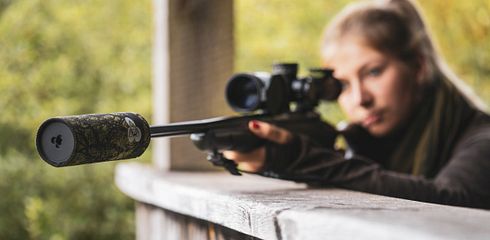
- Why: Work on the weapon, such as changing the scope, switching to different ammunition, or attaching a suppressor, can affect the ballistics and point of impact.
- Recommendation: After any technical change, the point of impact must be verified with a control shot.
4. When changing ammunition
- Why: Different types of ammunition or even different production batches from the same manufacturer can exhibit varying ballistic properties. This particularly affects the point of impact and the dispersion patterns.
- Recommendation: Before hunting, a control shot with the actual ammunition to be used is essential.
5. After prolonged non-use of the weapon
- Why: If a weapon is stored unused for an extended period, moisture, rust, or other influences can affect the mechanics and precision.
- Recommendation: Before the first hunt after a break, the point of impact should be verified with a control shot.
6. Before demanding hunting operations
- Why: Elaborate hunts, such as high-altitude hunting or hunting trips abroad, require maximum precision. Incorrect point of impacts can have serious consequences in such operations.
- Recommendation: Before starting such a hunt, a control shot should be performed to ensure that the weapon is correctly zeroed.
7. In case of deviations in shooting behavior
- Why: If a shot feels different than usual or the impact pattern on the game deviates significantly, this could indicate technical problems or changes to the weapon.
- Recommendation: After a noticeable deviation, a control shot is urgently required before further hunting operations take place.
How is a control shot performed?
1. Preparation
- Location: A suitable shooting range or a safe area in the hunting ground should be used.
- Target: A precise target, such as a target board with a clearly defined center, is important.
- Weapon and ammunition: The weapon and ammunition should be exactly the ones used during the hunt.
2. Execution
- Take a stable shooting position, e.g., on a shooting rest or a hunting seat.
- Fire at least three shots to obtain a meaningful hit pattern.
- Compare the hit pattern with the desired point of impact (e.g., "spot" at 100 meters or point of impact for the most favorable zeroing distance).
3. Adjustment
- If the hit pattern is outside the desired hit zone, a correction to the optics or other settings is necessary.
Common Problems with Control Shots and Their Solutions
-
Groupings are too large:
- Possible cause: Weapon or optics defective, incorrect ammunition, or unstable shooting position.
- Solution: Check weapon and optics, use a stable shooting rest, choose appropriate ammunition.
-
Impact point is outside the target area:
- Possible cause: Recoil, modifications to the weapon, or ballistic deviations.
- Solution: Adjust the scope and check again.
-
Shooter is unsure:
- Solution: Regular practice at the shooting range to improve shooting skills.
Conclusion
A control shot is an essential component of ethical hunting practice. It ensures that the weapon reliably hits its target and avoids unwanted deviations. Control shots are particularly important after transportation, technical changes, or prolonged periods of non-use of the weapon. They strengthen confidence in the equipment and play a crucial role in quickly and humanely taking game.
By regularly conducting control shots, hunters can identify and correct potential errors early on. This is not only a sign of professionalism but also of respect for the game and hunting itself.
FYI
Our partner Roedale has also addressed this topic in the following video:
Matching listings


Sponsored listings
You might also like

More articles on this topic