Restrictions in the field of vision due to silencers?
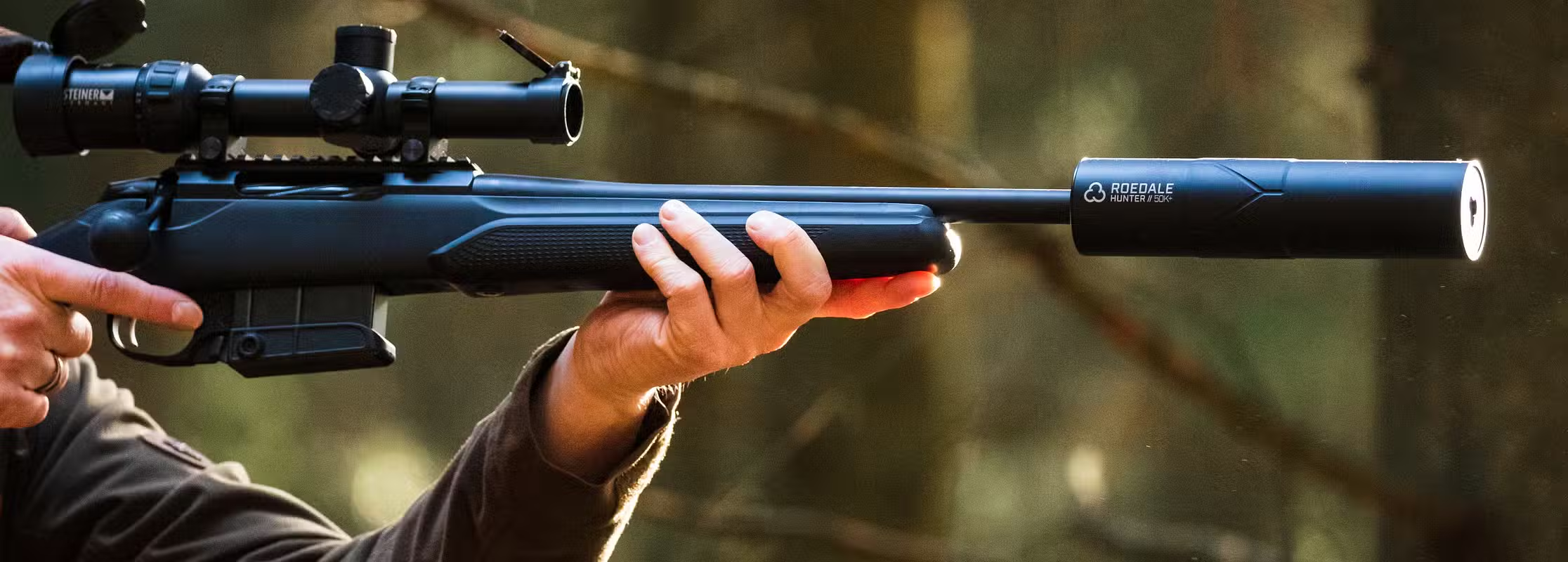
The use of silencers on hunting rifles has gained increasing popularity in recent years, particularly due to their advantages in terms of hearing protection and reduction of muzzle blast. However, a frequently discussed question among hunters is whether a silencer can impair the field of view through the scope. This article highlights the technical and practical aspects, analyzes the pros and cons, and specifically addresses driven hunt optics.
Technical Fundamentals
A suppressor extends the weapon by being mounted at the muzzle. Depending on the design and diameter of the suppressor, this extension can affect the visible area of the scope, especially at low magnification or with optical systems that have a wide field of view.
Pro-arguments for silencers
- Hearing protection and reduced noise disturbance: Silencers lower the sound level and thus protect the hearing of the hunter as well as that of fellow hunters and hunting dogs.
- Improved concentration: The reduced volume and decreased recoil allow for a calmer shot and can enhance precision.
- Possible reduction of muzzle rise: The additional weight distribution and the effect of the silencer reduce the muzzle rise of the weapon. This can make it easier to quickly acquire the target after a shot.
Counterarguments: Limitations of the Field of View
- Narrowing of the Field of View with Low Optic Mounting: Especially with optics that have a low height or a large field of view, as is common with driven hunt optics, the suppressor can obscure the lower edge of the field of view. This occurs particularly at low magnifications (e.g., 1x or 1.5x), which are often used in driven hunts.
- Impairment of Target Acquisition: In dynamic hunting forms, such as driven hunts, the partially obscured field of view can make quick target acquisition more difficult, especially with moving targets.
- Additional Balance Adjustment: The suppressor alters the balance of the weapon and extends it, which can make handling in tight environments, such as dense forests, more challenging.
Drive Hunting Optics and Silencers
Drive hunting optics are specifically designed for quick target acquisition at short to medium distances. Typically, they feature a wide field of view, low magnification (1x to 4x), and a brightly illuminated reticle.
- Advantages of Drive Hunting Optics: Drive hunting optics allow for a quick overview of the surroundings and the rapid targeting of moving game. However, a concealed area due to a silencer could diminish these advantages.
- Recommendations: To avoid limitations, hunters can use scopes with higher mounts that bring the silencer out of the line of sight. Alternatively, choosing a more compact silencer or a model with a smaller diameter can help.
Compromises and Solutions
- Optimal Silencer Choice: Choosing a silencer with a small diameter minimizes the risk of obstructing the field of view. Models specifically designed for hunting firearms are often compact and lightweight.
- Increased Mounting Height: A higher optic mount creates more space between the barrel and the scope, reducing the likelihood of the silencer entering the field of view.
- Individual Adjustment of Hunting Equipment: Every hunter should tailor their equipment to their personal hunting style and the weapons used. In driven hunts, where speed is crucial, a thorough review of the combination of optics and silencer can help achieve optimal results.
Conclusion
A suppressor can restrict the field of view through the scope, especially with low-mounted optics and wide fields of view. This is particularly true for driven hunt optics with low magnification, where the suppressor can obscure the lower edge of the field of view. However, by choosing the right equipment and adjusting the mounting height, these limitations can largely be avoided. The advantages of a suppressor, especially regarding hearing protection and reduced recoil effect, outweigh the potential disadvantages for many hunters.
Every hunter should individually assess which combination of suppressor and optics is best suited for their purpose and weapon.
FYI
Our partner Roedale has released an exciting and insightful video on the topic:
Matching listings

Sponsored listings


You might also like
More articles on this topic