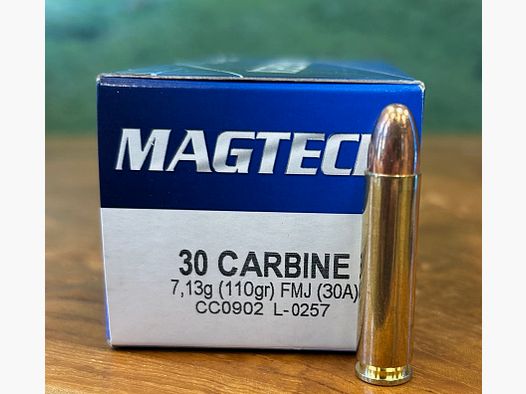
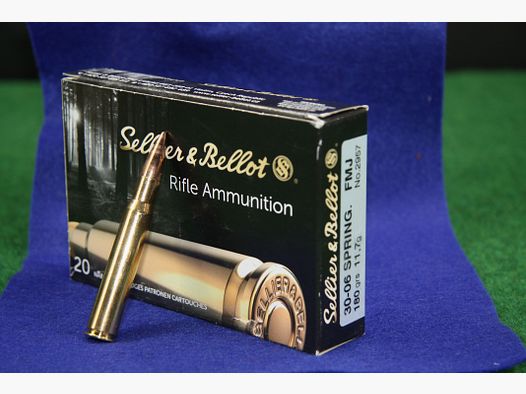
S&B Ammunition 30 CARBINE FMJ 7.10 g
Price on Request
Purchase permit required
25-330 Kielce, Poland
0
ID: 11090282
Purchase from outside the EU: The firearm goes through an importer in your country, the dealer handles the export.
How buying from Europe works
Shop safely with Gunfinder
Our AI-powered seller identity verification makes Gunfinder the safest marketplace online.
Learn more
Details
- Original language
- Polish
- Category
- Purchase eligibility
- Required
- Caliber
- .30Carbine
- Condition
- New
- Location
- 🇵🇱 25-330 Kielce, Poland
- Availability
- In stock
Freshness
This listing is based on a mirrored offer, where the listing data was synced to us from a shop, dealer, or external marketplace. Please note that temporary price discrepancies may occur due to possible delays in data transmission.
- Source
- Absolutus
- Last updated
- about 7 hours ago
Description
Note:
The item is located abroad. Please note that delivery conditions, shipping times, and/or the purchase process may differ.
.30 Carbine to nabój pośredni opracowany w czasie II wojny światowej dla amerykańskiego karabinka M1 Carbine. Krótka łuska i lekki pocisk 110 grs dają bardzo łagodny odrzut i niewielki huk w porównaniu z klasycznymi nabojami karabinowymi. Dziś jest to przede wszystkim amunicja kolekcjonerska i rekreacyjna — dla właścicieli karabinków M1 i ich współczesnych replik.
Konstrukcja pocisku FMJ
Pocisk pełnopłaszczowy o zaokrąglonym wierzchołku: rdzeń ołowiany zamknięty jest w tombakowym płaszczu na całej powierzchni czołowej i bocznej, bez odsłoniętego ołowiu. Taki kształt zapewnia niezawodne podawanie z magazynka w broni samopowtarzalnej — co dla konstrukcji M1 Carbine jest kluczowe. Pocisk nie odkształca się w celu i zachowuje pełną spójność.
Balistyka
Pocisk 110 grs (7,10 g) osiąga prędkość wylotową 617 m/s i energię 1351 J. Na 100 m to 461 m/s i 756 J, na 200 m — 331 m/s i 389 J. Przy zerowaniu na 100 m opad wynosi aż −43,1 cm na 200 m i −172,7 cm na 300 m. To typowa charakterystyka naboju pośredniego — energia i prędkość spadają szybko, a praktyczny zasięg strzelania to około 100–150 m. Długość naboju 42,5 mm.
Zastosowanie
Strzelectwo rekreacyjne, sportowe i kolekcjonerskie z karabinków M1 Carbine, ich replik oraz innej broni komorowanej na .30 Carbine, w tym pistoletów i rewolwerów w tym kalibrze. Niski odrzut i korzystna cena czynią z tego naboju dobry wybór na dynamiczne strzelanie treningowe.
Pocisk pełnopłaszczowy nie może być używany do polowania na zwierzynę grubą niezależnie od posiadanej energii — przepisy dopuszczają w tym zakresie wyłącznie pociski ekspansywne. Energia na 100 m wynosi 756 J, a więc nabój nie osiąga również progu 1000 J przewidzianego dla saren i warchlaków. Pozostaje dopuszczalny przy polowaniu na drapieżniki, dla których nie określono progu energii.
Numer katalogowy producenta: V332652.