


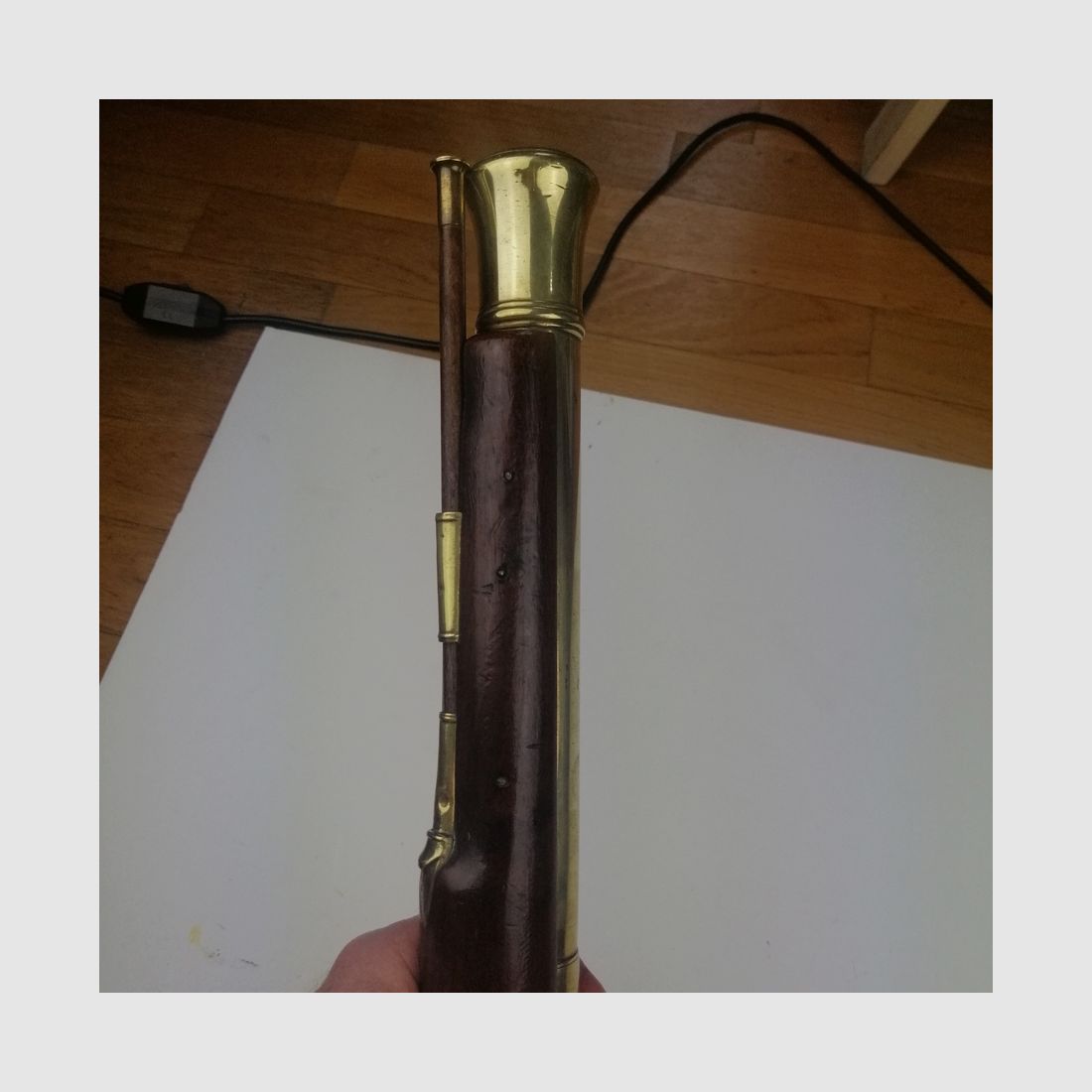
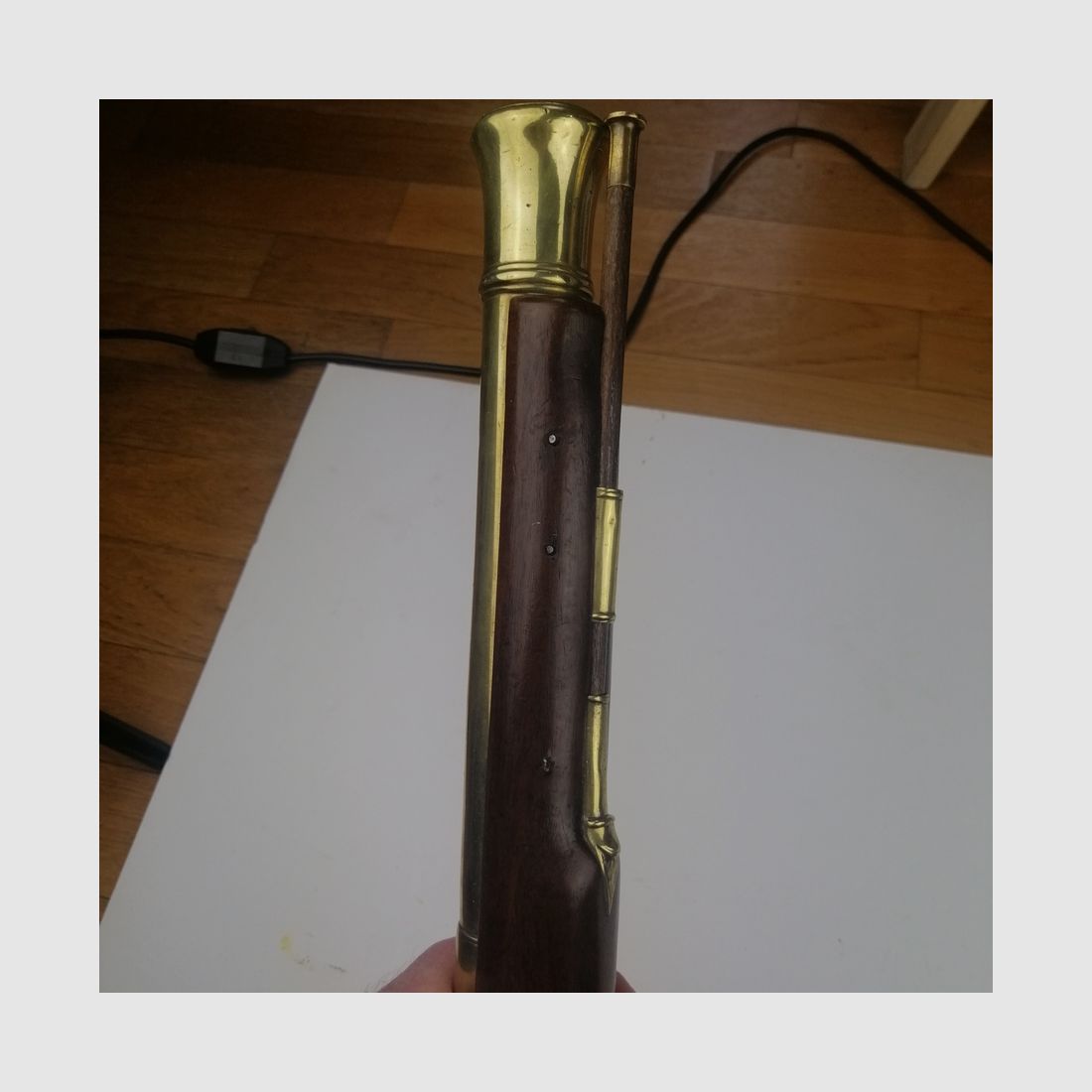
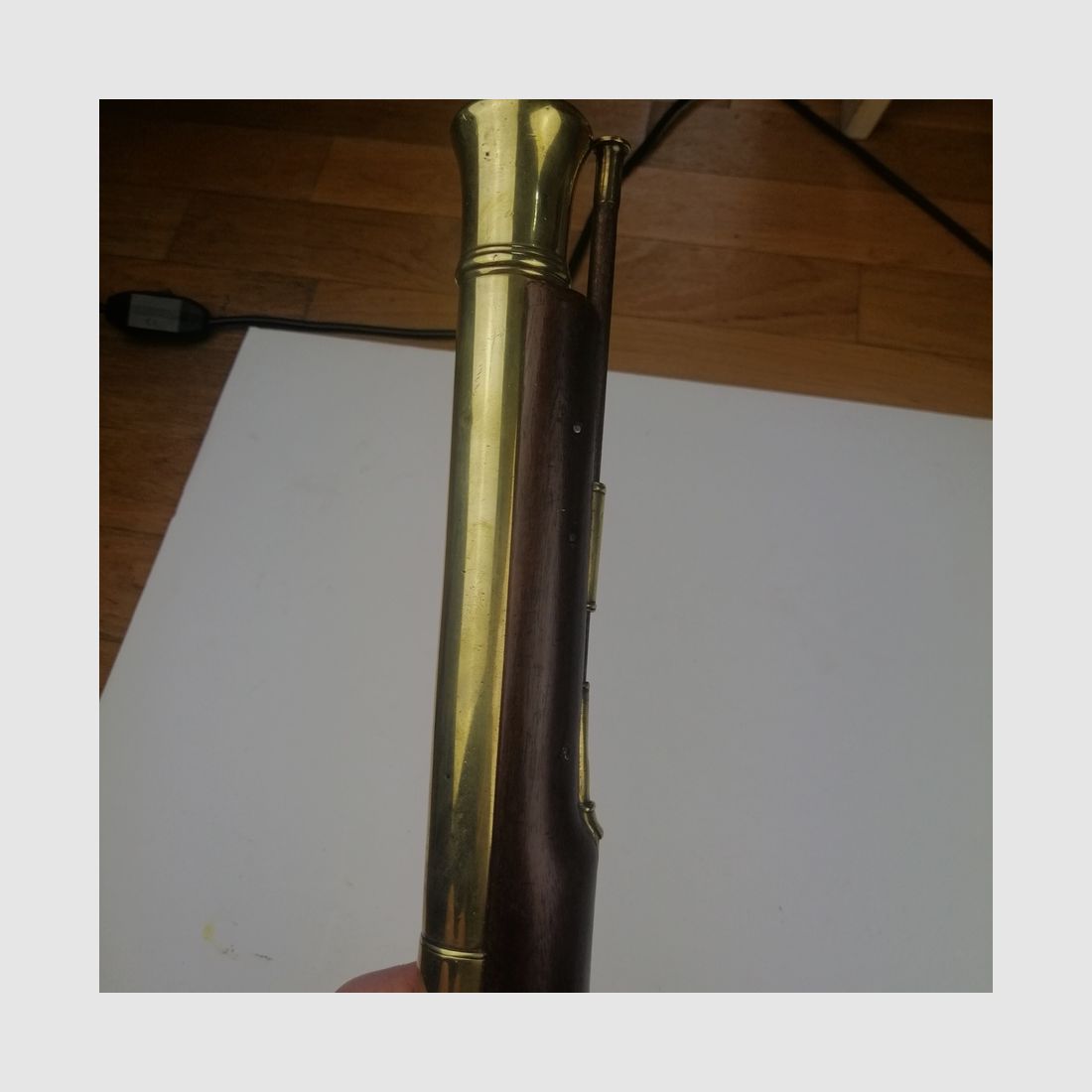
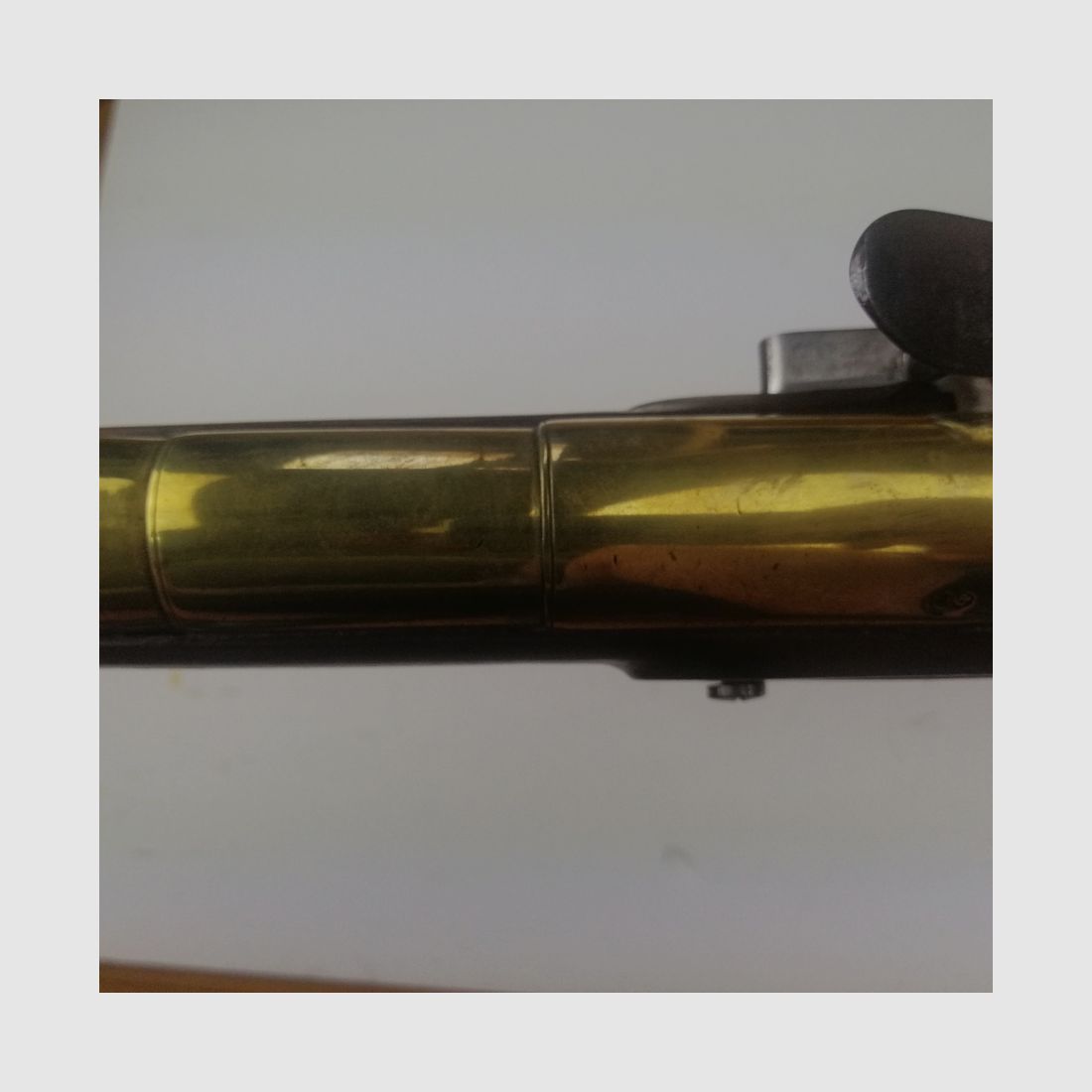




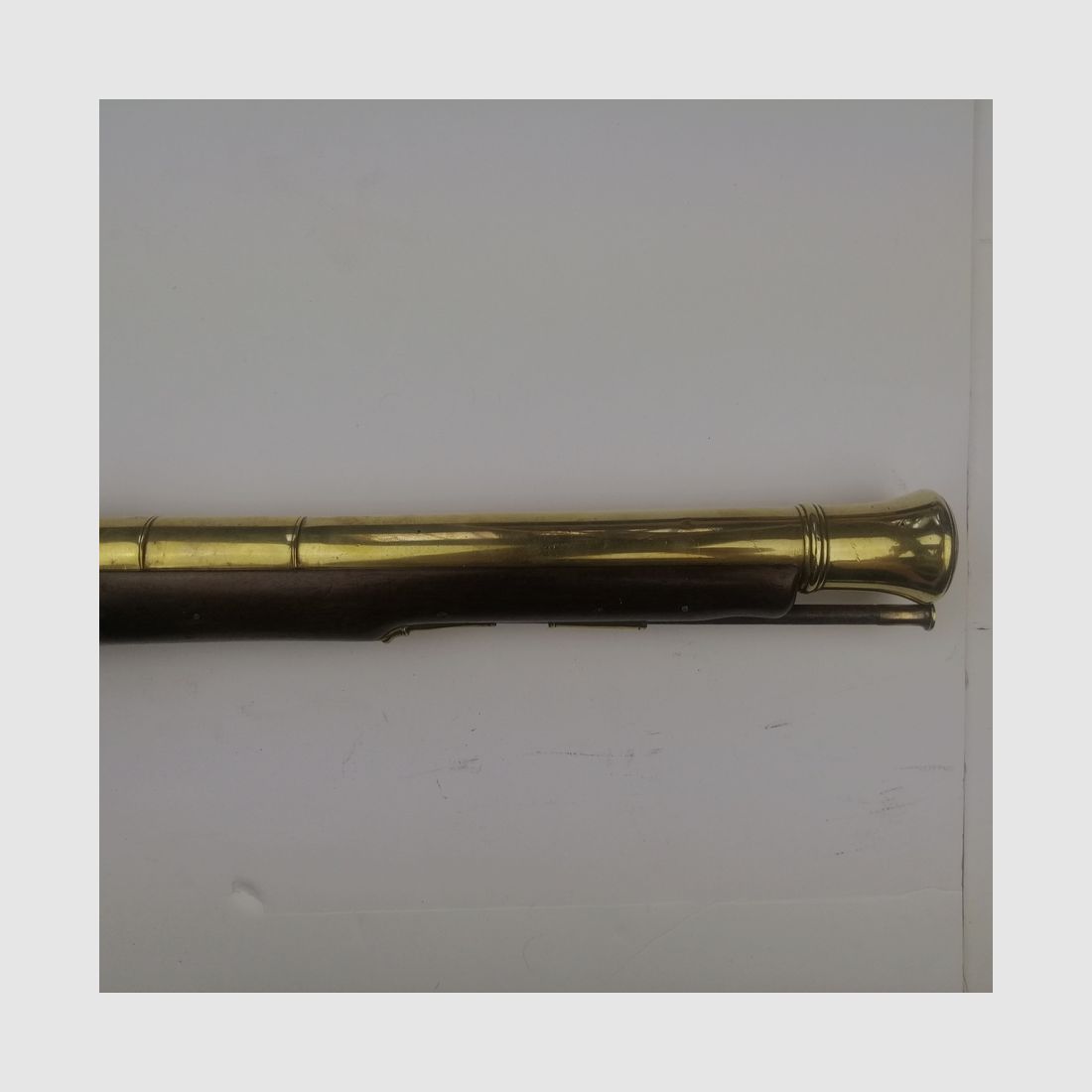


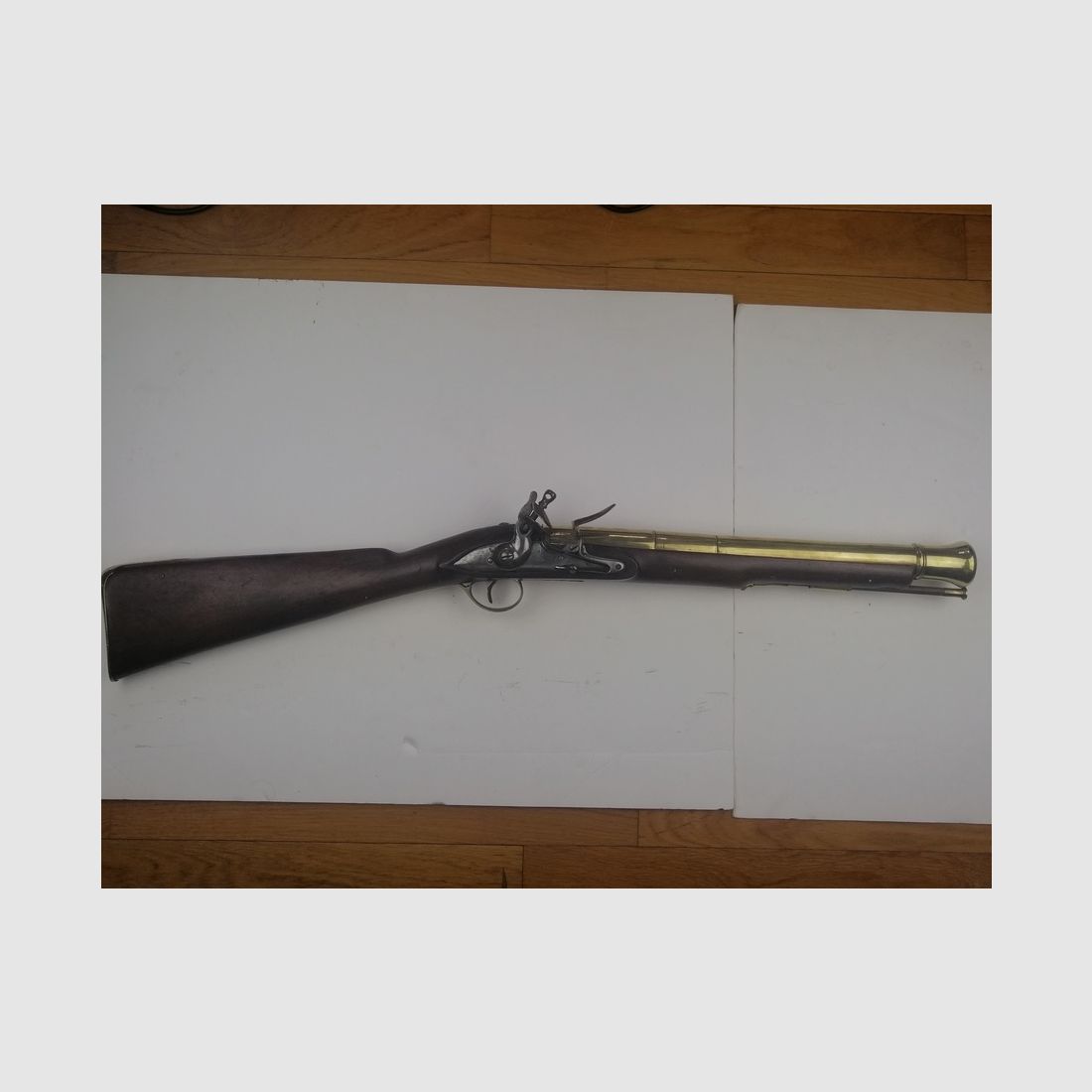
Magnificent British Naval Blunderbuss – Tower – French Prize – Bronze Barrel circa 1750 / 1780 – Engravings – TBE
Price on Request
Purchase permit required
75002 Paris, France
5
ID: 10339463
This item is currently unavailable.
Purchase from outside the EU: The firearm goes through an importer in your country, the dealer handles the export.
How buying from Europe works
Shop safely with Gunfinder
Our AI-powered seller identity verification makes Gunfinder the safest marketplace online.
Learn more
Details
- Original language
- French
- Category
- Purchase eligibility
- Required
- Condition
- New
- Location
- 🇫🇷 75002 Paris, France
- Availability
- Out of stock
Freshness
This listing is based on a mirrored offer, where the listing data was synced to us from a shop, dealer, or external marketplace. Please note that temporary price discrepancies may occur due to possible delays in data transmission.
- Source
- Flingus Maximus
- Last checked with the dealer
- about 11 hours ago
Description
Note:
The item is located abroad. Please note that delivery conditions, shipping times, and/or the purchase process may differ.
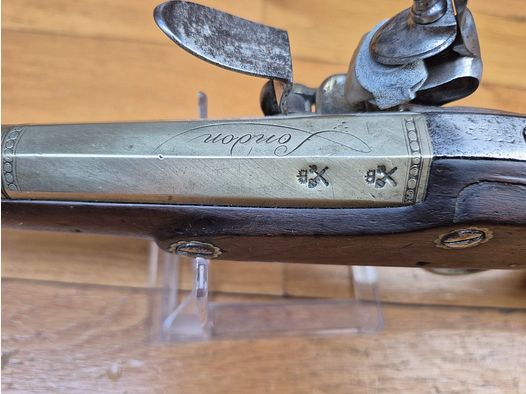
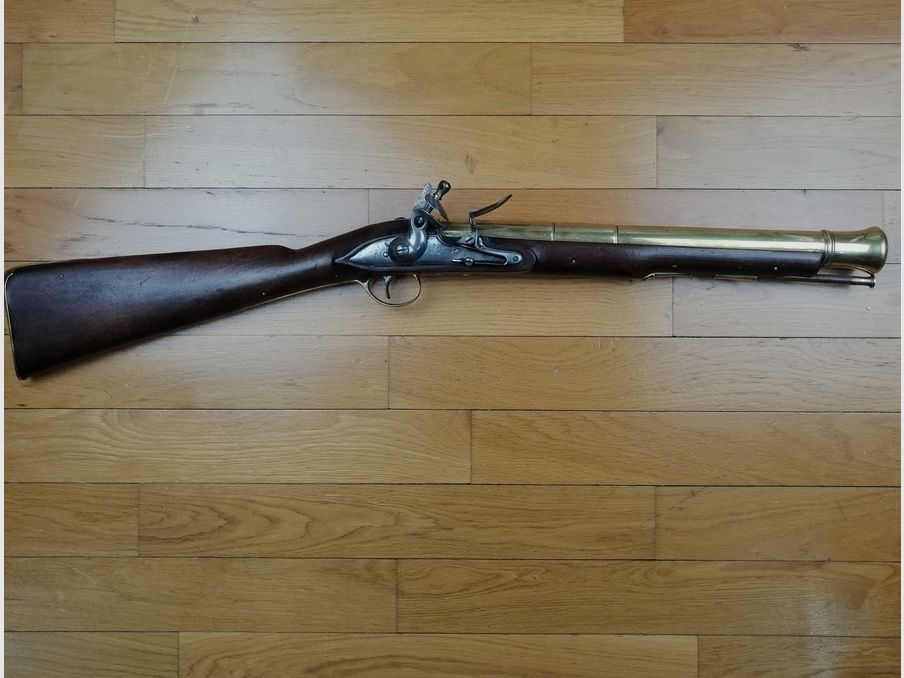
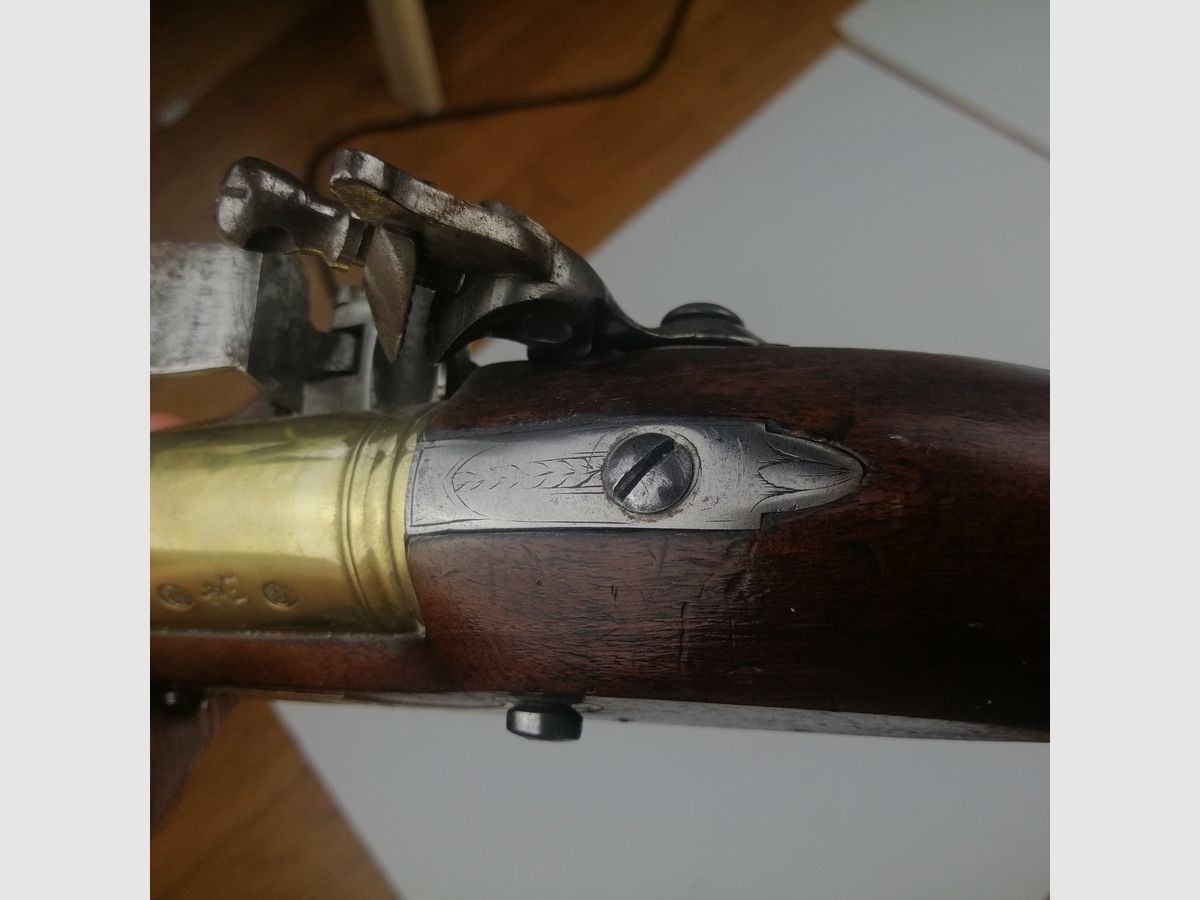
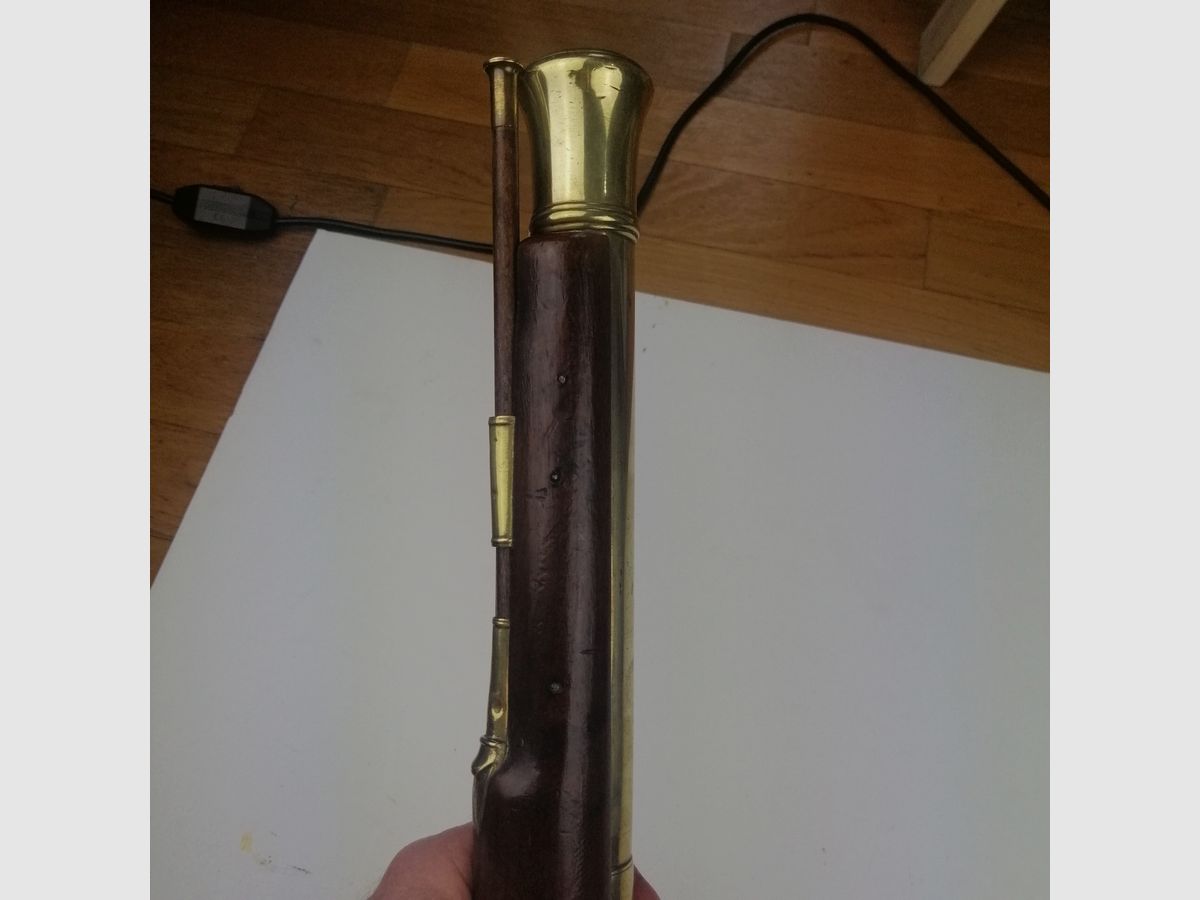
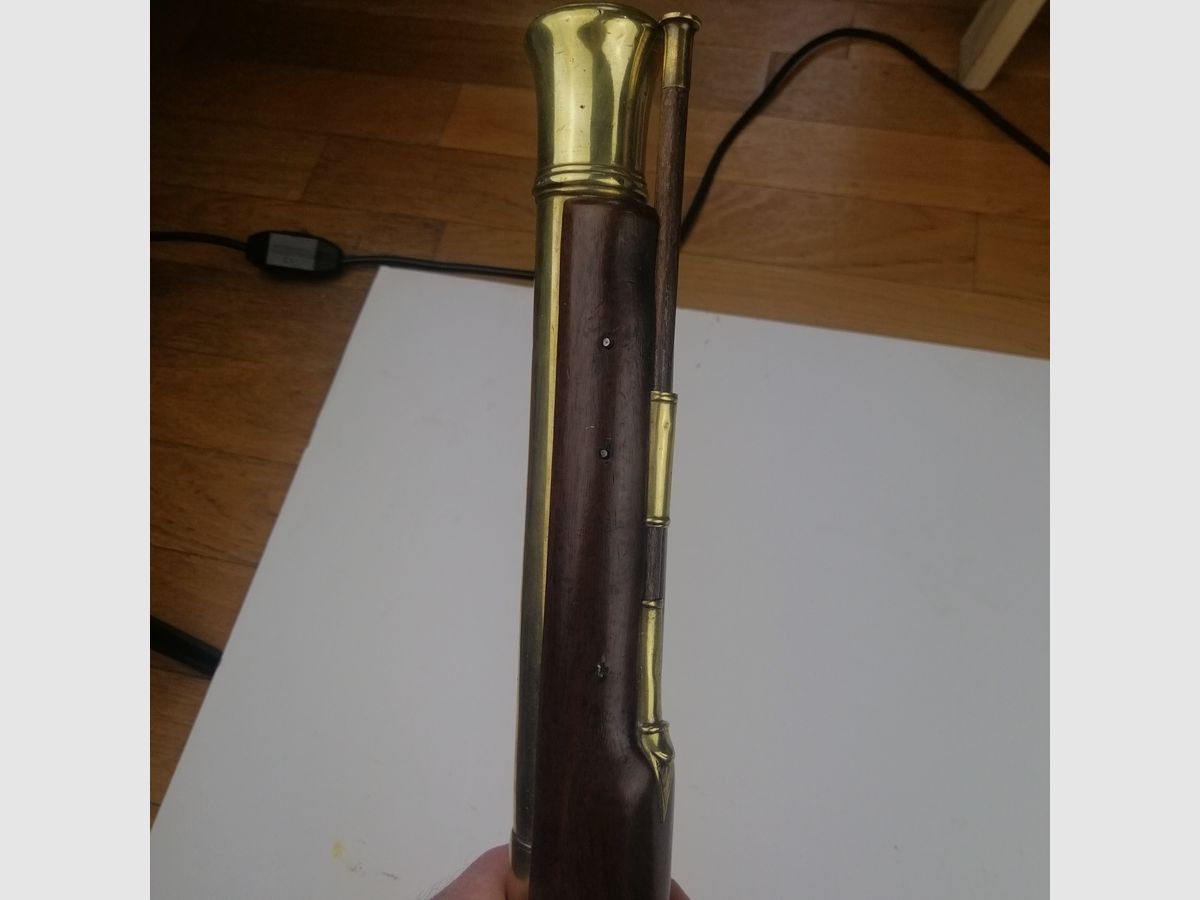
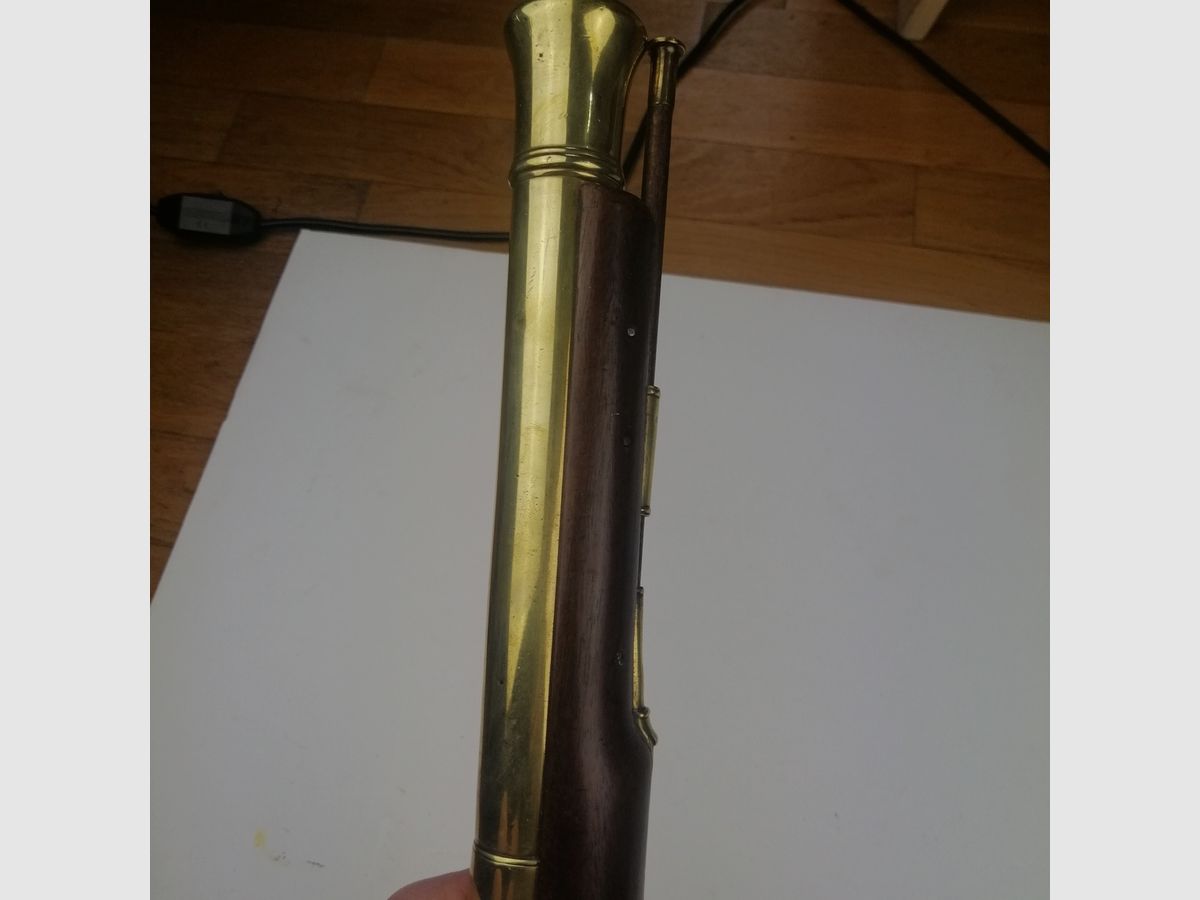
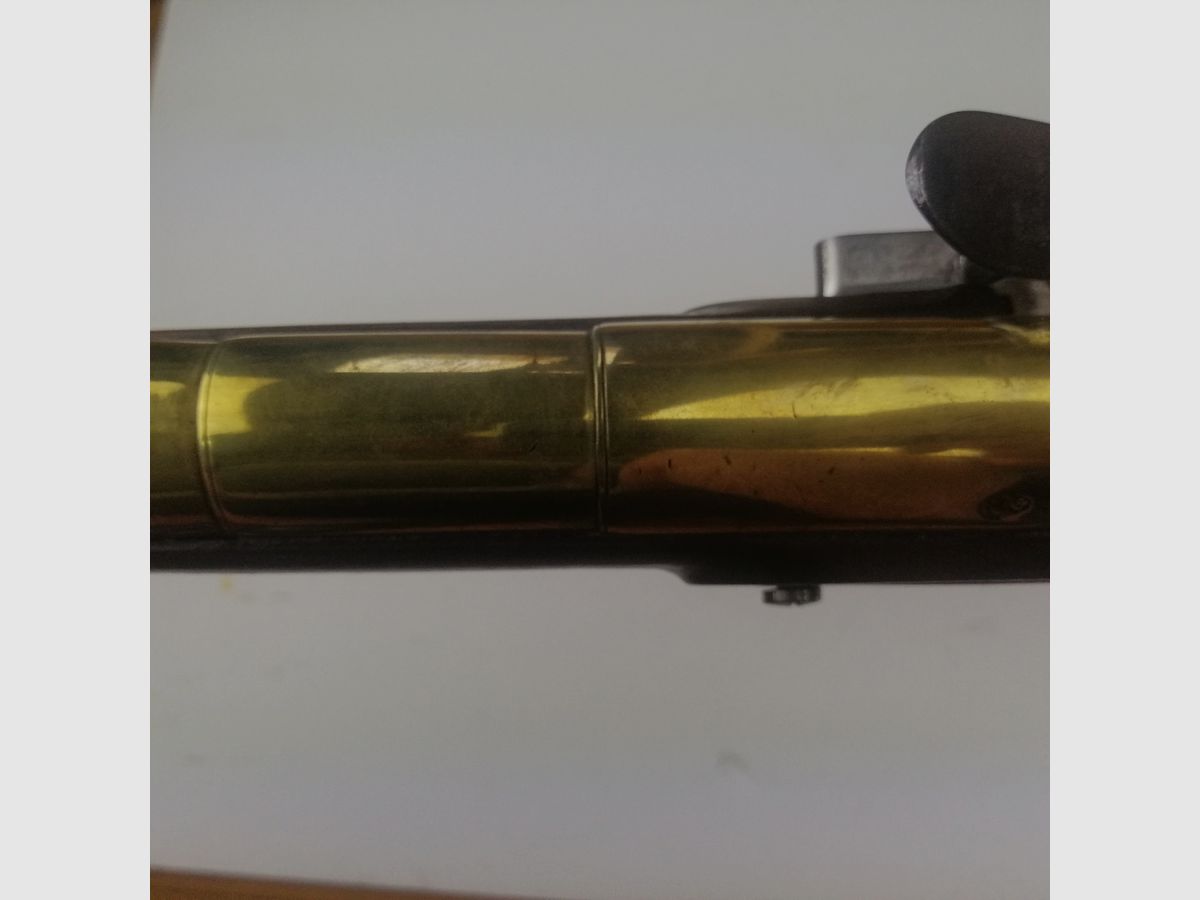
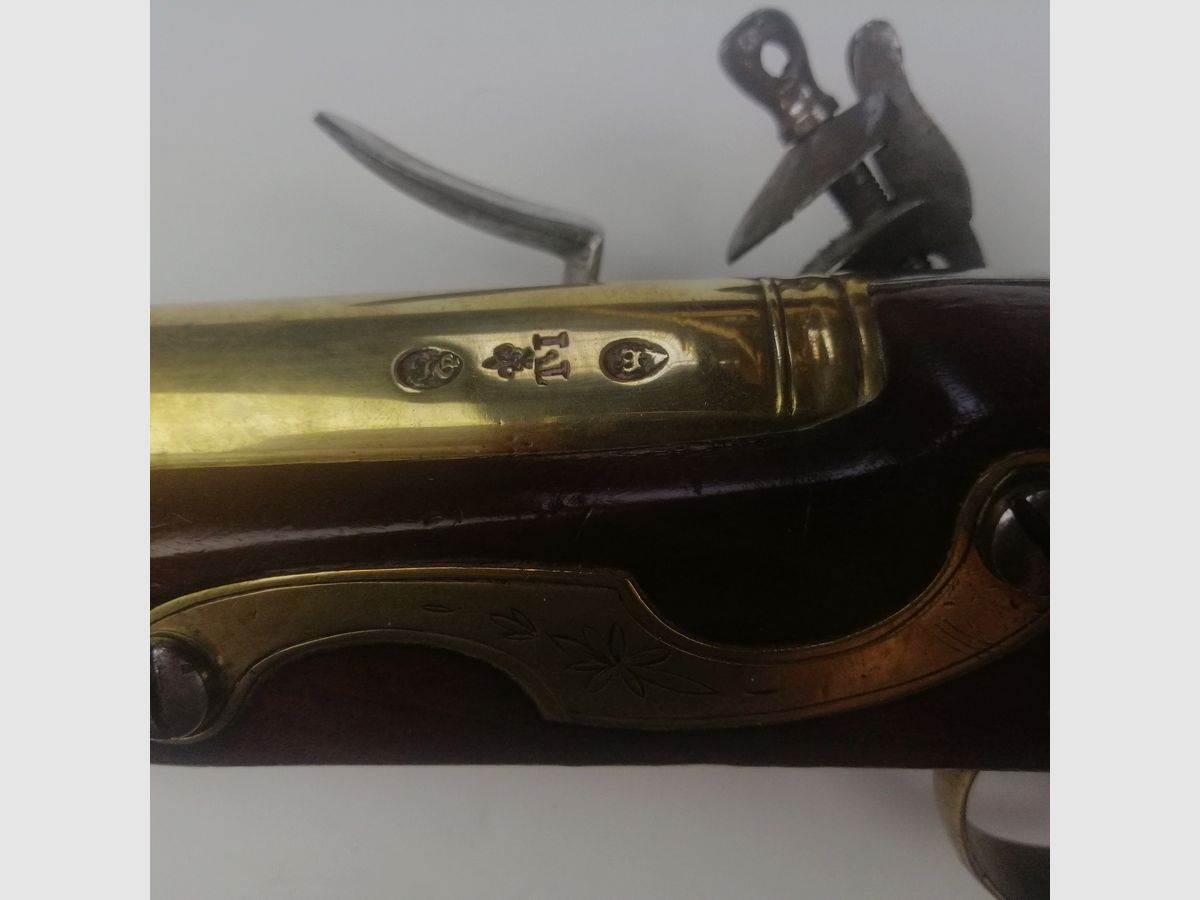
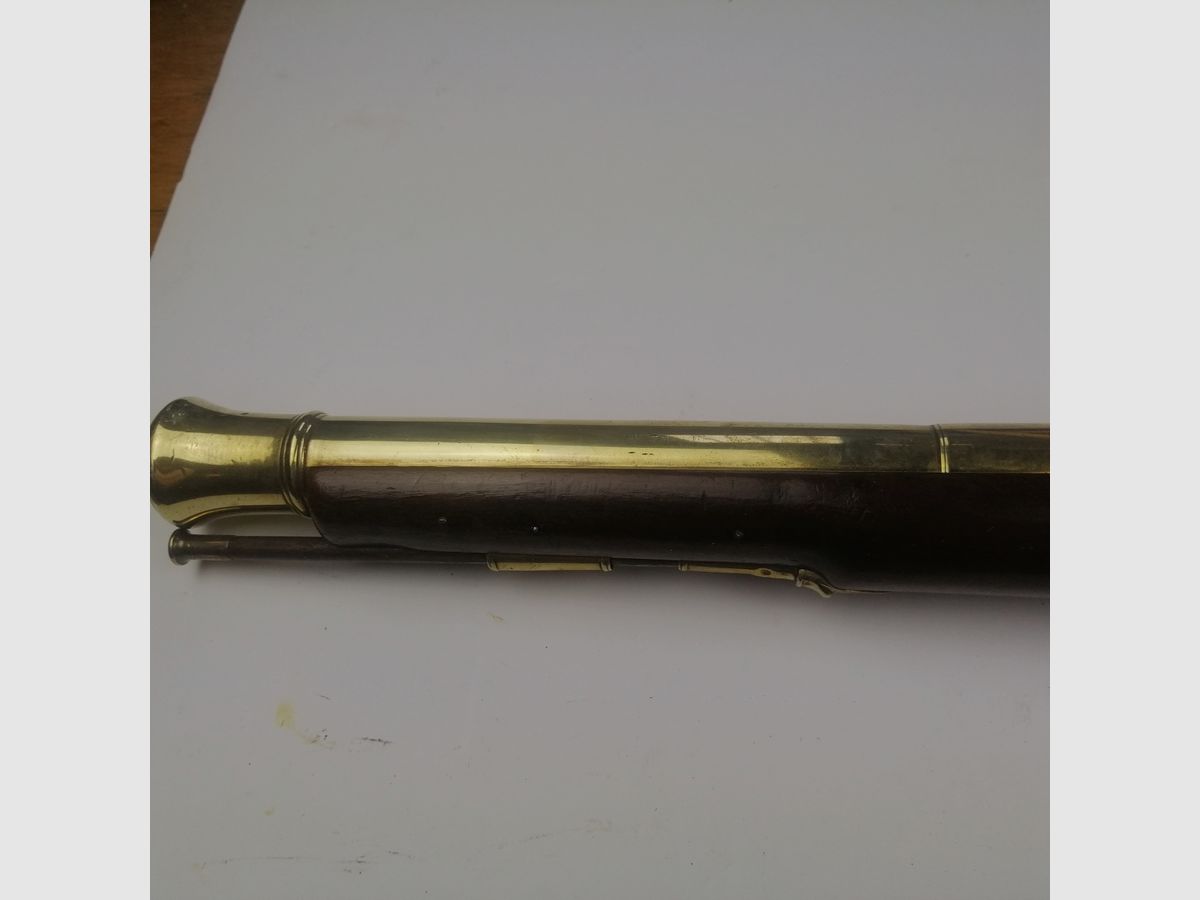
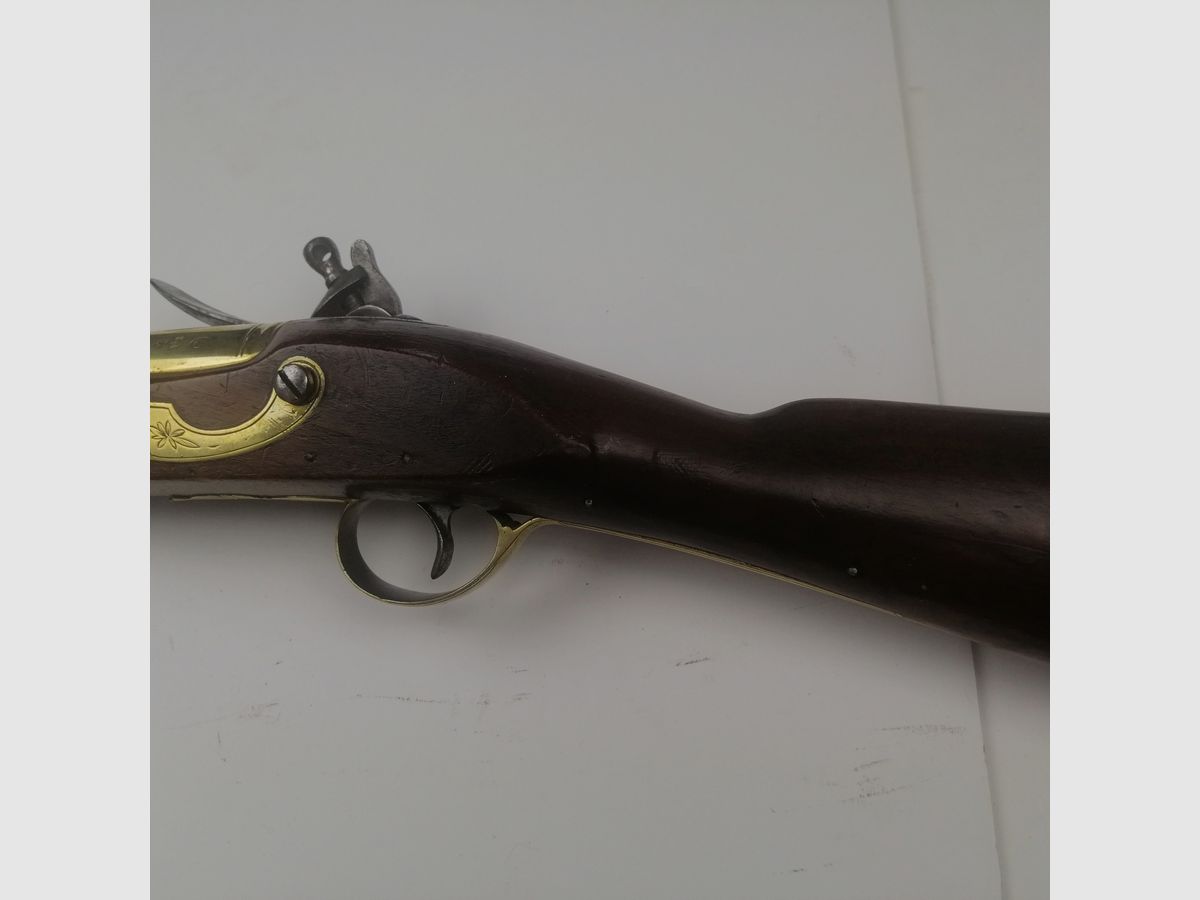
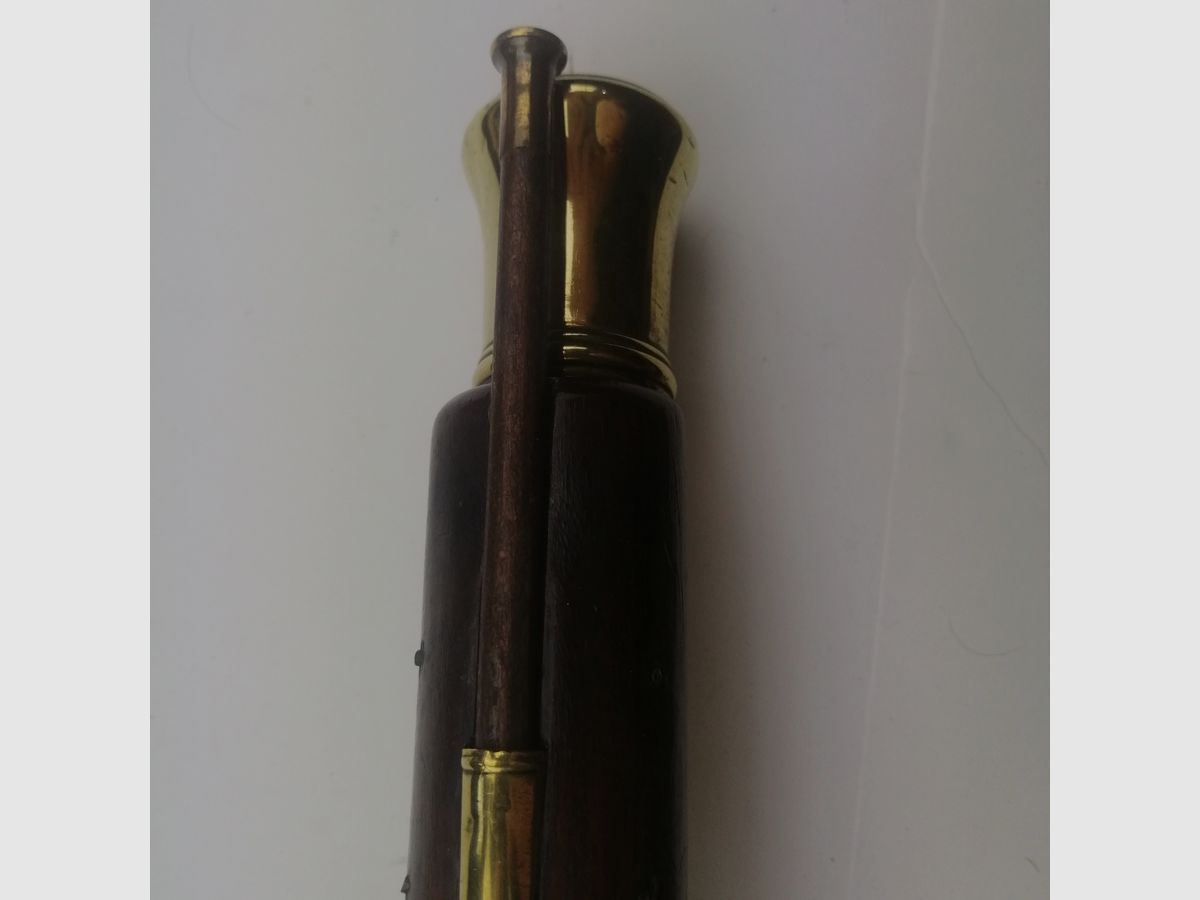
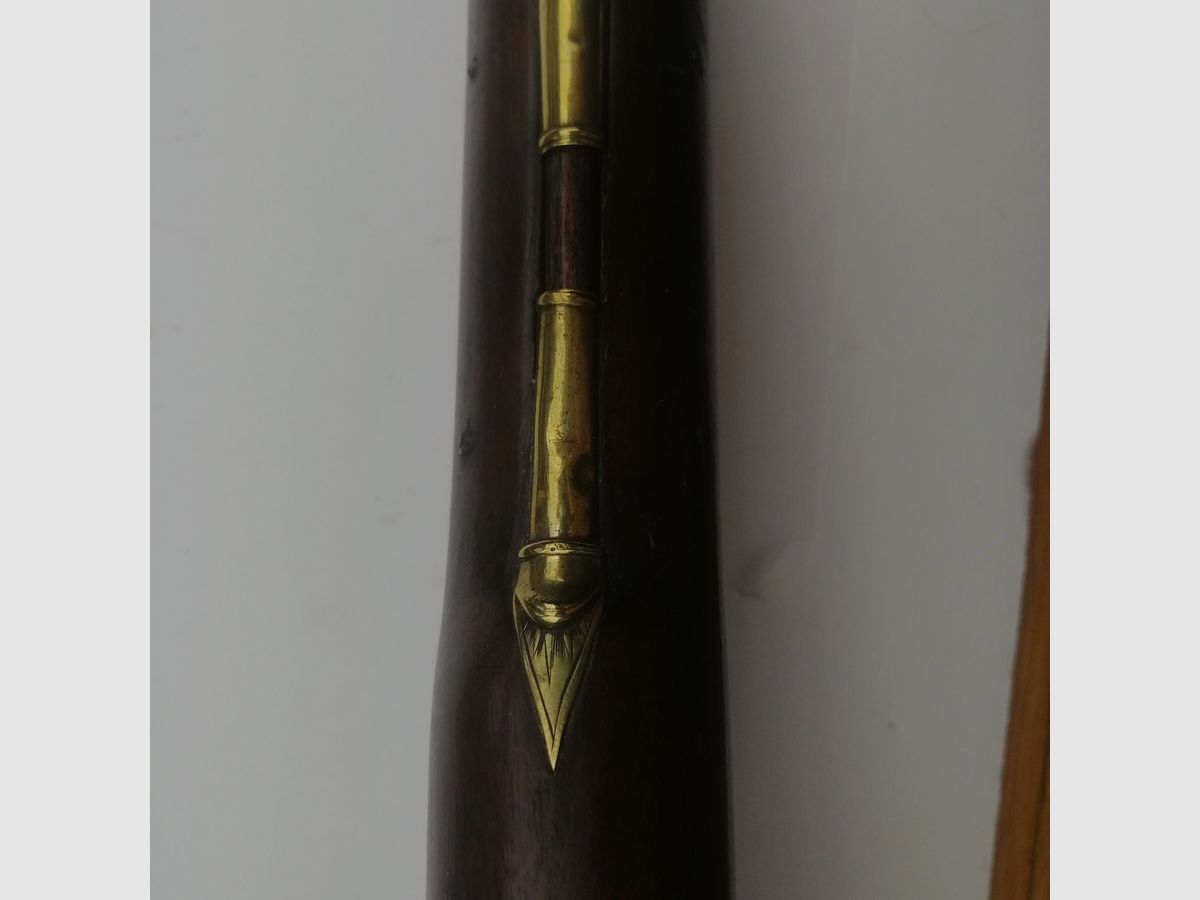
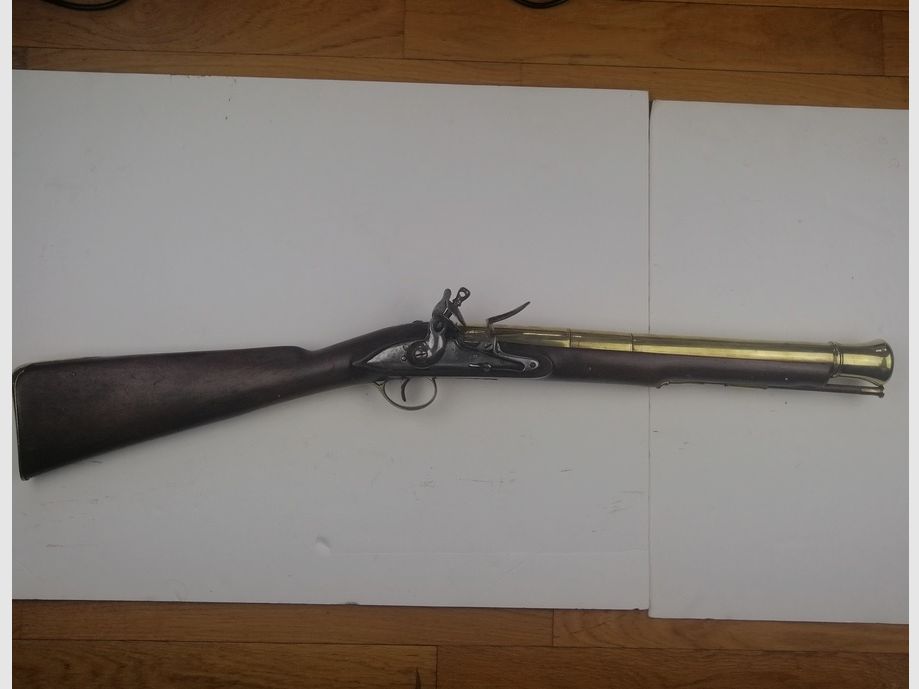
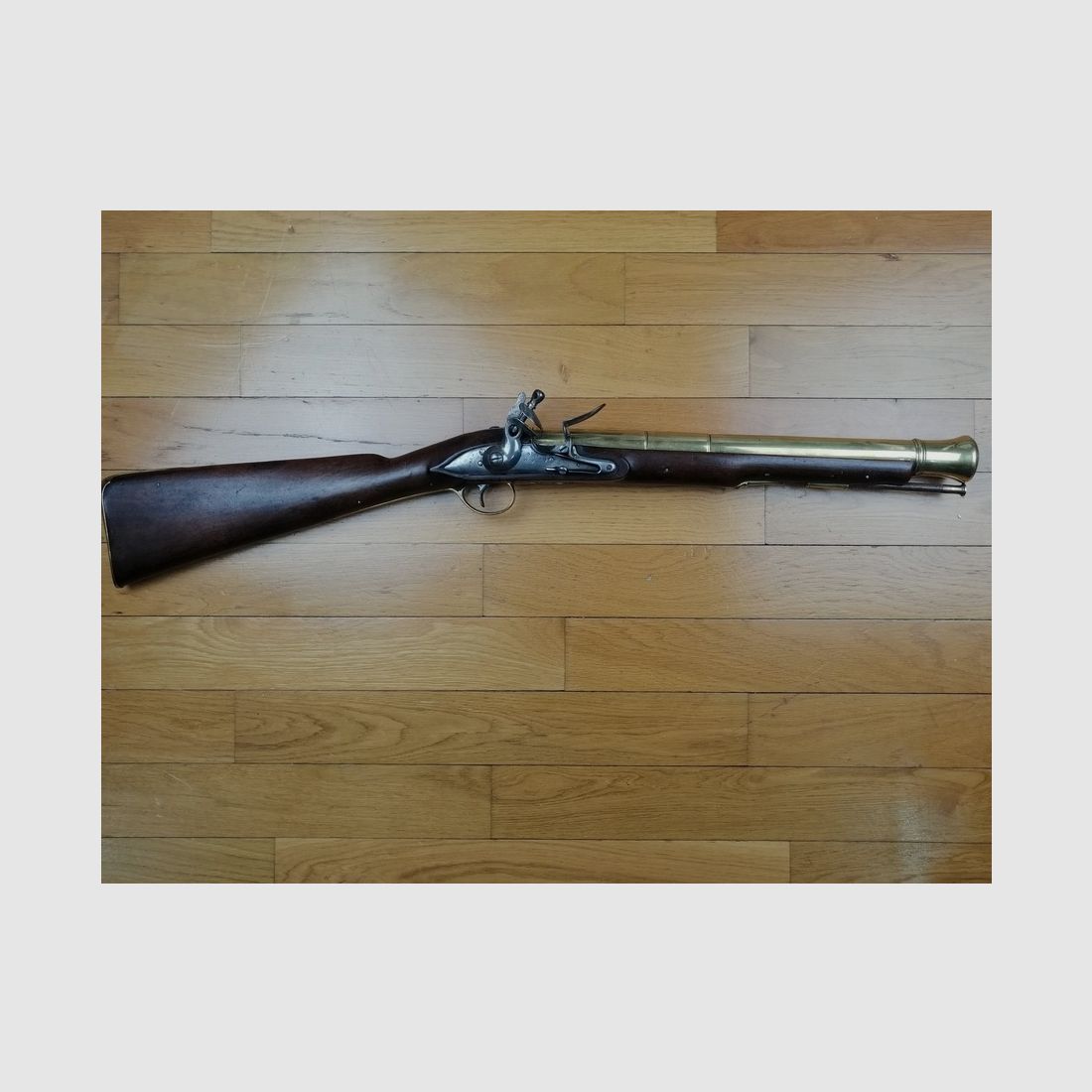
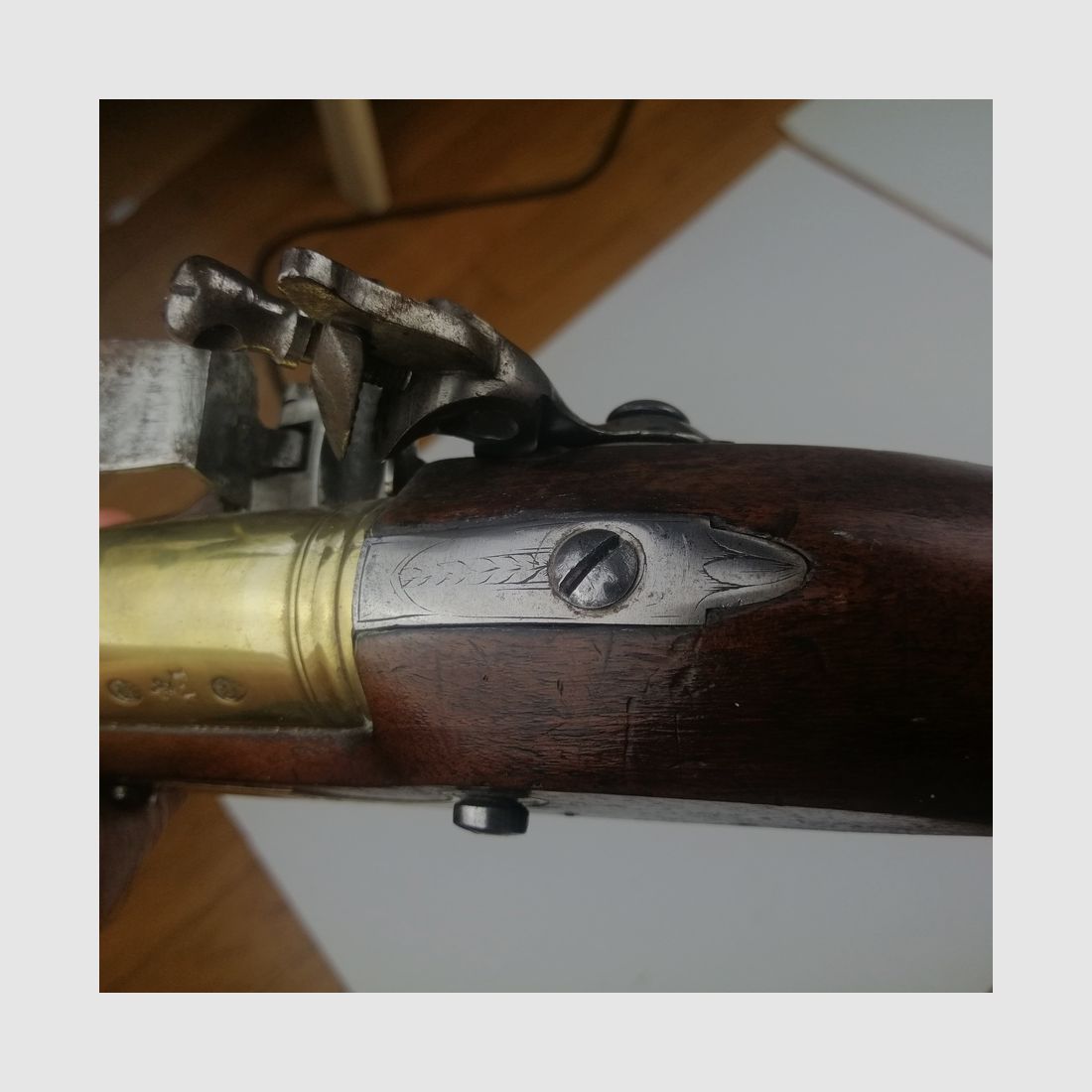
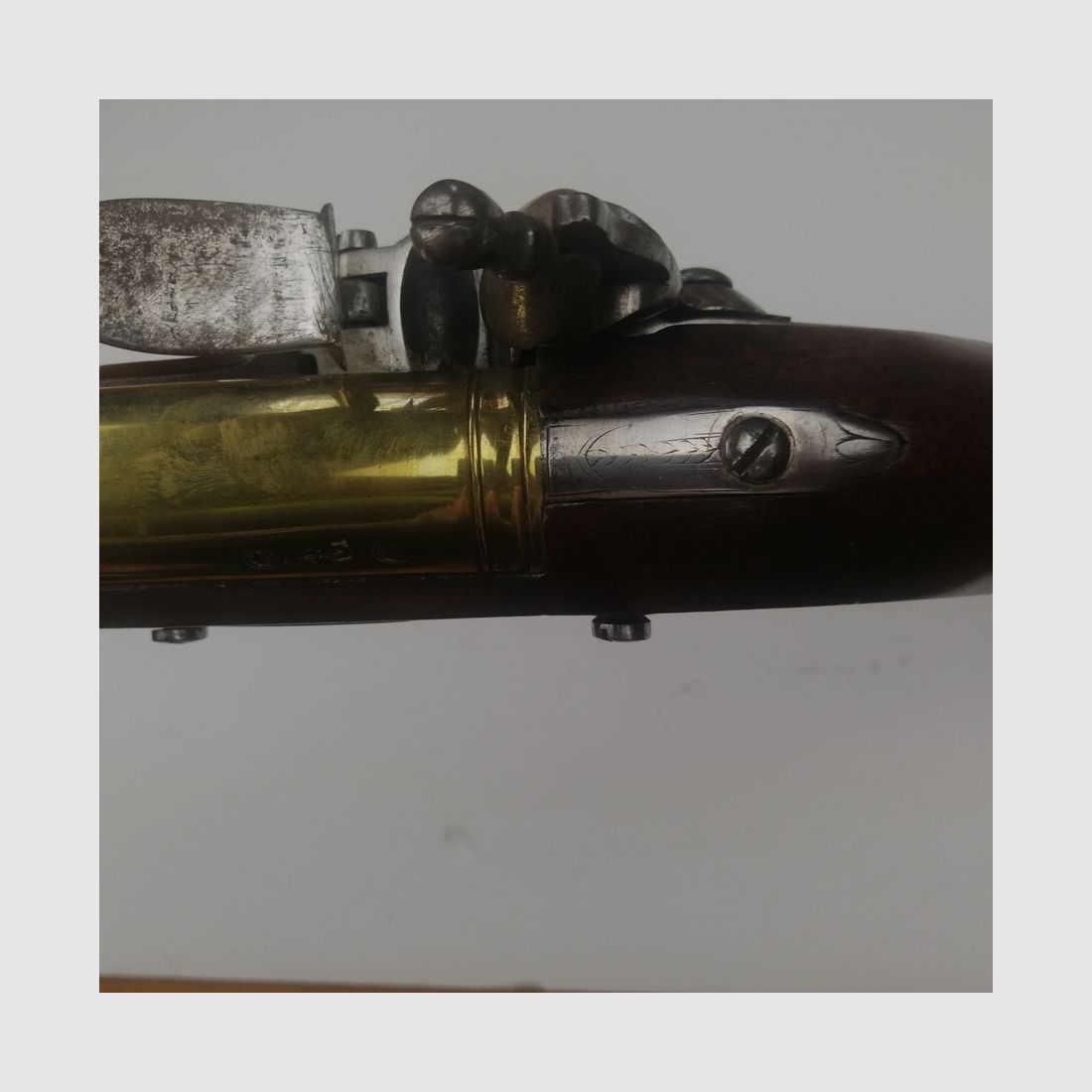
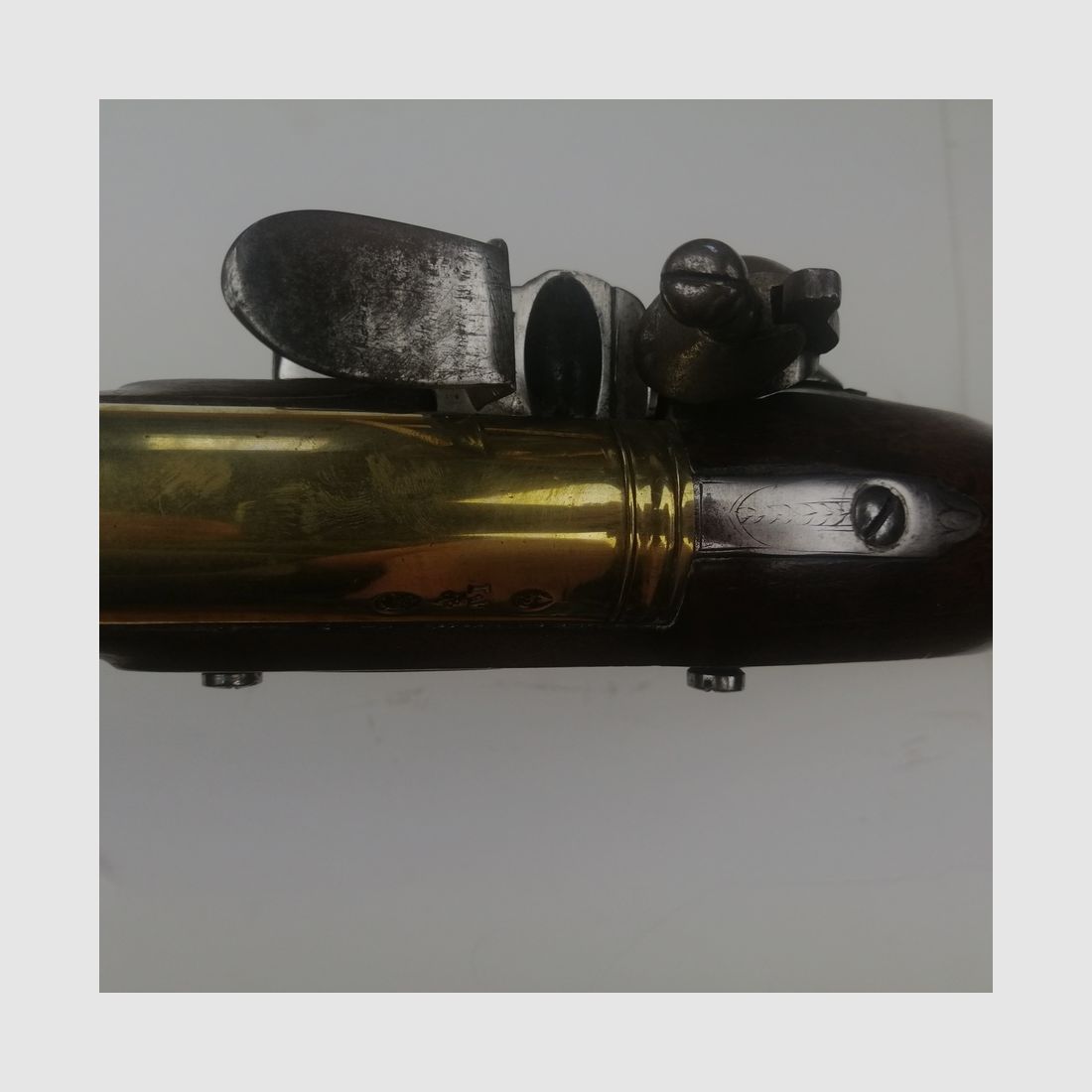
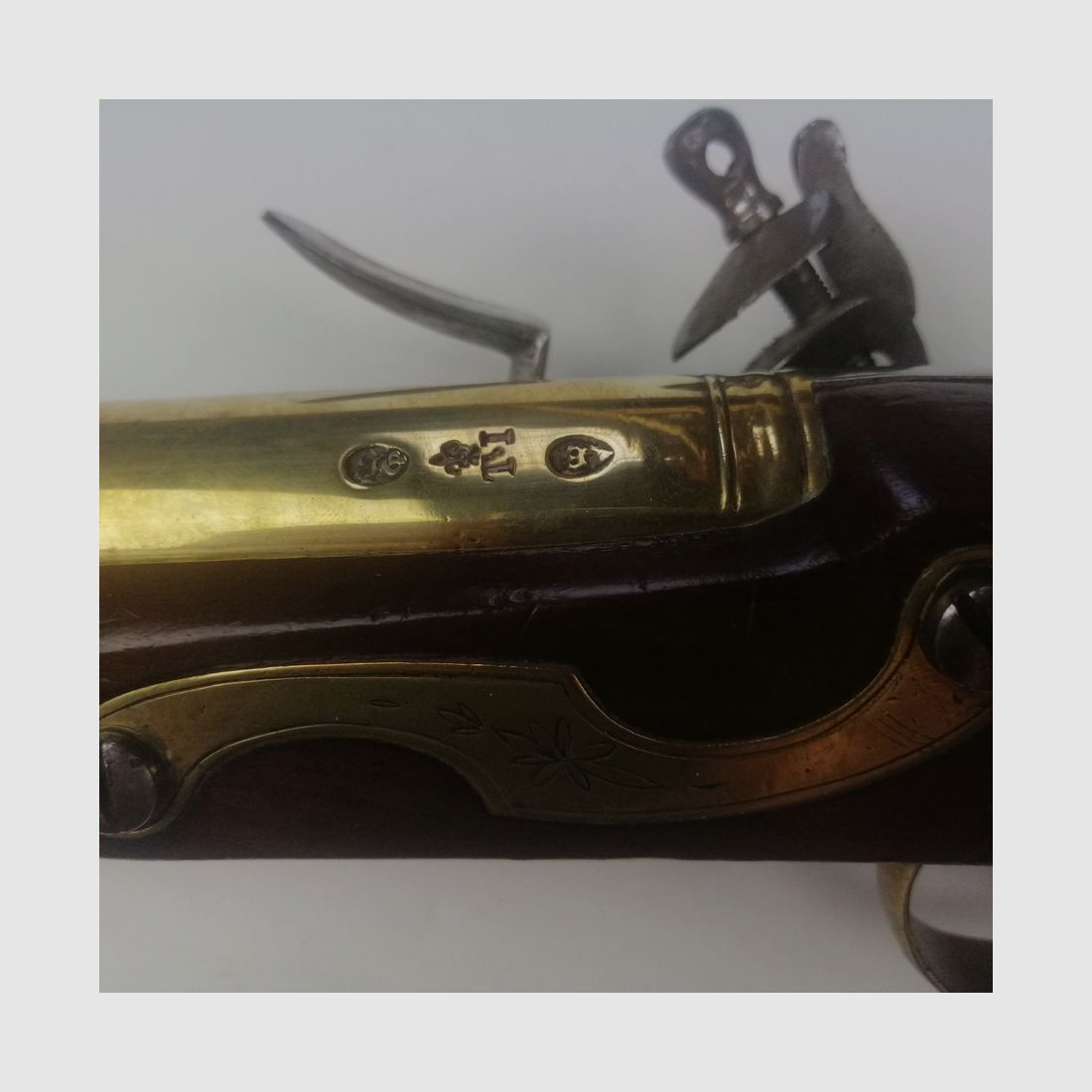
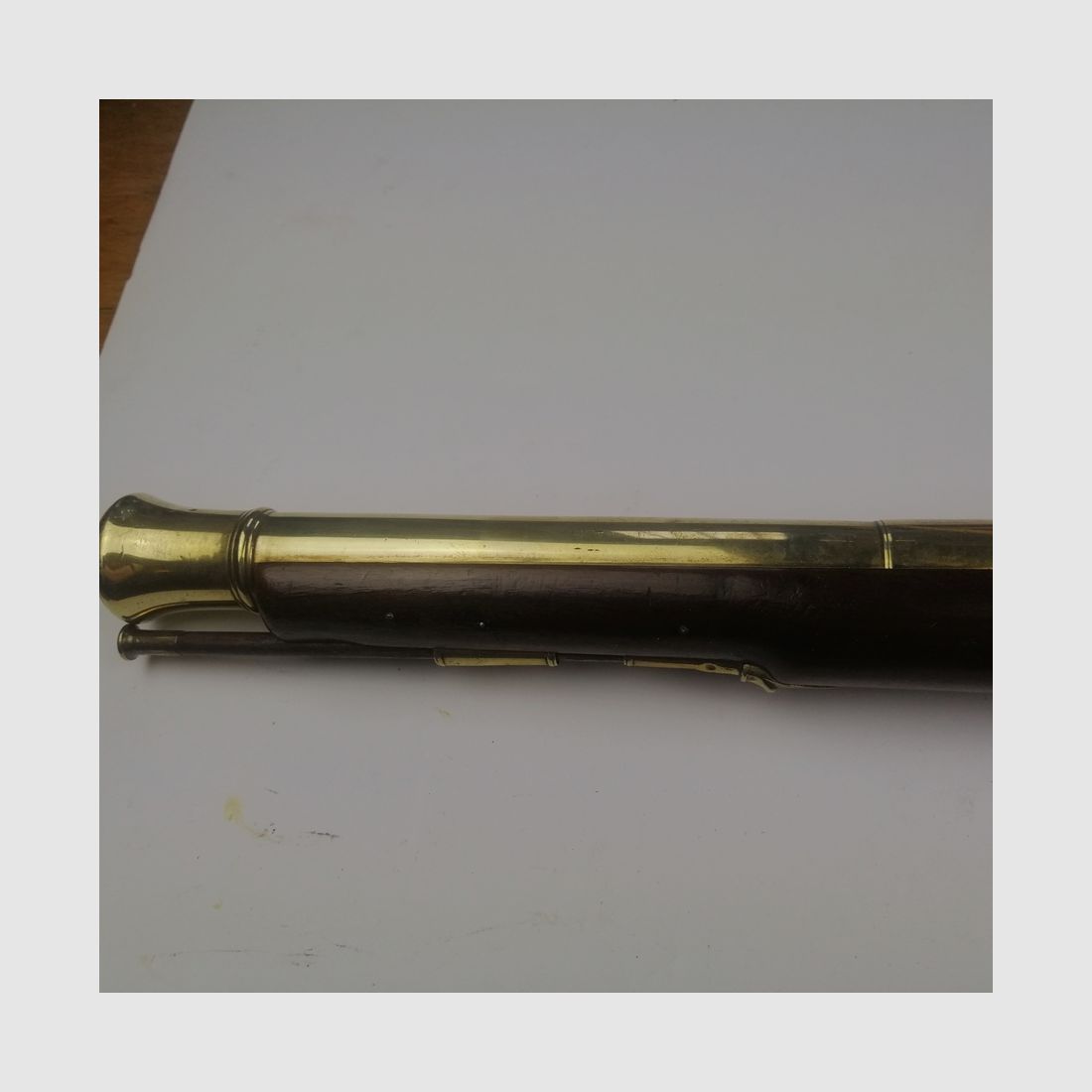
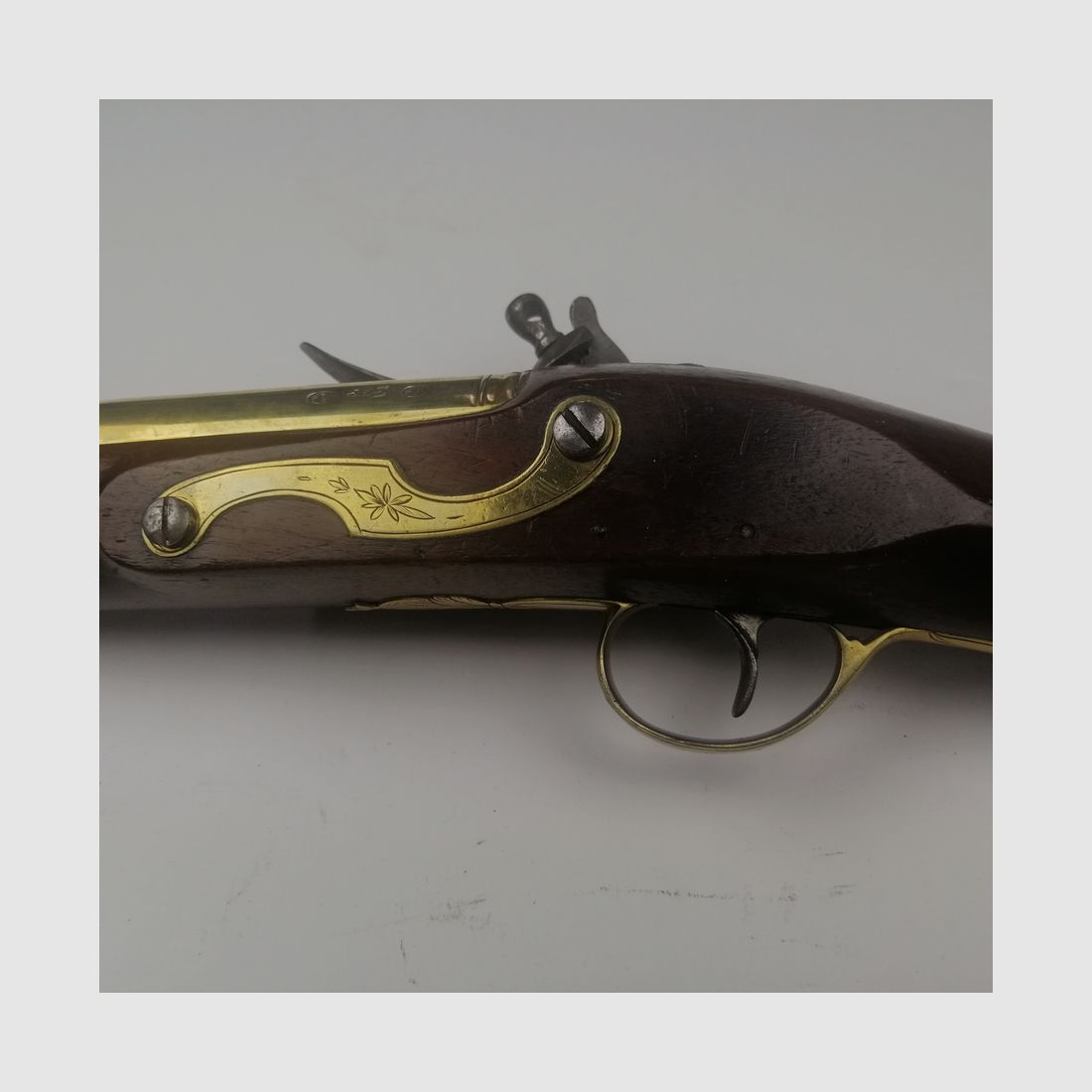
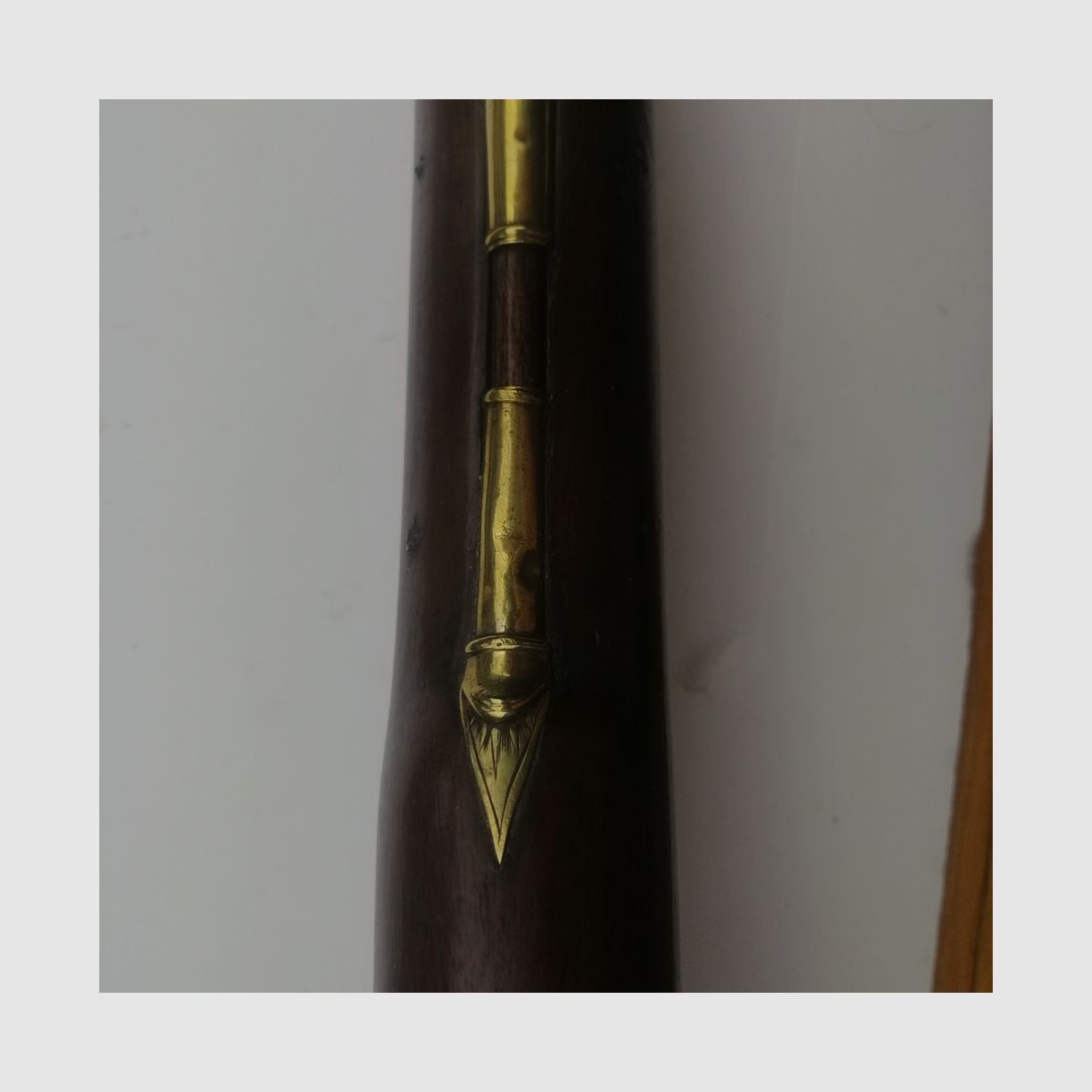
Bronze barrel with virtually no signs of handling (one or two tiny scattered dings), in excellent condition. Original ramrod, also with a bronze tip. The barrel bears two British proof marks and a fleur-de-lis mark.
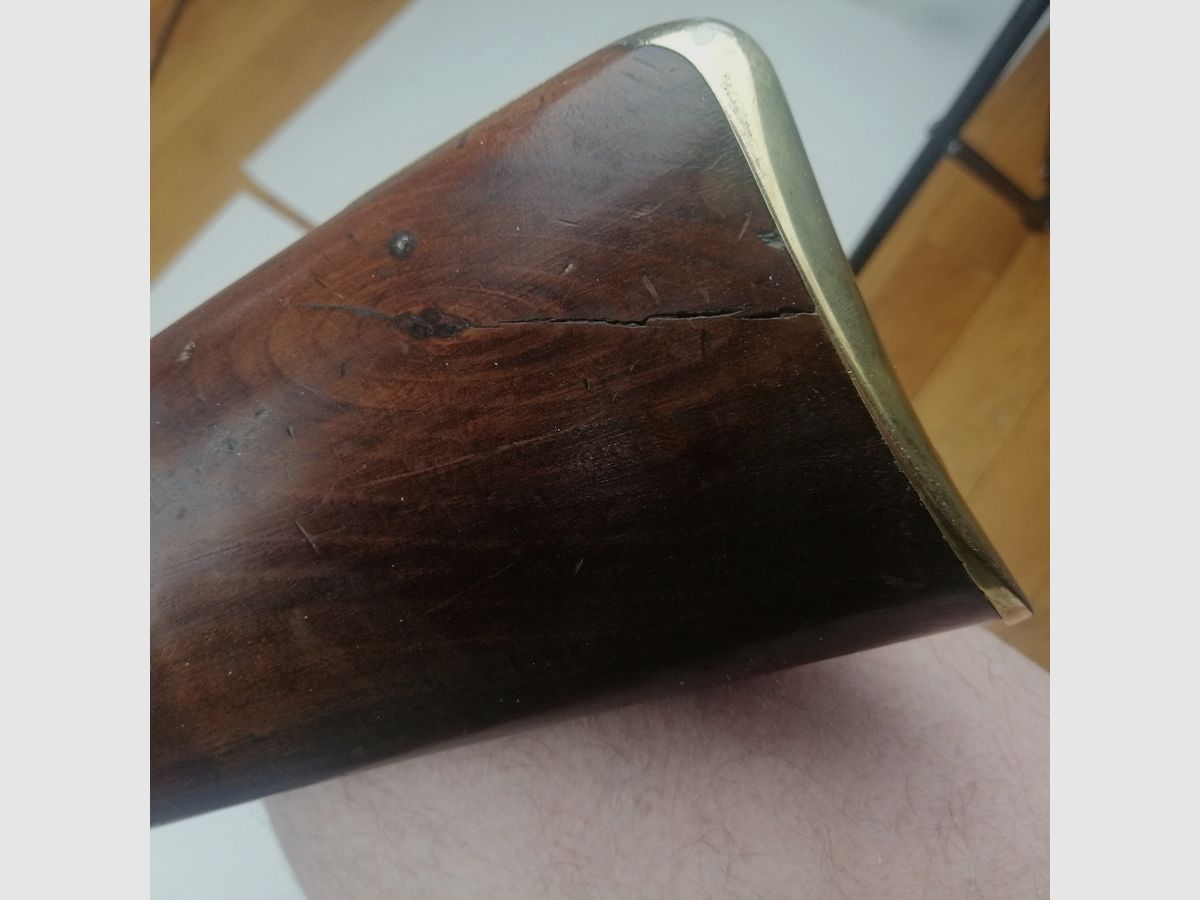
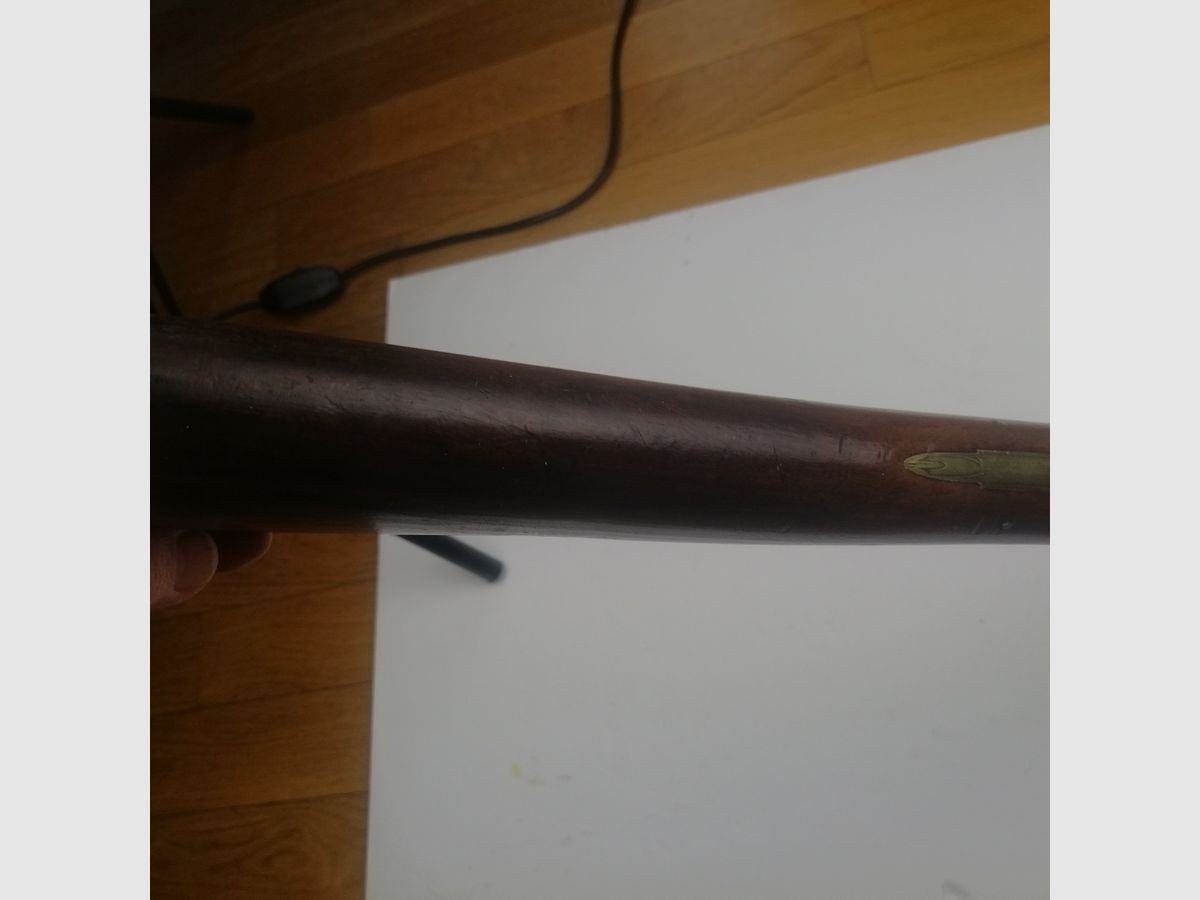
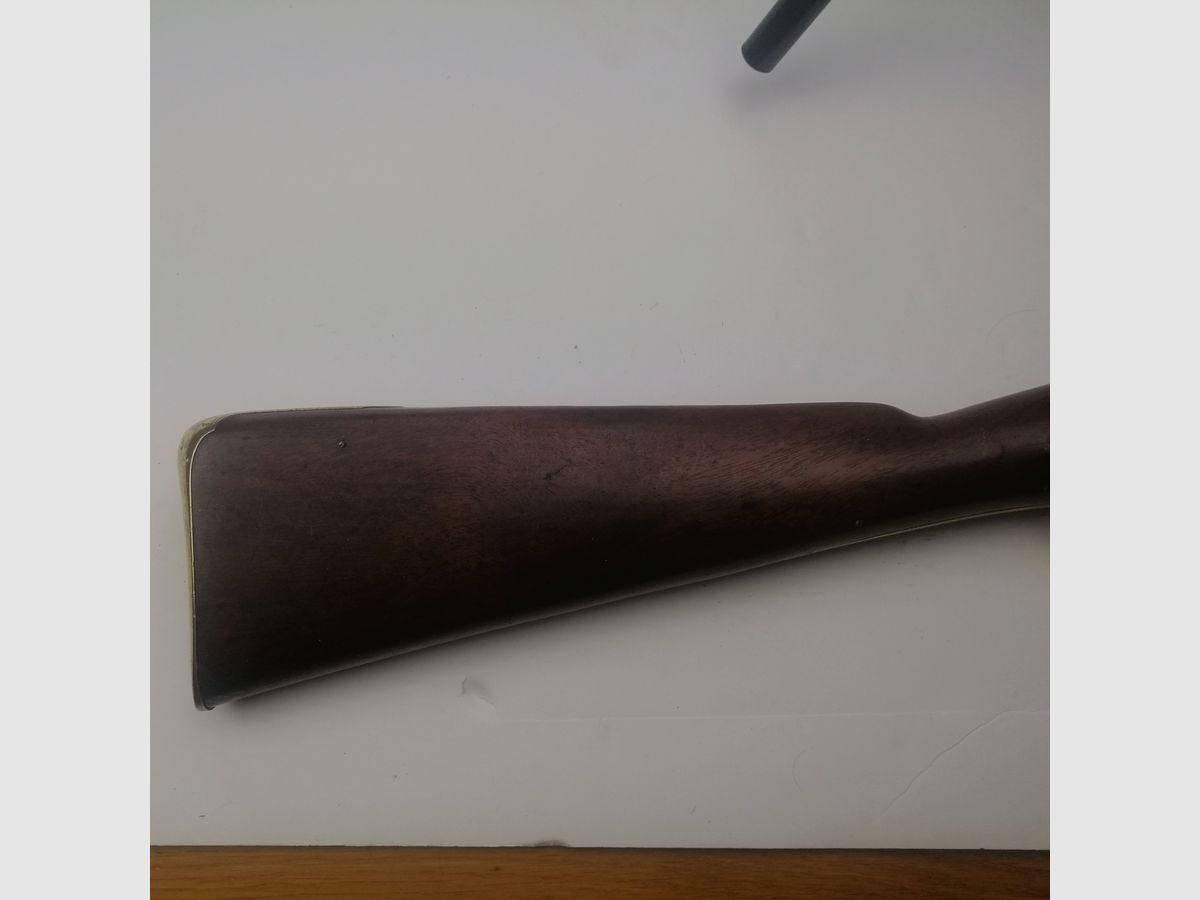
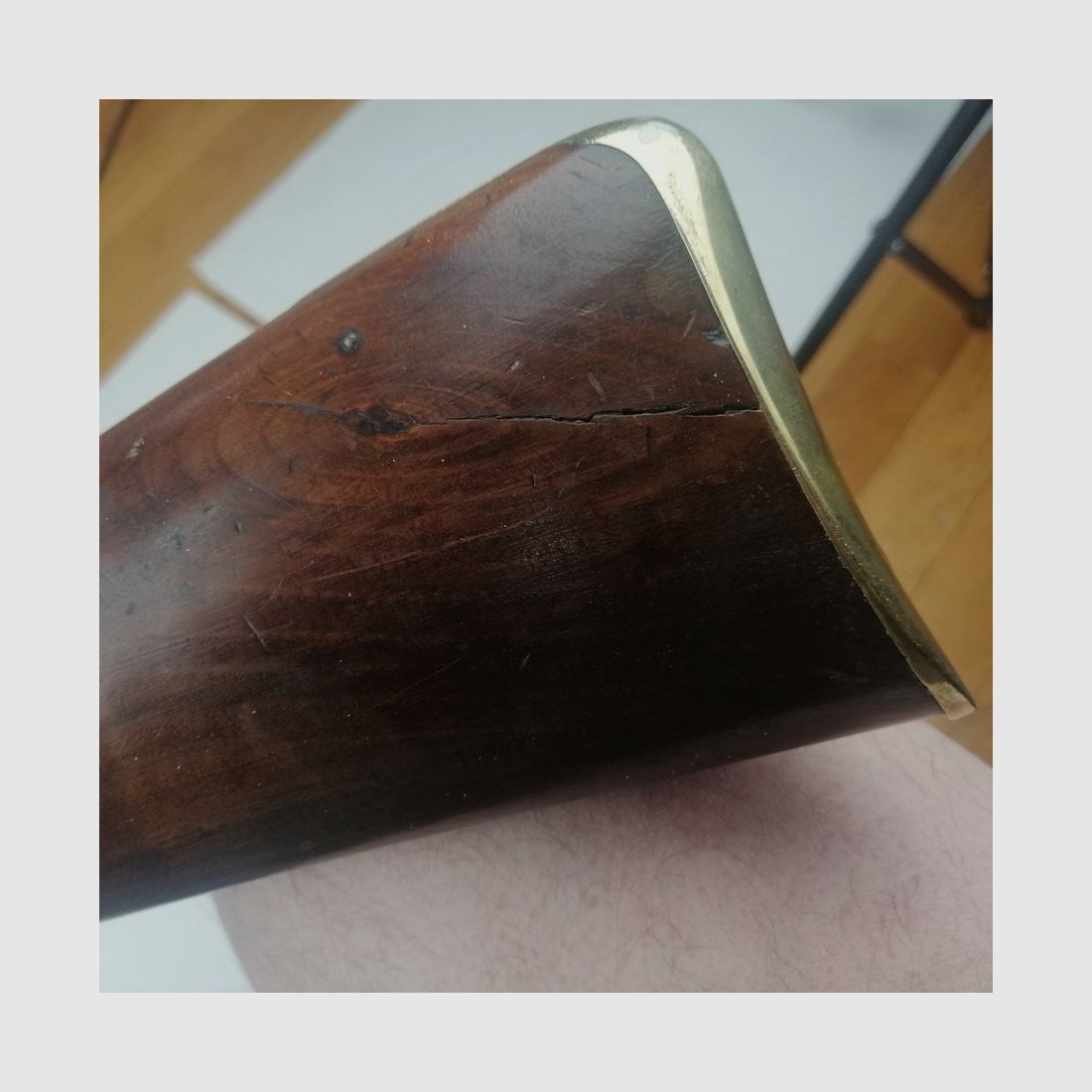
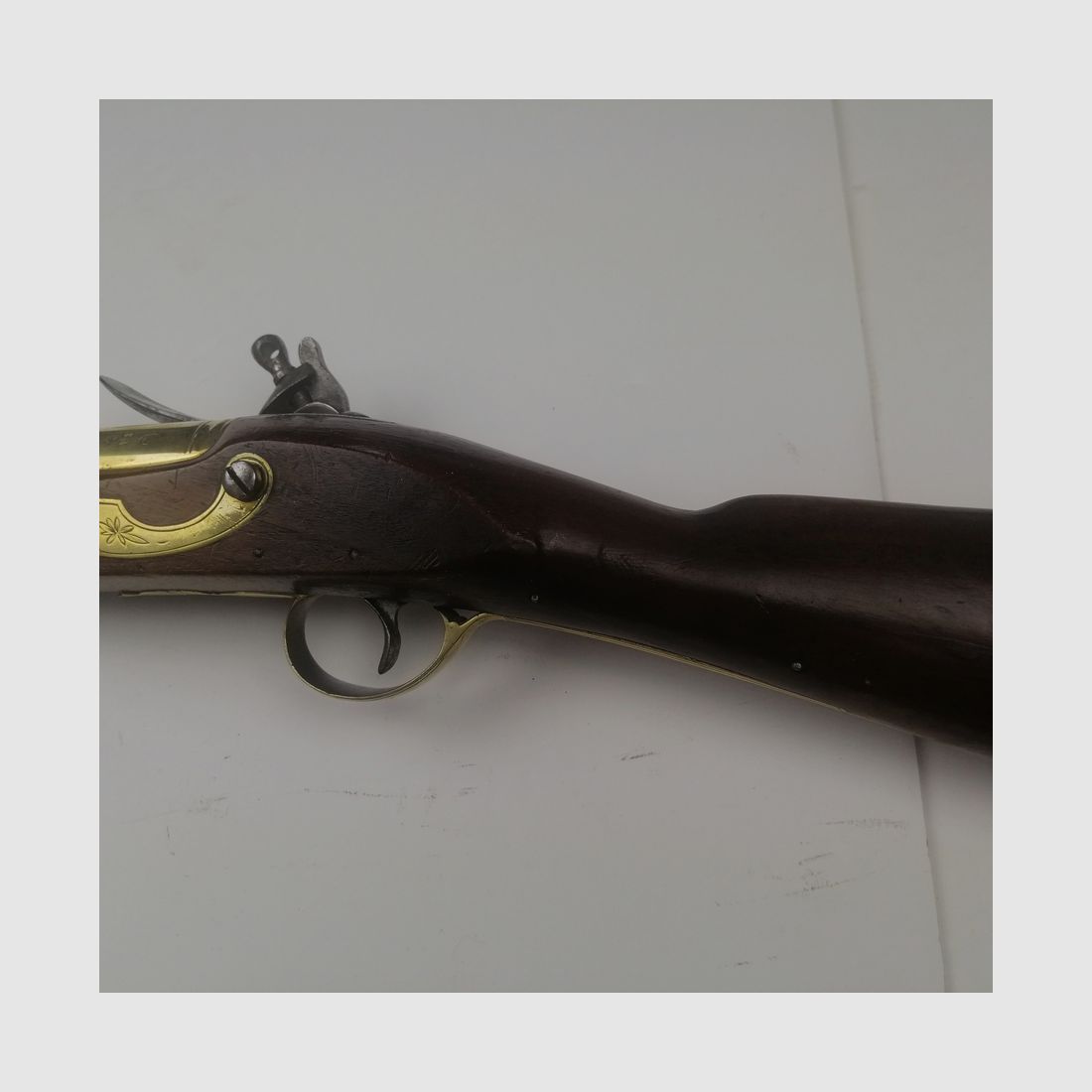
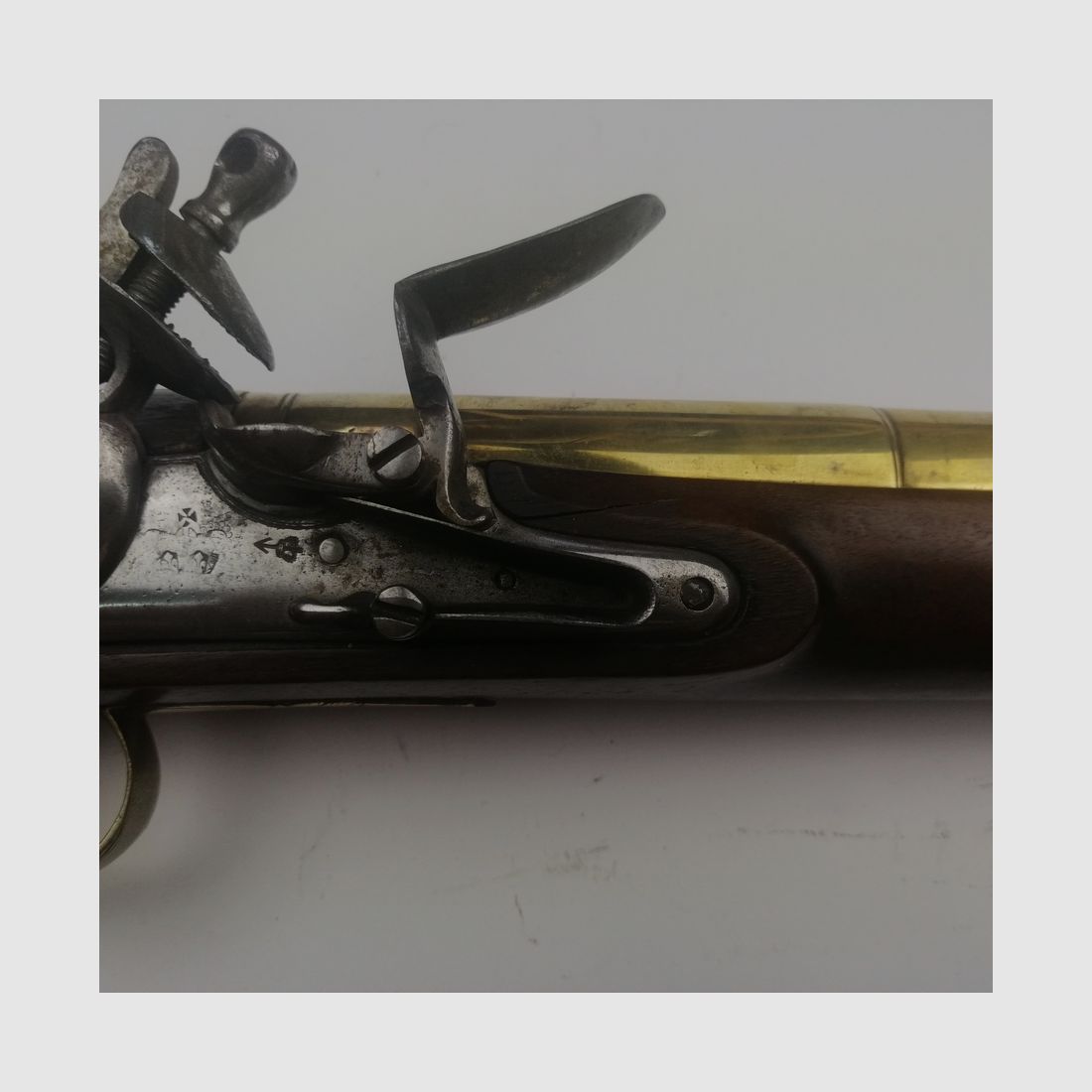
Wood in very good condition, despite a slight crack on the flat of the stock (this is movement in the wood: no break, and the overall structure is guaranteed to be sound—see photo). No missing wood. The weapon is actually in better condition than in my photos (too dark, taken in winter) and is in excellent condition. It’s beautiful!
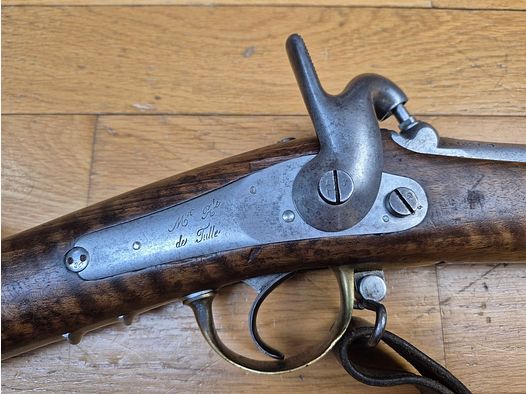
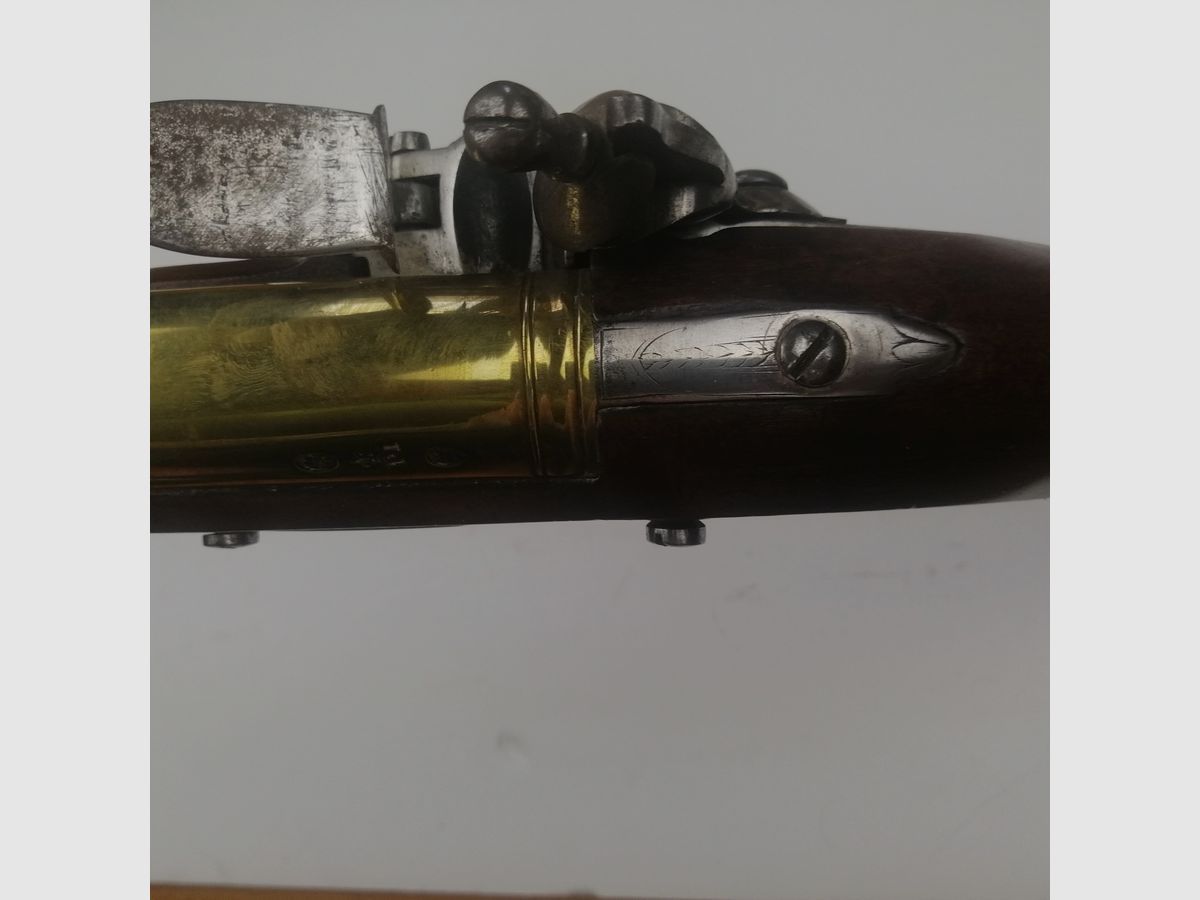
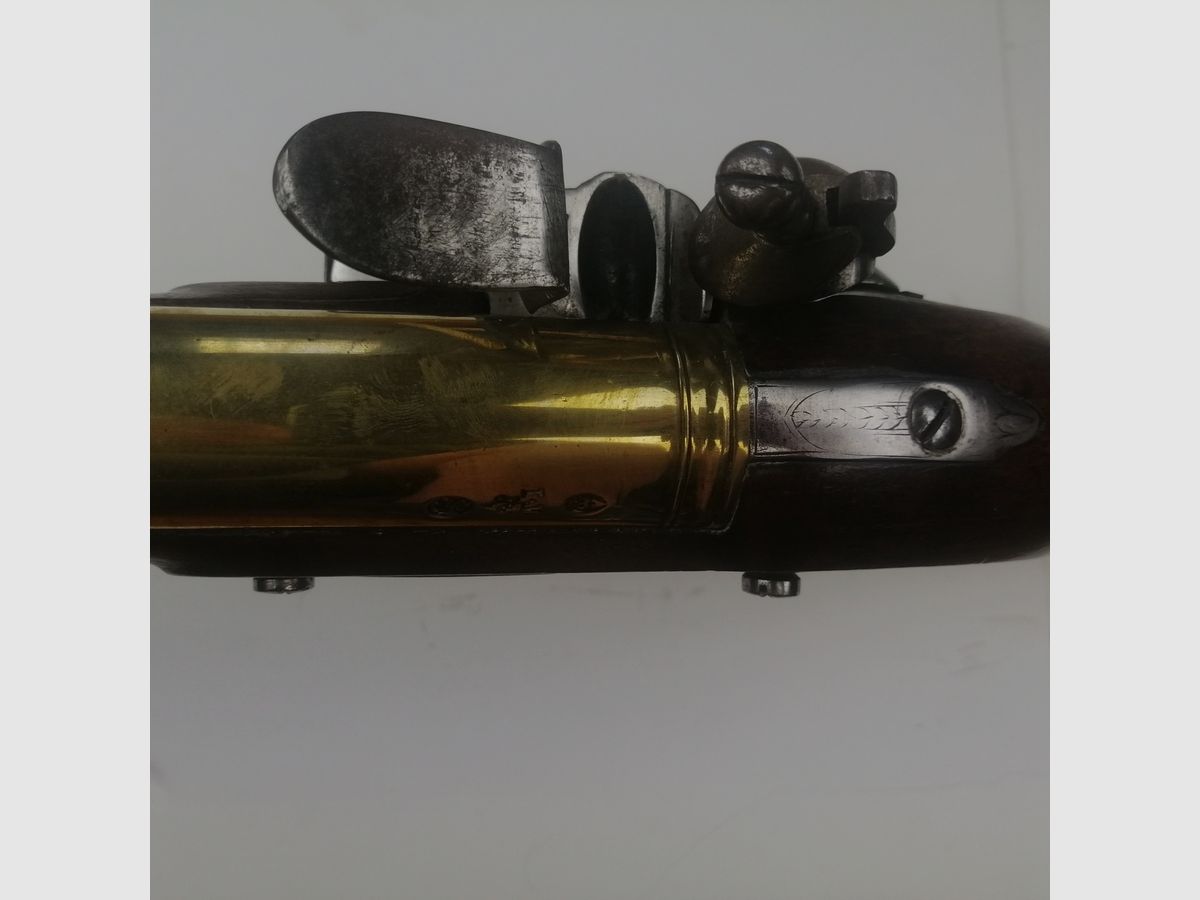
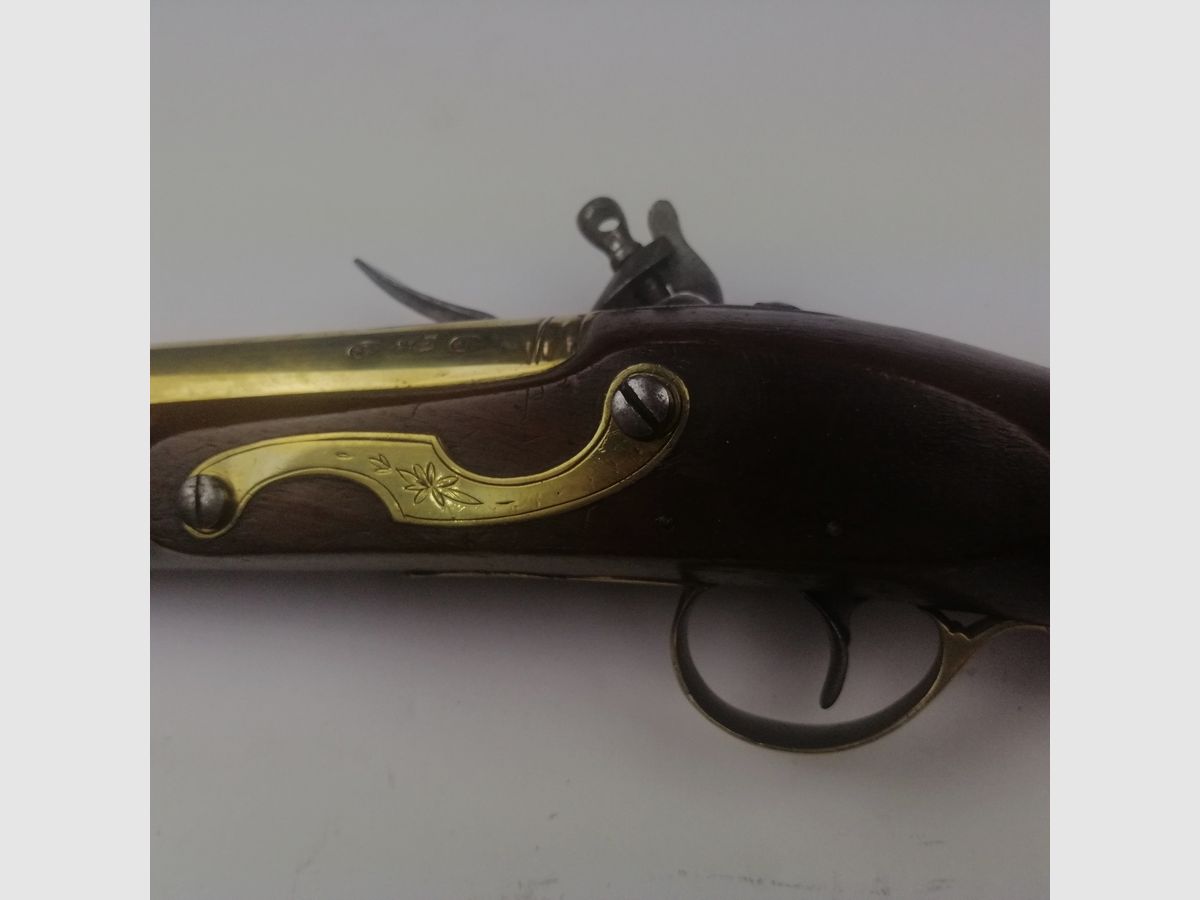
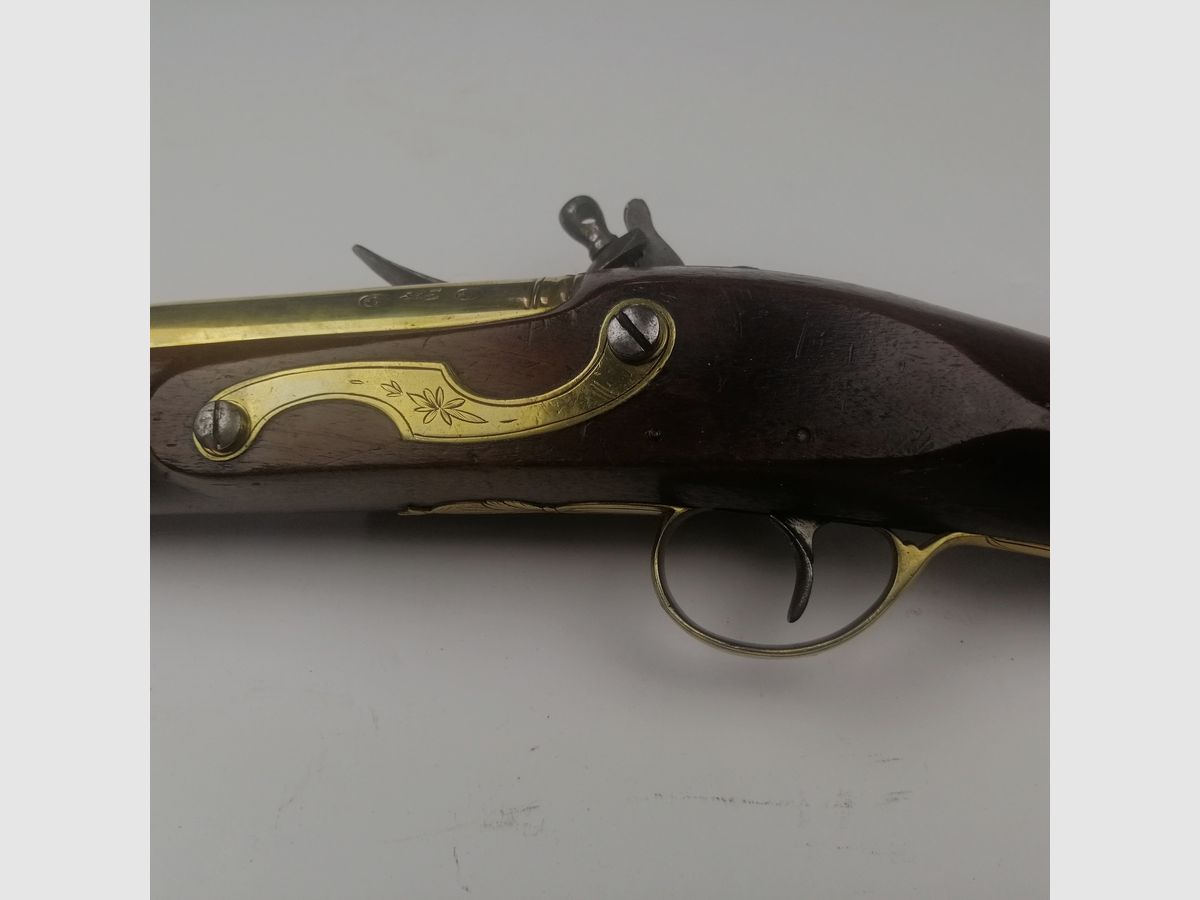
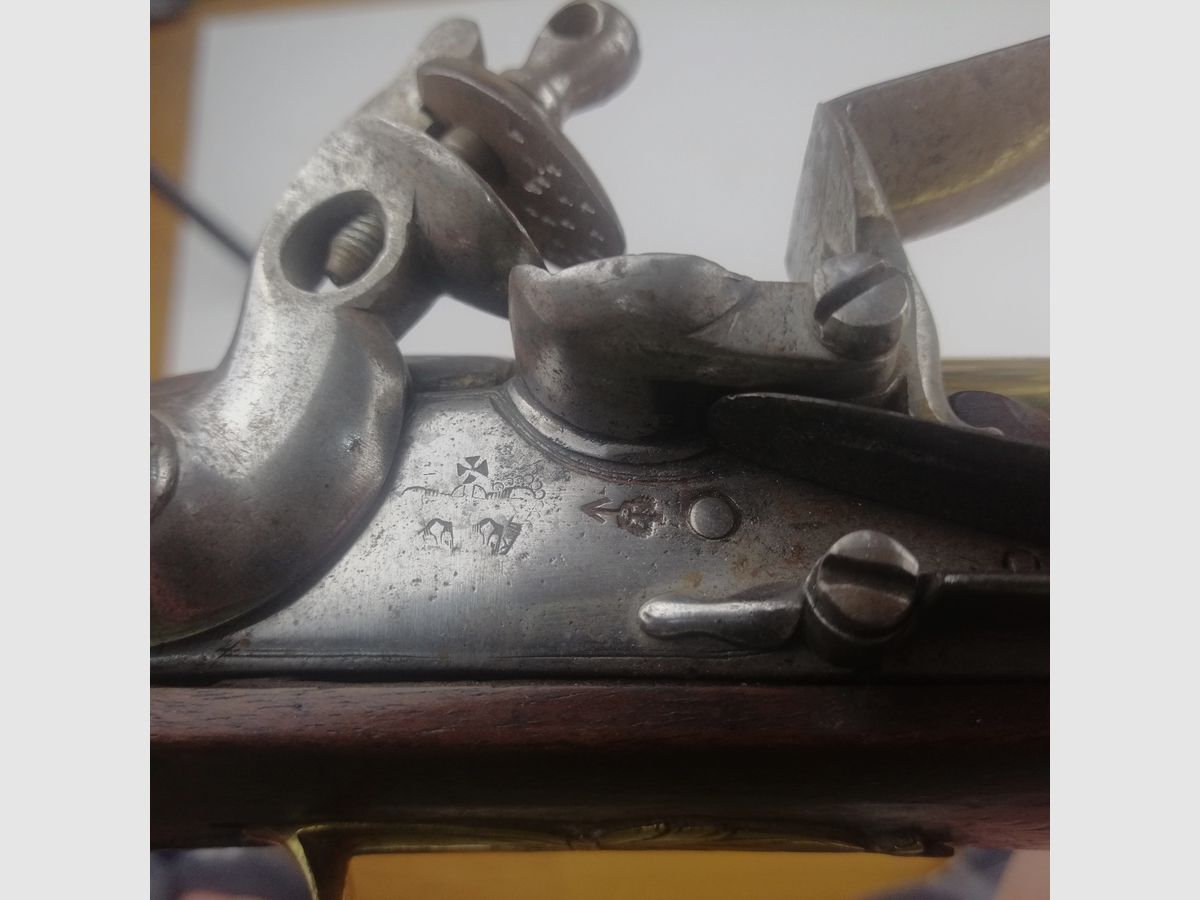
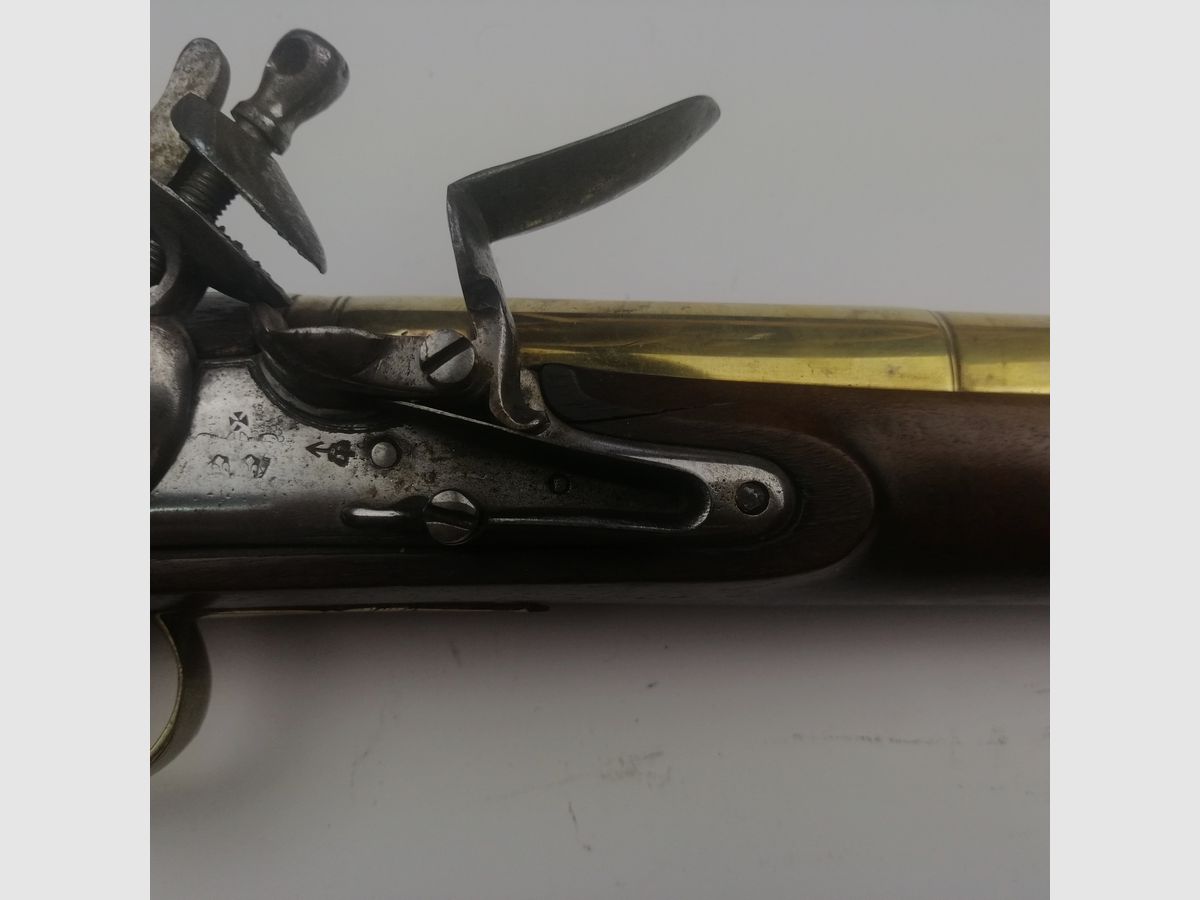
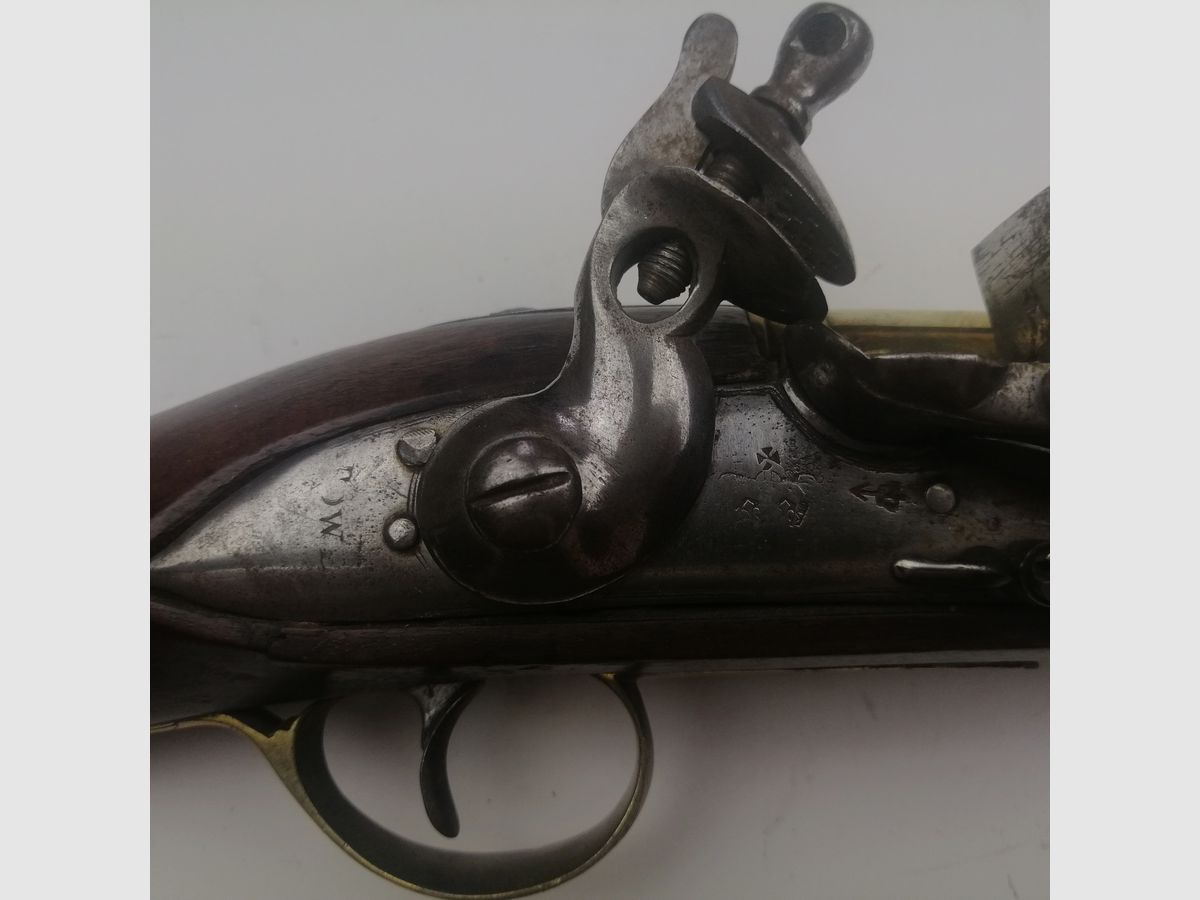
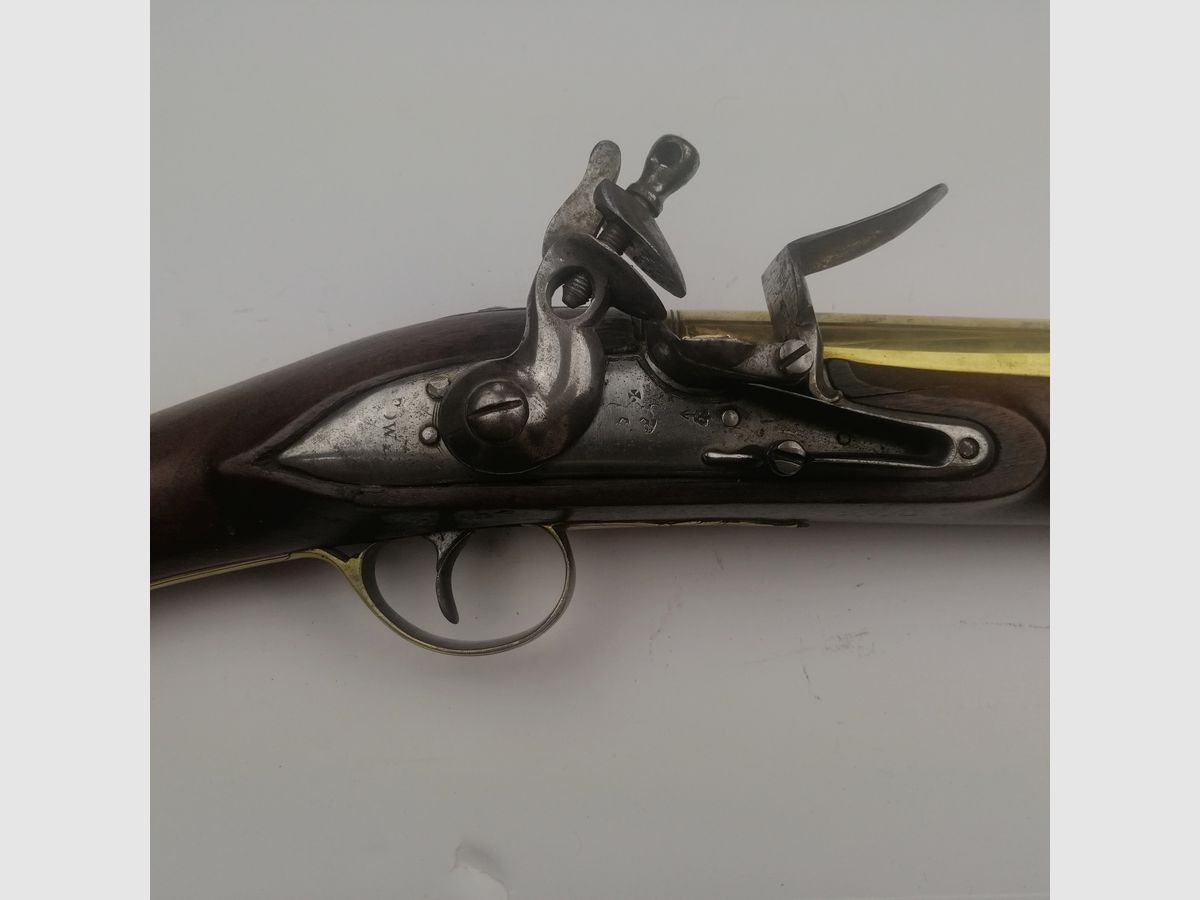
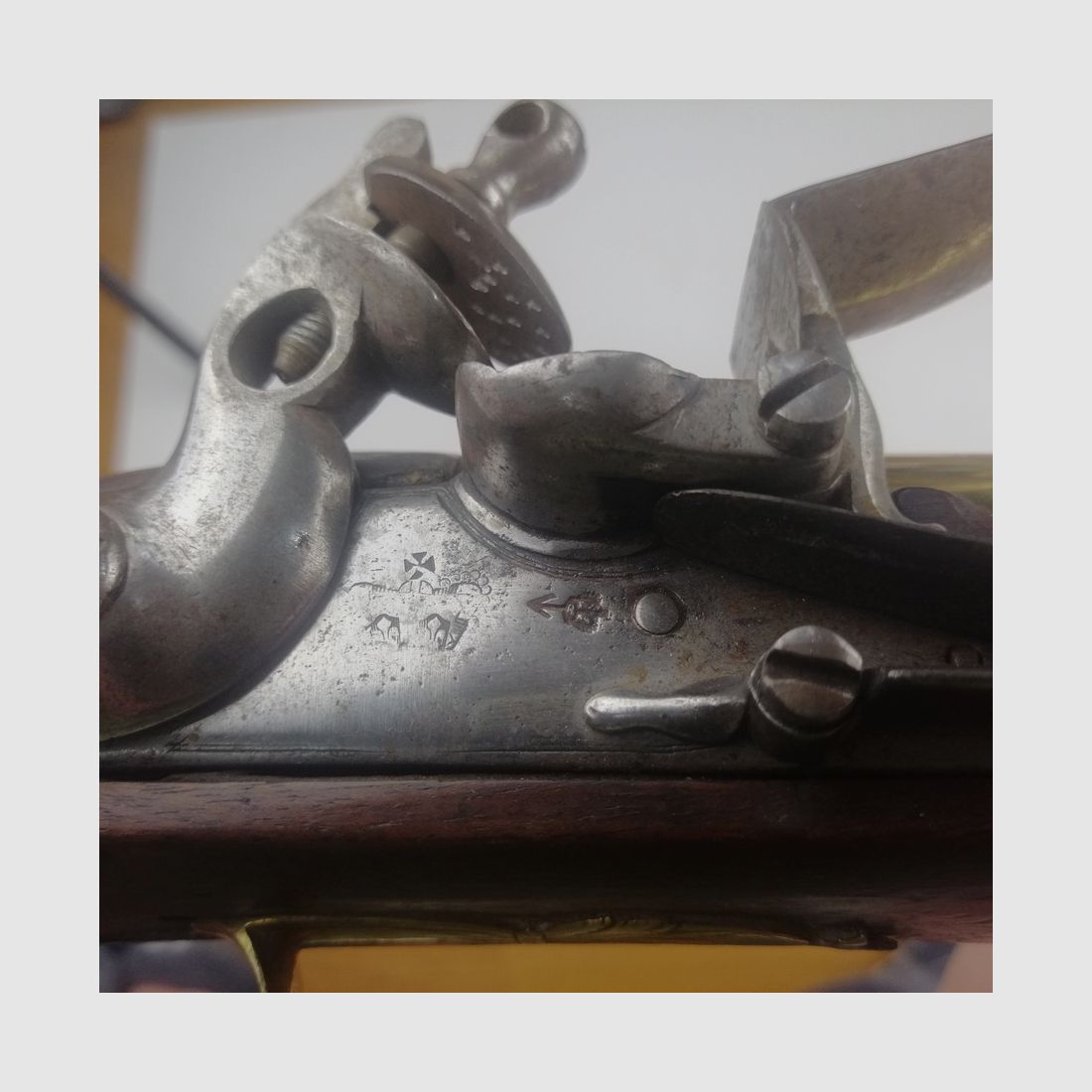
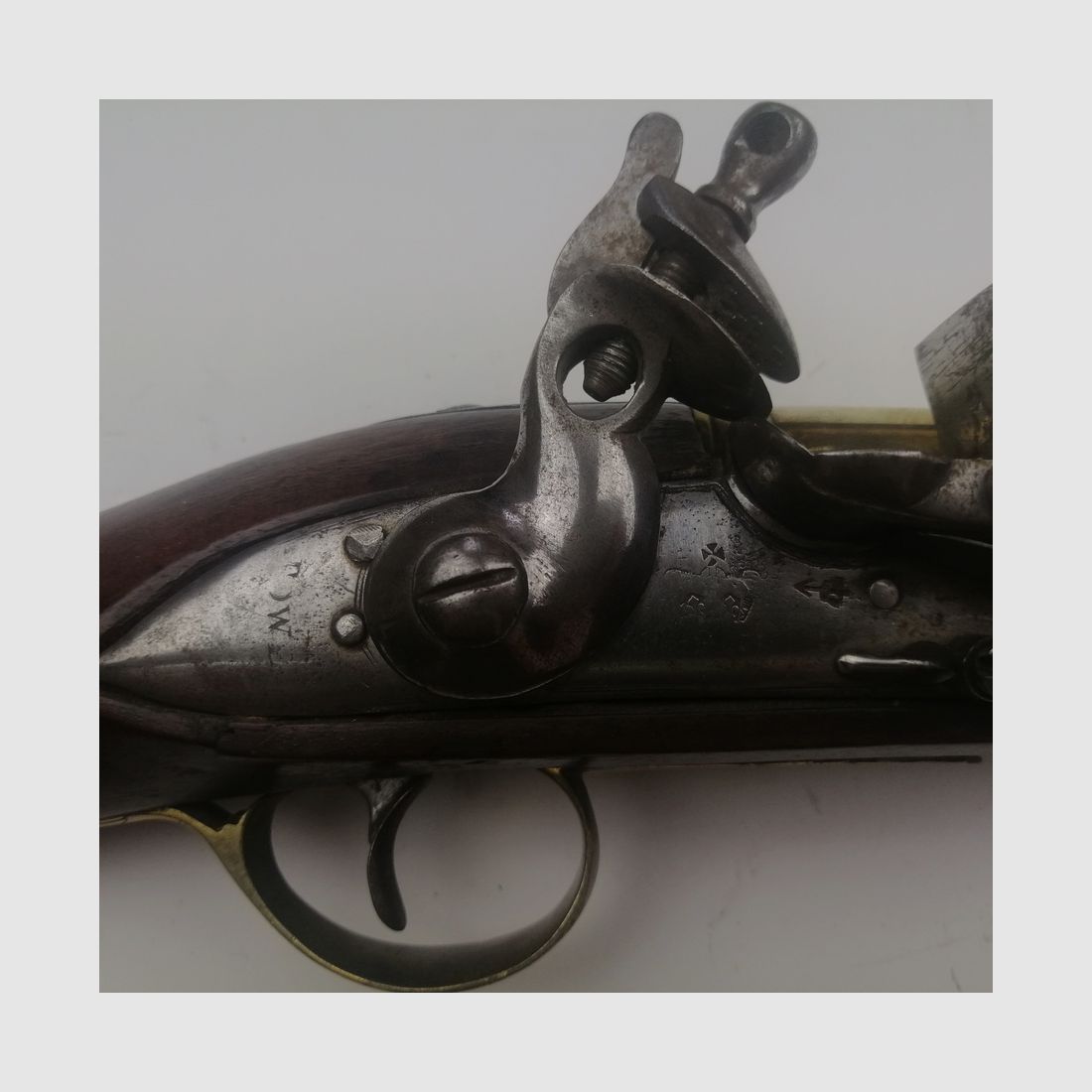
Lock in very good condition—fully functional and holds securely at both half-cock and full-cock. Flint missing. Frizzen worn but fully functional. “Tower” marking, an inspection mark for weapons from the Tower of London arsenal.
In addition to “TOWER”, other typical British proof marks from the 1740–1820 period are present (Maltese cross, crown over arrow). Most notably, two fleur-de-lis marks are still clearly visible, stamped over the older British crown mark, in addition to the fleur-de-lis already mentioned on the barrel. This is the French regulation mark of three fleur-de-lis beneath a crown, found on many weapons, particularly naval weapons from the 1730s to the 1790s. This weapon was captured by the French from the British before the Revolution. It may have seen action in privateering under Louis XV or in the American War of Independence.
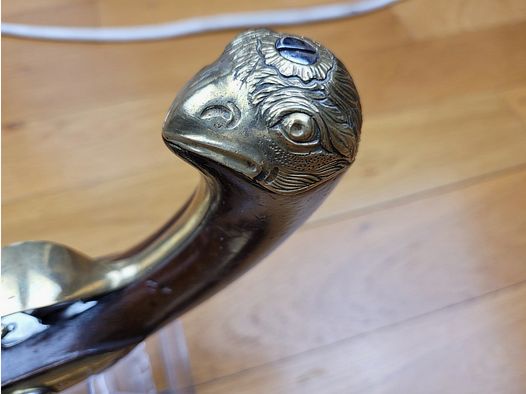
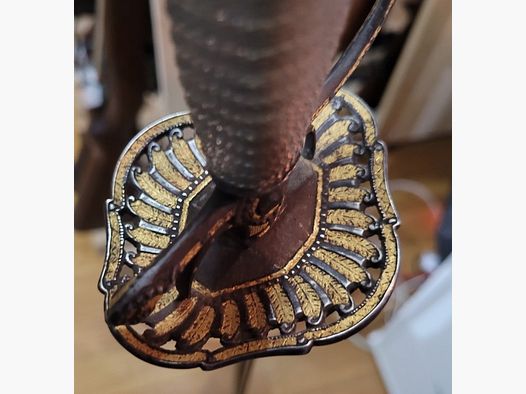
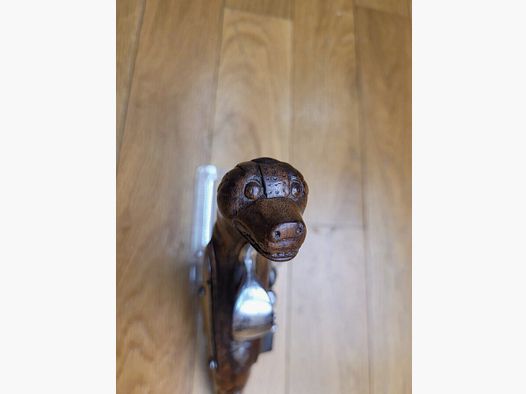
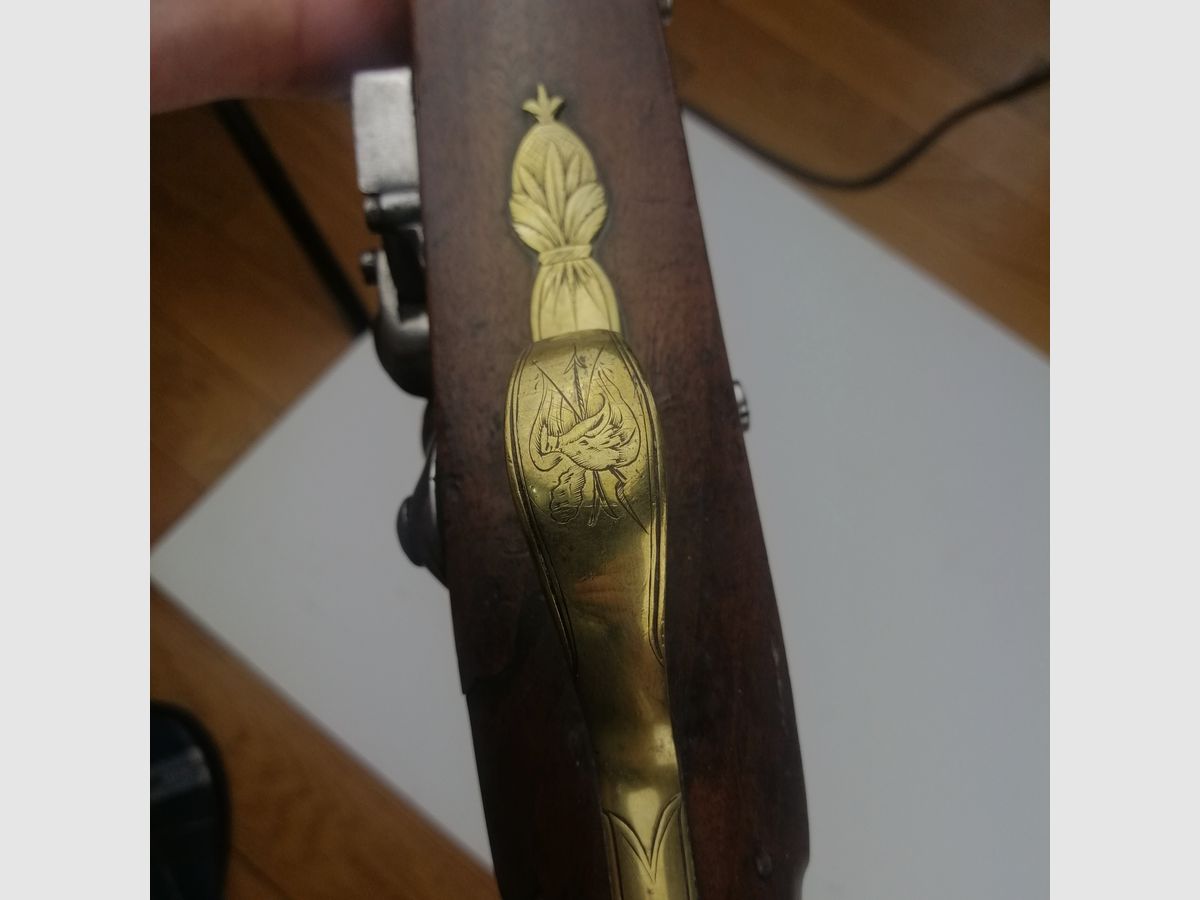
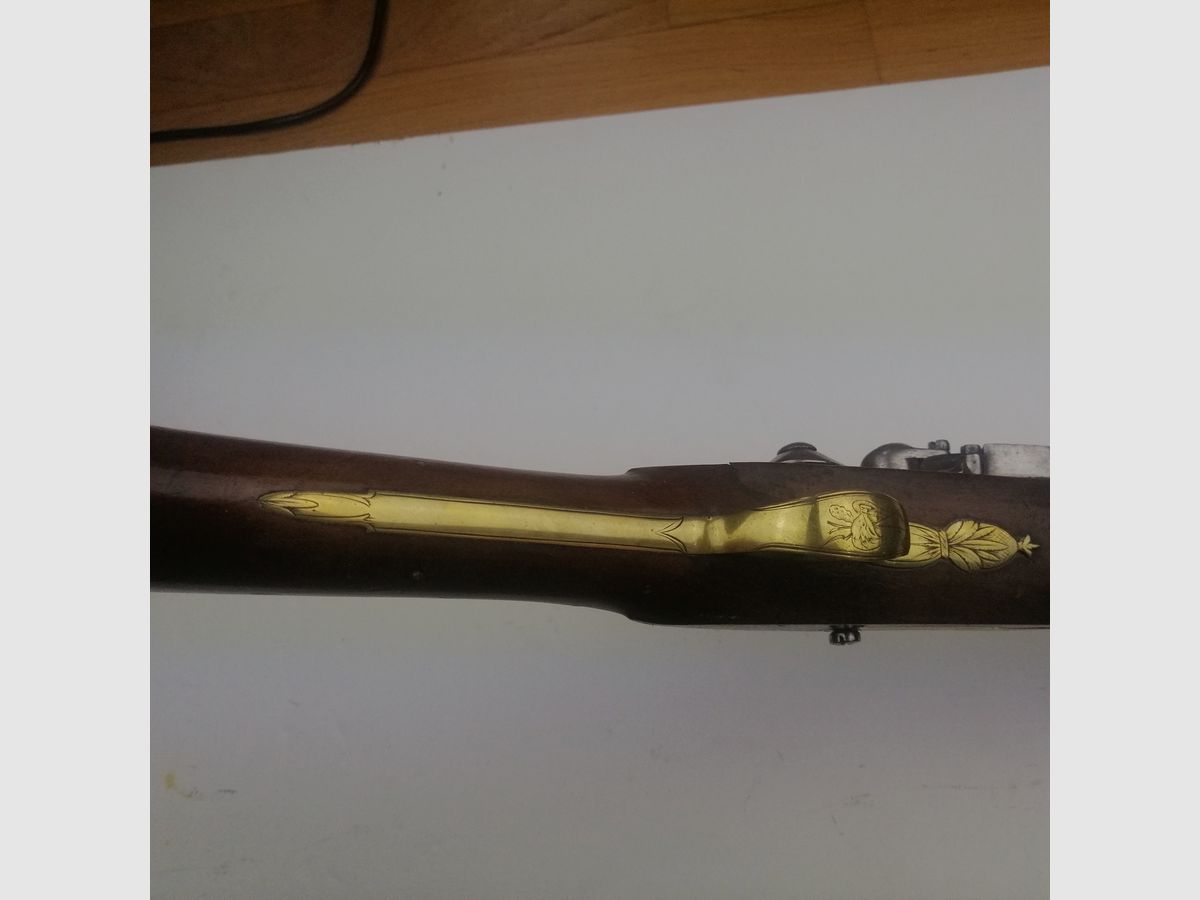
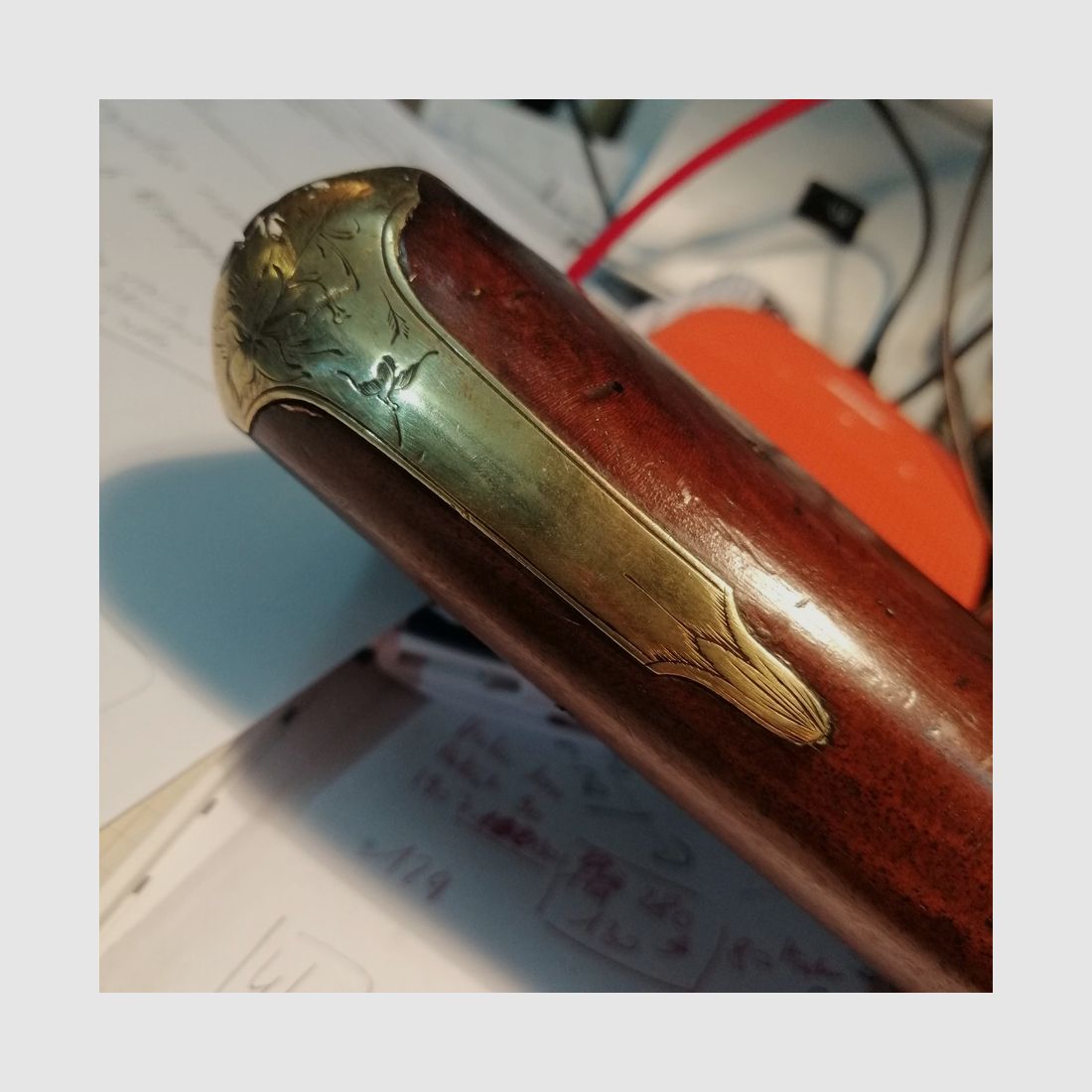
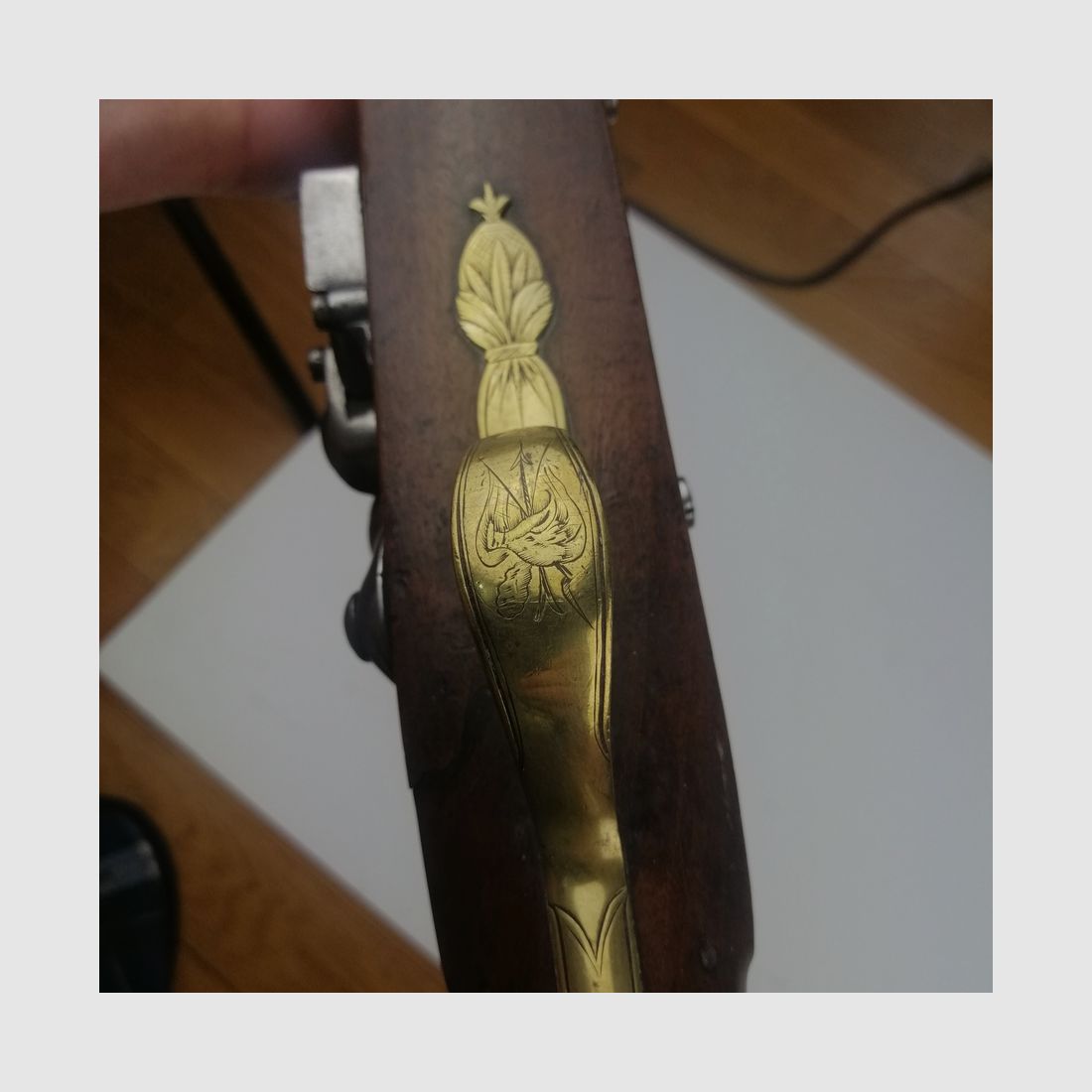
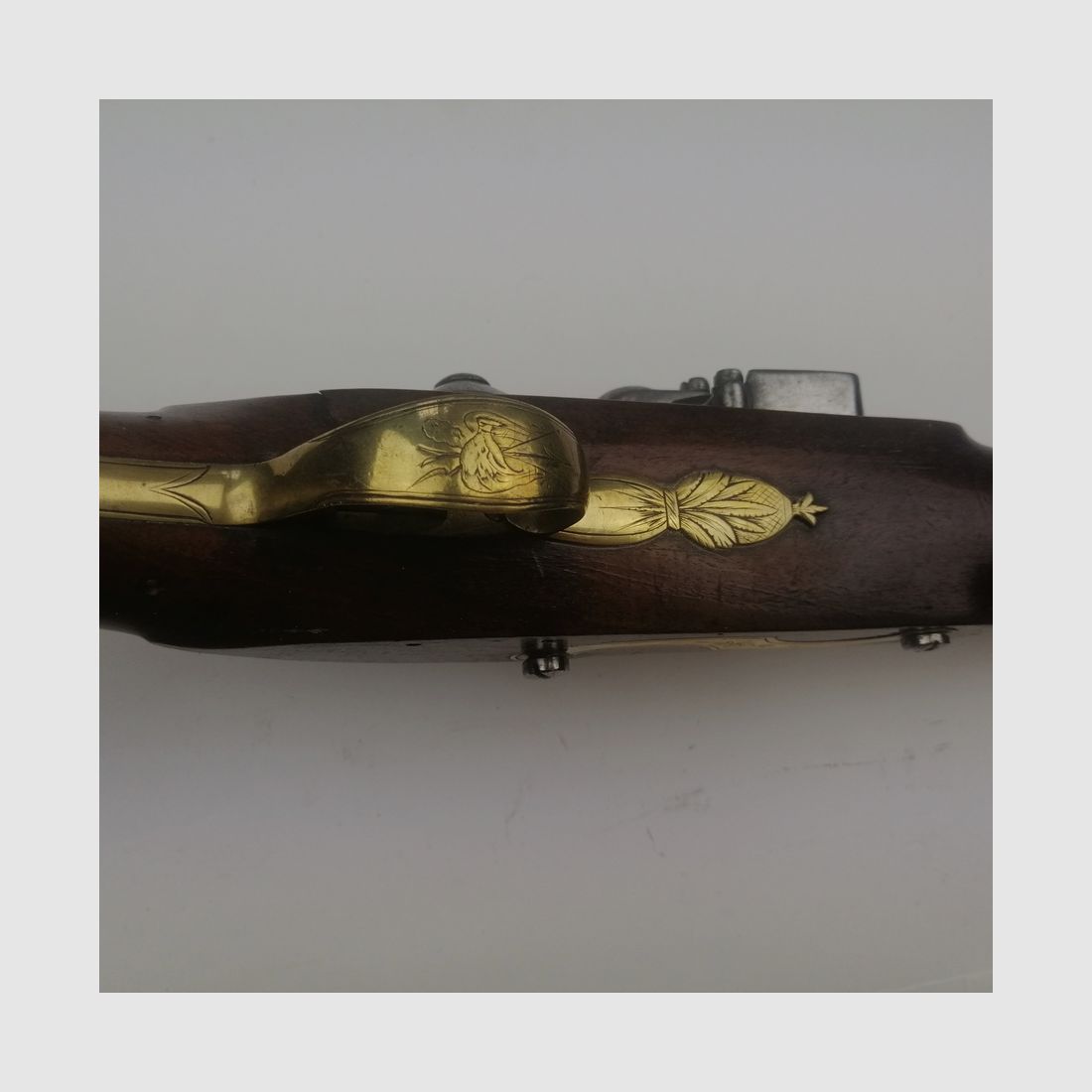
The fittings are also bronze, beautifully engraved with scrollwork and trophies of arms, including flags and weapons, particularly on the trigger guard. The exceptionally fine decoration, elegant design and quality of the wood suggest this was probably an officer’s weapon.
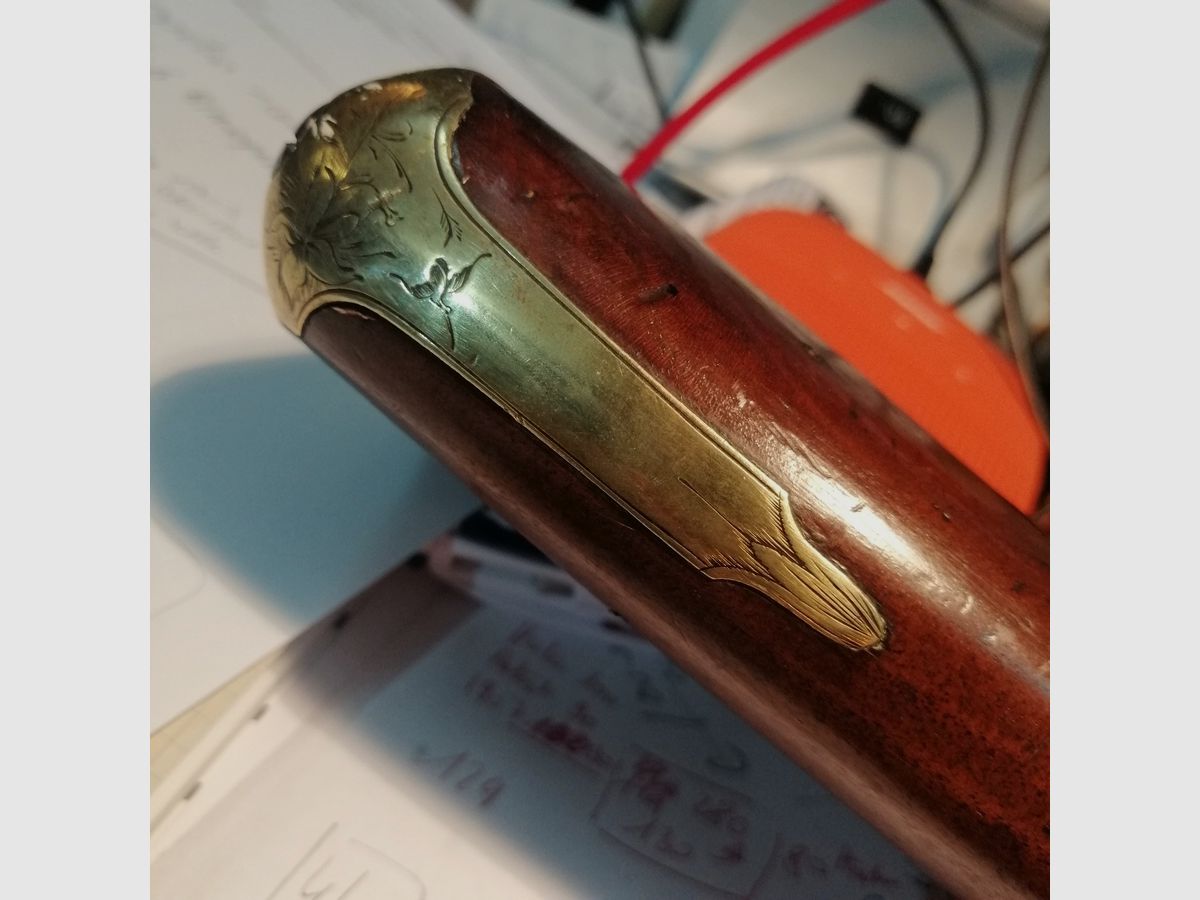
The buttplate is immaculate, and the upper face of the stock is engraved with a finely detailed scene featuring a seabird.
Overall, a very fine British weapon from the Ancien Régime, captured by the French—a rare blunderbuss that tells the story of naval battles in the second half of the 18th century. In excellent overall condition for its age, it would make a fine addition to a collection of naval antiques. A weapon that tells a story…
Weapon in category D under the CSI: valid ID card or passport required.
Reminder: All collectible, hunting and shooting firearms are used and sold as-is, without warranty.
All antique firearms sold as category C or D, “Collection” or “Cowboy shooting” are collectible firearms that have not been proof-tested or tested at a shooting range. They have been visually inspected for their general condition, but none have been used for shooting, so they are sold as untested. Anyone wishing to use a firearm for shooting must first contact the National Proof House in Saint Étienne, the only body authorised to issue proof certificates before a firearm is used for shooting. (Show description in original language)
Magnifique et rare tromblon de marine britannique de prise française ! Arme d’officier.
Canon en bronze quasi sans traces de manipulation (un ou deux tous petits coups épars) en excellent état – Baguette d’origine avec extrémité en bronze également. le canon porte deux poinçons réglementaires britanniques et un poinçon à la fleur de lys sur le canon.
Bois en très bon état nonobstant une légère fente sur le plat de crosse (c’est un jeu du bois : aucune rupture aucune fragilité de l’ensemble garanti -voir photo) . Aucun manque de bois. L’arme est réellement mieux que sur mes photos (d’hiver trop sombres) et en excellent état. Il est très beau !
Platine en très bon bon état – parfaitement fonctionnelle et qui tient bien ses deux crans – Silex absent – batterie usée mais parfaitement fonctionnelle. Marquage « Tower » qui est un poinçon d’inspection des armes de l’arsenal de la Tour de Londres.
En plus du TOWER, d’autres poinçons réglementaires anglais typiques de la période 1740-1820 sont présents (croix de malte – couronne sur flèche) mais on note surtout deux fleurs de lys encore bien visibles sur-imprimées sur le poinçon plus ancien de la couronne britannique en plus de la fleur de lys déjà mentionnée figurant sur le canon – il s’agit du poinçon à trois fleurs de lys sous couronne réglementaire français présent sur nombre d’armes notamment de marine des années 1730/1790. C’est une arme de prise par les français sur les anglais avant la révolution. Guerre de course sous louis XV ou Guerre indépendance américaine.
Les garnitures sont en bronze également très joliment gravées de rinceaux et de trophées d’armes avec drapeaux et armes notamment sur le pontet. La décoration réellement très fine, l’élégance de l’arme et la qualité du bois en font probablement une arme d’officier.
Plaque de couche impeccable dont le pan supérieur de crosse est gravé d’une scène très fine avec un oiseau marin.
Au global une très belle arme d’ancien régime anglaise ayant fait l’objet d’une prise française – un rare tromblon racontant les combats navals de la deuxième moitié du XVIIIième siècle – dans un état global excellent pour son époque et une addition de choix pour un collectionneur d’objet de marine. Une arme qui raconte l’Histoire…
Arme de catégorie D au CSI : pièce d’identité, CNI ou passeport, en cours de validité obligatoire
Rappel : Toutes les armes de collection, de chasse, et de tir sont d’occasion et sont vendues dans l’état, sans garantie.
Toutes les armes historiques de fabrication ancienne vendues en tant que C ou D, “Collection” ou “Cow-boy shooting” , sont des armes de collection non éprouvées pour le tir et non testées en stand. Elles ont été inspectées visuellement relativement à leur état général mais aucune n’a été utilisée au tir et elles sont donc vendues comme non testées. L’acquéreur désirant utiliser une arme pour le tir devra impérativement se rapprocher préalablement du banc National d’Épreuve de Saint Étienne, seule entité habilitée à délivrer des certifications d’épreuves préalable à un usage de tir.