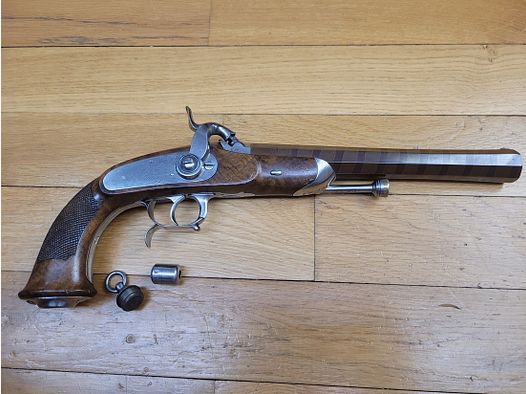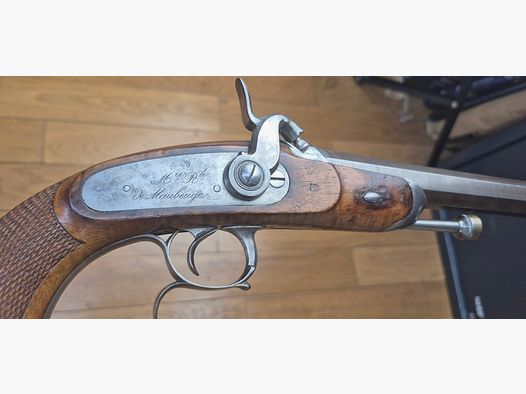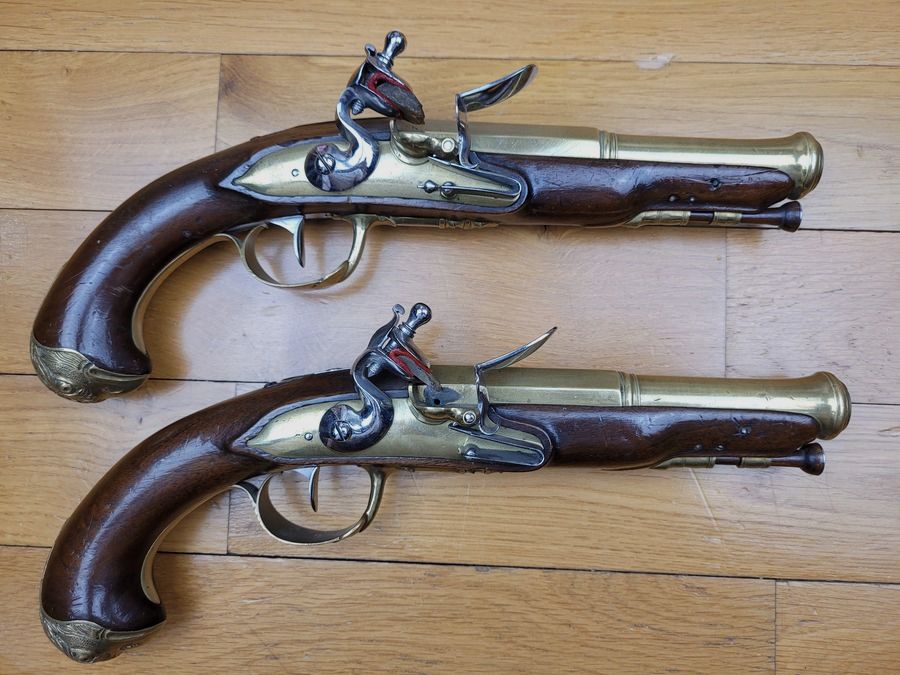
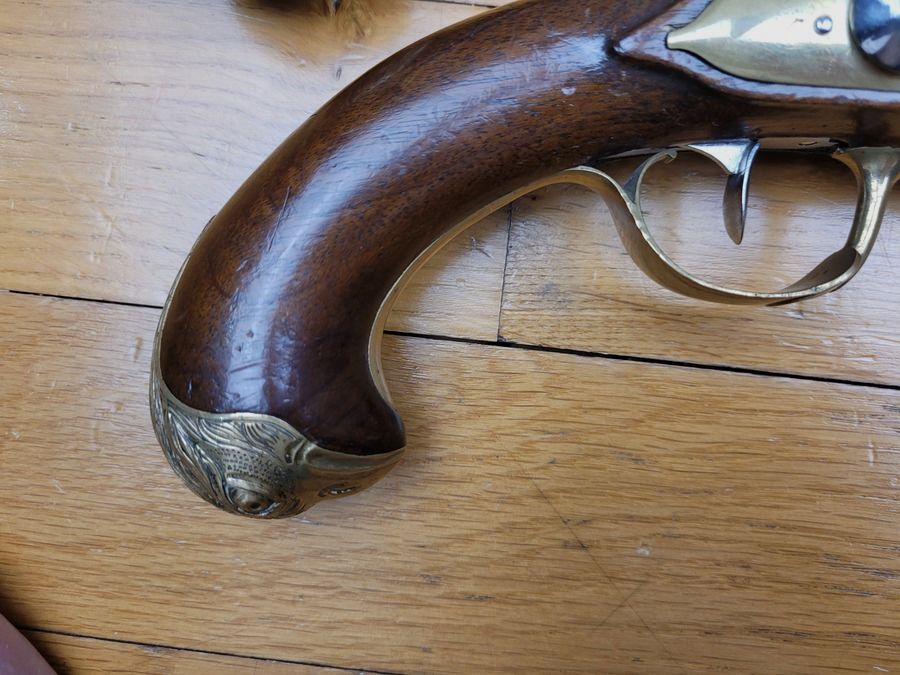
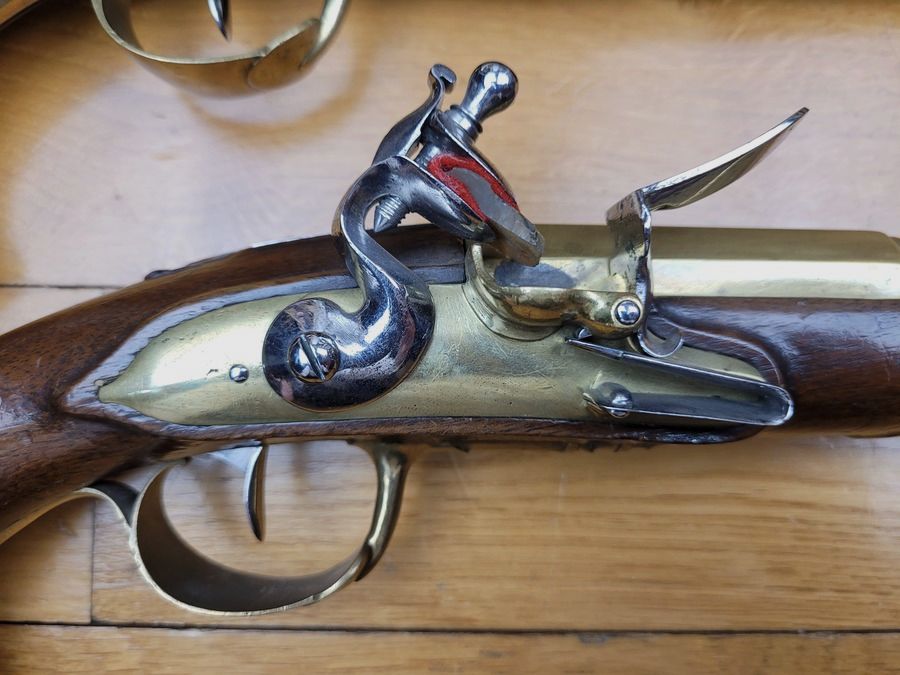
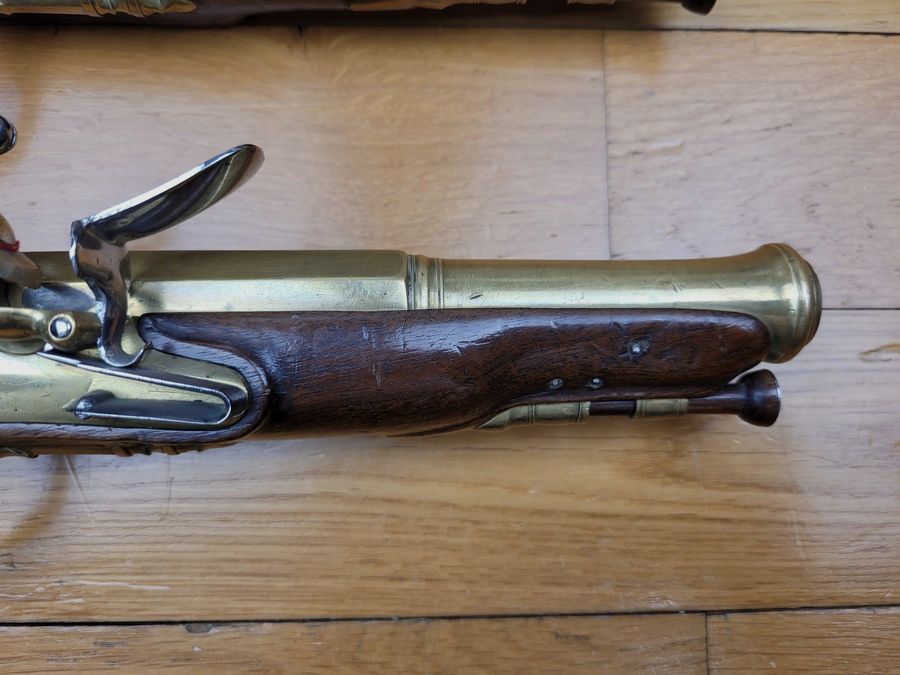
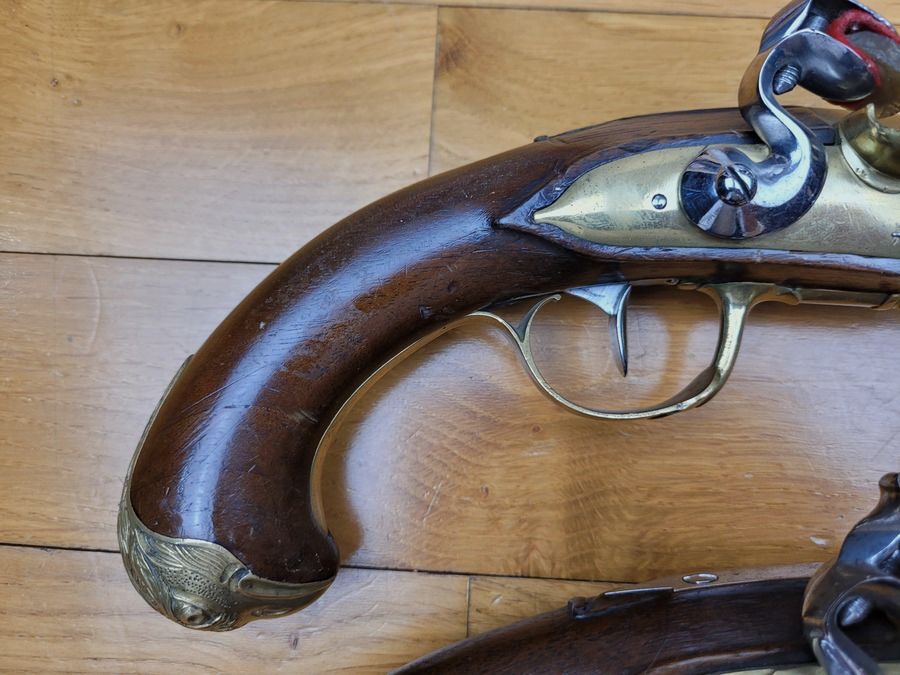

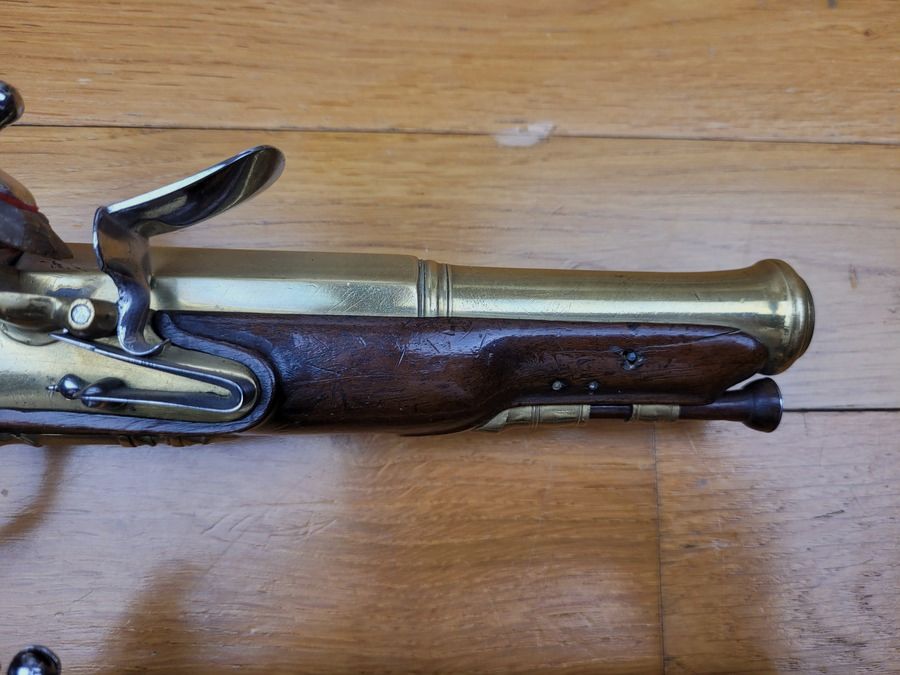
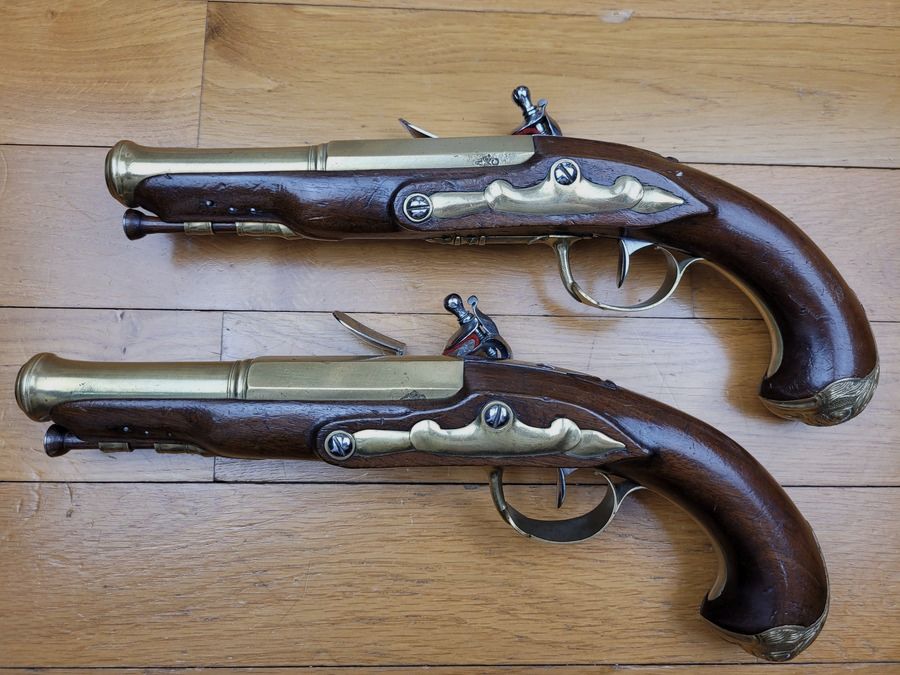
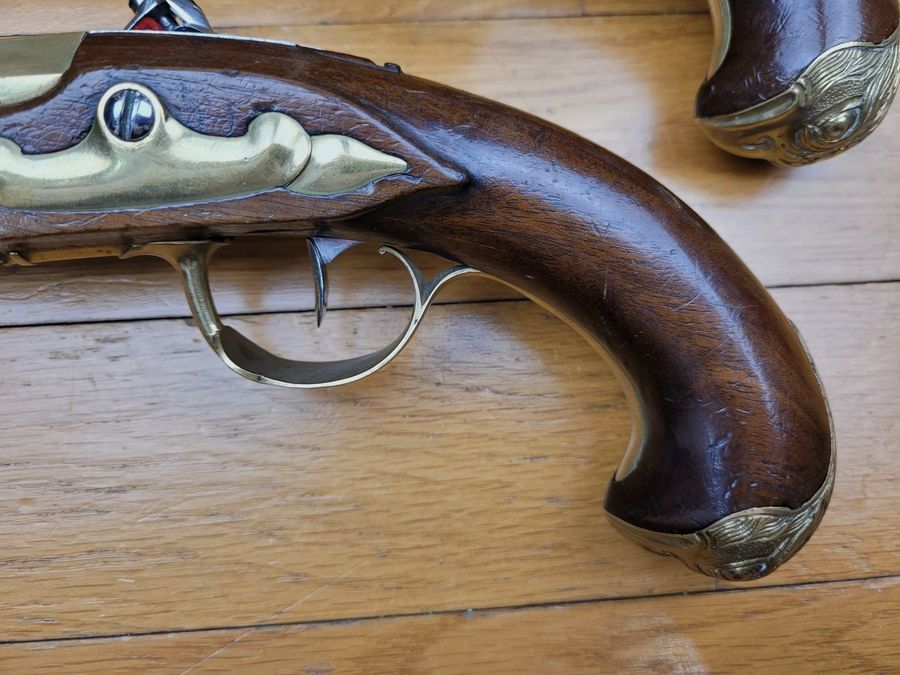
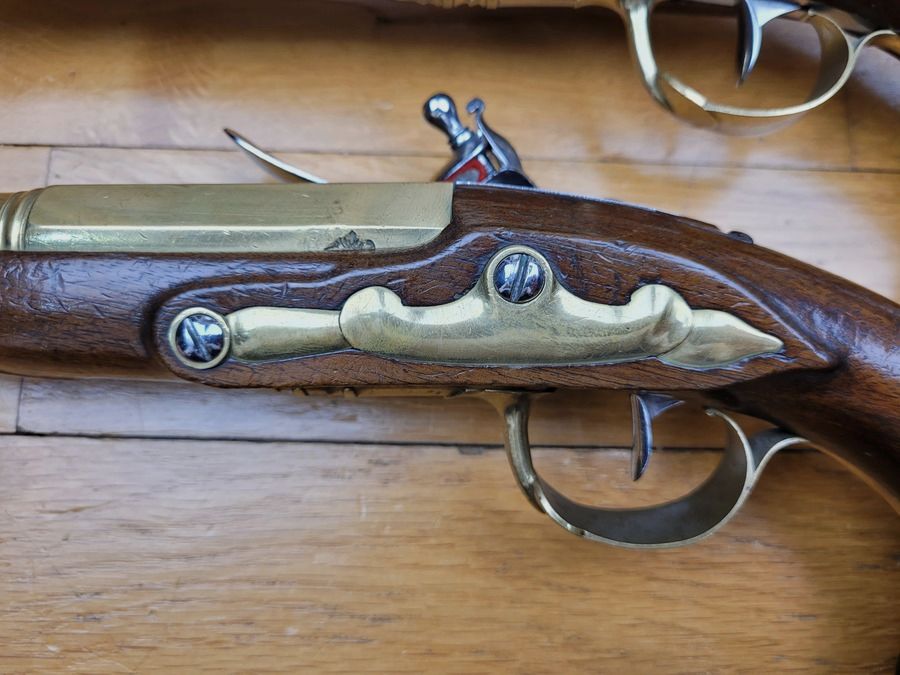
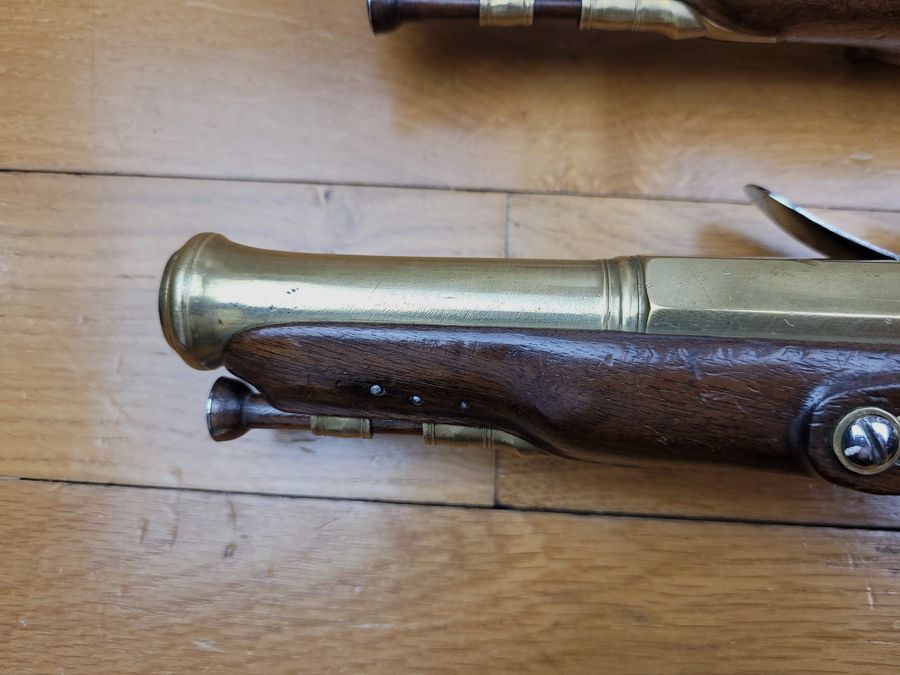
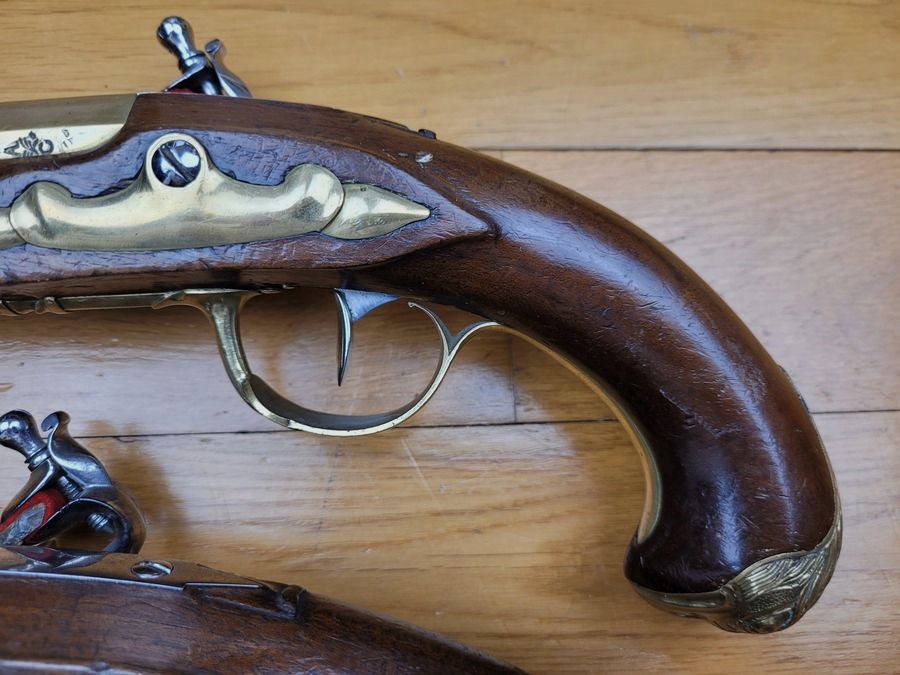
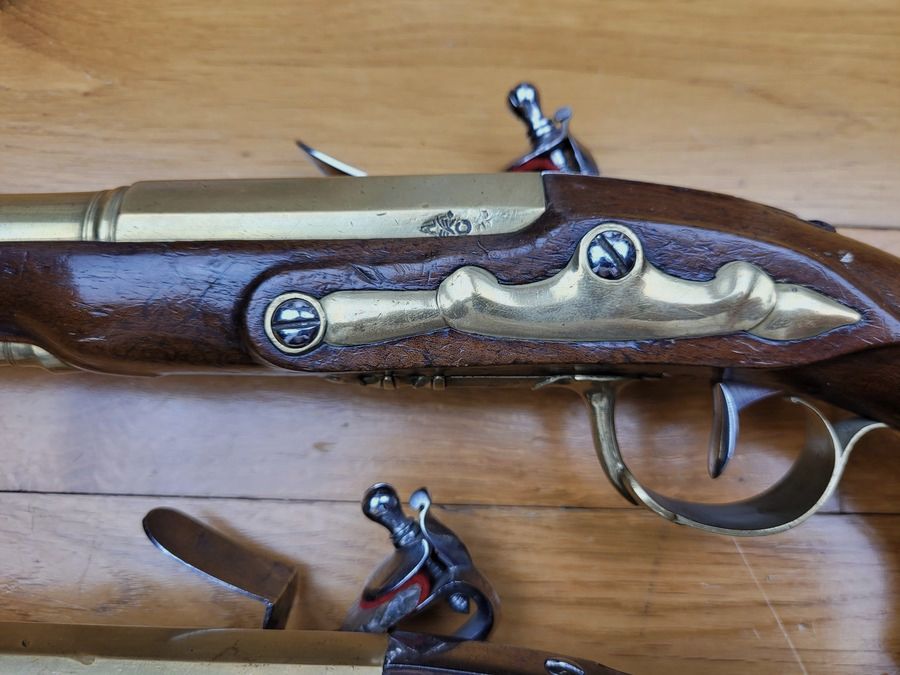
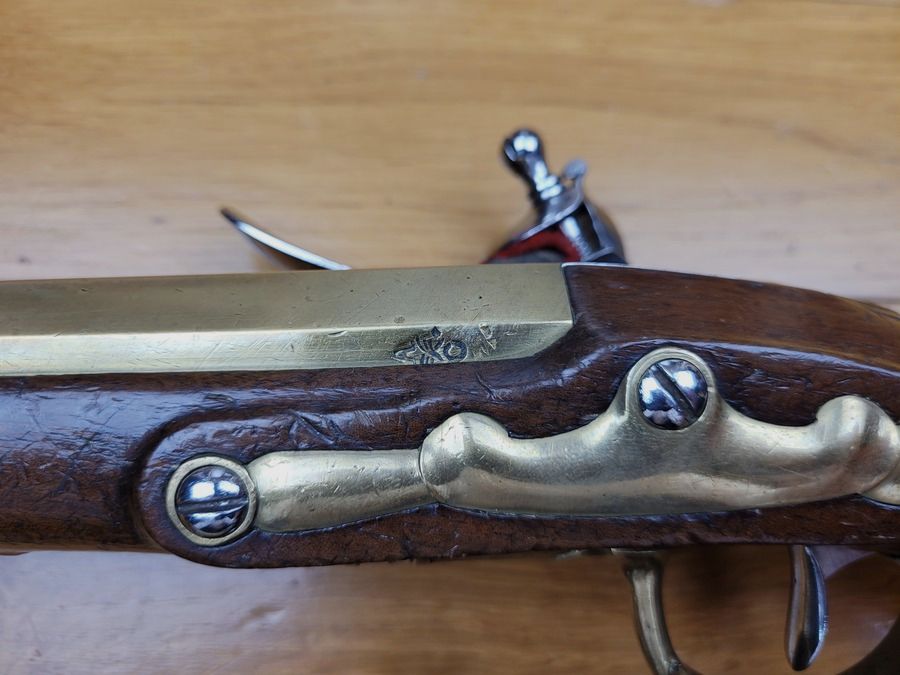
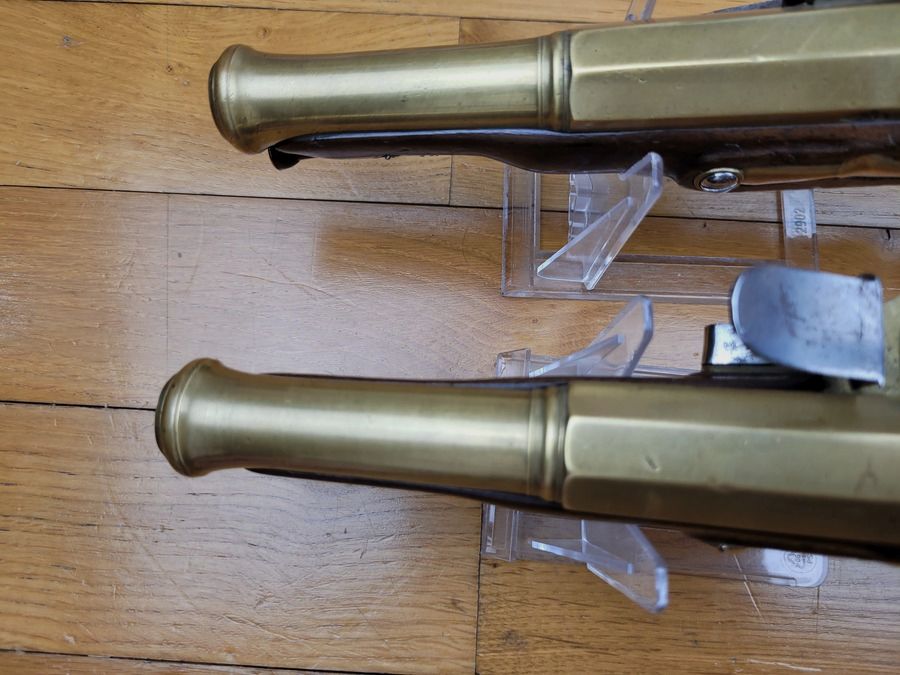
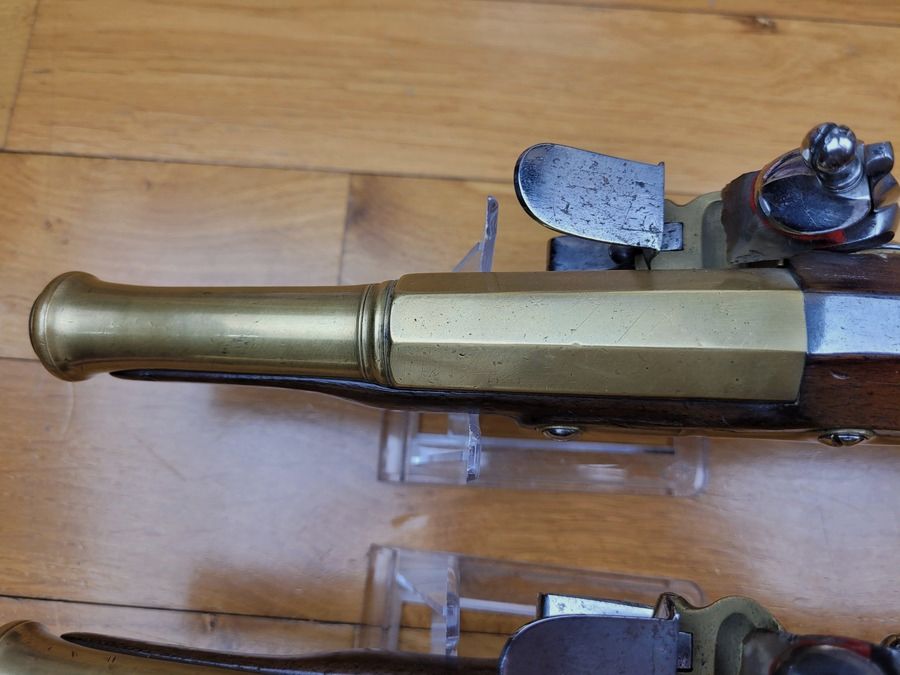
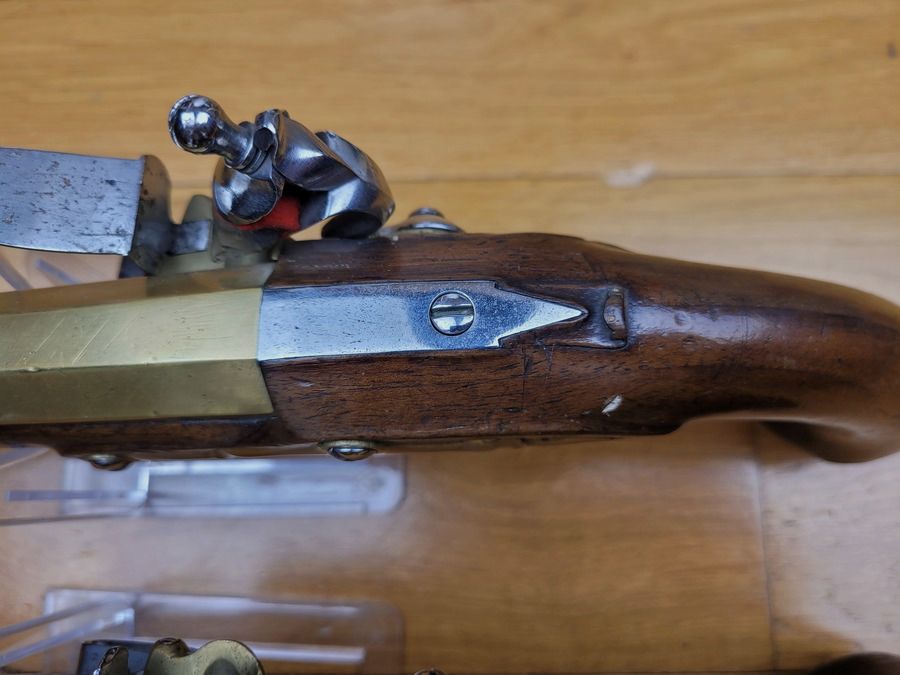

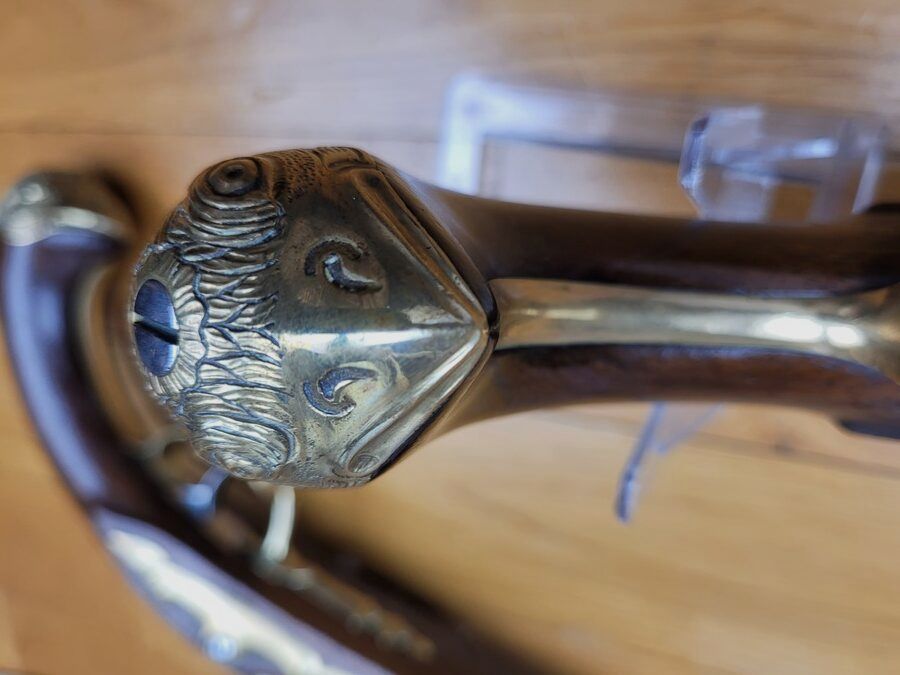
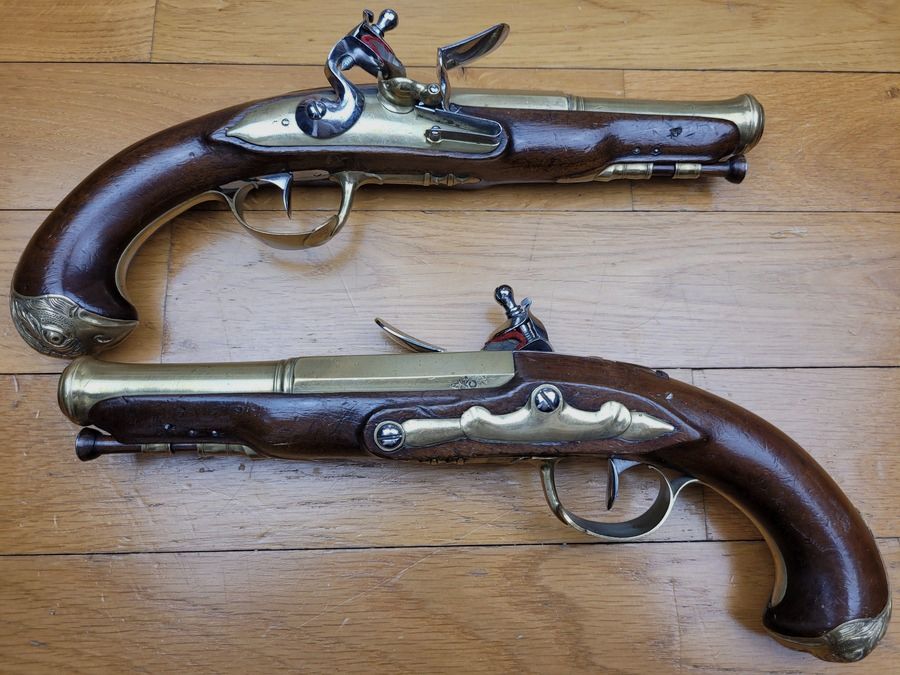


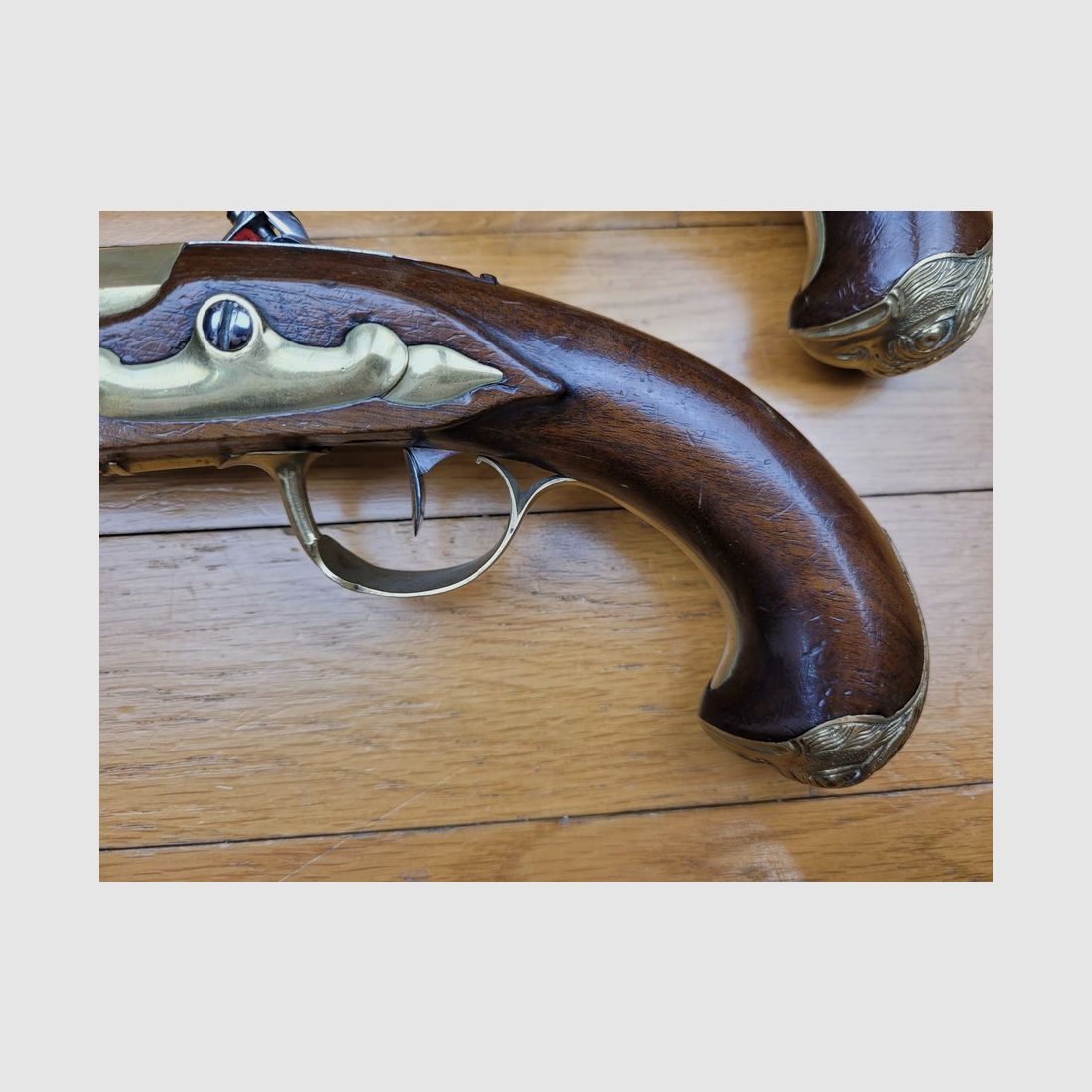

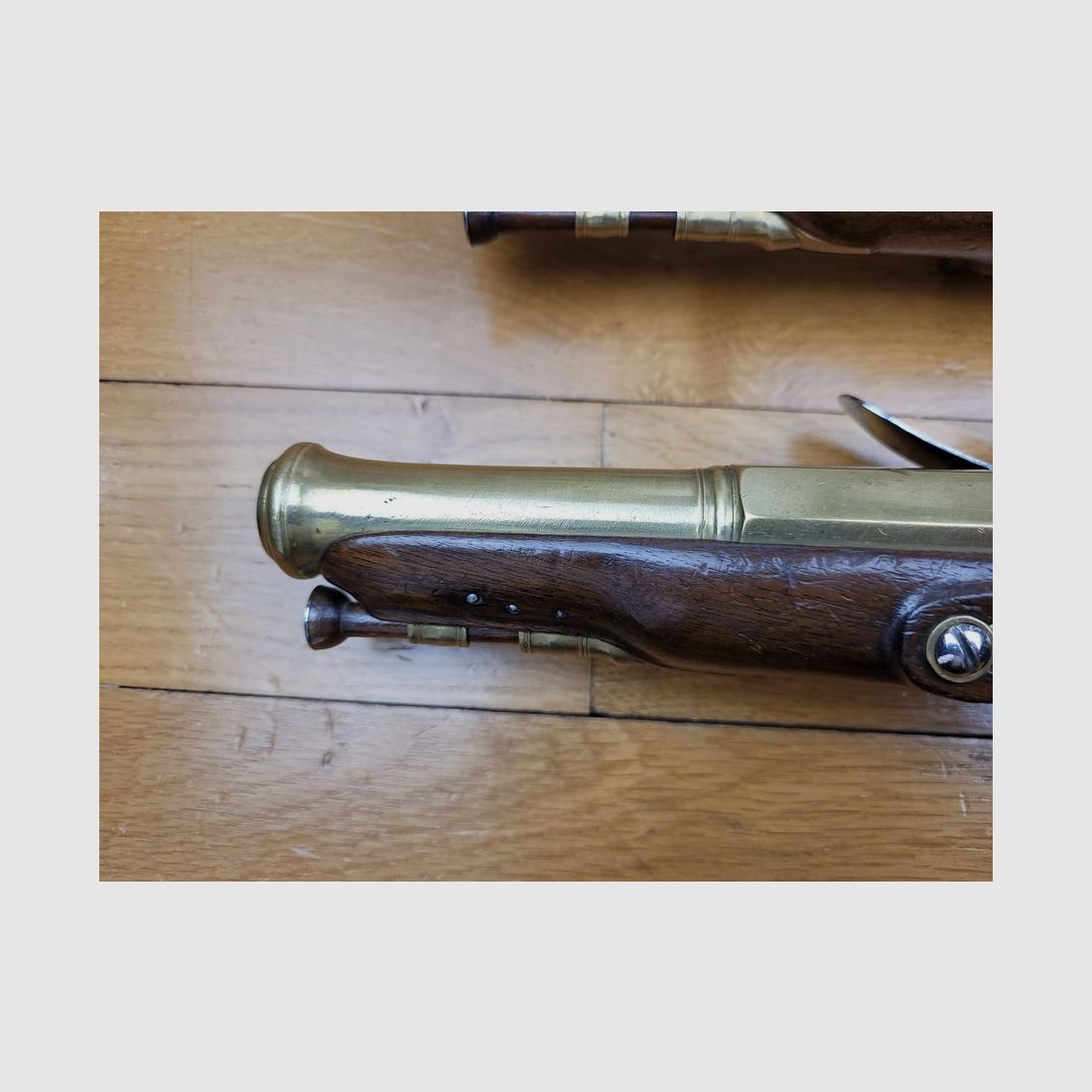
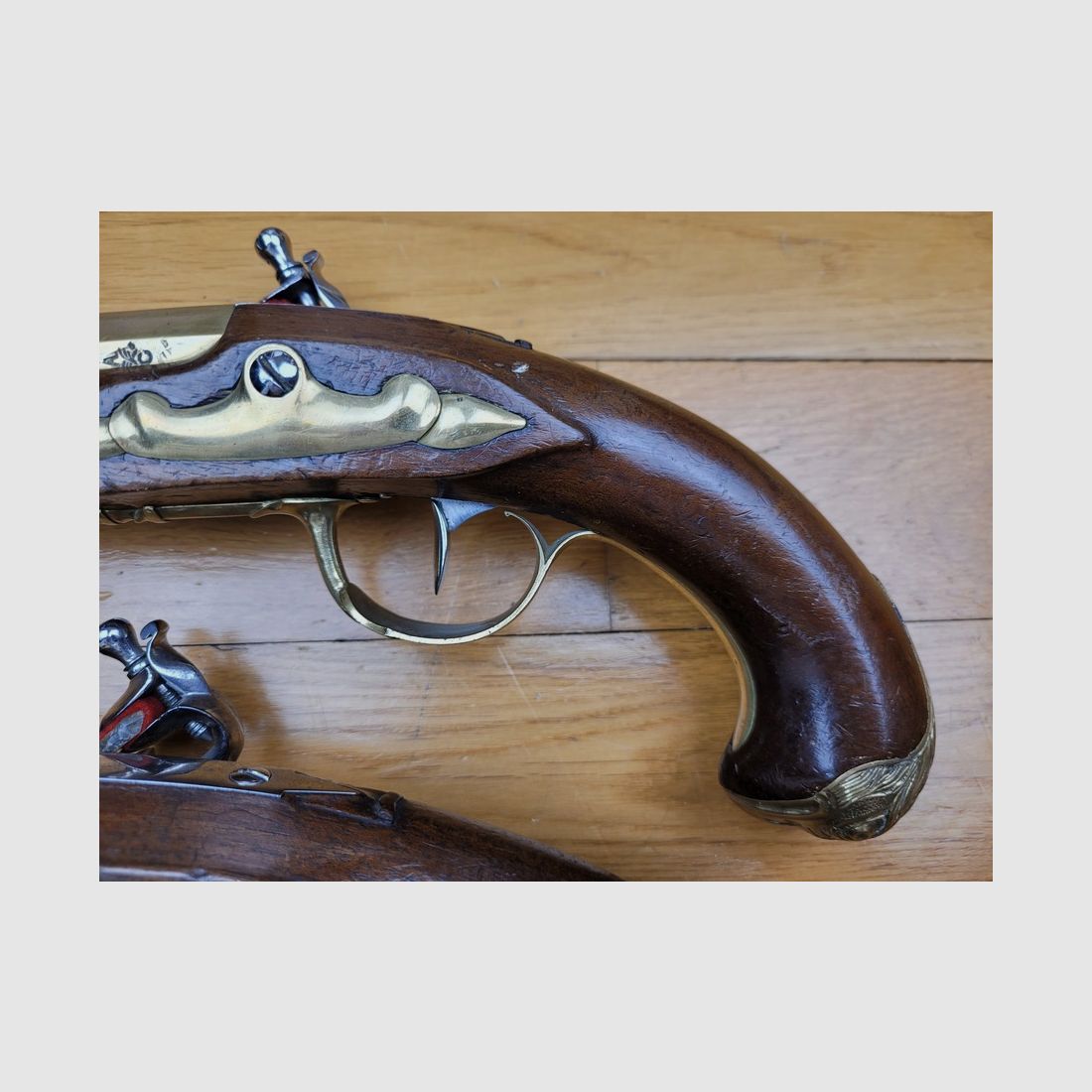

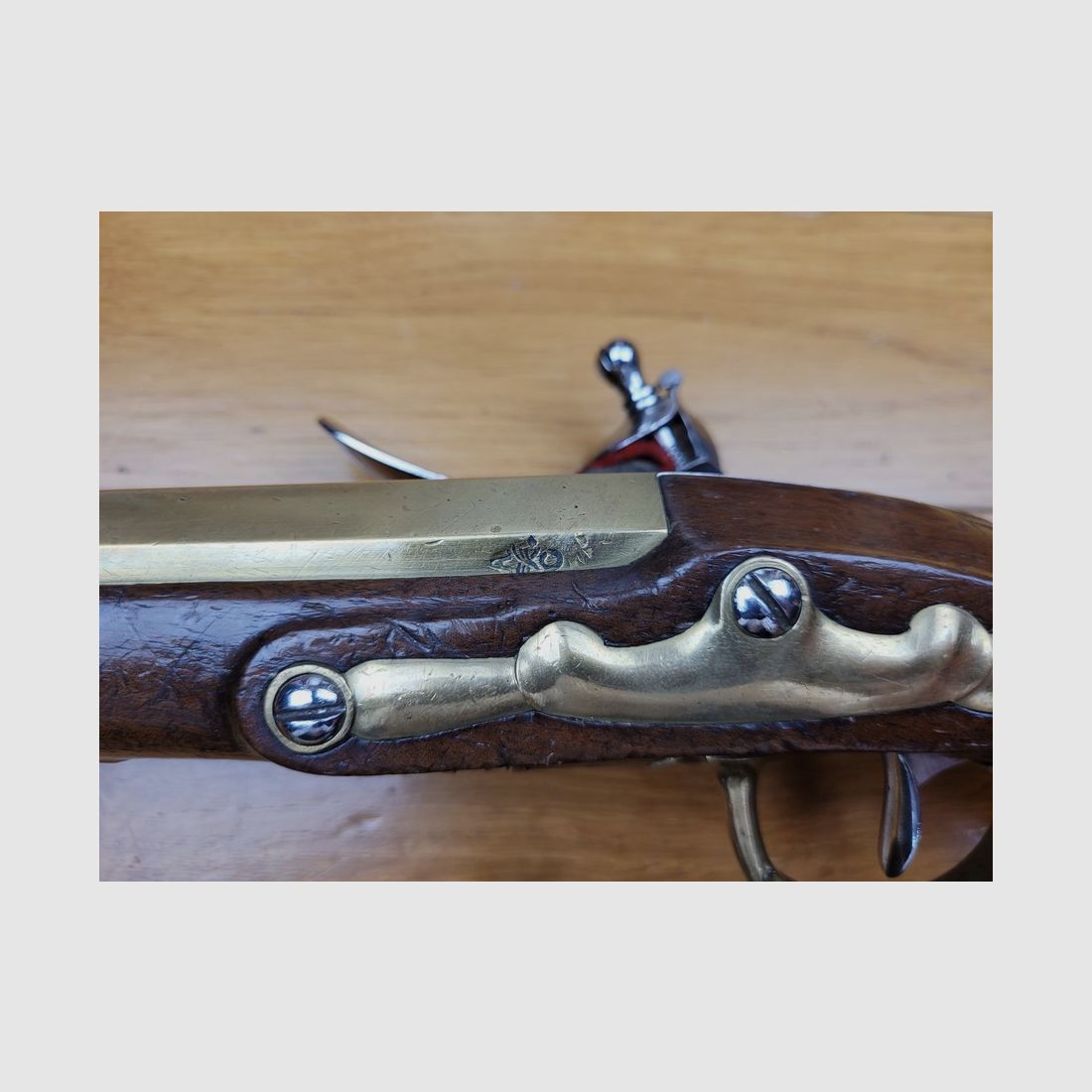
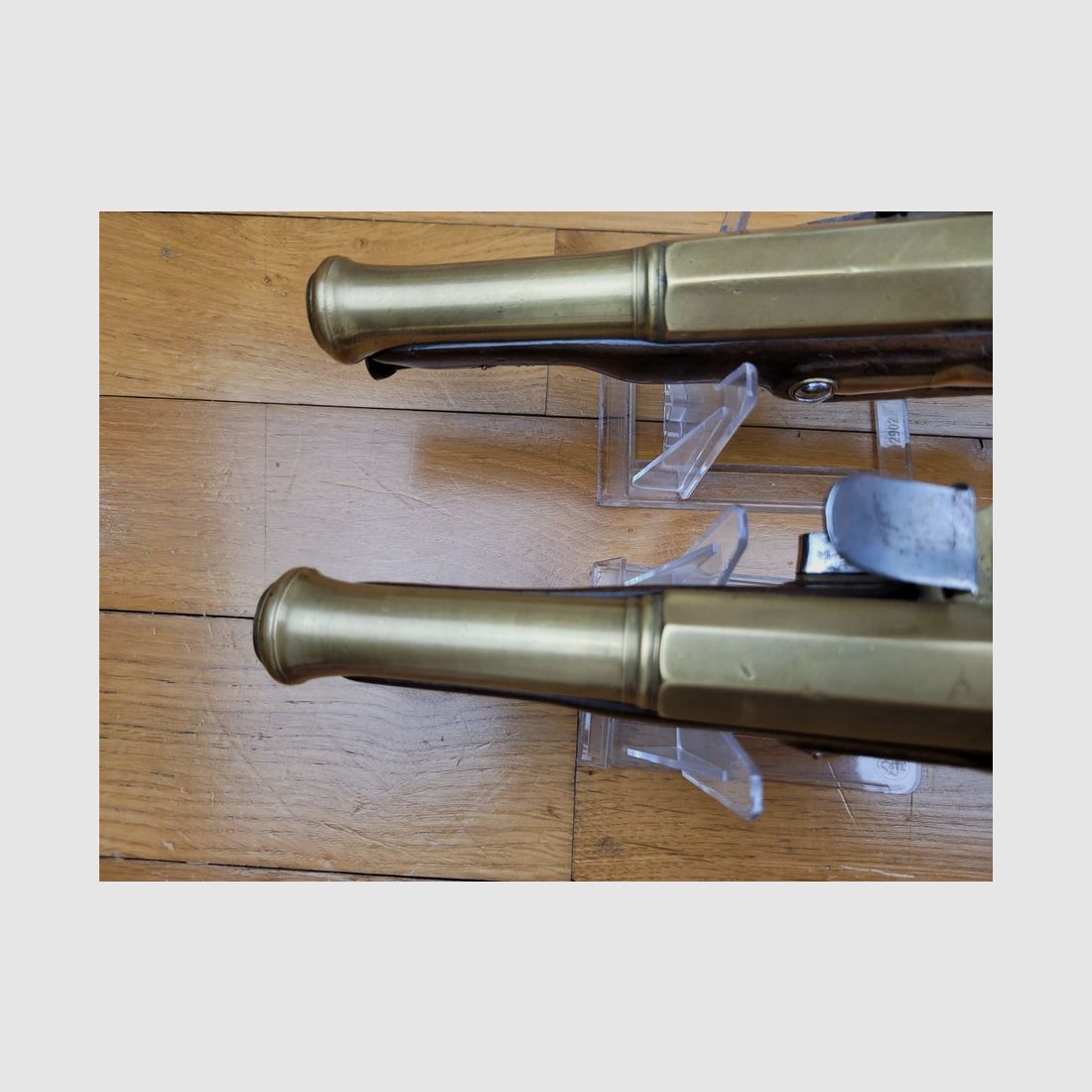
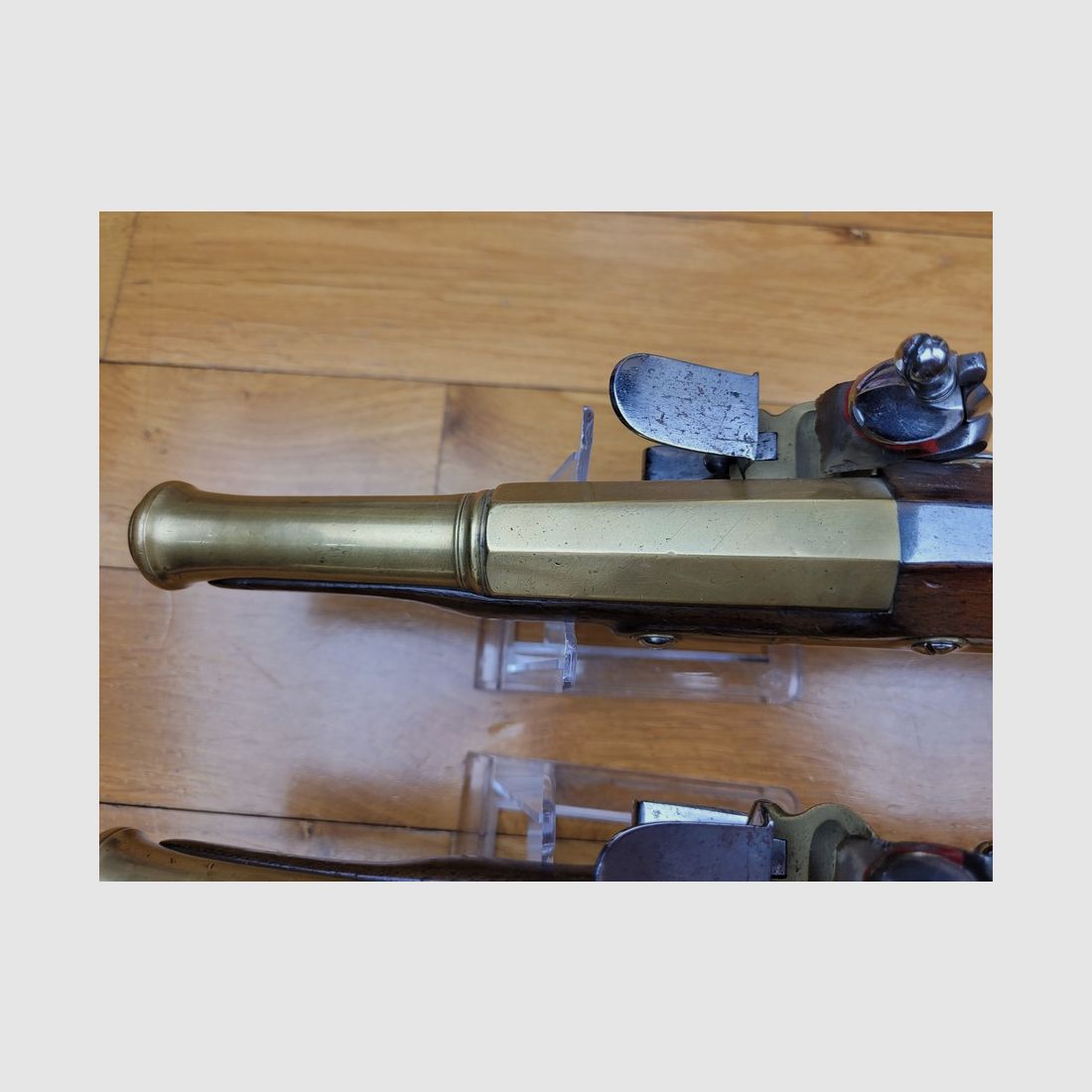
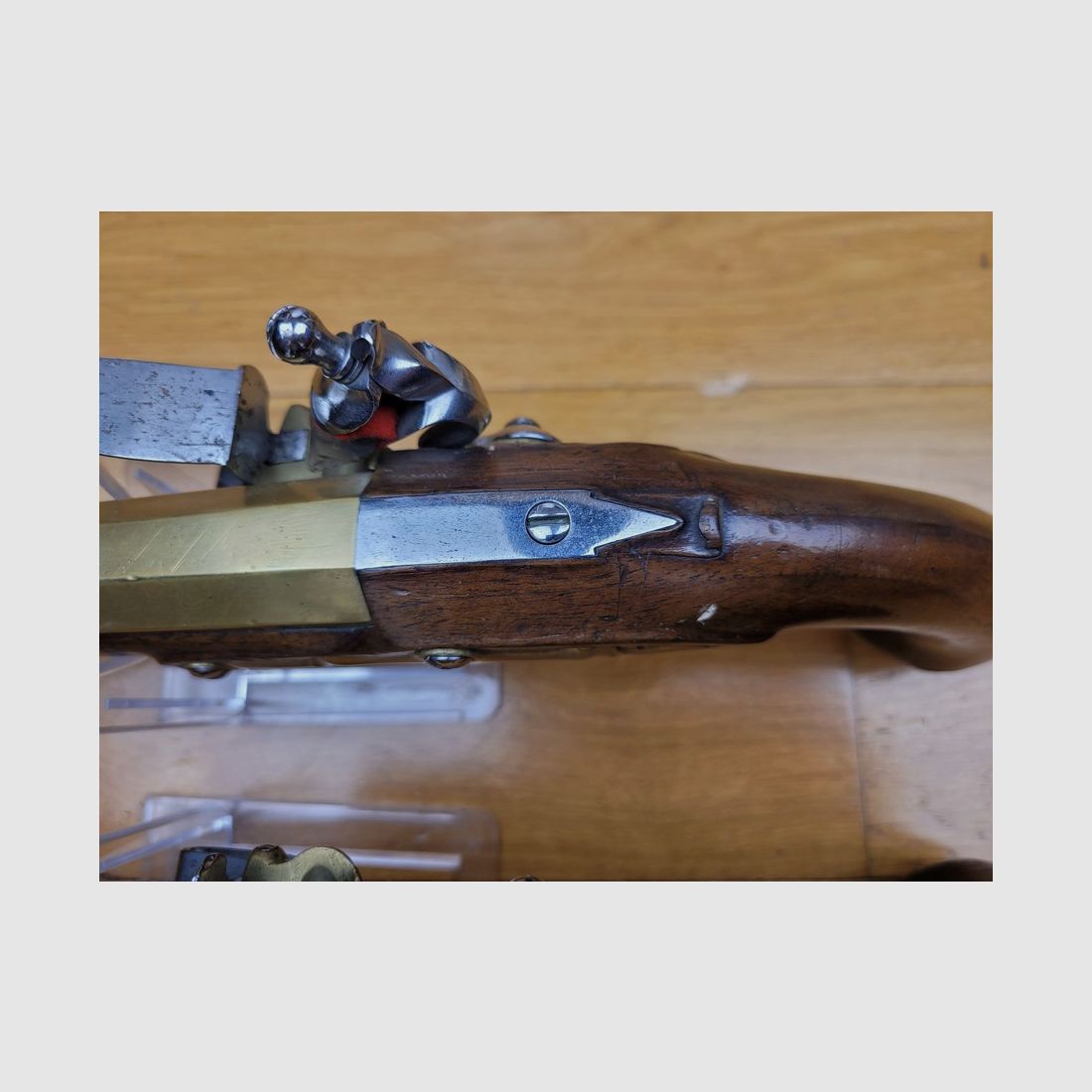

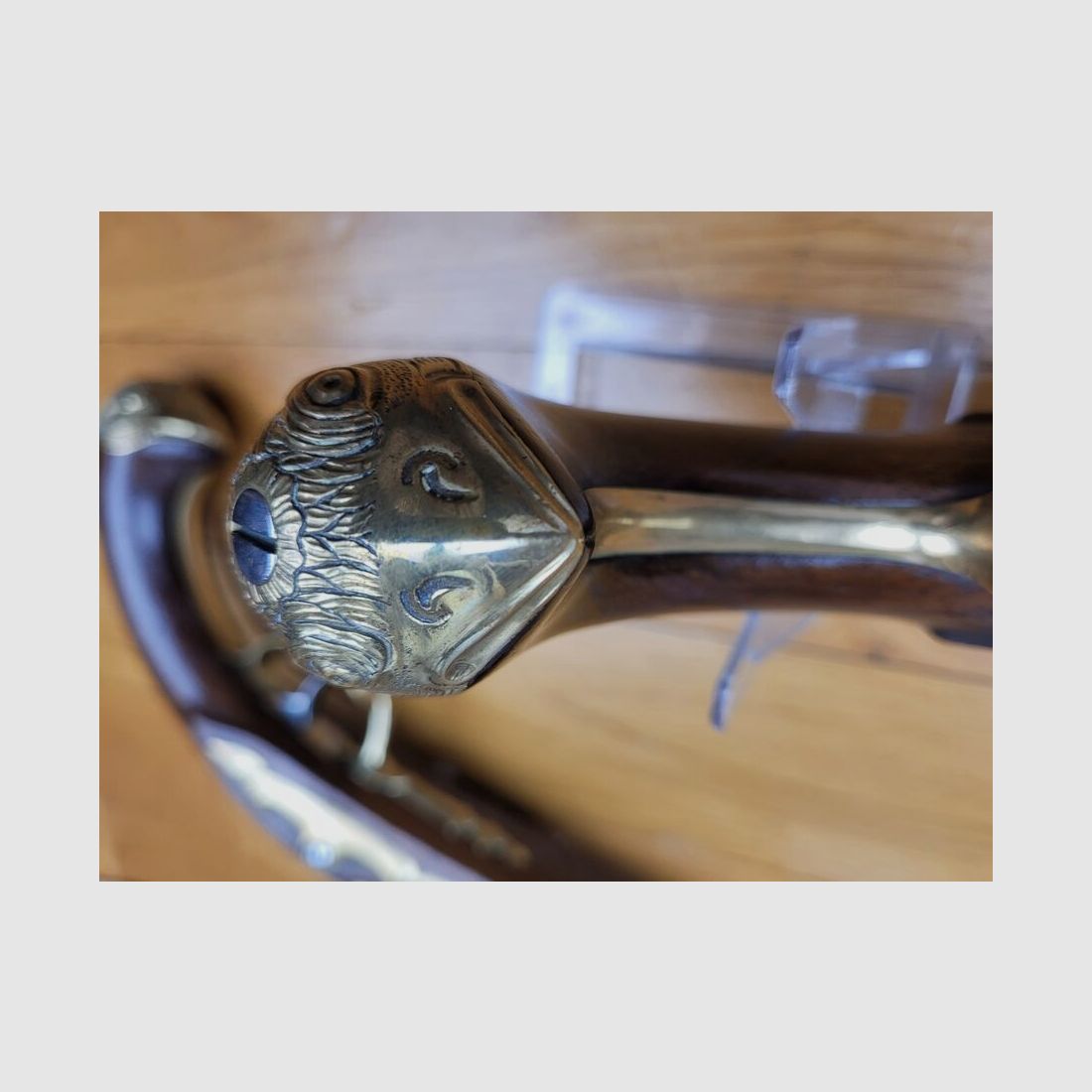

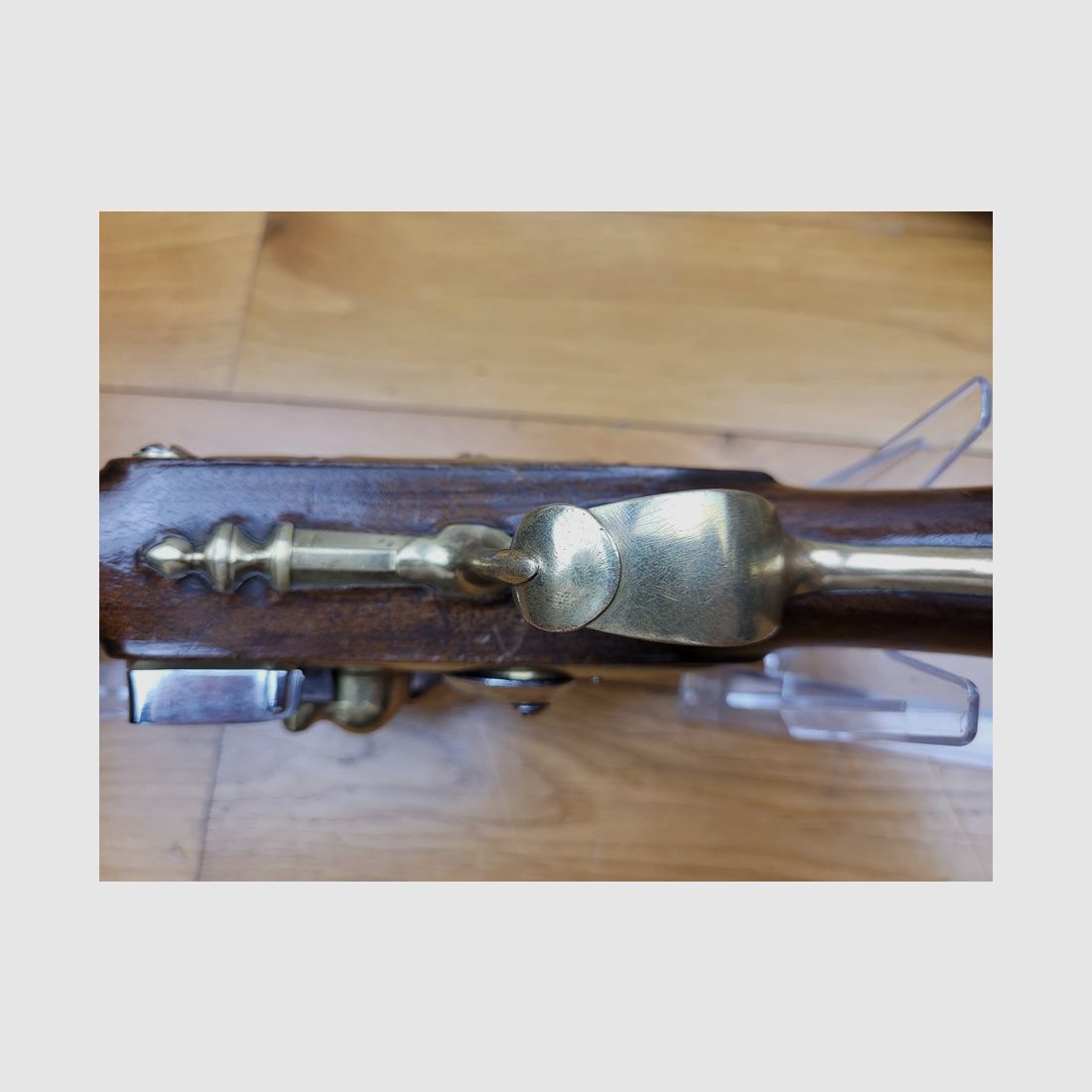
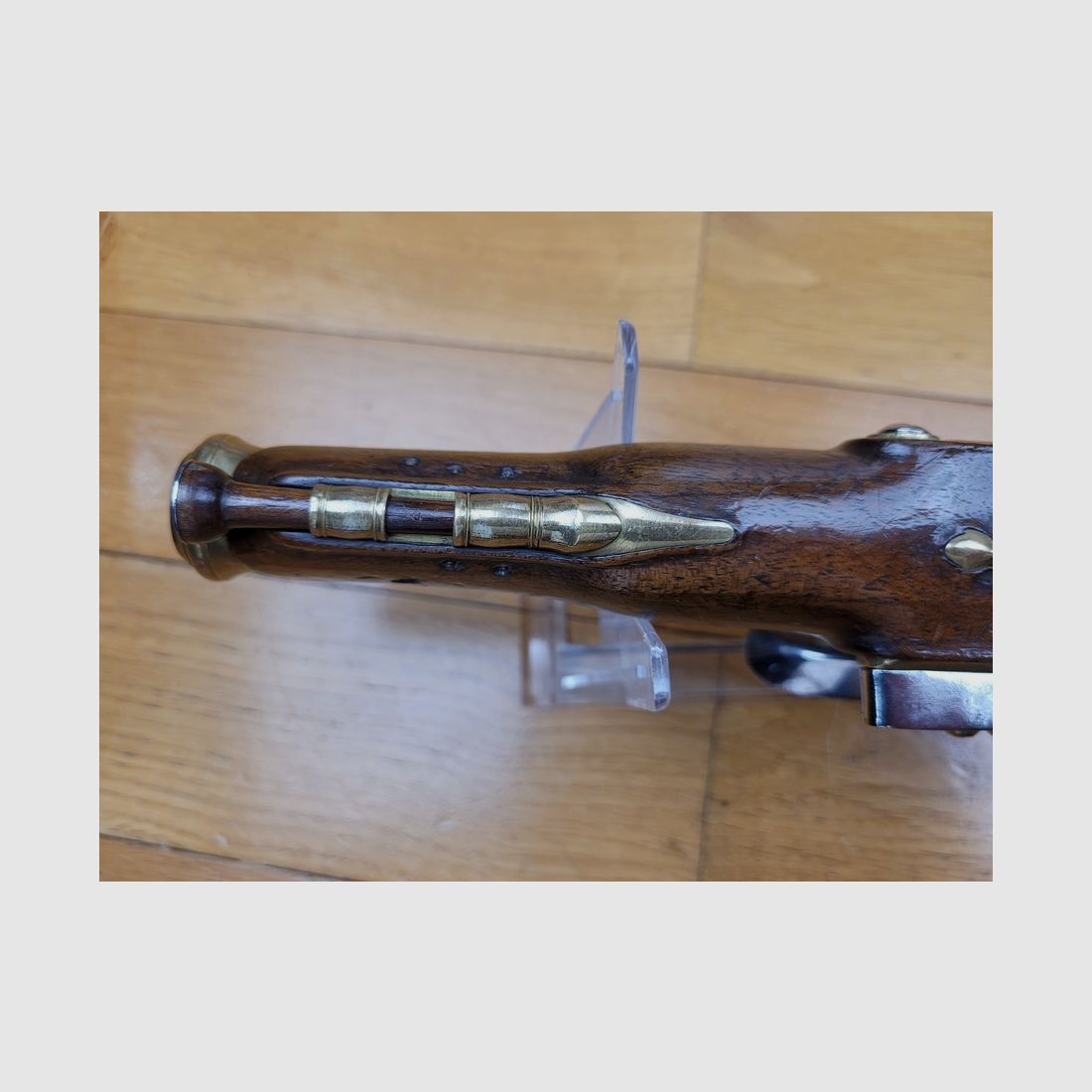
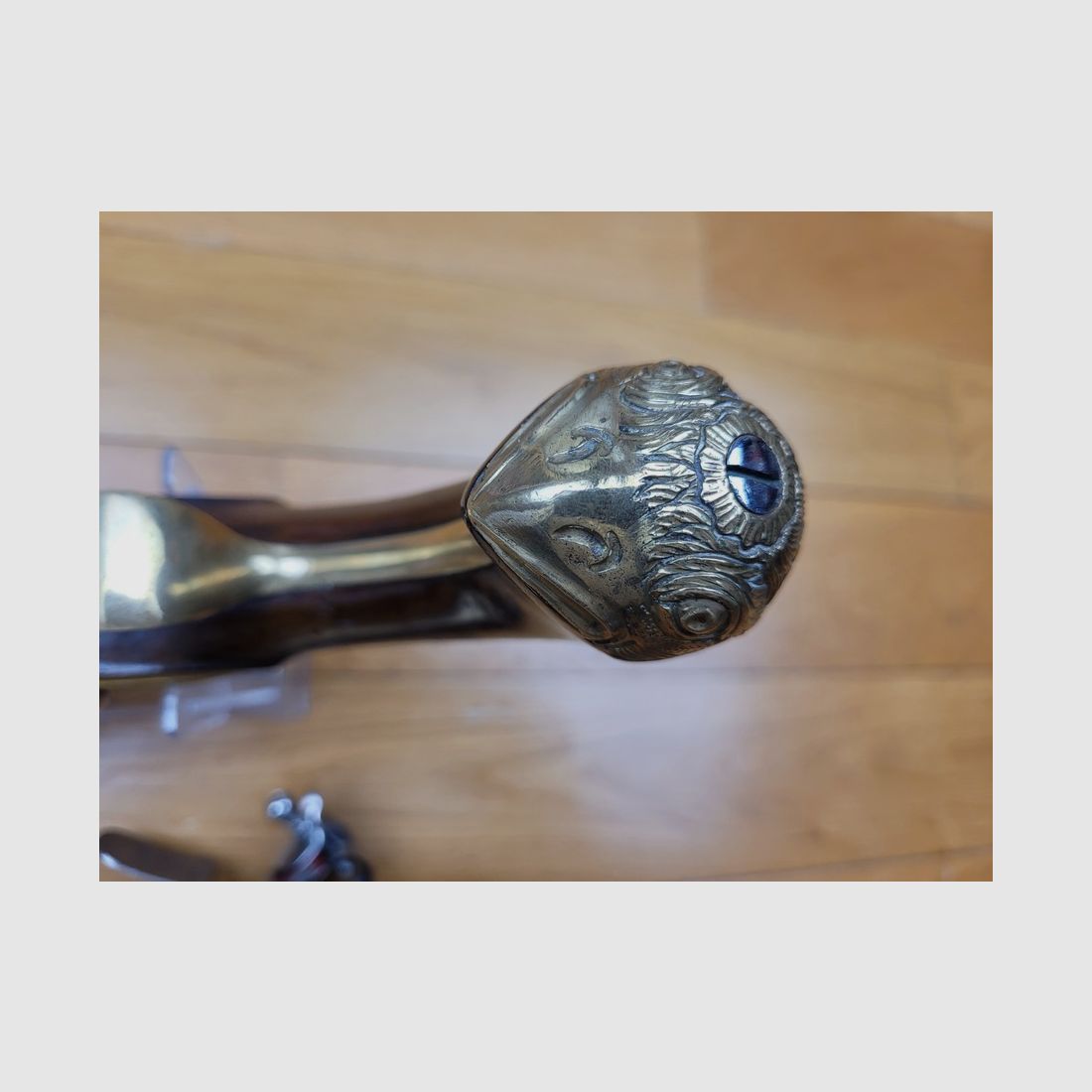
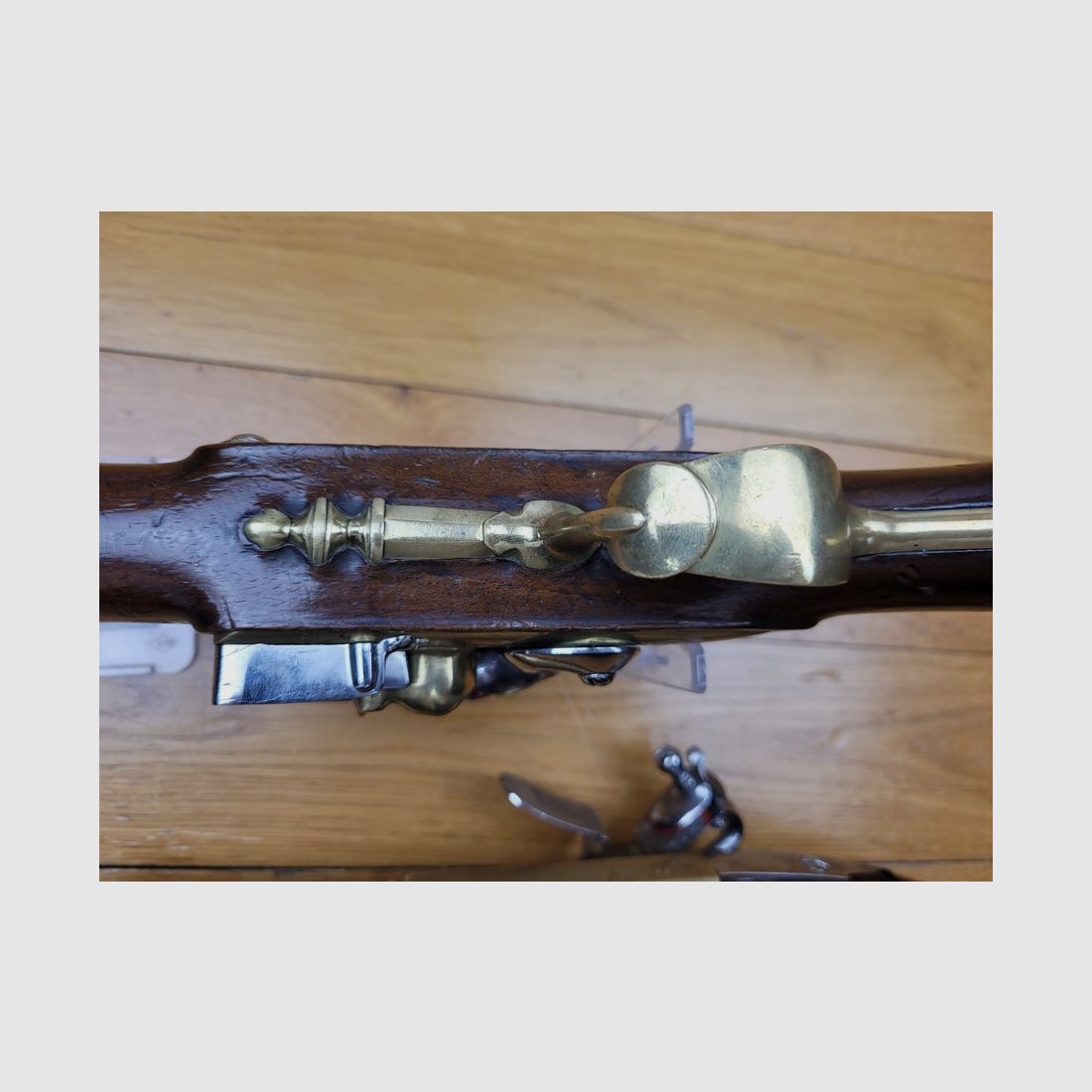

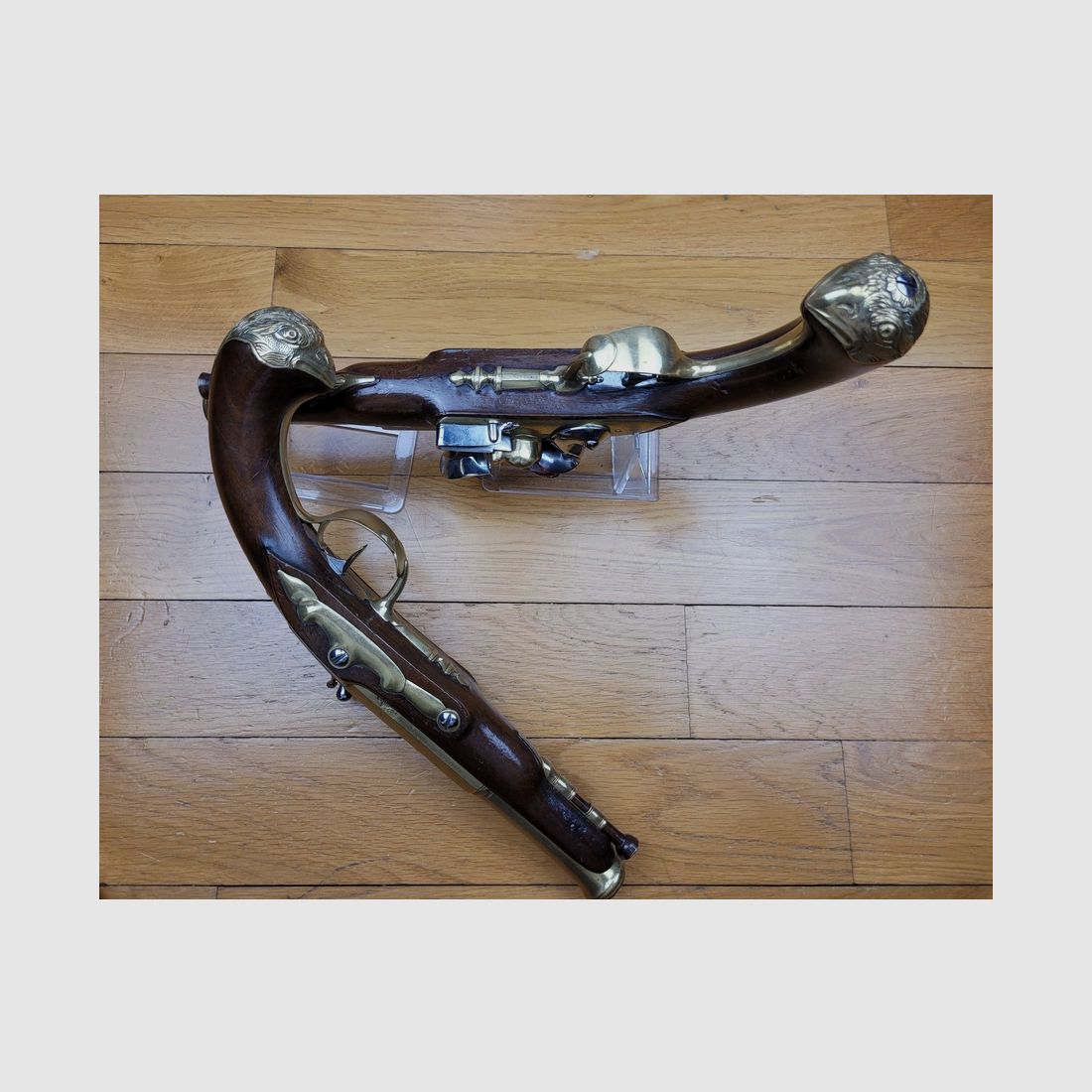
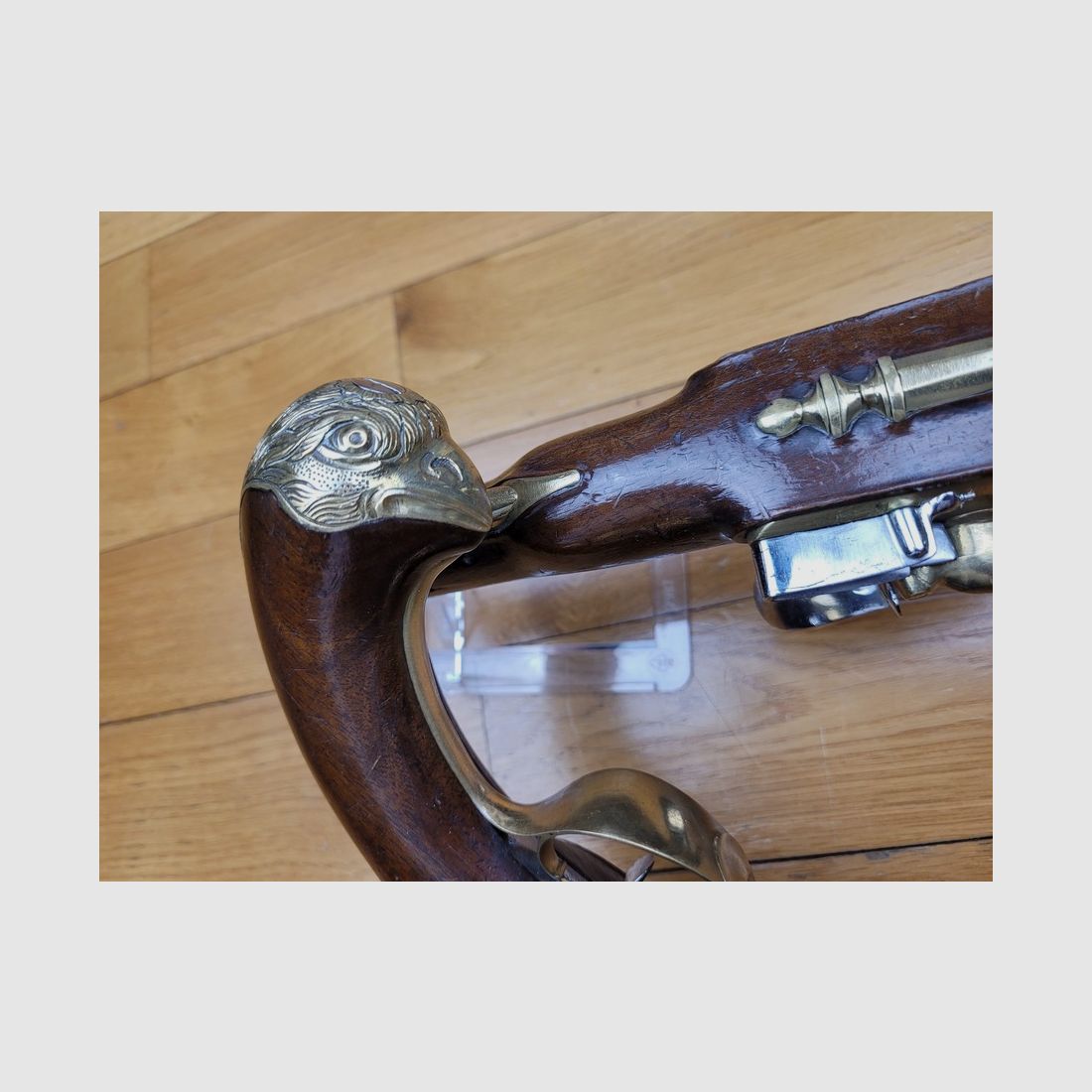
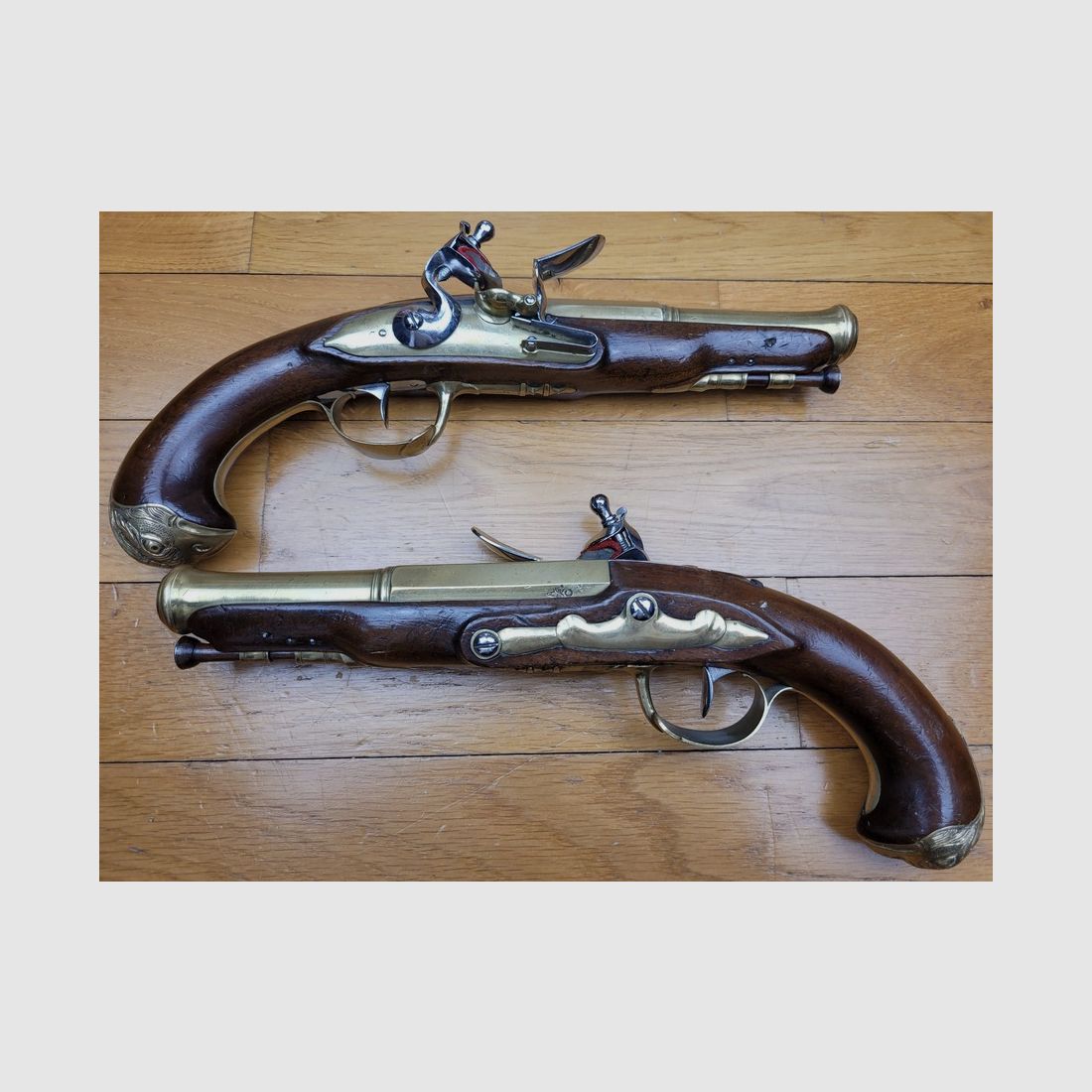
Magnificent pair of 1st Empire naval officer pistols – Brass barrels – Eagle cap – Privateering war around 1810 – Rare state of preservation – TBE++
Price on Request
Purchase permit required
75002 Paris, France
7
ID: 10338815
This item is currently unavailable.
Purchase from outside the EU: The firearm goes through an importer in your country, the dealer handles the export.
How buying from Europe works
Shop safely with Gunfinder
Our AI-powered seller identity verification makes Gunfinder the safest marketplace online.
Learn more
Details
- Original language
- French
- Category
- Purchase eligibility
- Required
- Condition
- New
- Location
- 🇫🇷 75002 Paris, France
- Availability
- Out of stock
Freshness
This listing is based on a mirrored offer, where the listing data was synced to us from a shop, dealer, or external marketplace. Please note that temporary price discrepancies may occur due to possible delays in data transmission.
- Source
- Flingus Maximus
- Last checked with the dealer
- about 11 hours ago
Description
Note:
The item is located abroad. Please note that delivery conditions, shipping times, and/or the purchase process may differ.
After Trafalgar, something had to be done…
Let me remind you that sugar, just for this example, accounted for roughly as much of the world economy back then as oil does today. That’s why, after the Seven Years’ War, the Monarchy had done everything possible to keep our sugar-producing possessions in the Caribbean rather than Canada or India. This was even more important at the start of the 19th century, when the population was booming just as fast as industry. Naval warfare had become an inseparable complement to economic warfare.
But the Navy had to be able to reach the sugar. And if it couldn’t defeat the English Navy in a formal duel, how could it disrupt its trade as much as possible?
In short, there was no other option than commerce raiding and daring raids aimed at disrupting British business as much as possible and tightening the Continental Blockade. Let me remind you that it came very close to achieving its goal. Around 1810/1811, the English Parliament was deeply divided, with a growing and increasingly powerful faction in favor of peace with the Empire for economic reasons. William Pitt had his work cut out for him in Parliament to keep his country in its crusade against France. This is no longer taught, and the English will never admit it, but they came very close to giving in around 1810/1811, just as they had in 1800 at Amiens. For nearly 20 years, the French had dominated the continent against all odds. The economic crisis caused by the Blockade was wreaking havoc in Great Britain. The country was weary… Then the Little Corporal, driven more by fury at seeing his blockade challenged than by any desire to make it more economically effective, decided to attack Russia, whose court was being heavily “bribed” with English money to provoke him. Bad idea.
As much as it marked the end of imperial power, 1812 and the Russian campaign were above all an entirely unexpected miracle for the English. From their point of view, it was the beginning of the end of a nightmare that had lasted since 1789. And also the beginning of another great Empire. Theirs.
All that remained was to wage the commerce-raiding and maritime harassment campaign shown to us by our Anglo-Saxon friends in the film “Master and Commander: The Far Side of the World,” starring Russell Crowe.
A war of naval ambushes, where the decks of three-masted ships were painted blood red so that young cabin boys—often in their teens—wouldn’t completely lose heart during the slaughter that followed. And where the Navy’s main instrument of command was the whip, along with the famous slogan “rum, lash and sodomy” (“rum, the lash and s…..”).
Discipline was hardly any gentler in the former Royal Navy. A somewhat forgotten war, but one of unimaginable violence. By modern standards, the bravery of these men is beyond our comprehension.
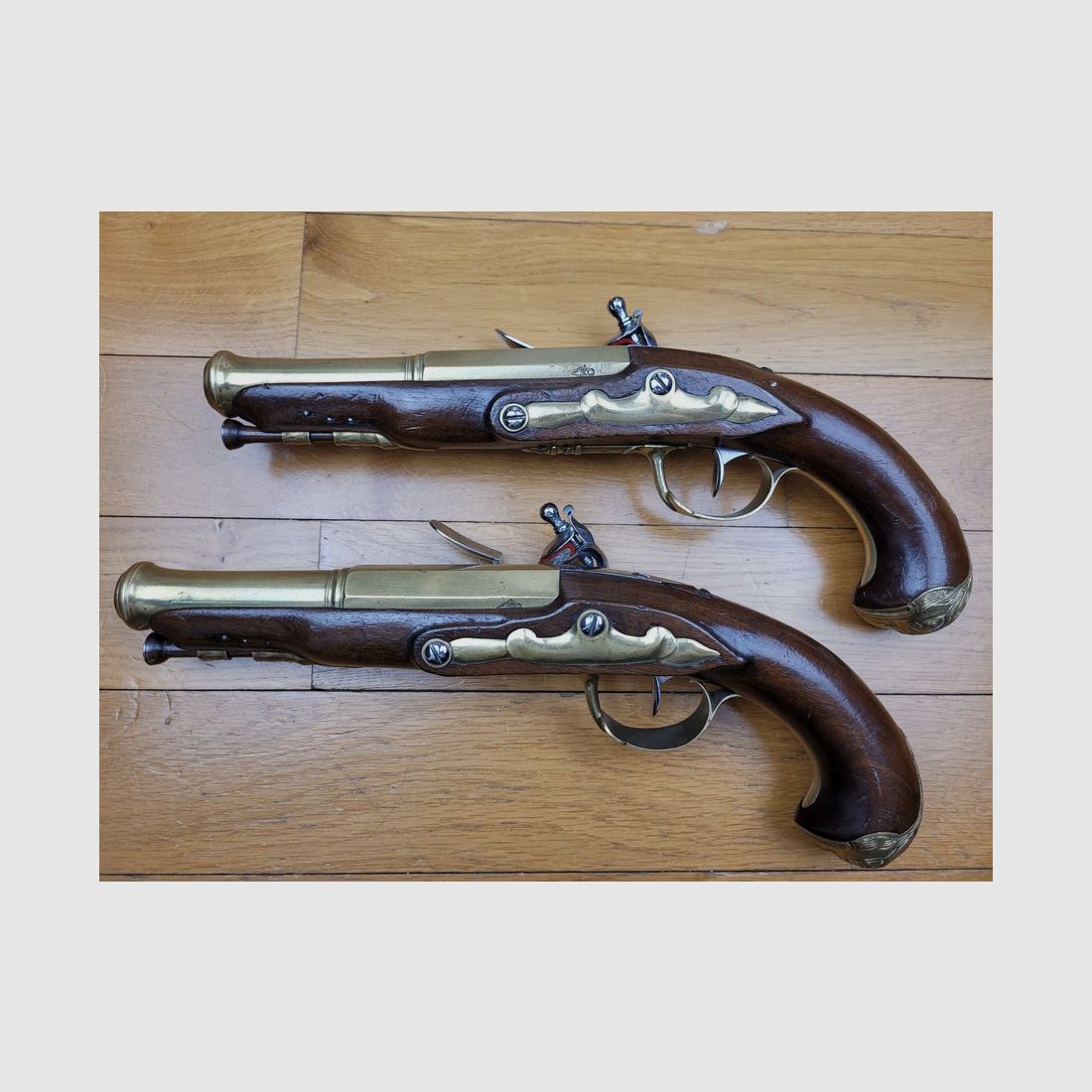
This is the story told by this beautiful pair of French Navy officer’s pistols, made in Saint Étienne around 1810 and untouched ever since.
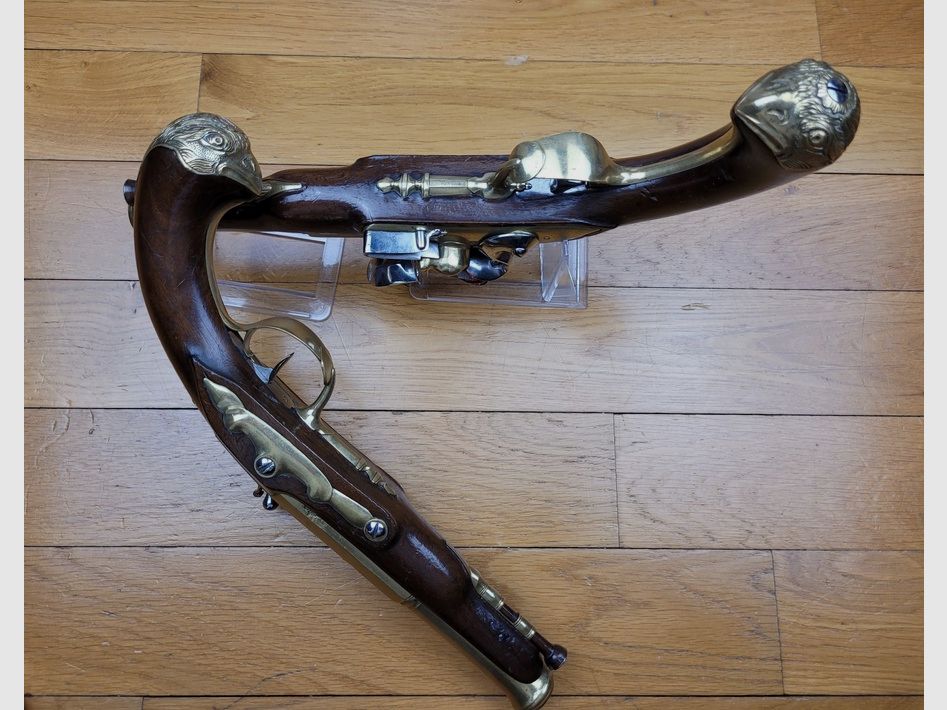
Both firearms are in near-perfect condition.
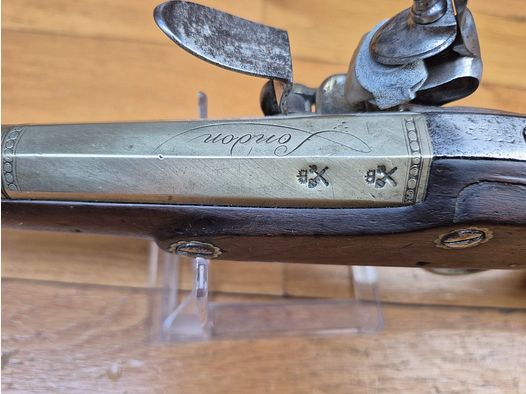
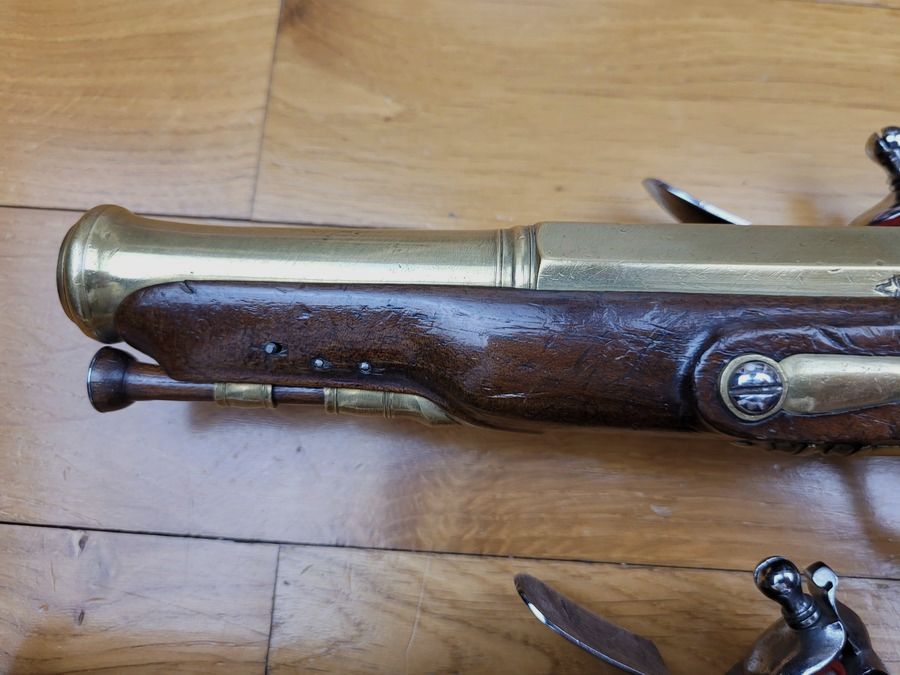
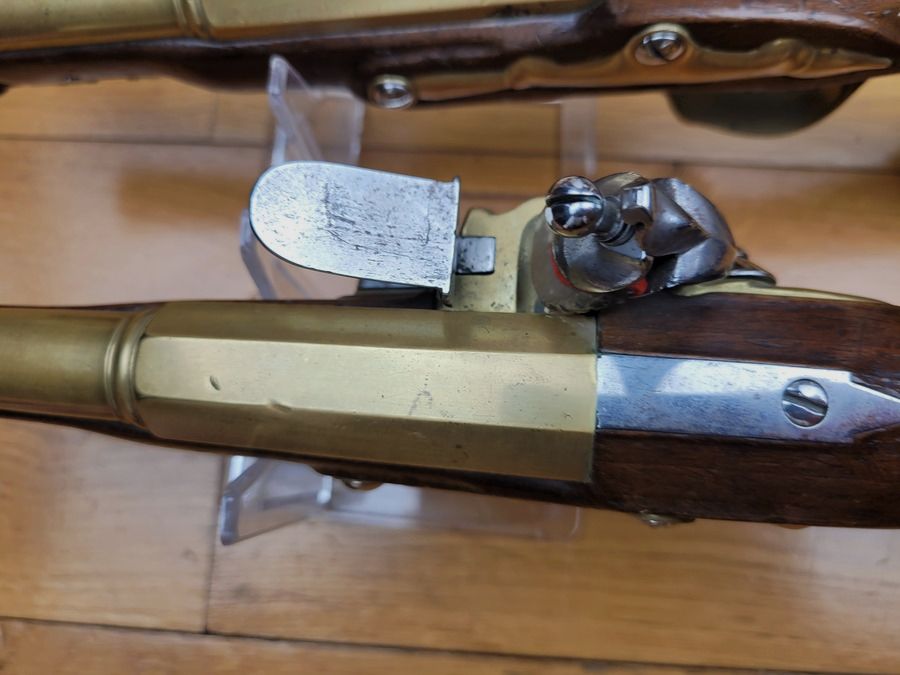
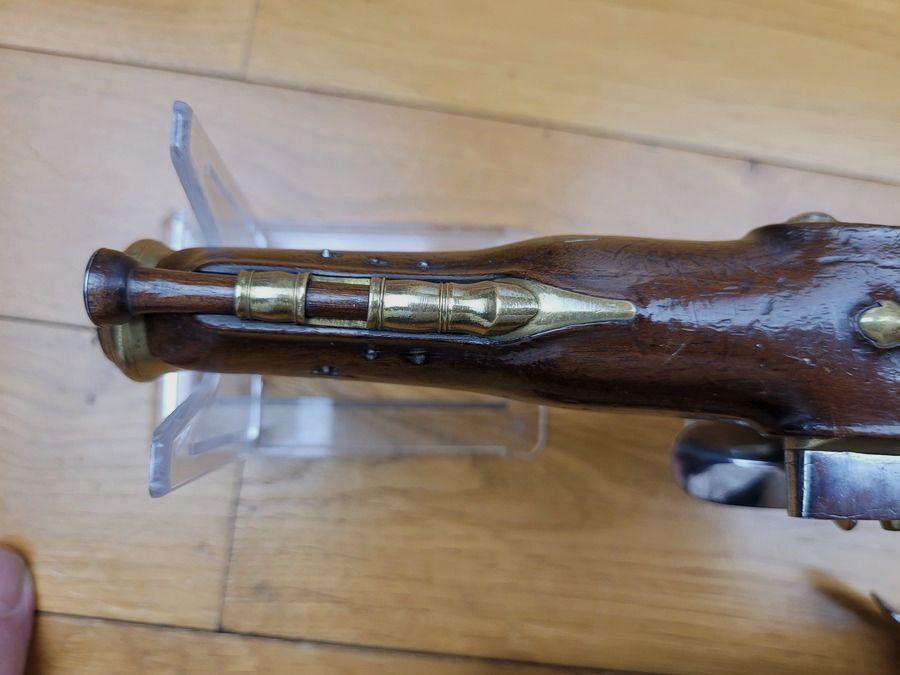
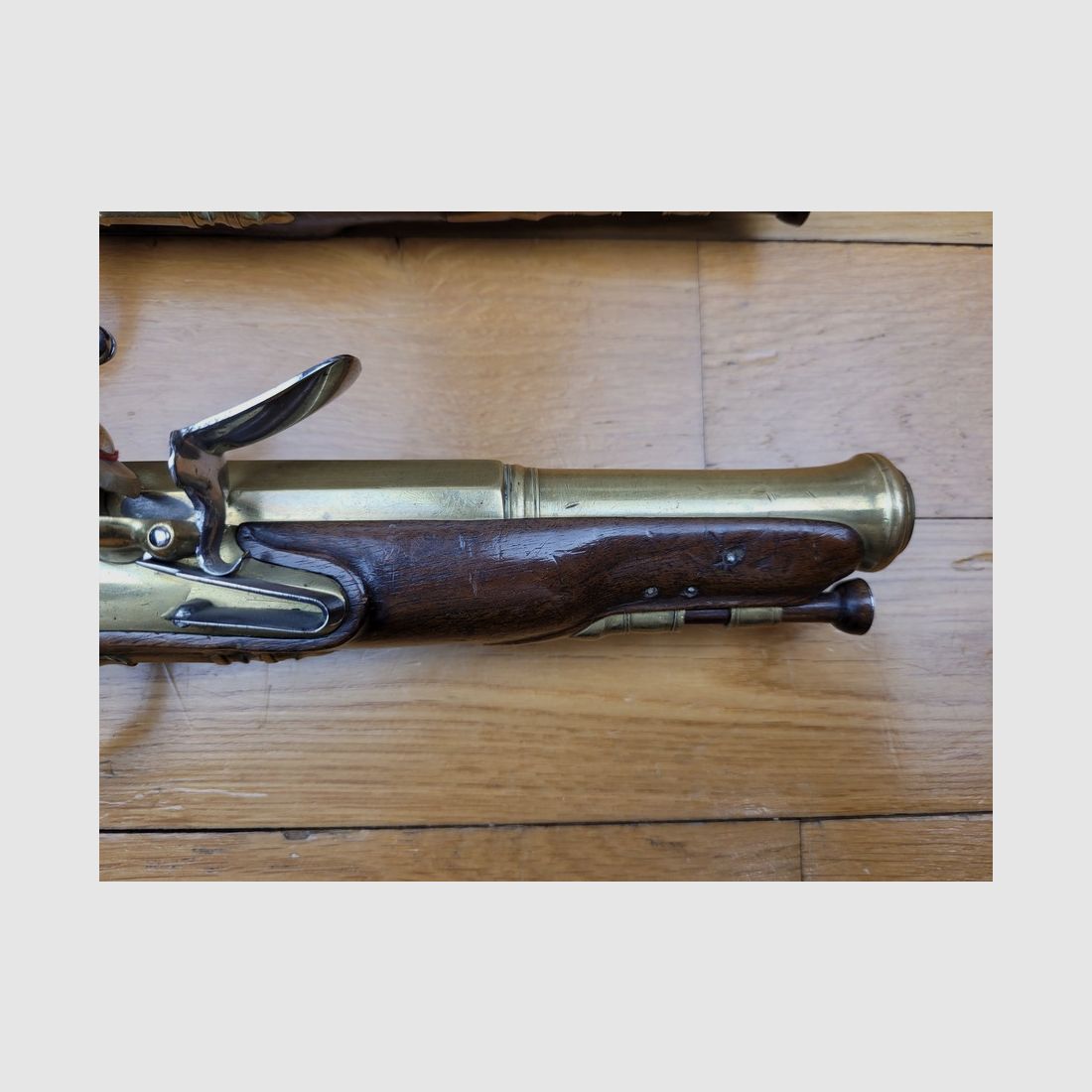
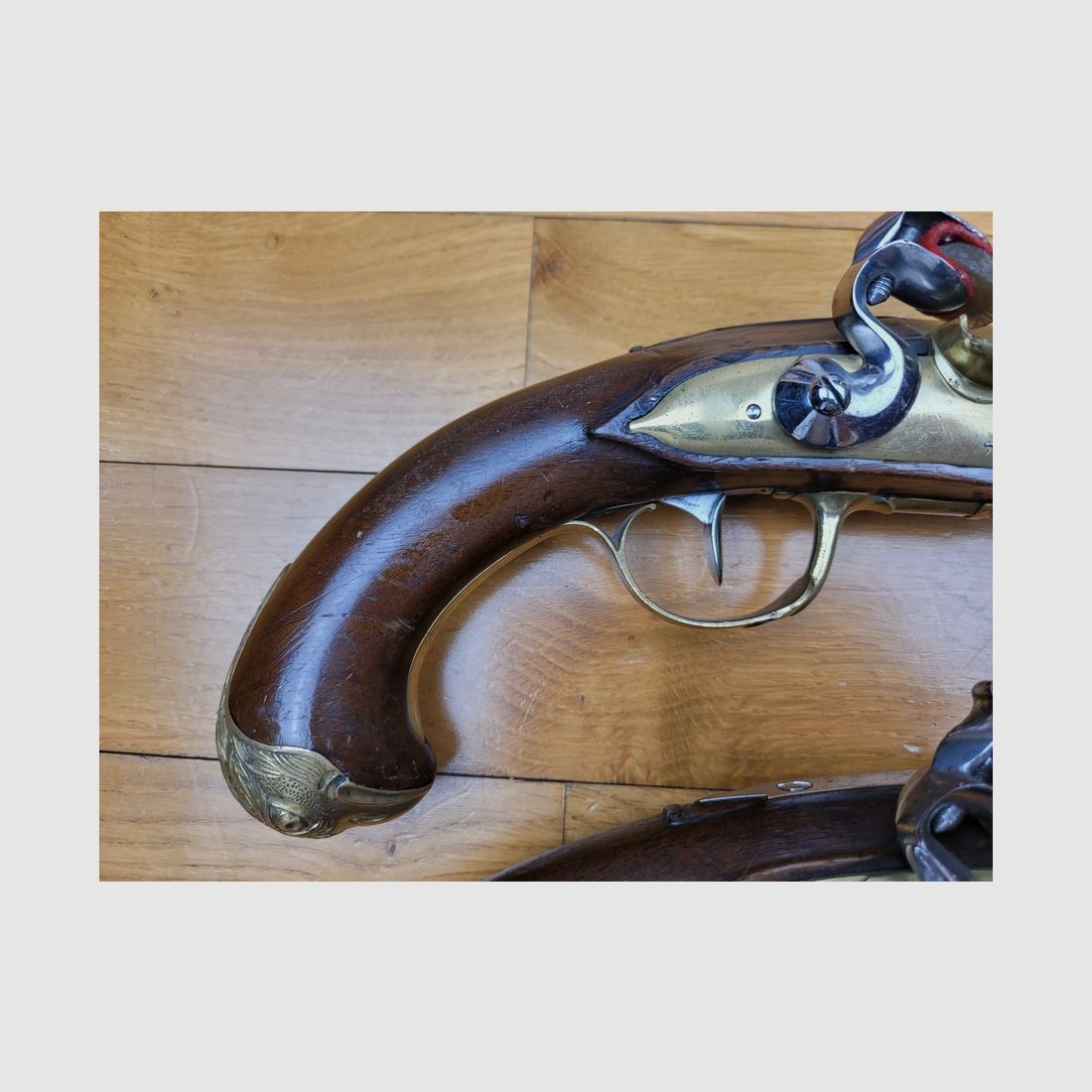
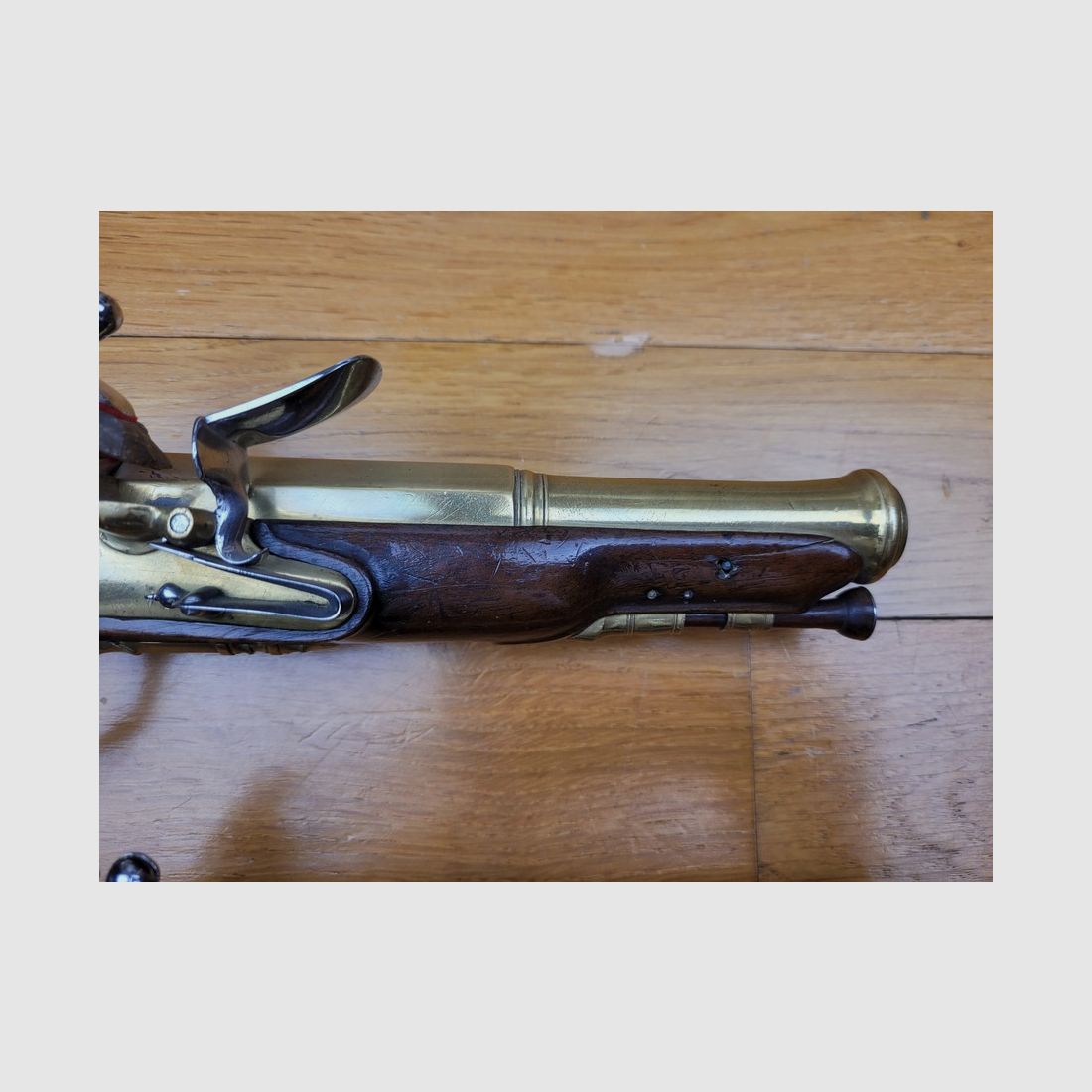
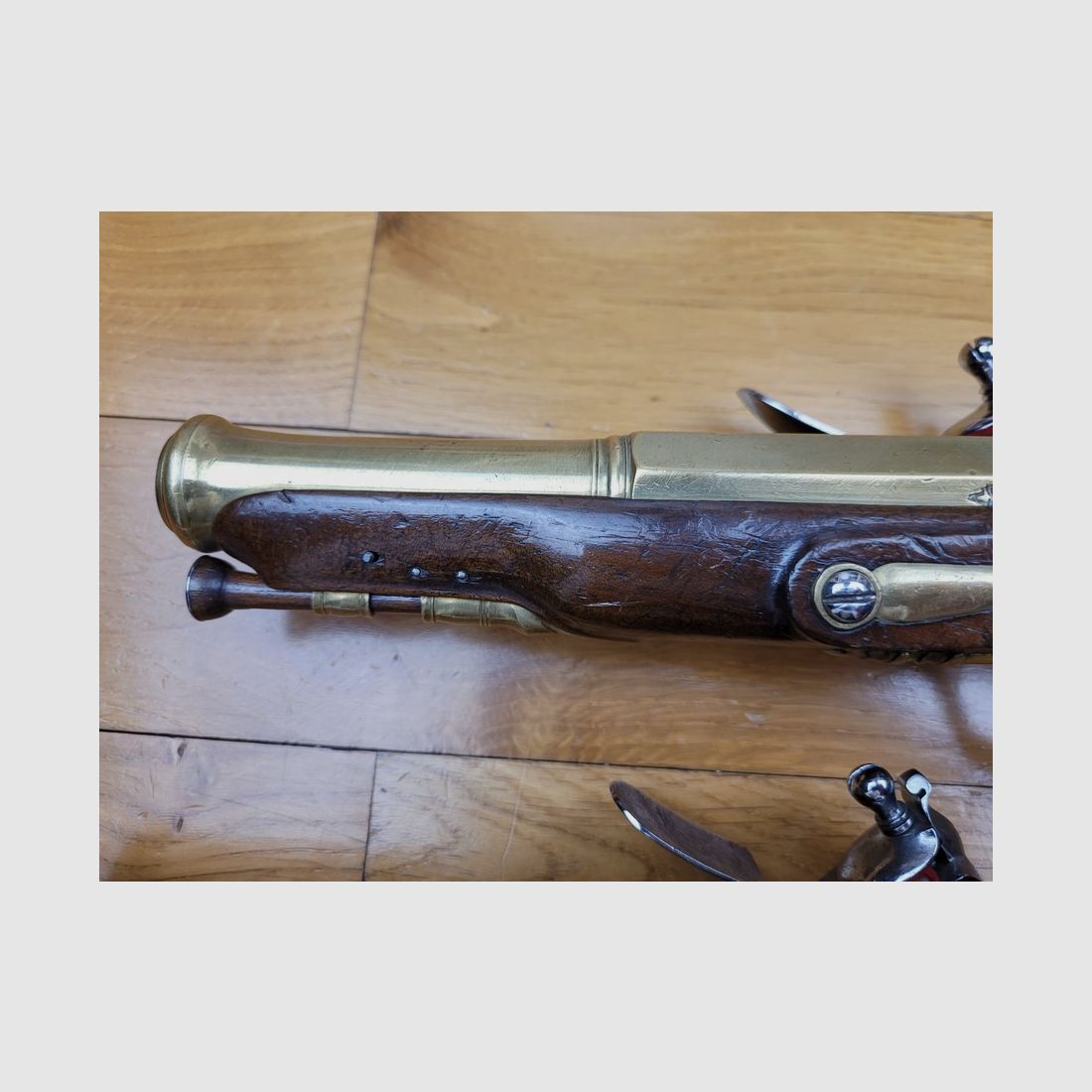
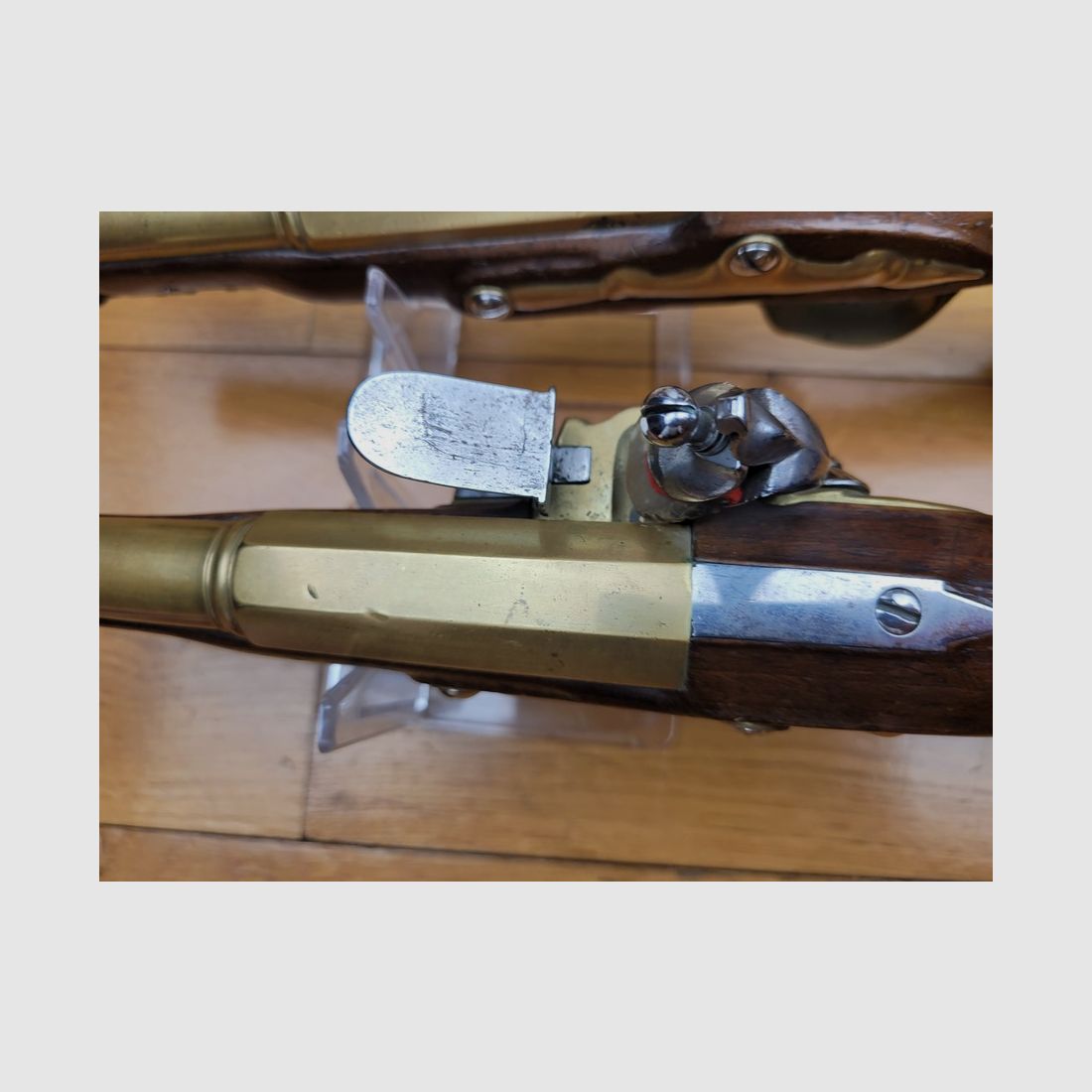
– Very thick brass barrels, with two sections—octagonal, then round, with a reinforced muzzle—bearing the Saint-Étienne proof mark “AC + two crossed palm branches.” The proof marks are crisp and legible, on the left side of the barrel near the side plate. Barrels in perfect condition—no dents or dings, at most a few light handling marks. 16 mm caliber, smoothbore, of course. Slightly flared at the muzzle (sailors had loved this since the beginning of Louis XVI’s reign!). Perfect condition.
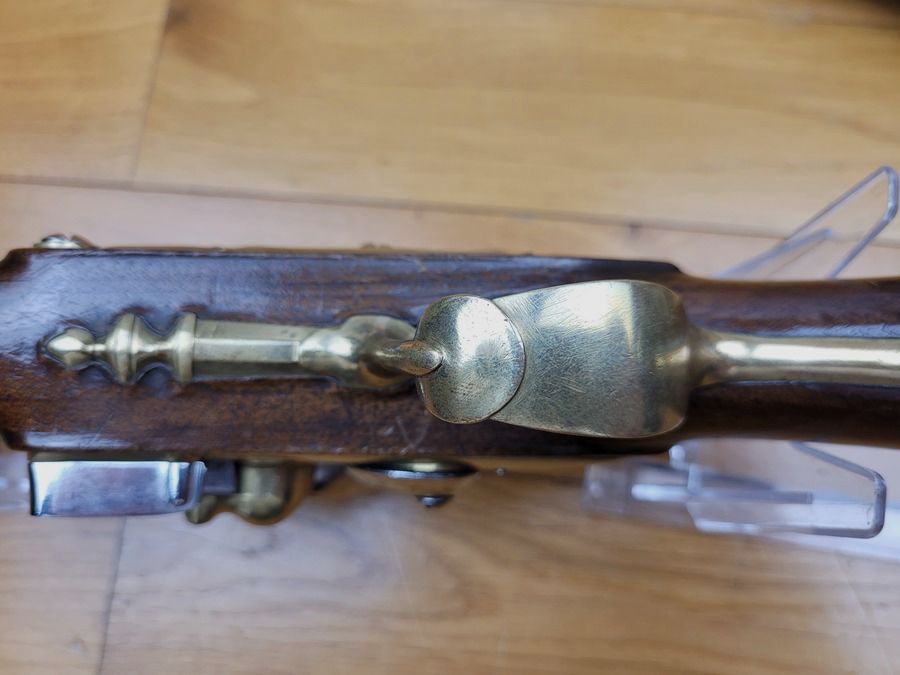
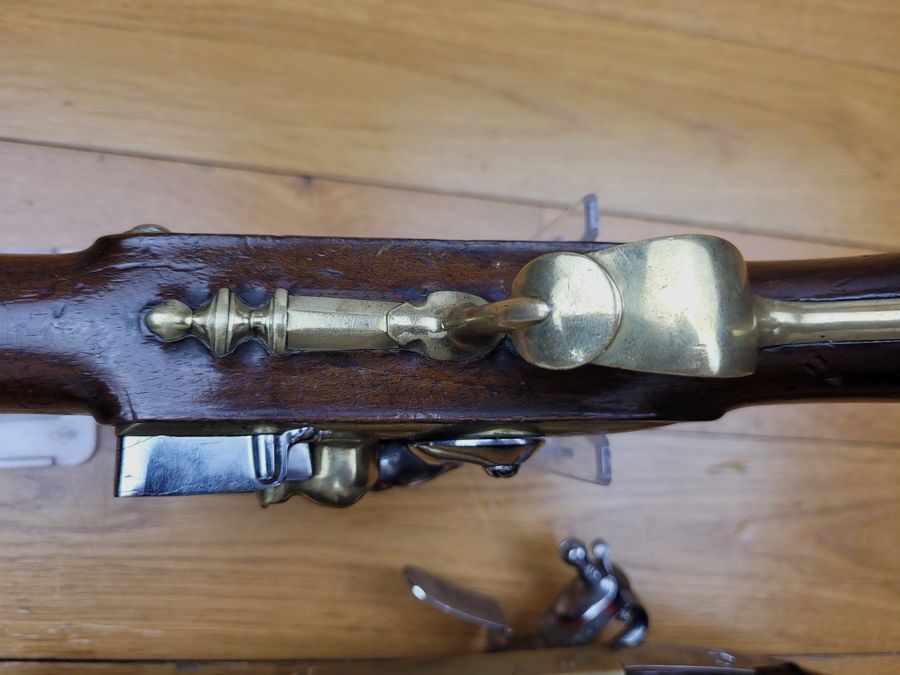
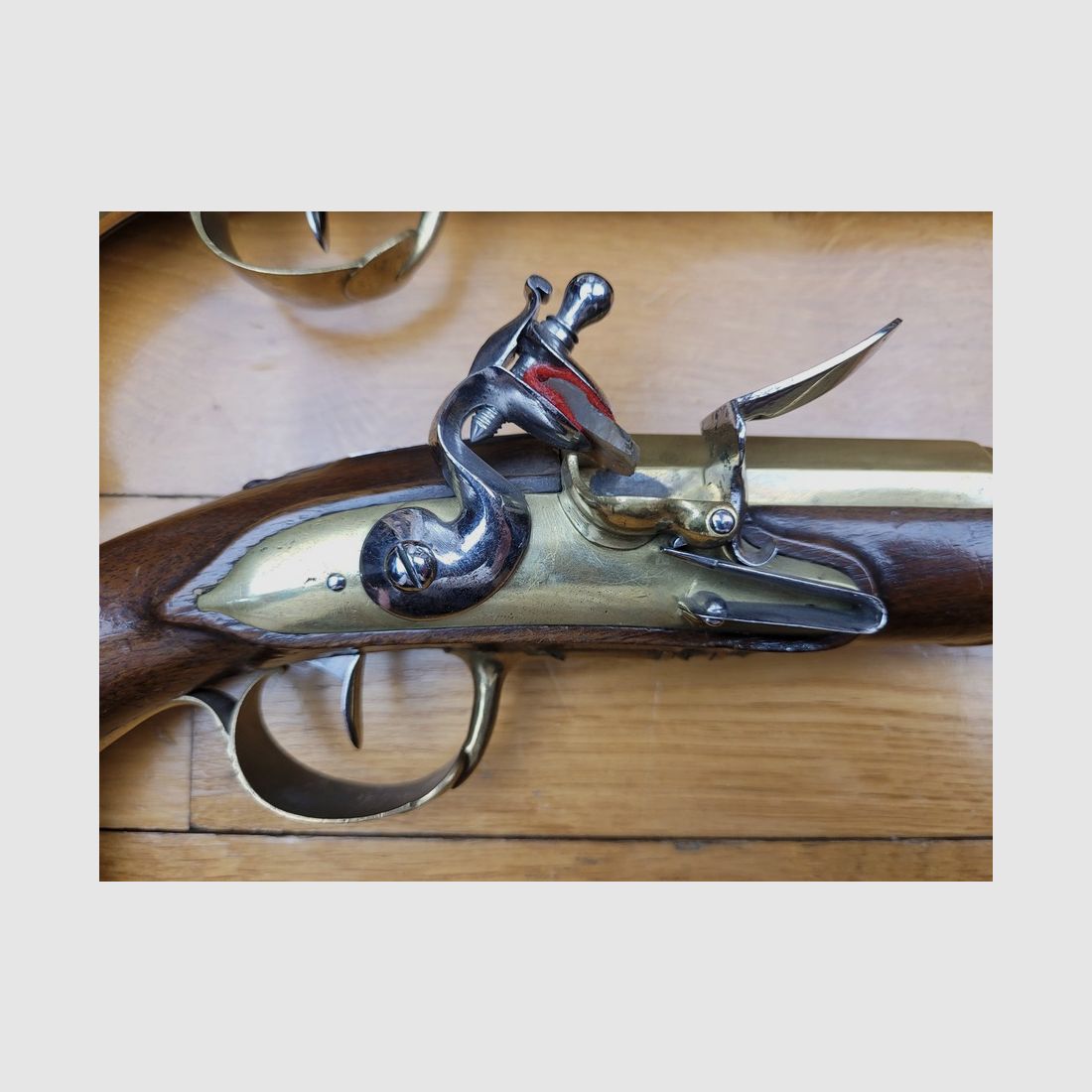
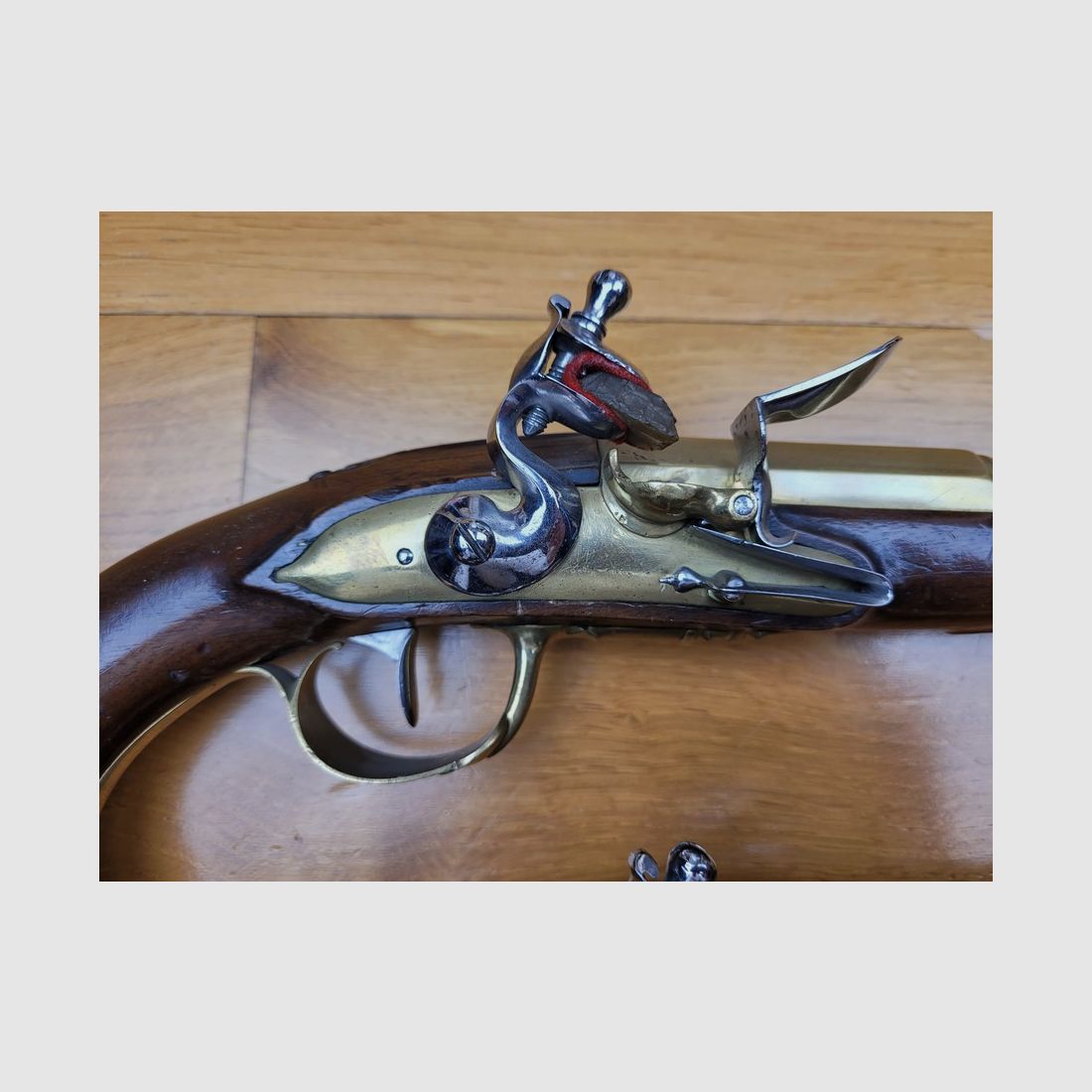
– Round-bodied brass lock plates, also untouched, and swan-neck hammers, very much in keeping with these naval firearms, which had hardly changed since the 18th century. Mechanical function is impeccable, both at half-cock and when fired, for the hammers and the frizzen. Perfect condition.
tat.
– Iron breech and trigger – in perfect condition.
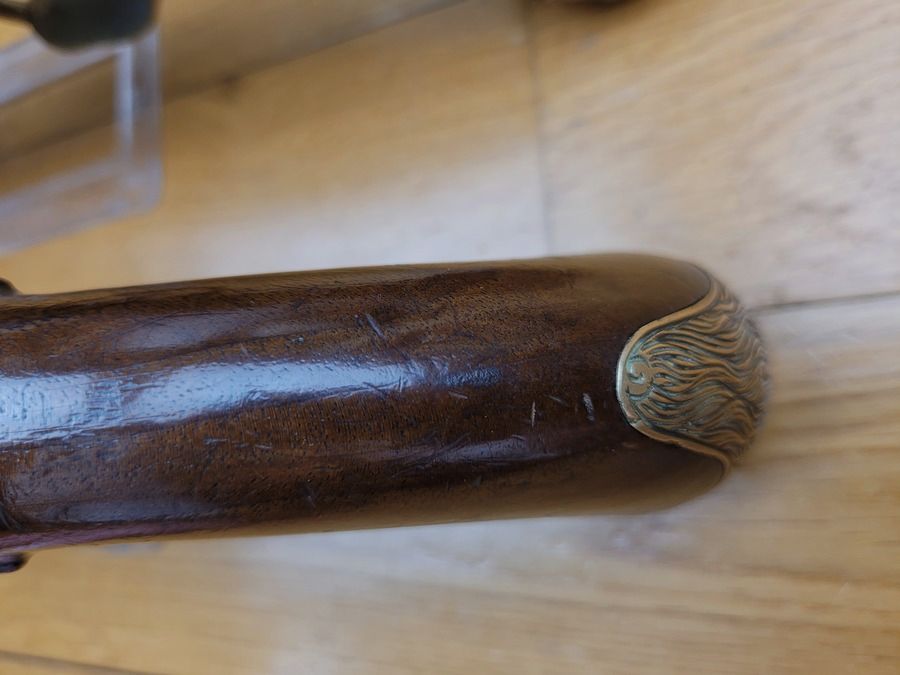
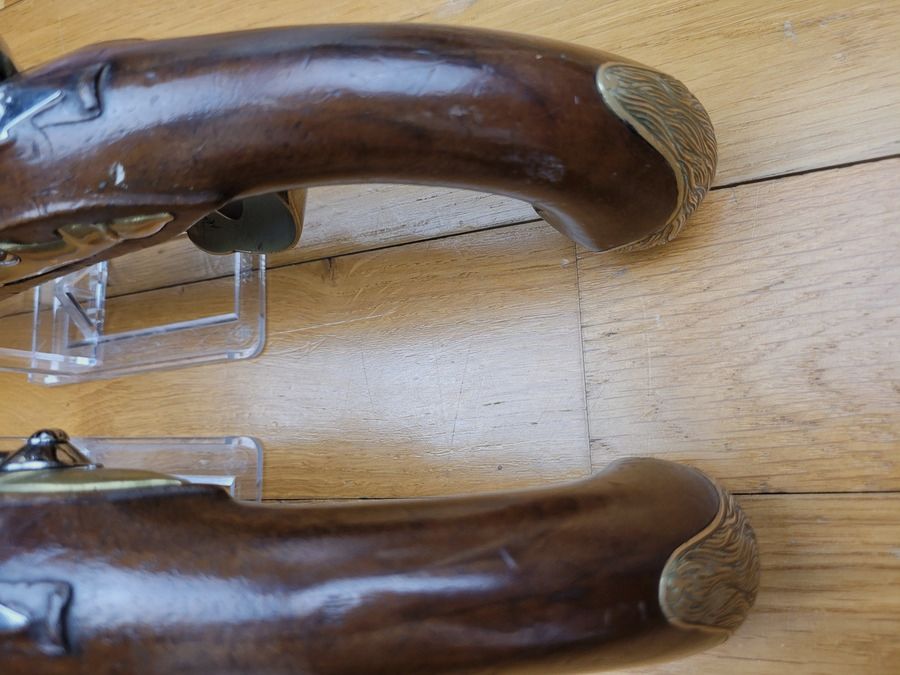
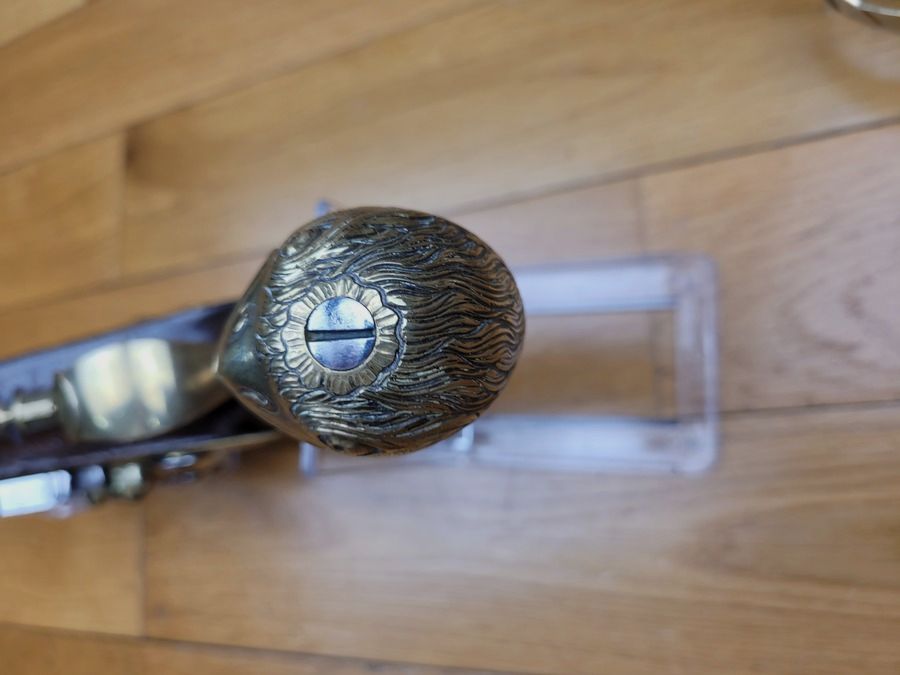
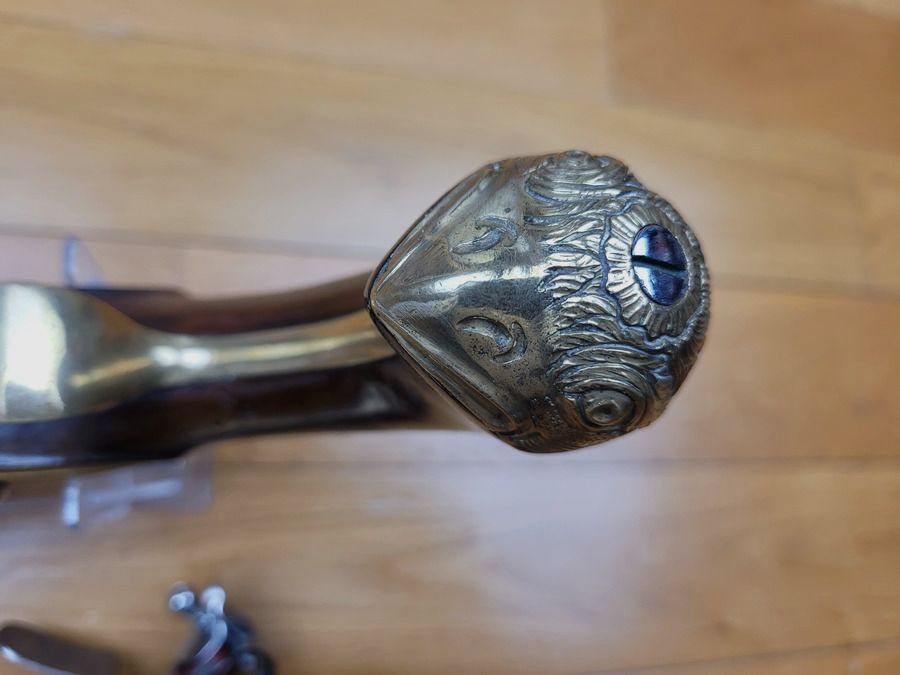
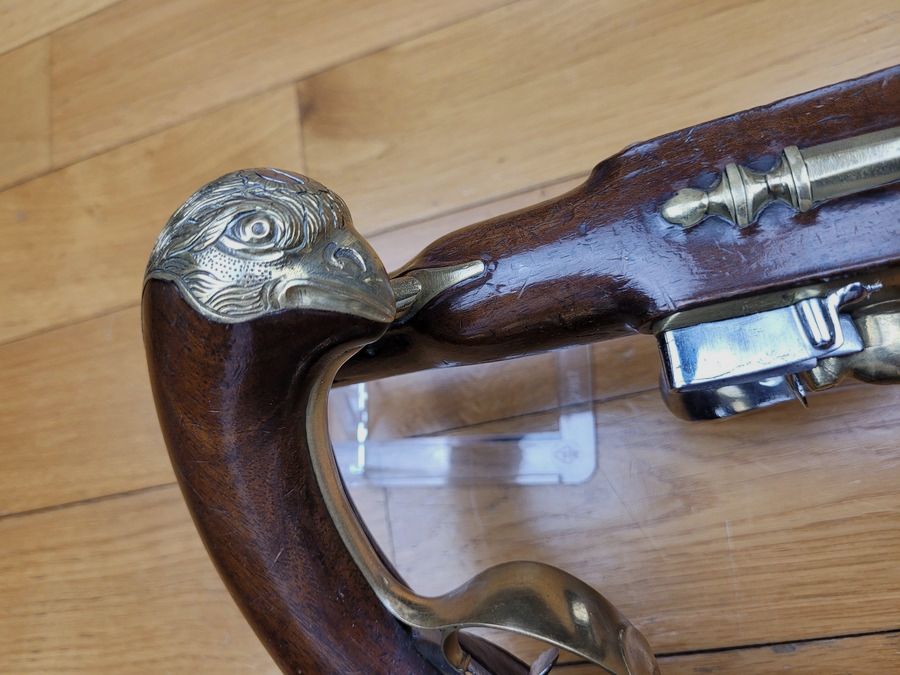
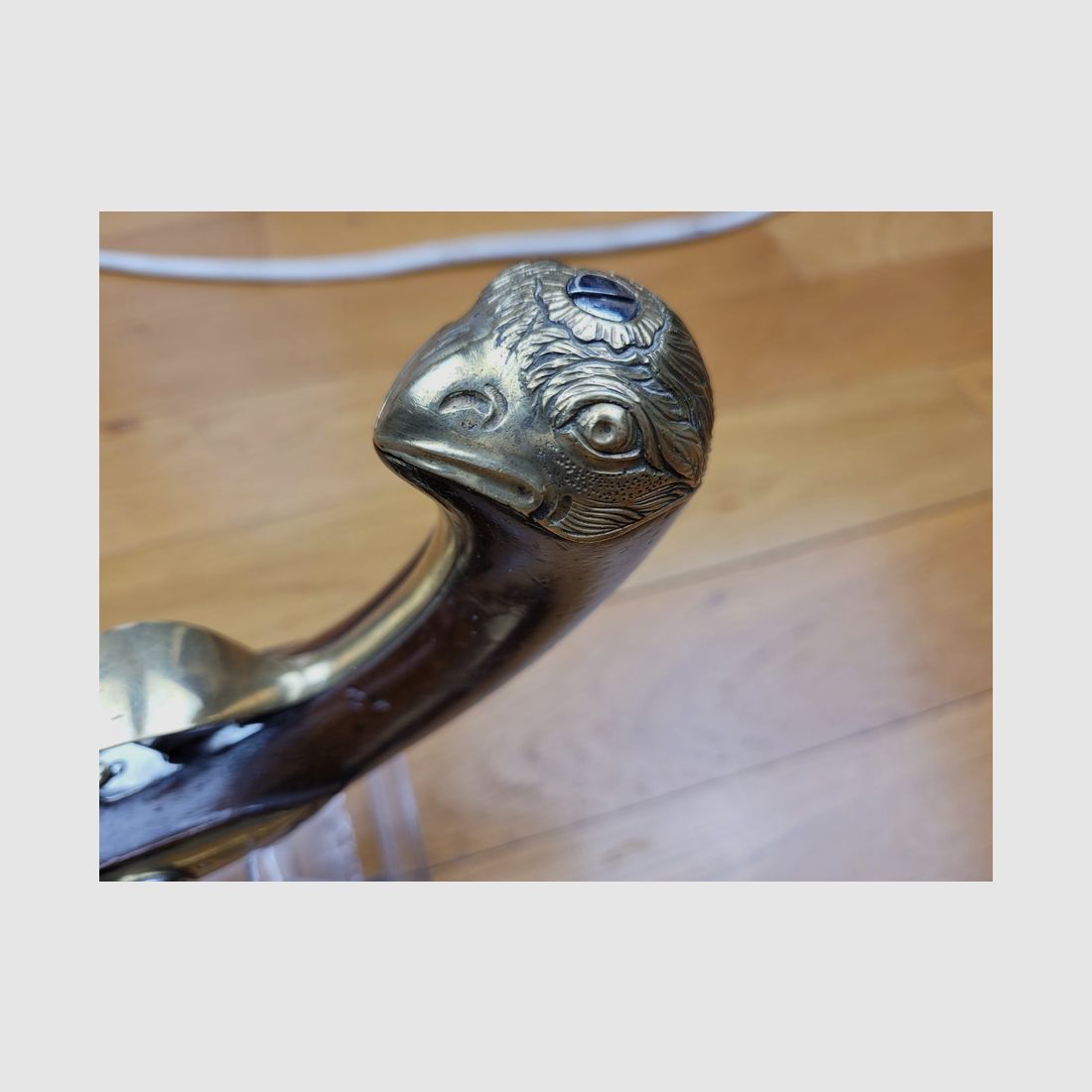
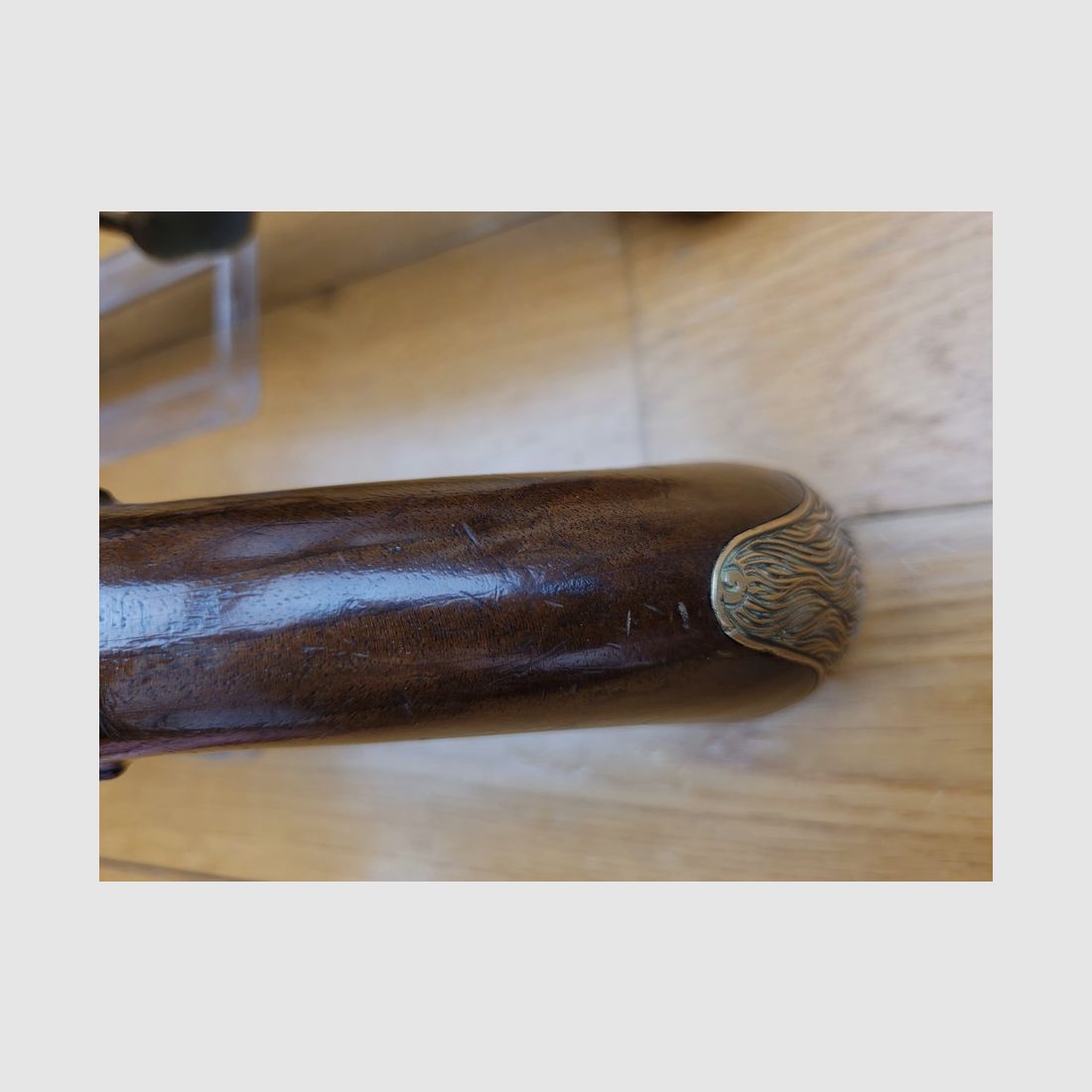
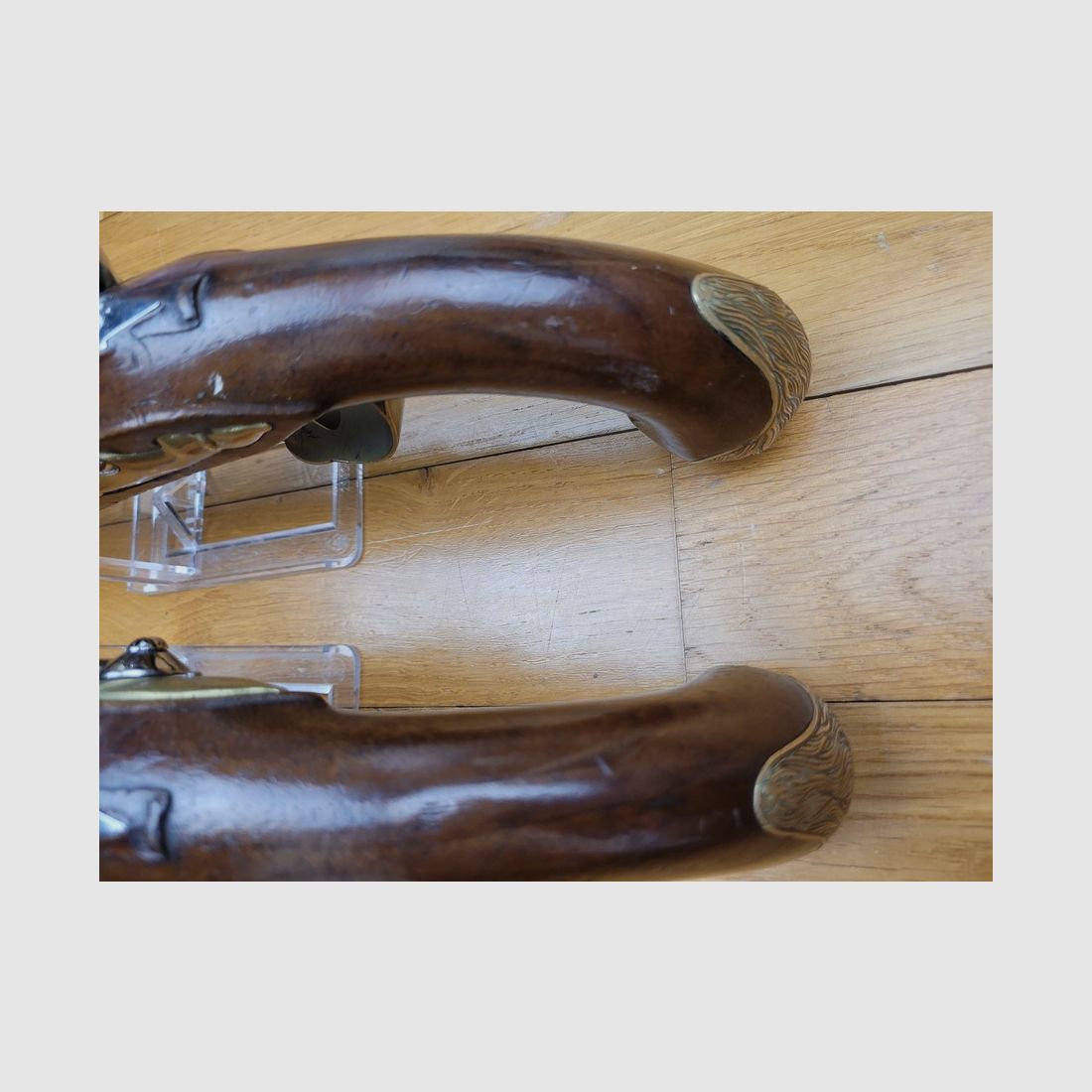
– All other fittings are brass – in remarkable condition, ending in chiseled eagle-head caps in perfect condition (Long live the Emperor!) – simply magnificent.
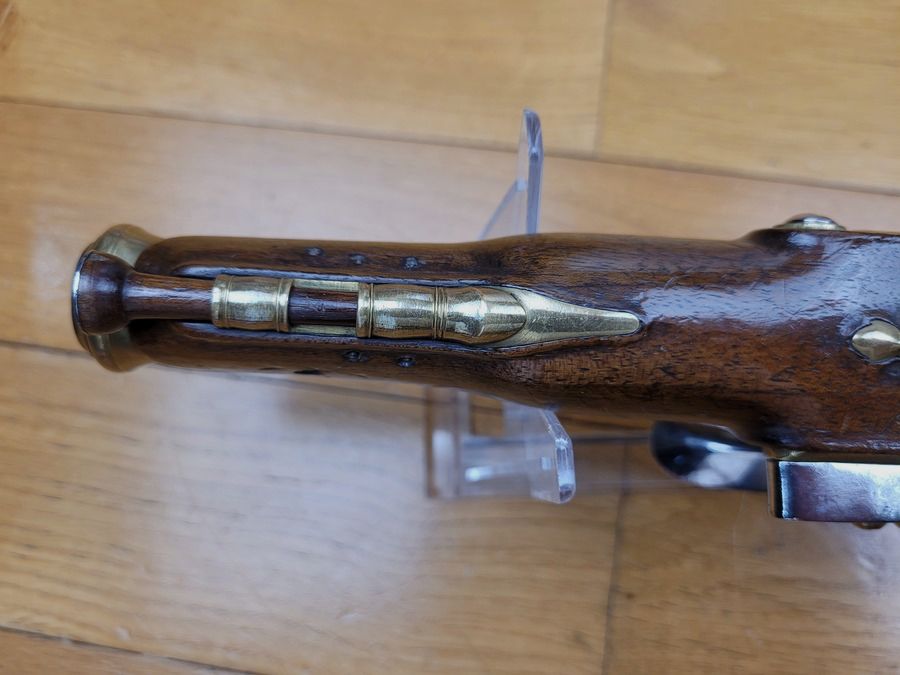
– The stocks are walnut, as are the “nail” ramrods, and show few signs of handling – all original screws are in excellent condition.
The guns are 30 cm overall, with 16 cm barrels – very comfortable to hold.
This is a private purchase by a French Navy officer around 1810, during the Empire’s heyday. And a pair, no less…
All in all, a magnificent pair of high-quality, beautifully crafted guns – with a long and glorious history – in truly exceptional condition. I’ve never had a pair in such well-preserved condition.
A Category D firearm under the CSI: valid ID card or passport required
*********************************************************************************************************************************************************************************************************************
Let’s say it again! Flingus Maximus gun shop in Paris and throughout France is also here to help with private firearm transfers, buying firearm and militaria collections, firearm appraisals, and questions about firearms in estates and inheritances. Contact your favorite gunsmith using our contact form or at [email protected]
Reminder: All collectible, hunting, and shooting firearms are used and sold as-is, without warranty.
All antique firearms sold as Category C or D, “Collection” or “Cowboy shooting” are collectible firearms that have not been proof-tested for shooting or tested at a shooting range. They have been visually inspected for their general and mechanical condition, but none have been used for shooting, so they are sold as untested. Anyone wishing to use a firearm for shooting must first contact the National Proof House in Saint Étienne, the only body authorized to issue proof certificates before a firearm can be used for shooting. (Show description in original language)
Le vent de l’océan souffle dans la turne de maître Flingus. Lui qui a le mal de mer et est fait pour le grand large comme la grenouille pour le désert.
Après Trafalgar, il a bien fallu faire quelque chose…
Je rappelle que le sucre, pour ce seul exemple, représentait à peu près dans l’économie mondiale d’alors ce que le pétrole y représente aujourd’hui. C’est pour cela qu’après la guerre de Sept ans, la Monarchie avait fait l’impossible pour conserver nos possessions sucrières dans les Caraïbes plutôt que le Canada ou les Indes. C’était encore plus important en ce début de XIXième siècle où la population explosait autant que l’industrie. La guerre navale était devenue le complément indissociable de la guerre économique.
Encore fallait il que la Marine puisse passer jusqu’au sucre. Et à défaut de vaincre la marine anglaise en duel solennel, comment perturber au maximum son commerce ?
Bref, plus d’autres solutions que la guerre de course et les raids audacieux visant à perturber au maximum le business grand breton et à visser un peu plus le Blocus Continental dont je rappelle qu’il a bien faillit arriver à son but. Le parlement anglais était, vers 1810/1811, largement divisé avec un parti de la paix avec l’Empire de plus en plus fourni et puissant pour des raisons économiques. William Pitt avait fort à faire au parlement pour maintenir son pays dans sa croisade contre la France. On ne l’apprend plus et les anglais ne le diront jamais mais ils ont bien failli céder vers 1810/1811 comme en 1800 à Amiens. Près de 20 ans que les français dominaient le continent contre vents et marées. La crise économique liée au Blocus faisait des ravages en Grande-Bretagne. Le pays était las… Puis le Petit Caporal, plus par fureur de voir son blocus contesté que pour renforcer son efficacité économique, décida d’attaquer la Russie, dont la Cour était largement « arrosée » par l’argent anglais pour mieux le provoquer. Mauvaise idée.
Autant que le tombeau de la puissance impériale, 1812 et la campagne de Russie furent surtout un miracle totalement inespéré pour les anglais. Le début de la fin d’un cauchemar qui durait depuis 1789 de leur point de vue. Et aussi le début d’un autre grand Empire. Le leur.
Restait à la faire cette guerre de course et de harcèlement maritime que nous ont montré nos amis anglo-saxons dans le film « Master and Commander: de l’autre coté du monde » avec Russel Crowe.
Une guerre d’embuscades navales où les ponts des trois mats étaient peints couleur rouge sang pour que les jeunes mousses – souvent dans leur dizaine d’années – ne défaillent pas complètement lors de la boucherie qui suivrait. Et où le principal instrument de commandement de la Navy était le fouet et le fameux slogan “rum, lash and sodomy” (« du rhum, du fouet et de la s….. ») .
La discipline n’était guère plus tendre dans l’ex Royale. Une guerre un peu oubliée mais d’une violence inouïe. La bravoure de ces hommes dépasse notre entendement selon nos critères modernes.
C’est cette histoire que nous raconte cette belle paire de pistolet d’officier de la Marine Française construite à Saint Étienne vers 1810 et intouchée depuis.
Les deux armes sont en état quasi parfait.
– Canons en laiton très épais – à deux registres, octogonal puis ronds avec renforcement de bouche – poinçon de Saint-Etienne « AC + deux palmes croisées »- poinçons bien nets et lisibles – sur le canon du coté gauche près de la contre-platine. Canons en parfait état – aucun coups ni bosses – quelque légères traces de manipulations tout au plus – Calibre 16mm – lisse évidemment – Légèrement tromblonées à la bouche (les marins adoraient cela depuis le début du règne de Louis XVI !) – Parfait état.
– Platines à corps rond en laiton également intouchées – et chiens à col de cygne bien dans l’esprit de ces armes de marine qui n’avaient guère changées depuis le XVIII° siècle – fonctionnement mécanique impeccable tant en tenue qu’à l’abattu pour les chiens, et pour la batterie – Parfait état.
– Queue de culasse et détente en fer – parfait état.
– Toutes autres garnitures en laiton – en état remarquables se terminant par des calottes à têtes d’aigles ciselées en parfait état (Vive l’Empereur !) – juste magnifiques.
– Les bois sont en noyer comme les baguettes « en clou » et portent peu de traces de manipulation – toutes vis d’origine en excellent état.
Les armes font 30cm au global et leur canon mesure 16 cm – très bonne prise en main.
C’est un achat privé d’un officier de Marine français vers 1810. Dans un Empire en plein apogée. Une paire en plus…
Au final une magnifique paire d’armes de haute qualité et très joliment ouvragées – avec une histoire glorieuse et au long cours – dans un état juste exceptionnel. Je n’en avais jamais eu dans un tel état de préservation.
Arme de catégorie D au CSI : pièce d’identité, CNI ou passeport, en cours de validité obligatoire
*********************************************************************************************************************************************************************************************************************
Répétons le ! L’armurerie Flingus Maximus à Paris et partout en France est là aussi pour vos formalités armes entre particuliers, le rachat de collections armes et militaria, vos estimations d’armes, vos questions armes dans les successions et héritage. Contactez votre armurier préféré via notre formulaire de contact ou à [email protected]
Rappel : Toutes les armes de collection, de chasse, et de tir sont d’occasion et sont vendues dans l’état, sans garantie.
Toutes les armes historiques de fabrication ancienne vendues en tant que C ou D, “Collection” ou “Cow-boy shooting”, sont des armes de collection non éprouvées pour le tir et non testées en stand. Elles ont été inspectées visuellement relativement à leur état général et mécanique mais aucune n’a été utilisée au tir et elle sont donc vendues comme non testées. L’acquéreur désirant utiliser une arme pour le tir devra impérativement se rapprocher préalablement du banc National d’Épreuve de Saint Étienne, seule entité habilitée à délivrer des certifications d’épreuves préalable à un usage de tir.