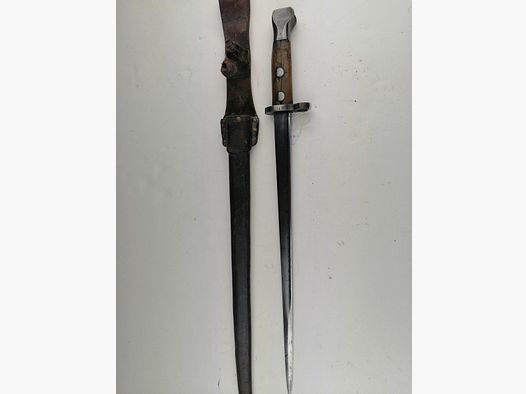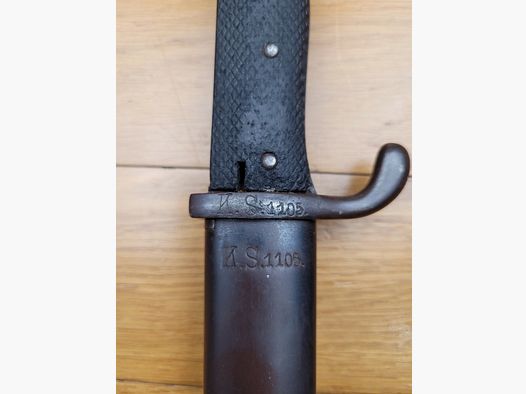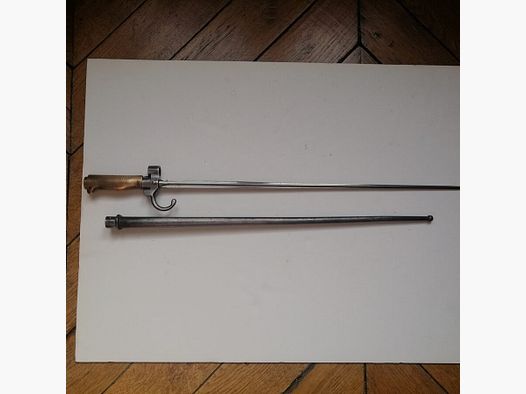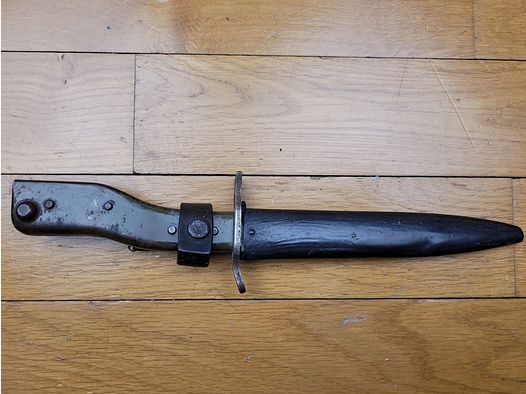







Very rare colonial bayonet – Netherlands Holland "KNIL" Dutch Indies Model 1895 Good sheath TBE
Price on Request
No permit required (18+)
75002 Paris, France
5
ID: 10339457
This item is currently unavailable.
Purchase from outside the EU: The firearm goes through an importer in your country, the dealer handles the export.
How buying from Europe works
Shop safely with Gunfinder
Our AI-powered seller identity verification makes Gunfinder the safest marketplace online.
Learn more
Details
- Original language
- French
- Category
- Condition
- New
- Location
- 🇫🇷 75002 Paris, France
- Availability
- Out of stock
Freshness
This listing is based on a mirrored offer, where the listing data was synced to us from a shop, dealer, or external marketplace. Please note that temporary price discrepancies may occur due to possible delays in data transmission.
- Source
- Flingus Maximus
- Last checked with the dealer
- about 24 hours ago
Description
Note:
The item is located abroad. Please note that delivery conditions, shipping times, and/or the purchase process may differ.
In Dutch, KNIL stands for “Royal Netherlands East Indies Army”.
The Dutch colonies (Indonesia, Suriname and the Netherlands Antilles) were administered by an army modelled on the former French East India Company or the English East India Company.
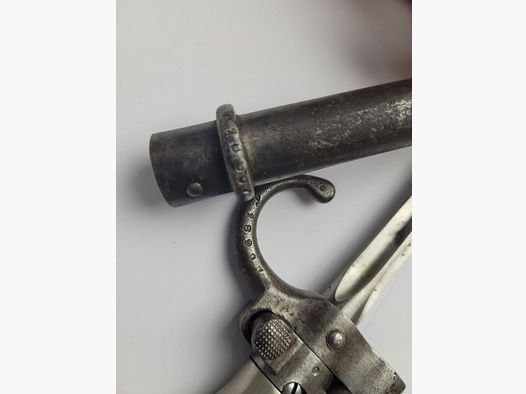
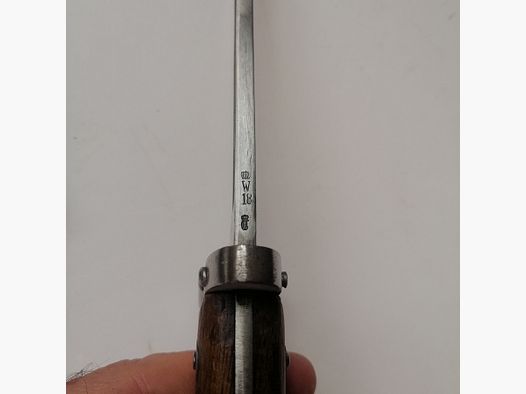
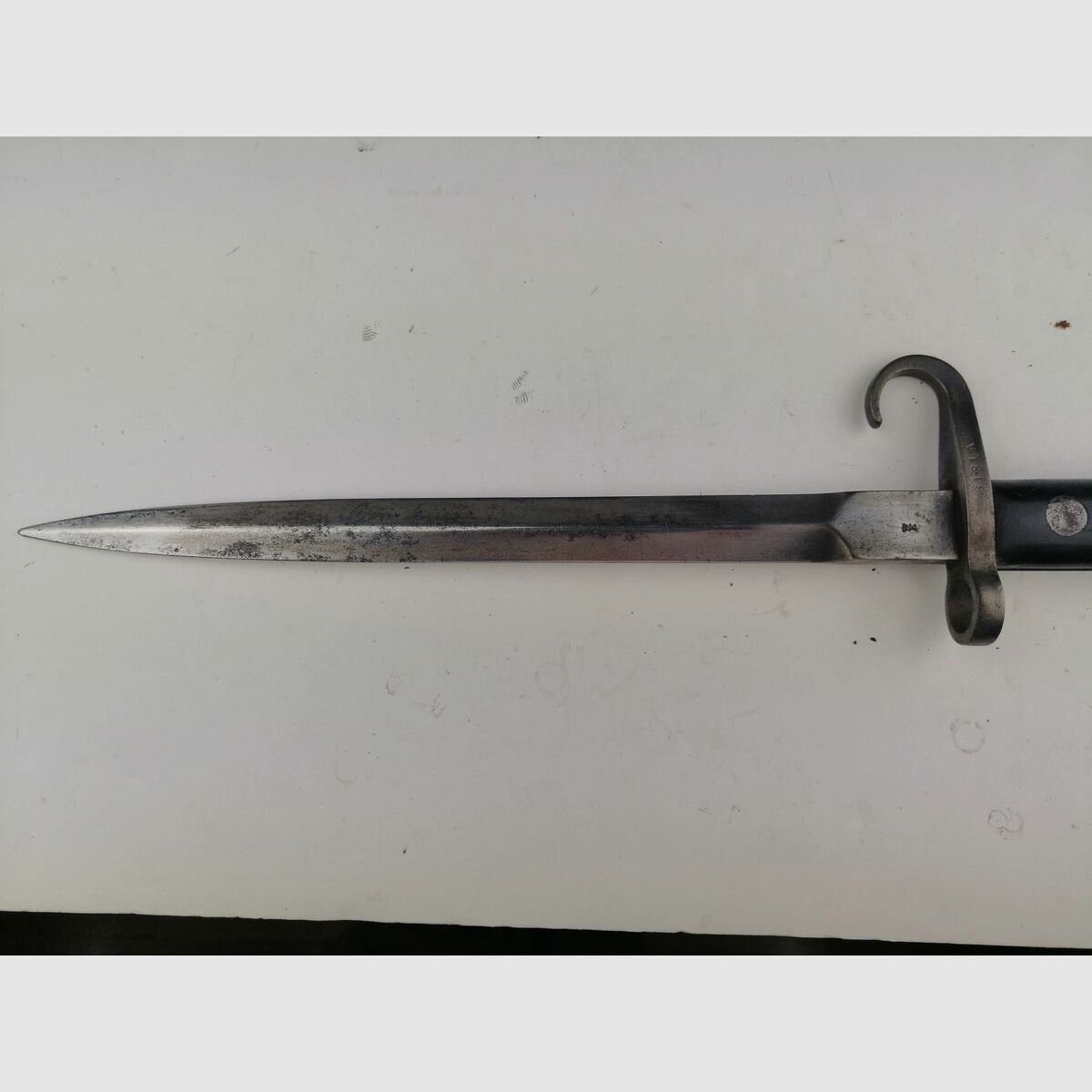
This bayonet is a special model made for the Dutch colonial troops. It was ordered specifically by the KNIL in 1896 from the Steyr factory in Austria, and bears the OEWG logo on the ricasso. Just 36,000 were ordered, and very few made it back. It is rare, if not very rare.
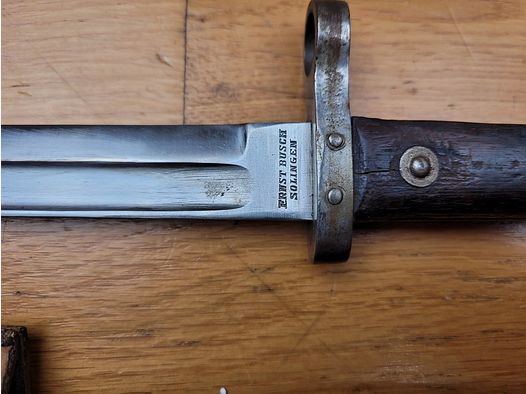
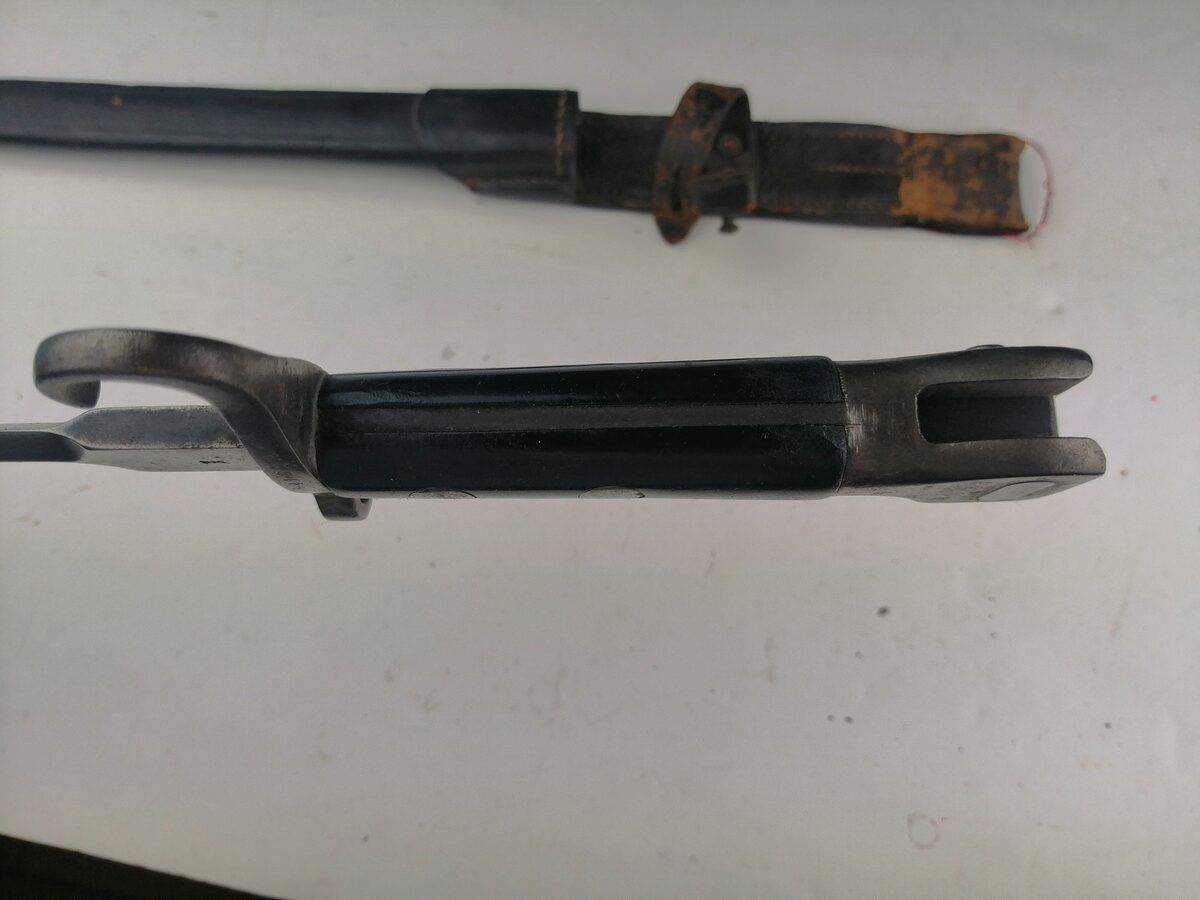
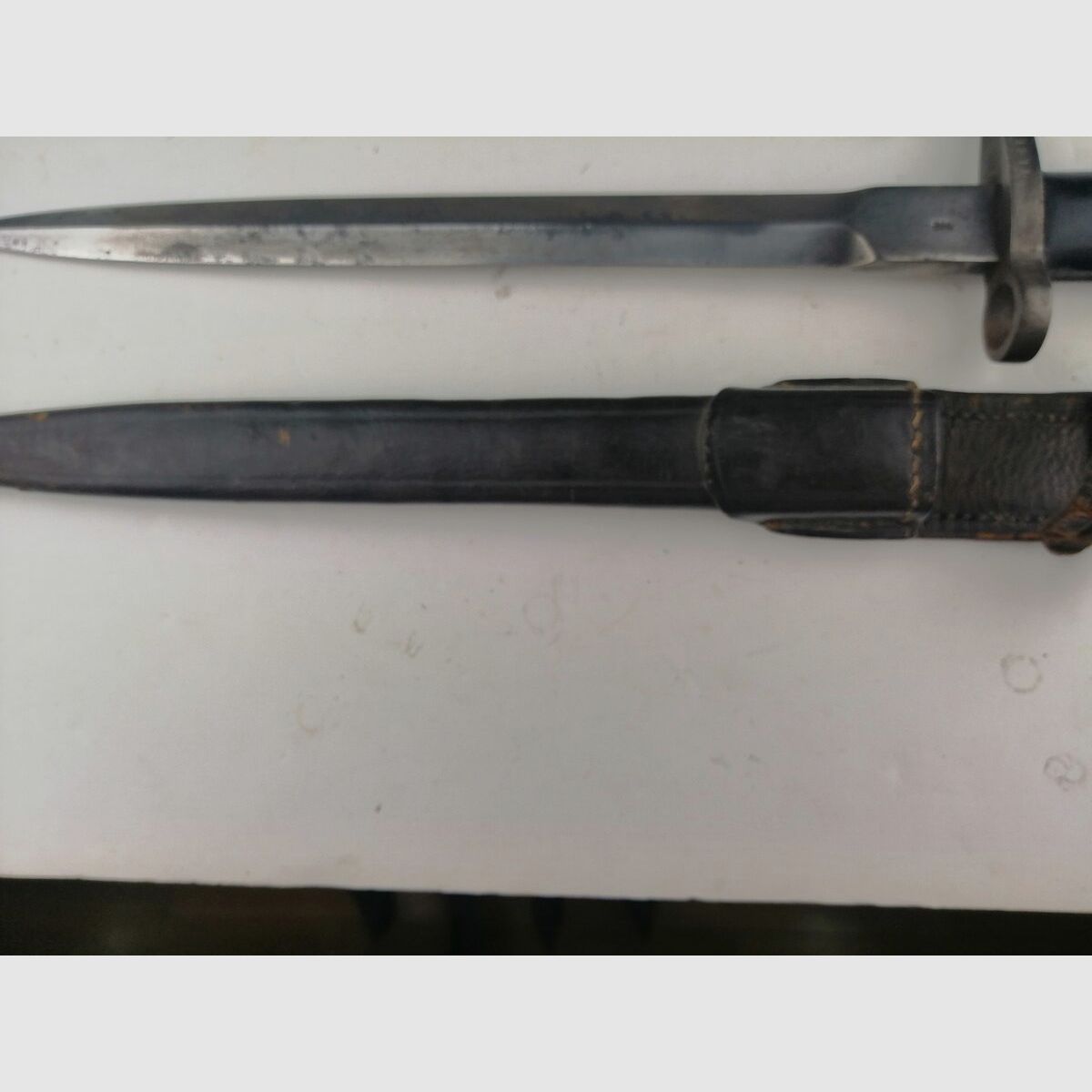
It has a quillon like the pre-1900 Model 95 infantry bayonet (the year all quillons on non-colonial infantry bayonets were cut off). However, its blade is a different length, at 25 cm (compared with 36 cm for the standard infantry version), so it retained its quillon. Its scabbard and frog are also completely different from those of other Model 95 bayonets. In short, it’s a completely different bayonet…
It should not be confused with the 1895 naval bayonet either. It looks very similar, but its blade is 36 cm long, like the infantry version, and its scabbard and frog are also different.
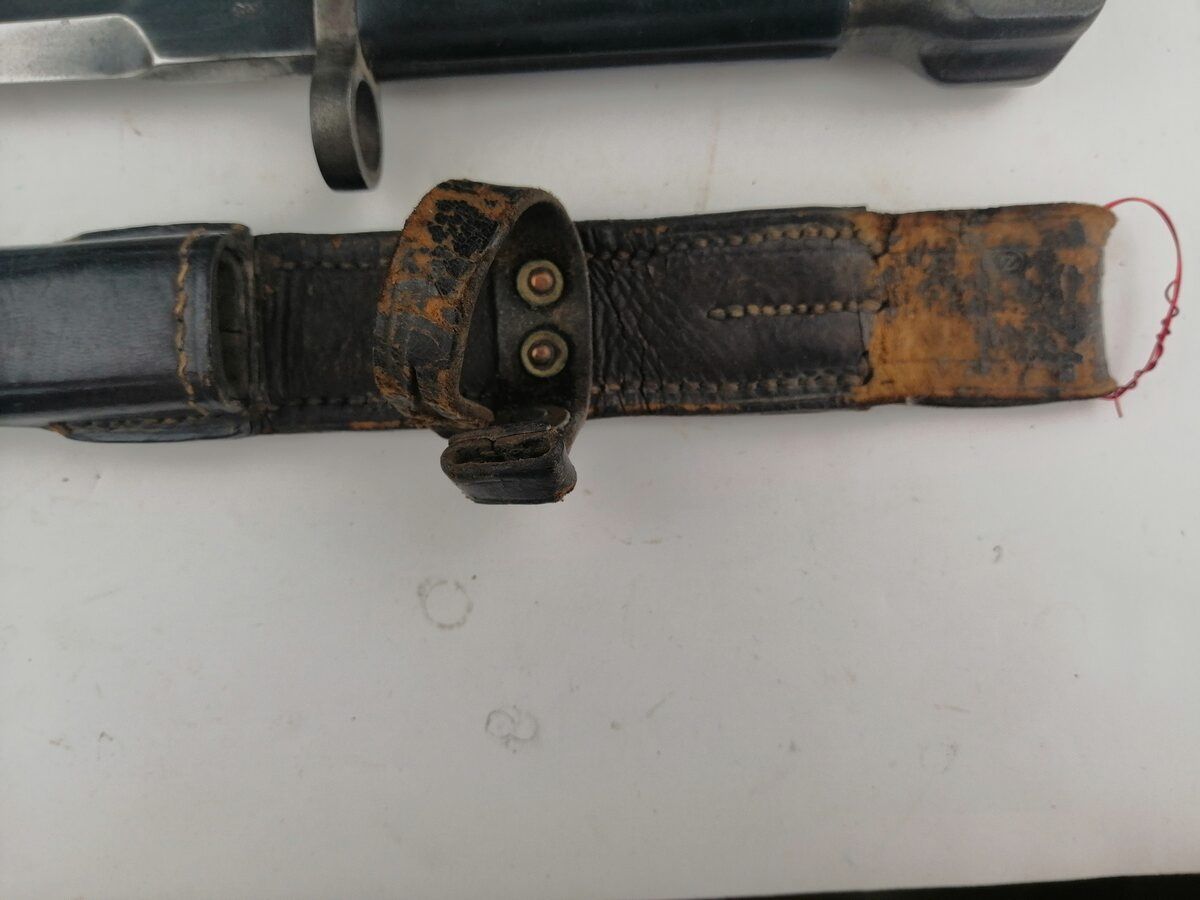
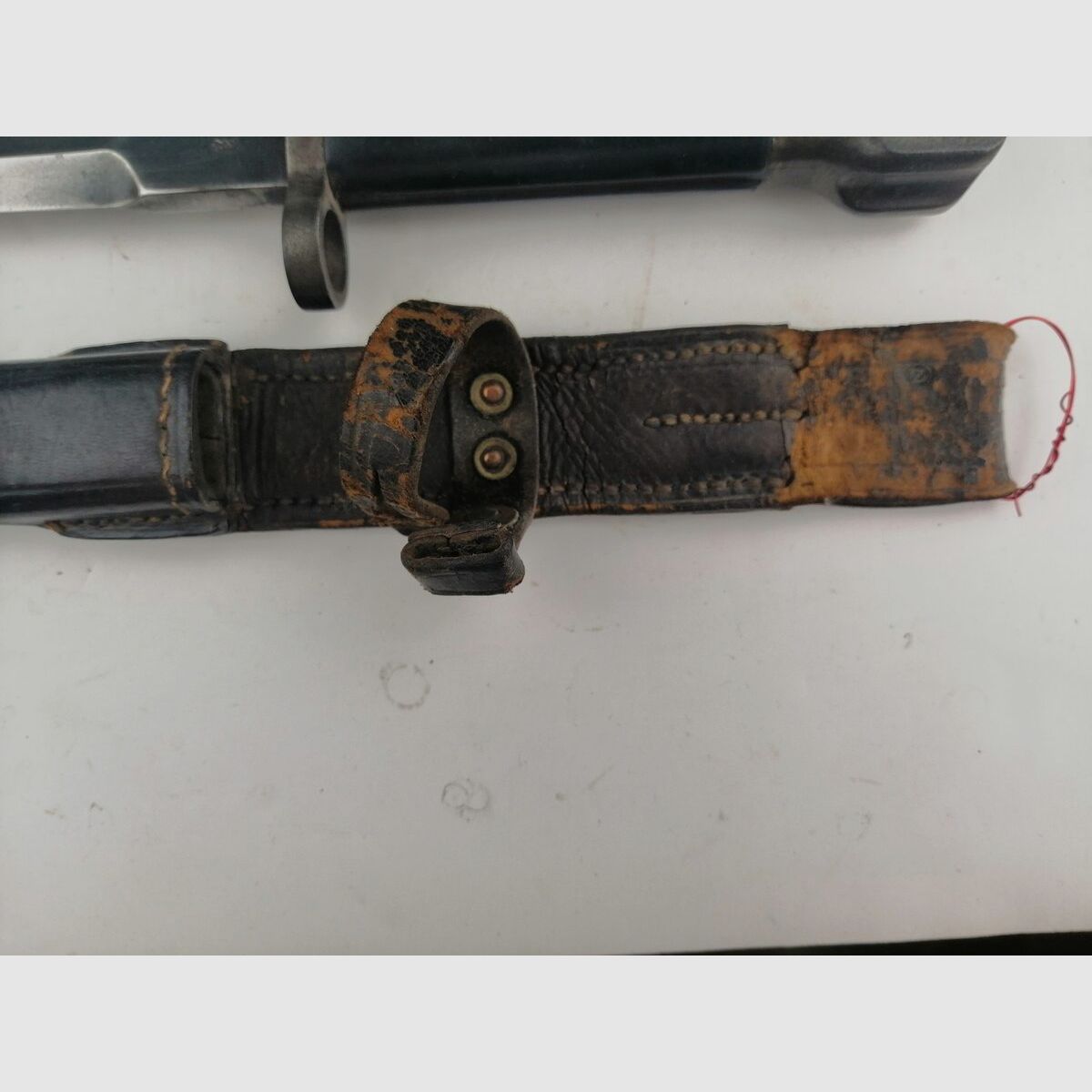
Our KNIL bayonet is in excellent condition, with a good original scabbard in very good condition, which is very rare for this model. Its only flaw is very slight oxidation at the tip of the blade. All its markings are clearly visible. Overall, it is in rare condition for this colonial model.
All in all, a very rare bayonet in very good original condition and an essential addition to a collection of early 20th-century European bayonets.
Weapon not classified under the CSI, but sale to minors is prohibited: ID required. (Show description in original language)
Très rare baïonnette coloniale du Royaume de Hollande pour le fusil M95 Mannlicher adopté par ce pays en 1895 dite « KNIL ».
En néerlandais KNIL signifie « Armée Royale néerlandaise pour les Indes Orientales « ou « Royal Netherlands East Indies Army » en anglais.
Les colonies hollandaises (Indonésie, Suriname, Antilles néerlandaises) étaient en effet gérée par une armée sur le modèle de l’ancienne Compagnie des Indes en France ou de la Compagnie des indes orientales anglaise.
Cette baïonnette est un modèle particulier à ces troupes coloniales hollandaises. Elle a fait l’objet d’une commande spécifique de la KNIL en 1896 auprès de l’usine de Steyr en Autriche dont elle porte dle logo OEWG au talon. A peine 36.000 ont été commandées et très peu sont revenues. Elle est rare voire très rare.
Elle porte un quillon comme celle de l’infanterie du modèle 95 avant 1900 (date à laquelle tous les quillons de la baïonnette d’infanterie non-coloniale ont été coupés). Mais la longueur de sa lame est différente à 25 cm (contre 36 pour celle d’infanterie classique), elle a donc gardé son quillon et son ensemble fourreau/ porte fourreau est totalement différent des autres modèles pour la 95. Bref c’est une toute autre baïonnette….
Elle ne doit pas être confondue non plus avec la baïonnette de Marine 1895 à la quelle elle ressemble beaucoup mais dont la lame fait 36 cm comme celle de l’infanterie pour le coup et dont le fourreau et porte-fourreau sont aussi différents.
Notre baionette KNIL est en excellent état avec un bon fourreau d’origine en TBE ce qui est très rare sur ce modèle – son seul défaut étant une très légère oxydation en bout de lame – Tous ses marquages sont bien visibles. Elle est globalement dans un état rare pour ce modèle colonial.
Au final une baïonnette très rare dans un TBE état d’origine et un complément indispensable pour une collection de baïonnettes européennes du début du siècle.
Arme non classée au CSI mais interdite de vente aux mineurs : CNI obligatoire.