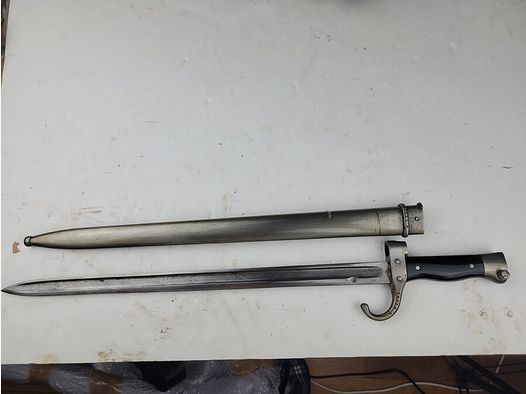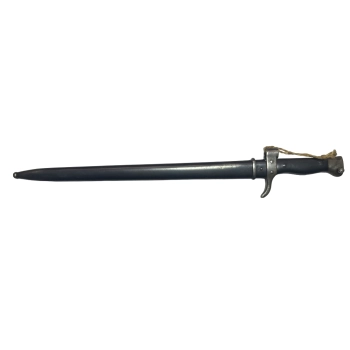
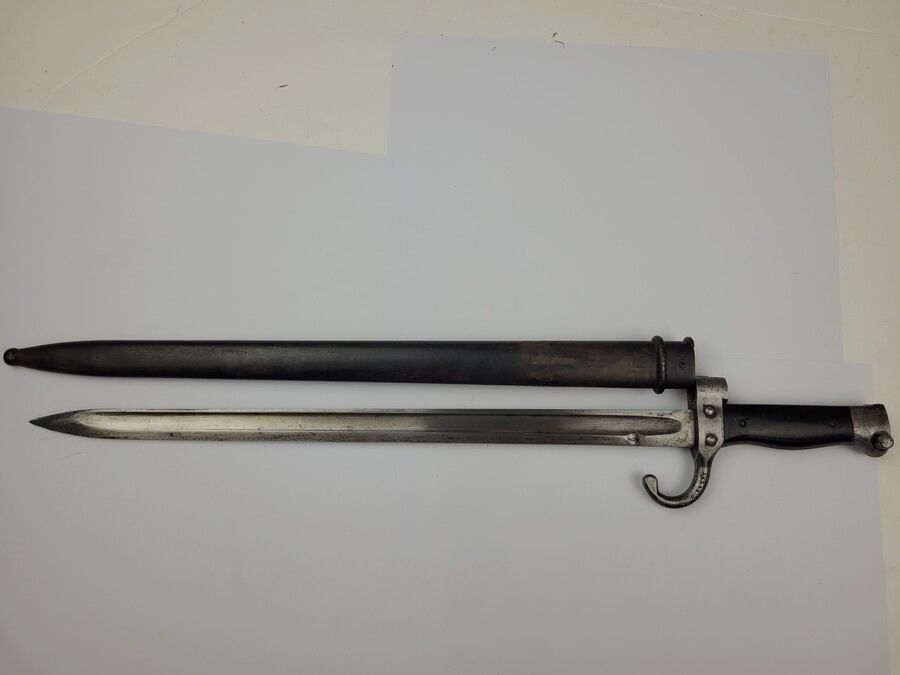
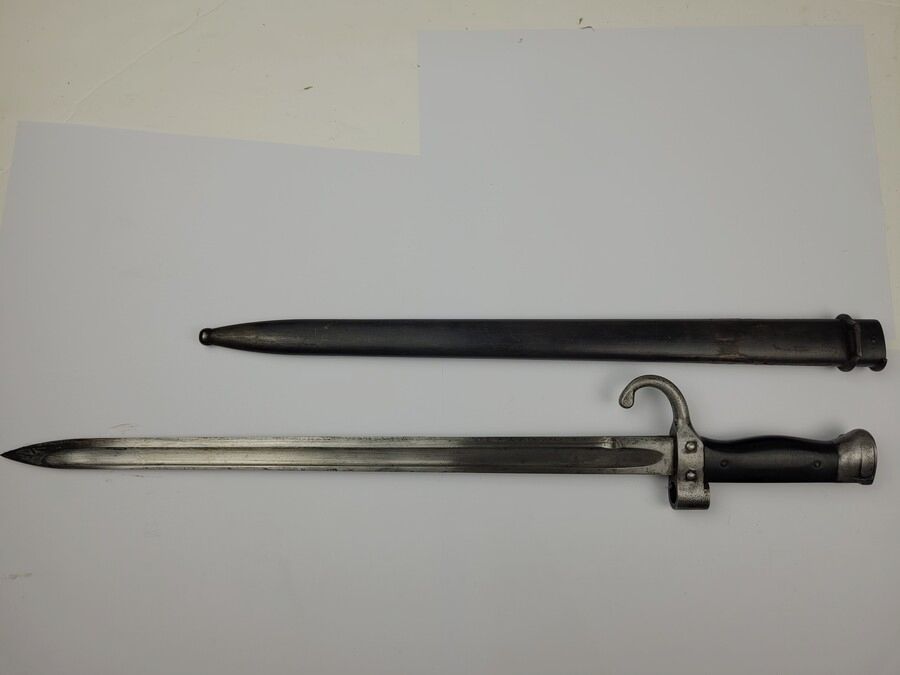
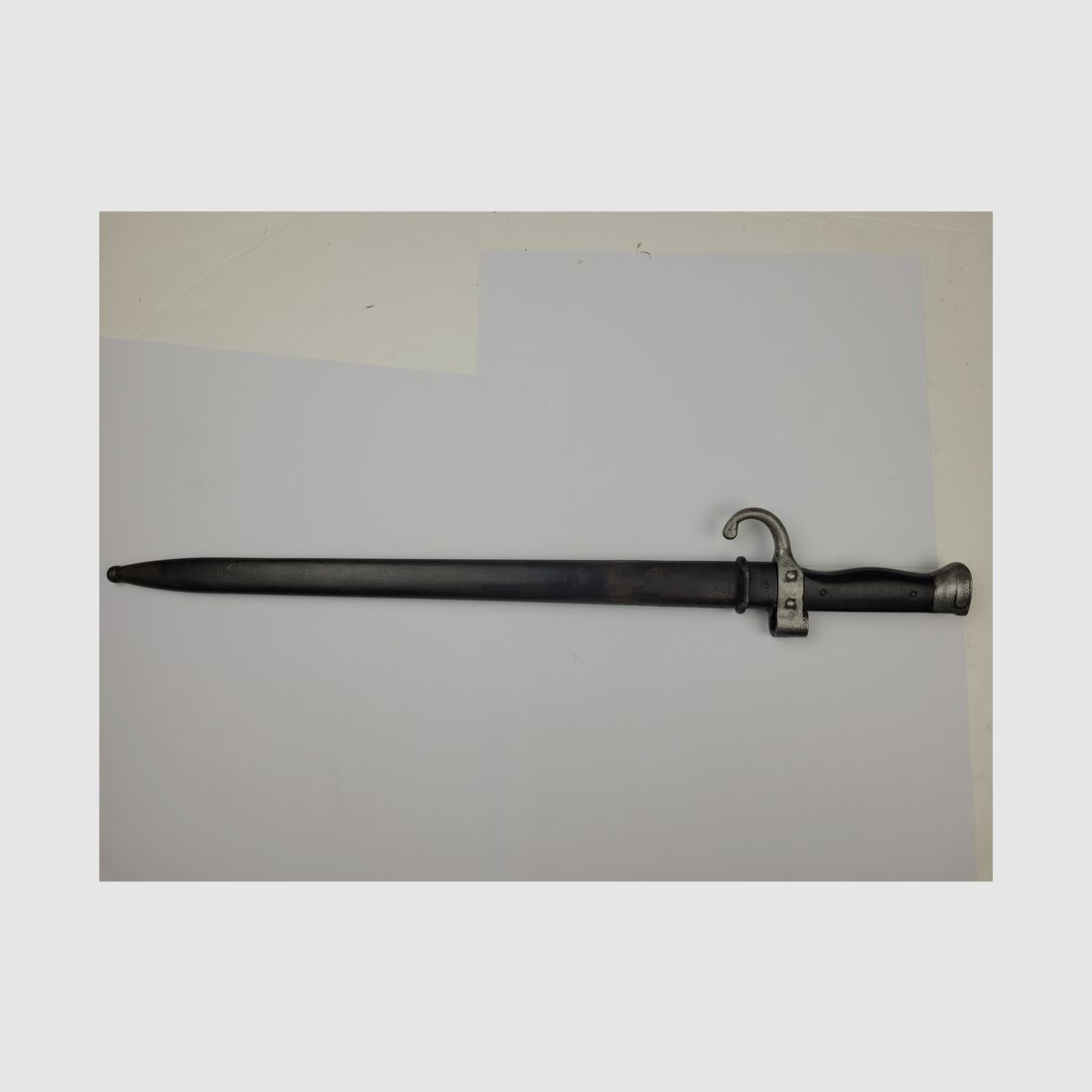
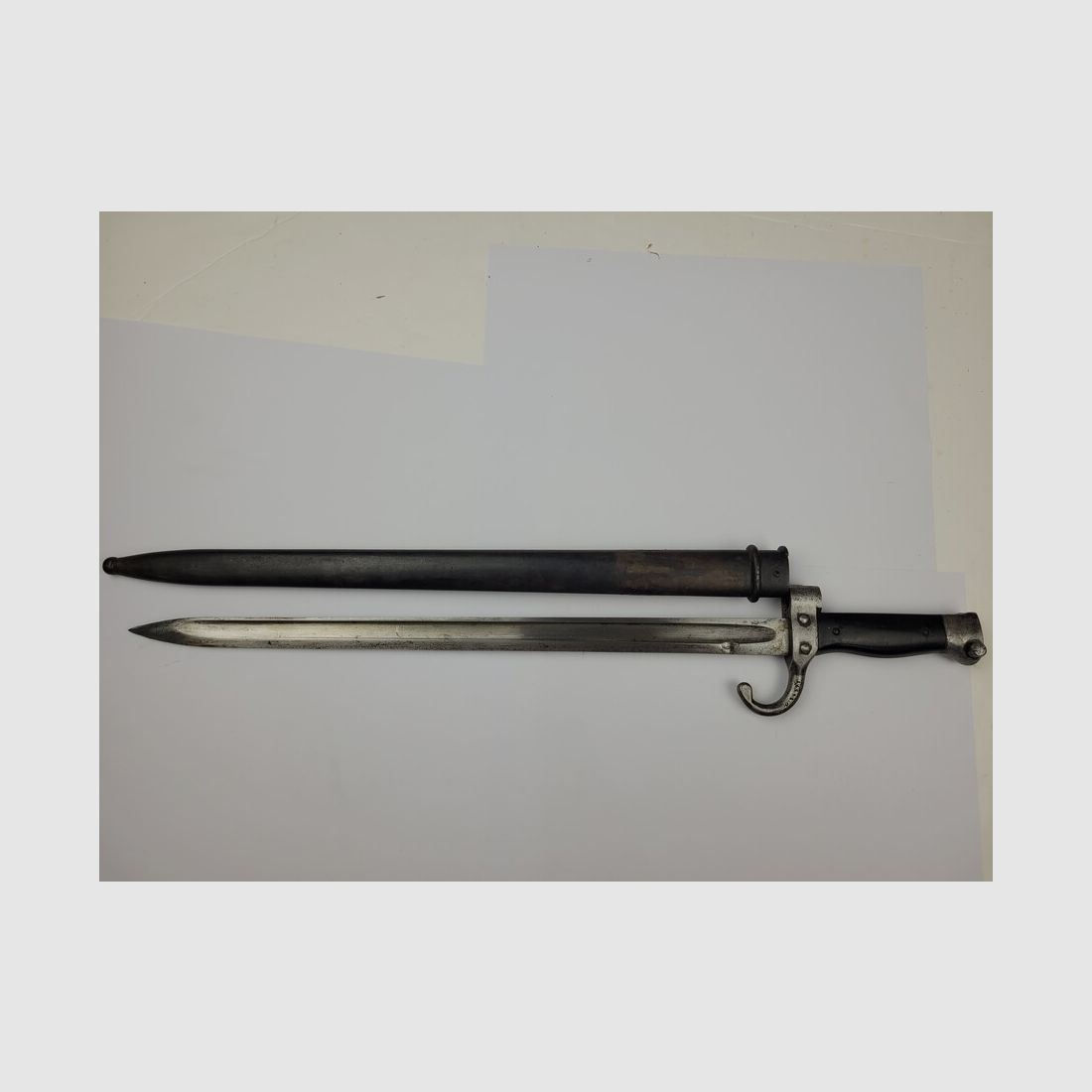
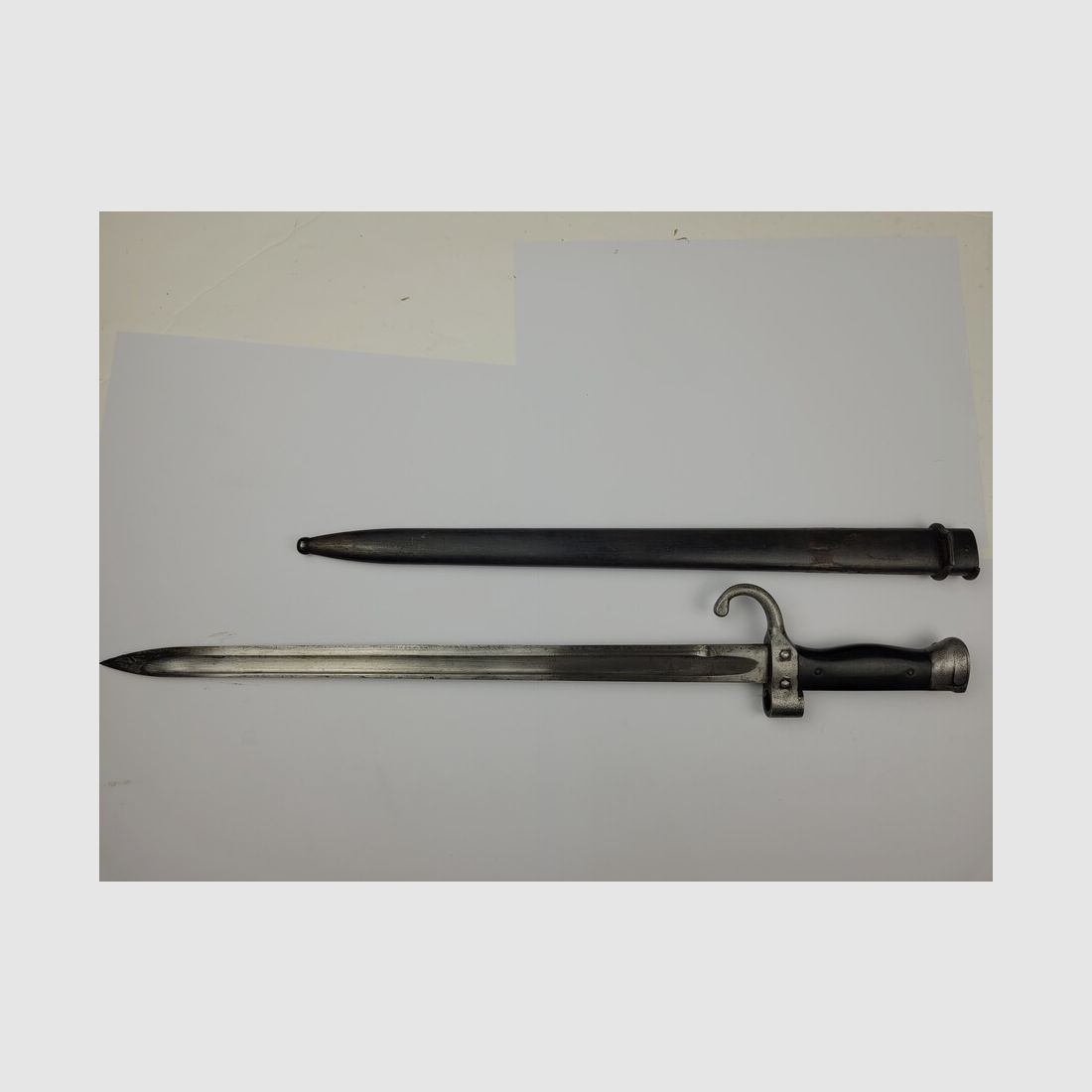
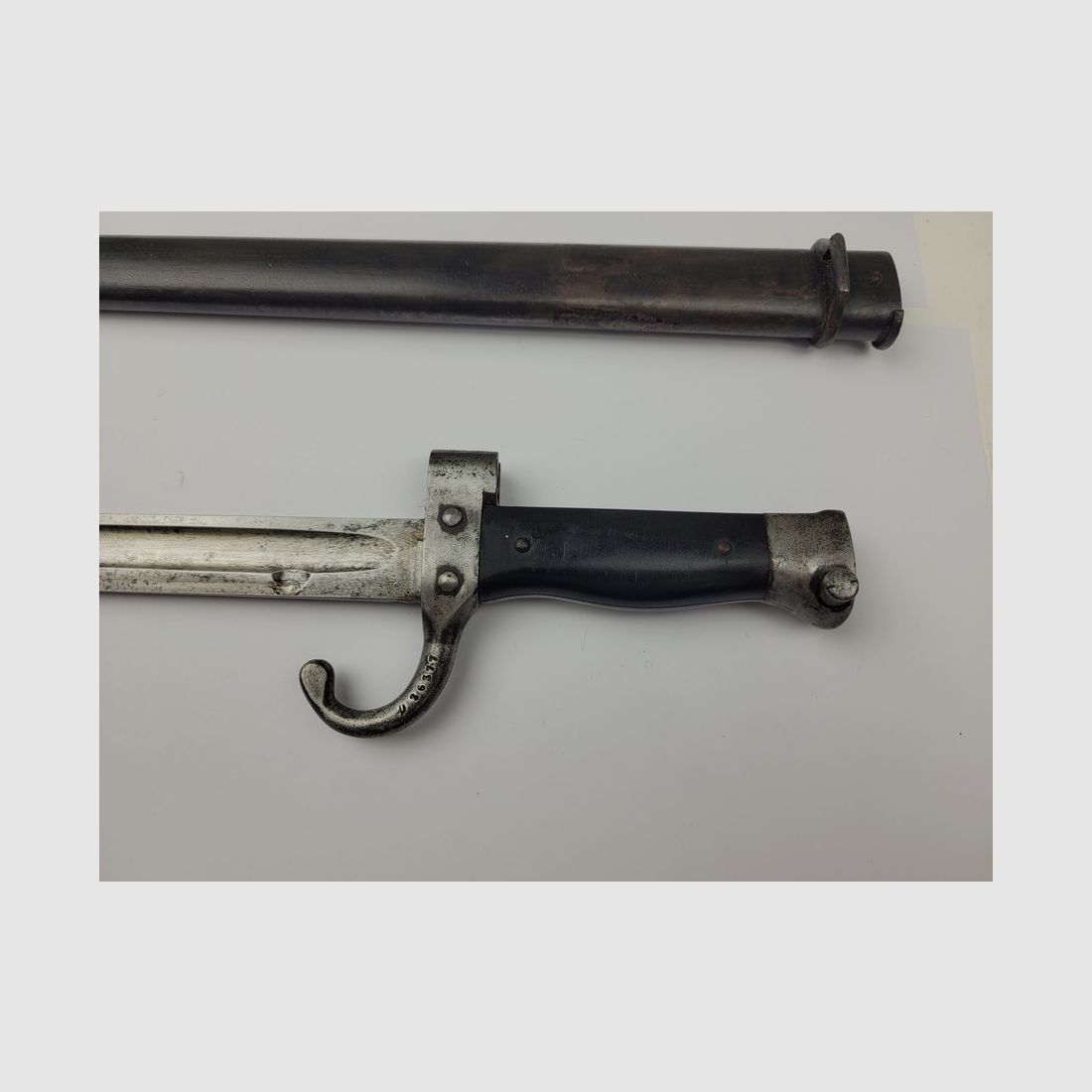
Berthier Model 1892 Bayonet Type 2 – with original Bakelite grips – Mono serial number – Very Good Condition
Price on Request
No permit required (18+)
75002 Paris, France
6
ID: 10339397
This item is currently unavailable.
Purchase from outside the EU: The firearm goes through an importer in your country, the dealer handles the export.
How buying from Europe works
Shop safely with Gunfinder
Our AI-powered seller identity verification makes Gunfinder the safest marketplace online.
Learn more
Details
- Original language
- French
- Category
- Condition
- New
- Location
- 🇫🇷 75002 Paris, France
- Availability
- Out of stock
Freshness
This listing is based on a mirrored offer, where the listing data was synced to us from a shop, dealer, or external marketplace. Please note that temporary price discrepancies may occur due to possible delays in data transmission.
- Source
- Flingus Maximus
- Last checked with the dealer
- about 23 hours ago
Description
Note:
The item is located abroad. Please note that delivery conditions, shipping times, and/or the purchase process may differ.
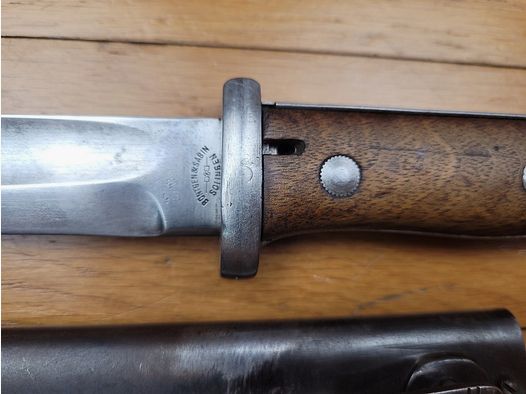
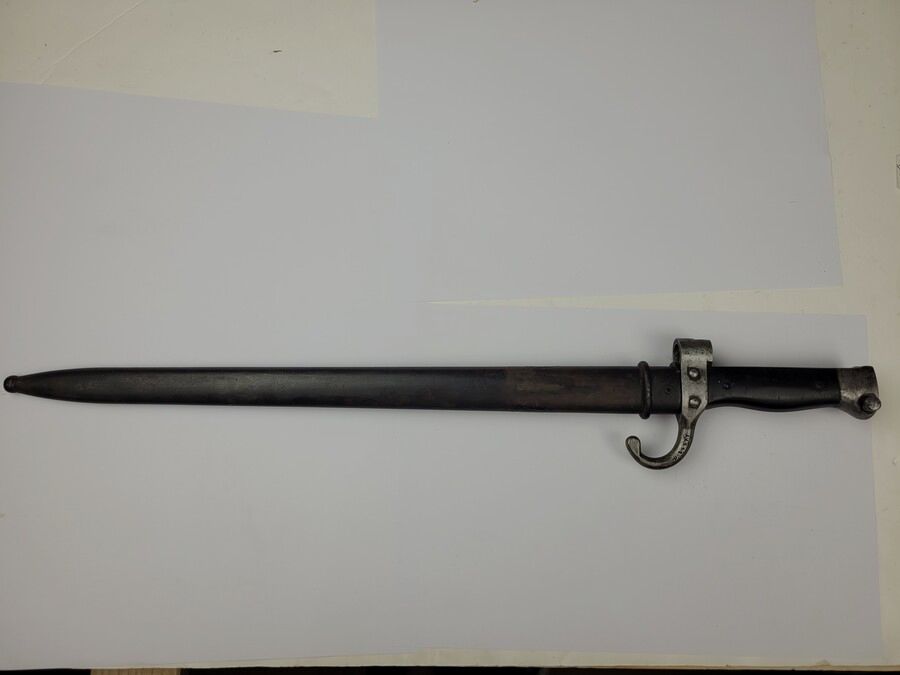
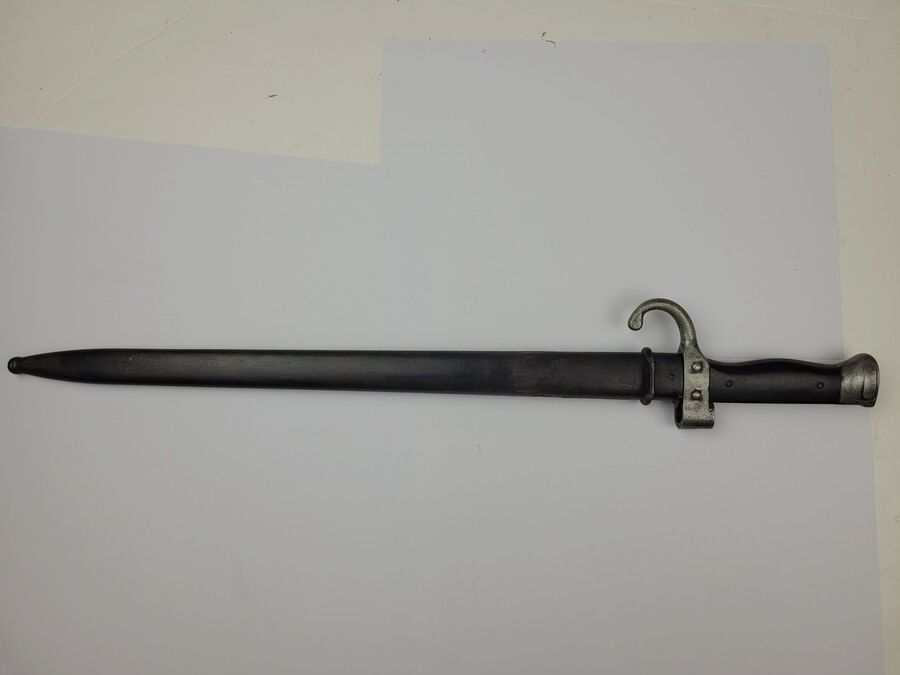
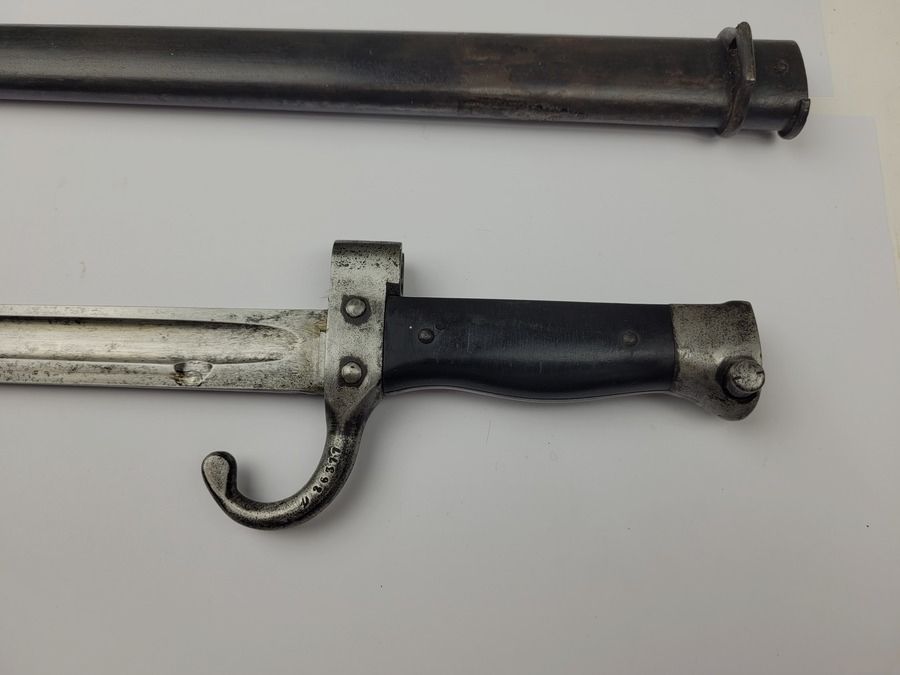
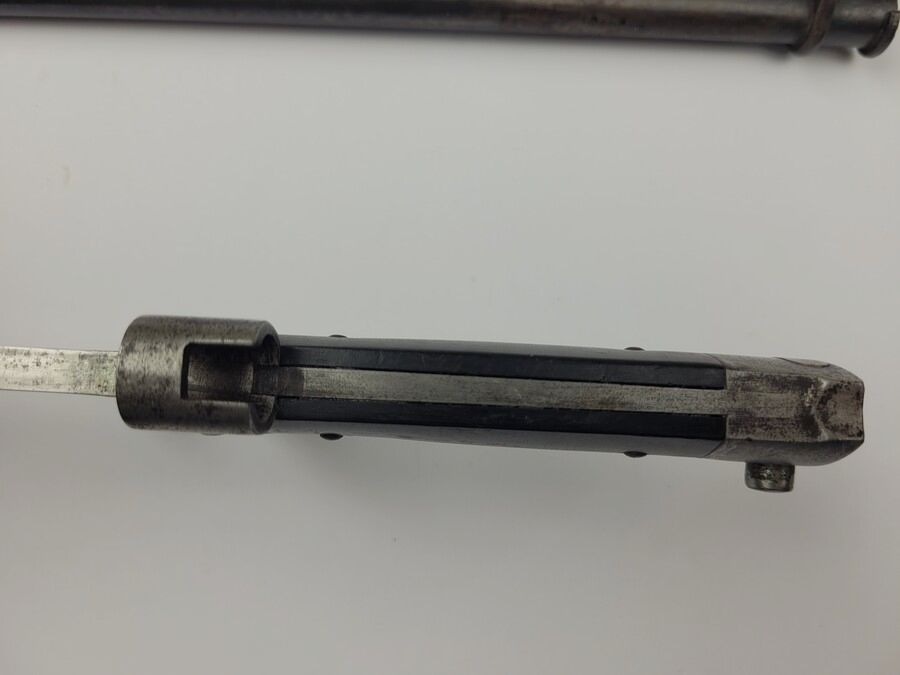
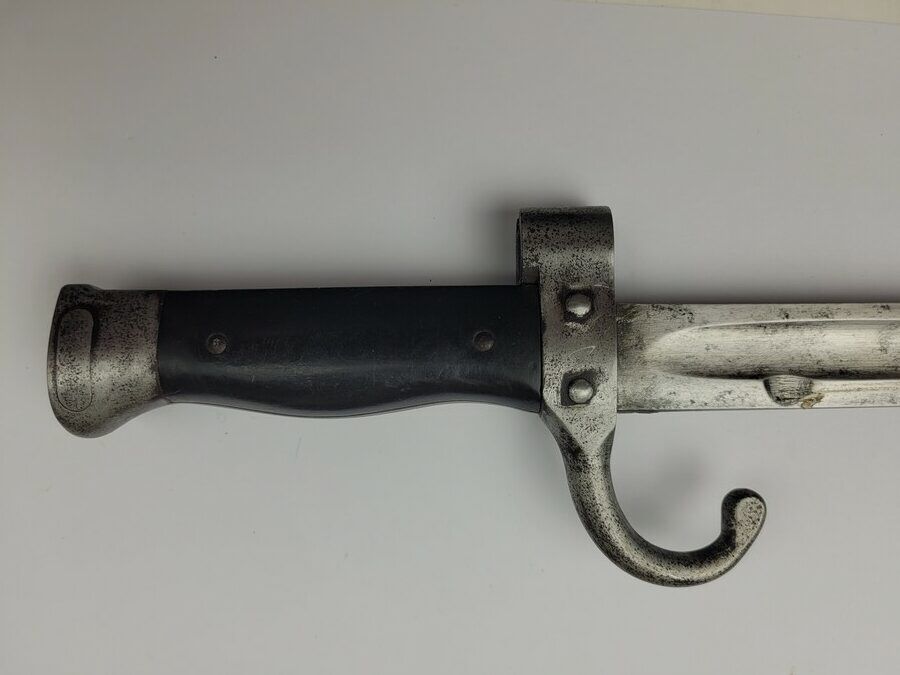
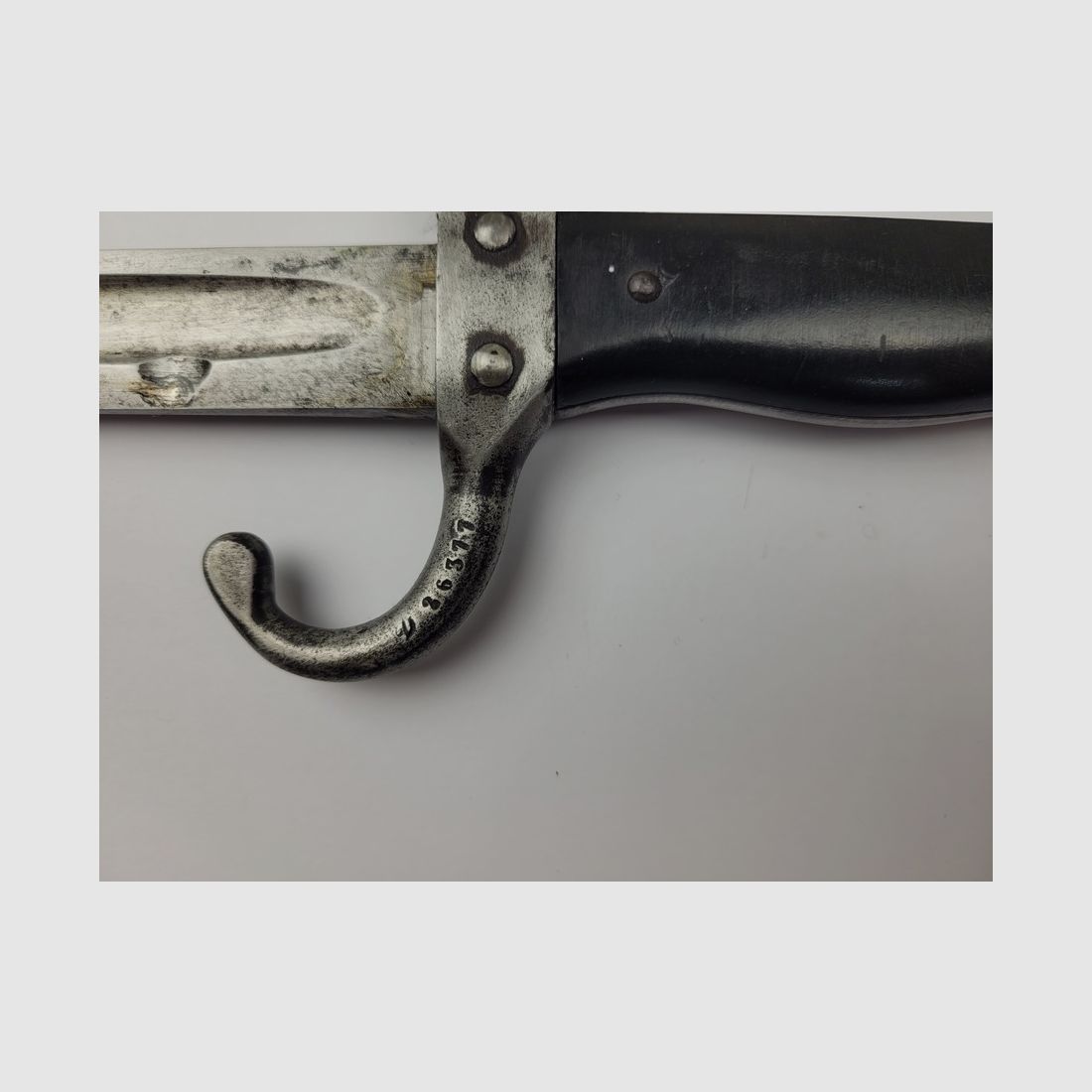
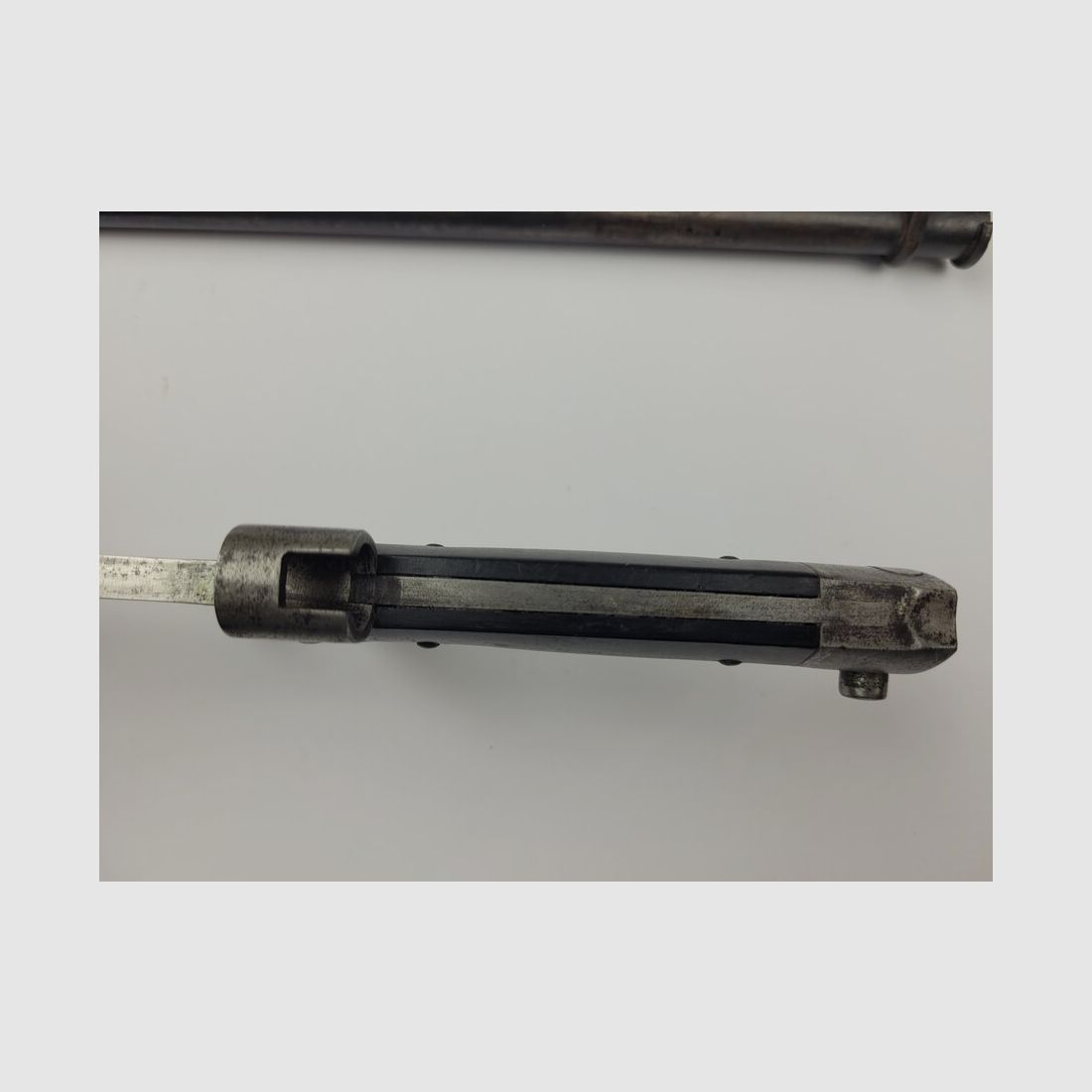
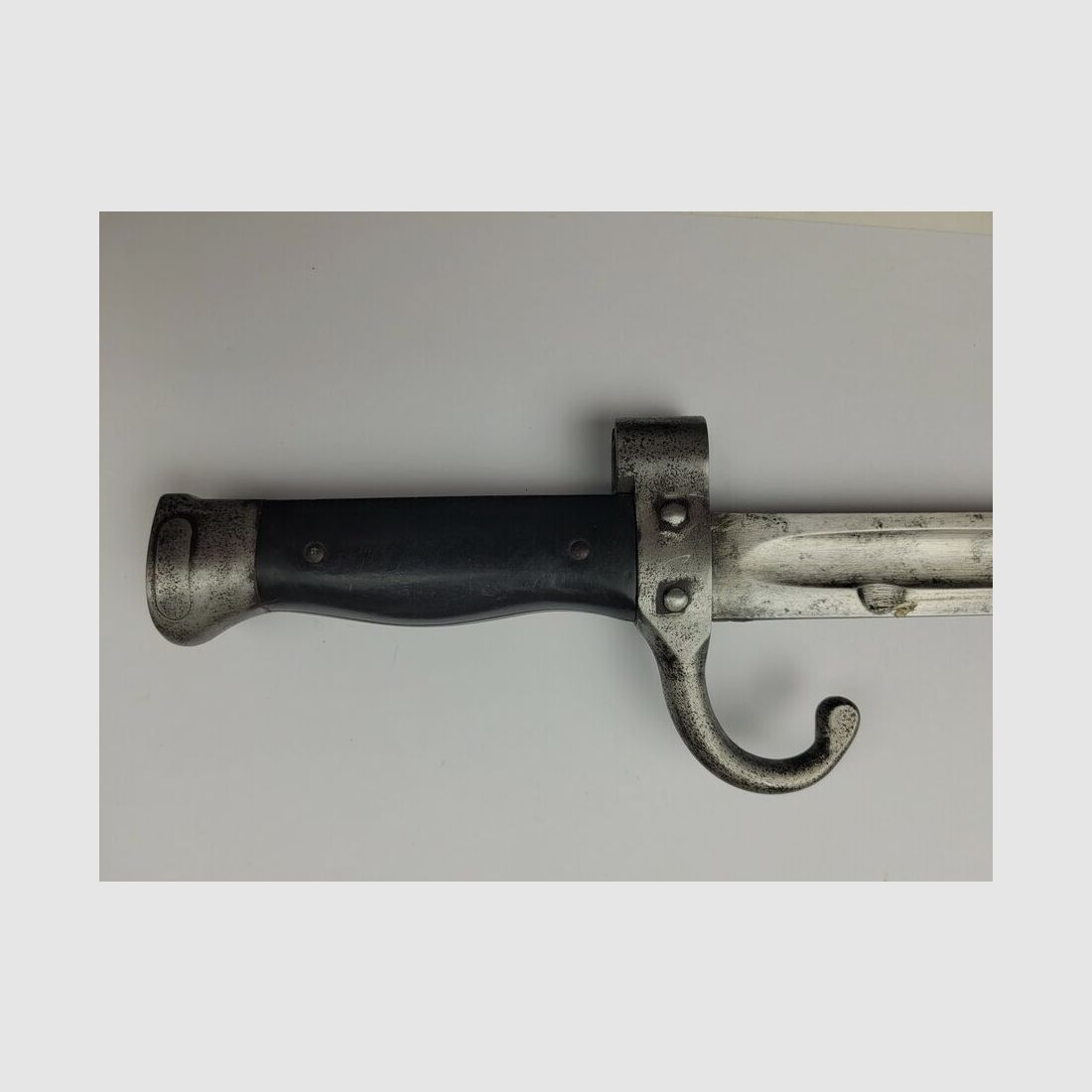
The original Bakelite grips are in perfect condition here – not split or broken, with no pieces missing, including around the fasteners. It’s very rare to find them in such good condition. 90% of these bayonets have wooden grips (systematically converted from 1917 onwards – very few escaped this) and, when found with Bakelite grips, they are often badly damaged.
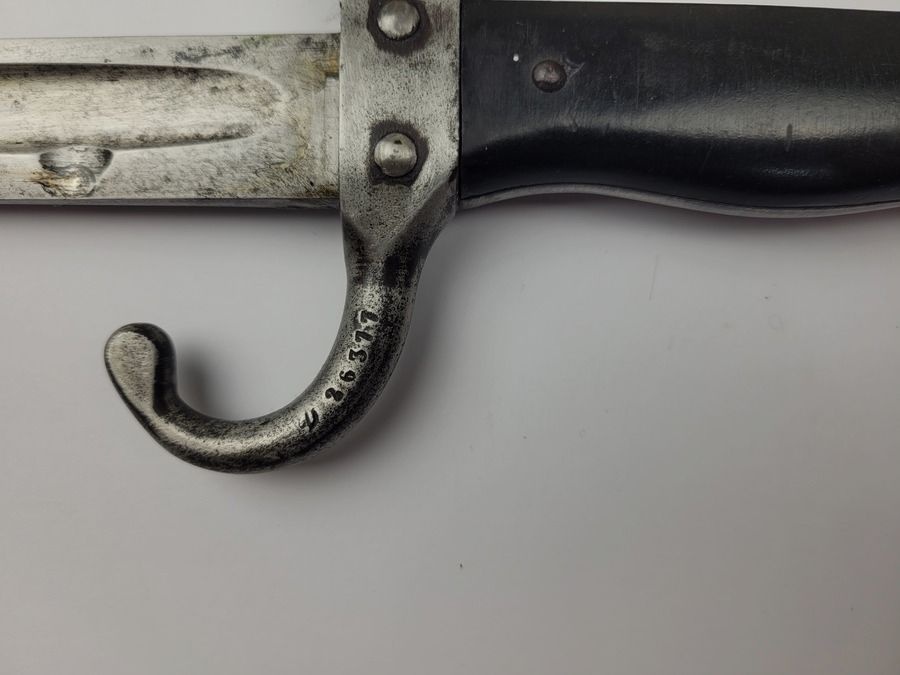
The guard is in very good condition, with a little patina on the reverse but no pitting.
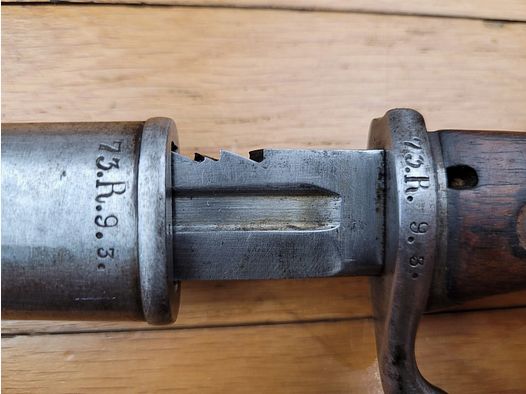
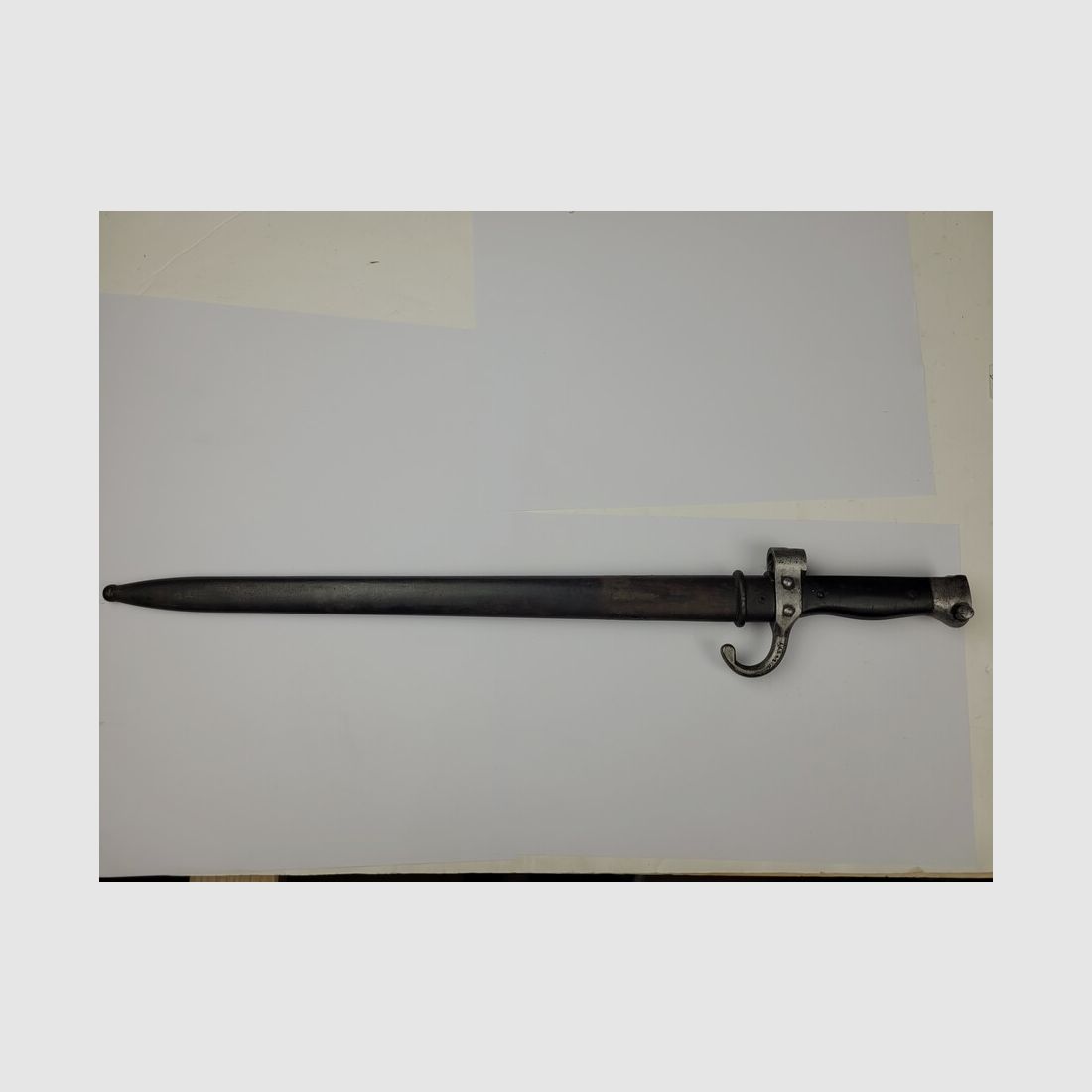
The blade and scabbard are also in very good condition. The socket is the long model (2nd type), and the quillon has not been cut down, as was done systematically after 1915.
The scabbard has retained 90% of its original bluing.
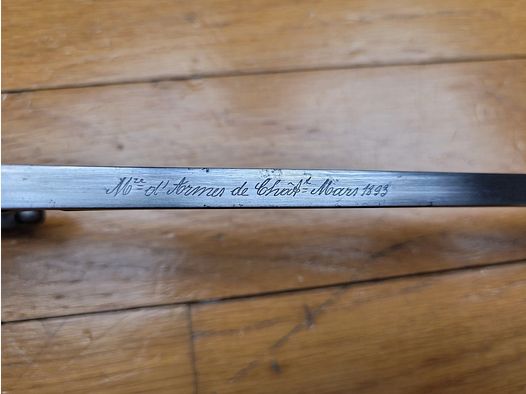
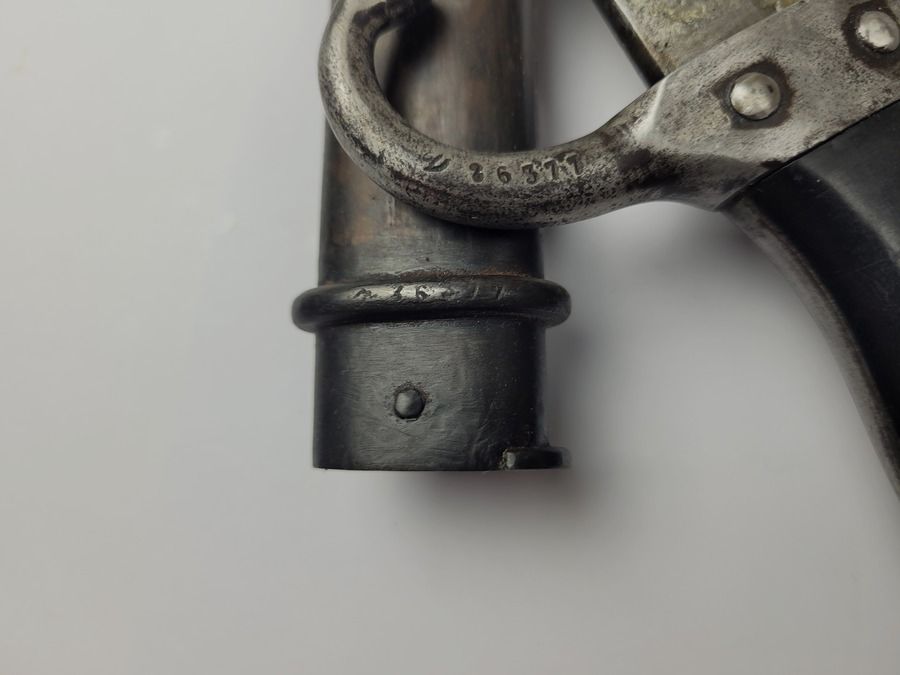
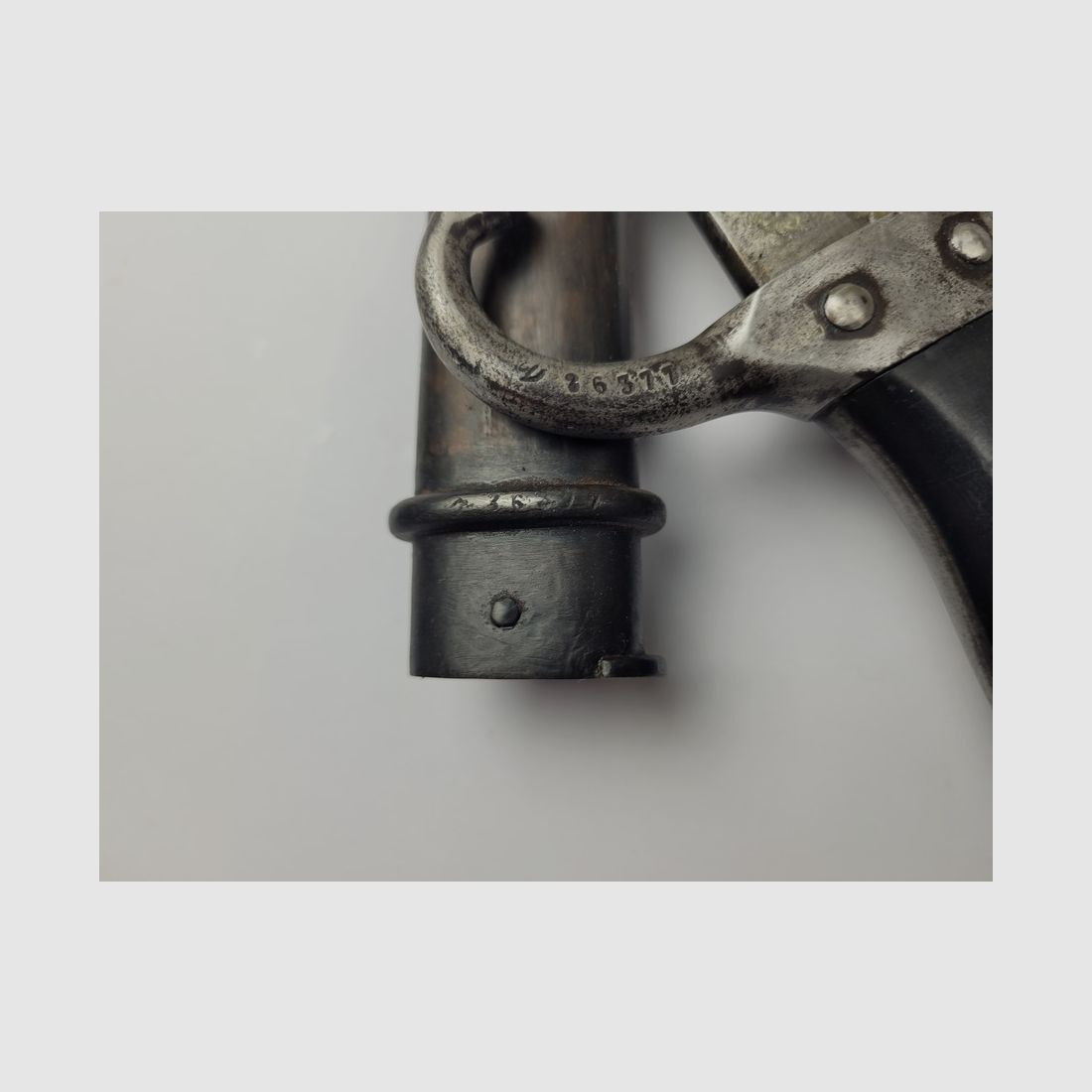
The bayonet has a single serial number, with all its proof marks, and the serial number is perfectly legible and clearly engraved on the crossguard and scabbard.
A good, typical First World War bayonet that is becoming rare to find: with quillon, matching numbers, and its original grips, as even 90% of the second-type bayonets with uncut quillons have been refitted with wooden grips.
Weapon not classified under the CSI, but sale to minors is prohibited: ID required. (Show description in original language)
Très bonne baïonnette pour fusil Berthier modèle 1892 – modèle à quillon – avec ses bonnes plaquettes en bakélite d’origine qui furent remplacées rapidement par des plaquettes en bois du fait de leur fragilité au combat. Arme et fourreau au numéro.
Les plaquettes bakélites d’origine sont ici en parfait état – pas fendues, ni cassées et sans aucun manque y compris autour des fixations – il est très rare de les trouver en si bon état. 90% de ces baïonnettes ont des plaquettes bois (transformation systématique à partir de 1917 – très peu y ont échappées) et quand on les trouve en bakélite elles sont souvent très abîmées.
La Garde est en TBE un peu tabac au revers mais non piquée.
La lame et le fourreau sont eux aussi en TBE. La douille est du modèle long (2° type) et le quillon n’est pas coupé comme il le sera systématiquement après 1915.
Le fourreau a conservé 90% de son bronzage d’origine.
L’arme est mono matricule avec tous ses poinçons et le numéro matricule est parfaitement lisible et nettement gravé sur la croisière et le fourreau.
Bonne baïonnette typique de la première guerre mondiale qui devient rare à trouver, quillon, monomatricule et avec ses bonnes plaquettes d’origine car même les seconds type à quillon non coupées ont à 90% été rééquipées en plaquettes bois
Arme non classée au CSI mais interdite de vente aux mineurs : CNI obligatoire