
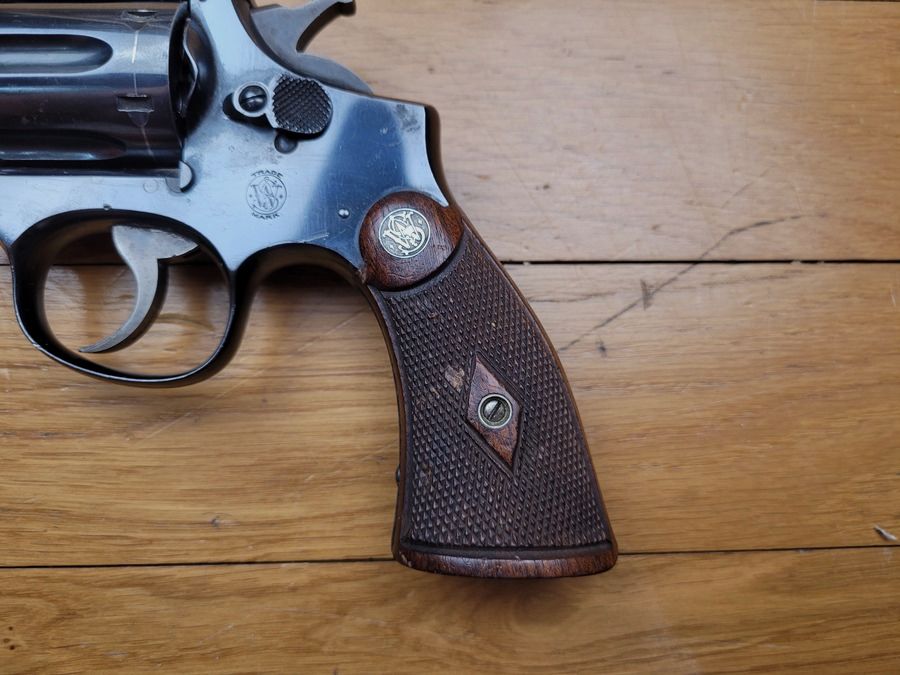
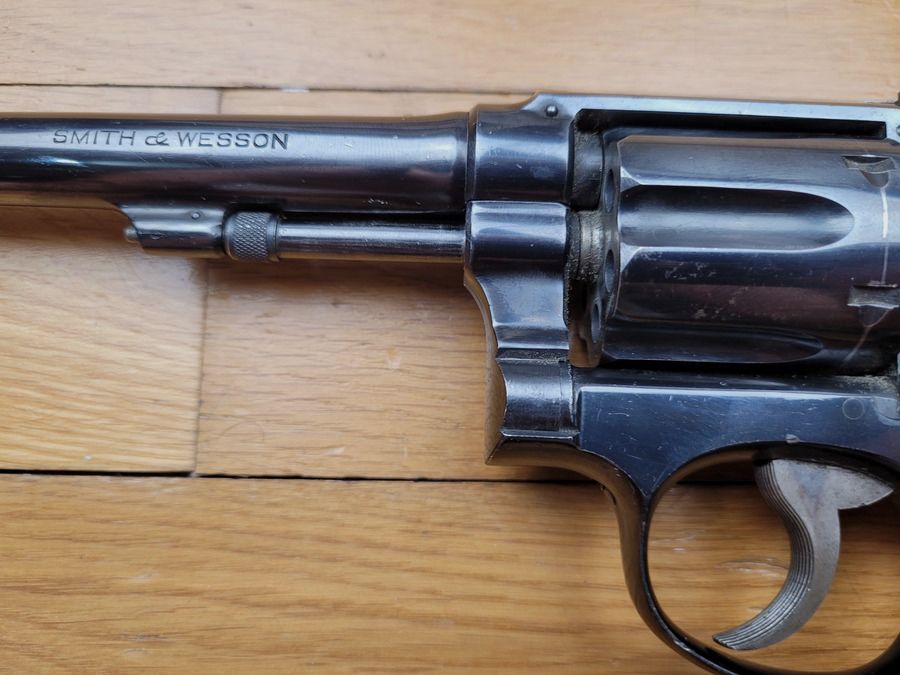

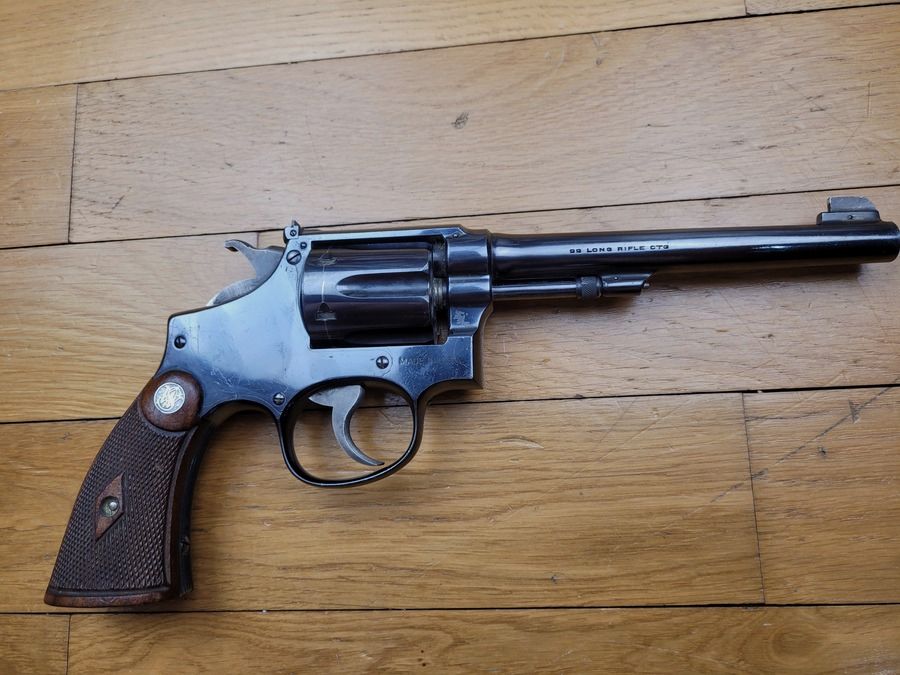
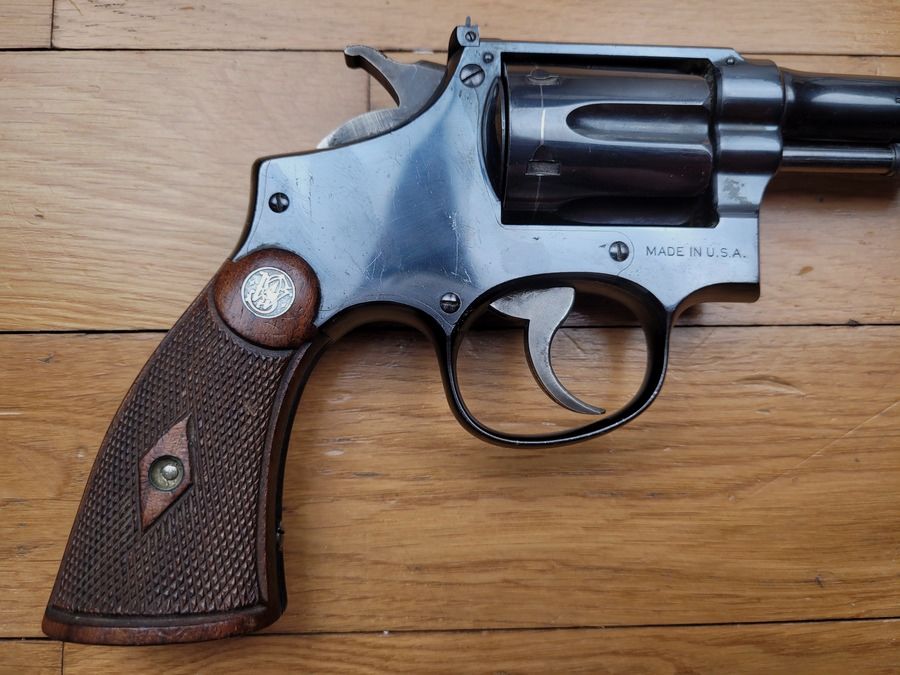





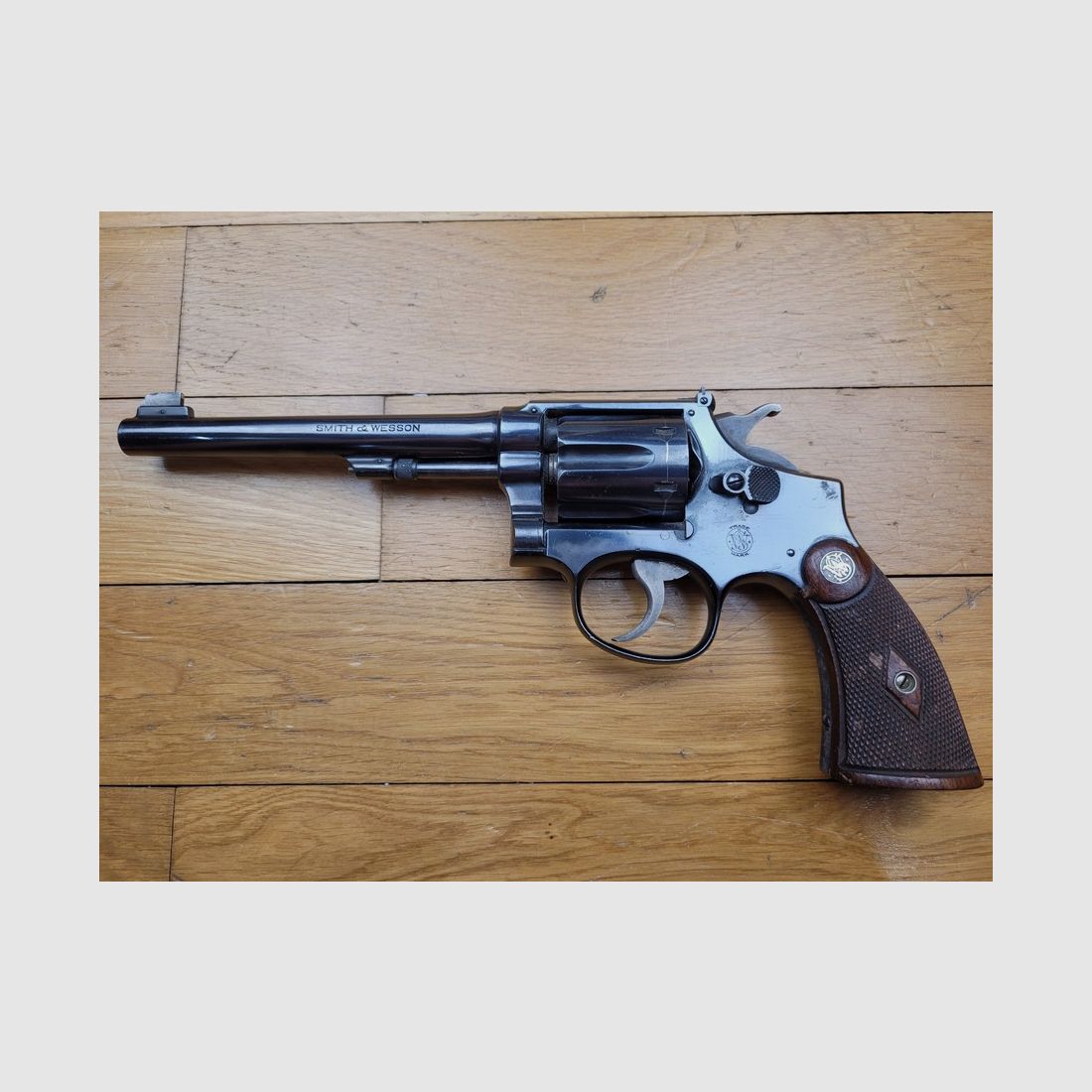





Rare Smith&Wesson « Outdoorsman » – 22.K model – 22LR – born in 1931! – 6 inches – 6 rounds – Dream condition!
Price on Request
Purchase permit required
75002 Paris, France
7
ID: 10339267
This item is currently unavailable.
Purchase from outside the EU: The firearm goes through an importer in your country, the dealer handles the export.
How buying from Europe works
Shop safely with Gunfinder
Our AI-powered seller identity verification makes Gunfinder the safest marketplace online.
Learn more
Details
- Original language
- French
- Brand
- Smith & Wesson
- Category
- Purchase eligibility
- Required
- Caliber
- .22lr
- Condition
- New
- Location
- 🇫🇷 75002 Paris, France
- Availability
- Out of stock
Freshness
This listing is based on a mirrored offer, where the listing data was synced to us from a shop, dealer, or external marketplace. Please note that temporary price discrepancies may occur due to possible delays in data transmission.
- Source
- Flingus Maximus
- Last checked with the dealer
- 19 minutes ago
Description
Note:
The item is located abroad. Please note that delivery conditions, shipping times, and/or the purchase process may differ.
It took a little while to “place” and correctly identify this one. And what a great find. Master Flingus still gets the occasional thrill from doing this. One of the perks of the job.
At Colt, broadly speaking, they created models that were usually quite distinct, marked what they were with patent dates as a safeguard. In short, pretty straightforward.
At Smith, they worked with a few “basic” models at different times, then built out the range based on frame shapes, sometimes indicating the identifying letters and sometimes not, changing numbering systems from time to time, renumbering a series as sales dictated, sometimes while it was still in production, not starting series at zero, significantly modifying firearms while keeping the same frame letters in the middle of existing series, and so on… In short, a complete mess.
We definitely recommend Jim Supica and Richard Nahas’s “Standard Catalog of Smith&Wesson,” 4th edition, and a few good hours of internet research if you want to find your way through the Smith jungle, especially when it comes to older and less common models.
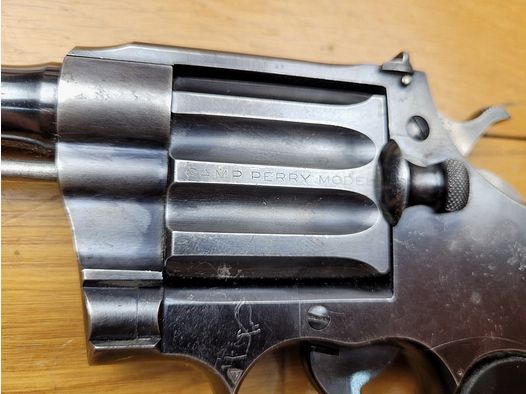
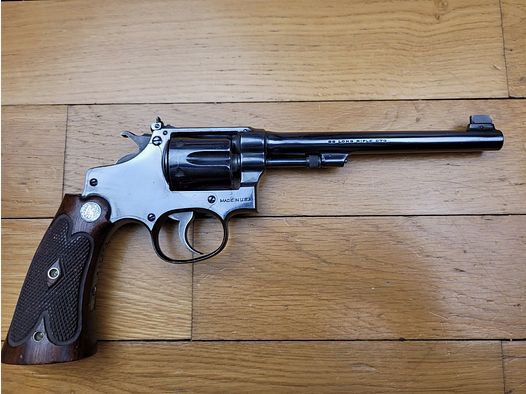
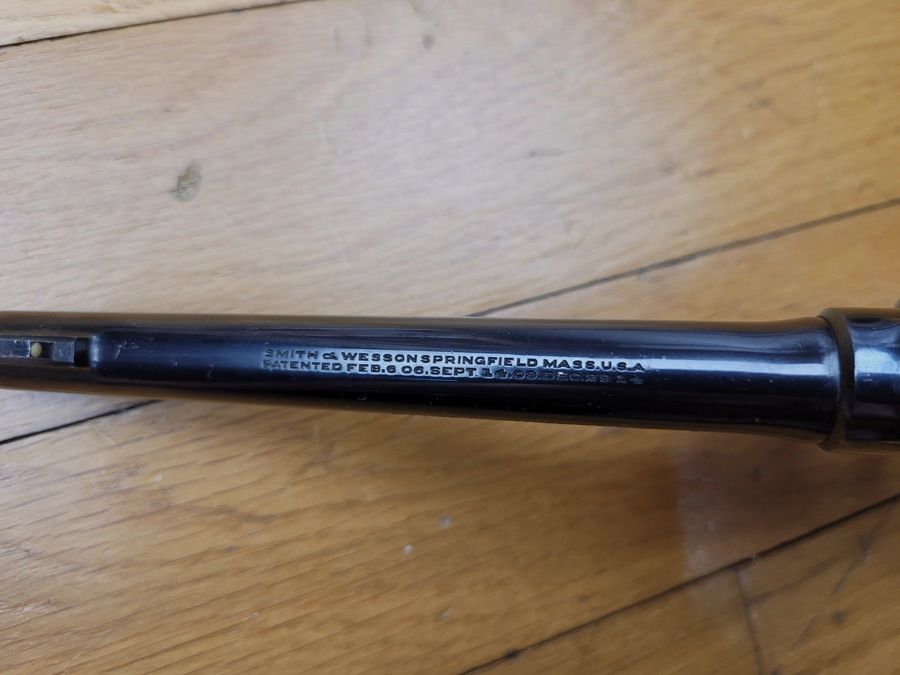
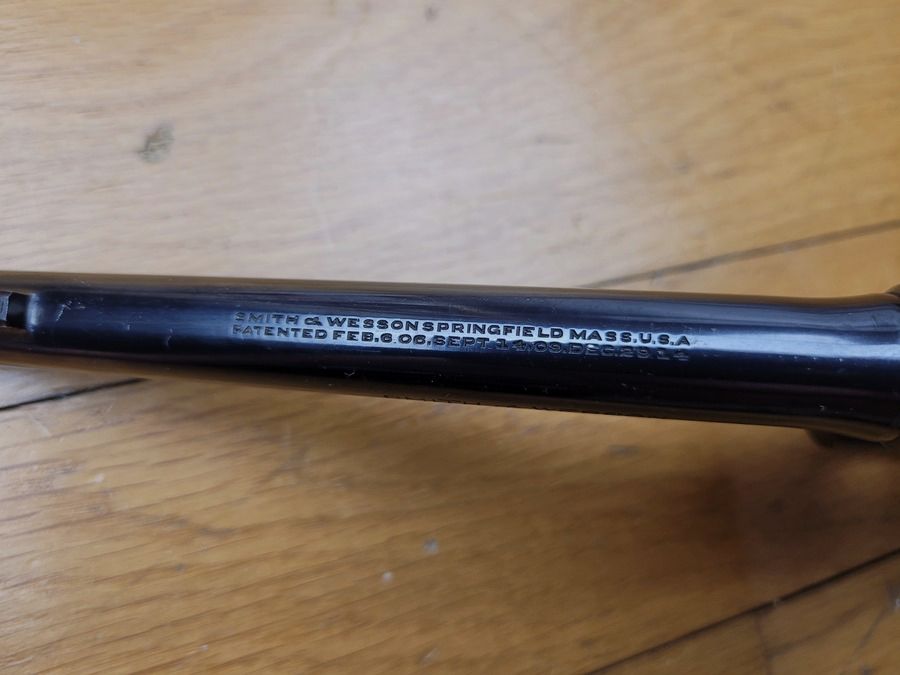
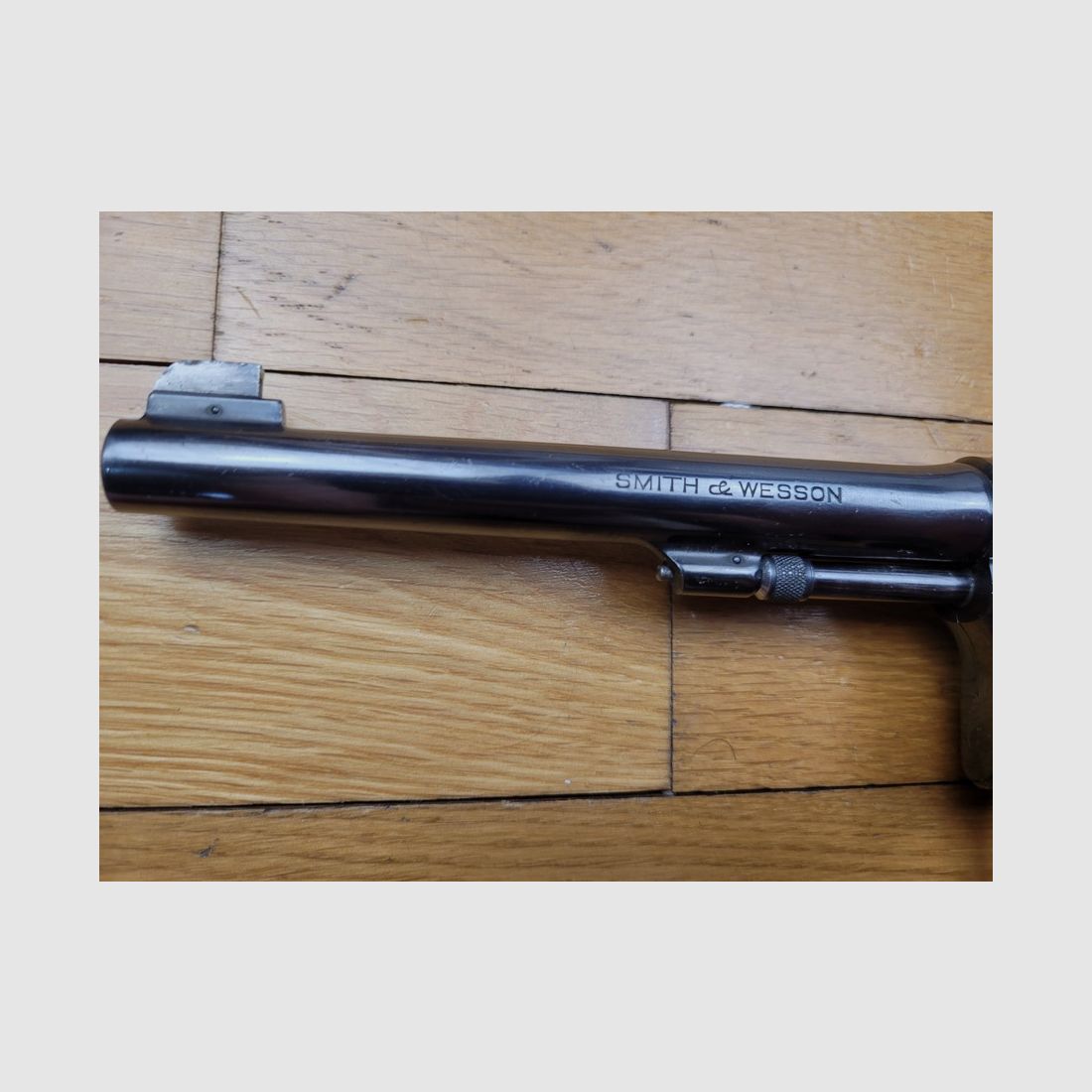
Our model is a great example: it’s a magnificent .22 K. Model, known as the “Outdoorsman,” 1st Model, from 1931, with a 6-inch barrel and six shots.
It’s called the 1st Model because the rear sight was simplified partway through production, resulting in a “2nd” Model.
It’s based on a good old 1896 Hand Ejector Model, moved to a K frame in 1899 (though it wasn’t called a K frame yet). And don’t confuse this K22 with some “ordinary” K22 Masterpiece Model 17 or 17-2.
In the first decades of the 20th century, Smith had already achieved considerable commercial success thanks to the exceptional quality of its firearms from that era, with its Model 1917 and Triple Lock, also based on the K frame. But the models in the range were still chambered in calibers far removed from the little .22LR (38SW, 32SWL, 455 for the British, 32-20, 44…).
Most manufacturers of .22LR handguns made fairly small firearms based on a simple principle: “small cartridge, small gun.”
Smith was the first to recognize that precision shooters needed a heavier, more stable firearm with a long barrel, as close as possible to the brand’s 38SW and 32SW Long models. A logical development, really…
By choosing the name Outdoorsman, perhaps Smith also wanted to take a dig at its hugely successful competitor at the time, Colt, which was making a commercial splash among the shooters and campers of the day with its semi-automatic pistol called the “Woodsman.” At least, that’s what some US authors claim.
The first “.22 K Model” was presented to Donald Wesson on January 3, 1931. It first appeared in the catalog as a “K22 Target Model” precision revolver (its designation changed a little later to “Outdoorsman”) and was presented as a top-of-the-line model. All of them had 6-inch barrels, of course.
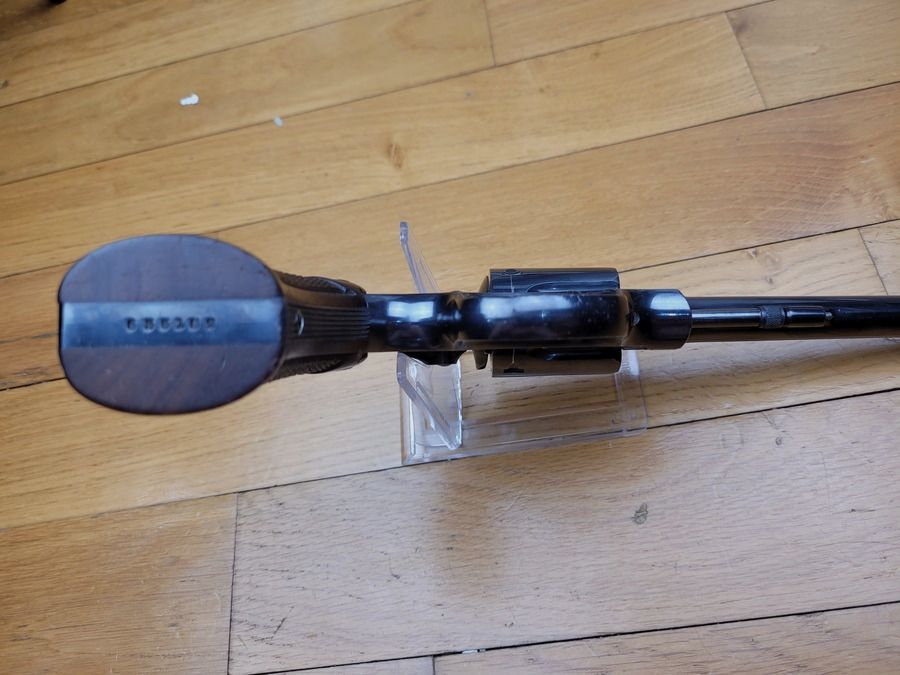
They also decided to start its serial numbering at 632xxx. Why? Well, that’s just how things are at Smith. They like complexity and commercial smoke screens.
And so these fantastic K22s were born: accurate, well-balanced, and finished to an exceptional standard. The beautifully crafted firearm was expensive, and offering such a finely finished precision firearm when America was entering the worst economic crisis in its history in 1929 was more than a bold gamble.
With production slowed to a crawl, as Smith fought to avoid laying off its skilled workers, production was slow, with no rush at all. As a result, these firearms have a reputation for representing the pinnacle of Smith quality, and you can see why when you hold one. The fit, adjustable rear sight mounting, polishing, bluing—everything is perfect. Our firearm is an exceptional example from this golden age of firearms in the USA.
Around 1944, Bob Brownell (the founder of Brownells) interviewed David Murray, Smith’s production manager at the time. He believed it took 15 years to train a good gun polisher, who couldn’t perform the most complex operations before then. It’s easy to see why Master Flingus and a few other enthusiasts sometimes gaze dreamily at firearms with a level of finish that we can no longer get even on new guns today. Relatively inexpensive labor, exceptional technical training, and difficult economic conditions led to exceptionally high-quality craftsmanship that we’re unlikely to see again.
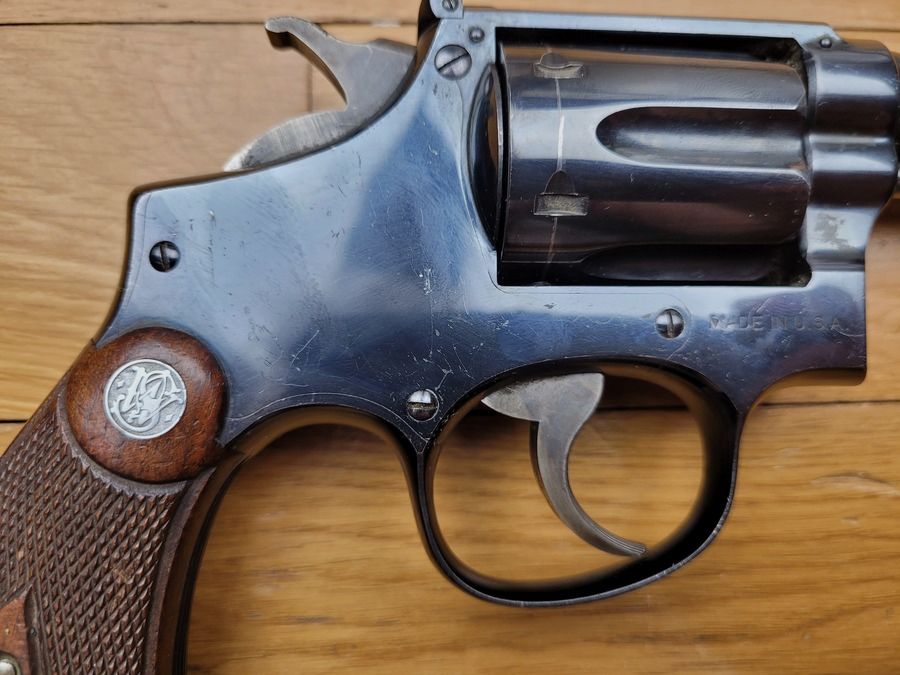
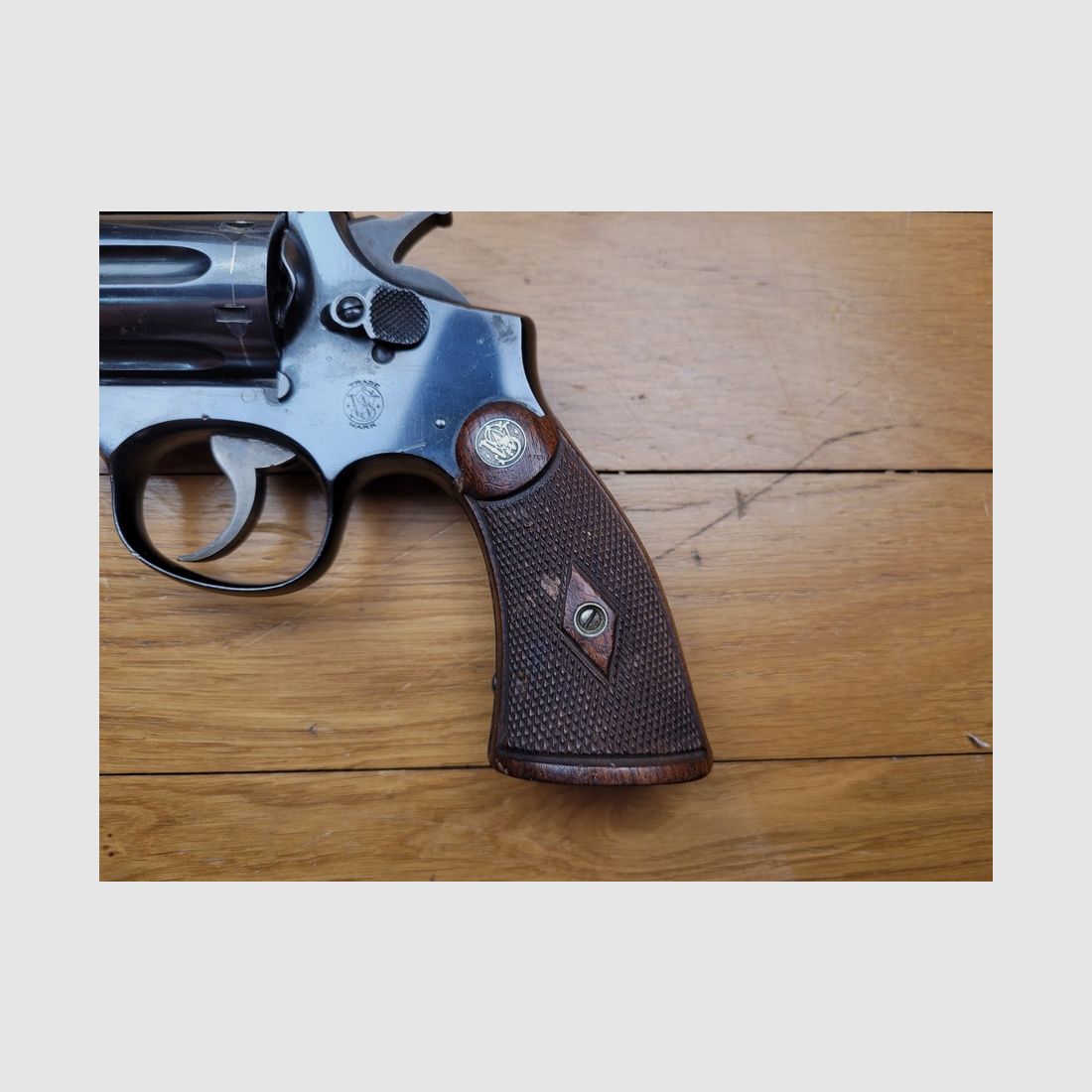
For example? The walnut grips were fitted before bluing, perfectly matched to the polished metal, then reinstalled after bluing once they had been numbered. We checked: ours are indeed numbered to the gun.
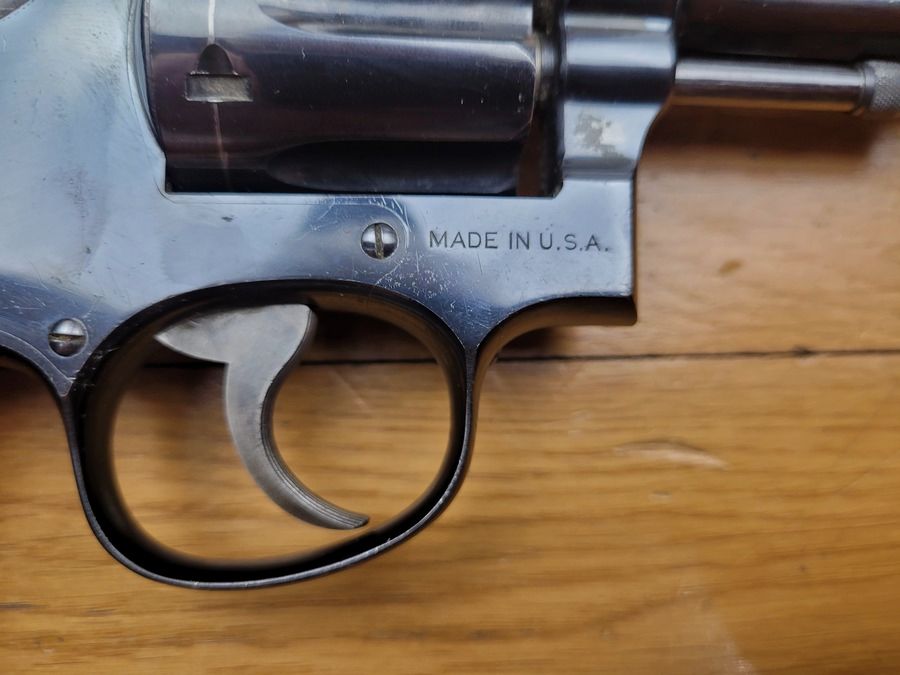
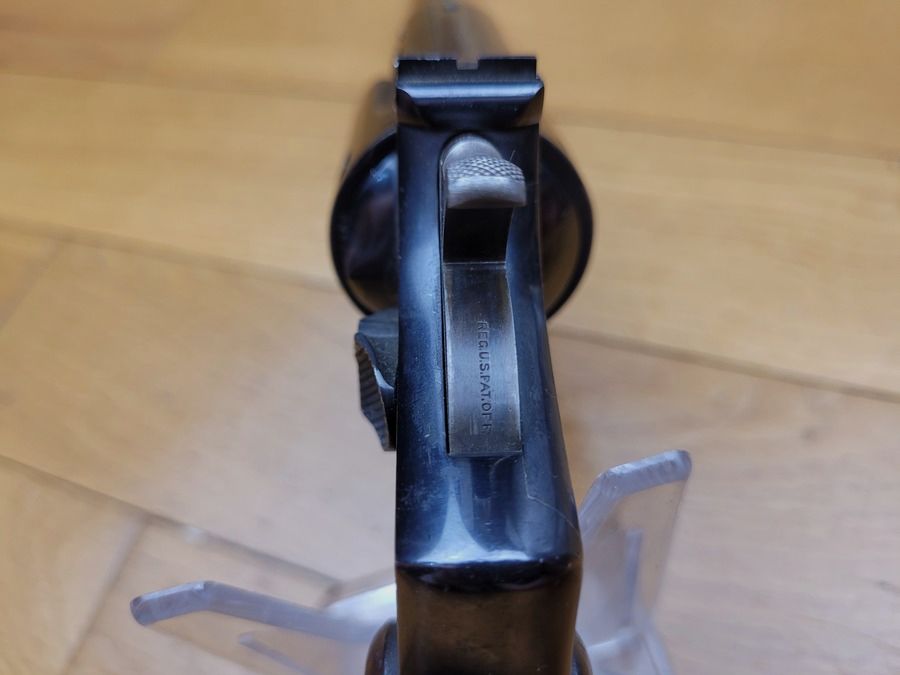
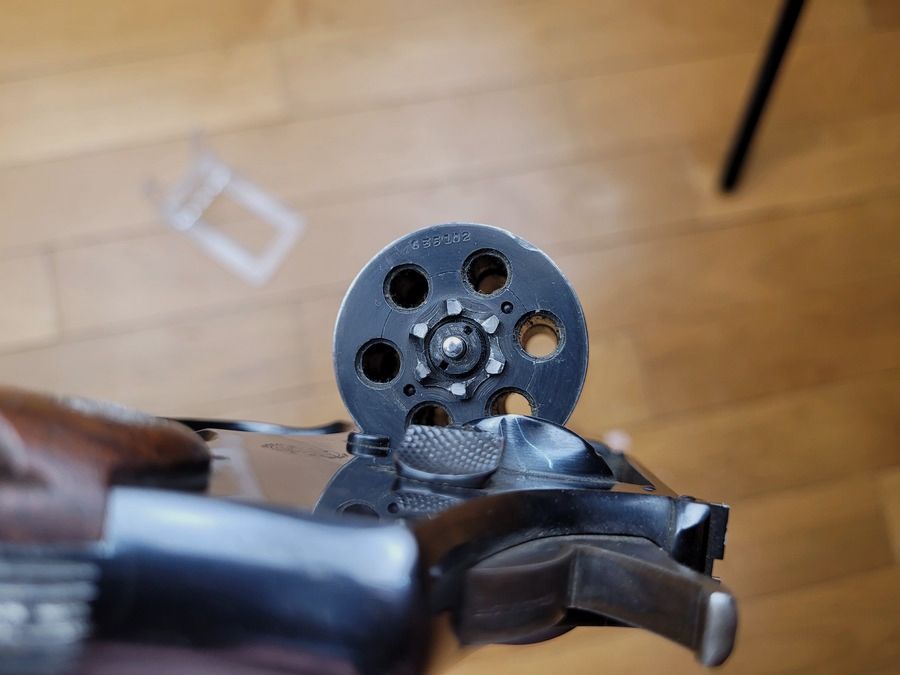
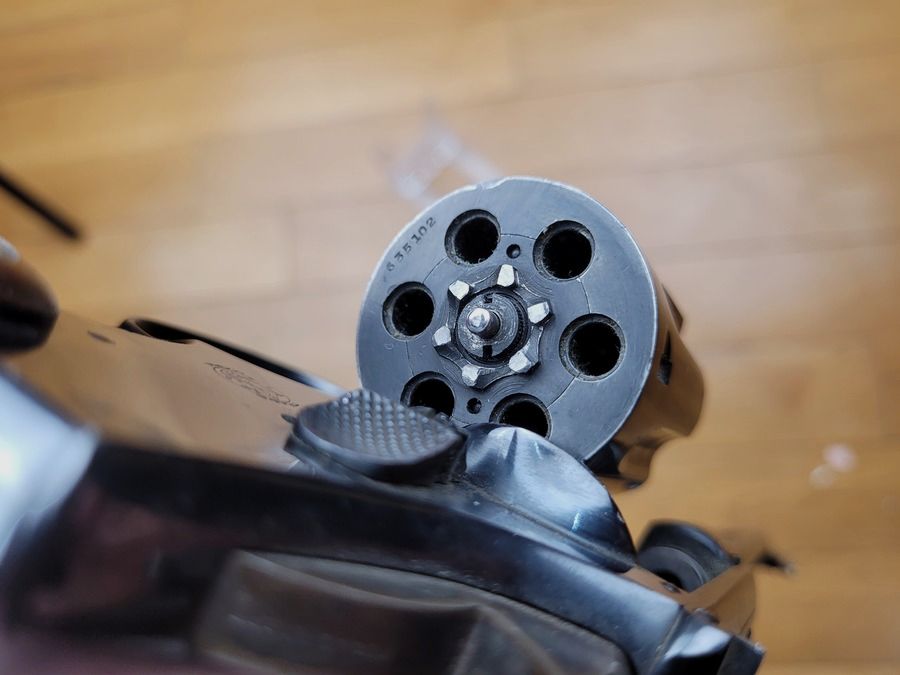
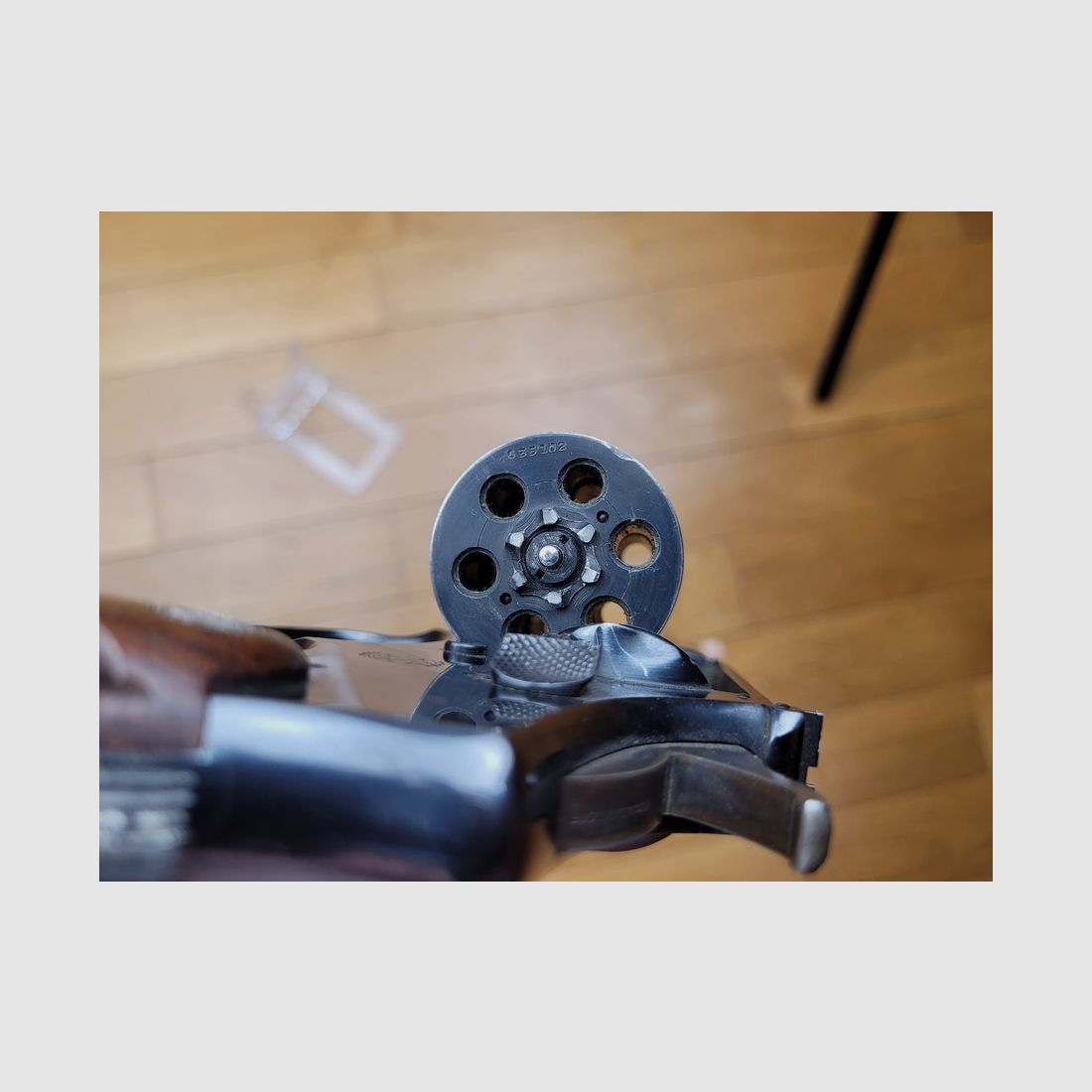
The action is simply perfect. Its clicks and fit are magical. The gun has seen very little use. Its original jet-black bluing is 97% intact. One or two small scratches stand out in the photos because of the lighting, but they’re really nothing serious. And, of course, there’s no serial number starting with K, as on the postwar K-series versions of other models. The cylinder is numbered to the gun too. 100% original. The gun is practically new!
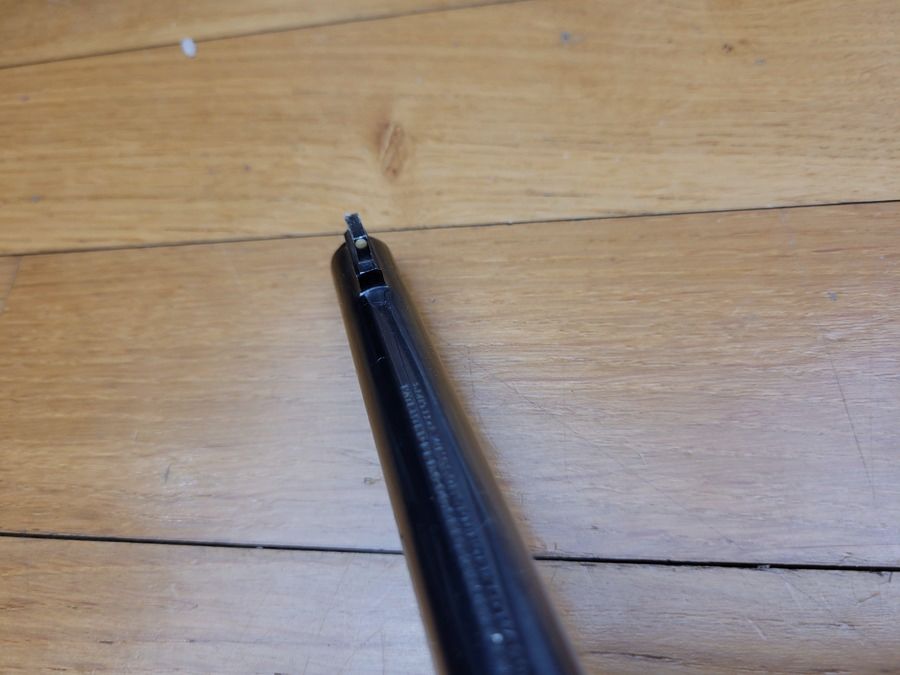
Charles Call, one of the most respected competitive shooters of his time, developed a special front sight topped with a round insert recessed into the top of the blade. Combined with the fully adjustable square rear sight, it makes for an astonishingly clear sight picture. The gun quickly earned a reputation among US precision shooters for its accuracy and ease of use. The very best of the brand’s .22 LR revolvers.
To give you an idea of their accuracy, the US Army bought a small batch of these guns for its participation in the 1932 Los Angeles Olympic Games.
Given its price and the exceptional circumstances surrounding its launch and production, production of our Smith&Wesson “22.K model Outdoorsman” ended on December 28, 1939, with just 17,117 guns made.
Ours is serial number 635XXX, making it one of the first 3,000, from 1931. And yet it’s “new”!
We recommend using 22 LR Z ammunition that isn’t too “hot,” so as not to damage this marvel of gunsmithing in any way and to preserve its impeccable appearance. It’s also an excellent investment that deserves to be preserved.
All in all, a Smith&Wesson piece among the brand’s rarest, an exceptional 22 LR revolver in exceptional condition. The asking price is nowhere near its value in the US (expect to pay USD 1,600 for one in very good condition).
A truly exceptional opportunity from Master Flingus. If you’re going to own an excellent 22 LR revolver, make it something exceptional.
CATEGORY B FIREARM AT THE CSI: SUBJECT TO AUTHORIZATION. PHOTOCOPY OF ID AND ORIGINALS OF SECTIONS 1 AND 2 OF THE AUTHORIZATION REQUIRED. SHIPPING WITH SIGNATURE IN TWO SEPARATE PARCELS AT LEAST 48 HOURS APART IS MANDATORY.
**********************************************************************************************************************************************************************************************
Let’s say it again! Flingus Maximus Gun Shop in Paris and throughout France is also here to help with private firearm transfers, buying firearm and militaria collections, firearm appraisals, and questions about firearms in estates and inheritances. Contact your favorite gun dealer using our contact form or at [email protected] (Show description in original language)
Quel bazar chez Smith…
Ça a pris un peu de temps pour le « loger » et l’identifier correctement celui-là. Et faire une belle découverte. Comme Maître Flingus a encore parfois l »émotion d’en faire. Les privilèges du métier.
Chez Colt, en gros, on a créé des modèles, plutôt bien différenciés le plus souvent, on écrit dessus ce que c’était, avec les dates de brevets en garde-fou. Bref normal.
Chez Smith, on a fonctionné sur quelques modèles « de base » à différentes époques, puis on a déroulé la gamme sur la base des formes de carcasses en indiquant ou pas les lettres désignatrices, en changeant de modes de numérotation de temps à autres, en renumérotant au gré des ventes une série parfois en cours, en ne démarrant pas les séries de zéro, en modifiant significativement les armes mais tout en conservant les mêmes lettres de carcasses en milieu de séries préexistantes, etc… Bref le bazar intégral.
On vous conseille d’ailleurs définitivement le « Standard Catalog of Smith&Wesson » de Jim Supica et Richard Nahas 4° édition et quelques bonnes heures de recherches internet si vous voulez vous y retrouver dans la jungle Smith surtout pour les anciens et les peu courants.
Notre modèle en est un bel exemple : c’est un magnifique .22 K. Model dit « Outdoorsman » 1er modèle de 1931 en 6 pouces pour six coups
On parle de 1er Modèle car la hausse fut simplifiée en cours de série donnant lieu à un « second » modèle.
La base est un bon vieux Hand Ejector Model de 1896, passé en carcasse K en 1899 (mais ça s’appelait pas encore la carcasse K). Et à ne surtout pas me confondre ce K22 là avec un quelconque et « vulgaire » K22 masterpiece Model 17 ou 17-2.
Dans les premières décennies du XXième siècle Smith avait déjà assuré un succès commercial certain du fait de la qualité extrême de ses fabrications de cette époque avec ses Modèle 1917 et Triple Lock eux aussi sur la base de la carcasse K. Mais les modèles de la gamme restaient sur des calibres bien éloignés de la petite 22LR (38SW, 32SWL, 455 pour les anglais, 32-20, 44…) .
La plupart des fabricants d’armes de poing 22LR fabriquaient des armes plutôt petites en taille sur la base d’un principe simple : « petite cartouche, petite arme ».
Smith fut le premier à saisir le besoin des tireurs de précision pour une arme plus lourde, plus stable, à canon long et la plus proche possible des modèles en 38SW et 32SW Long de la marque. Une sorte de développement logique tout de même…
En choisissant ce terme de Outdoorsman peut-être Smith voulait il aussi faire la nique au grand succès de son concurrent de l’époque, Colt qui faisait des ravages commerciaux parmi les tireurs / campeurs de ce temps avec son pistolet semi auto dénommé « Woodsman ». C’est du moins ce que certains auteurs US affirment.
Le premier « .22 K Model » fût présenté à Donald Wesson le 3 janvier 1931. Il fut vendu la première fois au catalogue comme revolver de précision « K22 Target Model » (sa désignation changea un peu plus tard en « Outdoorsman » ) et présenté dans le haut de gamme de la marque. Tous en six pouces évidemment.
On décida également de commencer sa numérotation à 632xxx. Pourquoi ? Ben parce qu’on est comme ça chez Smith. On aime la complexité et les écrans de fumée commerciaux.
Ainsi naquirent ces fantastiques K22, précis, équilibrés, d’une finition fantastique. L’arme, magnifiquement ouvragée, était chère et offrir une telle arme de précision dans cette finition alors qu’en 1929 l’Amérique entrait dans la pire crise économique de son histoire était un pari plus qu’audacieux.
Avec une production au ralenti, alors que Smith bataillait pour ne pas licencier son personnel qualifié, la production fut lente et sans rush du tout. Du coup, ces armes ont la réputation d’avoir atteint le summum de la qualité Smith et cela se voit quand on l’a en main. Ajustements, fixation de la hausse réglable, polissage, bronzage, tout est parfait. Notre arme est un modèle exceptionnel de cet age d’or de l’armement aux USA.
Vers 1944 Bob Brownell (le fondateur de Brownells) a interviewé David Murray le chef de production de Smith à cette époque. Il estimait que former un bon polisseur d’armes prenait 15 ans, incapable de réaliser les opérations les plus complexes avant un tel délai. On comprend pourquoi Maître Flingus et quelques autres amateurs rêvent parfois béatement devant des armes d’une finition dont la qualité nous est aujourd’hui interdite même en neuf. Une main d’œuvre relativement bon marché, une formation technique exceptionnelle, des conditions économiques difficiles ont conduit à une production de qualité artisanale exceptionnelle que nous ne sommes pas prêts de revoir.
Exemple ? Les plaquettes de noyer étaient installées avant le bronzage, parfaitement ajustée au polissage du métal puis réinstallée après le bronzage après avoir été numérotées. Nous avons vérifiés: les nôtres sont bien au numéro de l’arme.
La mécanique est juste parfaite. Magique dans ses cliquetis et ajustements. L’arme a très peu servi, Son bronzage noir geai d’origine est présent à 97%. Une ou deux petites griffures accentuées par la lumière des photos mais vraiment pas méchantes. Pas de numérotation débutant par K bien évidemment comme sur les séries K des autres modèles d’après guerre. Barillet au numéro aussi. 100% d’origine. Arme juste neuve !
C’est Charles Call, un des tireurs de compétition les plus respectés de l’époque, qui a développé un guidon spécial surmonté d’un insert rond enfoncé au sommet de la lame qui, allié à la hausse carrée réglable dans tous les sens, permet une prise de visée juste bluffante. De suite, l’arme gagna une réputation de précision et d’agrément d’emploi particulière parmi les tireurs de précision US. Le top du top des revolvers 22LR de la marque.
Pour vous donnez une idée de leur précision, un petit lot de ces armes a été acheté par l’US Army pour sa participation aux jeux olympiques de Los Angeles en 1932.
Compte tenu de son prix et des circonstances exceptionnelles de sa sortie et de sa production, c’est avec seulement 17.117 armes produites que la production de notre Smith&Wesson « 22.K model Outdoorsman » cessa le 28 décembre 1939.
Le notre est un numéro 635XXX et donc un des 3000 premiers et de 1931. Et pourtant il est « neuf » !
Nous vous conseillons de la 22 LR Z pas trop « péchue » pour ne pas en quoi que ce soit nuire à cette merveille d’arquebuserie et lui conserver son esthétique irréprochable. C’est aussi un placement de premier ordre qu’il convient de préserver.
Au final, une pièce Smith&Wesson parmi les plus grandes raretés de la marque pour un revolver 22LR d’exception dans un état d’exception. Le prix proposé n’a rien à voir avec sa valeur aux USA (compter 1600 USD pour un juste en BE).
Une très très belle opportunité que vous offre là maitre Flingus. Quitte à avoir un excellent révolver en 22LR, achetez vous de l’exceptionnel.
ARME DE CATÉGORIE B AU CSI : SOUMISE À AUTORISATION, PHOTOCOPIE DE LA PIÈCE D’IDENTITÉ ET ORIGINAUX DES VOLETS 1 ET 2 DE L’AUTORISATION. Expédition contre signature en deux colis séparés d’au moins 48 heures obligatoire.
**********************************************************************************************************************************************************************************************
Répétons le ! L’armurerie Flingus Maximus à Paris et partout en France est là aussi pour vos formalités armes entre particuliers, le rachat de collections armes et militaria, vos estimations d’armes, vos questions armes dans les successions et héritage. Contactez votre armurier préféré via notre formulaire de contact ou à [email protected]