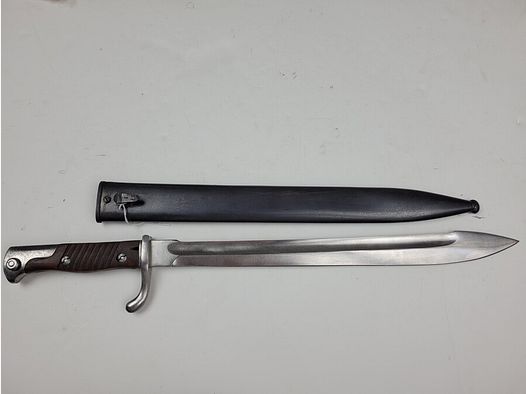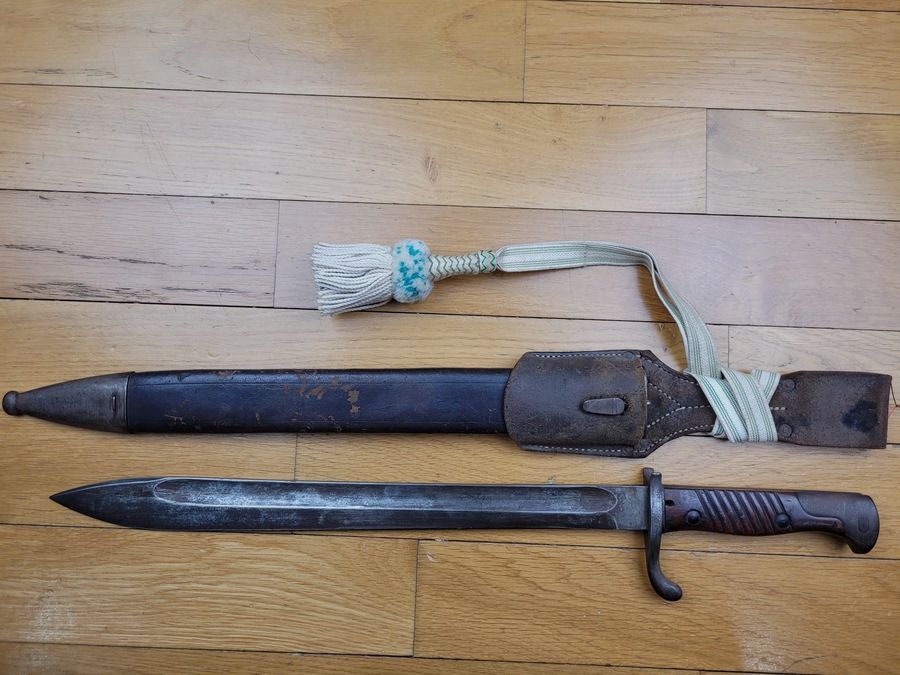









Rare 98/05 – 1st type SAXON – SAXON tassel and scabbard – AT NUMBER – Heavy mortars – TBE+
Price on Request
No permit required (18+)
75002 Paris, France
4
ID: 10339221
This item is currently unavailable.
Purchase from outside the EU: The firearm goes through an importer in your country, the dealer handles the export.
How buying from Europe works
Shop safely with Gunfinder
Our AI-powered seller identity verification makes Gunfinder the safest marketplace online.
Learn more
Details
- Original language
- French
- Category
- Condition
- New
- Location
- 🇫🇷 75002 Paris, France
- Availability
- Out of stock
Freshness
This listing is based on a mirrored offer, where the listing data was synced to us from a shop, dealer, or external marketplace. Please note that temporary price discrepancies may occur due to possible delays in data transmission.
- Source
- Flingus Maximus
- Last checked with the dealer
- about 23 hours ago
Description
Note:
The item is located abroad. Please note that delivery conditions, shipping times, and/or the purchase process may differ.
Only God knows how many 98/05 bayonets I’ve turned over in 40 years. And I’ve reached the same conclusion as Carter: Saxon 98/05 bayonets, especially regiment-marked ones, are extremely rare – see his essential work, “German Bayonets – The Models 98/02 and 98/05” – Anthony Carter, pages 24 and 25. The final sentence of the chapter is: “Any Saxon marked S98/05 must be considered extremely rare.”
I think that’s clear, even if you don’t speak Shakespeare’s language.
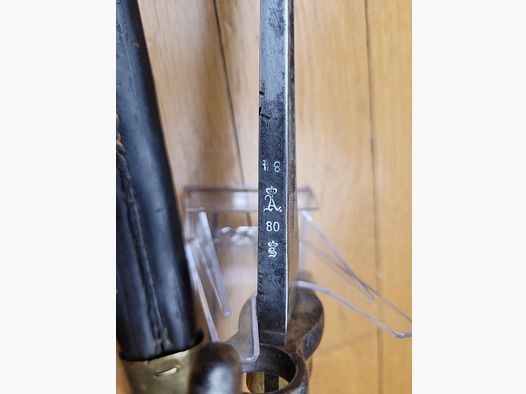
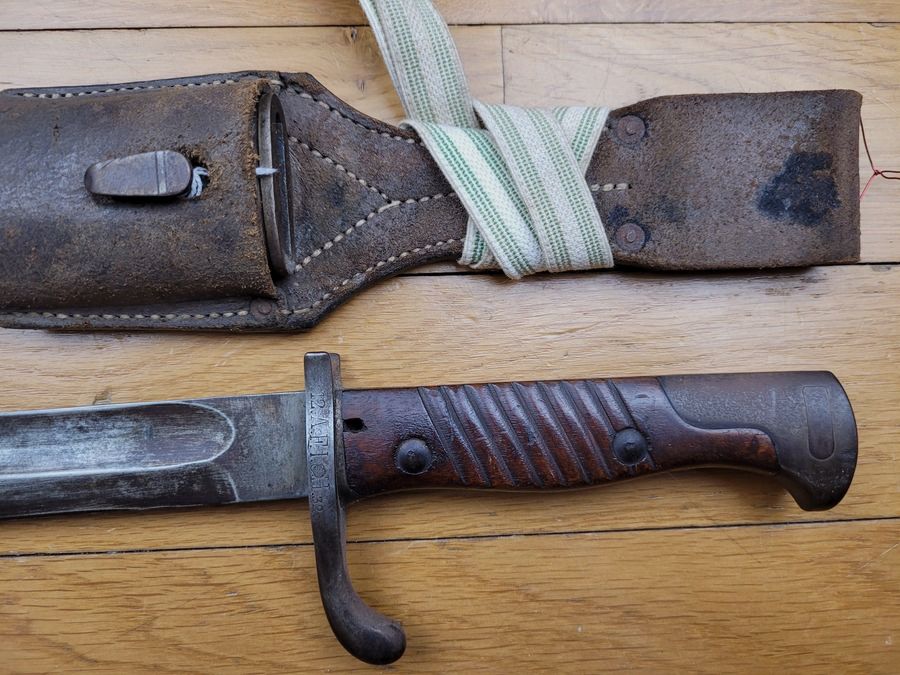
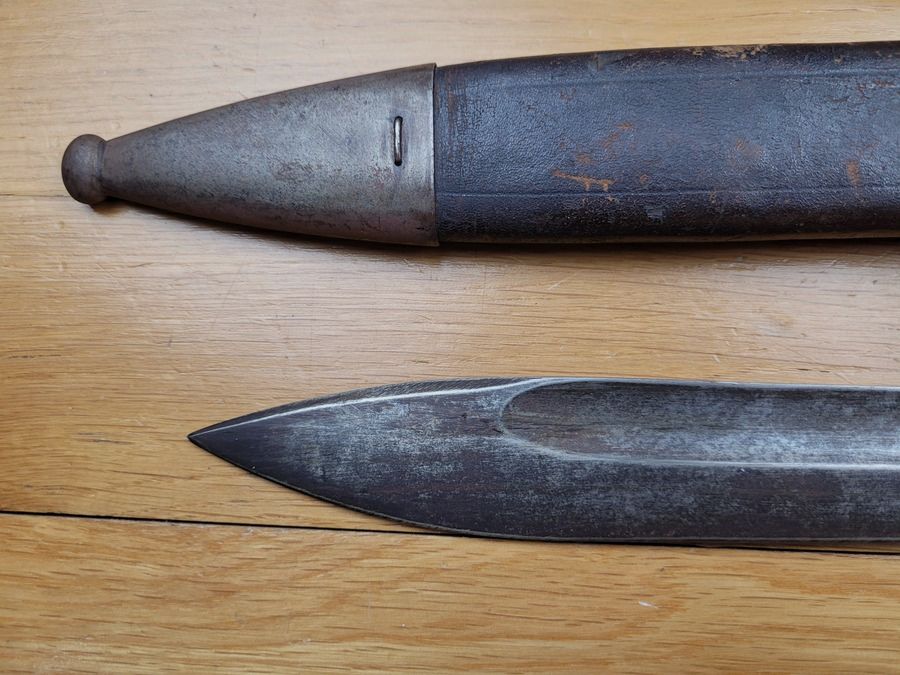
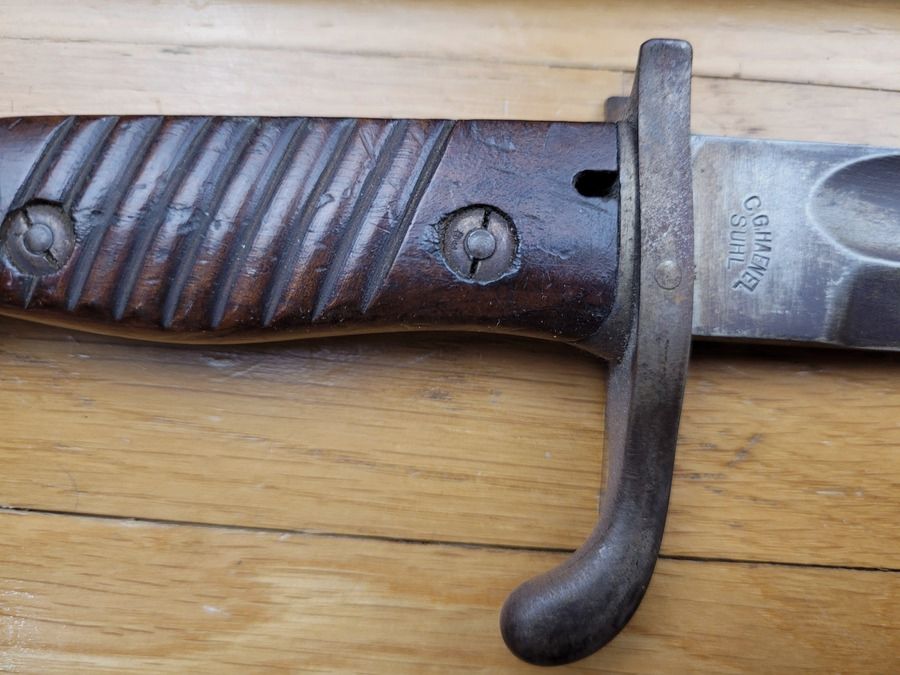
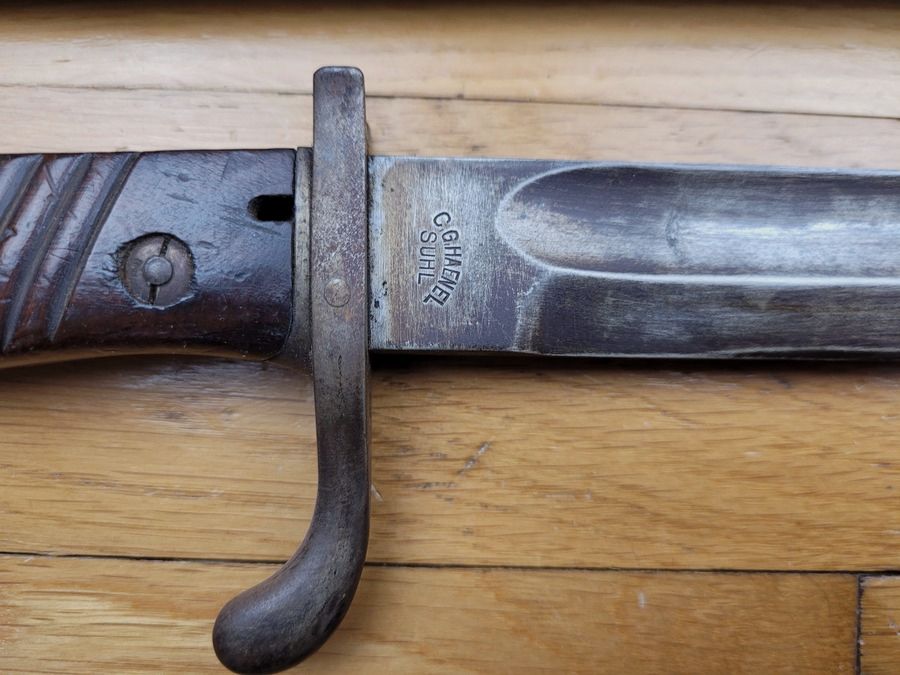
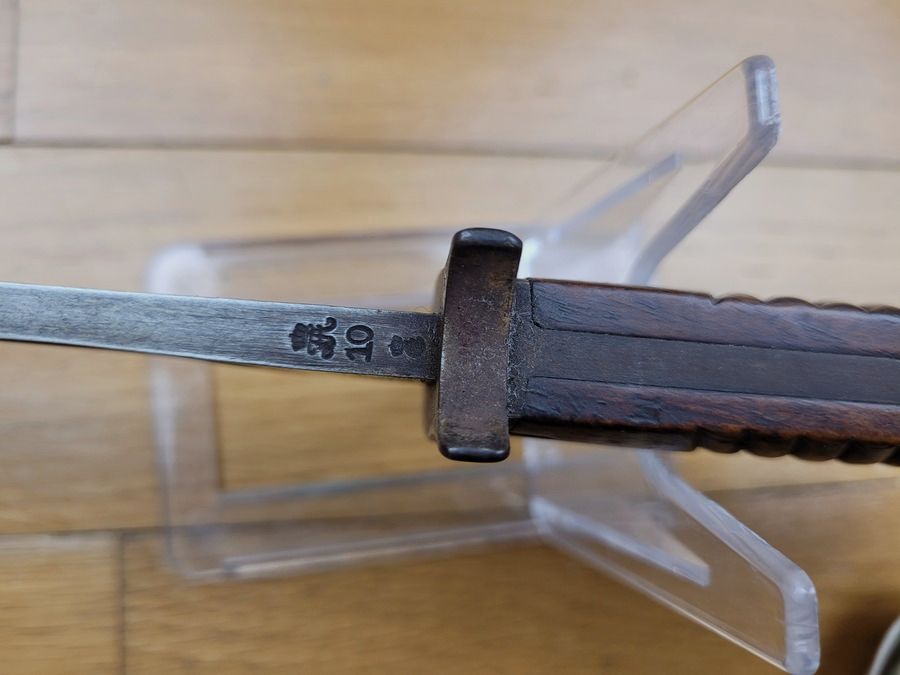
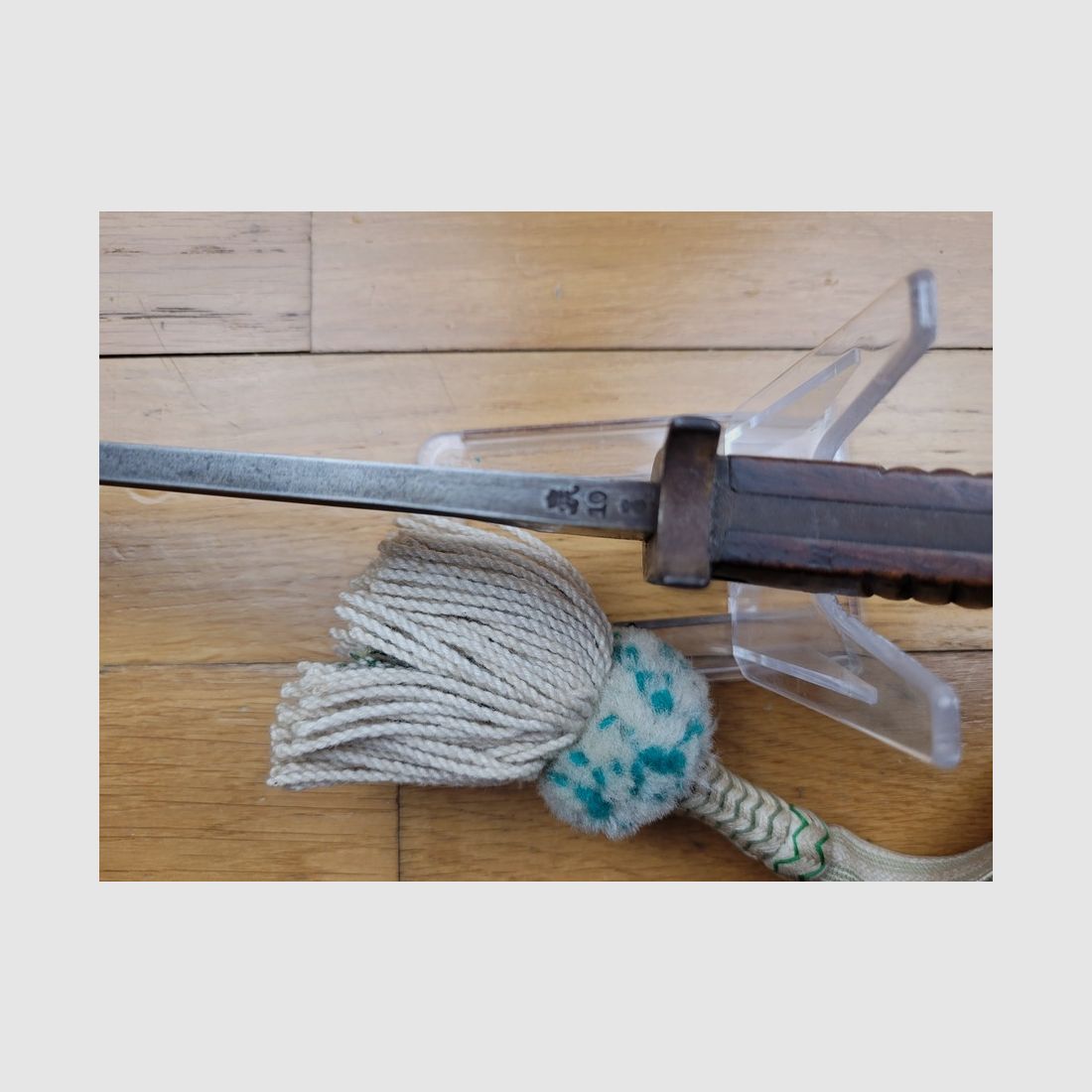
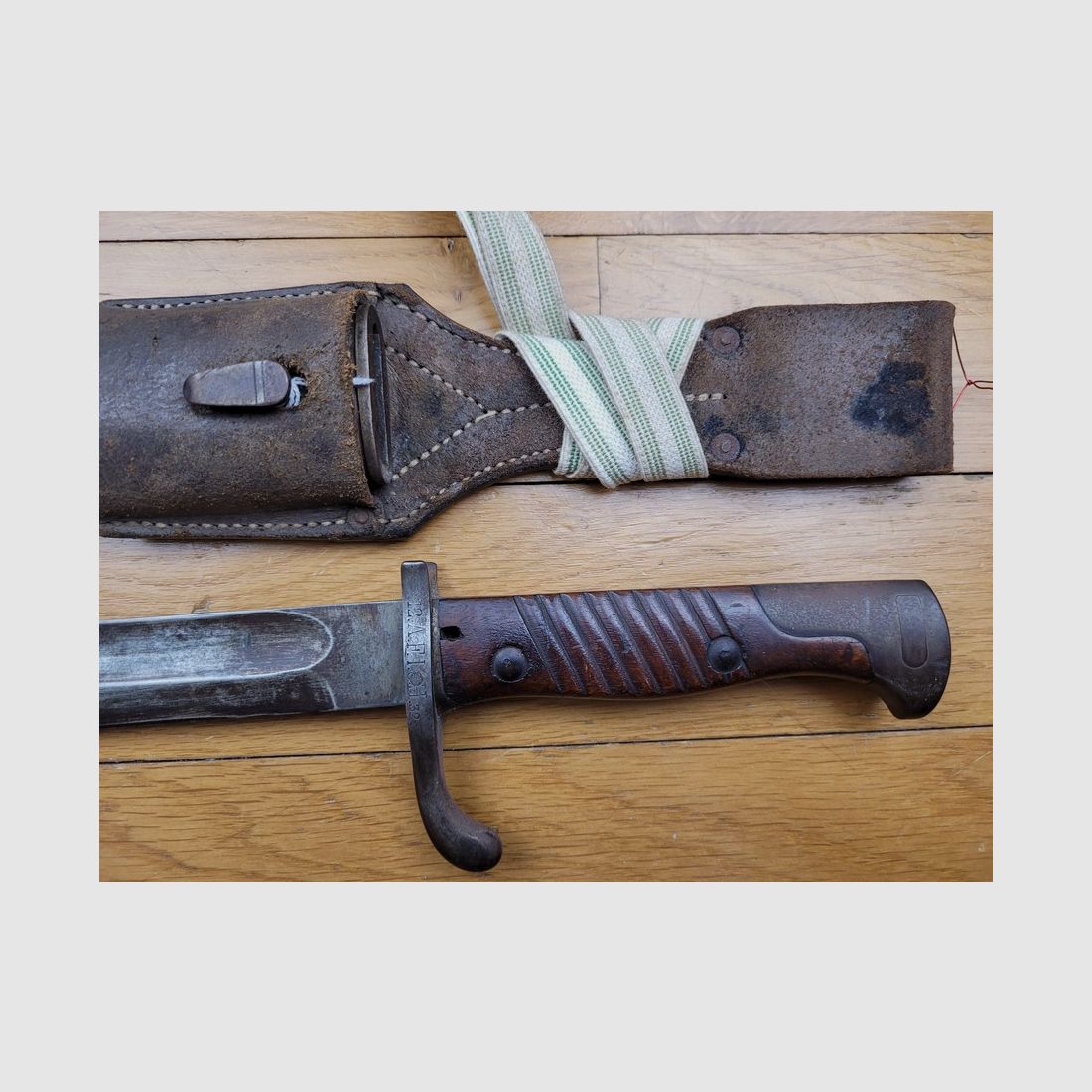
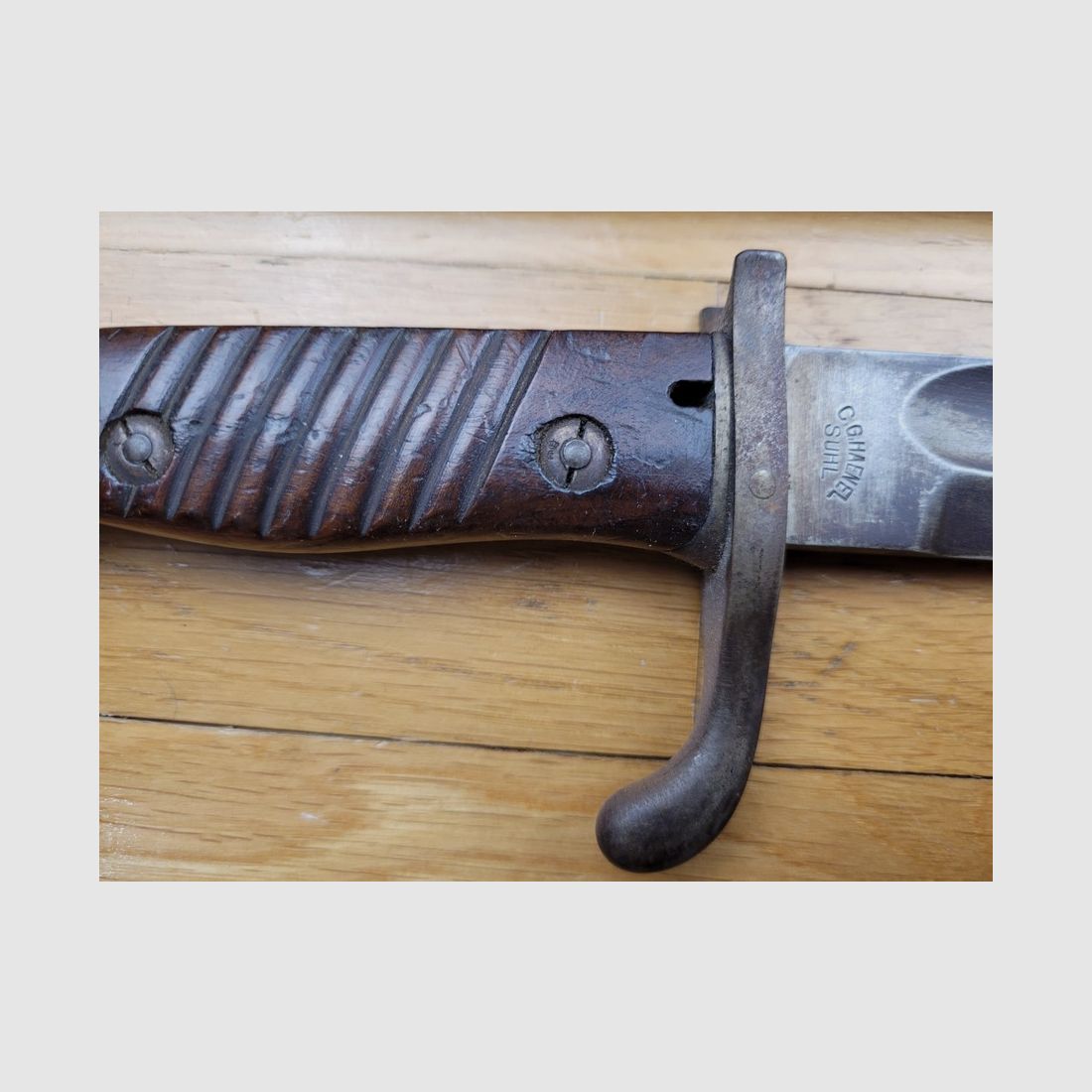
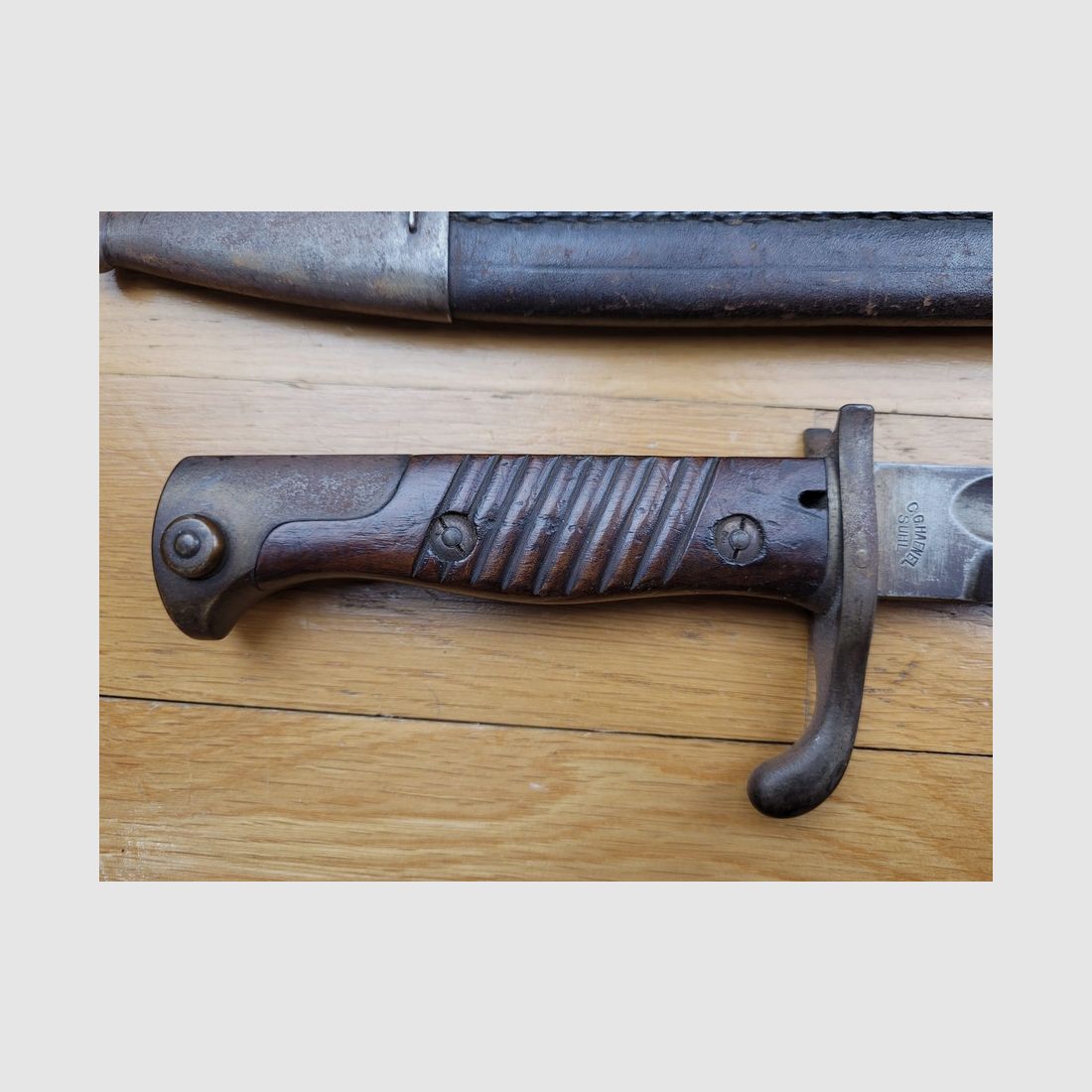
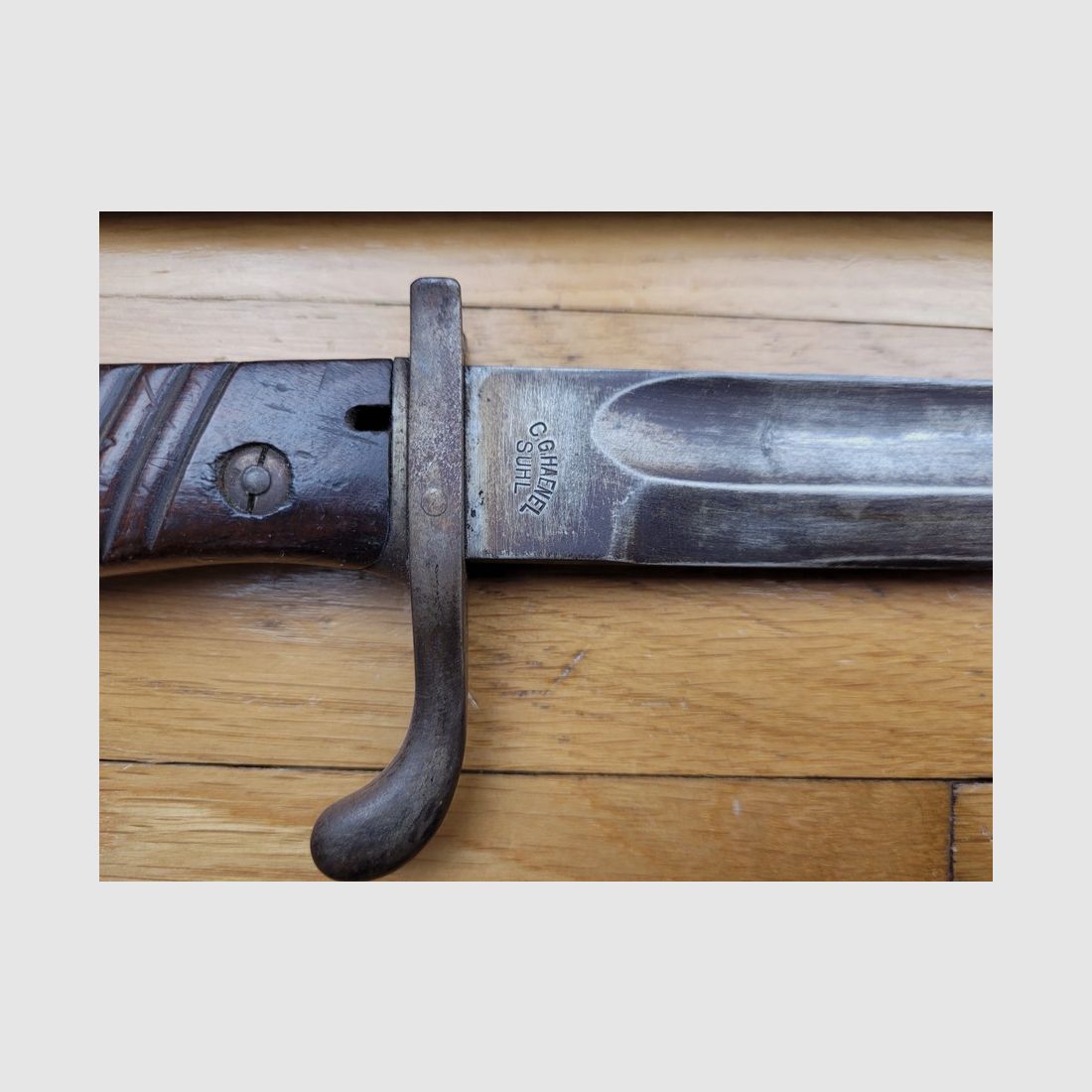
Magnificent Saxon 98/05 bayonet – made by Carl Gottlieb Haenel in Sühl, Thuringia – clearly marked “C.G. HAENEL SUHL” on the ricasso – the spine of the blade is clearly marked with a crowned FA and the number 10, or “FA10,” for Friedrich August, King of Saxony, and the year of production, 1910. So this is indeed a Saxon bayonet from 1910.
Friedrich August III was the last King of Saxony, reigning from 1904 to 1918. While the astonishing extramarital affairs of his wife, a Habsburg-Tuscany named Antoinette (it seems Antoinettes rarely bring luck to crowned heads), made headlines across Europe—scandalous for the time and her social circle, and even by today’s standards!—he was above all a very military-minded king who managed the Kingdom seriously, especially through the difficult circumstances of the First World War.
Well… serious, but with a sense of humor all the same…
In his official abdication statement in 1918, addressed to the insurgents of a Germany in collapse, he thought it best to add a fabulous “You’re on your own!” That’s not something you see every day in the history of Europe’s crowned heads. He died in 1932. His funeral was attended by 500,000 Saxons, even though Saxony had become a republic. The playful, unhappy husband—and yet a good king—had not been forgotten by his loyal subjects.
But back to our bayonet.
Saxon 98/05 bayonets are therefore extremely rare.
They only exist in the first pattern (any second-pattern 98/05 described as “Saxon” is necessarily a fake).
None have been found dated before 1907. Carter says he has never seen one dated after 1911. I was lucky enough to see one from 1912. But that was probably an exception, as production likely ended right at the beginning of 1912. Just five years—that’s very little for a kingdom with a small army.
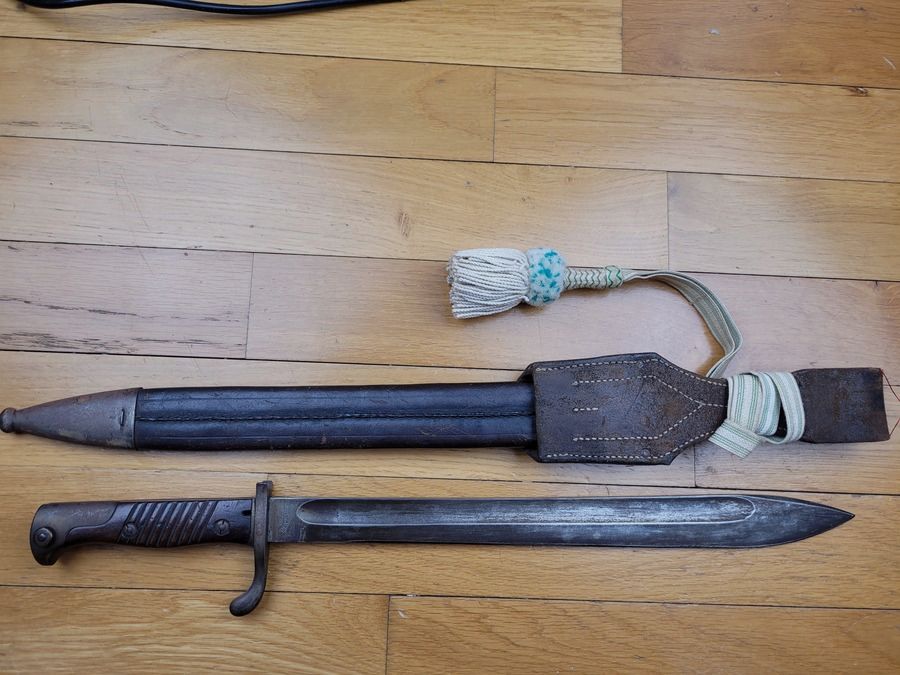
Our example is in perfect condition.
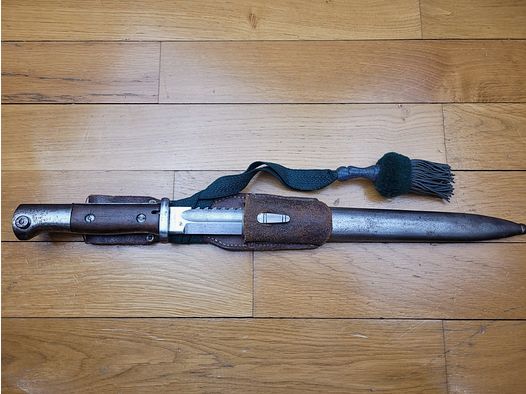
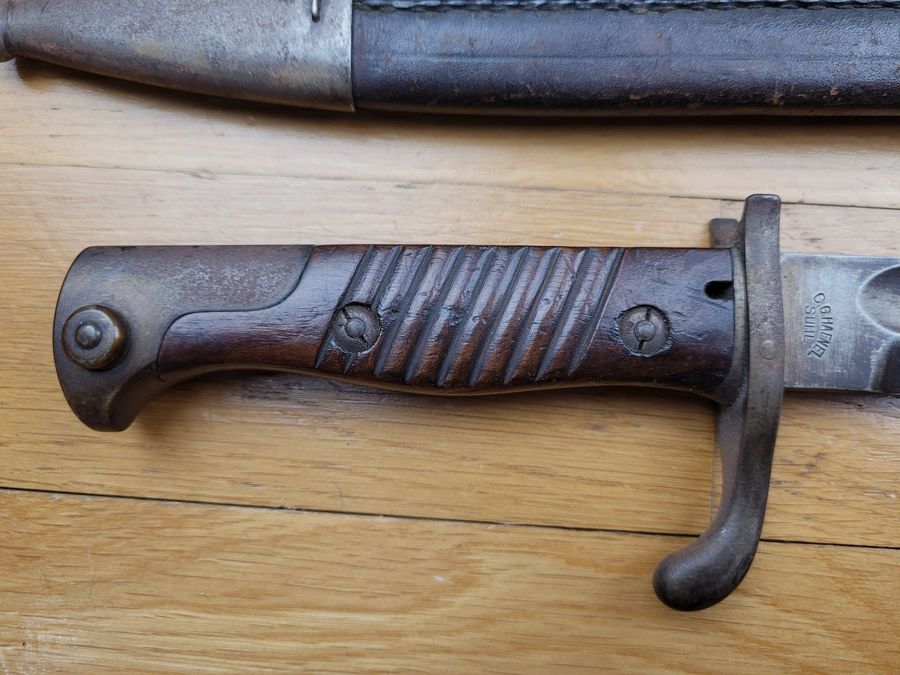
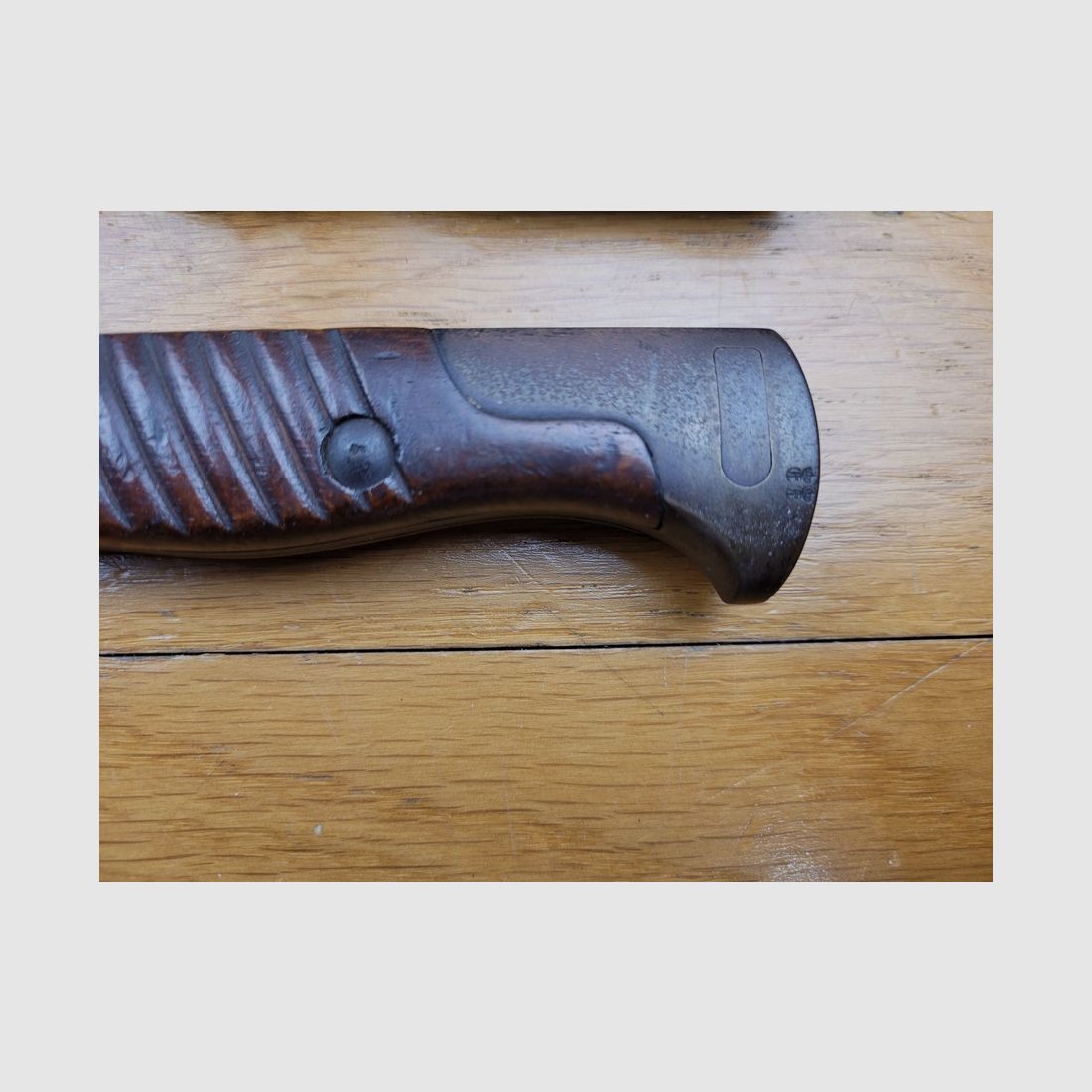
Very nice grip with very few signs of handling – push button works perfectly, of course – all markings are clearly legible. No pitting. Just the surface grayness from its 112 years of life – it could shine like a thousand suns with a very careful pass of a polishing wheel, but I’m leaving it as it is. Simply top-notch. You rarely see them in this near-museum condition.
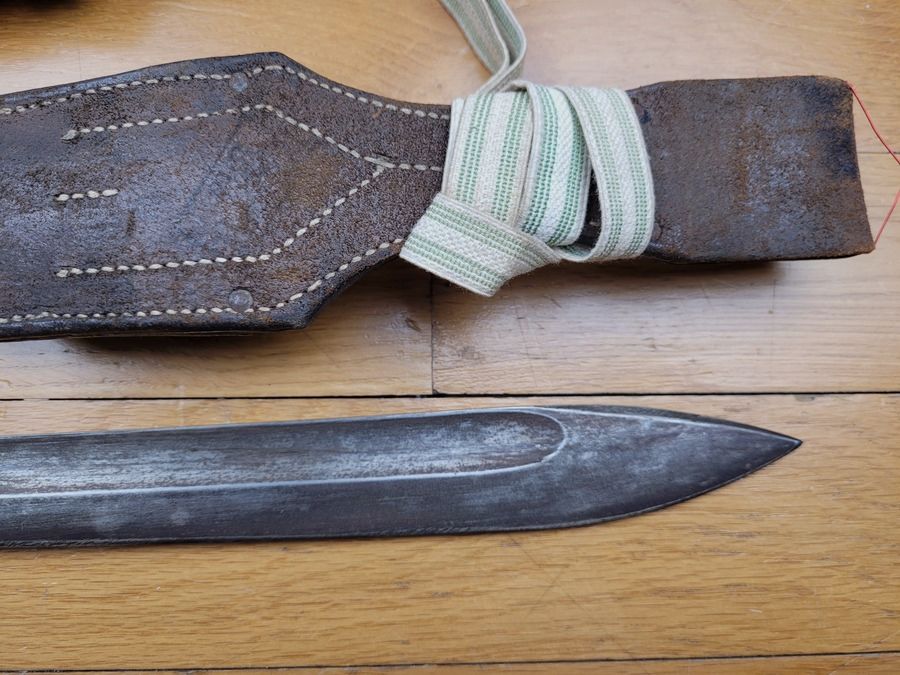
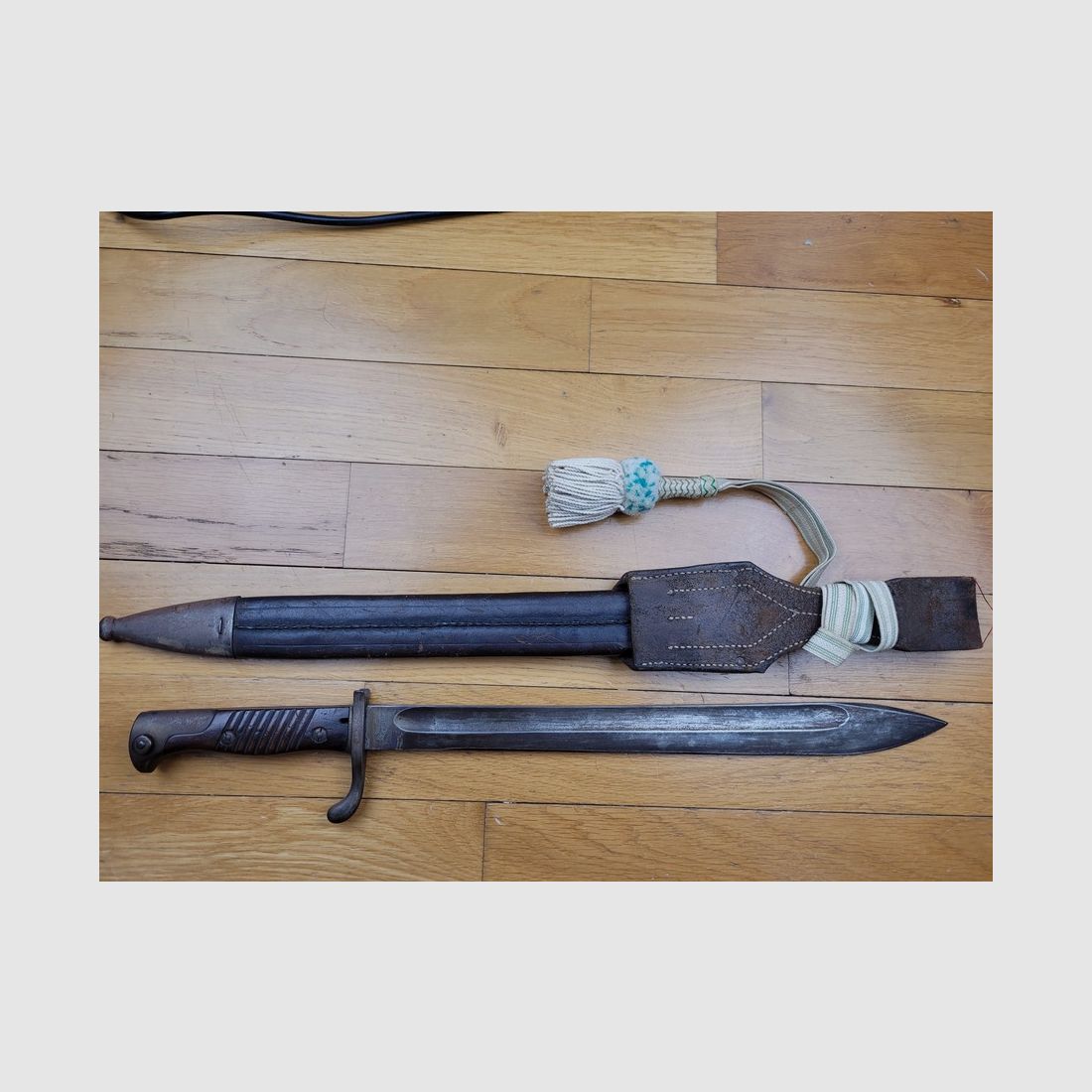
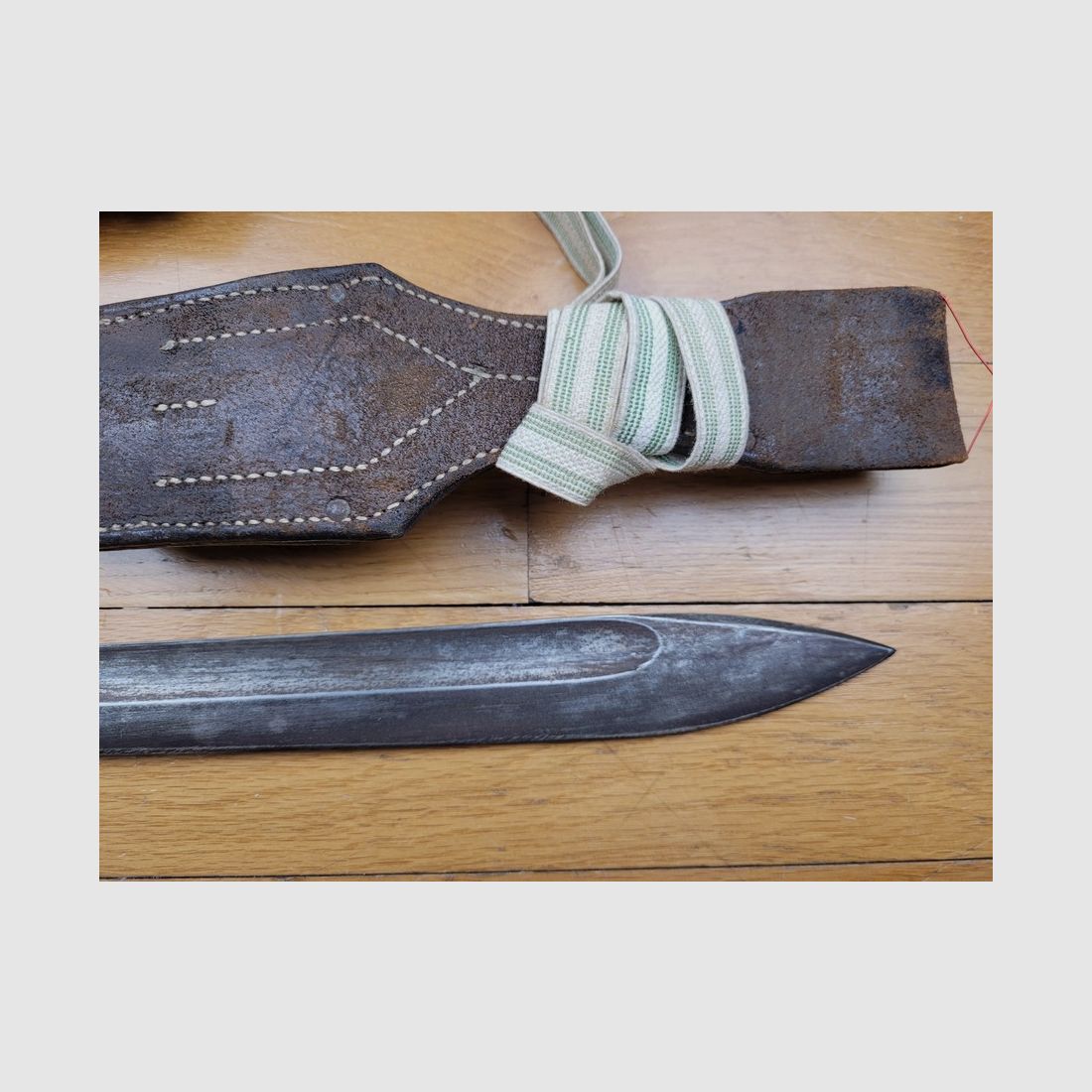
The blade is also in very good condition – no corrosion or pitting, and at its proper length. Better than excellent condition.
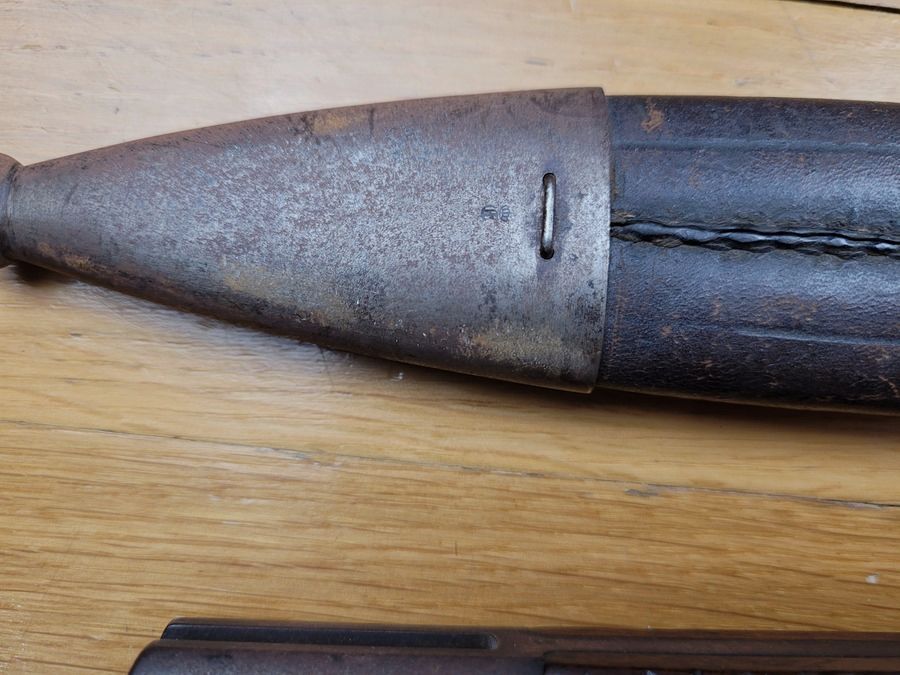
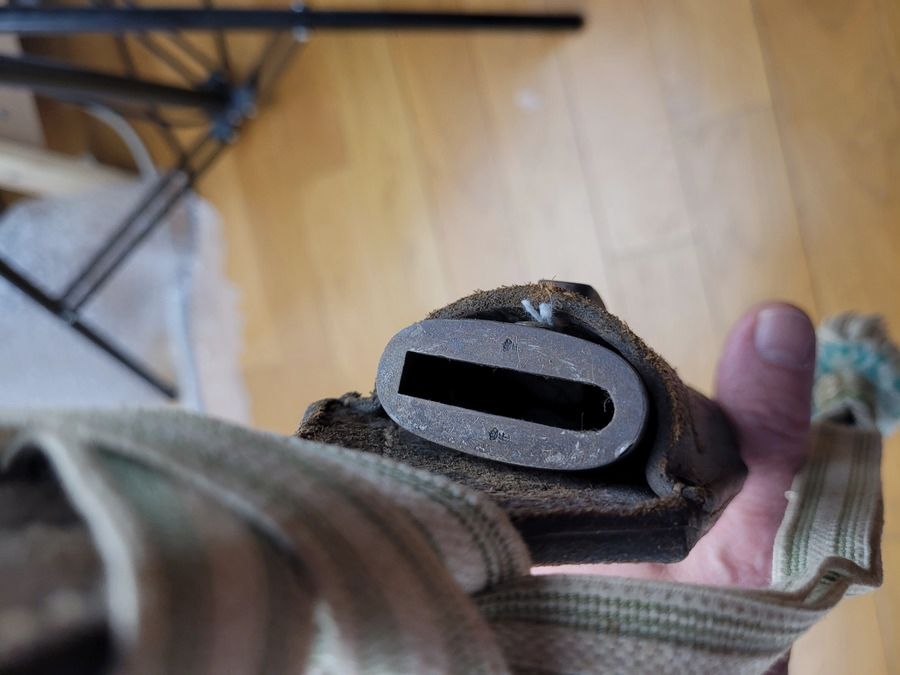
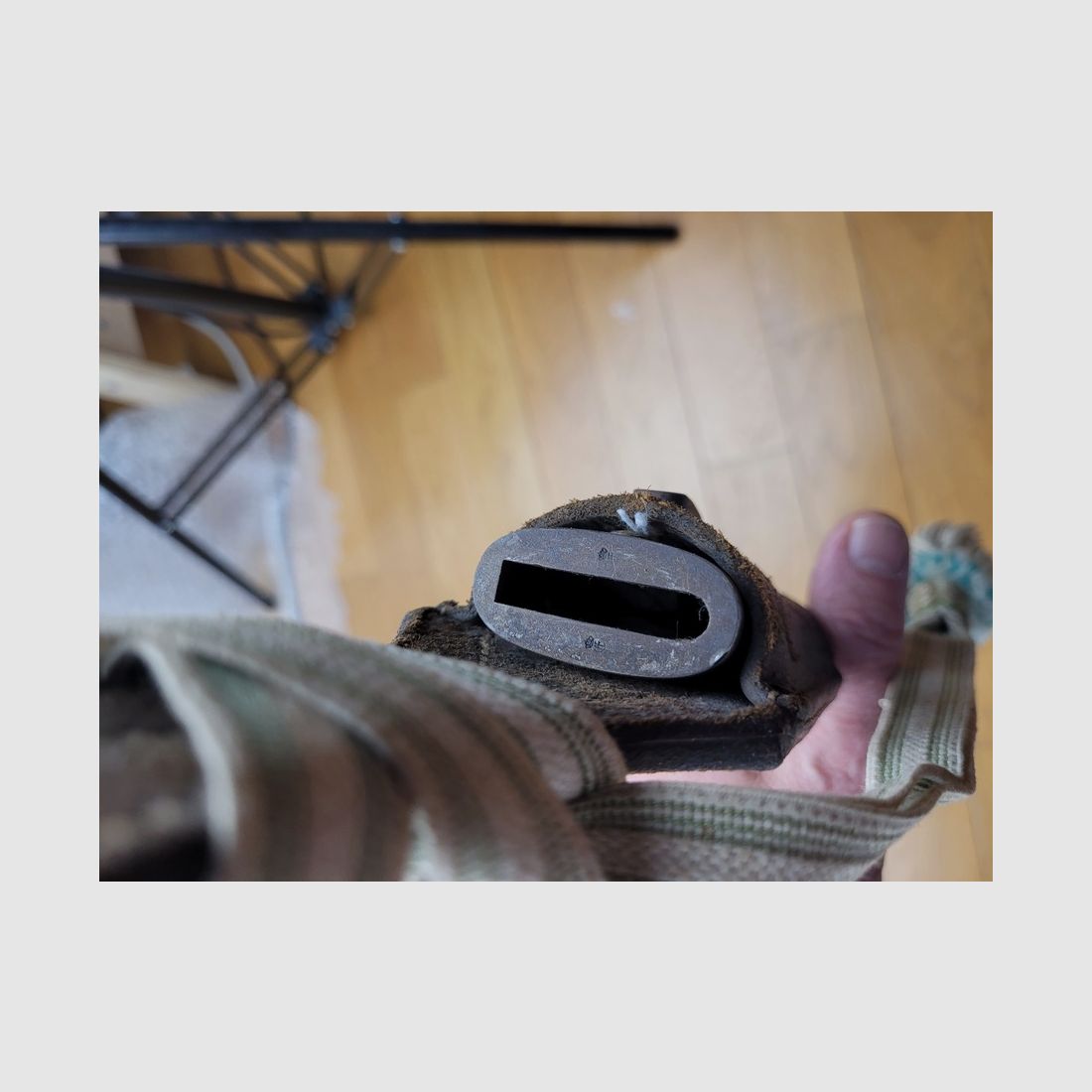
Very nice leather scabbard – gray as well – but no cuts or dents and absolutely no oxidation – good, sturdy staples, all present – in very good plus condition.
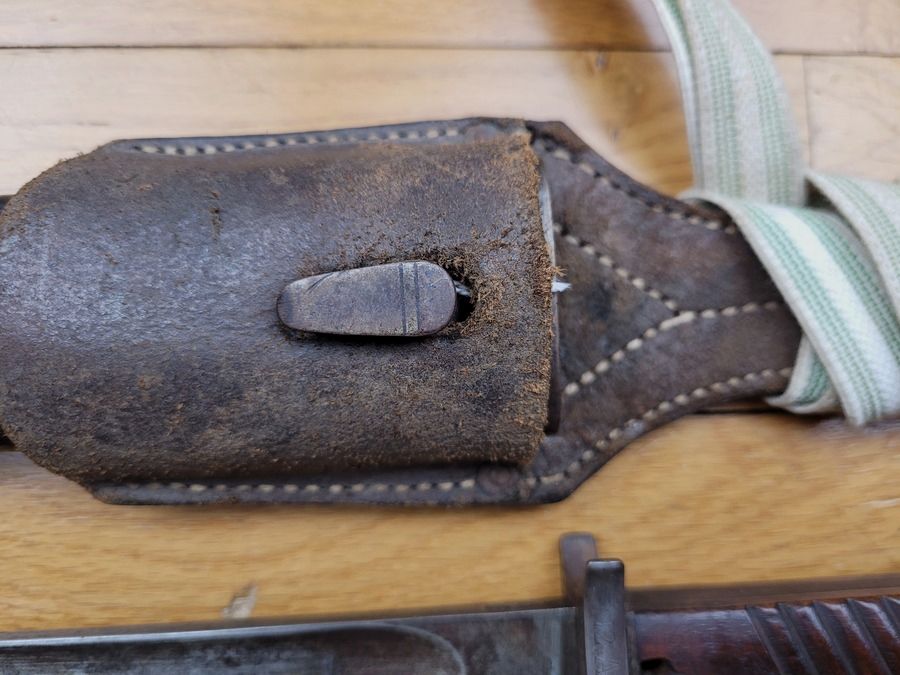
Good period leather frog with no markings – not blackened with shoe polish as ordered in late 1914 – so in original prewar / August 1914 condition – excellent condition.
All of that is already very good and rare. But above all, above all…
A beautiful troddel (sword knot) for a Saxon NCO, in green and white, of course, the colors of the Kingdom of Saxony. Classic wooden construction – excellent condition – almost new! Very rare now, especially in this condition.
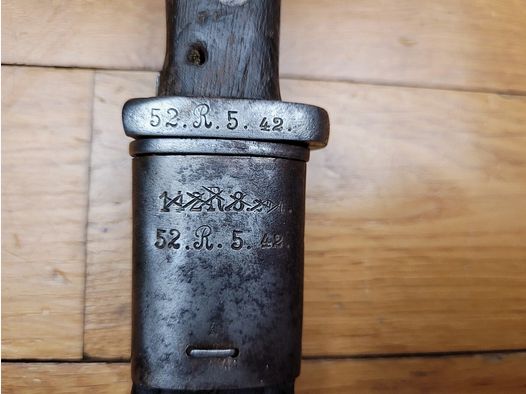
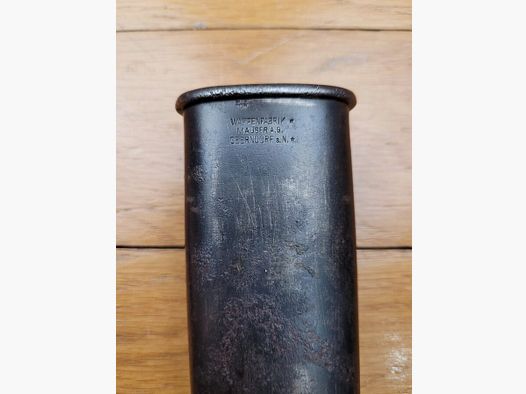
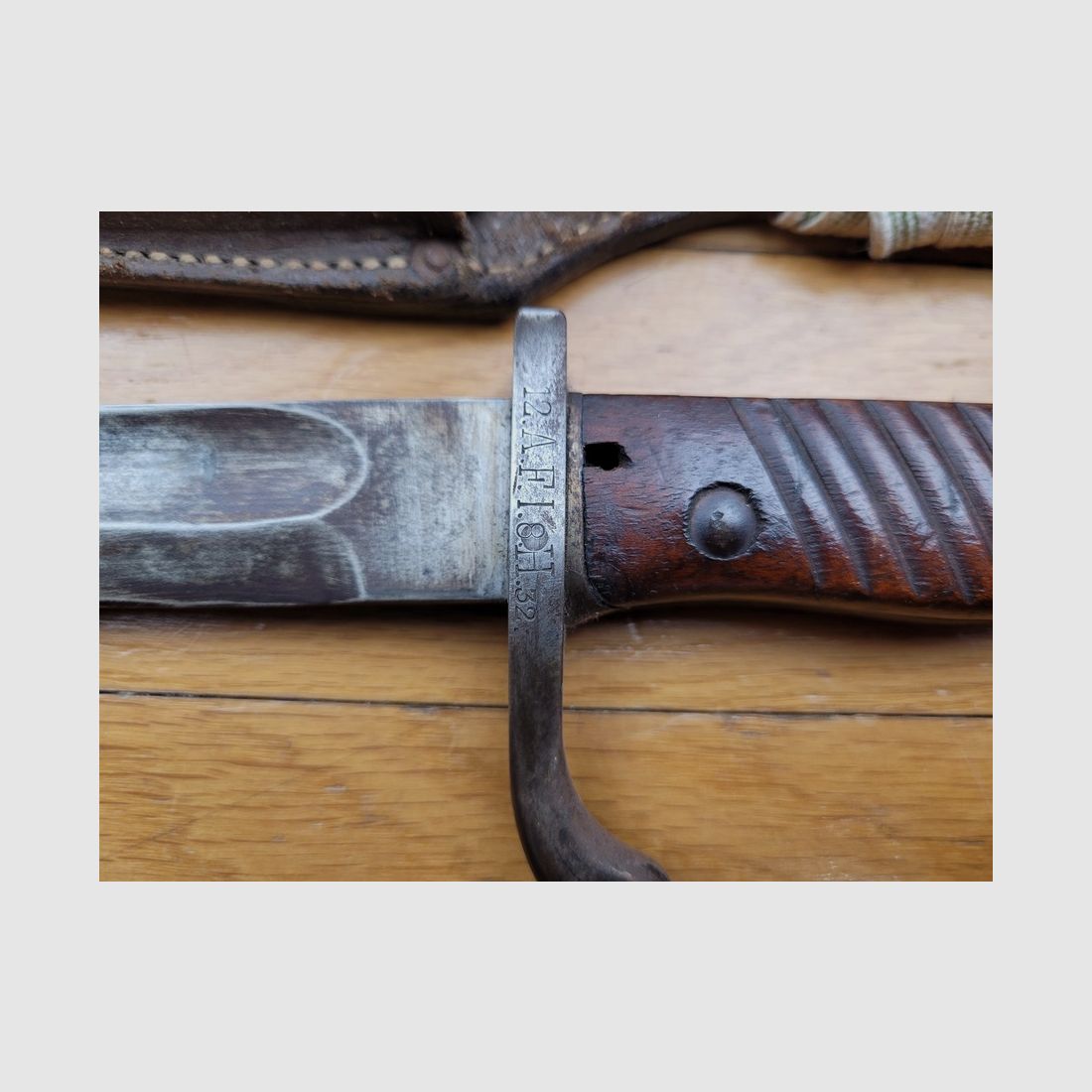
And the icing on the cake: the weapon is matching-numbered – the same number on the weapon and scabbard, with the exceptional marking “12.A.F.I.8.H.32,” meaning 12th Foot Artillery Regiment (“Füss-Artillerie”), 1st heavy mortar ammunition column (H = Haubitze / Howitzer) – 8th gun – weapon number 32. In other words, a heavy mortar unit attached to a Foot Artillery Regiment.
You can’t find matching-numbered 98/05 bayonets for the Prussian army anymore, by far the largest, let alone for the Saxon army…
One a
Exceptional addition to a collection of bayonets or German WWI militaria.
————————————————————————————————————————————————–
A very general, “rough-and-ready” cultural overview of artillery in World War I:
Horse artillery, also known as “mounted” artillery = entirely horse-drawn artillery – all personnel are mounted – light guns, generally up to a maximum of 65 mm in the German and French armies (Light Artillery – “Leicht Artillerie” in Germany) – by 1914, it had all but disappeared in France, except for the 65 mm mountain artillery model. The concept disappeared entirely with trench warfare, but reappeared in 1918 to help counter the emerging threat of tanks in a new war of movement.
Field artillery = partially mounted artillery – personnel followed the army corps they were attached to, using tractors, horse-drawn vehicles, limbers, trucks, etc. Mainly 75/77 mm and 105 mm guns – in France, this extended to Heavy Field Artillery with 120/155 CTR guns – known as “Feld Artillerie” in Germany.
Foot or heavy artillery = moved by train and mostly on foot – poor mobility, but used to destroy fortresses and for siege warfare. Heavy guns such as 90/20, 155/170/180 – heavy mortars of 220/270/280/305/420. In Germany, this was “Füss artillerie”, with extensive use of the excellent Austro-Hungarian Skoda heavy artillery. The case of our bayonet.
Fortress or coastal artillery = fixed artillery – rarely or never moved. Generally very large-caliber guns in protected positions.
Added to this during the war was the fantastic, ultra-modern French railway artillery, by far the best in the world! In 274, 320, 340, 370, and the astonishing 400 and 520 mm on railway tracks…
——————————————————————————————————————————————————
Weapon not classified under the CSI but prohibited for sale to minors: ID required.
******************************************************************************************************************************************************************************************
Let’s say it again! Flingus Maximus gun shop in Paris and throughout France is also here to help with private firearm transfer paperwork, buying firearm and militaria collections, firearm appraisals, and questions about firearms in estates and inheritances. Contact your favorite gun dealer using our contact form or at [email protected] (Show description in original language)
Un OVNI.
Dieu seul sait si j’en ai retourné des tonnes de 98/05 en 40 ans. Et je suis arrivé à la même conclusion que Carter : les 98/05 saxonnes, surtout régimentées, sont rarissimes – Voir son ouvrage essentiel “German bayonets – the models 98/02 and 98/05” – Anthony Carter page 24 et 25. La dernière phrase du chapitre étant « Any Saxon marked S98/05 must be considered extremely rare. »
Je pense que c’est clair même si on ne maîtrise pas la langue de Shakespeare.
Magnifique baïonnette 98/05 saxonne – fabrication de Carl Gottlieb Haenel à Sühl en Thuringe – bien marquée « C.G. HAENEL SUHL » au talon – Dos de lame bien marqué d’un FA couronné et du chiffre 10 soit « FA10 » pour Friedrich August, Roi de Saxe, et l’année de production 1910. C’est donc bien une saxonne de 1910.
Friedrich August III fut dernier roi de Saxe de 1904 à 1918. Si les aventures extra-conjugales, hallucinantes pour l’époque et le milieu – et même pour aujourd’hui !, de son épouse, une Habsbourg-Toscane, prénommée Antoinette (décidément les Antoinettes réussissent rarement aux têtes couronnées) ont défrayé la chronique européenne, il fut surtout un roi très militaire et sérieux dans sa gestion du Royaume et, encore plus, des circonstances difficiles de la Première Guerre Mondiale.
Enfin… Un sérieux facétieux quand même…
Il trouva plus clair d’ajouter dans son acte officiel d’abdication de 1918, à destination des insurgés d’une Allemagne en perdition, un fabuleux « Démerdez-vous tout seuls ! ». C’est pas si courant dans l’histoire des têtes couronnées européennes. Il est mort en 1932. Son enterrement fut suivi quand même par 500.000 saxons dans une Saxe devenue républicaine. Le facétieux mari malheureux, et néanmoins bon roi, n’était pas oublié de ses loyaux sujets.
Mais revenons à notre baïonnette.
Les baïonnettes saxonnes sont donc rarissimes en 98/05.
Elles n’existent qu’en premier type (toute baïonnette 98/05 2¨type « saxonne » est obligatoirement apocryphe).
On en a pas trouvé qui soient datées d’avant 1907. Carter indique ne pas en avoir vue une après 1911. Il se trouve que j’ai eu la chance d’en voir une de 1912. Mais il s’agit sans doute d’une exception relative à une production se terminant sans doute au tout début de l’année 1912 Cinq années à peine, c’est très peu pour un royaume avec une petite armée.
Notre exemplaire est en état parfait.
Très belle poignée avec très peu de traces de manipulation – Bouton-poussoir bien fonctionnel évidemment – Tous poinçon bien lisibles . Aucune piqûre. Juste la grisaille de surface de ses 112 années de vie – Elle pourrait briller de 1000 feux avec un coup très prudent de polisseuse mais je la laisse comme ça. Juste top. On les voit rarement dans cet état quasi muséal.
Lame en TBE aussi– aucune corrosion ou piqûre. dans sa bonne longueur -Mieux qu’en excellent état.
Très beau fourreau cuir – grisé aussi – mais aucun sans coup ni bosse et strictement aucune oxydation – bonnes agrafes bien présentes et et bien solides – en TBE +.
Bon porte-fourreau cuir d’époque sans marquage – non passé au cirage noir comme ordonné fin 1914 – donc état d’origine d’avant guerre / août 1914 – excellent état.
Tout ça est déjà très bien et déjà rare. Mais surtout, mais surtout…
Beau troddel (dragonne) pour sous-officier saxon aux couleurs verte et blanche évidement s’agissant du royaume de Saxe. Construction classique bois – excellent état – quasi neuve ! Devenu très rare surtout dans cet état
Et cerise sur le gâteau : l’arme est au numéro – identique sur l’arme et le fourreau avec le marquage exceptionnel « 12.A.F.I.8.H.32 » soit 12° régiment d’artillerie à pied (« Füss-Artillerie ») 1ire colonne de munitions de Mortiers Lourds (H = Haubitze / Howitzer) – 8iéme pièce – Arme Numéro 32″ soit une unité de mortiers lourds rattachée à un régiment d’Artillerie à pied.
On ne trouve déjà plus du tout de 98/05 au numéro pour l’armée prussienne, de loin la plus nombreuse, alors pour l’armée saxonne…
Une addition exceptionnelle dans une collection de baïonnettes ou de militaria allemand 14-18.
————————————————————————————————————————————————–
Rappel culturel très général et « à la hache » sur l’artillerie pour la Première Guerre Mondiale:
Artillerie montée / dite « à cheval » = artillerie entièrement hippomobile – Tout le personnel est monté – pièces légères jusqu’au 65 en gros max dans les armées allemande et française (Artillerie légère – « Leicht Artillerie » en Allemagne) – n’existe plus ou quasi plus en 14 pour la France sauf pour le modèle en 65mm d’artillerie de montagne. L’idée disparait totalement avec la guerre de tranchées mais ré apparaitra en 1918 pour faciliter la lutte anti-chars naissante dans une nouvelle guerre de mouvements.
Artillerie de campagne = artillerie partiellement montée – le personnel suit le corps d’armée auquel il est attaché plutôt avec des tracteurs, des voitures hippo-tractées, caissons, camions… Essentiellement du 75/77 -105 – En France on va jusqu’à une Artillerie Lourde de Campagne en 120/155 CTR – c’est la « Feld Artilerie » en Allemagne.
Artillerie à Pied ou Lourde = Déplacement en train et le plus souvent à pied – Mobilité médiocre mais artillerie de destruction de forteresses, de siège. Pièces lourdes Genre 90/20 -155 /170/180 – mortiers lourds de 220/ 270/280/305/420. Et « Füss artillerie » en Allemagne avec grosse utilisation de l’excellente artillerie lourde austro-hongroise Skoda dans leurs rangs. . Cas de notre baïonnette.
Artillerie de forteresse ou côtière = artillerie fixe – pas ou exceptionnellement de déplacement. En général du très gros calibre sous abri.
A la quelle s’ajoutera au cours de la guerre, la fantastique et modernissime artillerie française sur voire ferrée de loin la meilleure du monde ! En 274.320.340.370 et les hallucinants 400 et 520 sur voie férée…
——————————————————————————————————————————————————
Arme non classée au CSI mais interdite de vente aux mineurs : CNI obligatoire.
******************************************************************************************************************************************************************************************
Répétons le ! L’armurerie Flingus Maximus à Paris et partout en France est là aussi pour vos formalités armes entre particuliers, le rachat de collections armes et militaria, vos estimations d’armes, vos questions armes dans les successions et héritage. Contactez votre armurier préféré via notre formulaire de contact ou à [email protected]