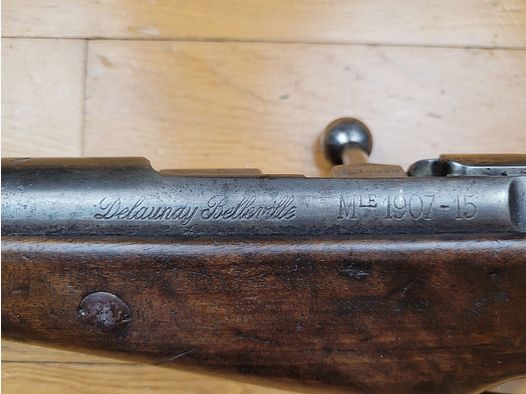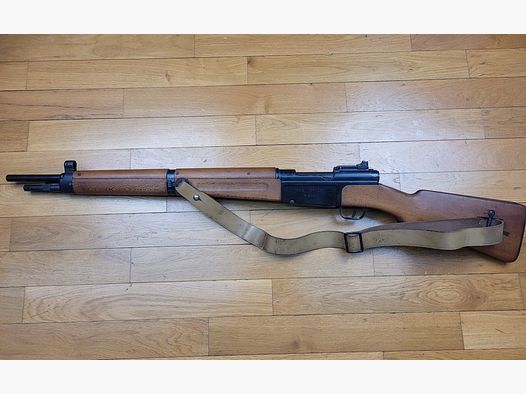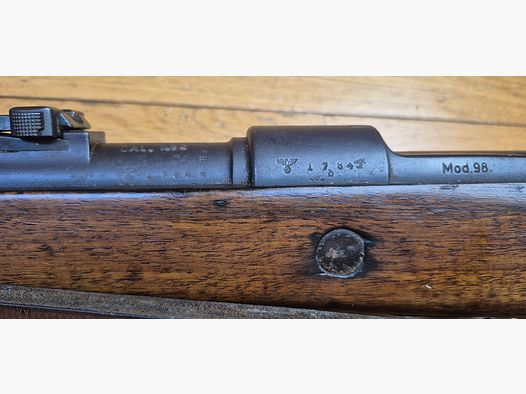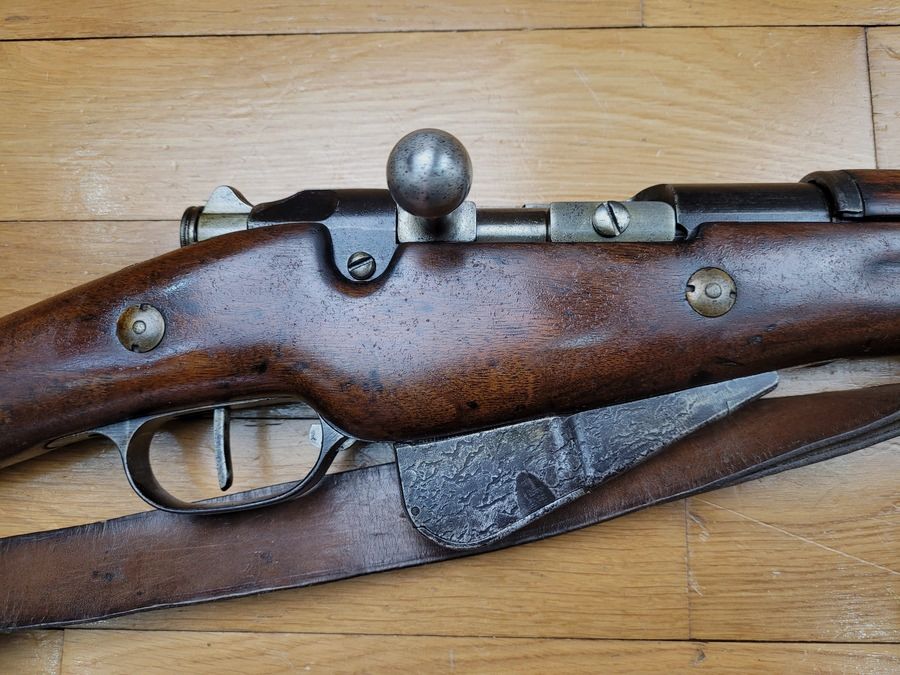
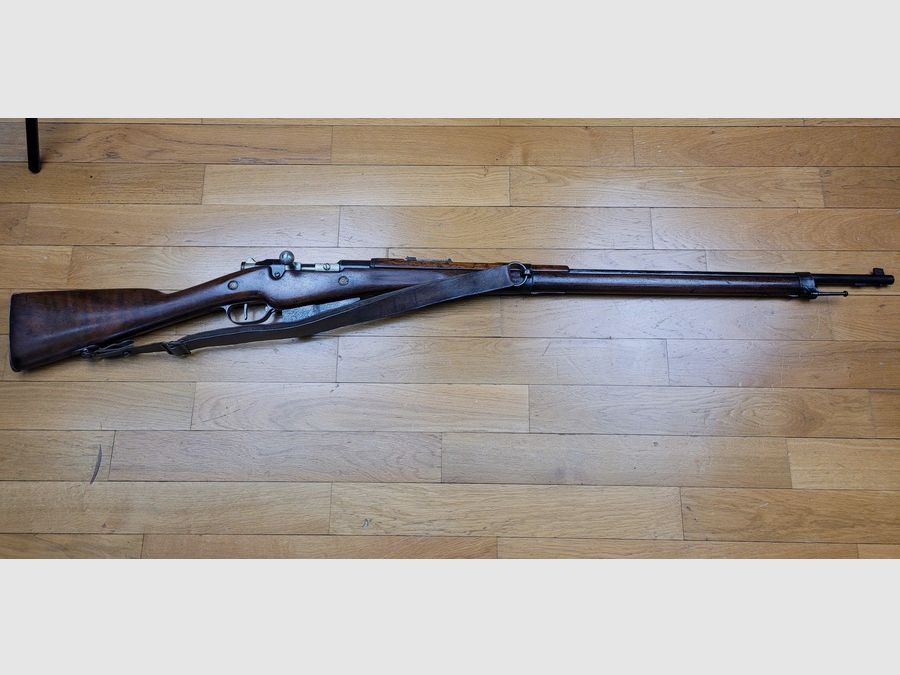
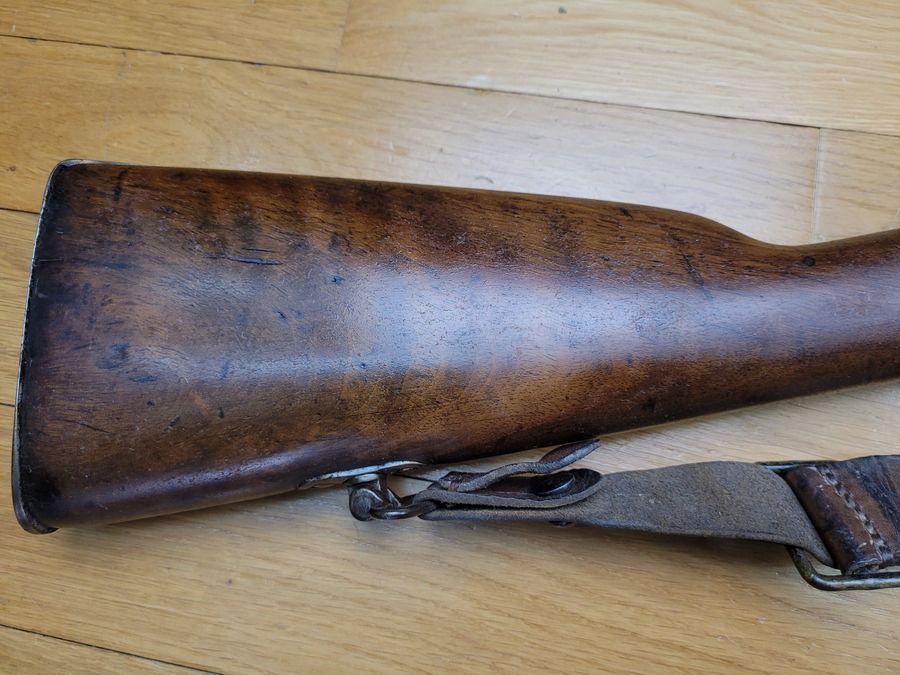
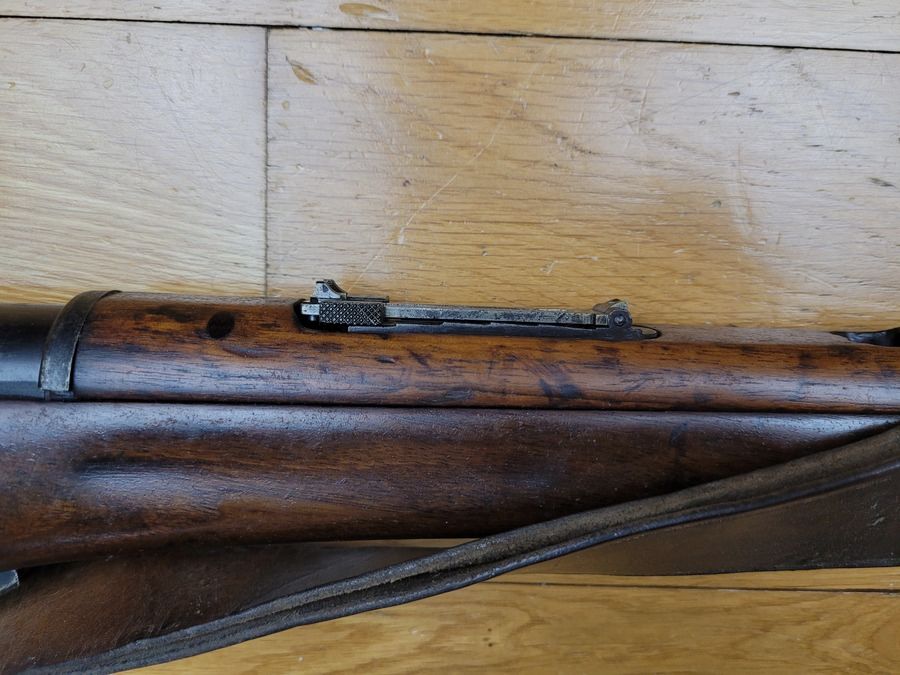

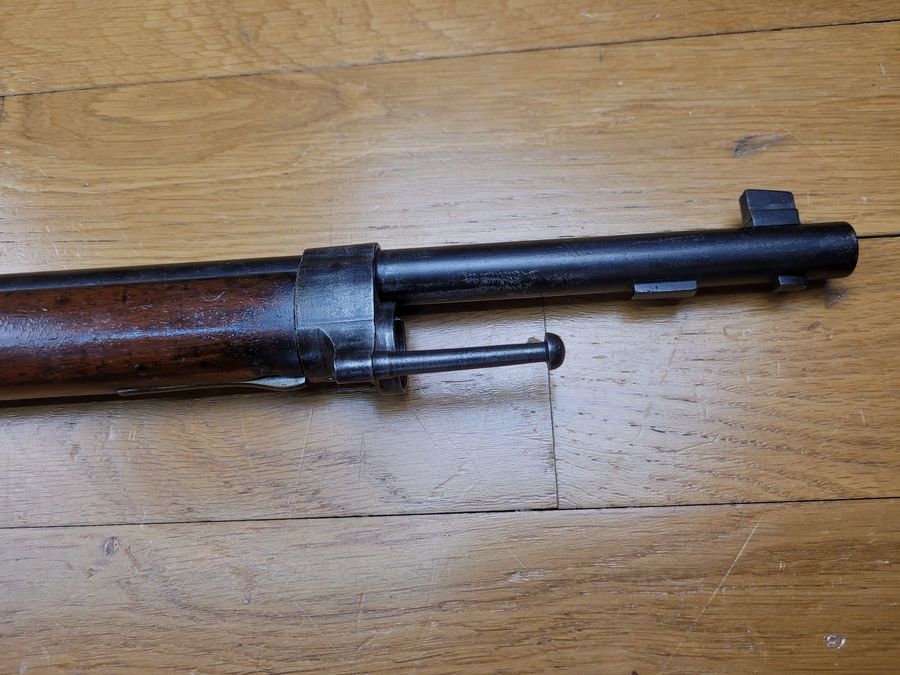
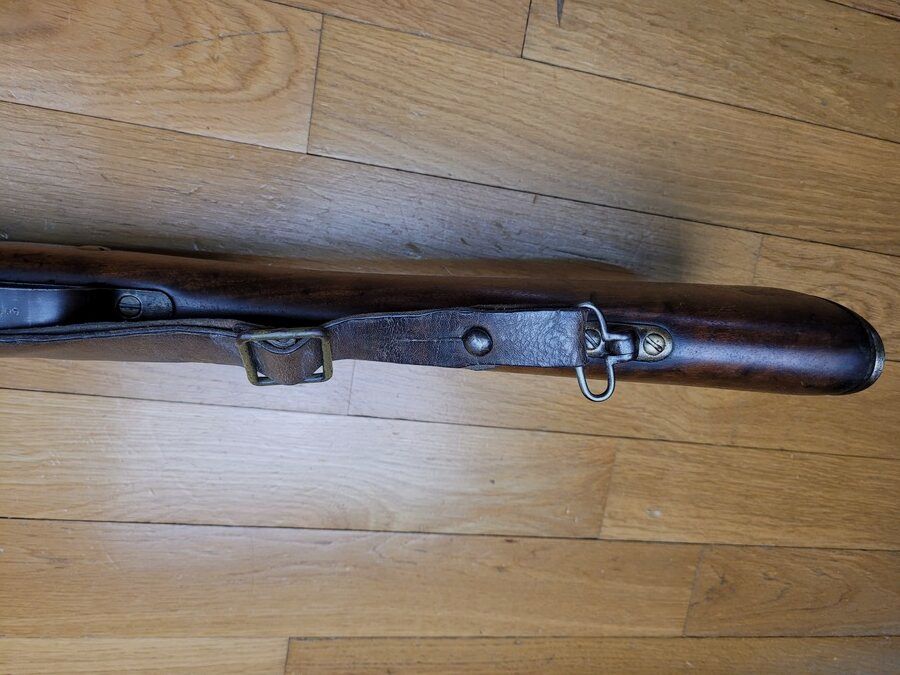
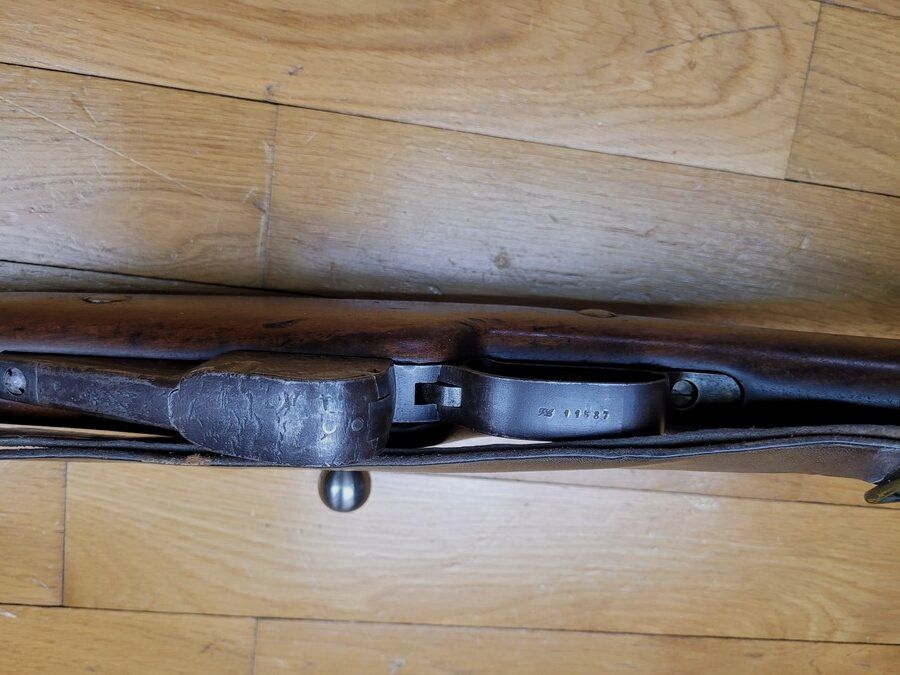
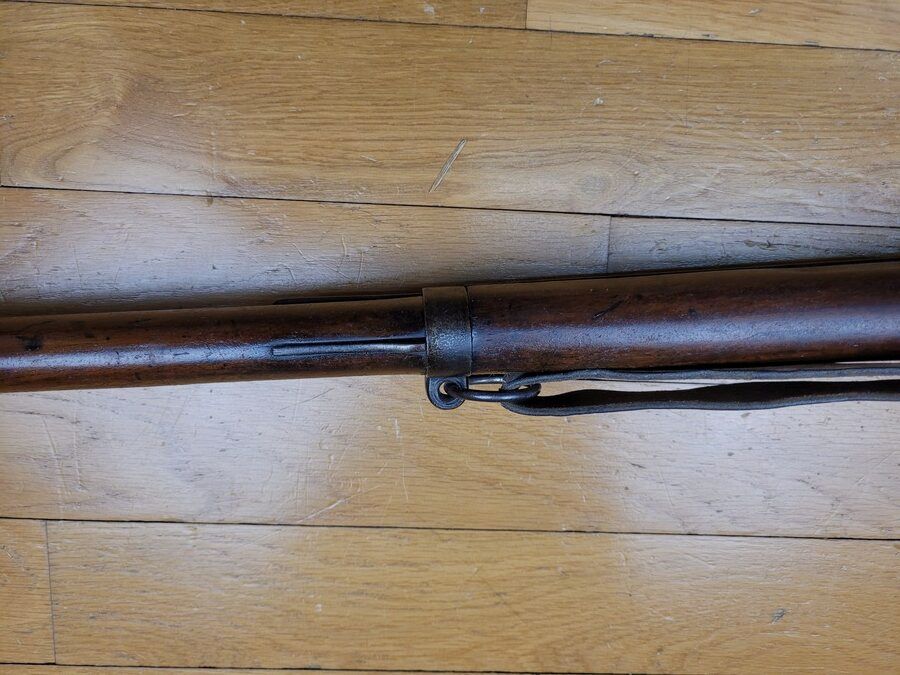

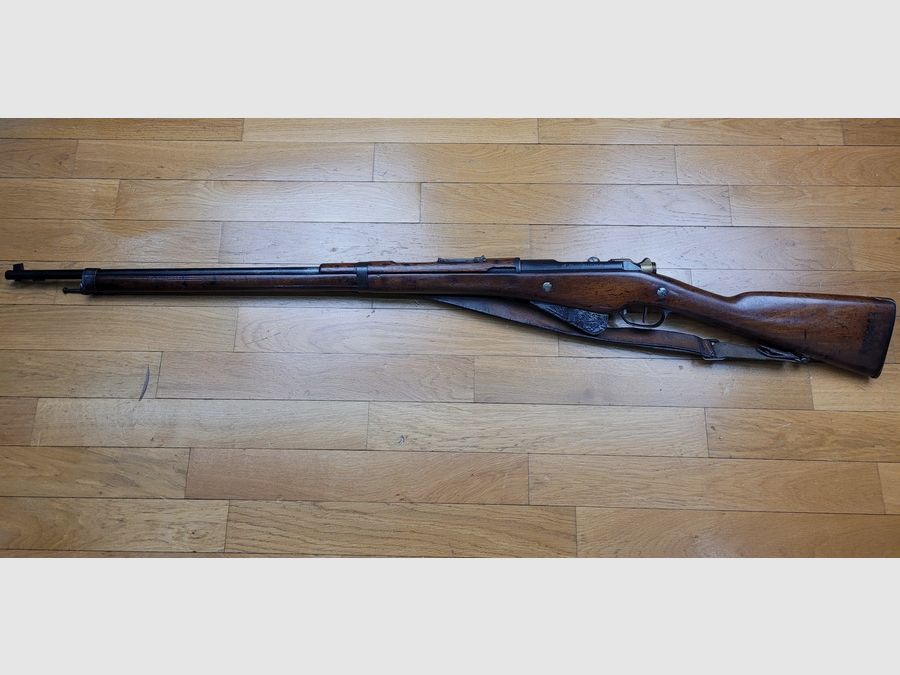
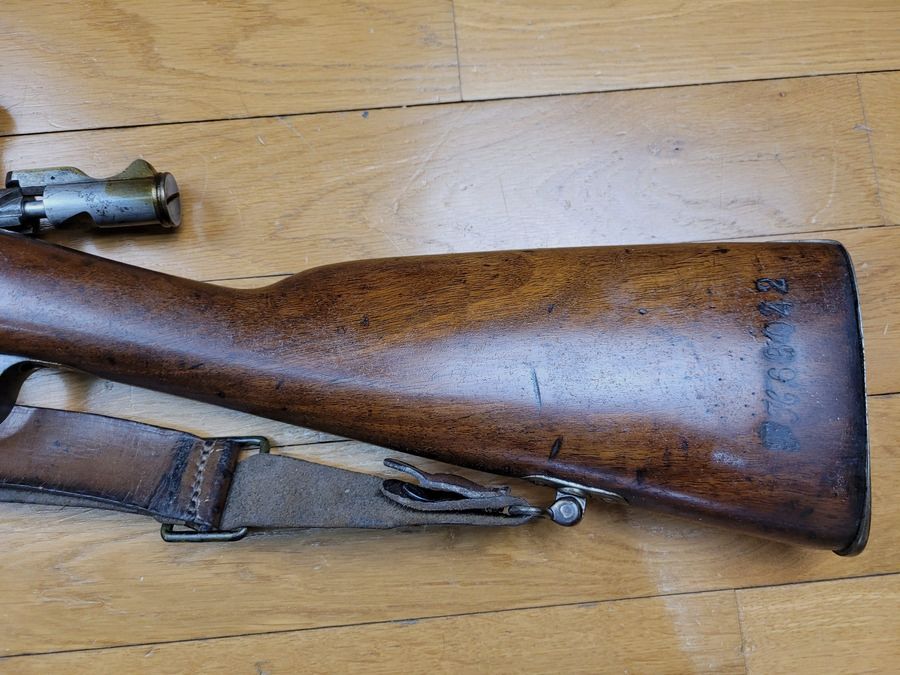

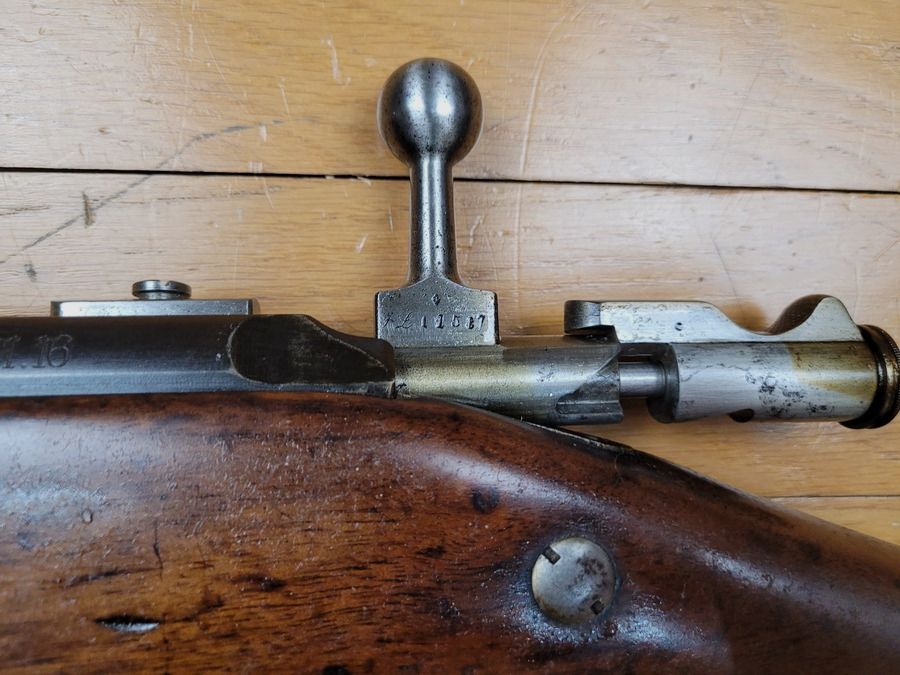

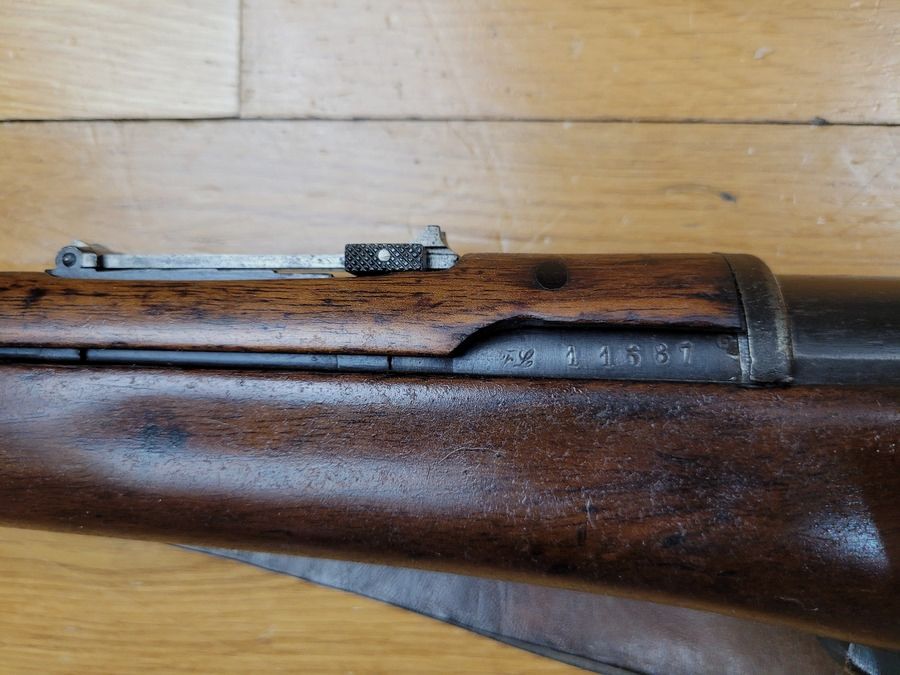


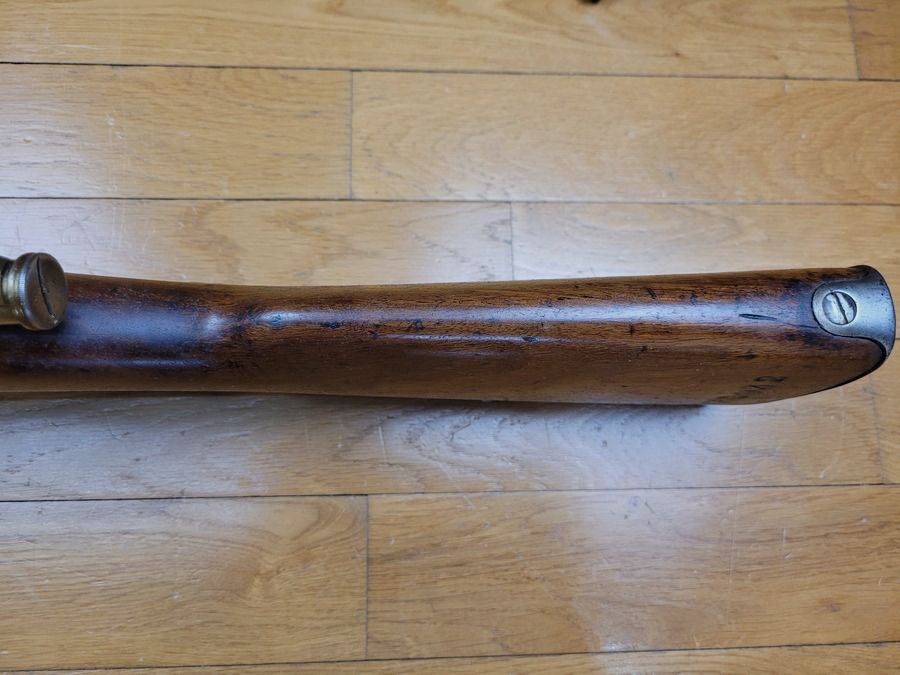
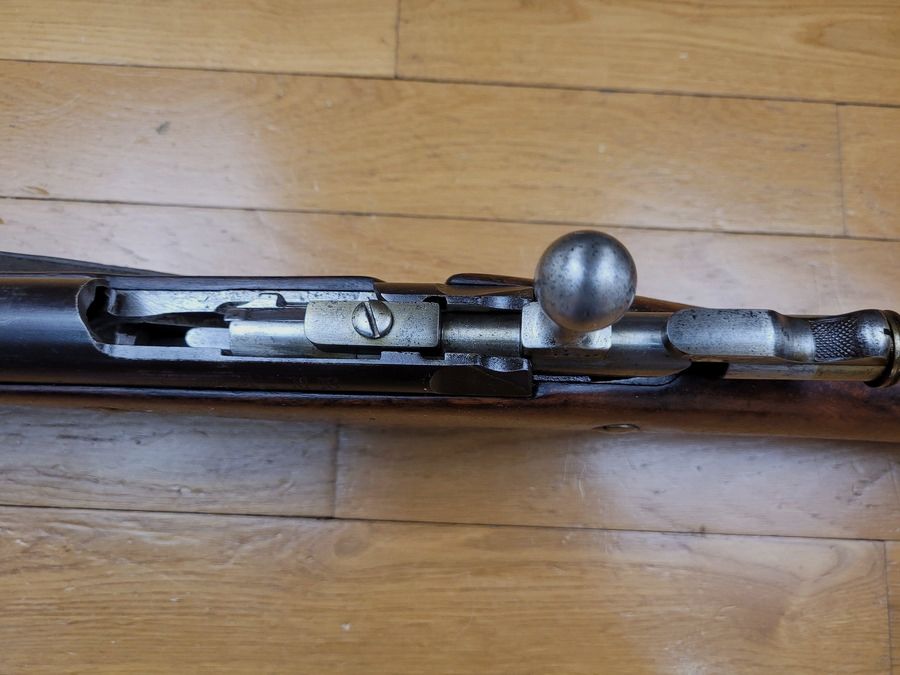


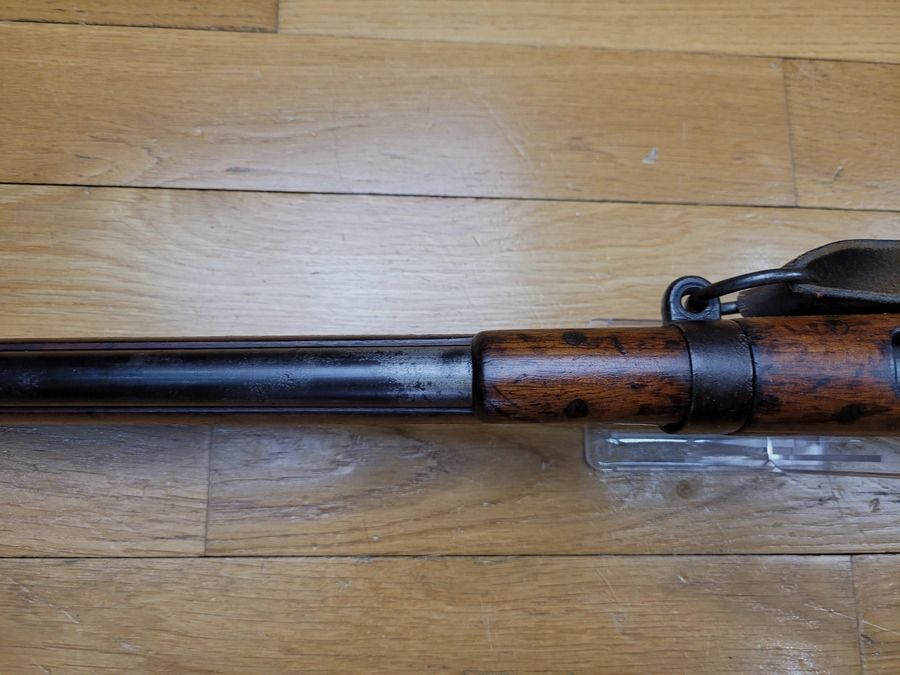


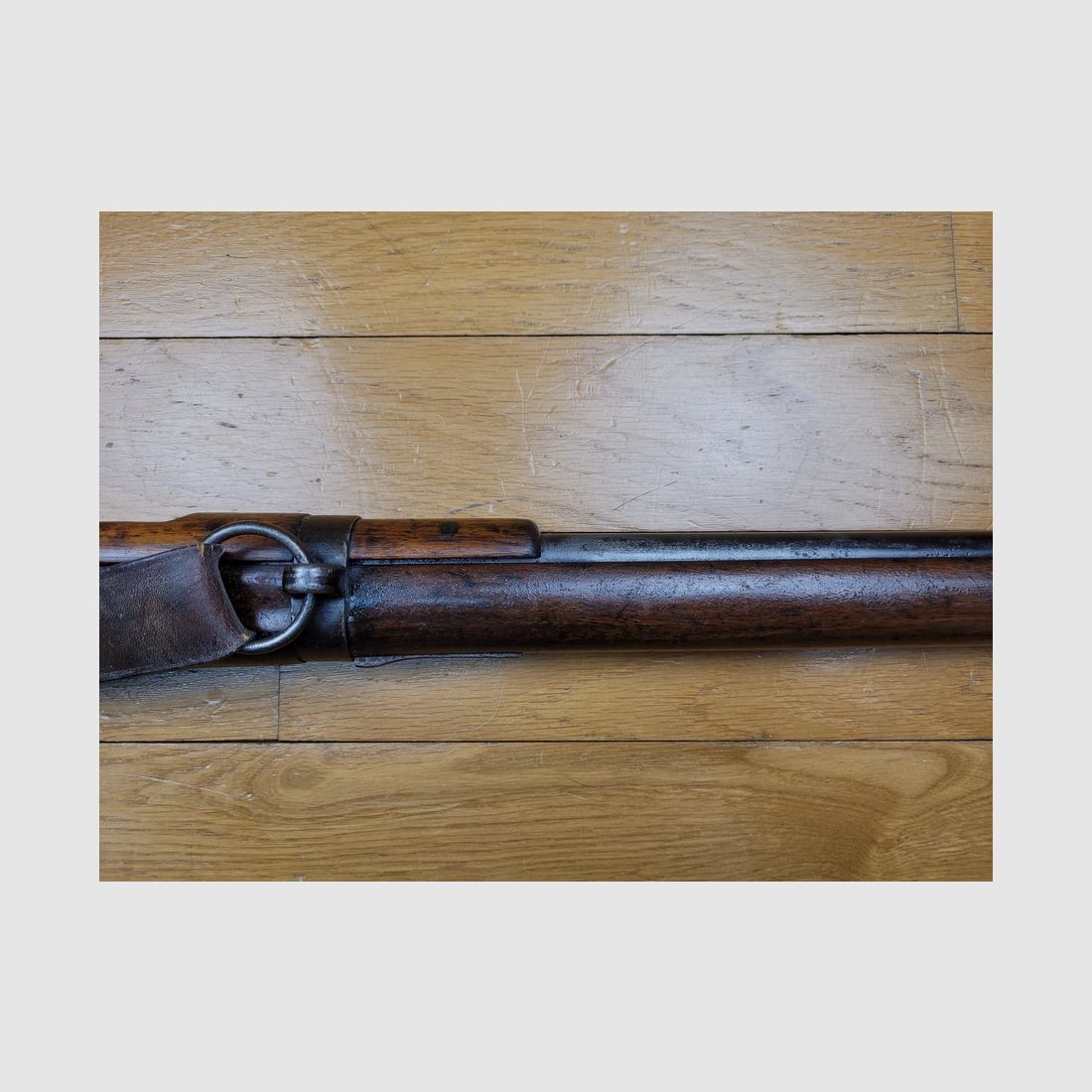

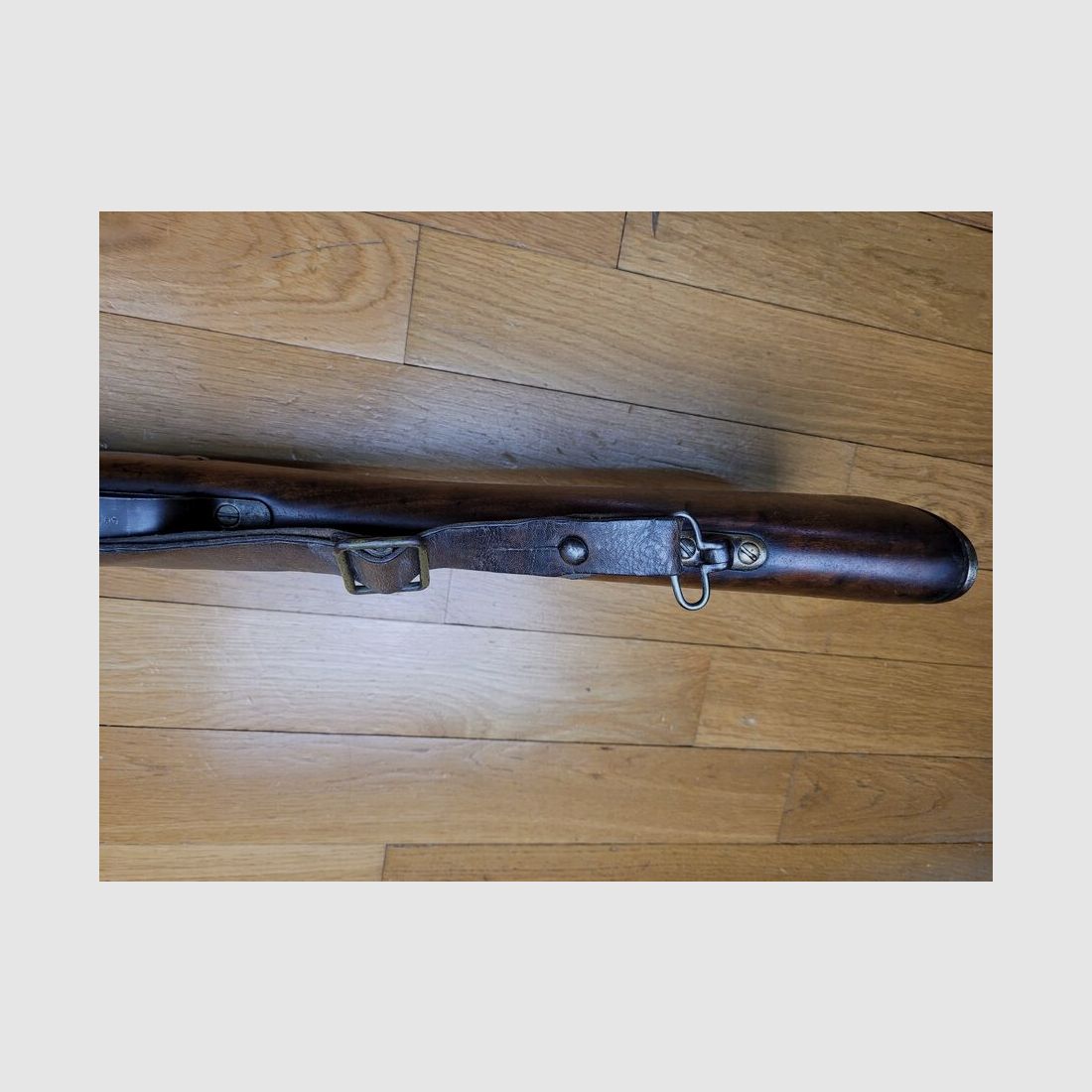
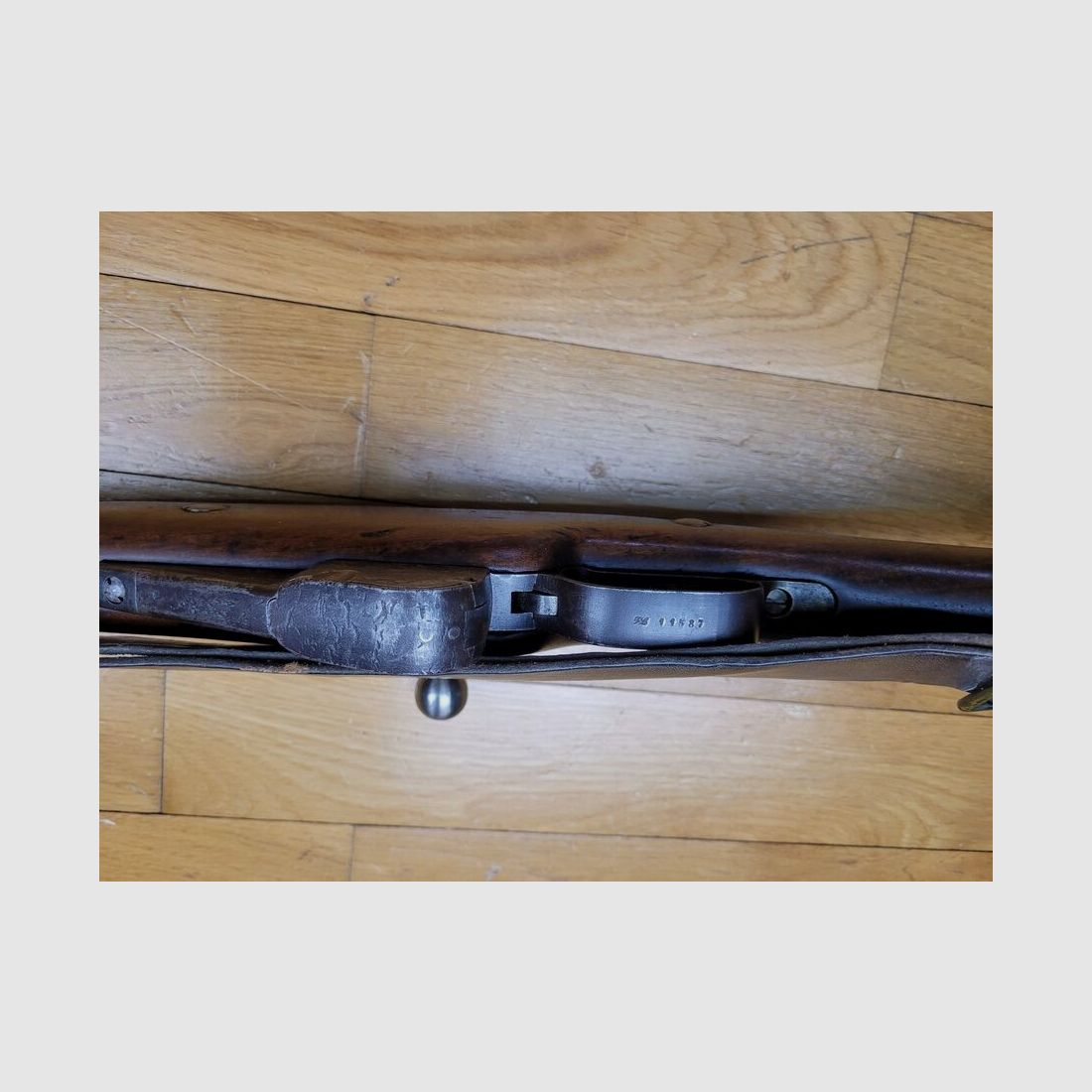
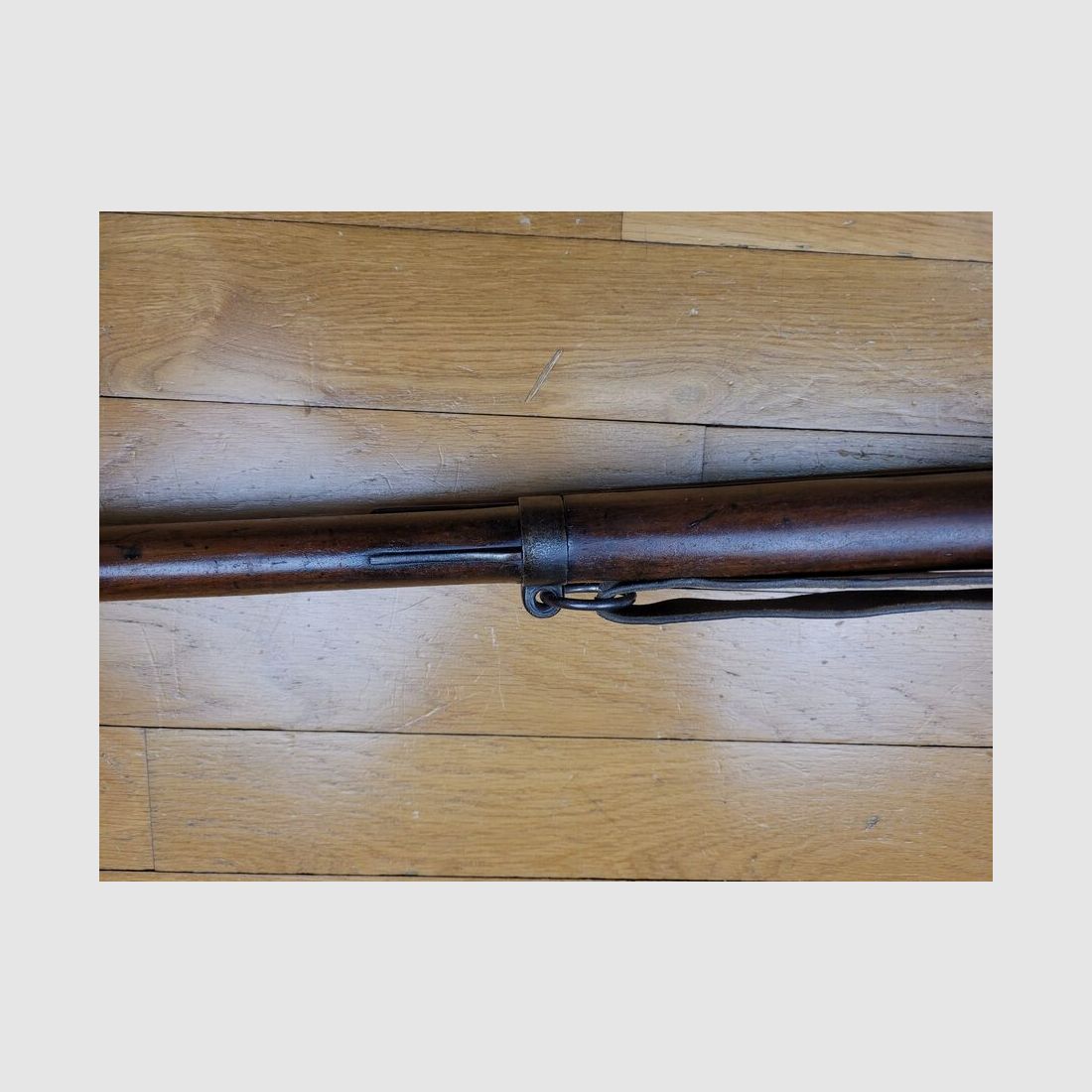
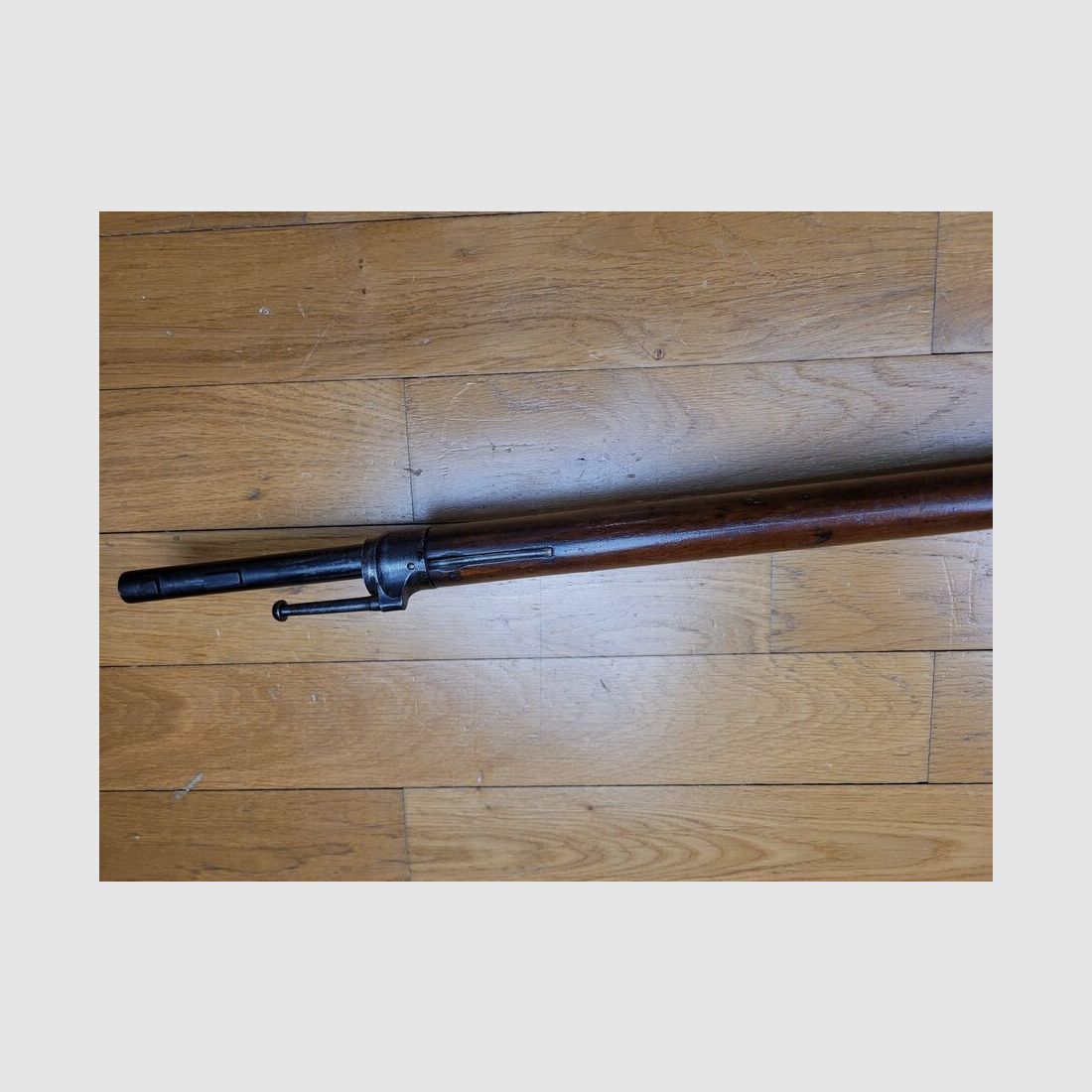

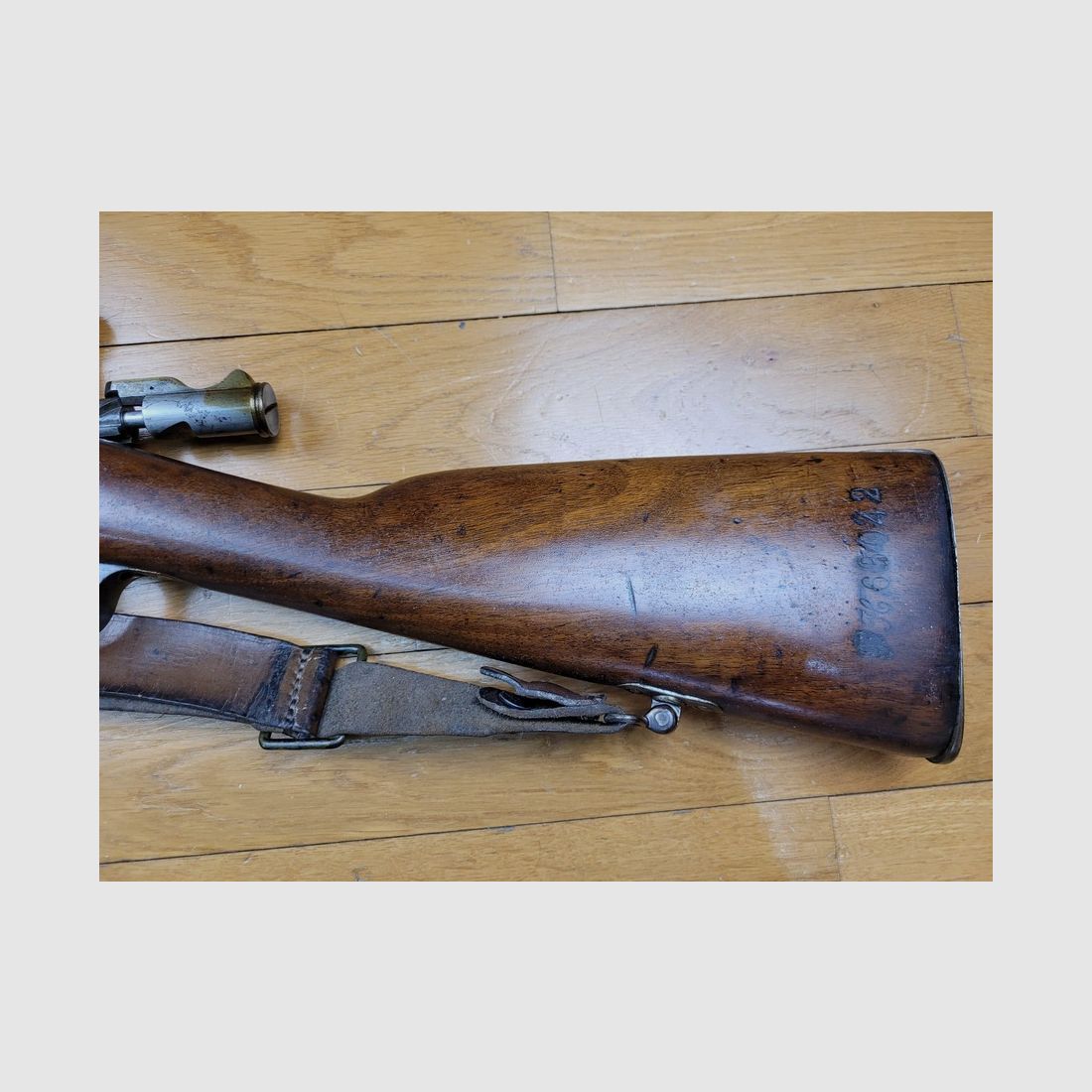
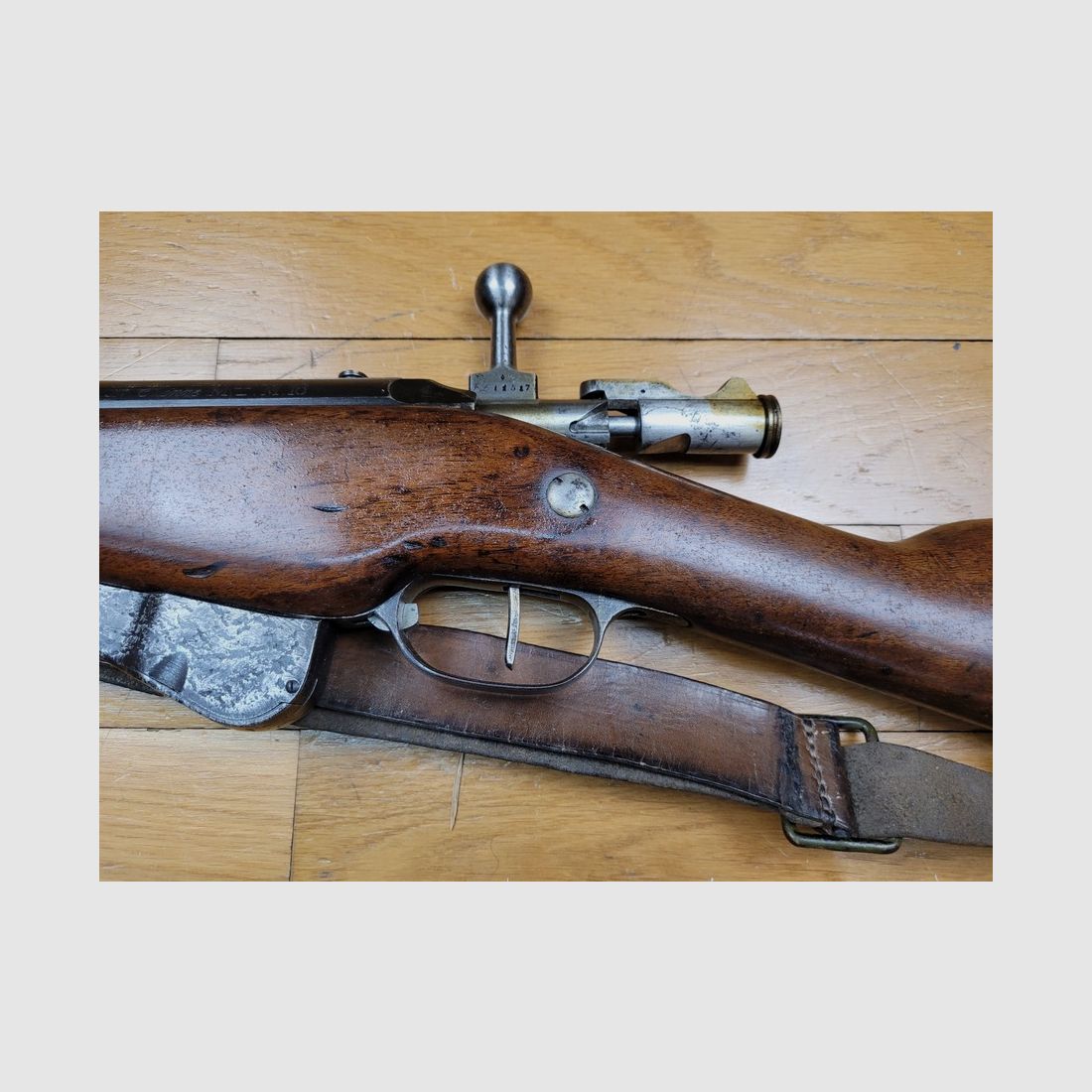





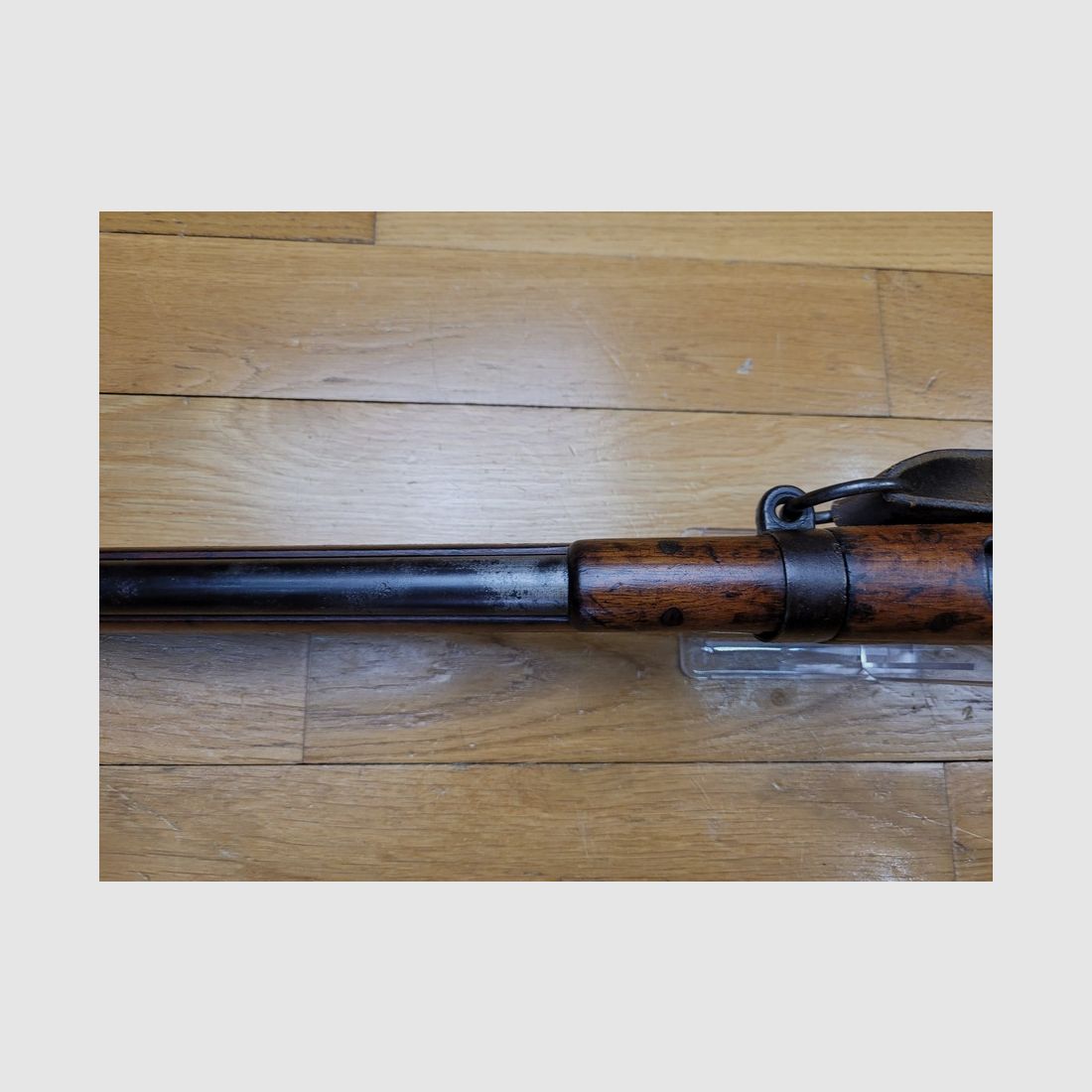
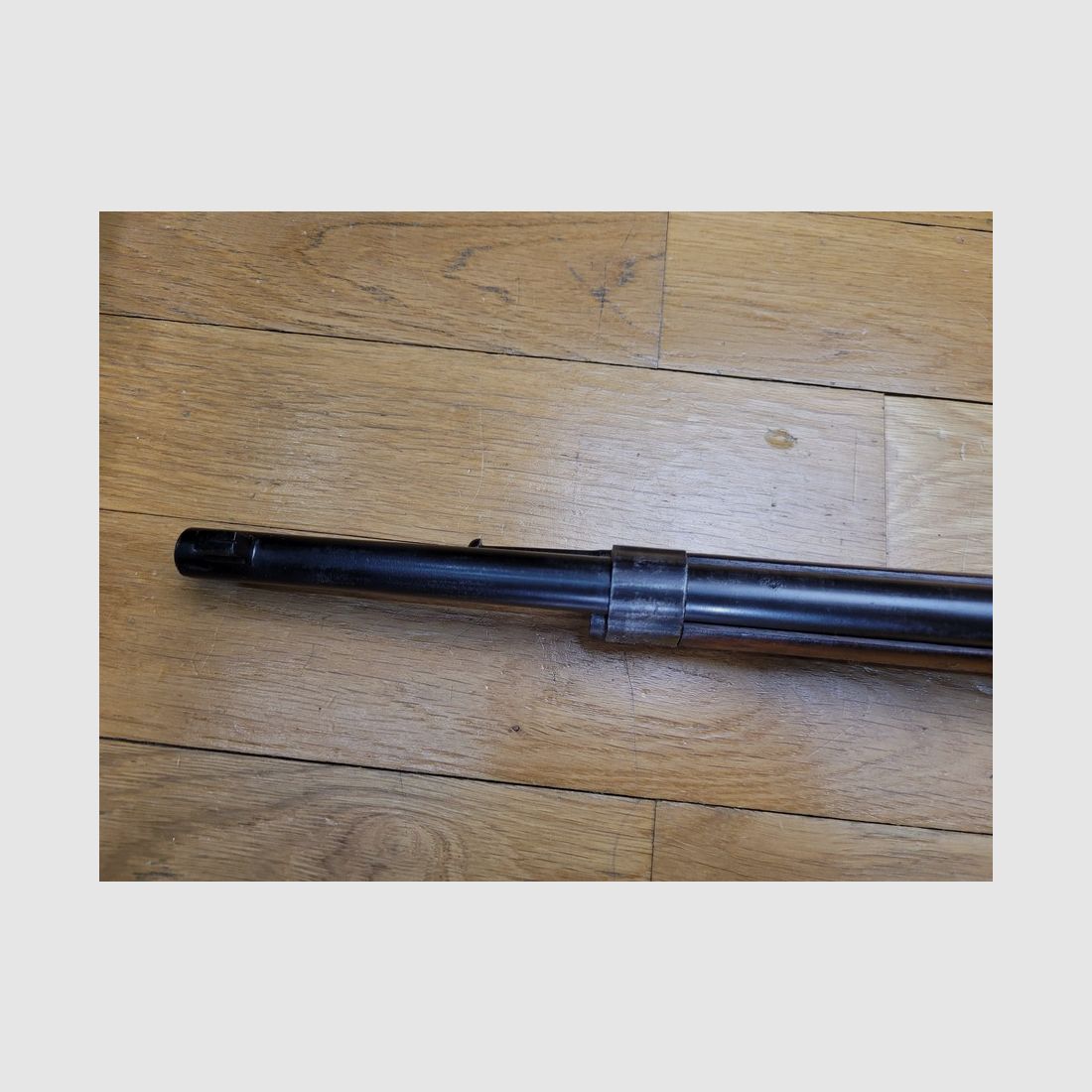
Good Berthier rifle – 07/15 Mod. 1916 – 5-round action – cal. 8×51 Lebel – Trigger, movable bolt and barrel with number – Very nice barrel – sling – 2 clips – TBE
Price on Request
Purchase permit required
75002 Paris, France
6
ID: 10339059
This item is currently unavailable.
Purchase from outside the EU: The firearm goes through an importer in your country, the dealer handles the export.
How buying from Europe works
Shop safely with Gunfinder
Our AI-powered seller identity verification makes Gunfinder the safest marketplace online.
Learn more
Details
- Original language
- French
- Category
- Purchase eligibility
- Required
- Condition
- New
- Location
- 🇫🇷 75002 Paris, France
- Availability
- Out of stock
Freshness
This listing is based on a mirrored offer, where the listing data was synced to us from a shop, dealer, or external marketplace. Please note that temporary price discrepancies may occur due to possible delays in data transmission.
- Source
- Flingus Maximus
- Last checked with the dealer
- 1 day ago
Description
Note:
The item is located abroad. Please note that delivery conditions, shipping times, and/or the purchase process may differ.
They also wanted to allow a little time to think about the weapon’s feeding system, so it would not simply be a “shortened” version of the rifle, whose feeding system was known to be less than ideal.
And progress came from where it was least expected. A civilian, working alone and far from the Armament Commissions and their ideal specifications, rose to the challenge.
Mr. André Berthier, inventor of a remarkable weapons system that served us until the 1970s, was in fact… head of the Railway Bureau of the Bône-Guelma Railway Company in Algeria.
He dared to present a weapons system of his own invention to the very cantankerous Artillery Committee. After many twists and turns, the Committee eventually conceded that he was right and adopted his system, without going so far as to pay the customary tribute to its inventor—a civilian, not a graduate of the École Polytechnique—by naming the system after him.
But French collectors and shooters, fans of the Berthier, have long since made up for this slight, and his name is still spoken with respect and admiration at many shooting ranges—and will be for a long time to come.
Berthier had the practical sense to use as many parts as possible from the Lebel rifle. He also used its cartridge. That was probably the most archaic element of the Lebel system. But Berthier knew that if he also proposed a different cartridge to the very conservative Artillery Committee, his entire system would almost certainly be rejected.
In his system, a very simple five-round sheet-metal clip, cheap to manufacture and use, was held in place by a modest catch, while a lifter pushed the cartridges upward. Once all five cartridges had been fired, the clip simply fell to the ground through an opening beneath the magazine, ready to be replaced immediately with a new clip loaded with cartridges. Inserting the clip, firing, ejecting it and replacing it with a new clip loaded with ammunition—all of this happened very quickly. The rate of fire and reloading was therefore very high. The adaptation of the Mannlicher system to the Lebel rifle was a success.
Berthier plucked up his courage, and the audacious head of a colonial railway bureau dared to present his carbine design to the Artillery Committee (the committee responsible for technical choices concerning weapons and ammunition for the armed forces). It was 1887, a little over a year after the Lebel was introduced.
Unwelcoming toward a civilian meddling in matters that, in their view, concerned only the polytechnicians on the Artillery Committee, who were confident in their innate expertise and had a track record of consistently unfortunate choices—particularly when it came to cartridges (all three main French small-arms calibers chosen by the Artillery Committee between 1873 and 1892 were problematic: the 11MM 1873, the 8×51 Lebel 1886 and the 8mm 1892, even though the weapons themselves, made in the arsenals, were generally excellent)—the Artillery Committee began by… throwing Berthier and his project out!
The handsome André was not discouraged and returned to the Committee in 1888 with a few improvements. This time, the Artillery Committee had to acknowledge that adapting a Mannlicher feeding system to the Lebel design had worked rather well. It therefore authorized the manufacture of a prototype, which proved promising. Eventually, around ten prototypes were made. The Berthier system was adop
ted as early as March 14, 1890, in the form of a cavalry carbine and a cuirassier carbine, now very rare.
Of course, the Artillery Committee, no doubt as part of its astonishing plan to “save” ammunition in the event of a major conflict—a fixed idea among most general staffs before the war—added its own touch. It reduced the magazine capacity from 5 rounds to 3! Another unfortunate decision that would once again require all Berthier firearms (rifles and carbines of every model) to be modified to take 5-round magazines starting in 1916.
But the firearm was a success, and the Berthier family quickly expanded with a Gendarmerie carbine, followed by an artillery carbine. The ultimate accolade came when a series of rifles was developed from it before 1914, alongside the Lebel: first the extremely rare Fusil 1902 de Tirailleurs Indochinois (short), then a Fusil de Tirailleurs Sénégalais 1907 (long). It was all about the size of the people carrying them. These firearms were therefore more modern than the metropolitan Lebel rifles issued to Bretons and Burgundians.
Then came the summer of 1914. It was very hot. In every sense. The Lebels melted away like snow in the sun as the French armies were forced to suffer a horrific reduction in numbers—250,000 men between August and October. 370,000 in total between August and the end of December. Even in 2023, Maître Flingus cannot think about it without being deeply moved. A national suicide and an eternal tribute to warriors of all eras who refuse to give up, from Thermopylae to Fort de Vaux.
The shortage of Lebels became acute and, since rifles had to be made anyway, it was decided to develop a standard infantry rifle to replace it, based on the very satisfactory Berthier 1902 and 1907 rifles. The result was the handsome Berthier 07/15 rifle, which replaced the Lebel 1886 and became the standard rifle of the French army from then on.
An initial, extremely rare version with a bent bolt handle (Maître Flingus has had one—better than perfect—in his stock for years, but he can’t bring himself to sell it. Still, if you’re nice, a good customer, and above all a passionate collector, I’ll have to part with it one day… But it makes me sad!) was produced only from March to June 1915. This version was itself replaced as early as June 1915 by the classic 07/15 with a straight bolt handle, which would be produced throughout the war and even afterward.
In early 1916, they returned to Berthier’s original idea, against the Artillery Committee, which wanted a firearm with a five-round charger clip rather than three. This was the final version for 1914–18: the Berthier 07/15 rifle, modified in 1916, sometimes called the “Berthier 1916 five-round rifle.”
This time, we’re offering you a handsome second-pattern 07/1915 infantry rifle, originally built to the 1916 five-round standard. A representative of the unmodified Berthier system, still holding three rounds, can be seen HERE.
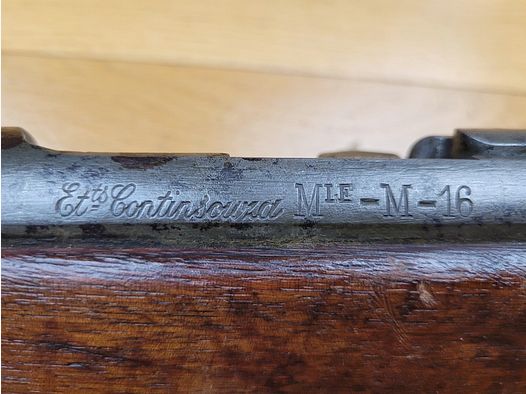
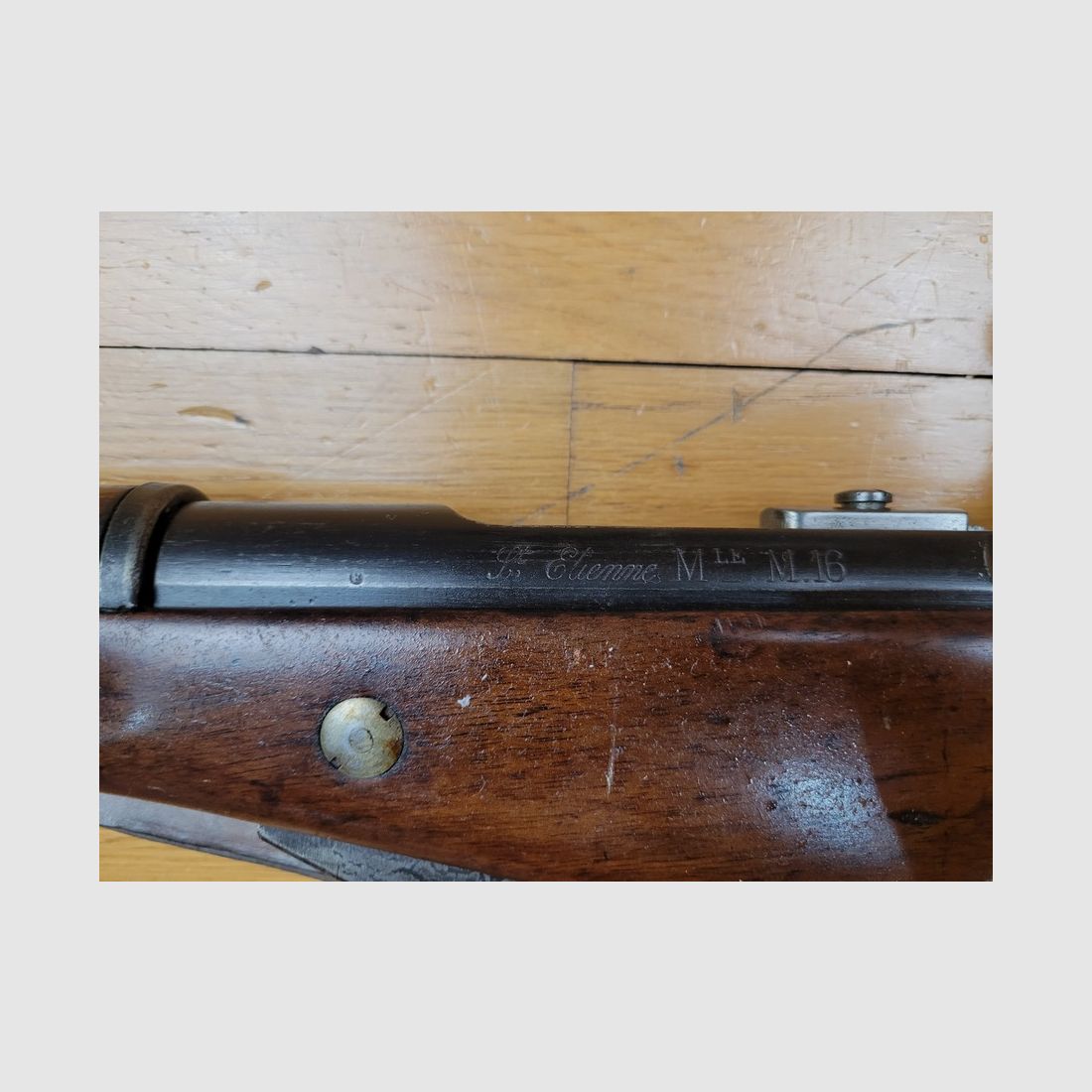
Our firearm is not a three-round 07/15 converted to the Model 16. Our rifle was built directly in St-Étienne to the 1916 standard, as its receiver bears the marking “St Étienne Mle M-16” with no “1907/15” reference. The firearm was assembled in St Étienne, where it returned in 1932 to be adapted for the 32N bullet, like 99.99% of French service firearms of the Berthier and Lebel systems. The receiver is clearly marked with a capital “N.” You can therefore safely fire factory PPU ammunition in it.
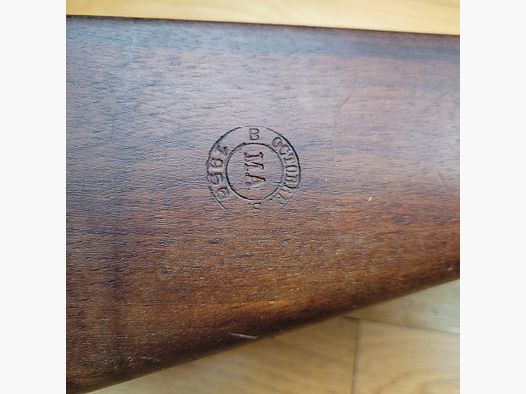
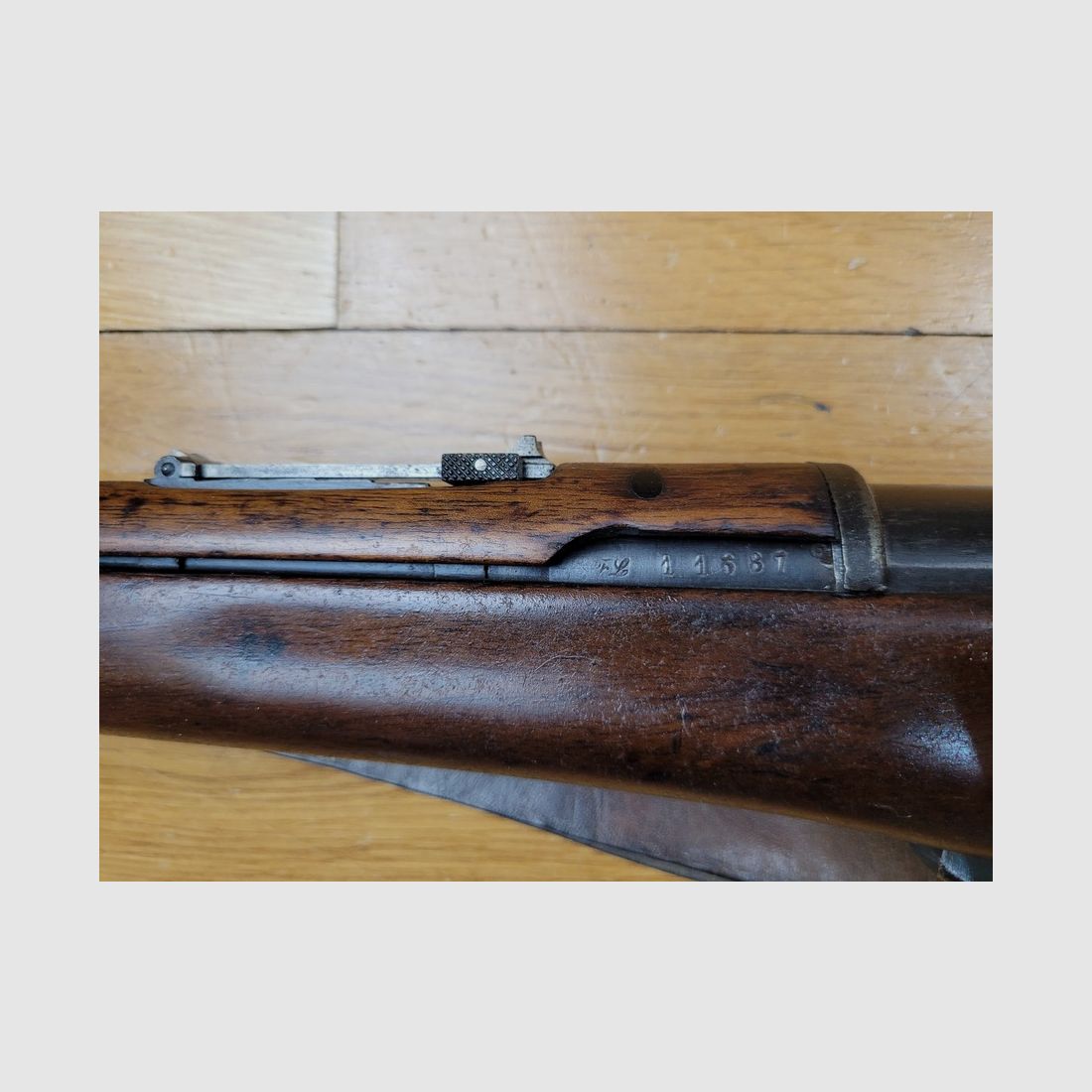
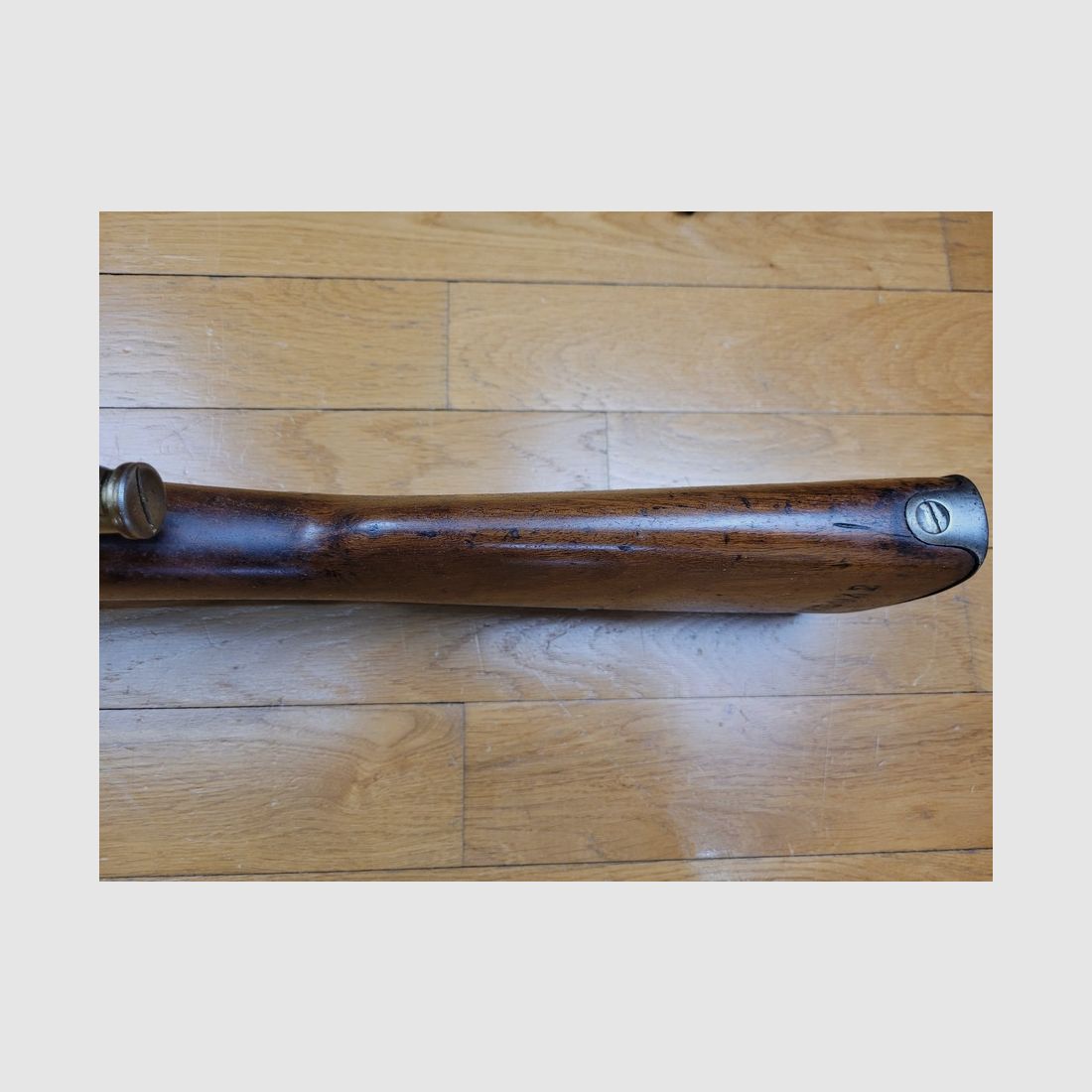
The firearm is beautiful and in excellent condition. The barrel, trigger guard, and bolt are all matching, which is quite rare, but the wood isn’t. The wood is in excellent condition (cartouche illegible), with no signs of excessive handling, cracks, or arsenal repairs. The buttplate is also in very good condition and isn’t eaten away by rust, as is so often the case.
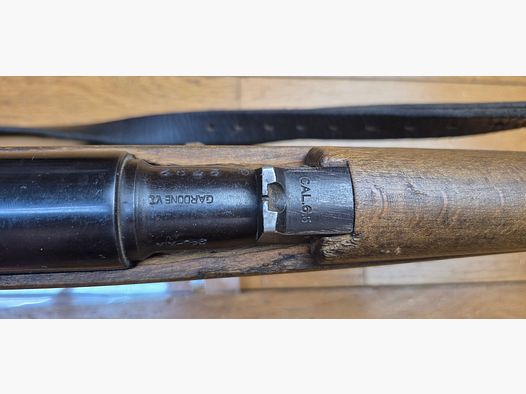
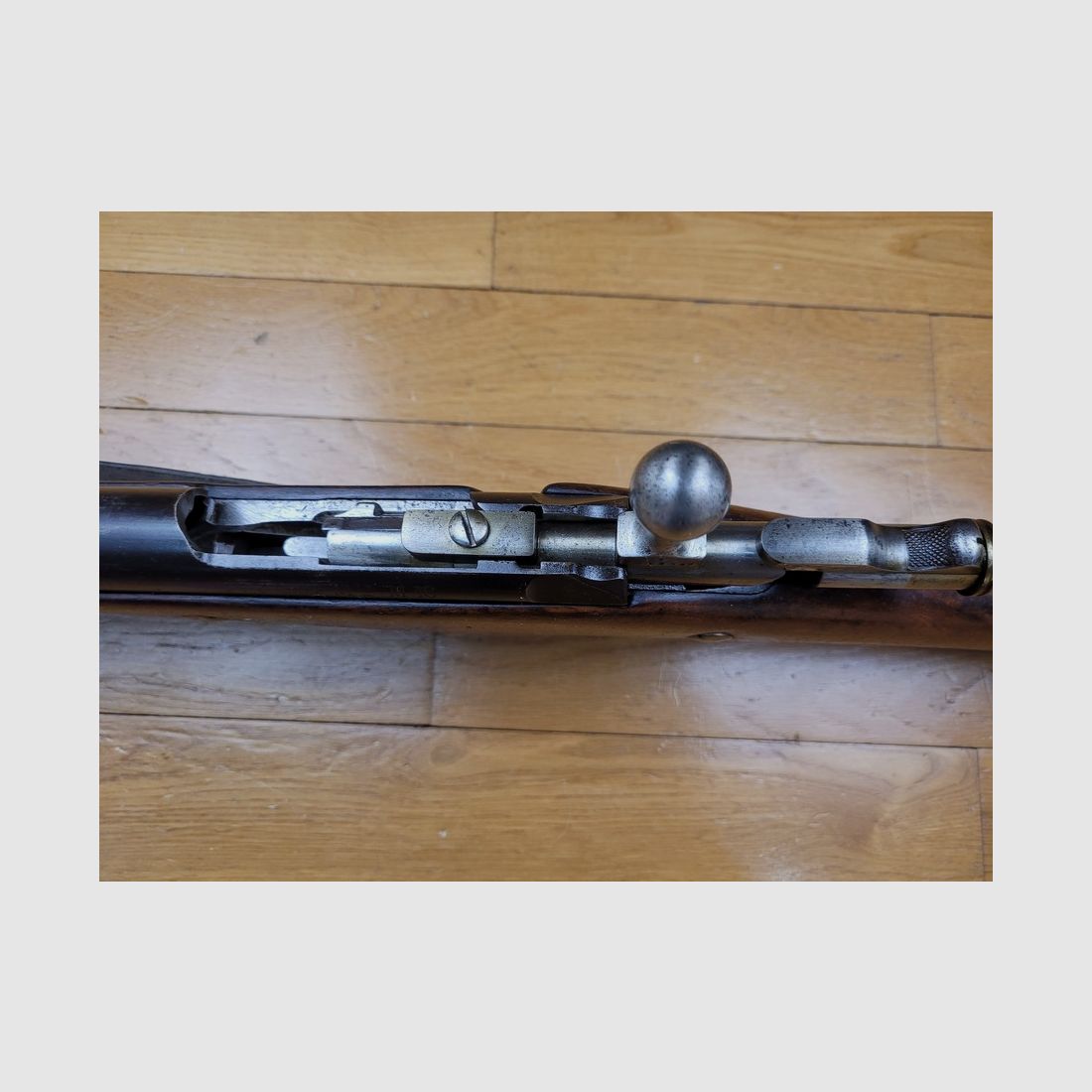
Above all, its barrel is beautiful, mirror-bright with crisp rifling—no rust at all. A guarantee of excellent accuracy. The firearm is mechanically impeccable and locks.
Very good, with a nice trigger.
All its markings and proof marks are crisp and clearly visible, and the firearm shows no signs of oxidation, inside or out—truly beautiful!
The firearm comes with a matching sling, and Maître Flingus will also give the lucky buyer two five-round clips for free. No need to beat around the bush!
In short, an excellent example of a Berthier, made to the 1916 standard from the outset, almost “textbook,” and a superb addition to a collection of French military firearms. A beautiful firearm!
Firearm in category C under the CSI: a valid shooting license with a doctor’s stamp and signature on the back, or a hunting license validated for the current or previous year, AND a valid national ID card or passport.
**********************************************************************************************************************************************************************
Let’s say it again! Flingus Maximus gun shop in Paris and throughout France is also here to buy firearm and militaria collections, provide firearm valuations, help with private firearm sale paperwork, and answer questions about firearms in estates and inheritances.
Contact your favorite gun dealer using our contact form or at [email protected] (Show description in original language)
Après l’adoption “à la hussarde” du Fusil Lebel 1886 par le Général Boulanger (condisciple de lycée de Clemenceau et auquel ce dernier doit probablement sa carrière car il l’a protégé et a fait donner au Tigre son premier ministère), et une fois le dit Général Boulanger éliminé politiquement puis suicidé en exil sur la tombe de sa maitresse, il convenait néanmoins de compléter ce fusil lebel avec une carabine courte destinée aux cavaliers et artilleurs.
On voulu aussi se donner un peu de temps pour la réflexion sur l’alimentation de l’arme afin qu’il ne s’agisse pas simplement d’une version “raccourcie” du fusil dont on mesurait que l’alimentation était perfectible.
Et le progrès vint de là où on ne l’attendait pas. Un pur civil, seul dans son coin et loin des Commissions d’Armement et de leurs idéaux cahiers des charges, releva le défi.
Mr André Berthier, inventeur d’un remarquable système d’armes qui nous a servi jusqu’aux années 1970, était en effet…chef du Bureau des Chemins de Fer Algériens de la Compagnie Bône Guelam de son état.
Il osa présenter un système d’arme de son invention au très revêche Comité d’Artillerie. Après maintes péripéties, le Comité finit par lui donner raison et adopter son système sans toutefois aller jusqu’à rendre l’hommage normal d’usage du à cet inventeur, civil et non polytechnicien, en donnant au système une dénomination conforme au nom de l’inventeur.
Mais les collectionneurs et tireurs de France, fans des Berthier, ont depuis longtemps réparé cet outrage car son nom est toujours, et pour longtemps encore, prononcé avec respect et envie sur de nombreux stands.
Berthier eu l’intelligence pratique d’utiliser un maximum de pièces se trouvant déjà dans le fusil lebel. Et d’utiliser sa cartouche aussi. C’était sans doute l’élément le plus archaïque du système Lebel. Mais Berthier savait que s’il proposait en plus une autre cartouche au très conservateur Comité d’Artillerie, c’est tout son système qui serait plus que très probablement rejeté.
Dans son système, un très simple clip-chargeur en tôle de cinq coups, très économique de fabrication et de consommation, était maintenu en place par un modeste crochet, un élévateur poussant les cartouches vers le haut. Quand le tir des cinq cartouches était terminé le dit clip-chargeur tombait tout simplement par terre par une ouverture situé sous le magasin pour être remplacé illico par un nouveau clip garni de cartouches. Introduction du chargeur, tir, éjection du dit changeur et remplacement par un nouveau clip garni de munitions, tout allait très vite. La cadence de tir et de rechargement s’en trouvait très élevée. L’adaptation du système Mannlicher au fusil Lebel était réussie.
Berthier pris son courage à deux mains et l’impudent Chef de Bureau de chemins de fer coloniaux osa présenter son projet de carabine au Comité d’Artillerie (Comité en charge des choix techniques en matière d’armement et de munitions pour les armées). On était en 1887 un peu plus d’un an après la naissance du lebel.
Peu accueillant vis à vis d’un civil se mêlant d’affaires qui ne regardaient que les polytechniciens du dit Comité d’Artillerie, fort de leur compétence innée, et de choix systématiquement malheureux notamment en matière de choix de cartouches (les trois calibres français principaux d’armes légères choisis pas le Comité d’artillerie entre 1873 et 1892 sont TOUS problématiques : le 11MM 1873, Le 8×51 Lebel 1886 et le 8mm 1892 alors que les armes, venues des arsenaux, elles, sont plutôt excellentes), le Comité d’Artillerie commença donc par … virer Berthier et son projet !
Le bel André ne se découragea point et revint à la charge en 1888 après quelques améliorations. Le Comité d’Artillerie du cette fois reconnaitre que l’adaptation d’un système d’alimentation Mannlicher sur le concept Lebel était assez bien réussi. Il autorisa donc la fabrication d’un prototype qui se révéla prometteur. On finit par faire une dizaine de prototypes. Le système Berthier fût adopté dès le 14 mars 1890 sous forme d’une carabine de cavalerie et d’une, désormais très rare, carabine de cuirassier.
Bien sûr, le Comité d’Artillerie, sans doute dans l’ahurissant projet “d’économiser” les munitions en cas de conflit majeur, une idée fixe de la plupart des états-majors dans l’avant guerre, ajouta sa patte. Il réduisit la capacité du magasin de 5 à 3 coups! Encore un choix malheureux qui obligera à nouveau à modifier toutes les armes Berthier (fusils et mousquetons de tous modèles) pour les remettre en magasins à 5 coups dès 1916.
Mais l’arme était réussie et la famille Berthier s’agrandit très rapidement avec un mousqueton de Gendarmerie, puis d’artillerie. Consécration suprême, on en extrapola une série de fusils dès avant 1914 et en parallèle au Lebel, avec le rarissime Fusil 1902 de Tirailleurs Indochinois (court), puis un fusil de Tirailleurs Sénégalais 1907 (long, lui). Toujours des histoires de taille de porteurs. Ces armes étaient donc plus modernes que les Lebel métropolitains qui équipaient bretons et bourguignons.
Puis vint l’été 1914. Il fut très chaud. A tous points de vue. Les Lebel fondirent comme neige au soleil à la mesure de l’épouvantable amaigrissement forcé des armées françaises – 250.000 hommes entre août et octobre. 370.000 au total entre août et fin décembre. Maître Flingus ne peut encore, en 2023, y songer sans être profondément ému. Un suicide national et une ode éternelle aux guerriers de tous les temps qui ne veulent rien lâcher, des Thermopyles au Fort de Vaux.
La pénurie de Lebel devint aiguë et, quitte à refaire des fusils, on préféra extrapoler un fusil d’infanterie standard en remplacement de ce dernier à partir des très satisfaisants fusils Berthier 1902 et 1907. Ce fût le très beau fusil Berthier 07/15 qui remplaça le lebel 1886 et devint le fusil standard de l’armée française à partir de cette date.
Une première version – rarissime – à levier d’armement coudée (Maître Flingus en a un – mieux que parfait – dans ses stocks depuis des années mais il n’a pas le cœur de mettre en vente – mais enfin, si vous êtes sympa, bon client et surtout passionné, il faudra bien que je m’en sépare un jour… Mais ça m’attriste !) fût produite seulement de mars à juin 1915. Cette version fût elle-même remplacé dès juin 15 par le classique 07/15 à levier tout droit qui lui sera produit pendant toute la guerre et même après.
Début 1916, on en revint à l’idée initiale de Berthier contre le Comité d’artillerie, qui voulait une arme à lame-chargeur de cinq et non trois coups. Ce fût la dernière version pour 14-18 : le fusil Berther 07/15 modifié 1916 parfois dit “Fusil Berthier 1916 en cinq coups”.
C’est cette fois-ci un beau fusil d’infanterie du second système 07/1915 construite d’origine au standard 1916 à cinq coups que nous vous proposons ici. Un représentant du système Berthier non modifié 1916 resté à trois coups est visible ICI
Notre arme n’est une arme 07/15 en trois coups transformés en modèle 16. Notre fusil a directement été construit à St-Étienne au standard 1916 puisque son boitier de culasse porte la mention « St Étienne Mle M-16 » sans aucune référence « 1907/15 ». L’arme a été assemblée à St Étienne où elle est repassée en 1932 pour l’adaptation à la balle 32N comme 99,99% des armes réglementaires françaises des systèmes Berthier et Lebel. Boitier bien marqué du « N » majuscule. Vous pouvez donc tirer de la munition d’usine PPU sans aucun souci dedans.
L’arme est très belle et en excellent état. Le canon, pontet et la culasse mobile sont bien au même numéro ce qui est assez rare mais pas les bois. Les bois sont en excellent état (macaron non lisible) sans traces de manipulations excessives, brisure ou enture d’arsenal. La plaque de couche aussi est en très bel et pas bouffée de rouille comme très souvent.
Surtout son canon est très beau, miroir avec de belles rayures – Pas de rouille du tout. Gage d’une belle précision. L’arme est mécaniquement impeccable et verrouille très bien avec une bonne détente.
Surtout tous ses marquages et poinçons sont bien nets et bien visibles et l’arme ne présente aucune traces d’oxydation interne ou externe – Vraiment très beau !
L’arme est munie d’une bretelle au modèle et Maître Flingus fournira en plus gratuitement 2 clips cinq coups à l’heureux acquéreur. Au diable les varices !
Bref un excellent exemple de Berthier, né directement au standard 1916, presque “text book”, et superbe ajout dans une collection de réglementaire français. Très belle arme !
Arme de catégorie C au CSI : Licence de tir en cours de validité avec cachet et signature d’un médecin au dos ou bien un permis de chasse avec sa validation pour l’année en cours ou l’année précédente ET CNI ou passeport en cours de validité.
**********************************************************************************************************************************************************************
Répétons le ! L’armurerie Flingus Maximus à Paris et partout en France est là aussi pour le rachat de collections armes et militaria, vos estimations d’armes, vos formalités armes entre particuliers, vos questions armes dans les successions et héritage.
Contactez votre armurier préféré via notre formulaire de contact ou à [email protected]