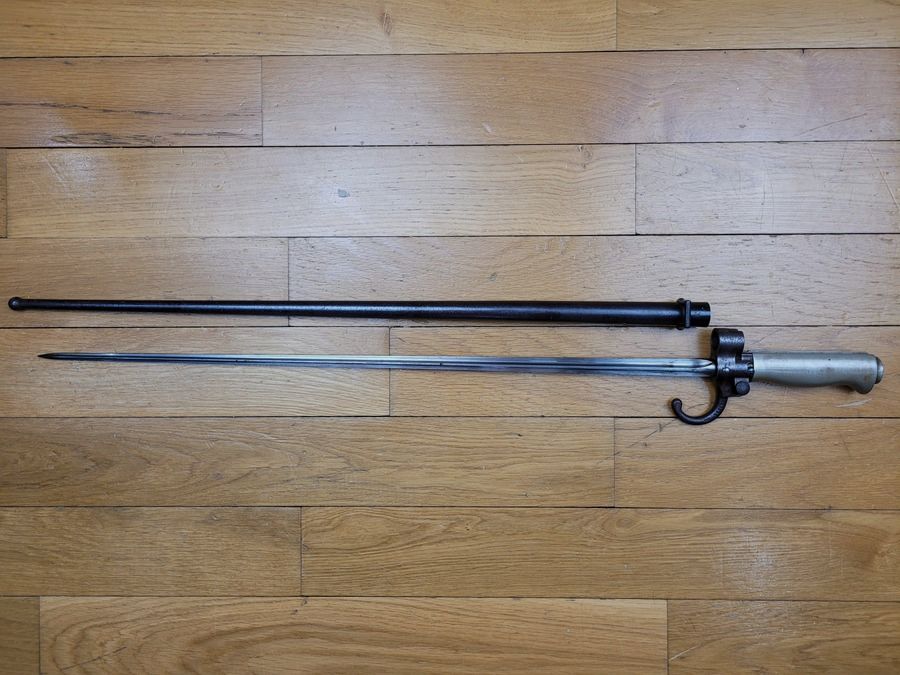
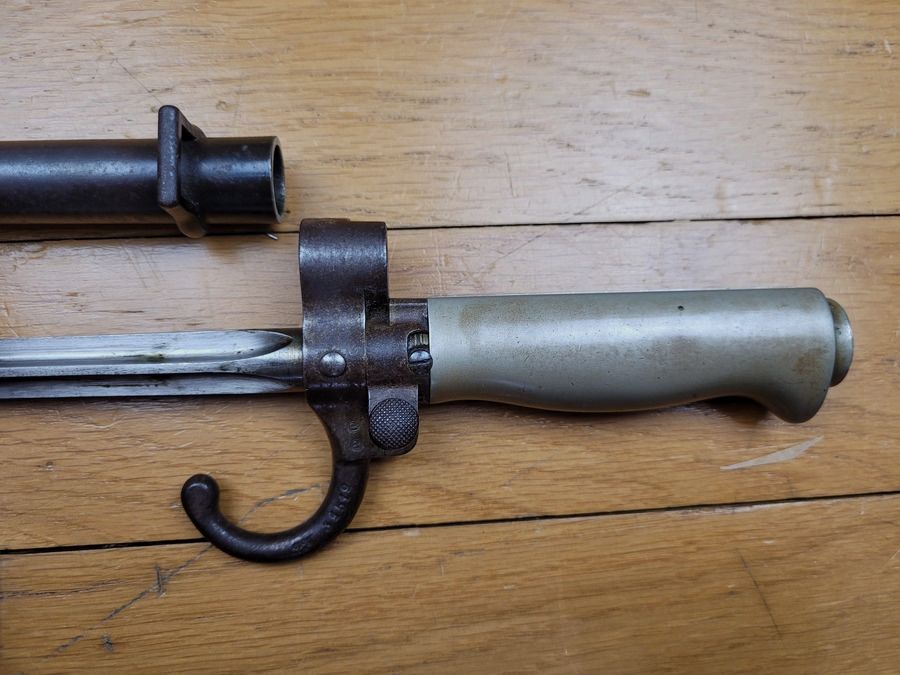
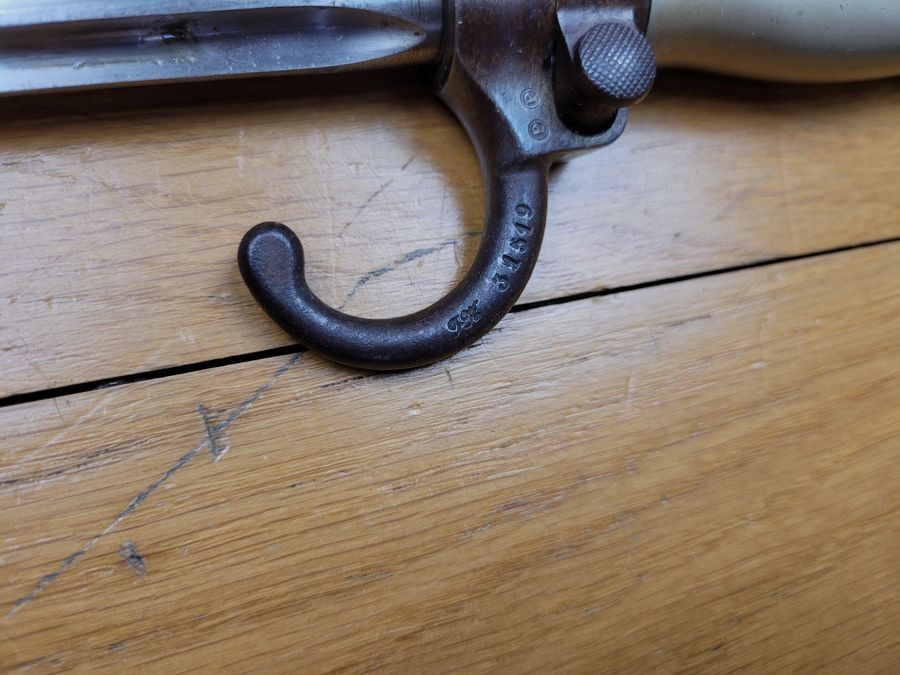


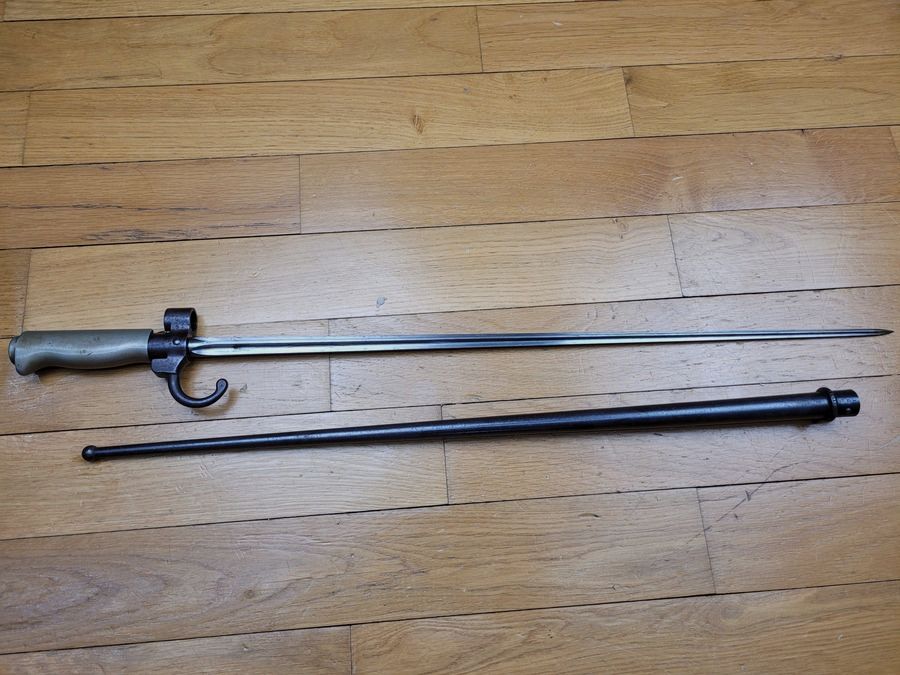









French Bayonet 1886/93 with Quillon – Lebel 1st Model with Quillon and Long Tang – Scabbard & Weapon with Number – Excellent Condition
Price on Request
No permit required (18+)
75002 Paris, France
4
ID: 10339025
This item is currently unavailable.
Purchase from outside the EU: The firearm goes through an importer in your country, the dealer handles the export.
How buying from Europe works
Shop safely with Gunfinder
Our AI-powered seller identity verification makes Gunfinder the safest marketplace online.
Learn more
Details
- Original language
- French
- Category
- Condition
- New
- Location
- 🇫🇷 75002 Paris, France
- Availability
- Out of stock
Freshness
This listing is based on a mirrored offer, where the listing data was synced to us from a shop, dealer, or external marketplace. Please note that temporary price discrepancies may occur due to possible delays in data transmission.
- Source
- Flingus Maximus
- Last checked with the dealer
- about 24 hours ago
Description
Note:
The item is located abroad. Please note that delivery conditions, shipping times, and/or the purchase process may differ.
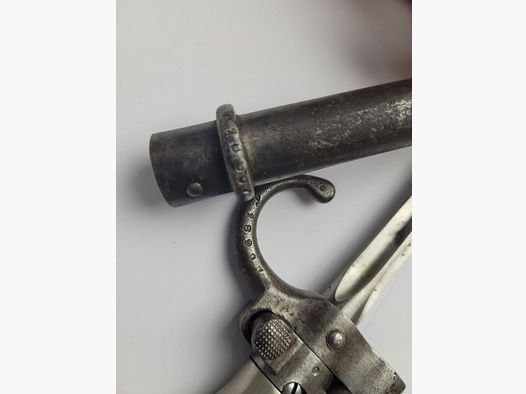
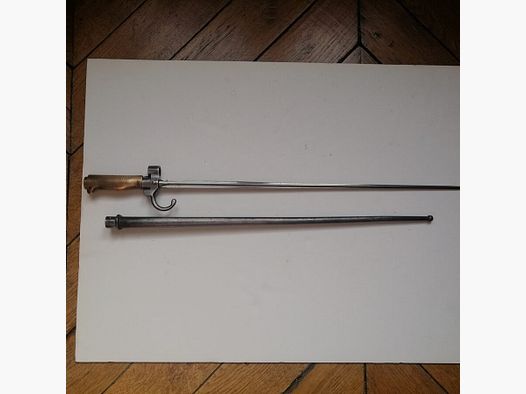
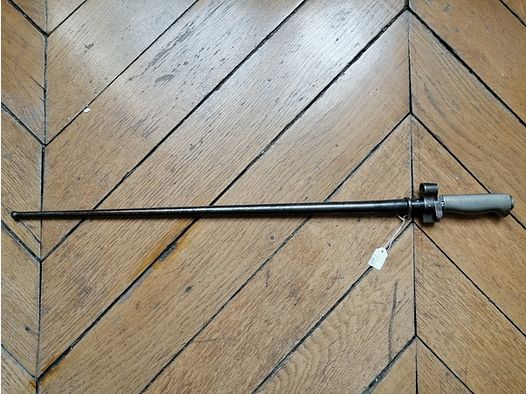
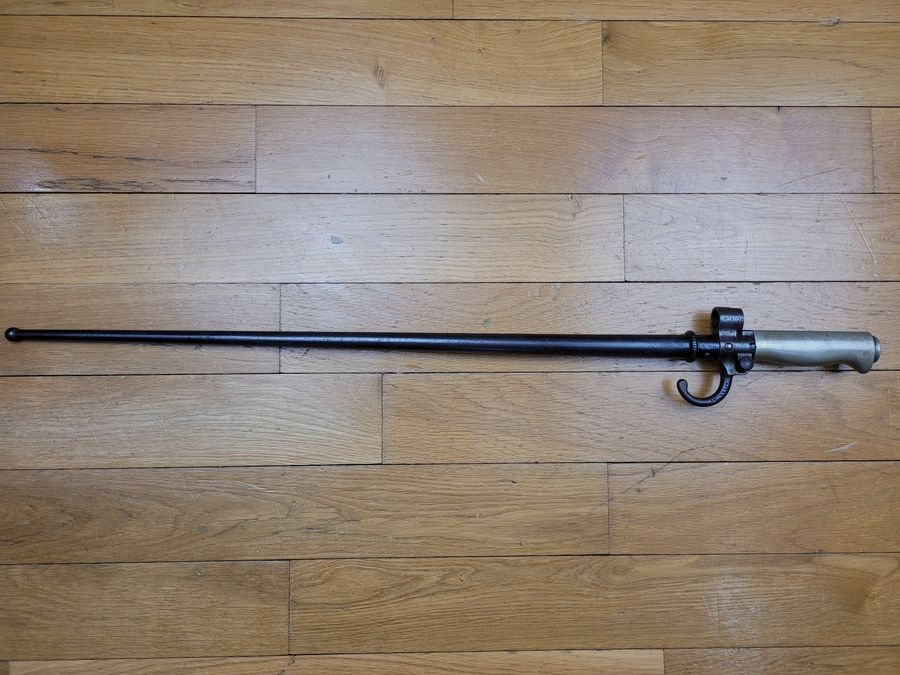
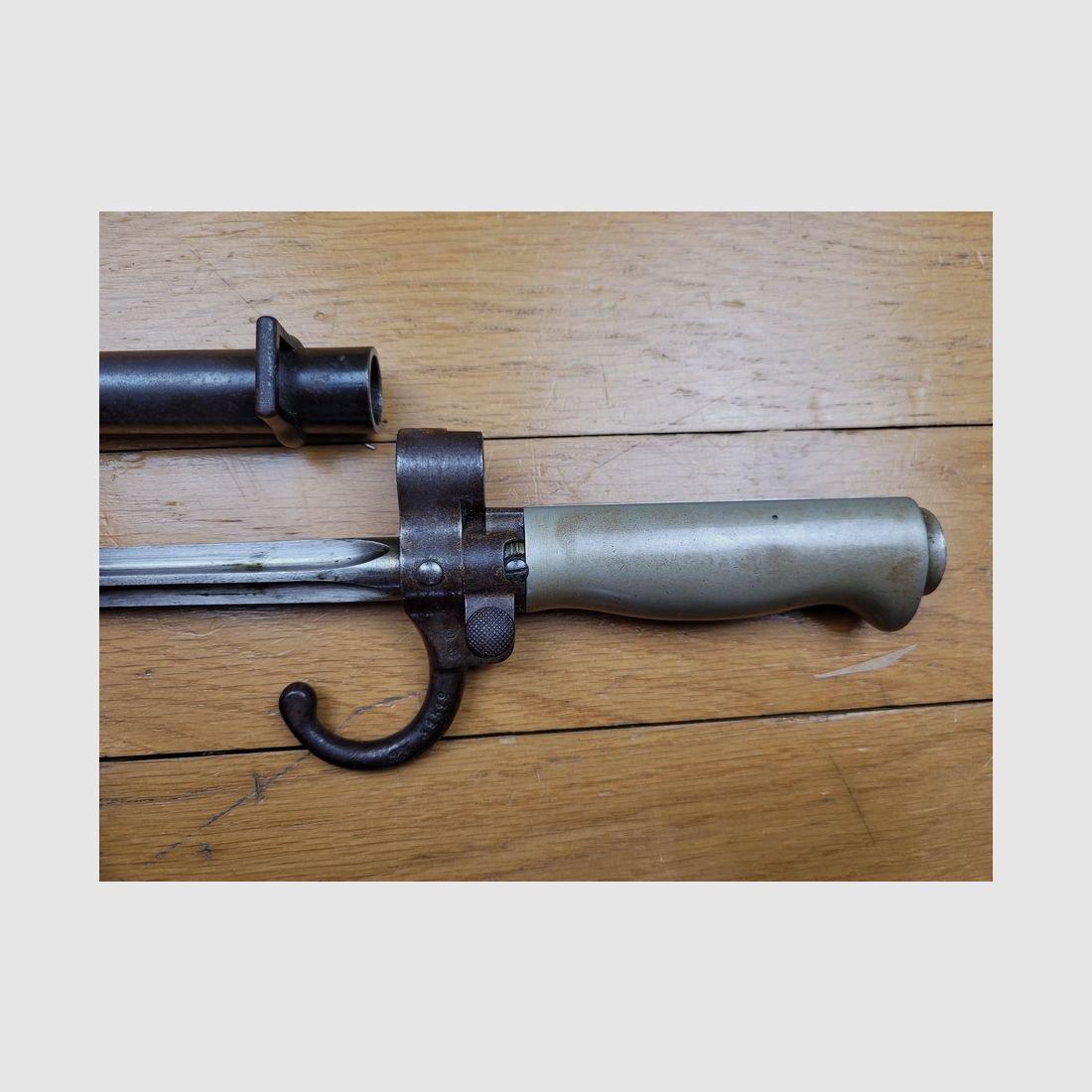
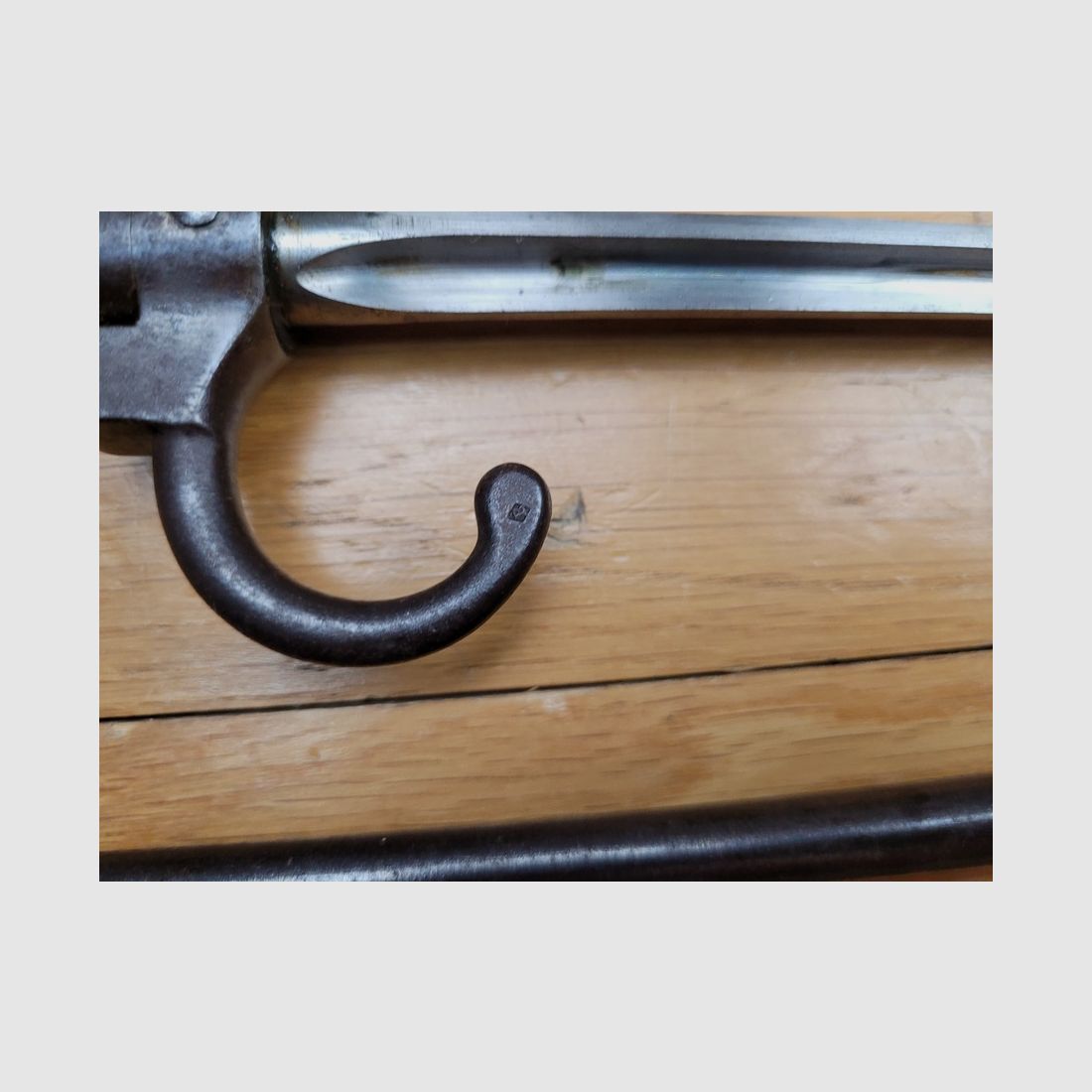
These Lebel “quillon” bayonets were produced between 1886 and 1904, when production of Lebel rifles stopped before the war (1914). Most of those that survived the major offensives of 1914 had their quillons cut off from 1915 onward, as they could get in the way when moving through barbed wire. The quillons had originally been intended for stacking rifles in the evening, as in the days of the Empire… And in the trenches, opportunities to stack rifles were few and far between.
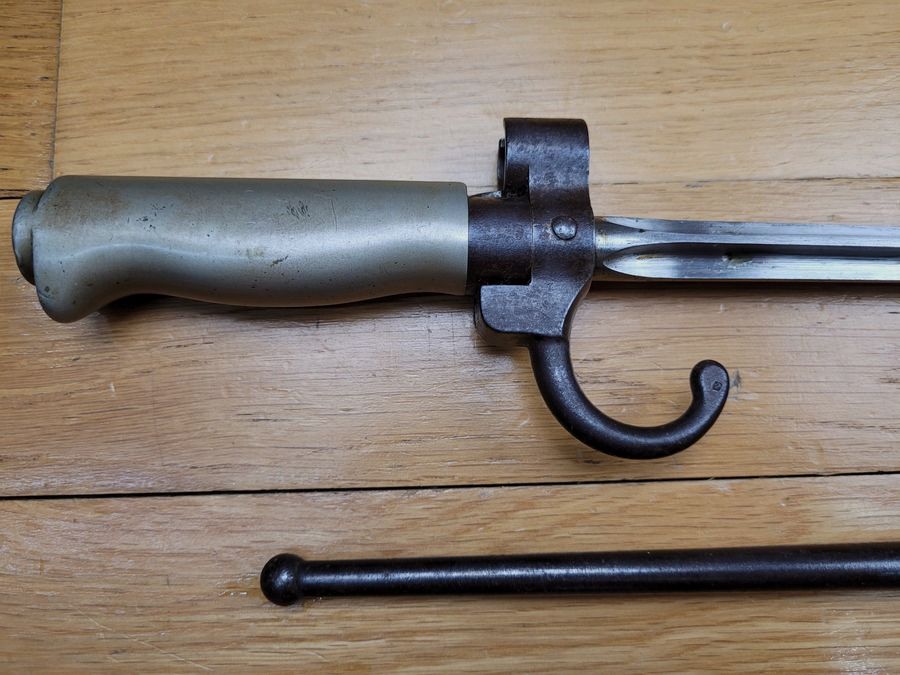
Grip in excellent condition – round, checkered push button, fully functional.
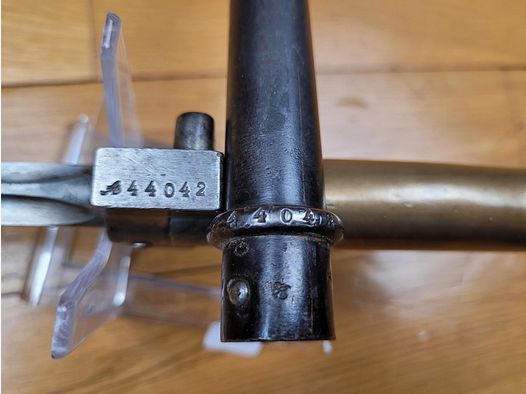
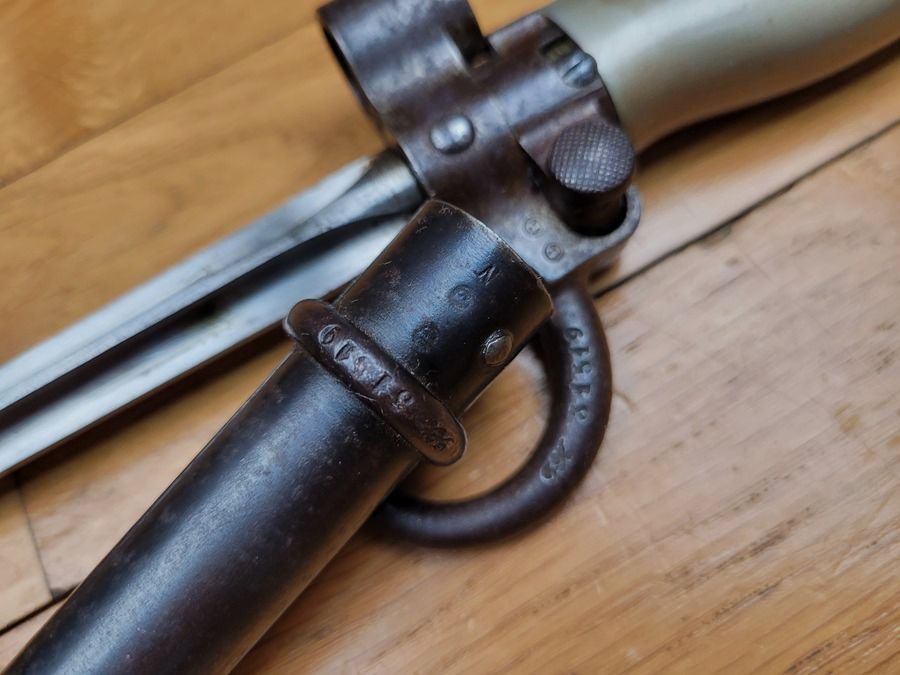
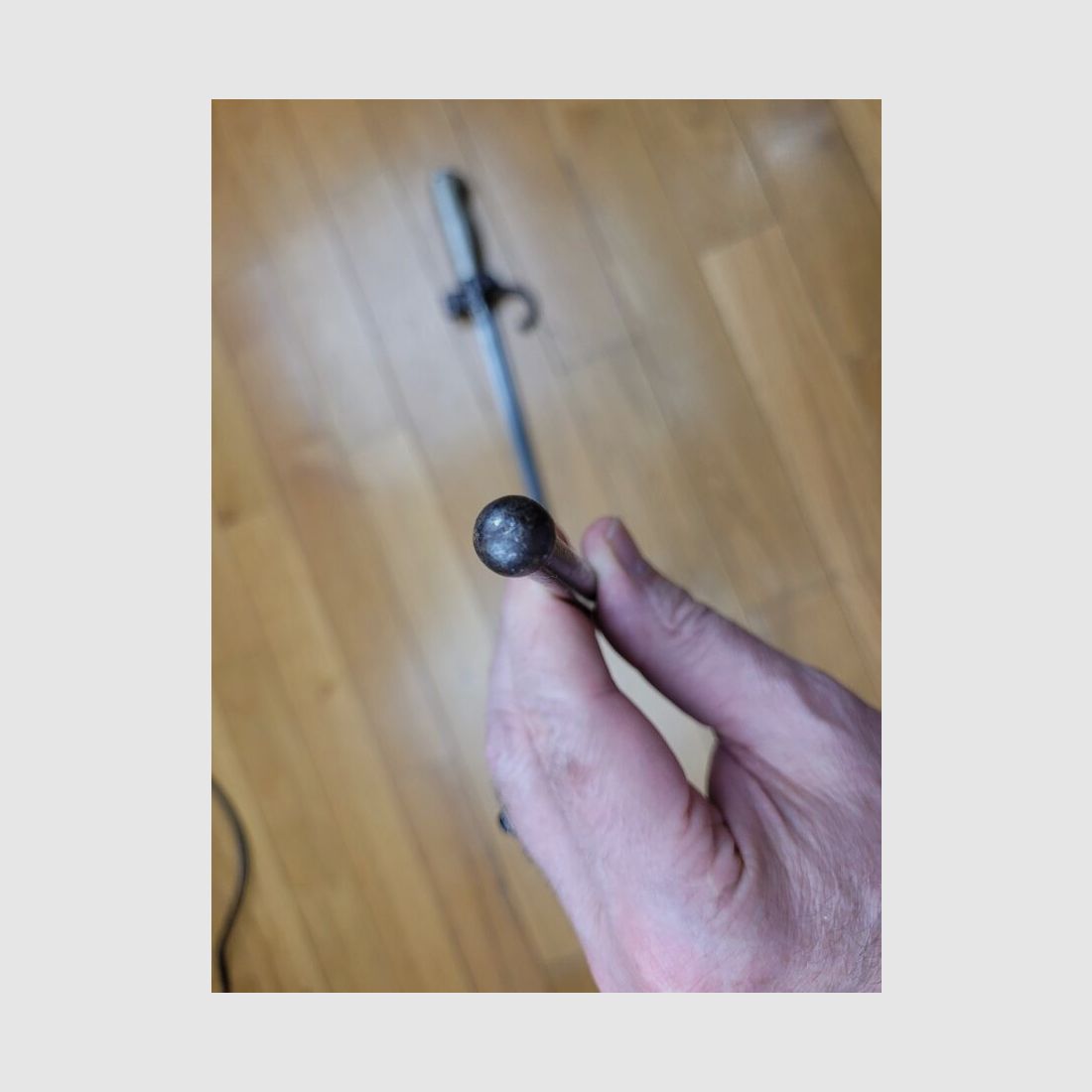
Long-tang model (see photo of the pommel), introduced around 1890 to replace the short-tang model, which was considered too fragile (see our short-tang example, also for sale HERE). The first model (short tang) can be identified by its grip cap, which was omitted on the long-tang model in favor of a nut, as on ours.
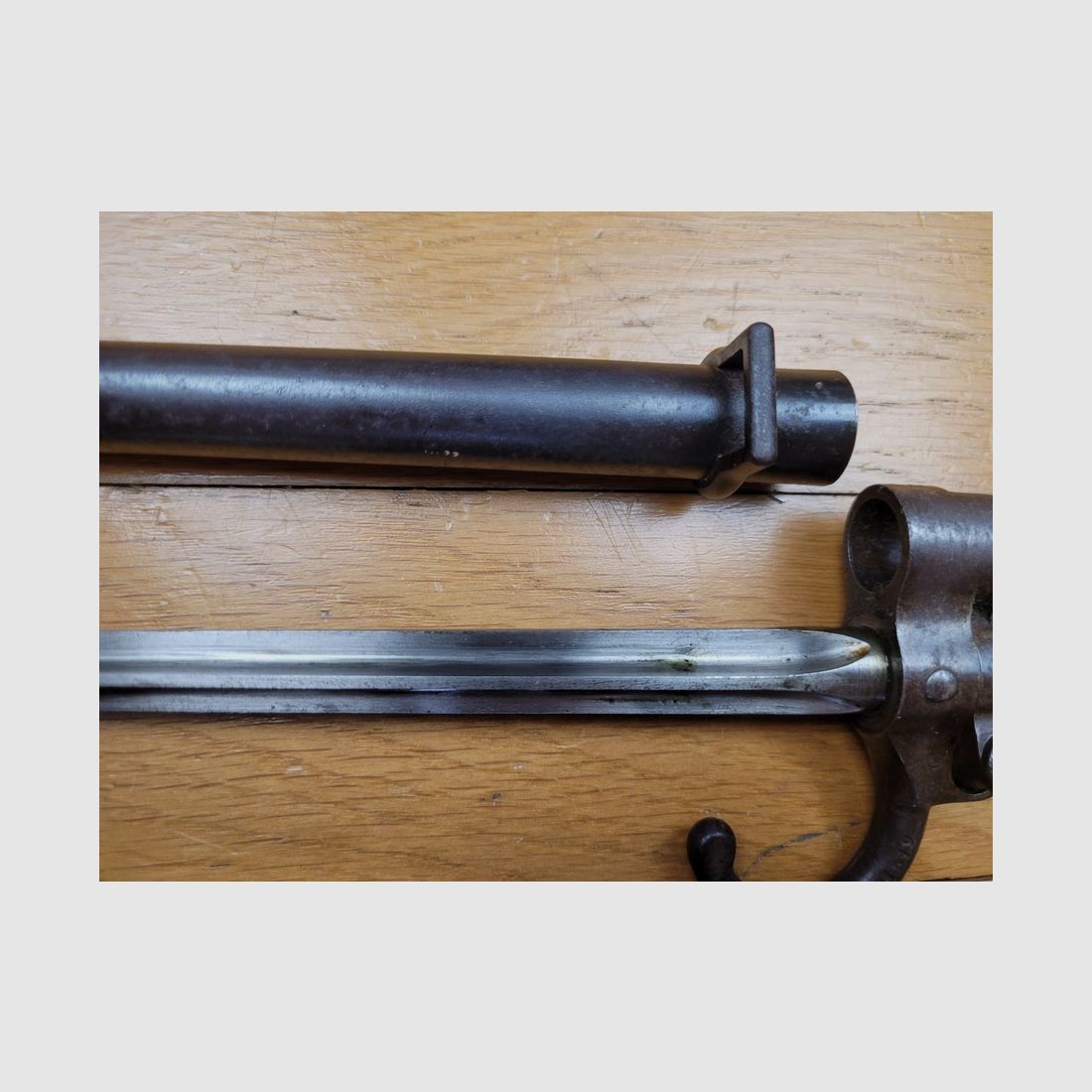
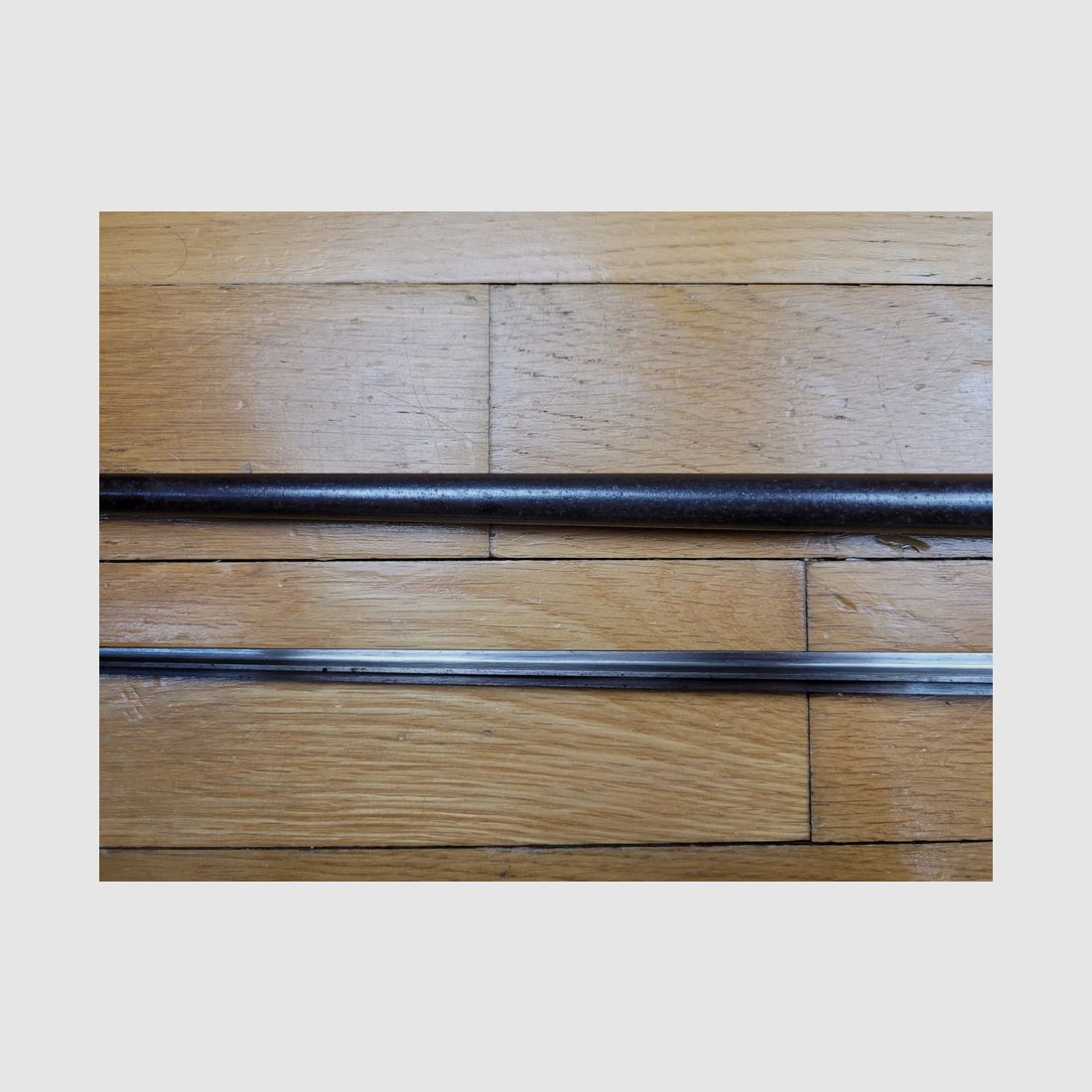
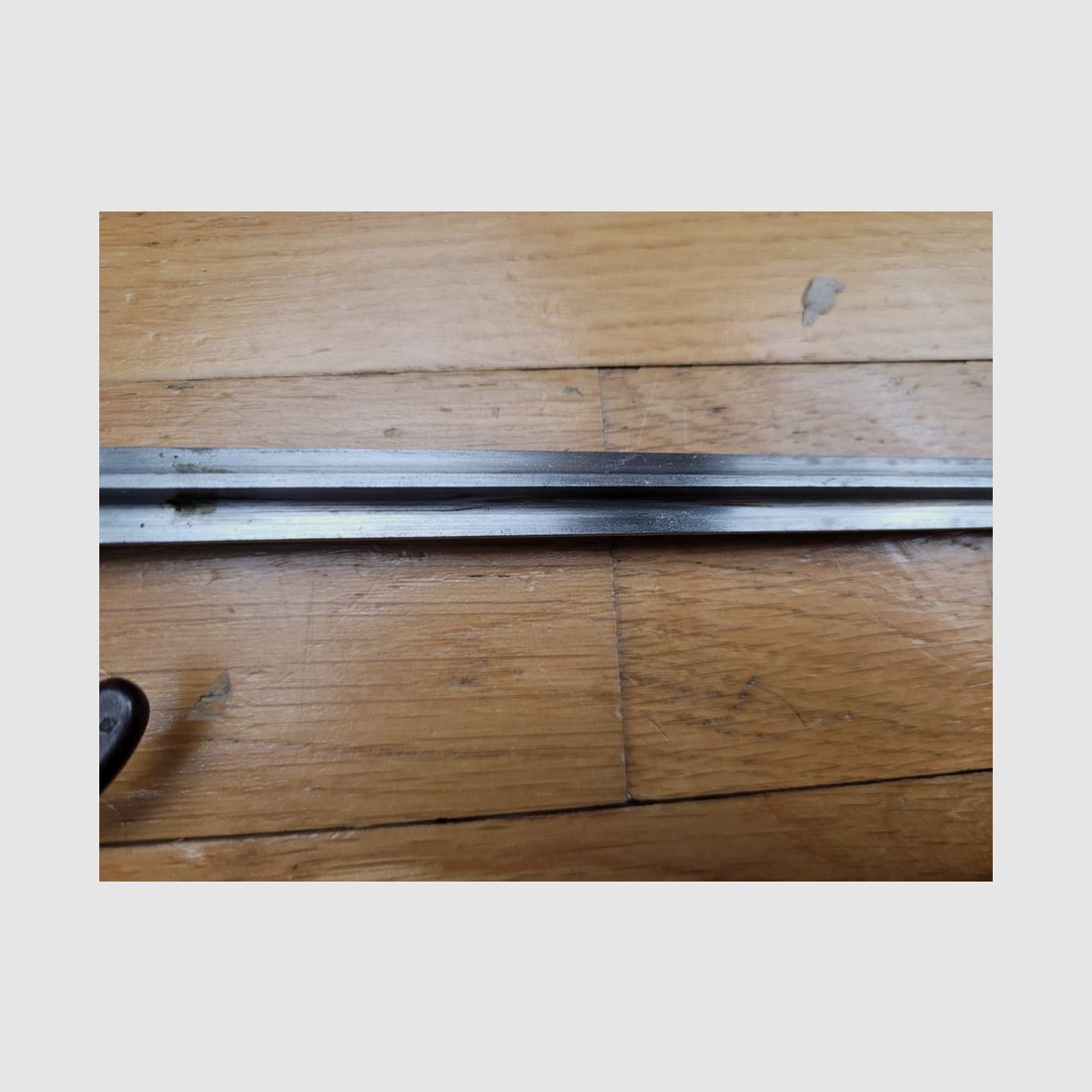
Guard with no pitting or orange peel – blade also in excellent condition. In fact, like new. All markings are sharp and easy to read. A “textbook” example, as the Anglo-Saxon authors say.
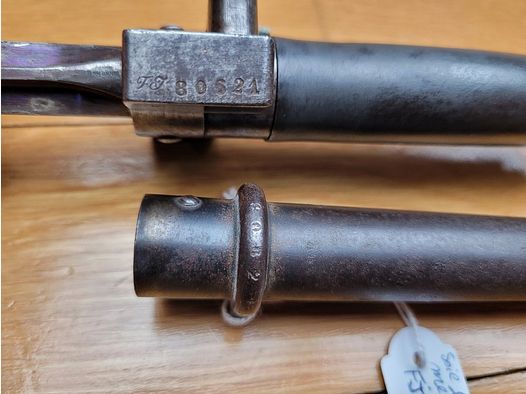
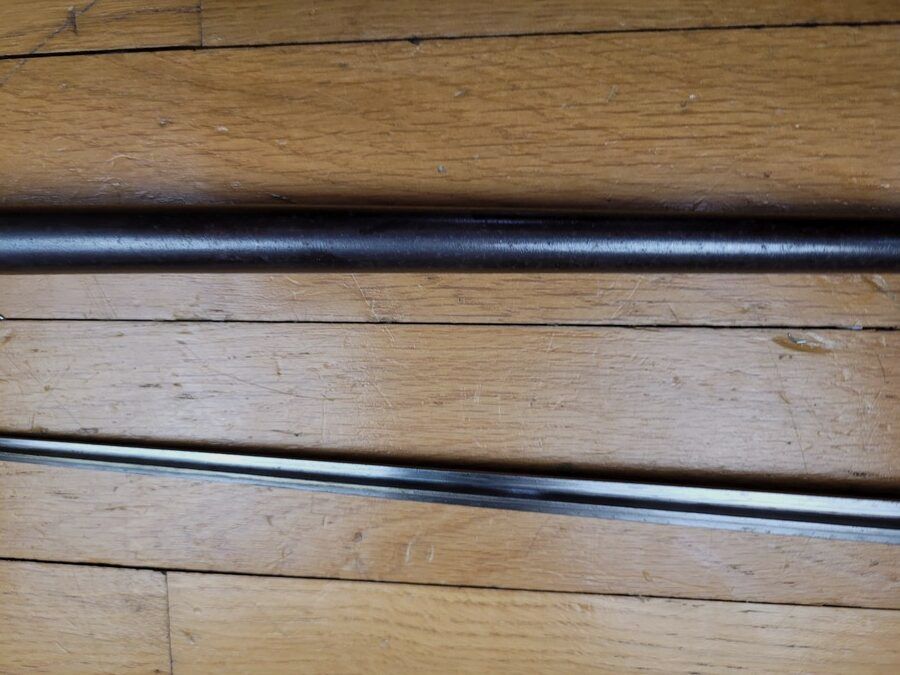
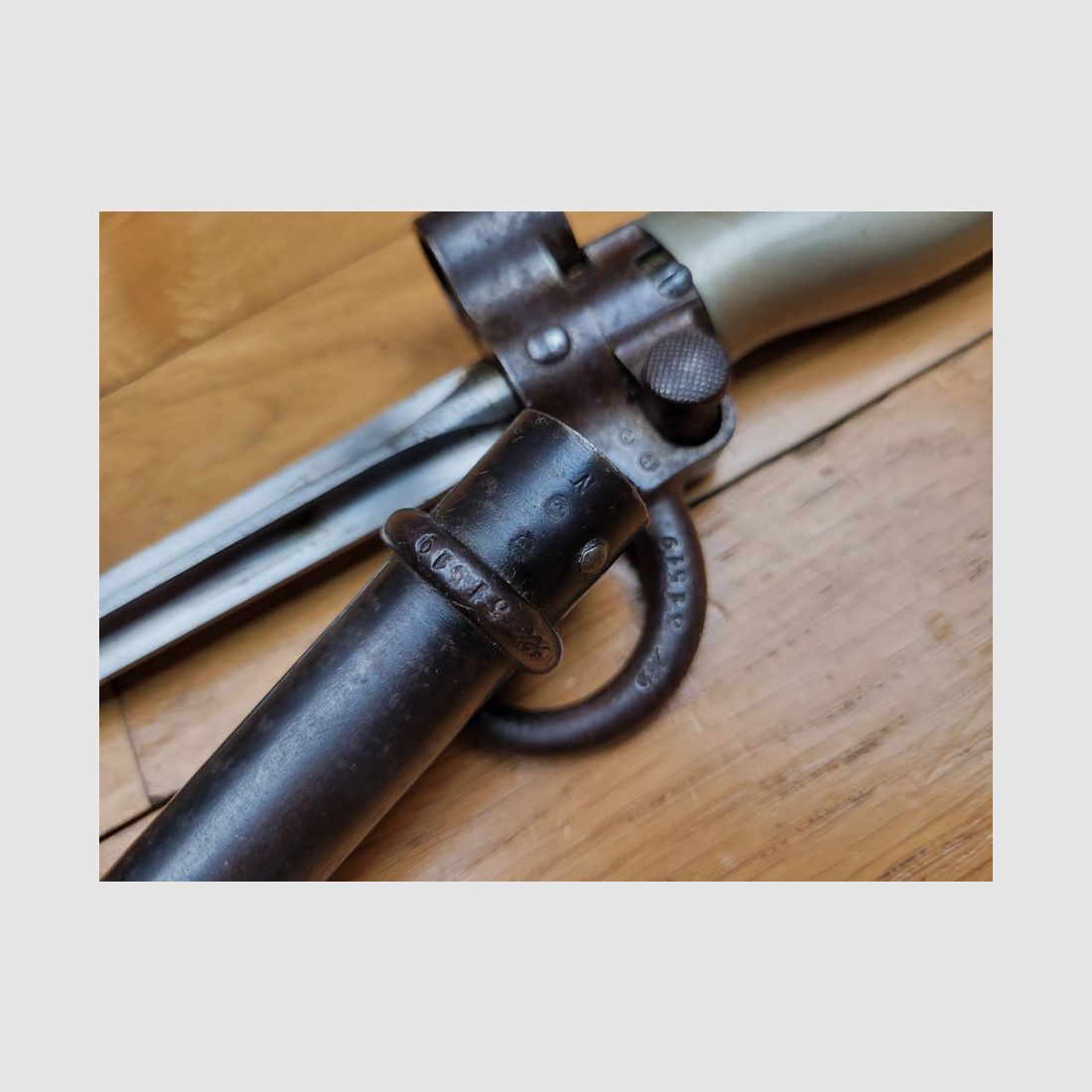
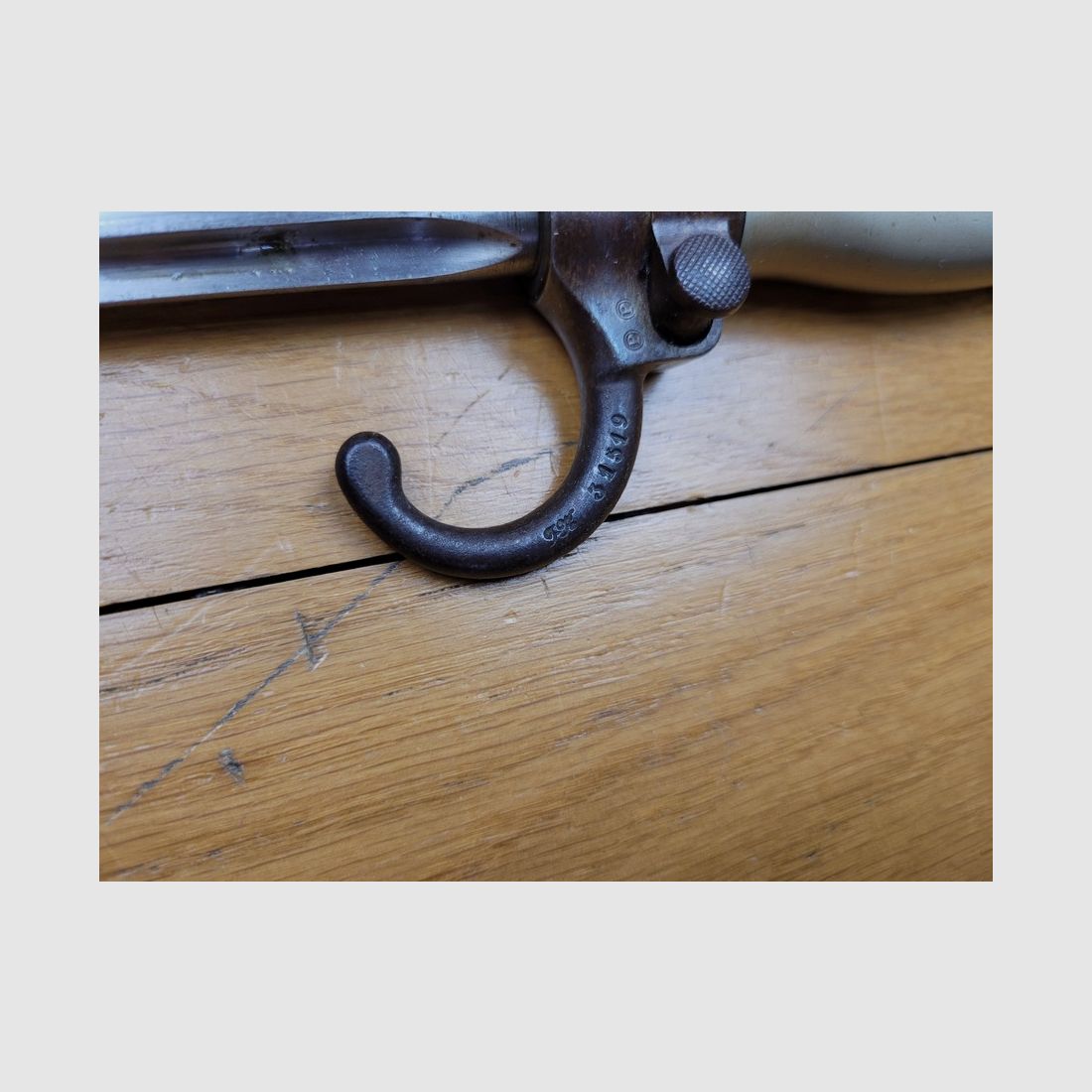
Scabbard with a solid ball tip (an early model, therefore produced until 1893) – well marked, never oxidized, and retaining 98% of its original bluing. Top condition! The number on the scabbard frog is clearly stamped and easy to read.
Weapon and scabbard have matching numbers, which is becoming very difficult to find, especially on an early model, even with a long tang.
Very good and uncommon 1893 production example, judging by its serial number and the shape of its retaining catch, and one that saw combat in the Great War – more than excellent condition – essential for a collection of French service bayonets or items from the 1914–1918 period. Historically speaking, it would look perfect with a fine Lebel rifle.
This is one of the two variants of the 1886 bayonet that saw the fury of the great charges of August 1914 and was not modified afterward…
Weapon not classified under the CSI, but sale to minors is prohibited: ID required.
****************************************************************************************************************************************************************
Let’s say it again! Flingus Maximus gun shop in Paris and throughout France is also here to help with your paperwork for private firearm sales, buying firearm and militaria collections, firearm appraisals, and questions about firearms in estates and inheritances. Contact your favorite gun dealer using our contact form or at [email protected] (Show description in original language)
Belle baïonnette modèle 1886/93 à quillon avec une poignée en maillechort. Non modifiée 1915 (suppression su quillon) – Arme et fourreau au numéro. Modèle à soie longue. C’est le modèle de août 1914.
Ces baïonnettes Lebel « à quillon » on été produites entre 1886 et 1904, date d’arrêt de la production des fusils Lebel avant guerre (de 14). La plupart des survivantes des grandes offensives de l’année 14 ont eu le quillon amputé à partir de 1915 car il gênait pouvait gêner la progression dans les barbelés. Ces quillons avaient été, à l’origine, prévus pour la formation des faisceaux de fusil le soir à la veillée comme sous l’Empire… Et dans les tranchées, l’occasion de former les faisceaux se faisaient rares.
Poignée en excellent état – bouton-poussoir rond quadrillé parfaitement fonctionnel.
Modèle à soie longue (voir photo du talon) apparu vers 1890 et remplaçant le modèle à soie courte jugée trop fragile ( voir notre exemplaire soie courte également en vente ICI) . Le premier (soie courte) se reconnait par un bouchon de poignée, bouchon qui disparait sur la soie longue au profit d’un écrou comme sur la notre .
Garde sans piqûre ni peau d’orange – lame en excellent état aussi. Neuve en fait. Tous les poinçons sont nets et bien lisibles. Un exemplaire « text book » comme disent les auteurs anglo-saxons.
Fourreau du modèle à terminaison boule non percée (un premier modèle donc produit jusque 1893) – bien poinçonné, jamais oxydé et qui a conservé 98% de son bronzage d’origine. Top état ! Le numéro sur le passant du fourreau est nettement frappé et très lisible .
Arme et fourreau au même numéro ce qui devient très difficile à trouver surtout en premier modèle même à soie longue.
Très bon et peu courant exemplaire de production de 1893 au vu de son numéro de série et de la forme de son taquet de fixation et qui a connu les combats de la Grande Guerre – état plus qu’excellent – indispensable dans une collection de baïonnettes françaises réglementaires ou de la période 1914-1918. Elle ornerait parfaitement, historiquement parlant, un beau fusil Lebel.
C’est l’une des deux variantes de la baïonnette 1886 qui a connu la fureur des grandes charges du mois d’août 1914 et n’a pas été modifié après…
Arme non classée au CSI mais interdite de vente aux mineurs : CNI obligatoire.
****************************************************************************************************************************************************************
Répétons le ! L’armurerie Flingus Maximus à Paris et partout en France est là aussi pour vos formalités armes entre particuliers, le rachat de collections armes et militaria, vos estimations d’armes, vos questions armes dans les successions et héritage. Contactez votre armurier préféré via notre formulaire de contact ou à [email protected]