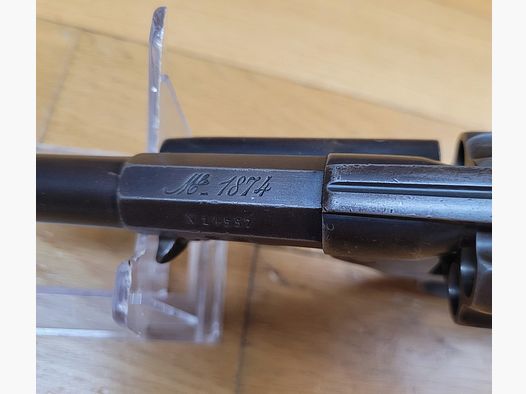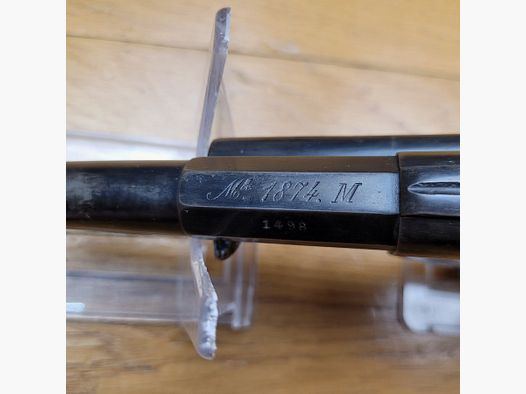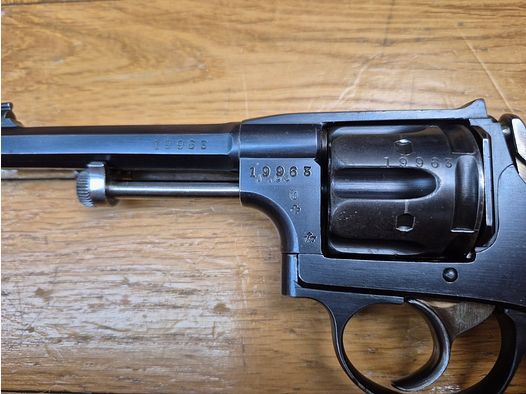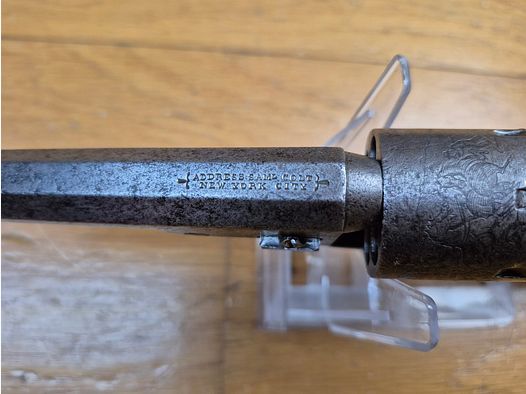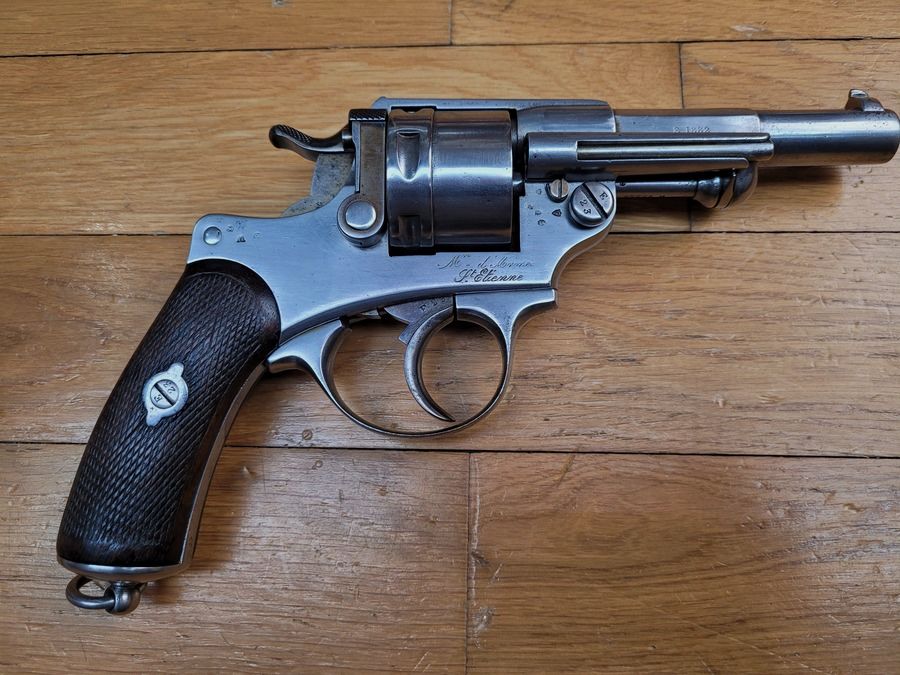
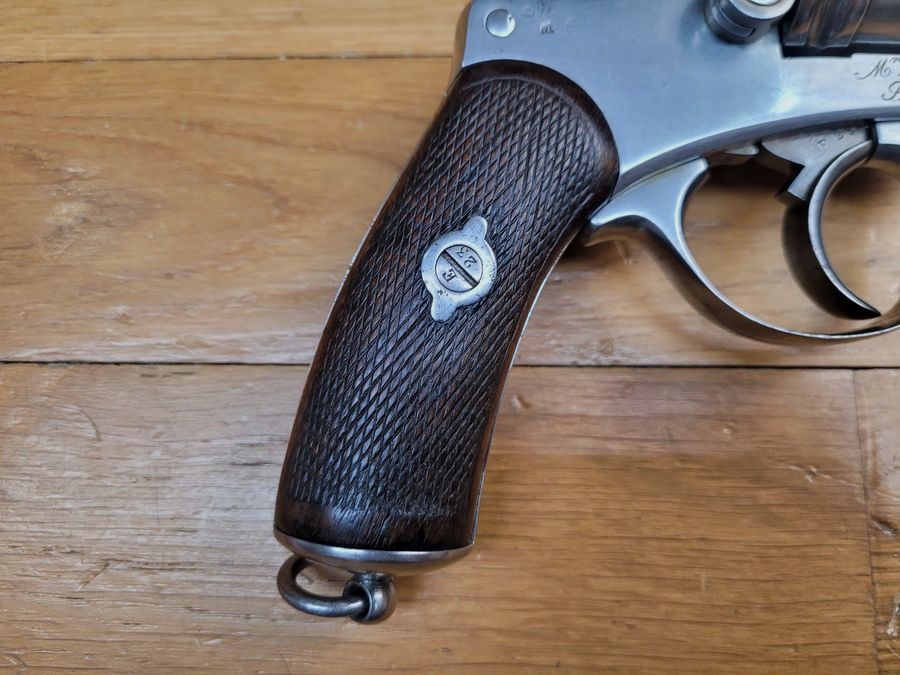
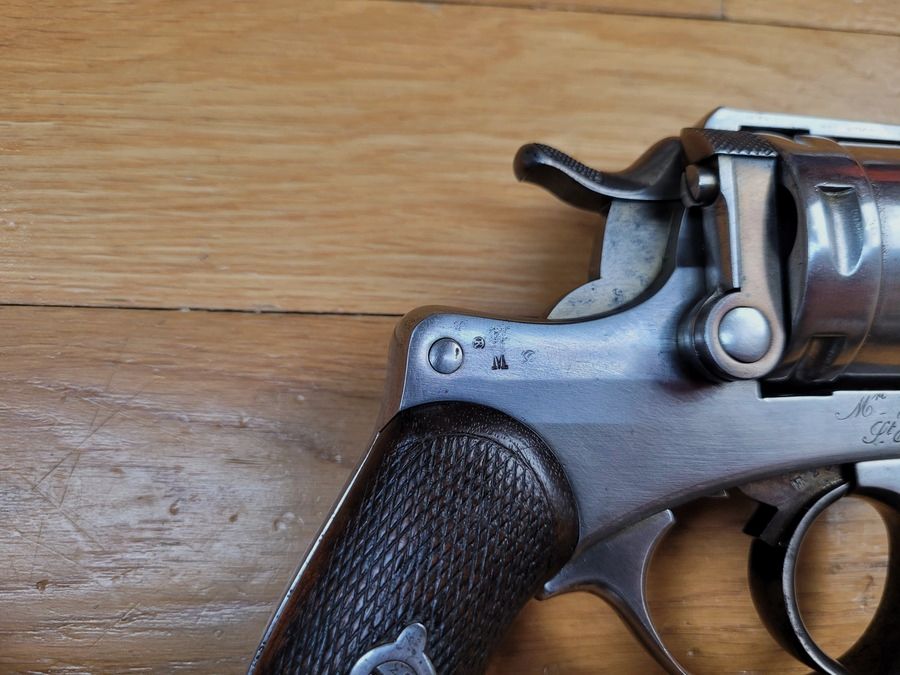

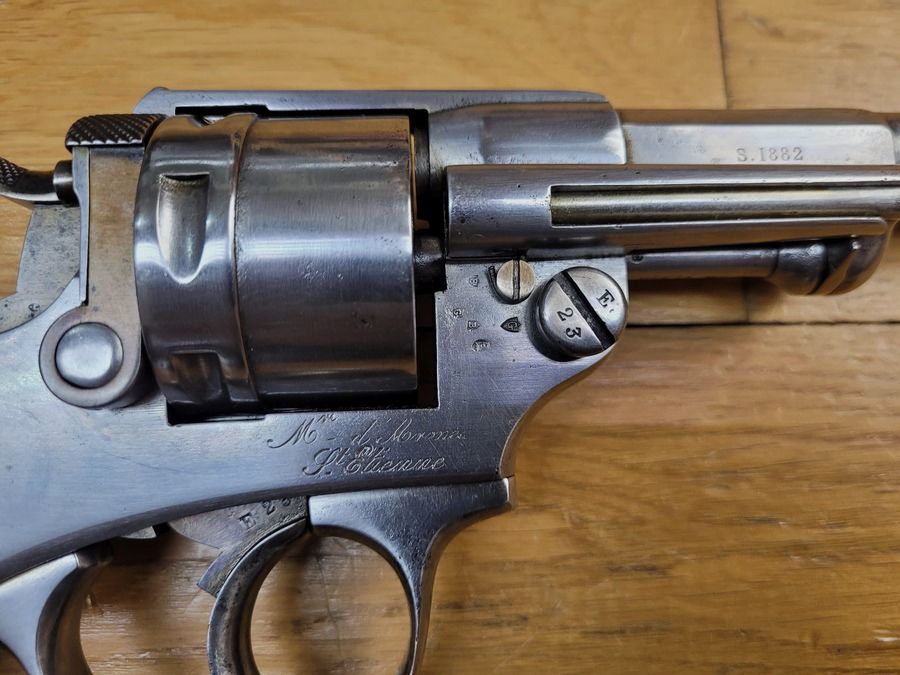
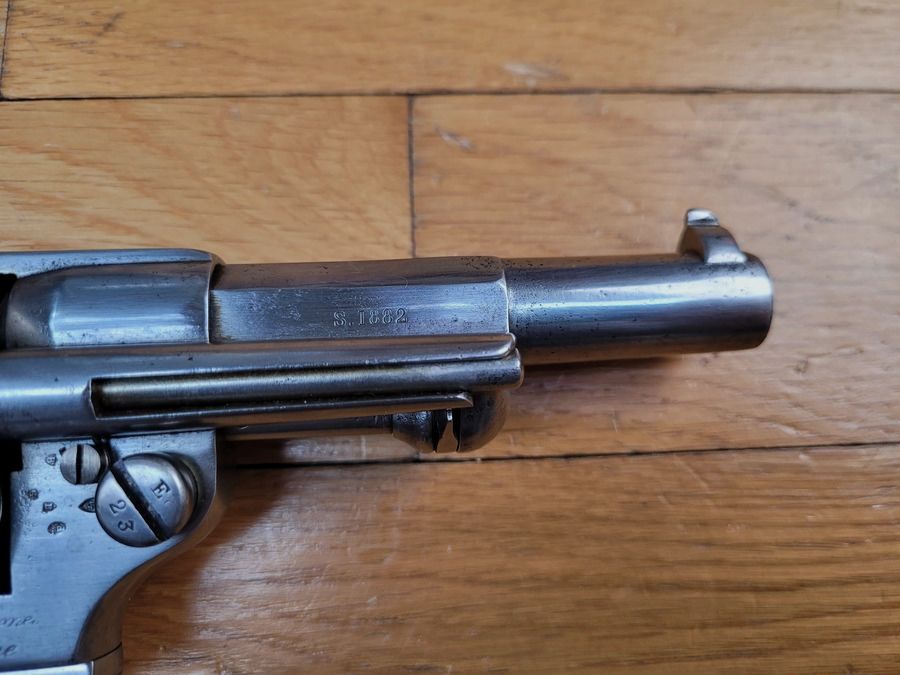


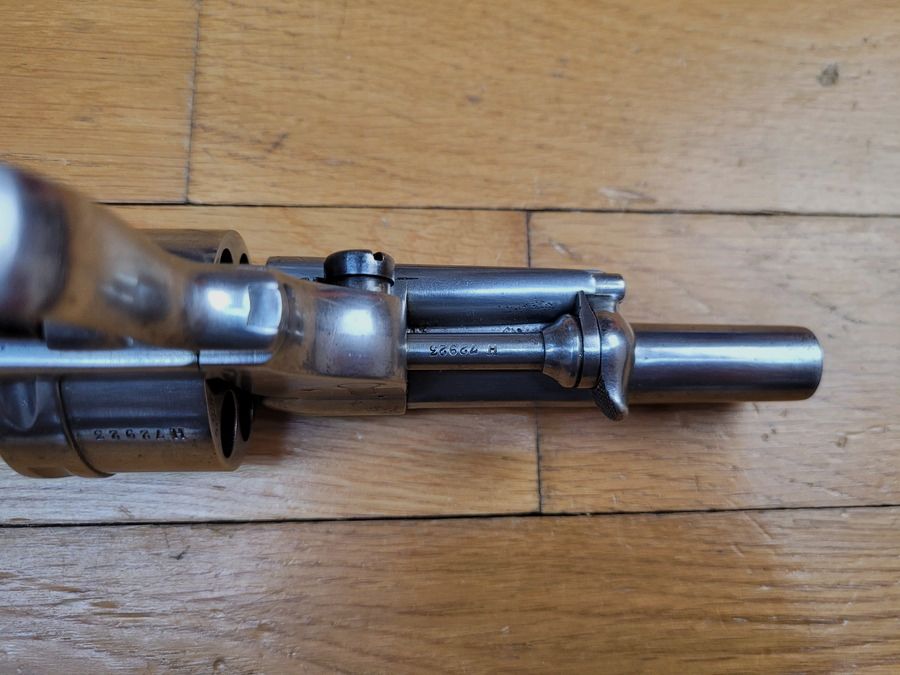

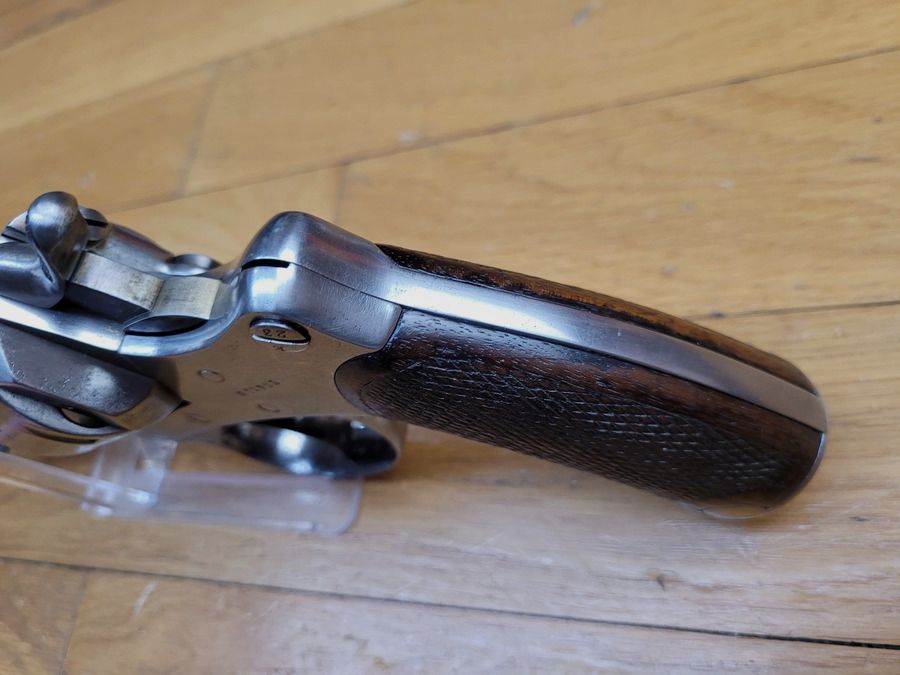
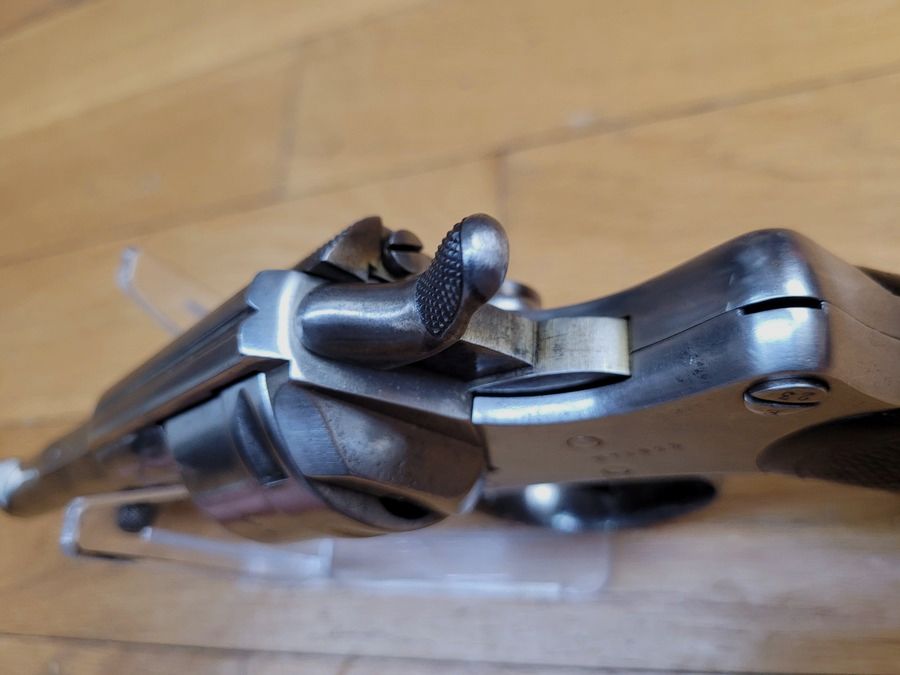

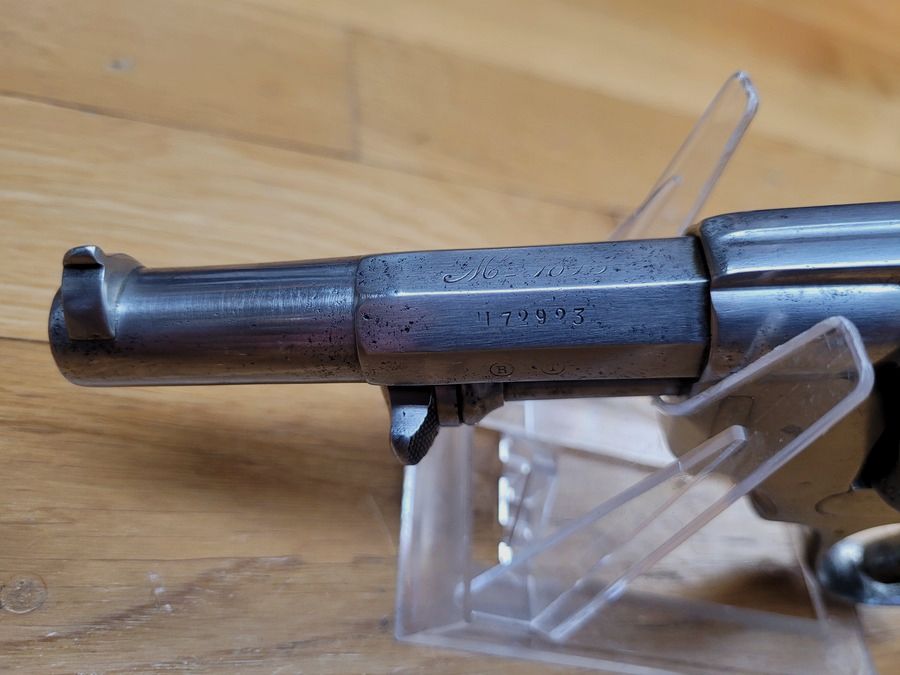
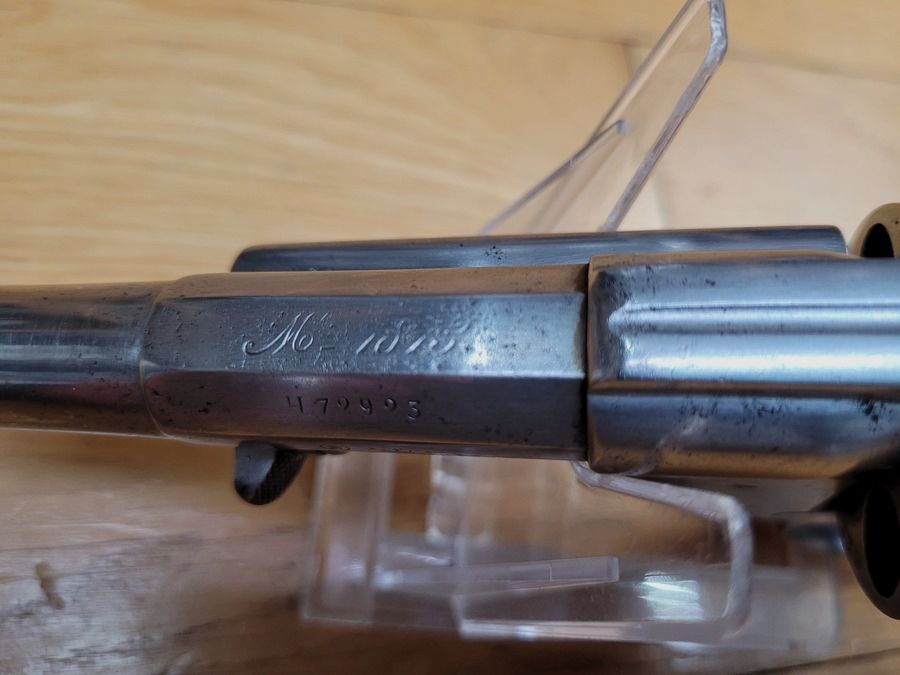
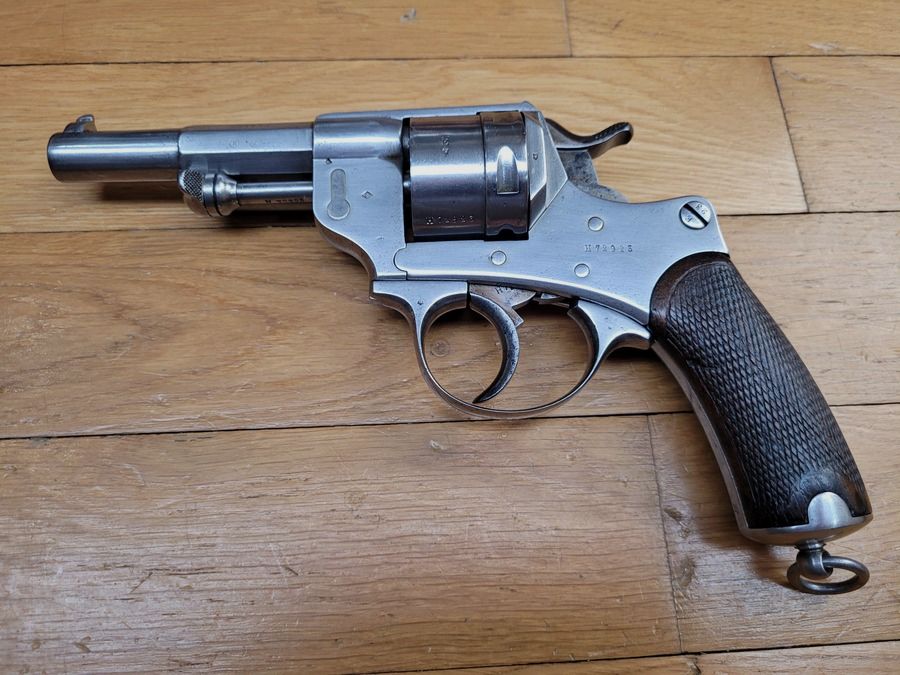

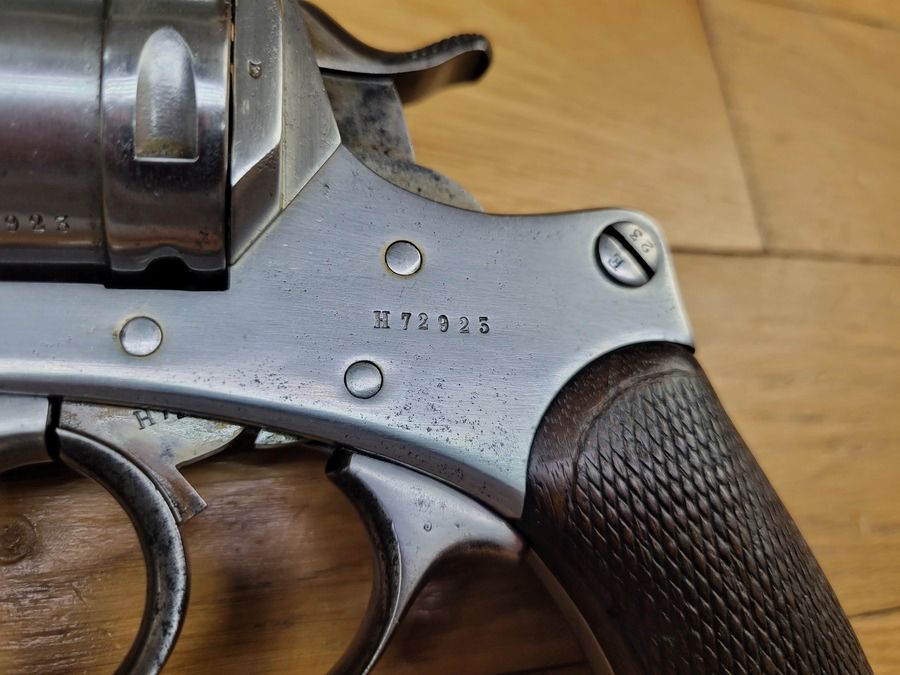
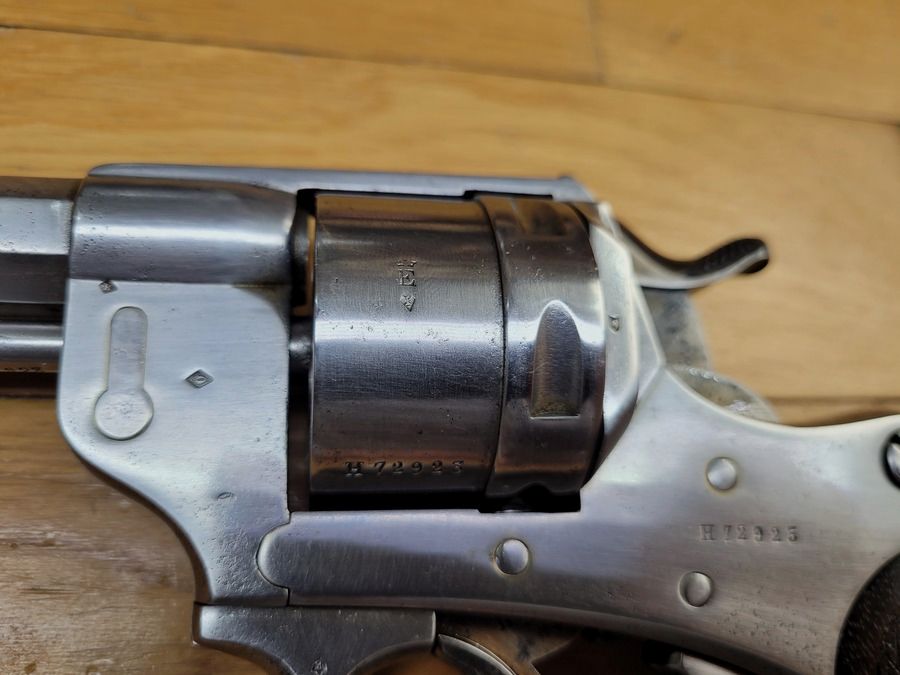

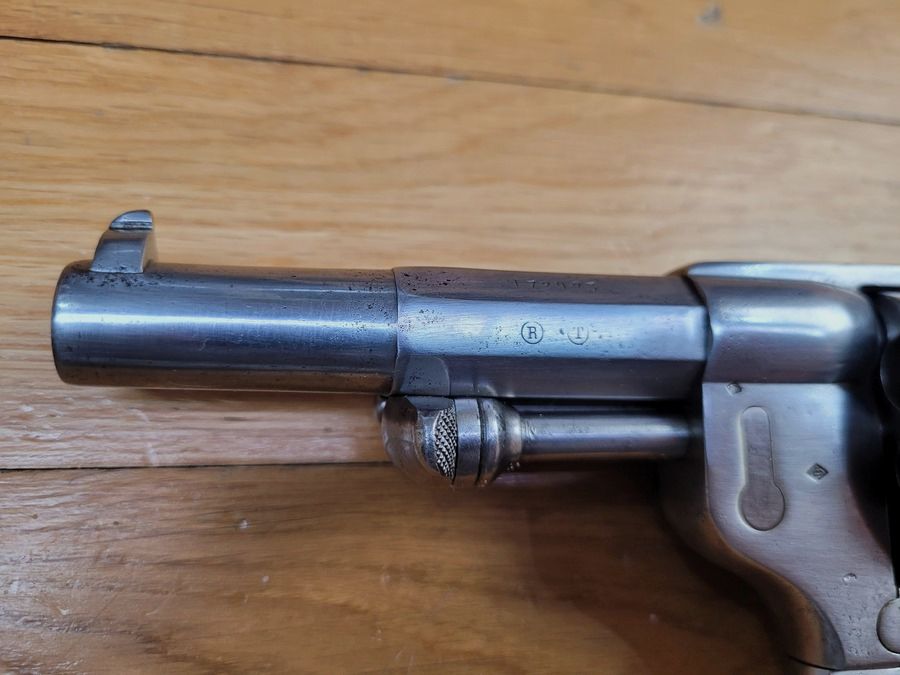
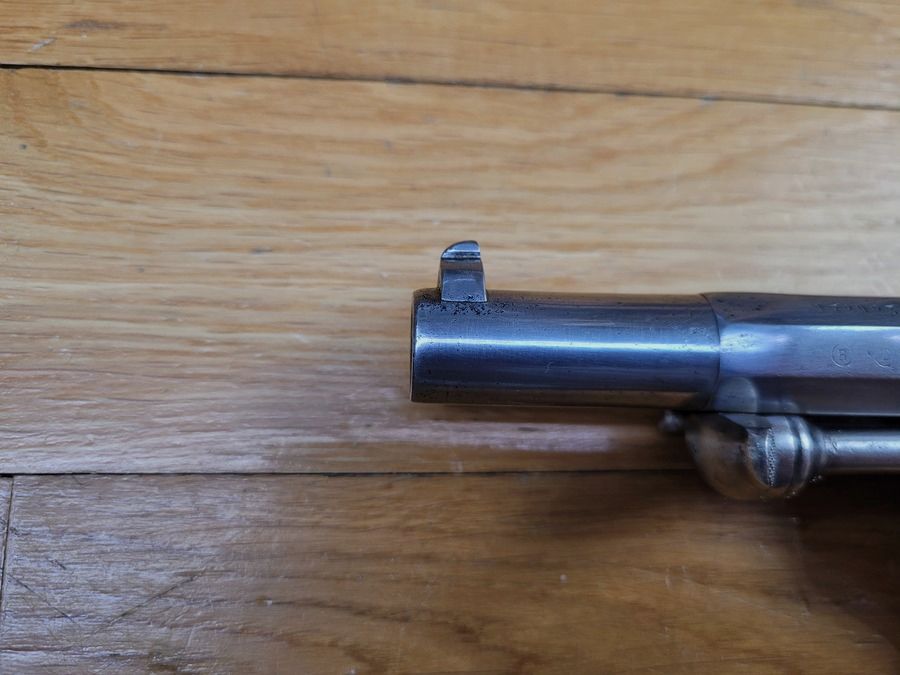
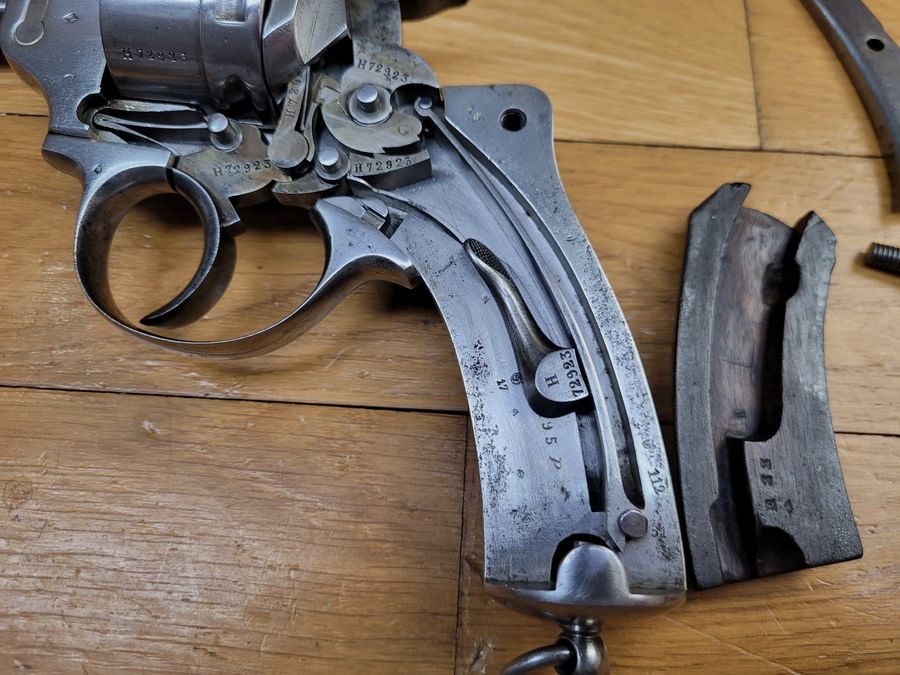

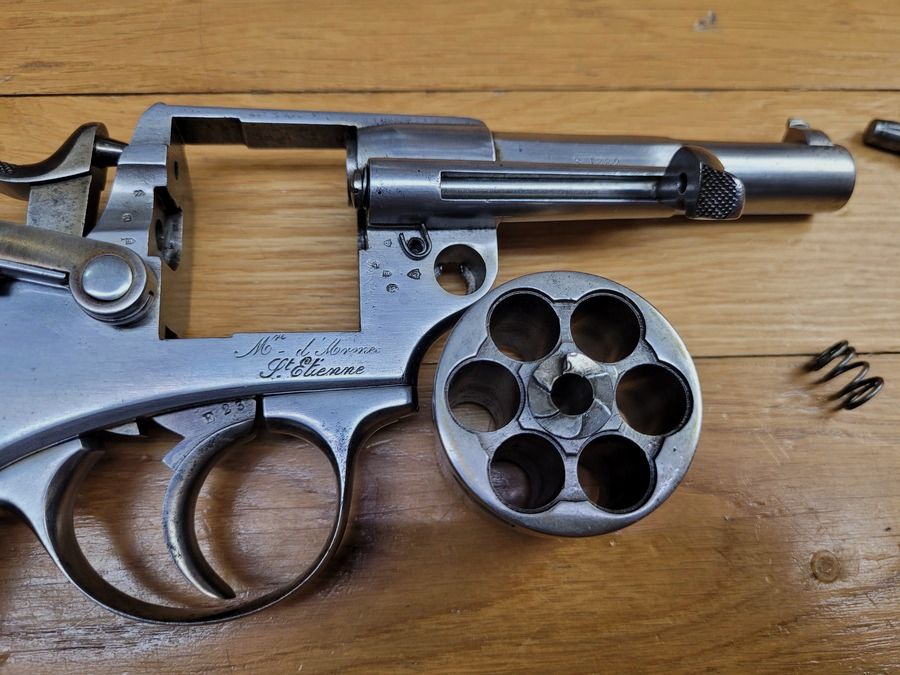

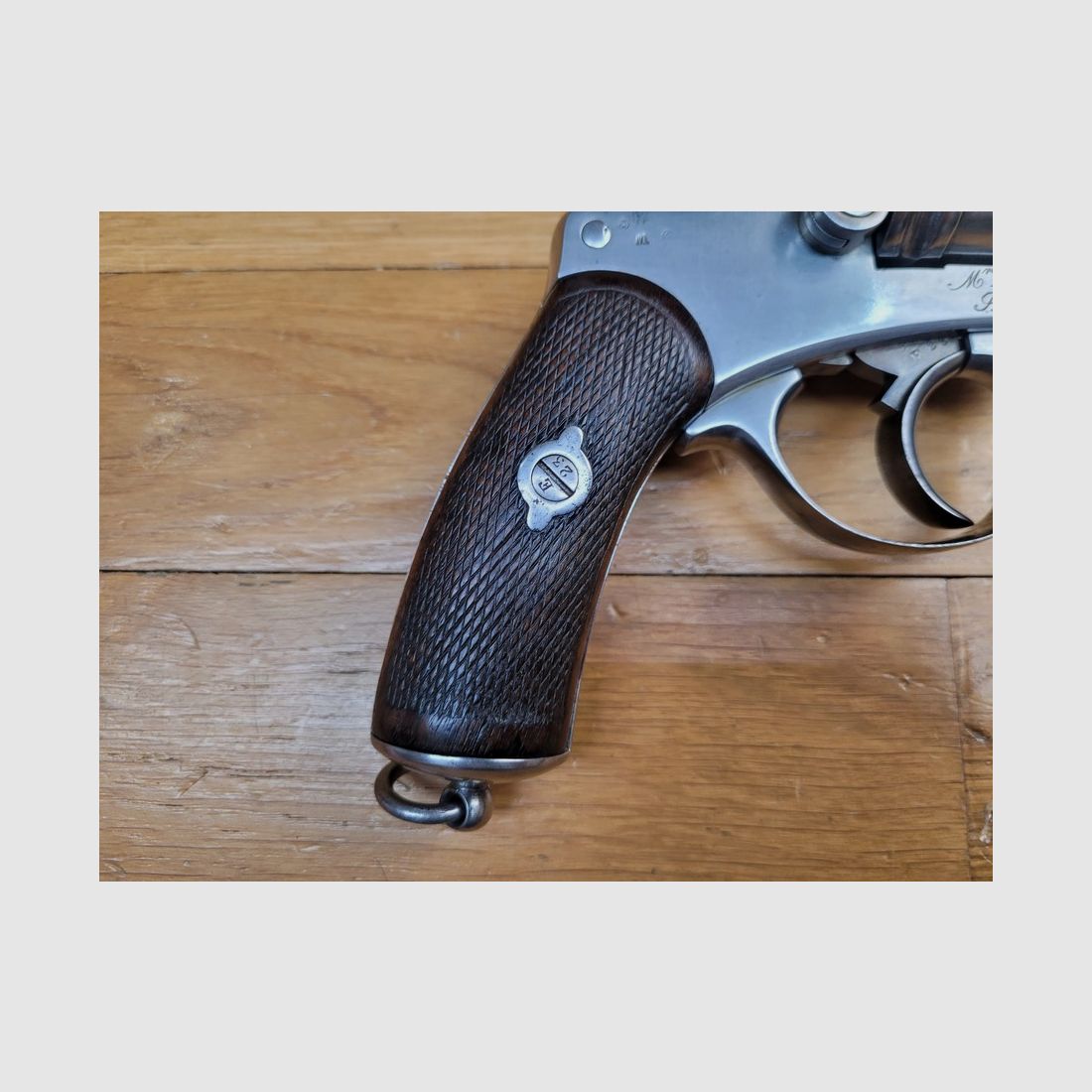
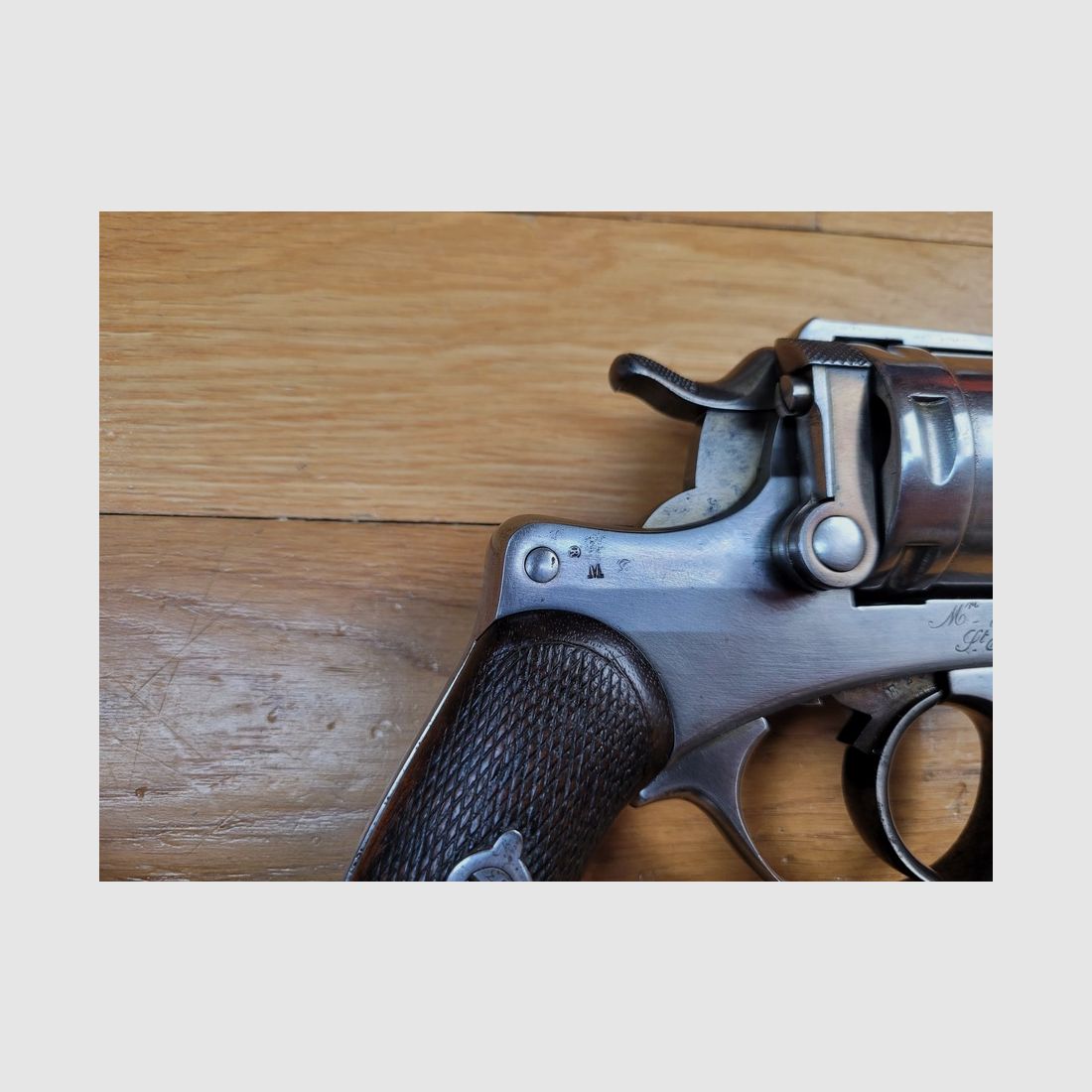


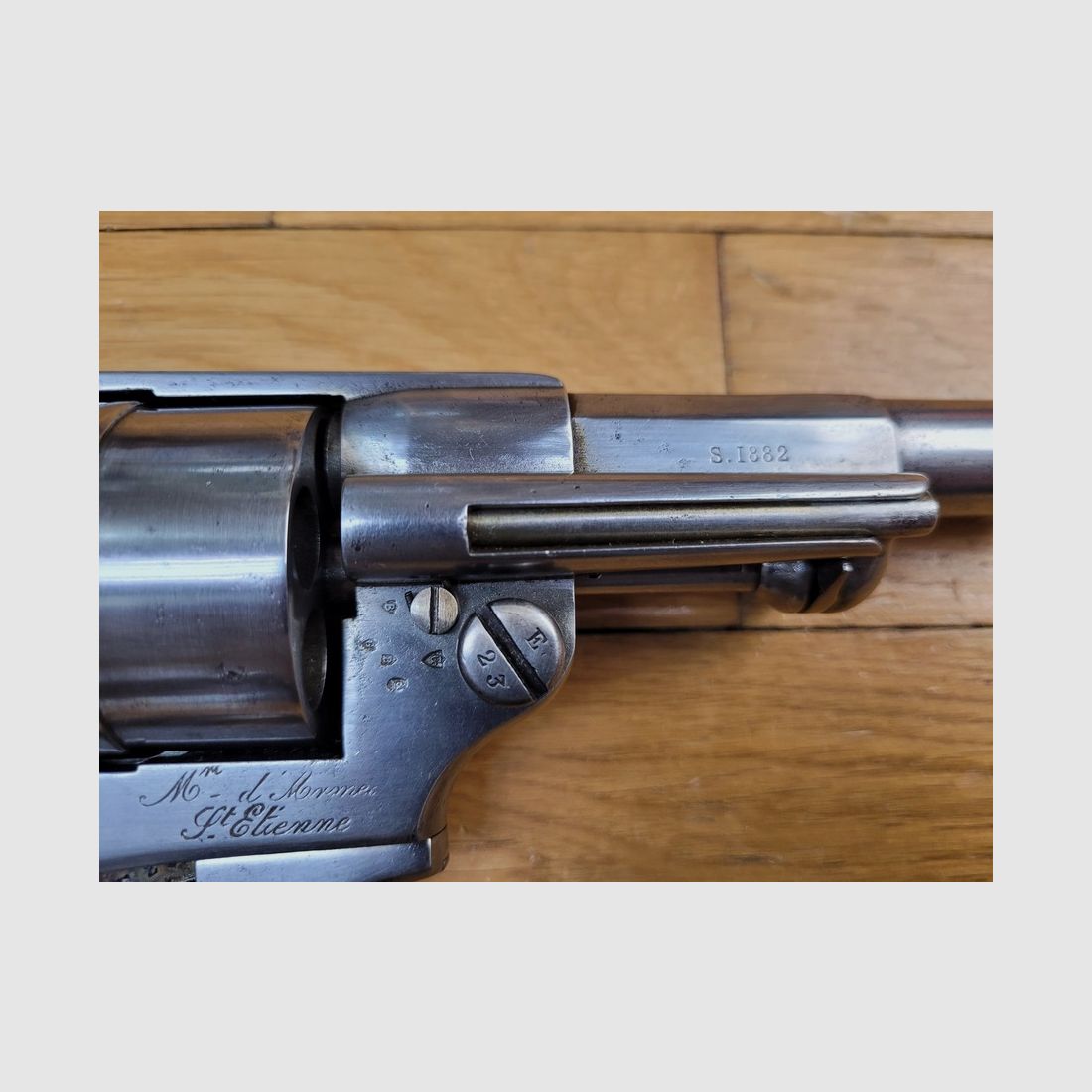


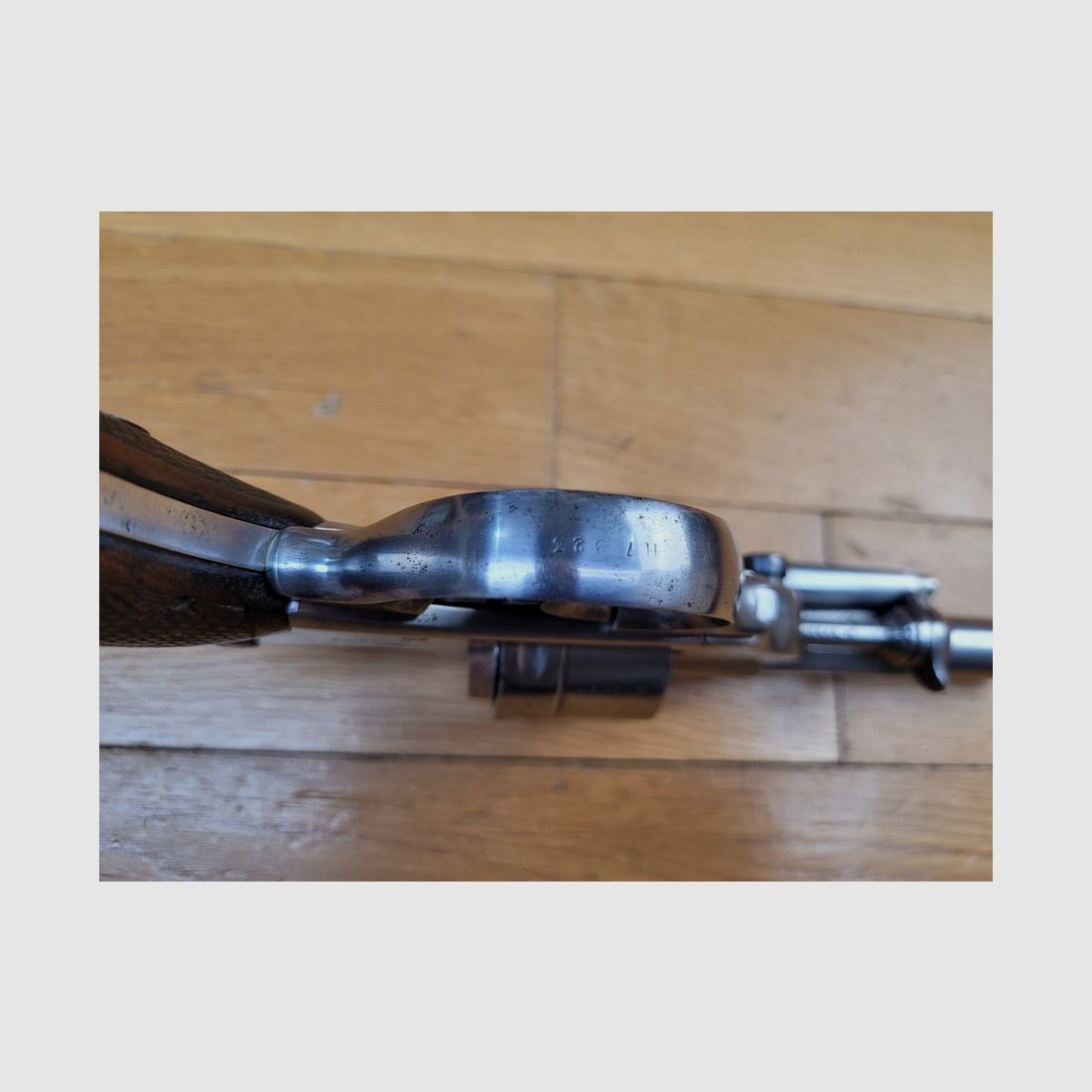
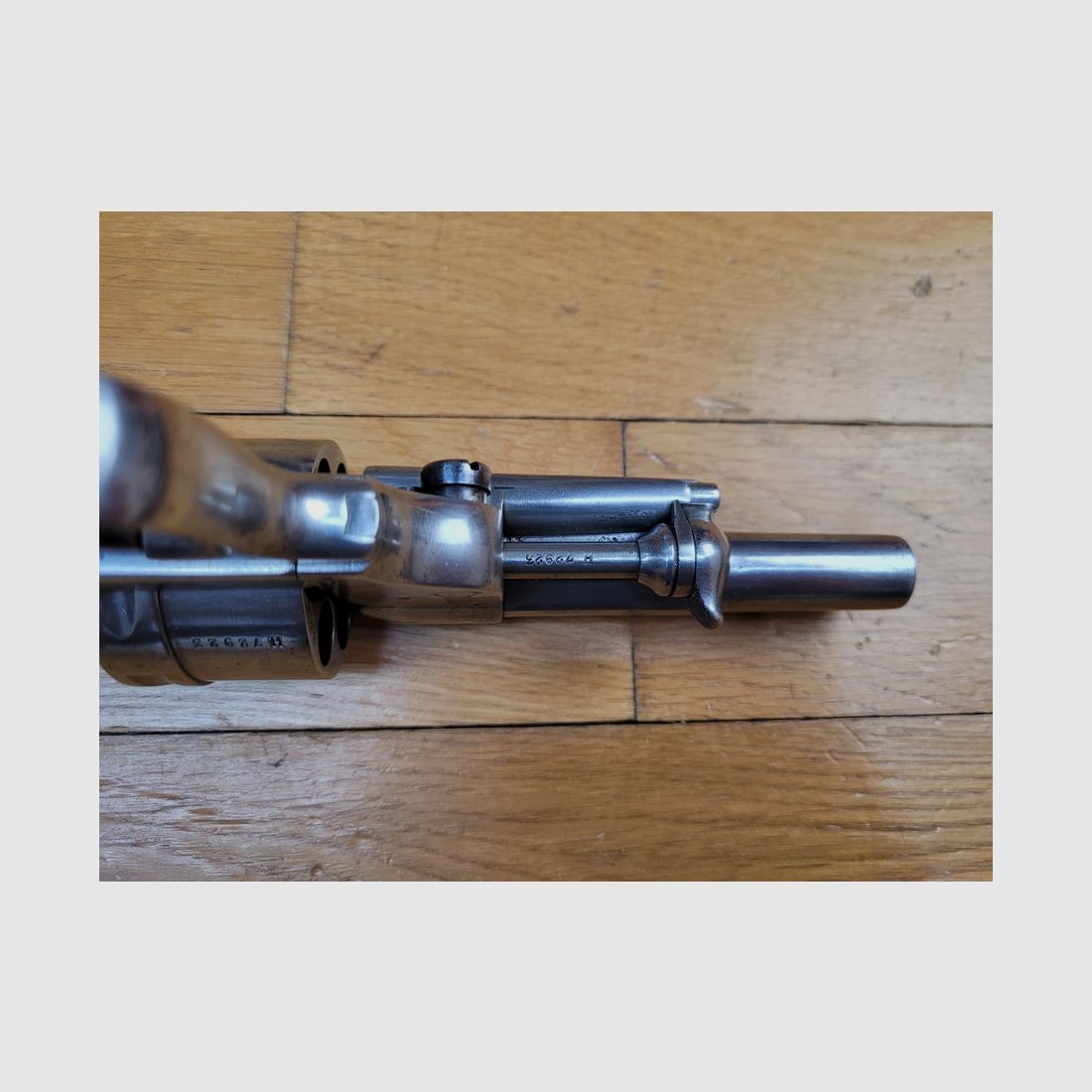
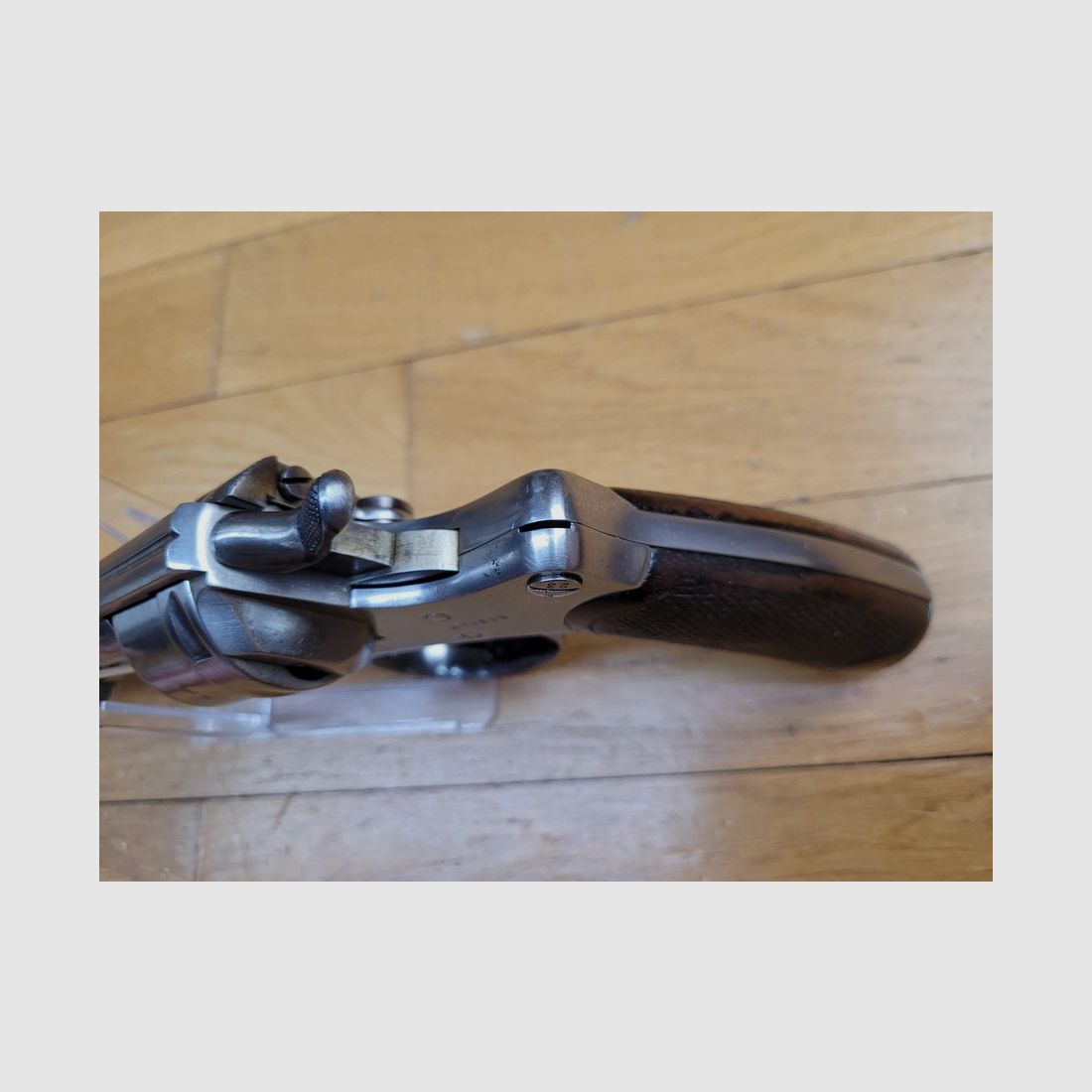

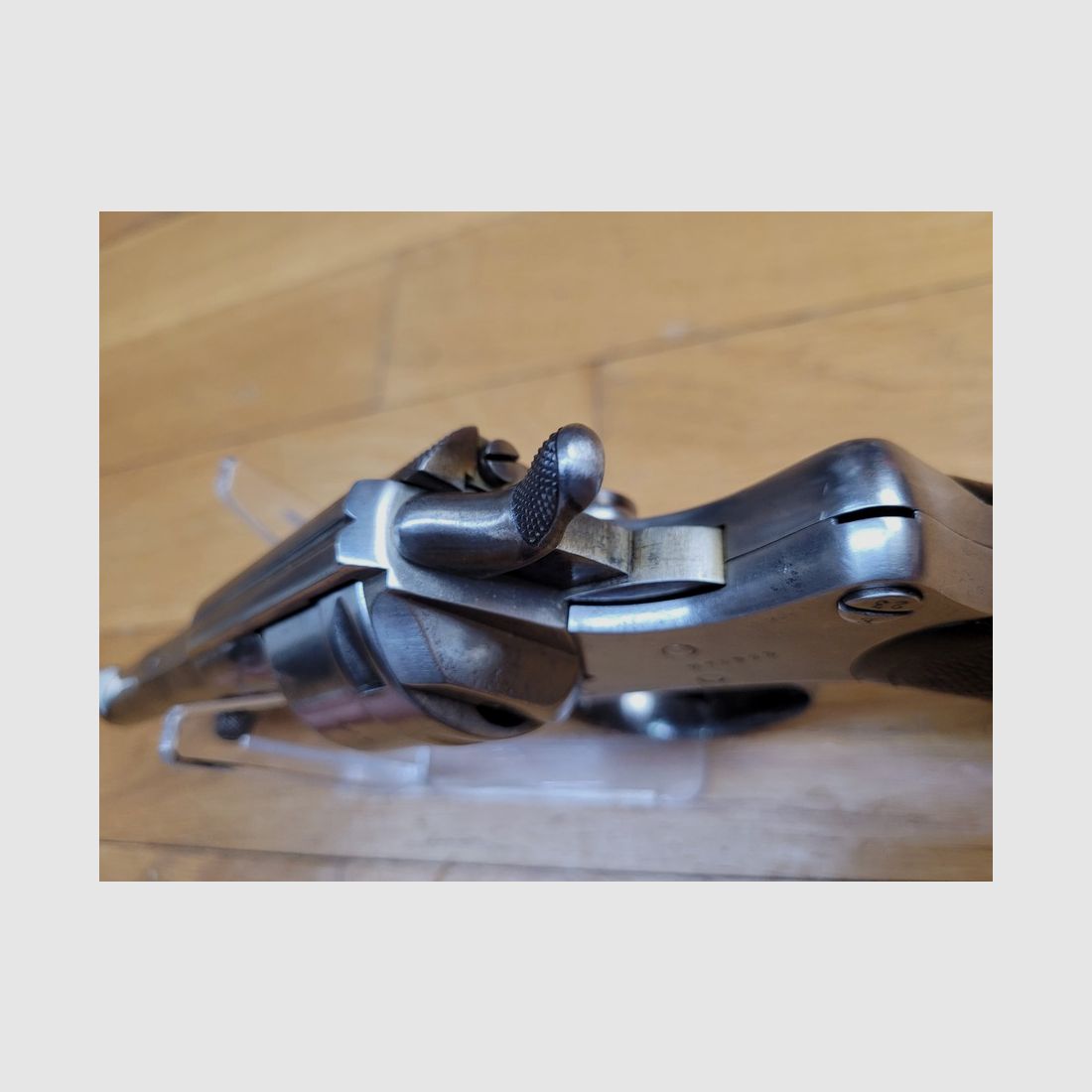
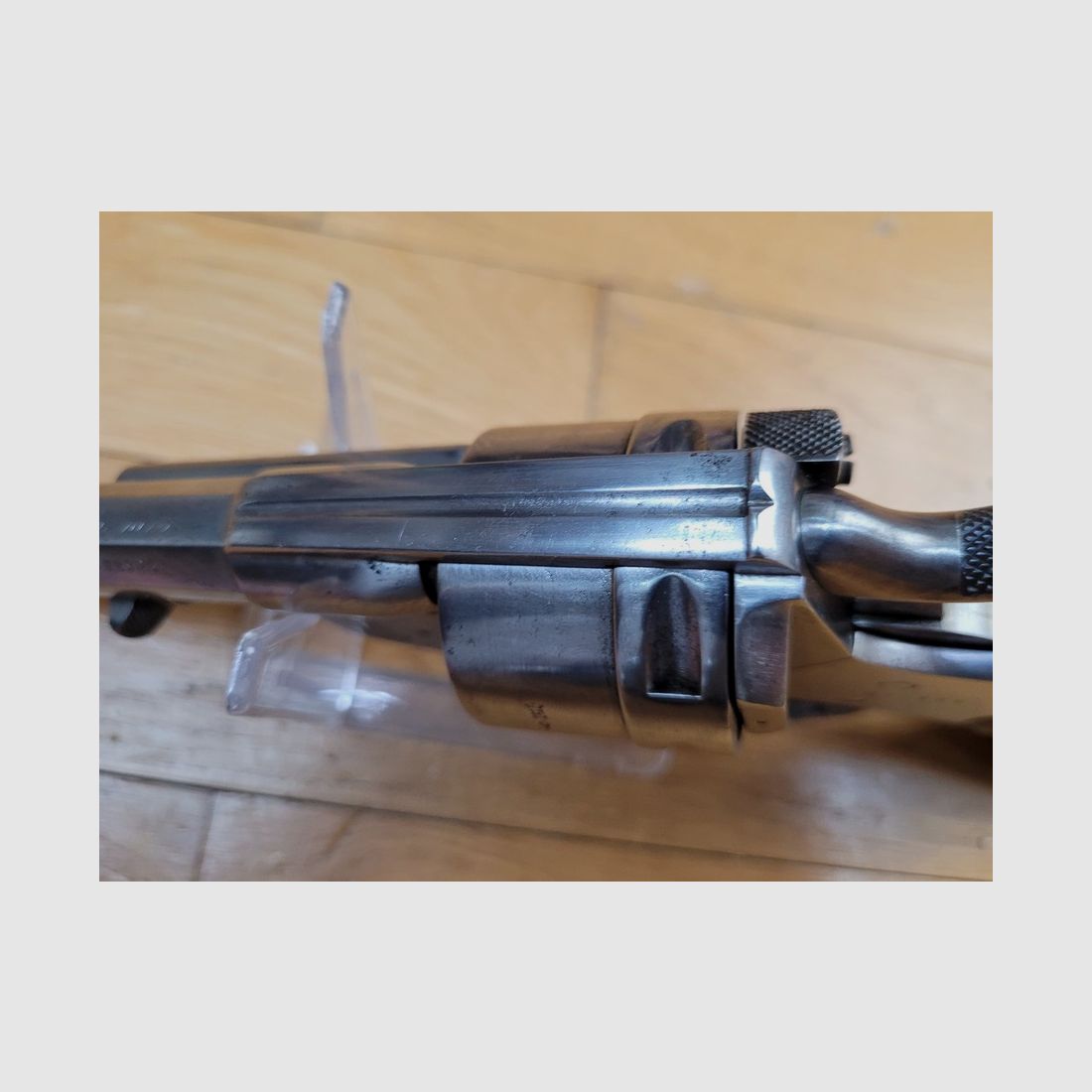


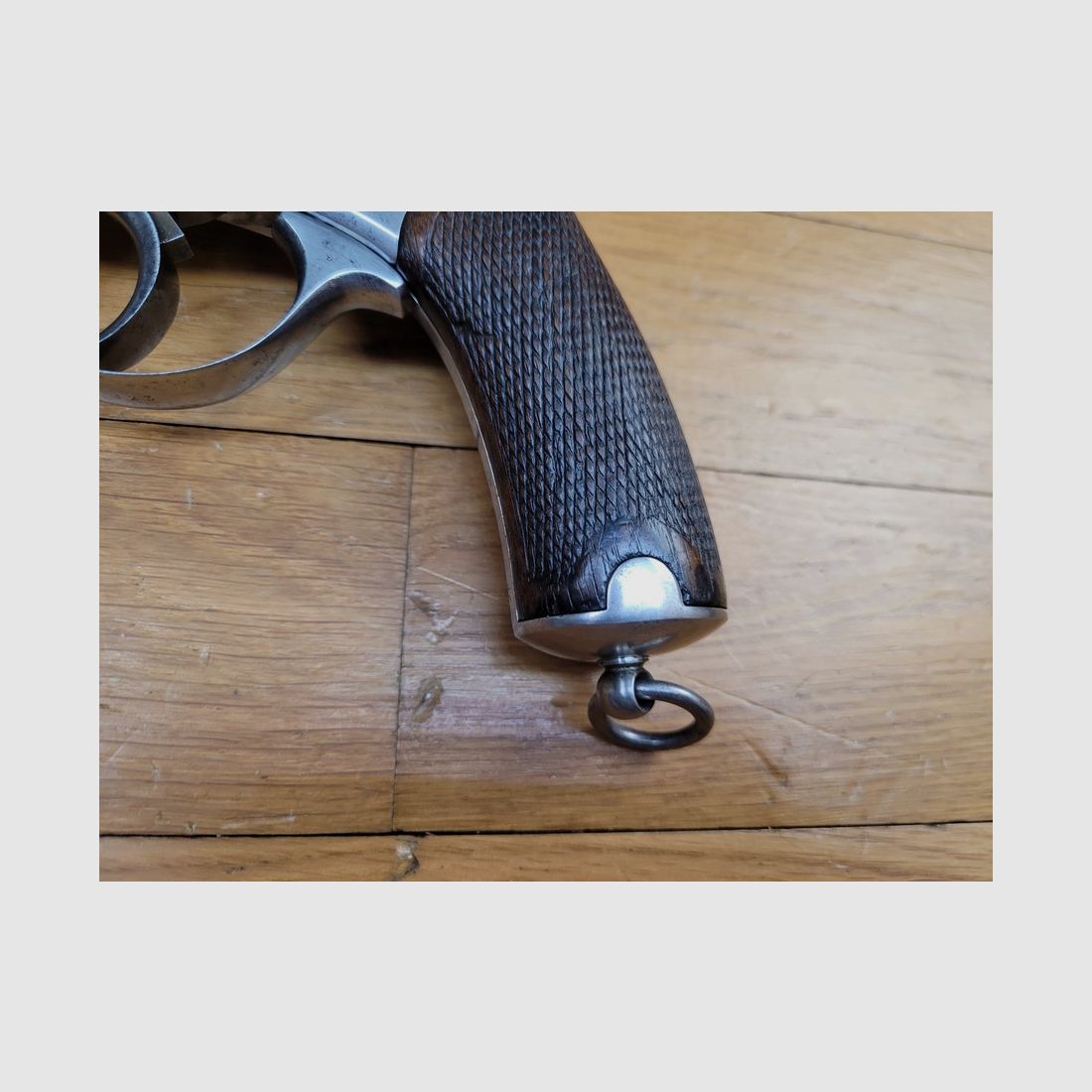
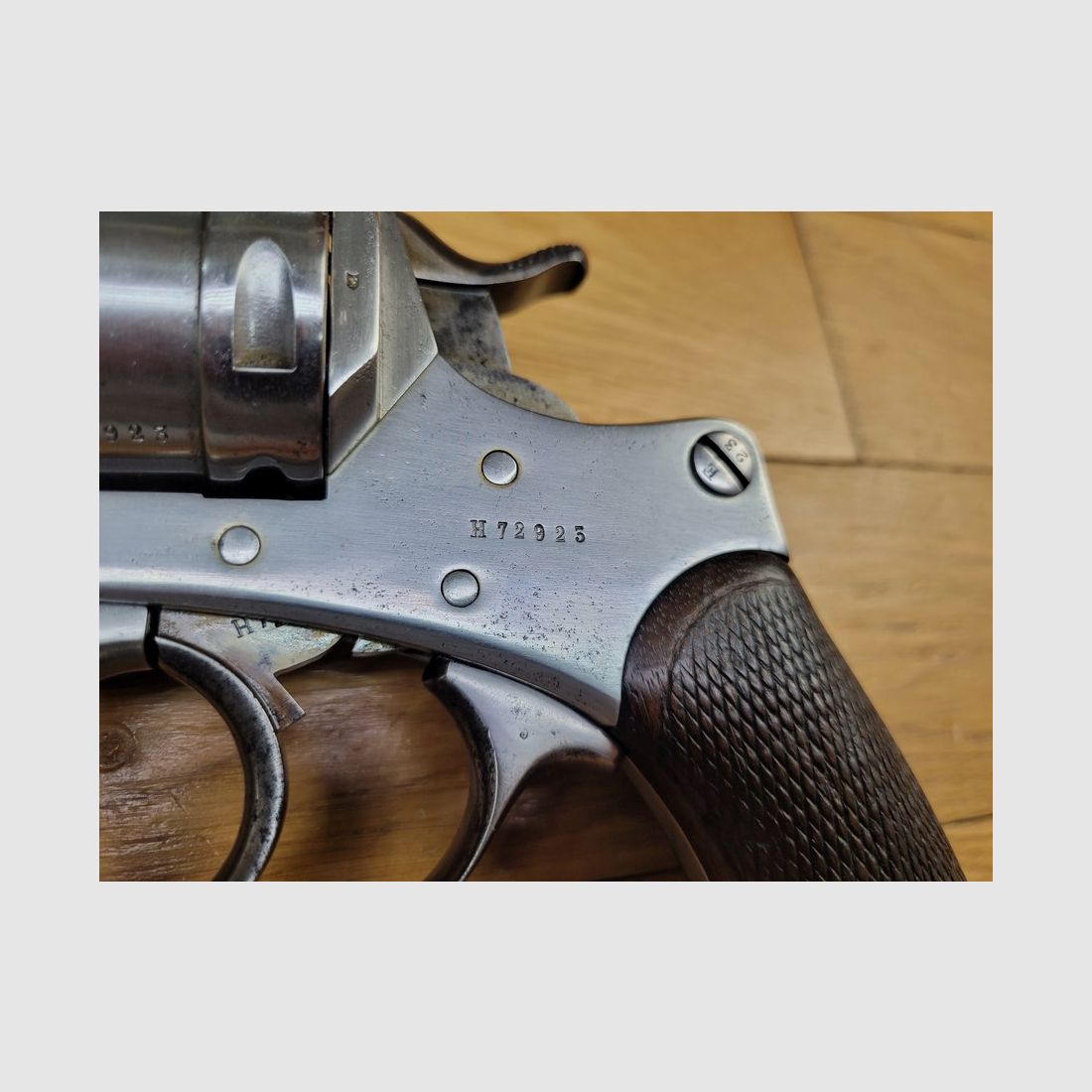
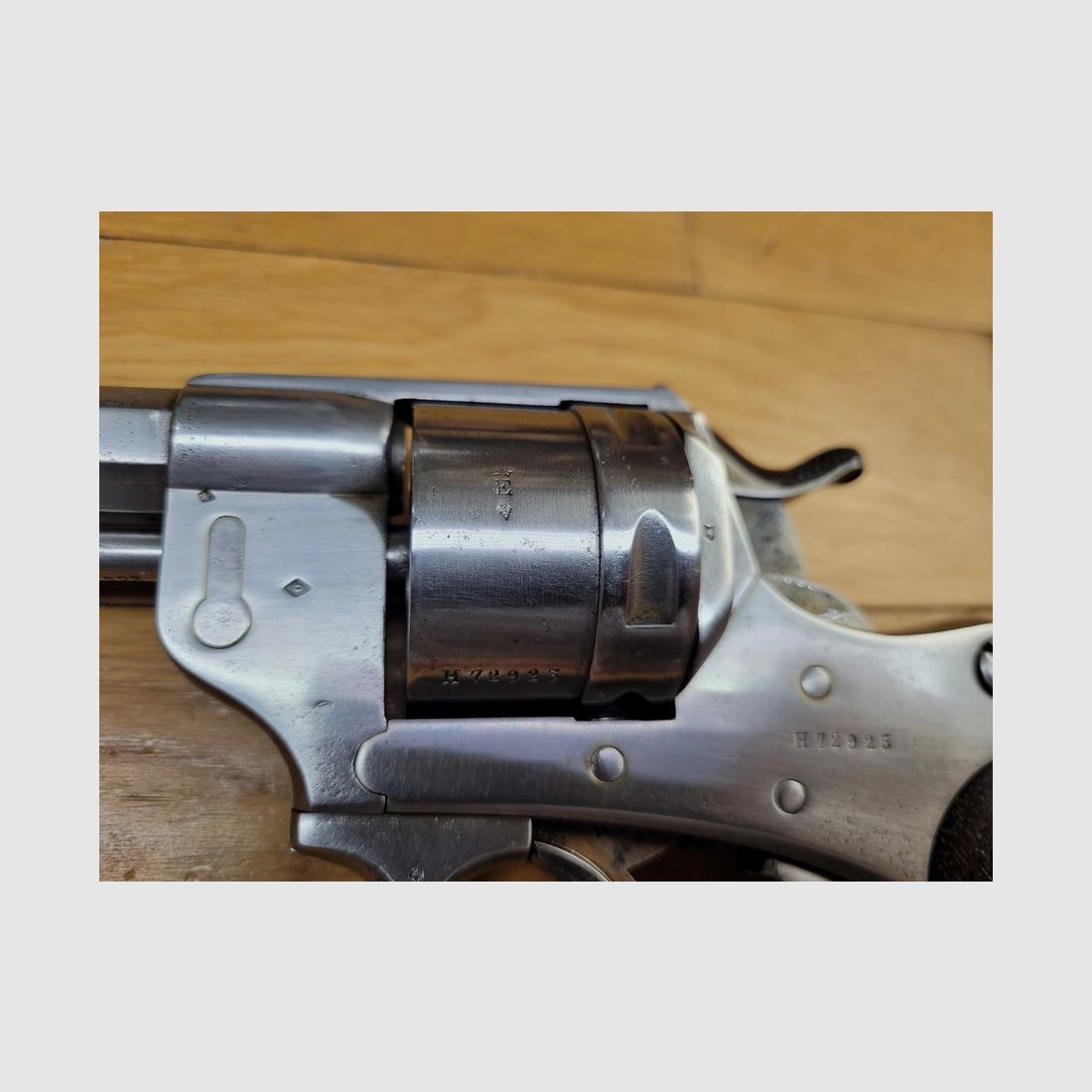


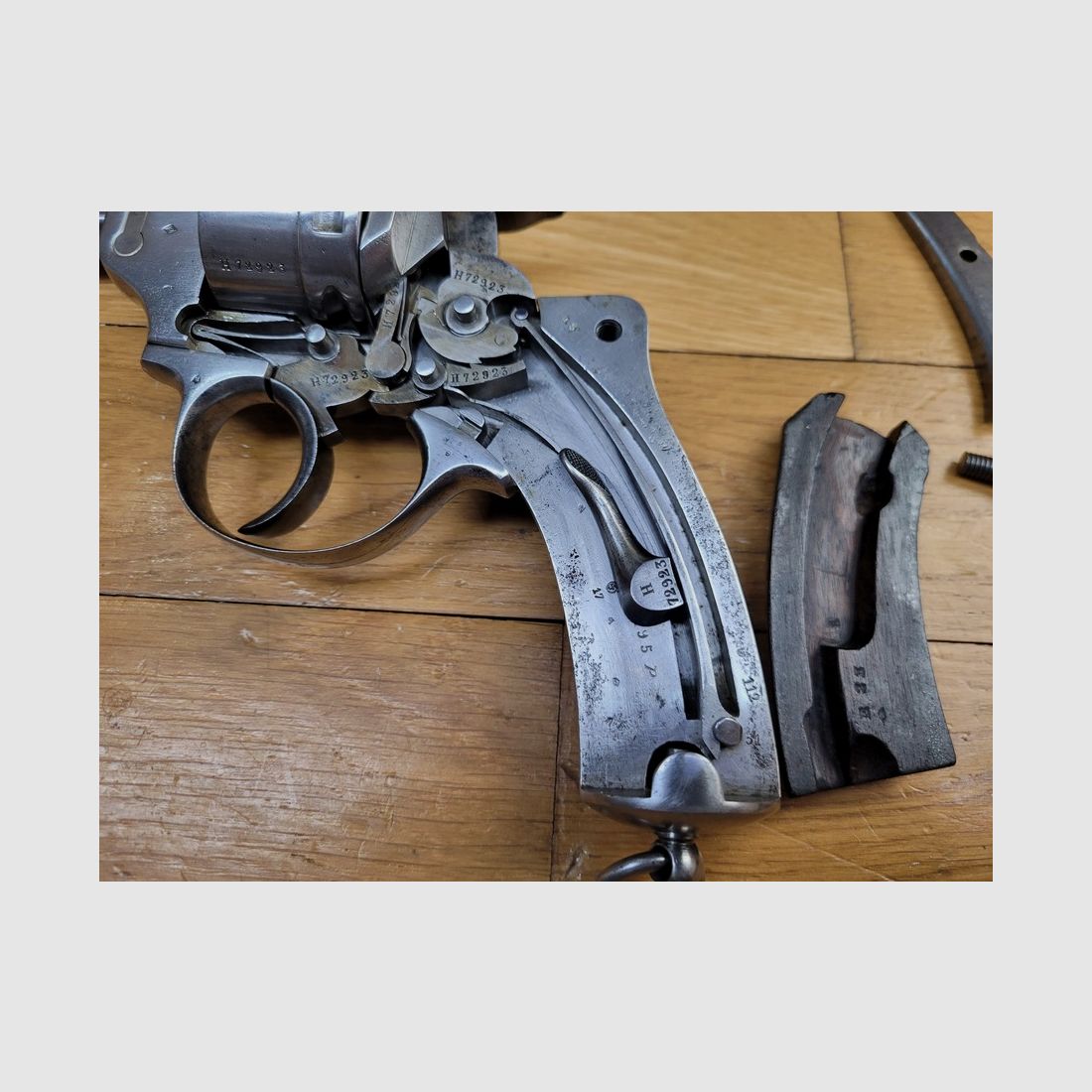


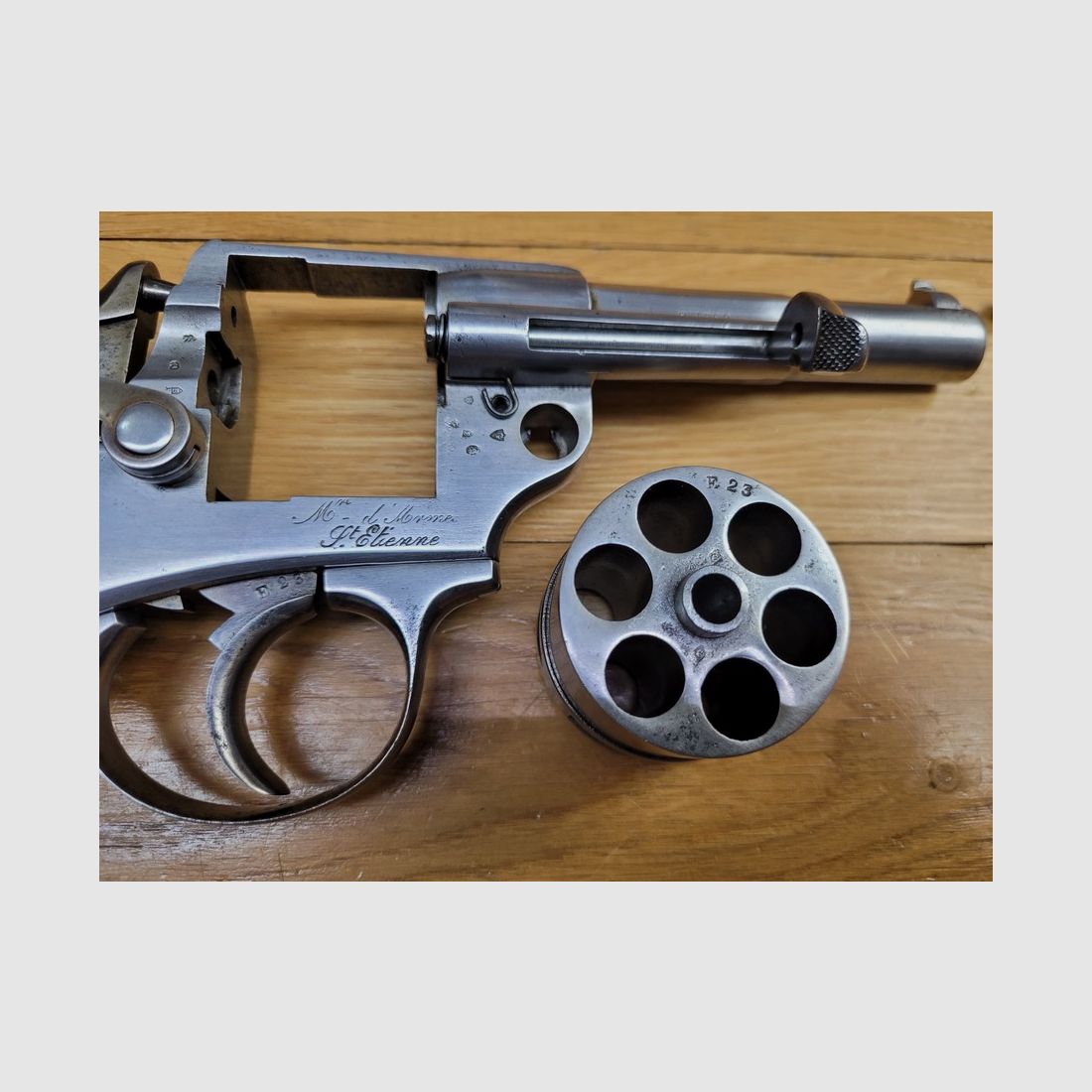

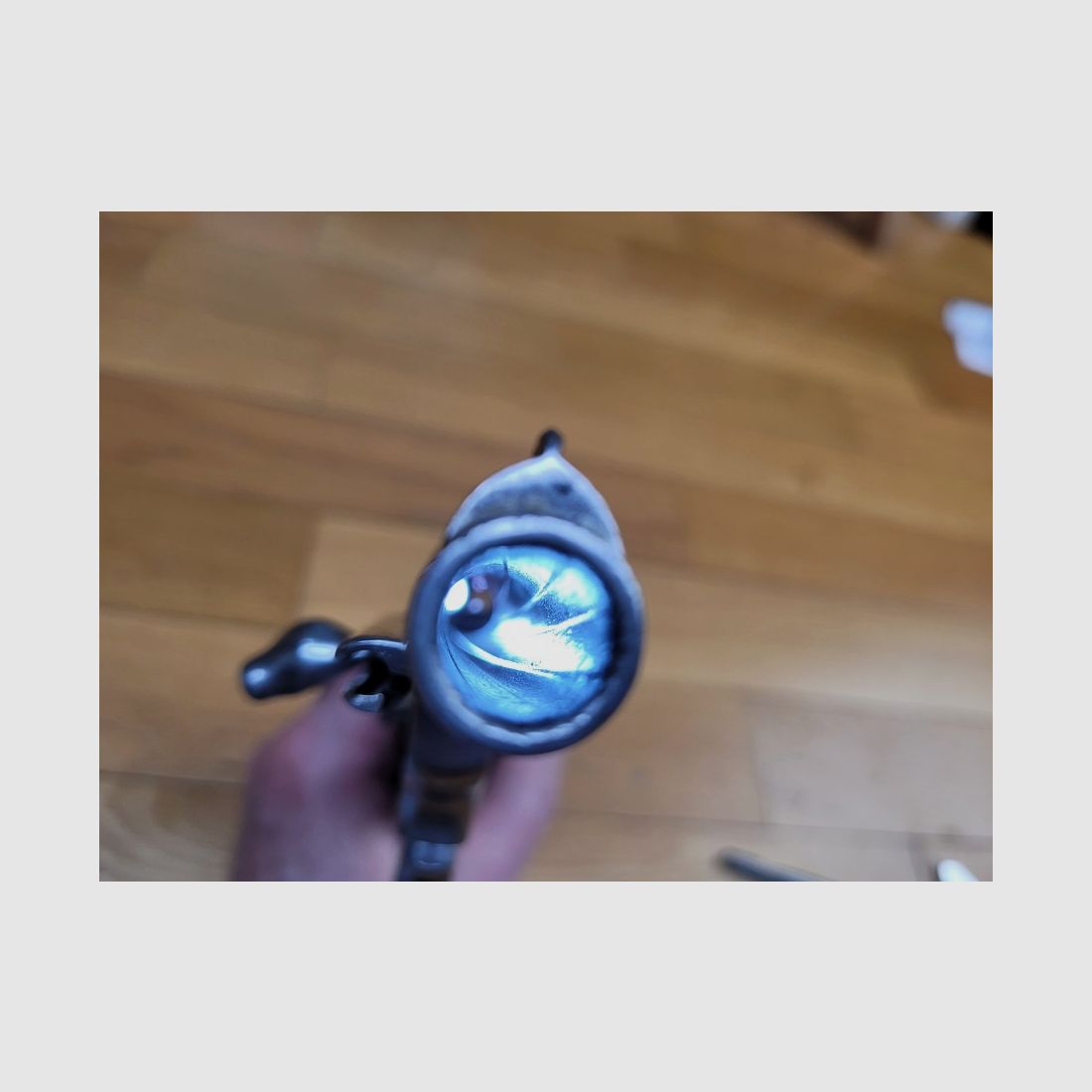
Beautiful service revolver Model 1873 – caliber 11mm73 – fully matching serial number – still in original straw yellow! – MAS in 1882 – Good mechanics and very nice barrel – Very good condition
Price on Request
Purchase permit required
75002 Paris, France
11
ID: 10338885
This item is currently unavailable.
Purchase from outside the EU: The firearm goes through an importer in your country, the dealer handles the export.
How buying from Europe works
Shop safely with Gunfinder
Our AI-powered seller identity verification makes Gunfinder the safest marketplace online.
Learn more
Details
- Original language
- French
- Category
- Purchase eligibility
- Required
- Caliber
- 11mm73
- Condition
- New
- Location
- 🇫🇷 75002 Paris, France
- Availability
- Out of stock
Freshness
This listing is based on a mirrored offer, where the listing data was synced to us from a shop, dealer, or external marketplace. Please note that temporary price discrepancies may occur due to possible delays in data transmission.
- Source
- Flingus Maximus
- Last checked with the dealer
- 1 day ago
Description
Note:
The item is located abroad. Please note that delivery conditions, shipping times, and/or the purchase process may differ.
For starters, ours is double- and single-action, while its US counterpart is single-action only. It’s easy to disassemble, perfectly finished, and built to withstand anything. All overwhelming advantages over the Colt SAA 1873. Only its ammunition could have been better. But the firearm itself is not at fault. It’s exceptional for its time in every respect. A masterpiece of French gunsmithing.
Its only misfortune was its ballistically weak cartridge (the 12 mm chosen by the Navy for the same model is much better). It could easily have been replaced, if not for the Artillery Commission’s insular and stubborn nature.
But above all, our 1873 was never made famous around the world by an all-powerful film industry…
Note that, as with its successor, the 1892, I’ve never read any account or memoir complaining about its cartridge’s lack of power in combat. The range enthusiasts who extol power—already responsible for today’s excessively powerful commercial ammunition, especially for handguns—simply forget that a combat revolver or pistol is meant to engage a slightly agitated guy at a distance of 1 to 5 meters. Maybe 7 on a good day, if you’re already a GIGN-level shooter. Or to convince the agitated guy’s horse to lie down immediately. Nothing at all like punching holes in black targets at 25 meters with a beautiful Tanfo that you can’t find in the dark, left out in the rain in the parking lot because it came with fluorescent orange grips…
The enormous soft lead bullet (which mechanically fragments on impact, dum-dum style), even traveling at just 200 m/s at those distances, surely didn’t leave many of our enemies around the world able to carry on their agitation for long. Otherwise, we’d probably have heard about it in the countless memoirs of the time. And I’ll spare you the bacteriological consequences of its animal-fat lubrication in wounds already horrific for any survivors of the initial assault…
In short, the 1873 is actually a formidable firearm, perfectly suited to its historical purpose.
A black powder firearm, it is nevertheless legendary for its strength.
During World War II, it was the only truly large-caliber handgun available in large numbers in many households. Some resistance fighters even slightly reamed out its chambers so it could fire… live-powder .45 ACP ammunition for their assassination operations! This is madness and should never be attempted. But more often than not, our 73 really did withstand this extreme pressure. It might not have held up to a series of shots, but that still says a lot about its astonishing strength.
And it’s also a revolver that conquered the world. It saw action from Senegal to Tonkin. It traveled from the penal colonies of French Guiana to the far reaches of the Red Sea. A legendary firearm of the French Empire. It served for a long time, returned to service in 1914–18 in the holsters of many reservists, and could still be found in prisons as late as the 1960s.
An arsenal firearm, its finish is nevertheless worthy of the finest craftsmanship. Superb construction from the best forged steels. Its finish would only be matched by its successor, the 1892. A legendary firearm in technical terms, too.
That’s probably why the 1873 is still so sought after by collectors today.
Kept in families, often poorly stored and/or badly hidden during the occupations, they’re often in rather poor condition. But not this one.
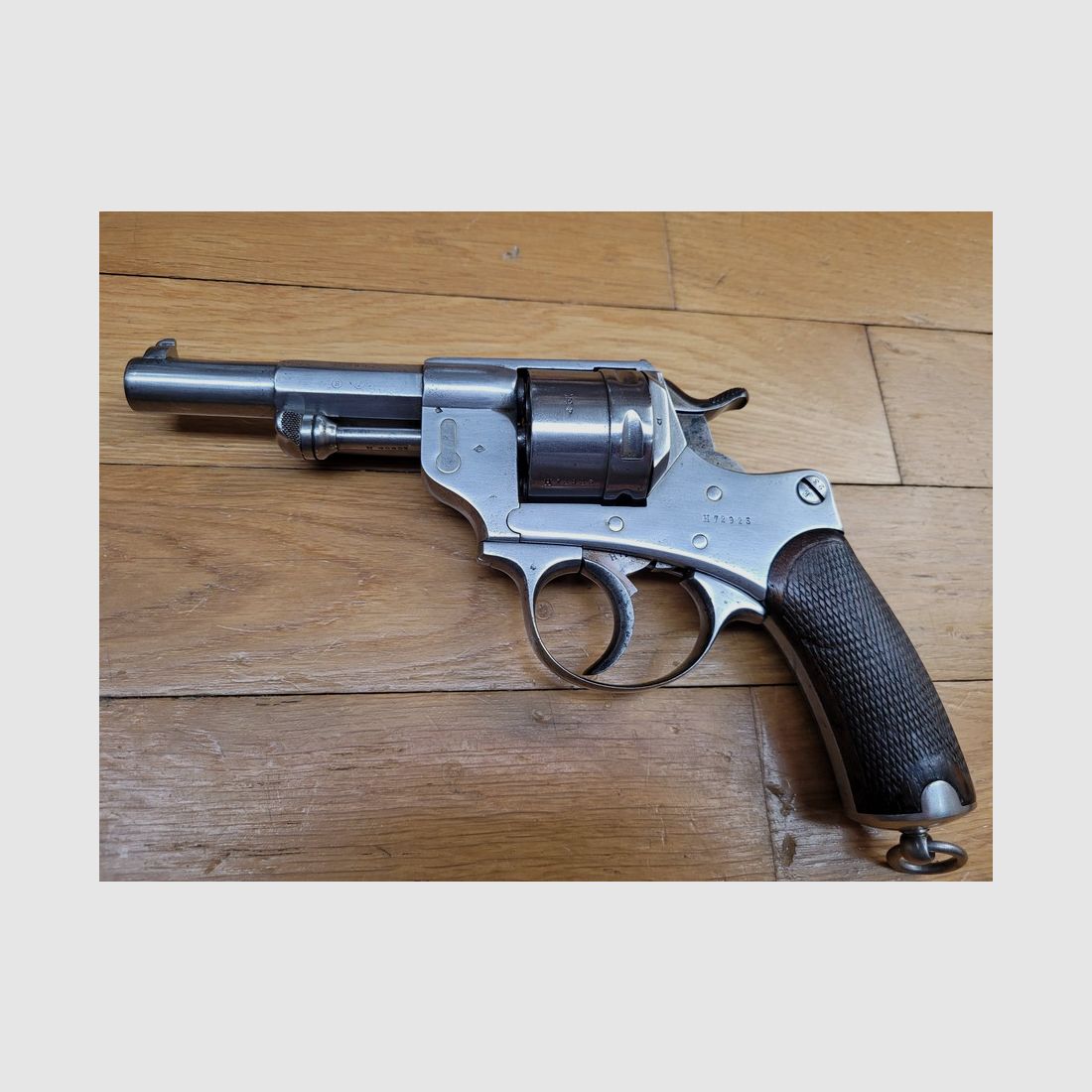
Our example is a classic MAS 1873 service revolver, dated 1882 on the barrel, in the standard 11 mm 1873 caliber, with a 6-round capacity in si
Single and double action. Like all its brothers and cousins, it was made at the Manufacture of St Étienne for officers of the 1874 model. Including naval officers.
A beautiful firearm, without the awful orange peel finish seen on most surviving examples. Completely matching numbers.
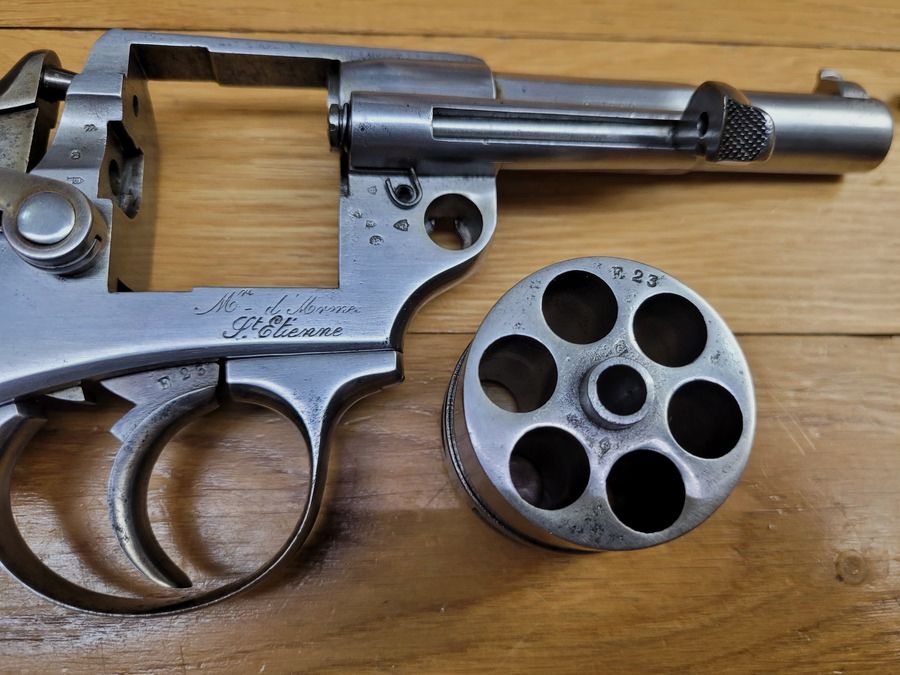
The firearm was cleaned in the past, infrequently but carefully. The model inscription, Manufacture d’Armes de Saint-Étienne markings, proof marks and serial numbers are all crisp and legible throughout. It hasn’t been “polished with steel wool,” erasing all the markings in the process as is so often done, just to make it shinier than a brothel mirror from the Second Empire. Some of the yellow finish is still visible on the trigger, internal parts and hammer. Truly in very good condition.
Good mechanics. Good click—springs are all firm, indexing is good, and all screws are in very good condition as well as matching numbers. Grips are the same (no cracks or breaks).
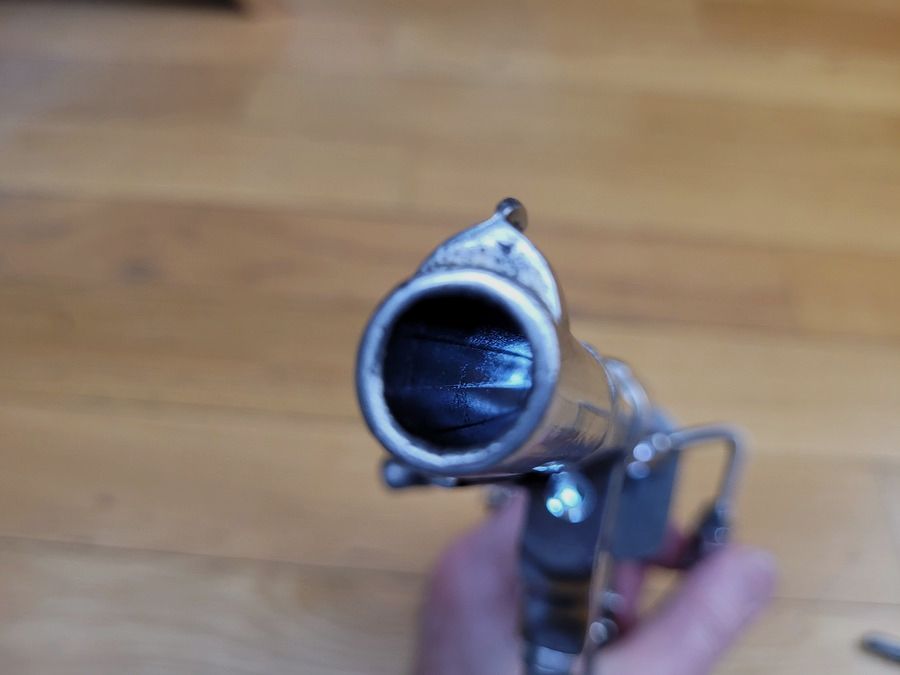
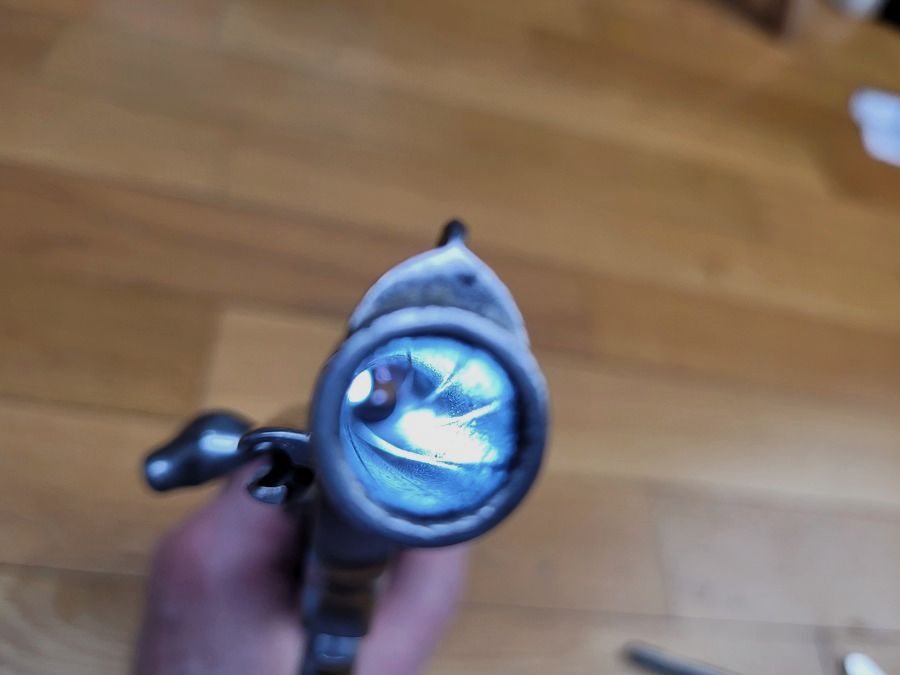
Complete, functional mechanism with all original internal parts, all matching numbers. No oxidation. No excessive wear gap. Easy, smooth disassembly. The barrel is truly mirror-bright, with very nice, still-deep rifling. Very good barrel.
The cylinder is also in very good condition, and the chambers are more than clean for a firearm that is now over 142 years old… Spotless, even! A very fine firearm mechanically, too.
It deserves a complete, careful disassembly and cleaning, as it’s still a little “grimy,” and then it will be PERFECT!
All in all, a very beautiful revolver in a state of preservation that is becoming rare, with excellent mechanics. It’s a classic for any good collection of 19th-century French service firearms.
This is the revolver from the era of the French colonial empire. From Tonkin to Sudan, it carried our colors far and wide. It will satisfy both a history-loving, discerning collector and a potential black-powder sport shooter. A very fine piece.
Category D e) firearm under the CSI: valid national ID card or passport required.
**********************************************************************************************************************************************************************
Let’s say it again! Flingus Maximus gun shop in Paris and throughout France is also here to help with private firearm transfers, buying firearm and militaria collections, firearm appraisals, and questions about firearms in estates and inheritances. Contact your favorite gun dealer using our contact form or at [email protected]
Reminder: All collectible, hunting and shooting firearms are used and sold as-is, without warranty.
All antique firearms sold as category C or D, “Collection” or “Cowboy shooting,” are collectible firearms that have not been proof-tested for shooting or tested at a range. They have been visually inspected for their general condition and mechanics, but none have been used for shooting, so they are sold as untested. Buyers wishing to use a firearm for shooting must first contact the National Proof House of Saint Étienne, the only body authorized to issue proof certificates before use for shooting. (Show description in original language)
Le révolver français 1873 est une arme exceptionnelle. Bien plus performant que son collègue américain le Colt SAA 1873, né pourtant la même année que lui et star incontestée du western, popularisé ad nauseum par Hollywood et … qui fait pourtant figure d’antiquité armurière à coté de notre 1873 à nous.
Déjà, le notre est double et simple action quand son confrère US n’est que simple action – son démontage est aisé, sa finition parfaite et il est d’une robustesse à toute épreuve. Autant d’avantages écrasants sur le Colt SAA de 1873. Seule sa munition aurait mérité mieux. Mais l’arme n’est pas du tout en cause. Elle est exceptionnelle pour son époque à tous points de vues. Une réalisation du génie armurier français.
Son seul malheur fut sa cartouche balistiquement faible (la 12mm choisie par la Marine pour le même modèle est bien meilleure). Elle aurait pu être facilement remplacée sans le caractère casanier et borné de la Commission d’Artillerie.
Mais surtout, surtout, notre 1873 n’a pas été popularisé mondialement par une industrie cinématographique toute puissante…
Notez bien que, comme pour son successeur de 1892, je n’ai jamais lu de récit ou de mémoires se plaignant de la faiblesse de sa cartouche en opérations. Les thuriféraires en stand de la puissance, déjà responsables de la trop grande puissance des munitions du commerce actuelles surtout en poing, oublient juste qu’un révolver ou pistolet de combat c’est fait pour engager un gugus un peu agité entre 1 et 5 mètres. 7 peut-être les grands jours et en étant déjà un tireur type GIGN. Ou encore de convaincre le cheval du dit agité de se coucher illico. Rien à voir du tout avec percer du carton noir à 25 mètres avec un beau Tanfo imperdable la nuit sous la pluie du parking car livré en version plaquettes orange fluo…
L’énorme boulet de plomb mou (qui mécaniquement se fragmente à l’impact façon doum-doum), même poussé à 200m/s seulement à ces distances, n’a sans doute pas laissé beaucoup de nos ennemis sous toutes les latitudes prolonger indûment leur agitation. Sinon on en aurait sans doute entendu parlé das les innombrables mémoires de l’époque. Et je vous passe les conséquences bactériologiques de son graissage à la graisse animale dans des plaies déjà affreuses pour les éventuels survivants du premier assaut …
Bref. Le 1873 est en fait une arme redoutable parfaitement adaptée à son usage historique.
Arme à poudre noire, sa solidité est néanmoins proche du légendaire.
Pendant la seconde guerre mondiale, seule arme de poing véritablement de gros calibre et disponible en grand nombre dans de très nombreux foyers, des résistants ont même légèrement réalésé ses chambres pour qu’il tire…. de la 45ACP à poudre vive pour leurs opérations d’assassinat ! C’est une folie qu’il ne faut jamais faire. Mais le plus souvent, notre 73 a bel et bien tenu à ce choc extrême de pression. Il ne l’aurait peut-être pas tenu sur une série de coups mais c’est dire quand même sa stupéfiante robustesse.
Et puis c’est aussi un révolver qui a conquis le monde. Il a vaincu du Sénégal au Tonkin. Il a voyagé des bagnes de Guyane jusqu’au confins de la mer Rouge. Une arme de légende de l’Empire Français. Il a servi longtemps, a repris du service en 14-18 dans l’étui de nombreux réservistes, et on l’a trouvé jusque dans les années 1960 dans les prisons.
Arme d’arsenal, ses finitions sont néanmoins dignes de l’artisanat de pointe. Superbe fabrication des meilleurs aciers forgés. Elles ne seront égalées que par son successeur le 1892. Une arme de légende au plan technique aussi.
C’est sans doute pour tout cela que le 1873 est encore si recherché par les collectionneurs de nos jours.
Restés dans les familles, fréquemment mal conservés et/ou mal cachés durant les occupations, ils sont souvent en état fort moyen. Mais pas celui-là.
Notre exemplaire est un classique revolver réglementaire modèle MAS 1873, daté de 1882 en canon, en calibre réglementaire 11 mm 1873, capacité 6 coups en simple et double action. Il est né à la Manufacture de St Étienne comme tous ses frères et cousins pour officiers 1874. Marins compris.
Belle arme sans les affreuses peaux d’orange que l’on voit sur la majeure partie des survivants. Intégralement mono matricule.
Arme nettoyée autrefois rarement et bien proprement. Inscription du modèle, marquages de la Manufacture d’Armes de Saint-Étienne, poinçons de contrôle et numéros bien nets et lisibles partout. Pas « poncé à la paille de fer » en effaçant tous les marquages au passage comme trop souvent, histoire de rendre plus brillant qu’un miroir de bordel du second Empire. Une partie du jaune est d’ailleurs encore visible sur la détente, les pièces intérieures et le chien. Très bon état véritablement.
Bonne mécanique. Bon cliquetis – tous ressorts fermes – bonne indexation – Vis toutes en très bon état en plus d’être au numéro. Plaquettes idem (ni fêlures ni cassures).
Mécanisme complet et fonctionnel avec toutes pièces internes d’origine et au même numéro – Aucune oxydation – Aucun entrefer d’usage excessif . Démontage aisé et fluide – Canon véritablement miroir avec de très belles rayures encore profondes. Très bon canon.
Le barillet est en très bon état aussi et les chambres sont plus que propres pour une arme de plus de 142 ans désormais… Nickel même ! Très belle arme au plan mécanique également donc.
Il mérite un démontage / nettoyage intégral (et délicat!), car il est encore un peu « crado », et il sera PARFAIT!
In fine un très beau revolver dans un état de conservation qui devient rare et avec une très bonne mécanique. Il est un classique dans toute bonne collection d’armes réglementaires françaises du XIXème.
C’est le revolver de la création de l’Empire colonial français. Du Tonkin au Soudan, il a porté loin nos couleurs. Il satisfera tout autant un collectionneur fan d’Histoire et exigeant qu’un éventuel tireur sportif à l arme ancienne. Très bonne pièce.
Arme de catégorie D e) au CSI : CNI ou passeport en cours de validité obligatoire.
**********************************************************************************************************************************************************************
Répétons le ! L’armurerie Flingus Maximus à Paris et partout en France est là aussi pour vos formalités armes entre particuliers, le rachat de collections armes et militaria, vos estimations d’armes, vos questions armes dans les successions et héritage. Contactez votre armurier préféré via notre formulaire de contact ou à [email protected]
Rappel : Toutes les armes de collection, de chasse, et de tir sont d’occasion et sont vendues dans l’état, sans garantie.
Toutes les armes historiques de fabrication ancienne vendues en tant que C ou D, « Collection » ou « Cow-boy shooting », sont des armes de collection non éprouvées pour le tir et non testées en stand. Elles ont été inspectées visuellement relativement à leur état général et mécanique mais aucune n’a été utilisée au tir et elles sont donc vendues comme non testées. L’acquéreur désirant utiliser une arme pour le tir devra impérativement se rapprocher préalablement du banc National d’Épreuve de Saint Étienne, seule entité habilitée à délivrer des certifications d’épreuves préalable à un usage de tir.