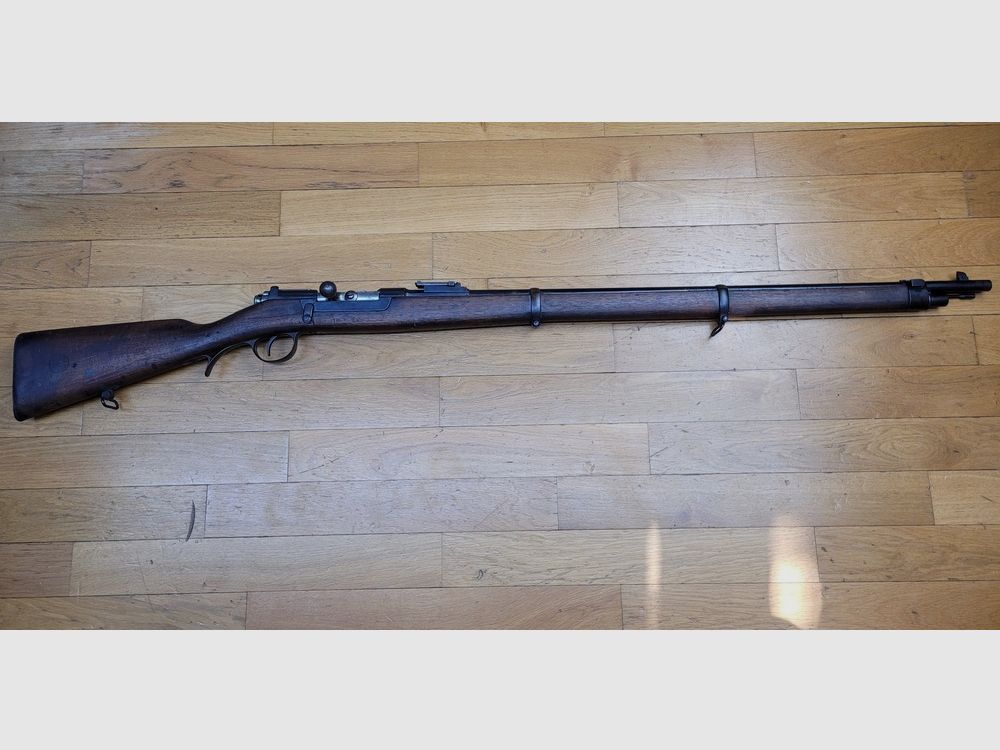


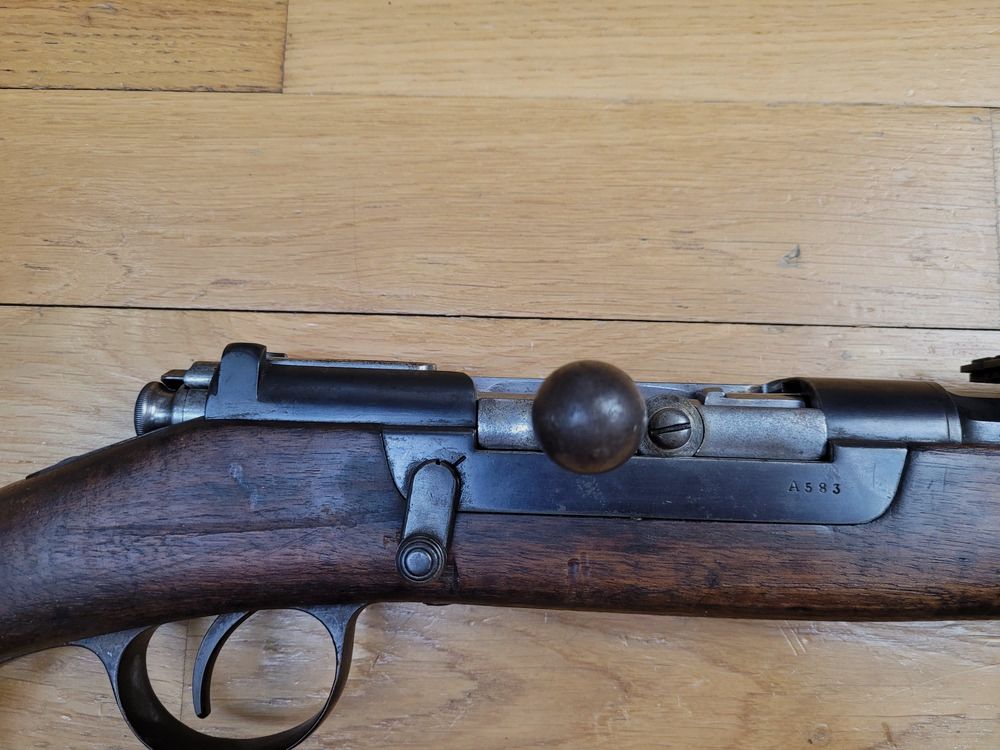
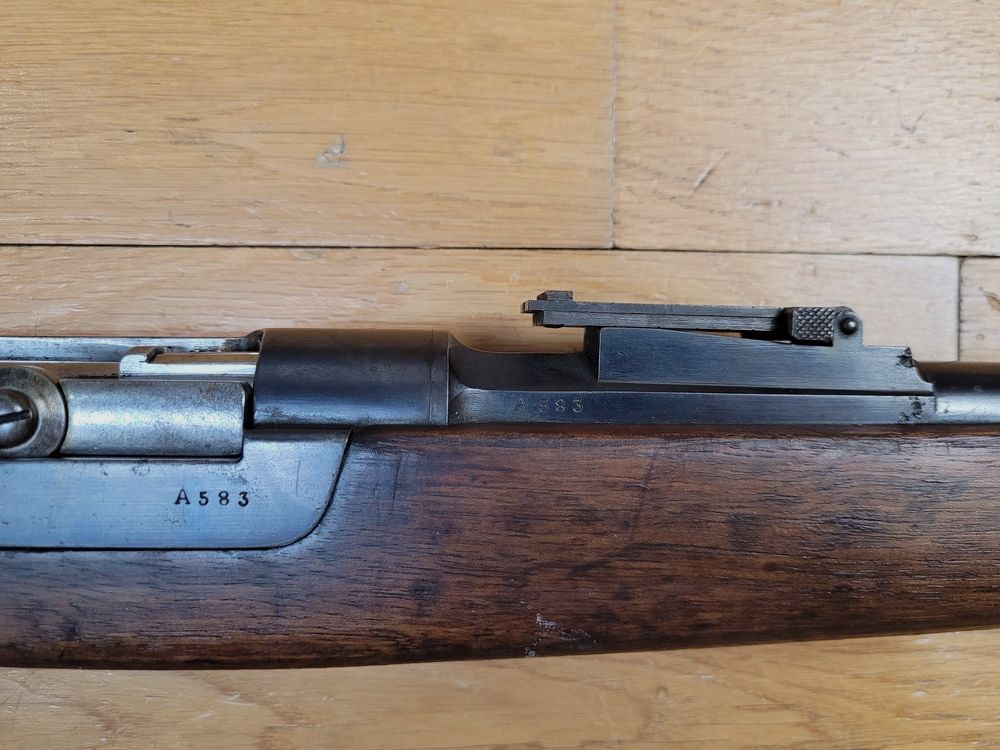
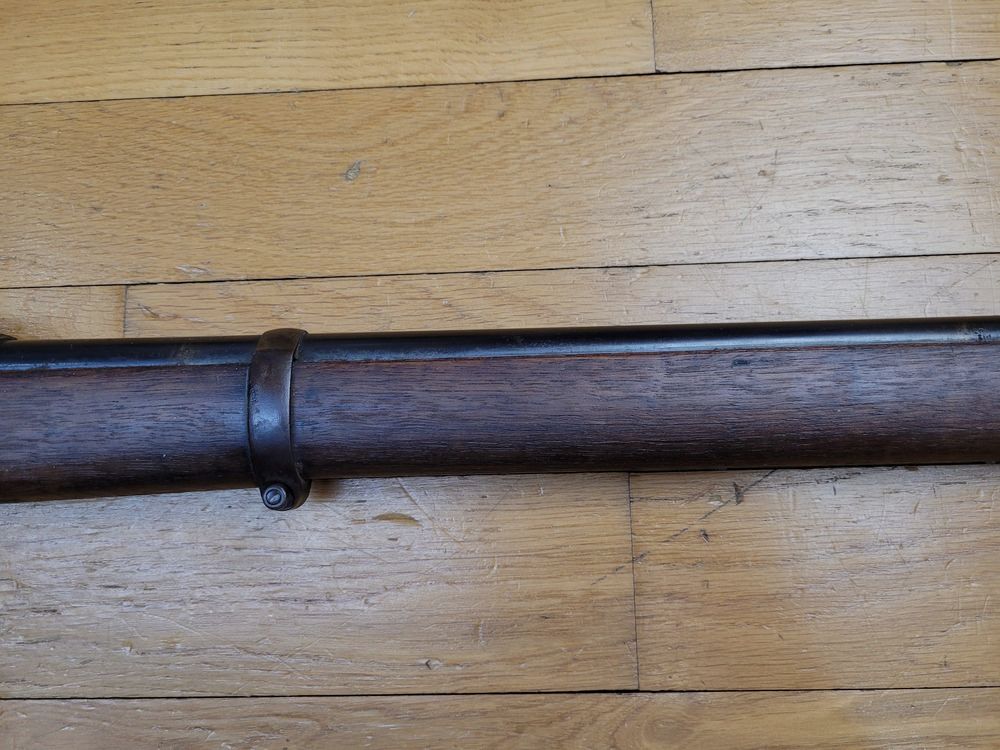

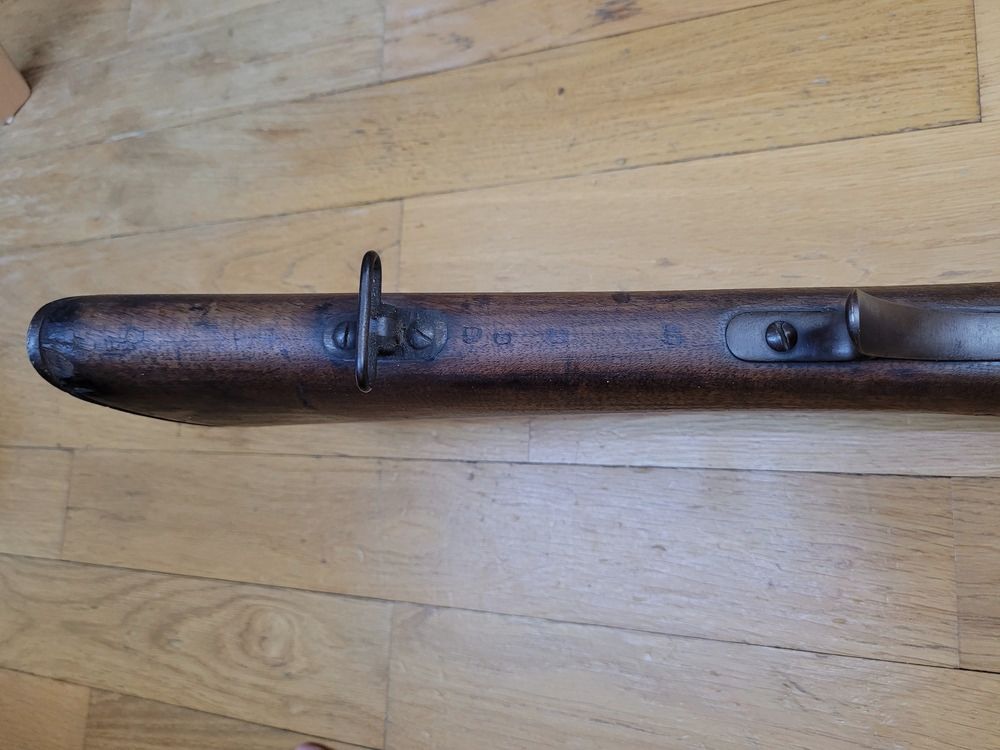
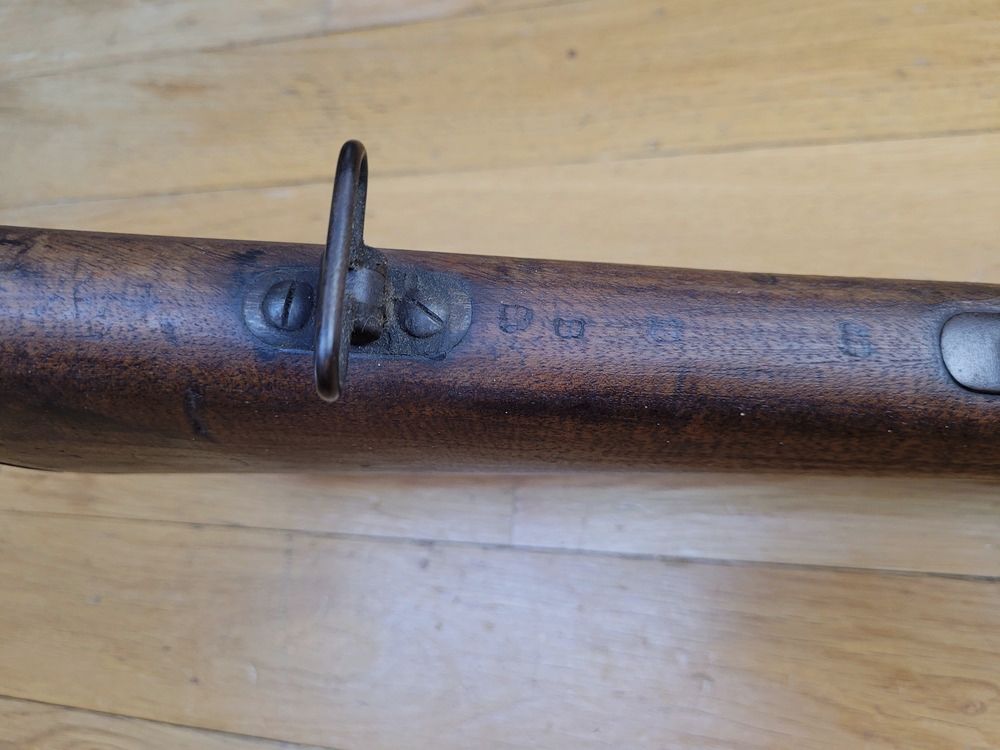

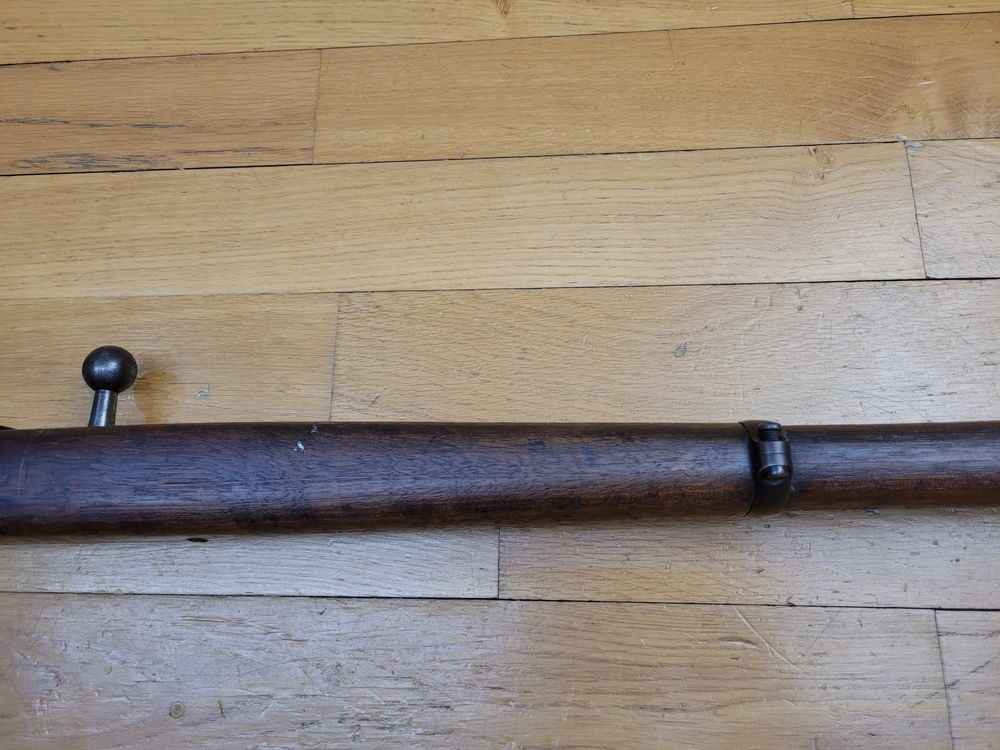

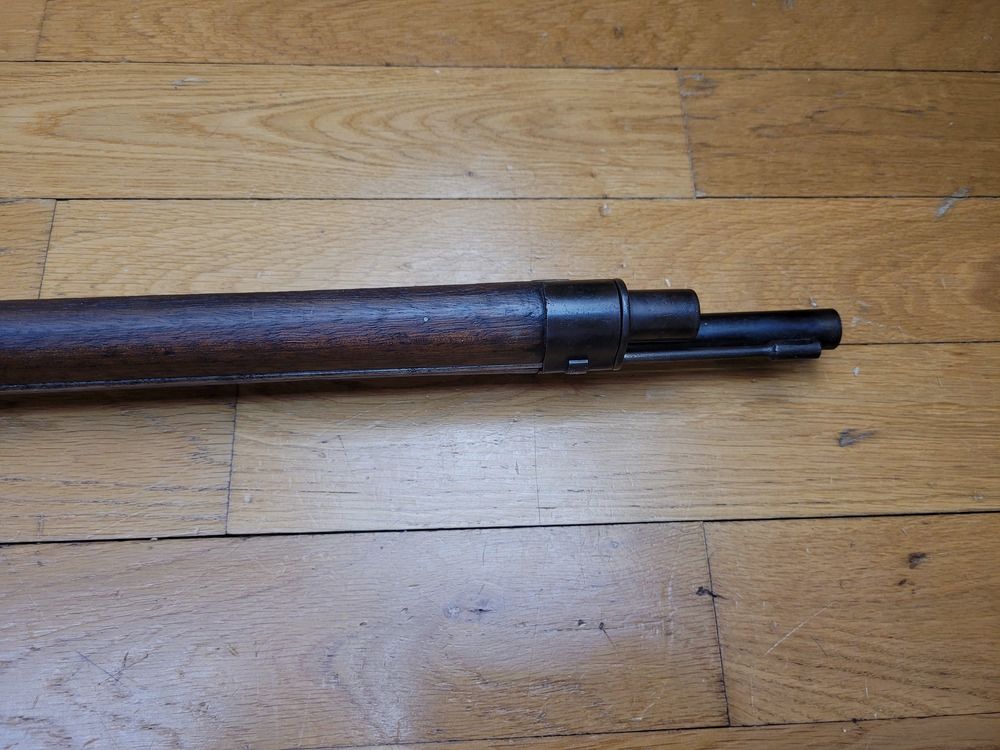
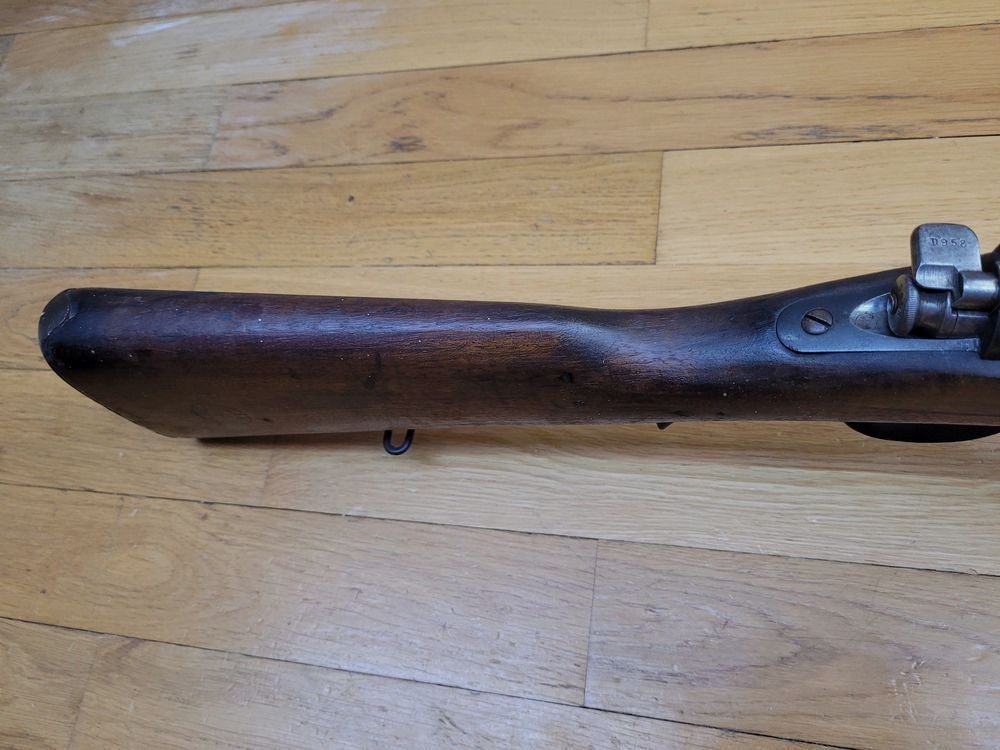
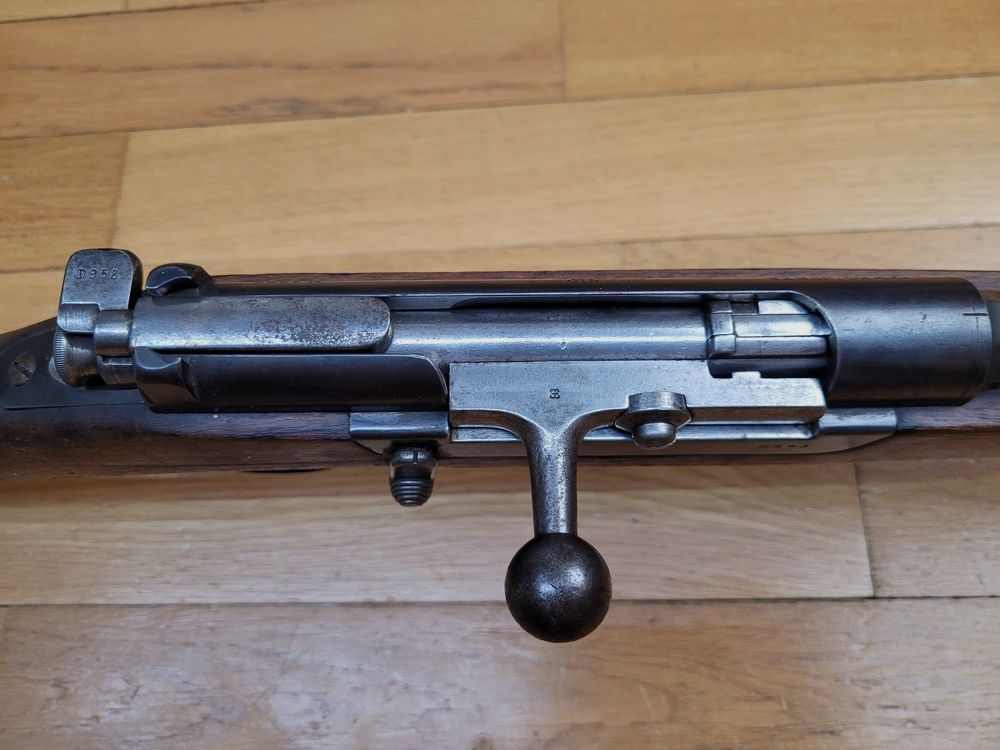

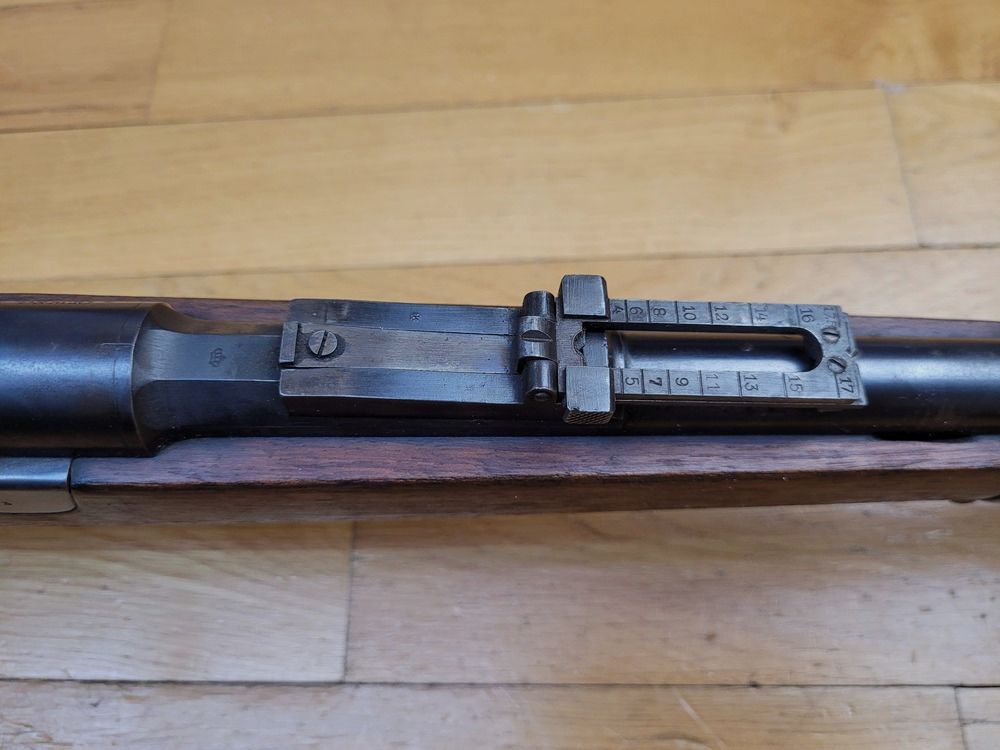

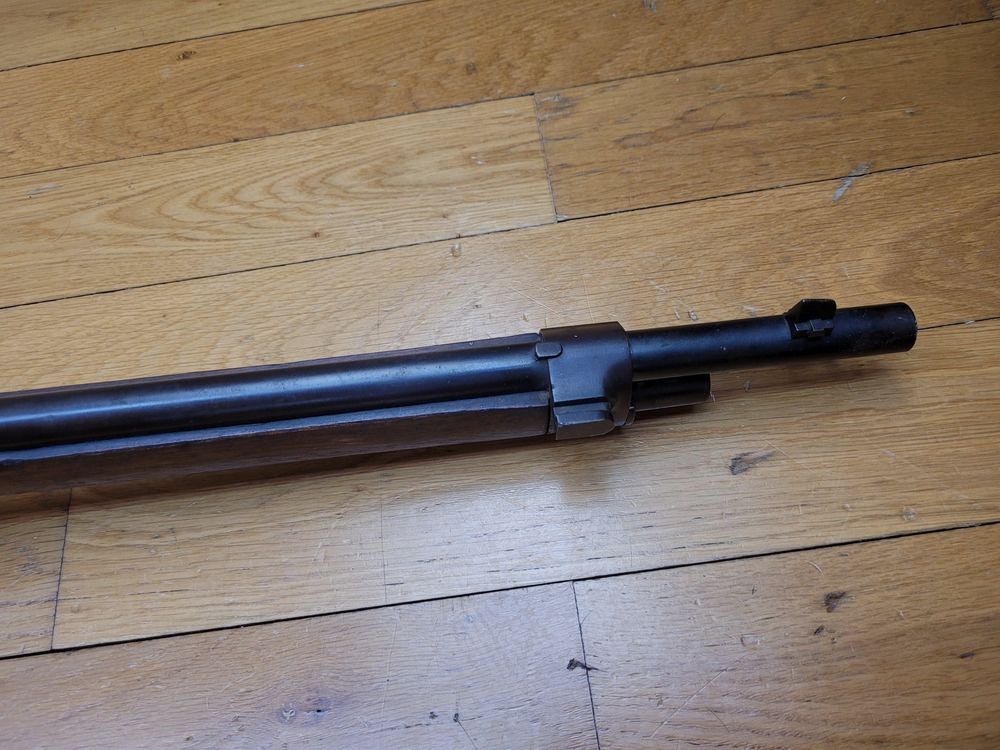
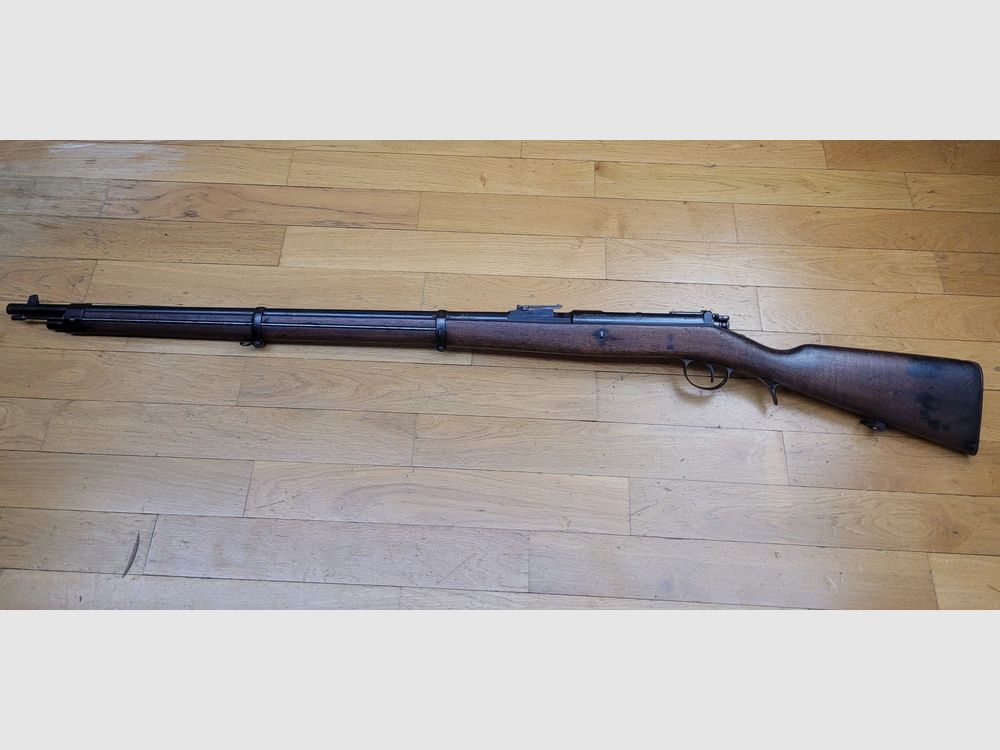
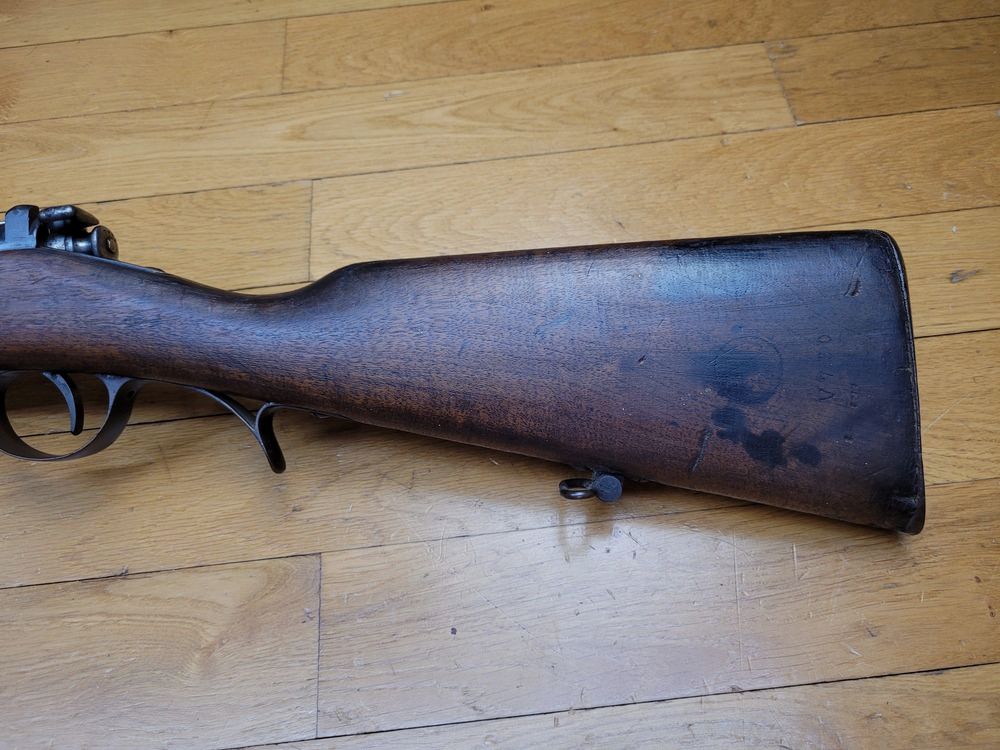
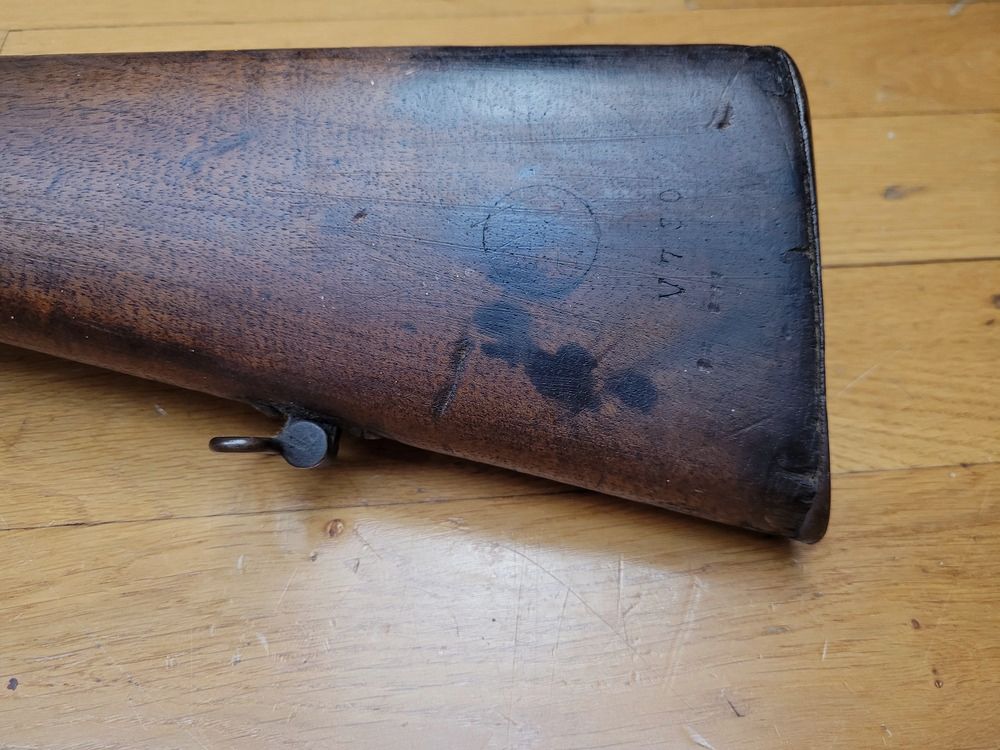
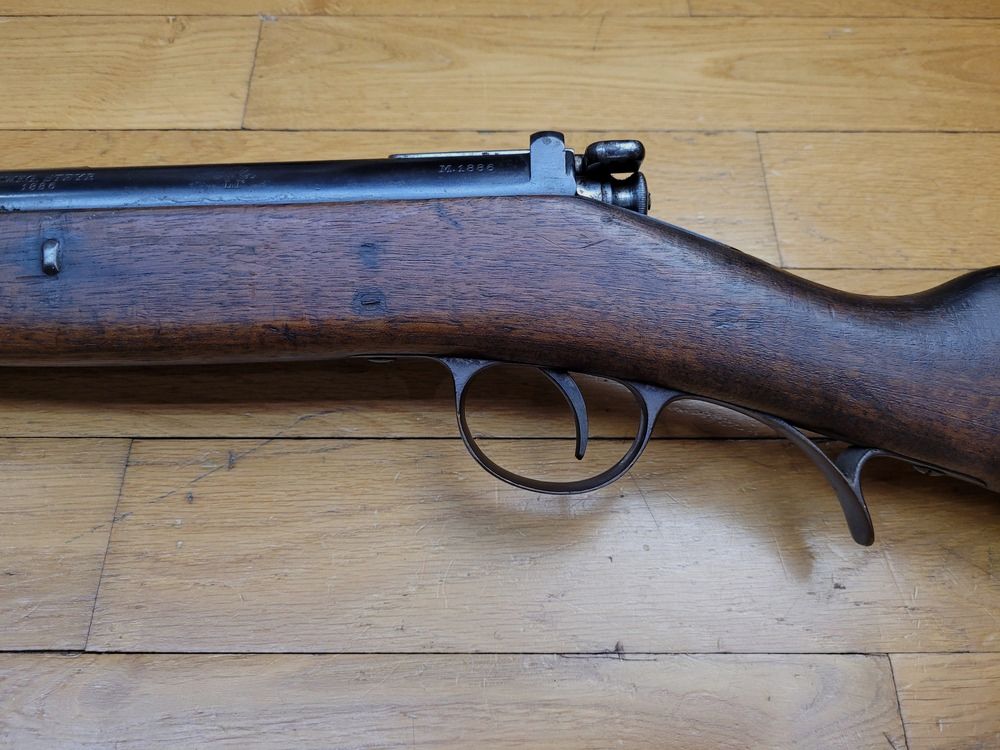
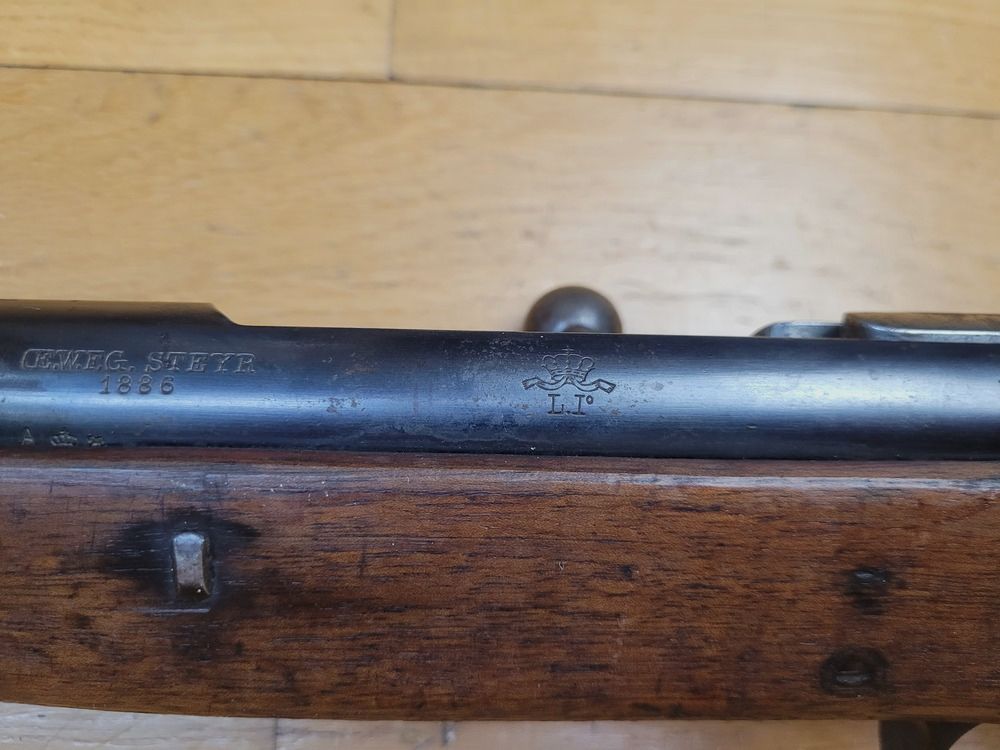

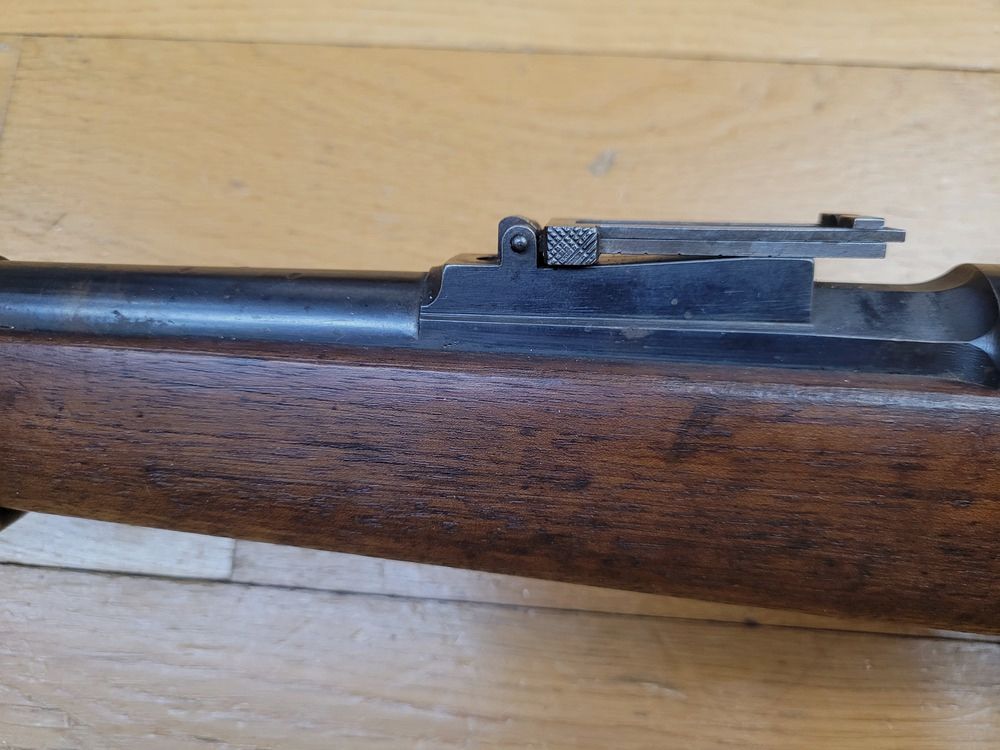

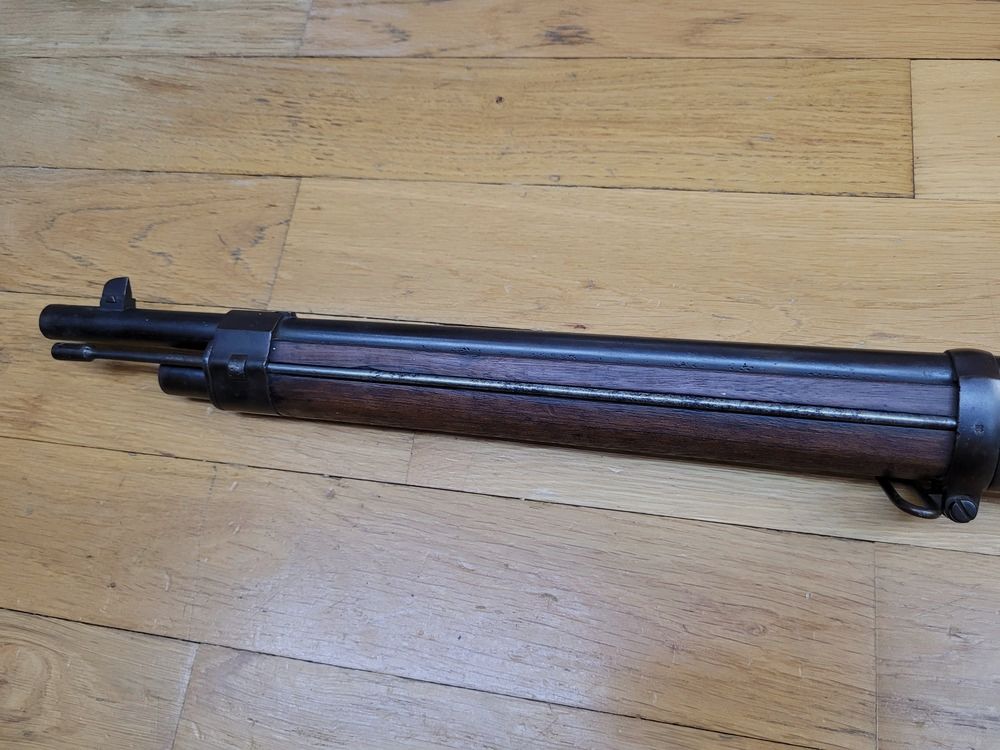
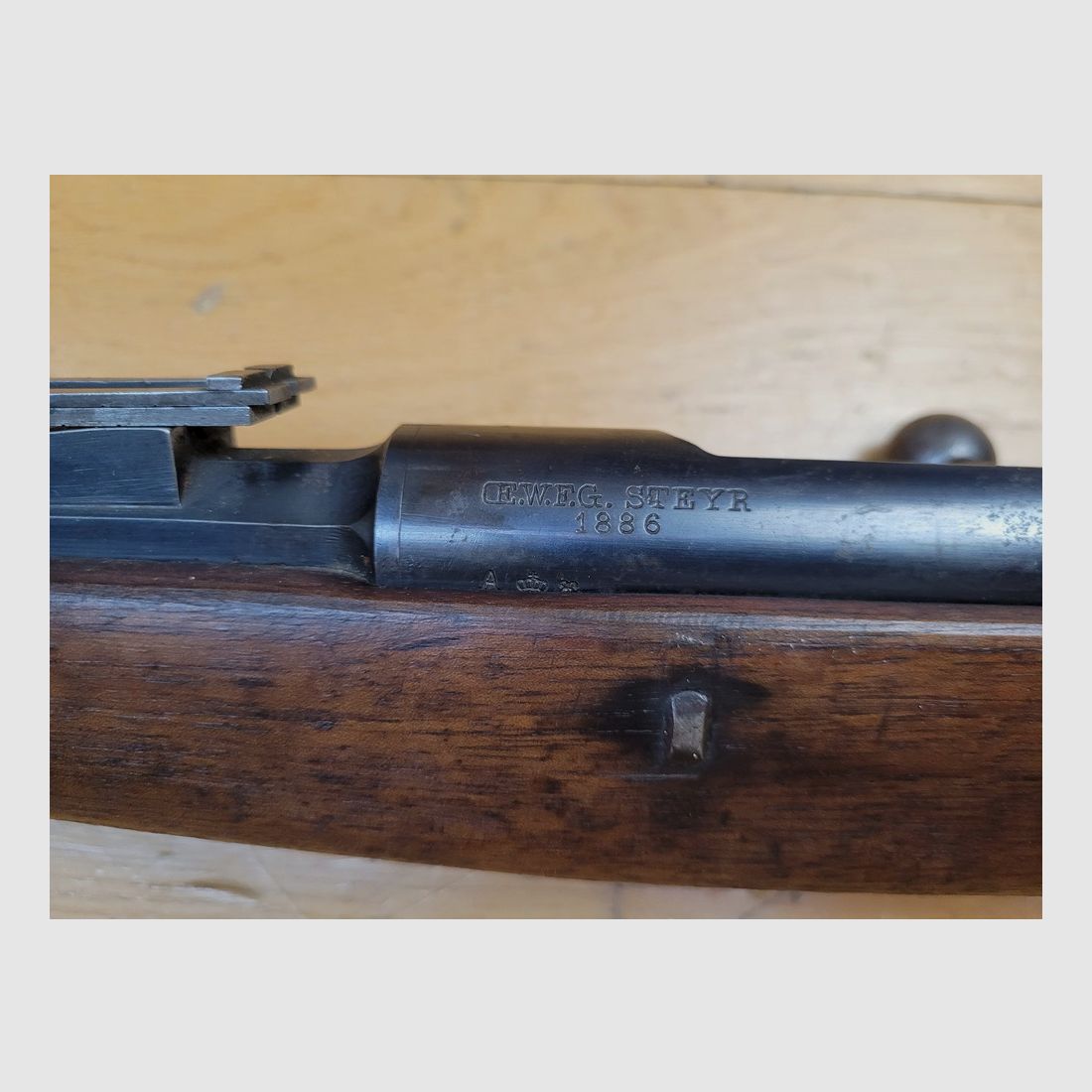

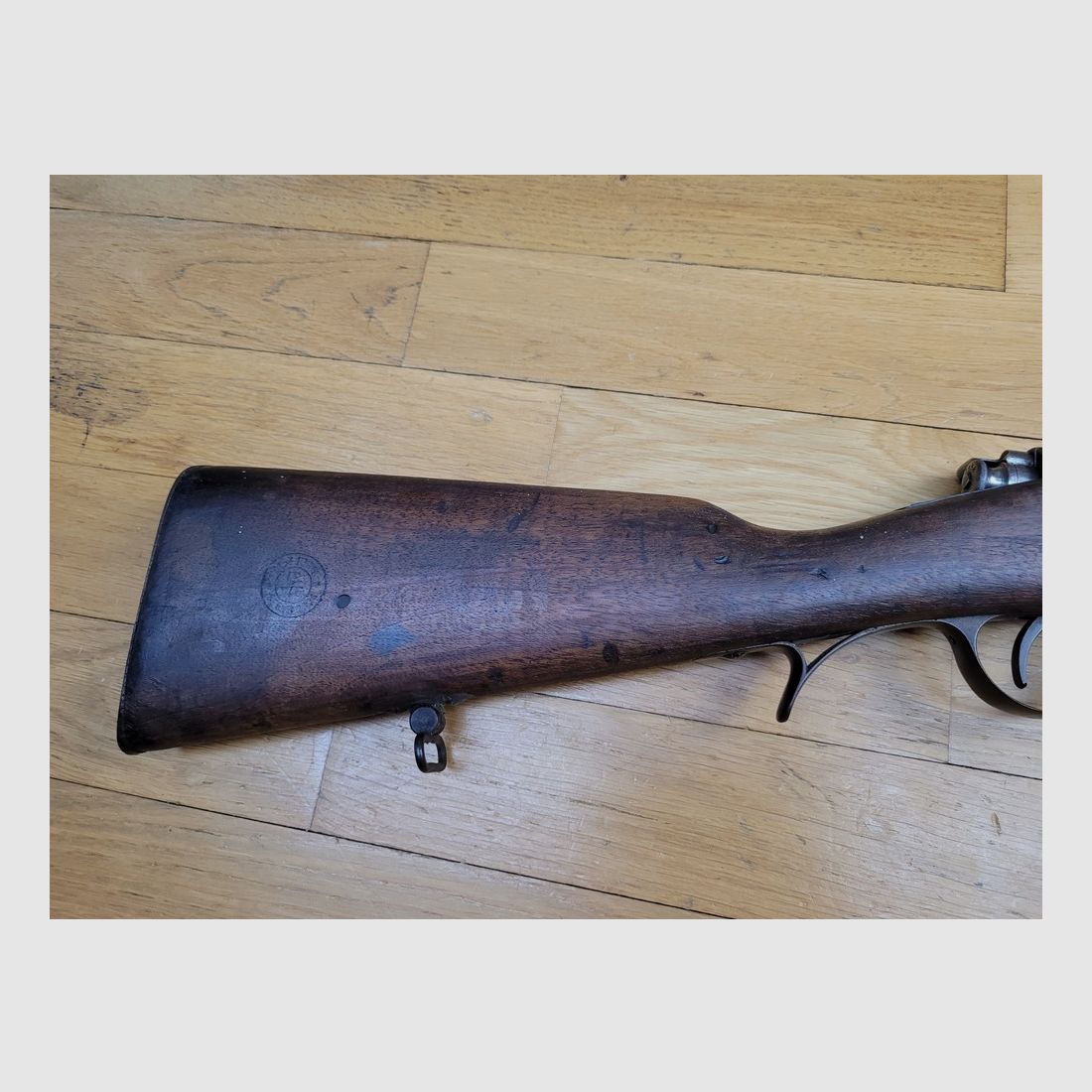
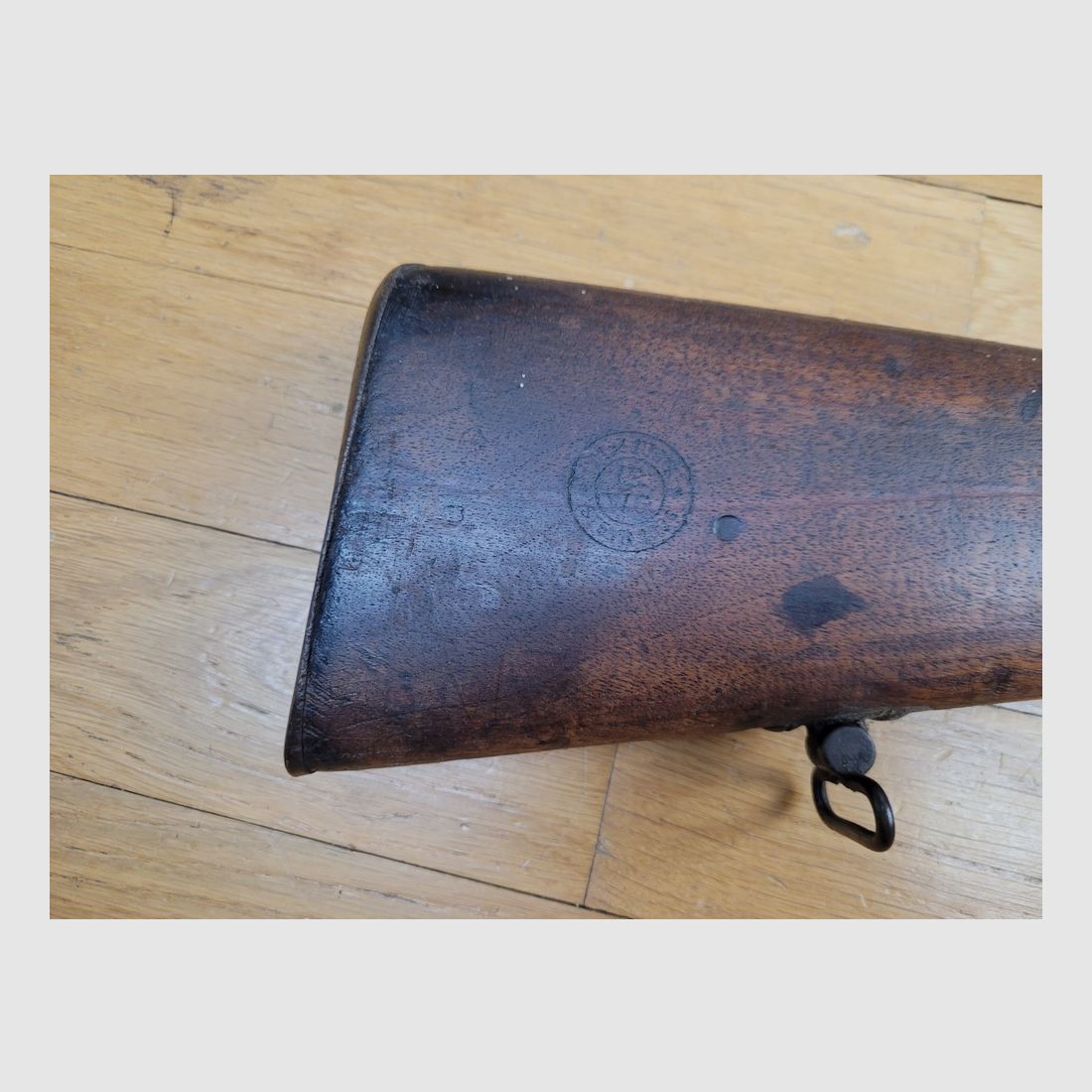
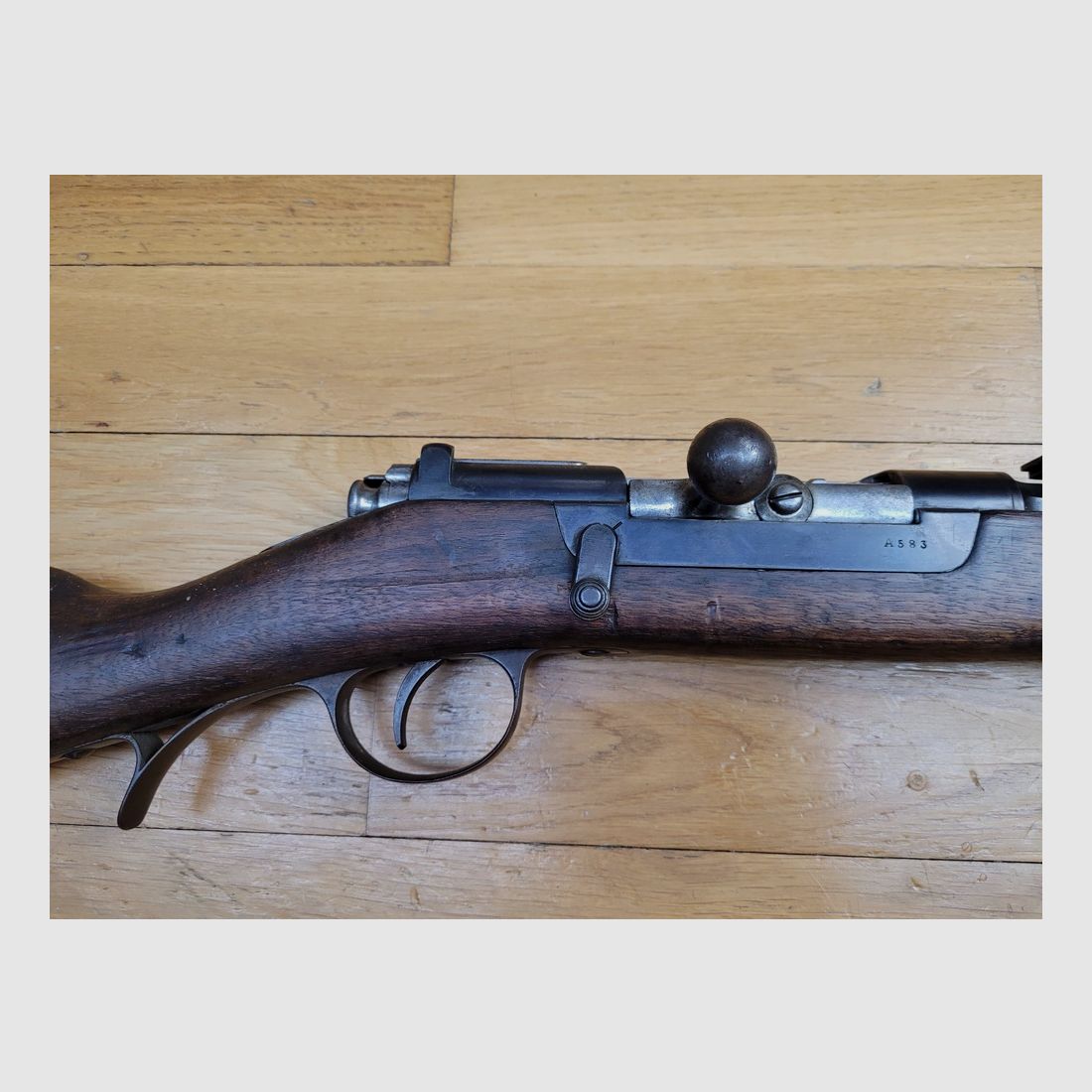
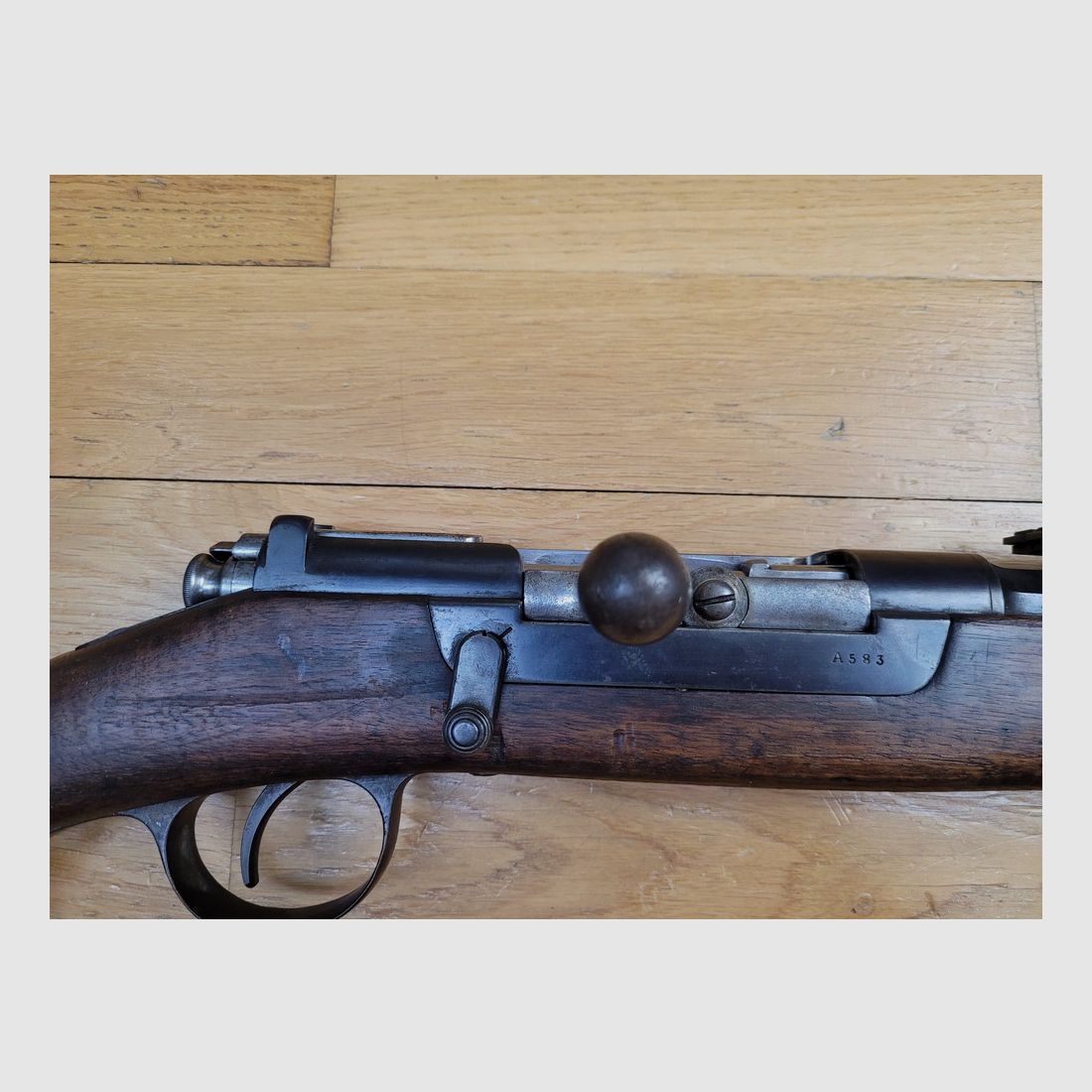
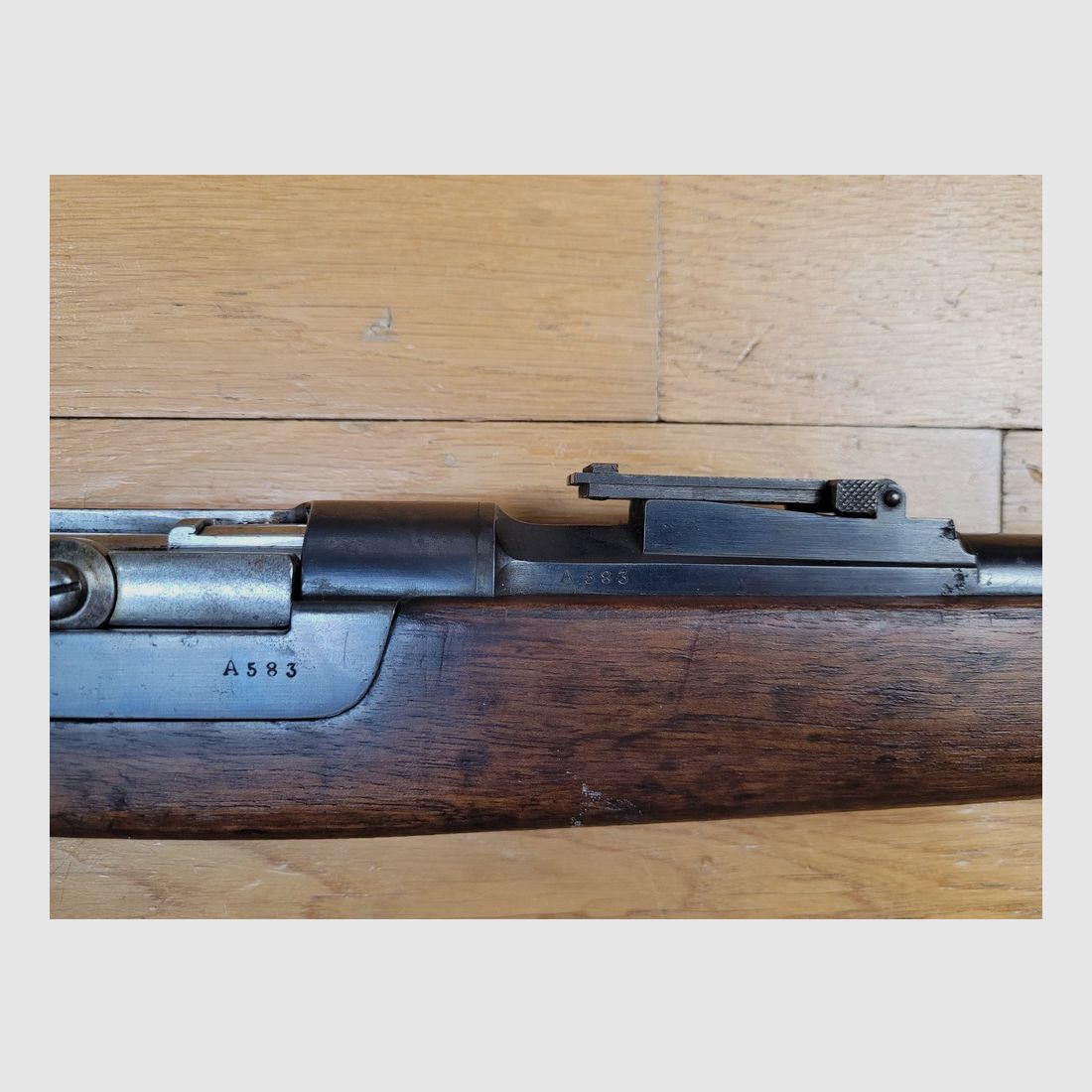

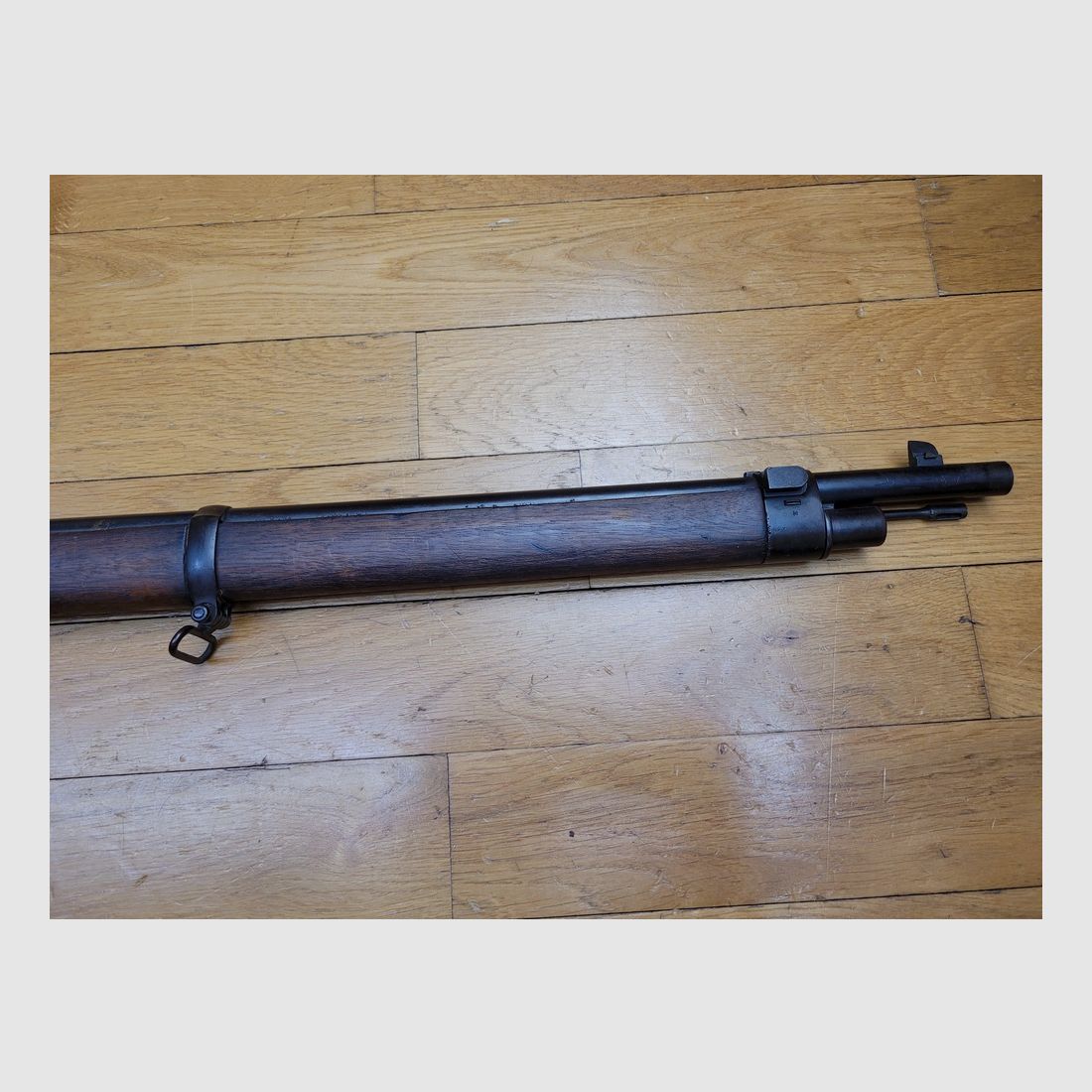


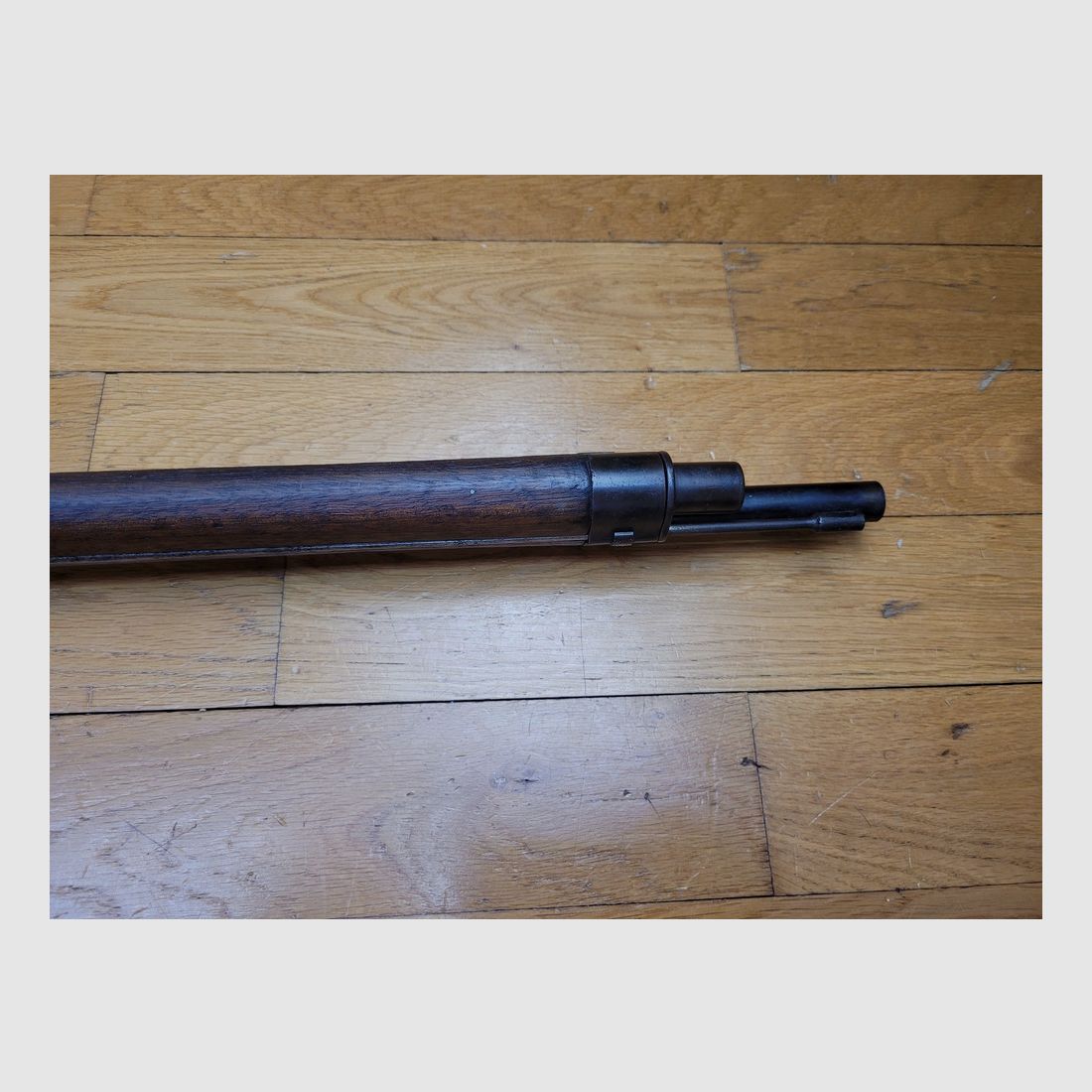
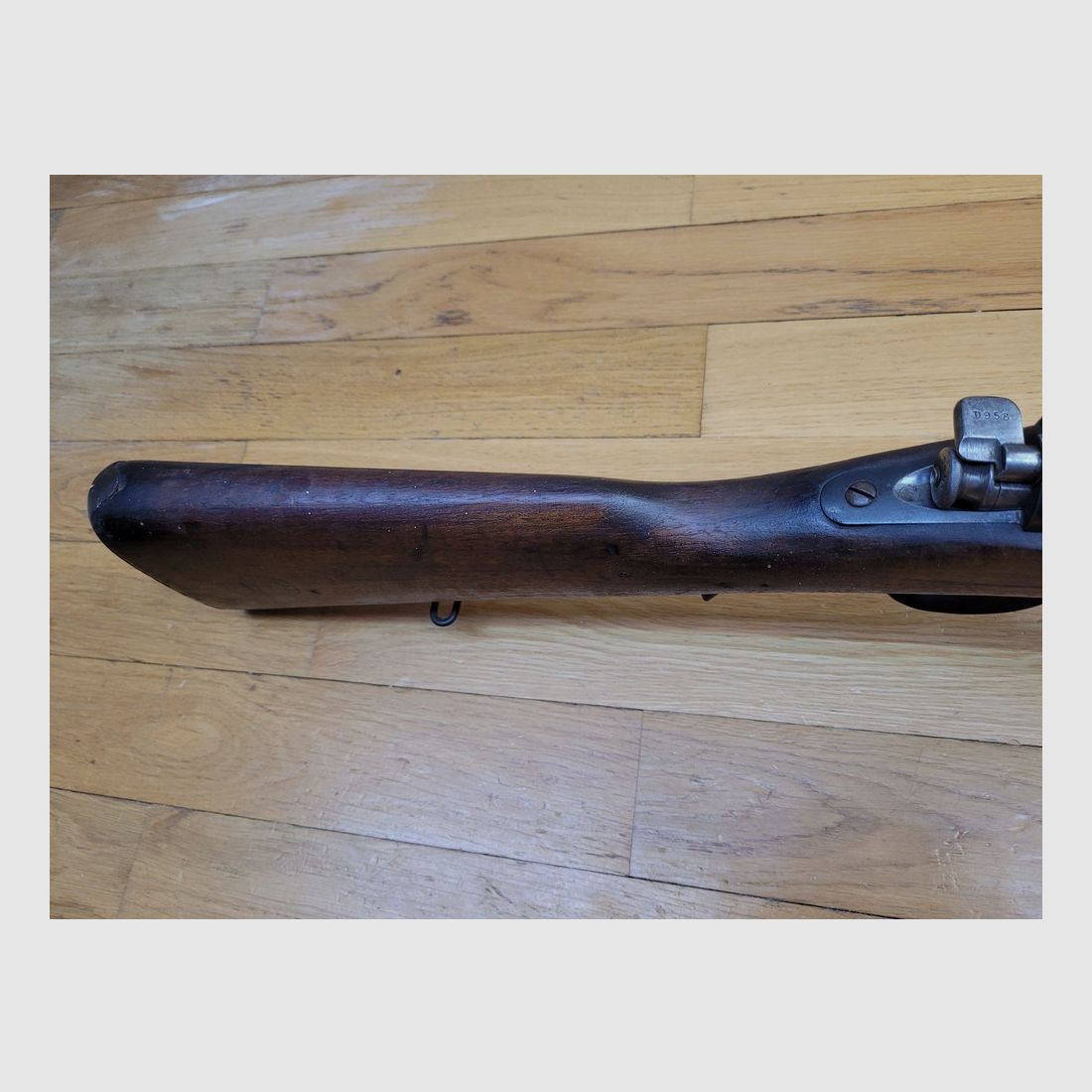
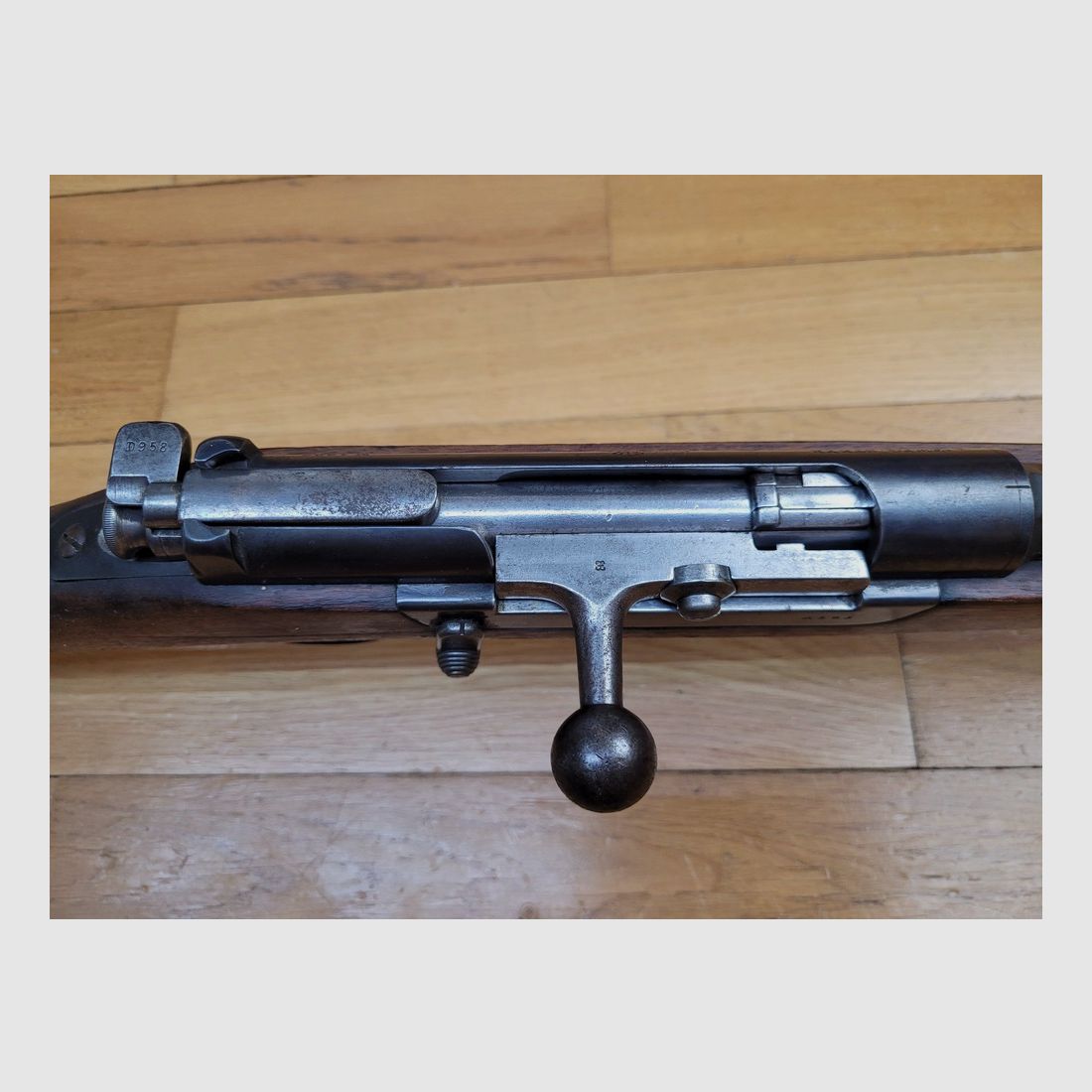
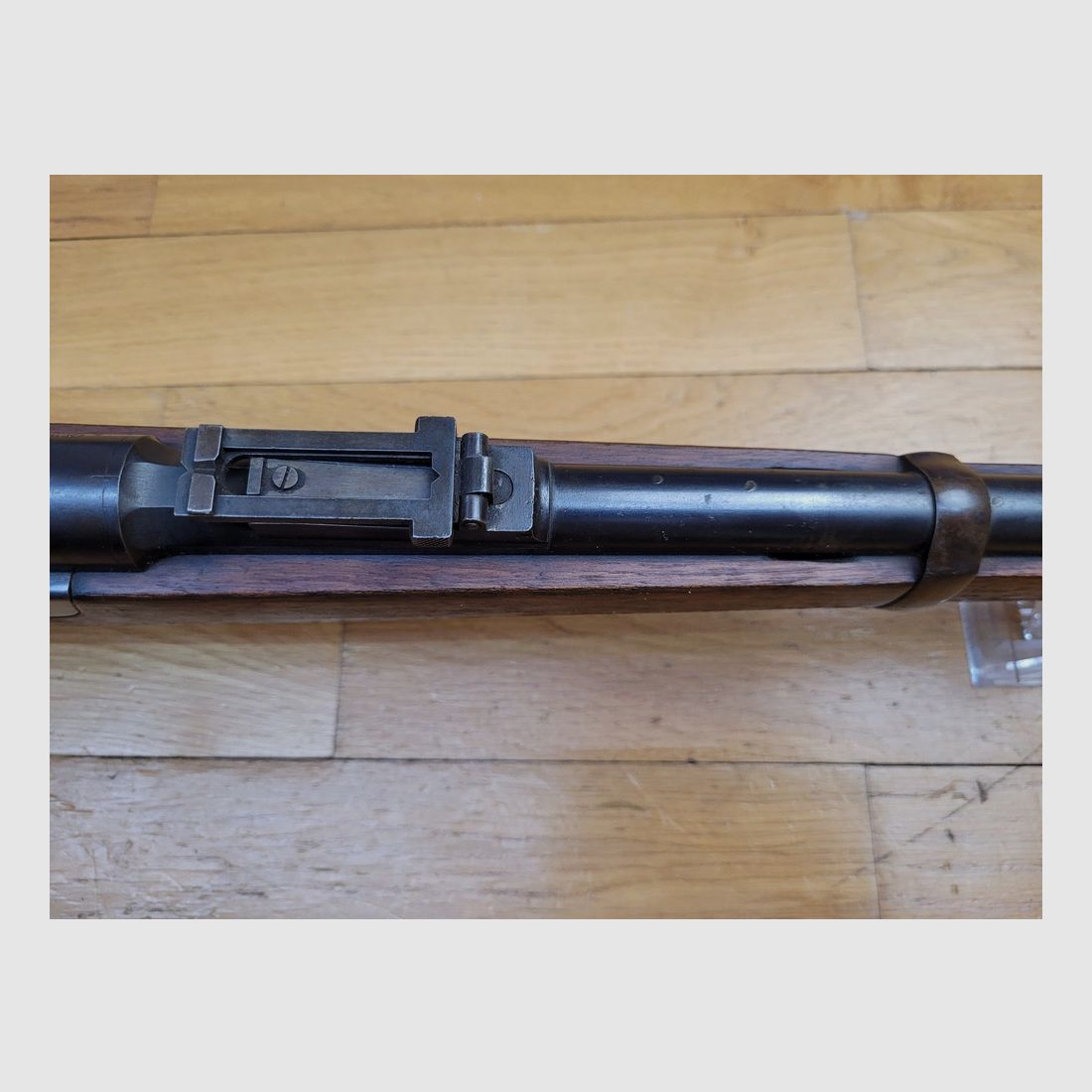
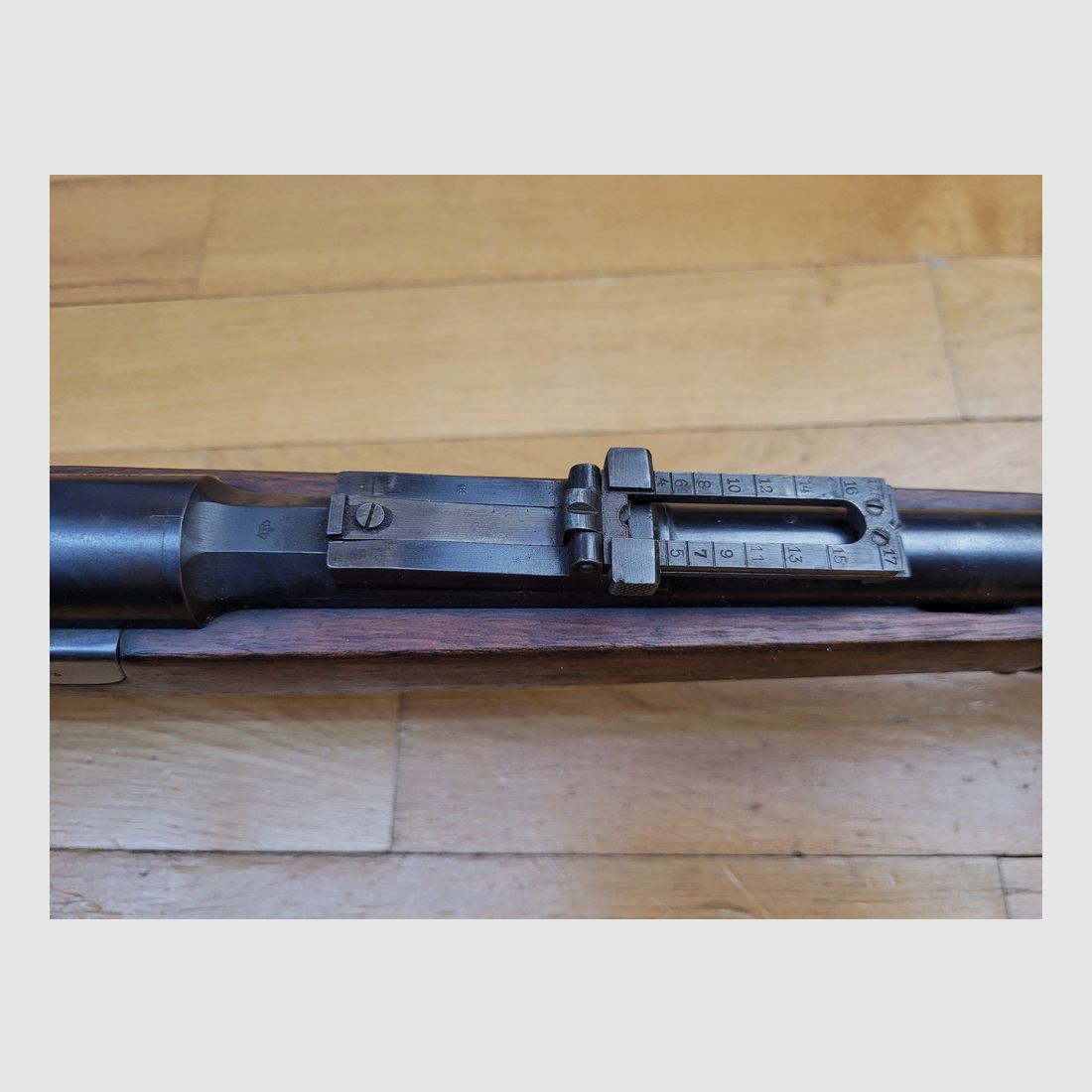
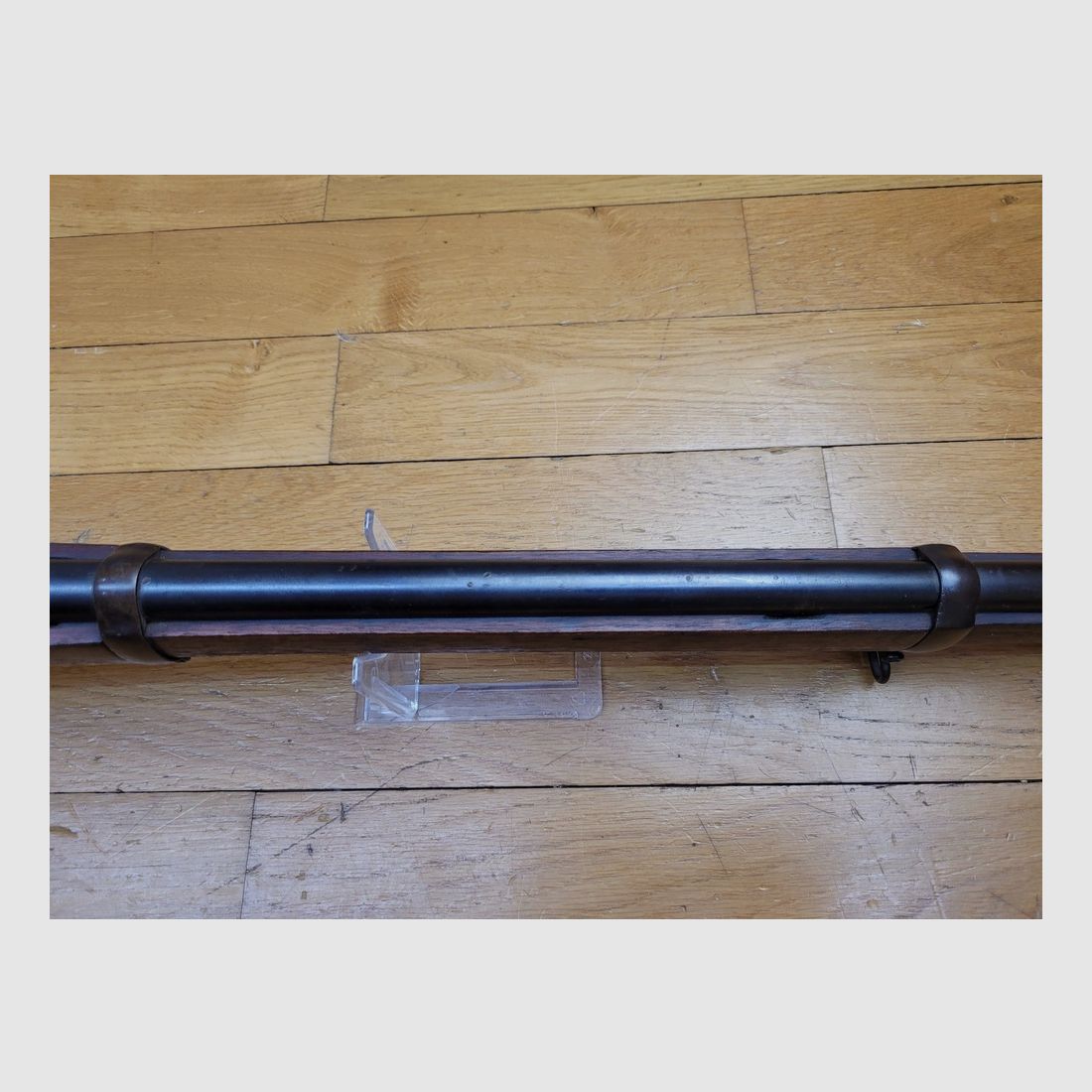

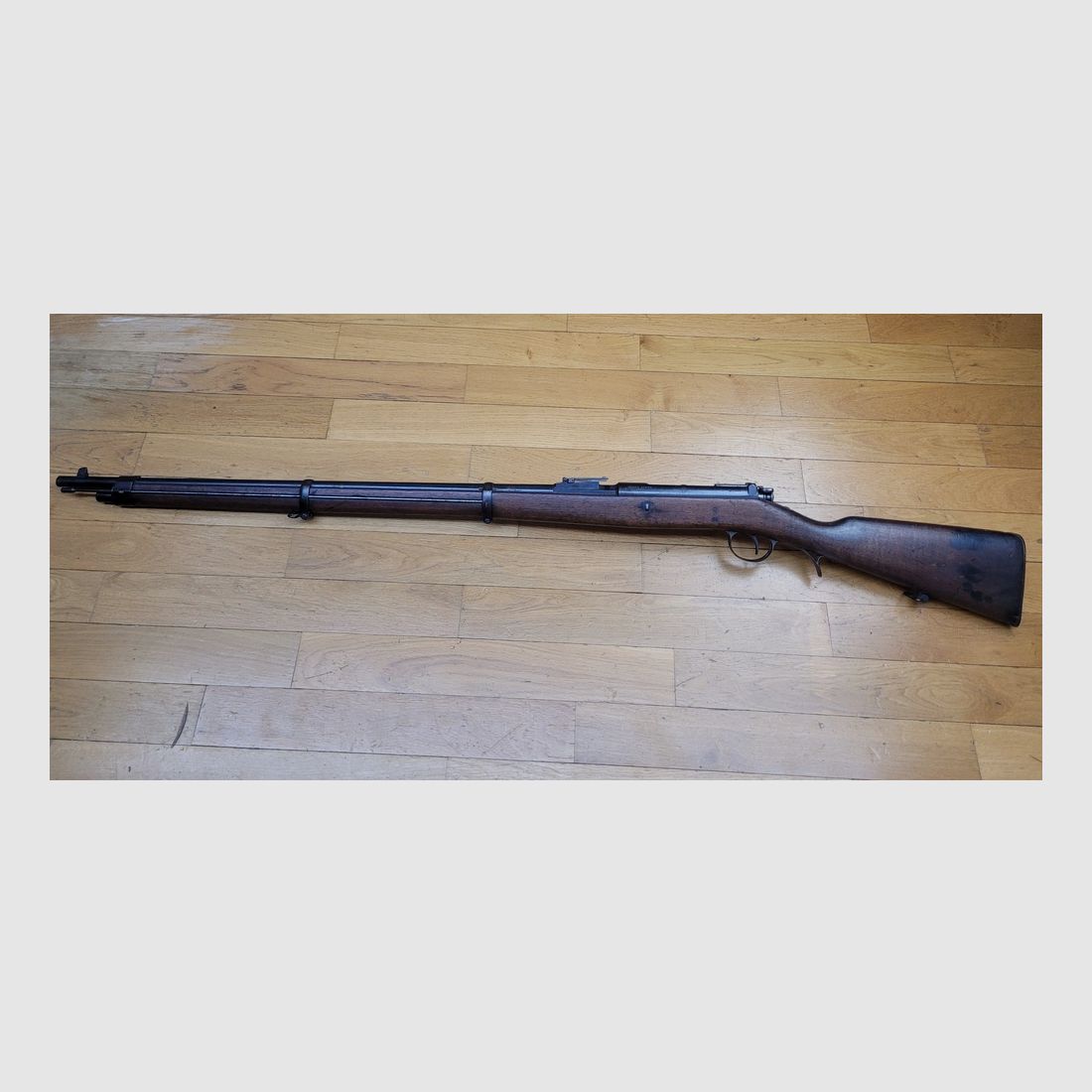
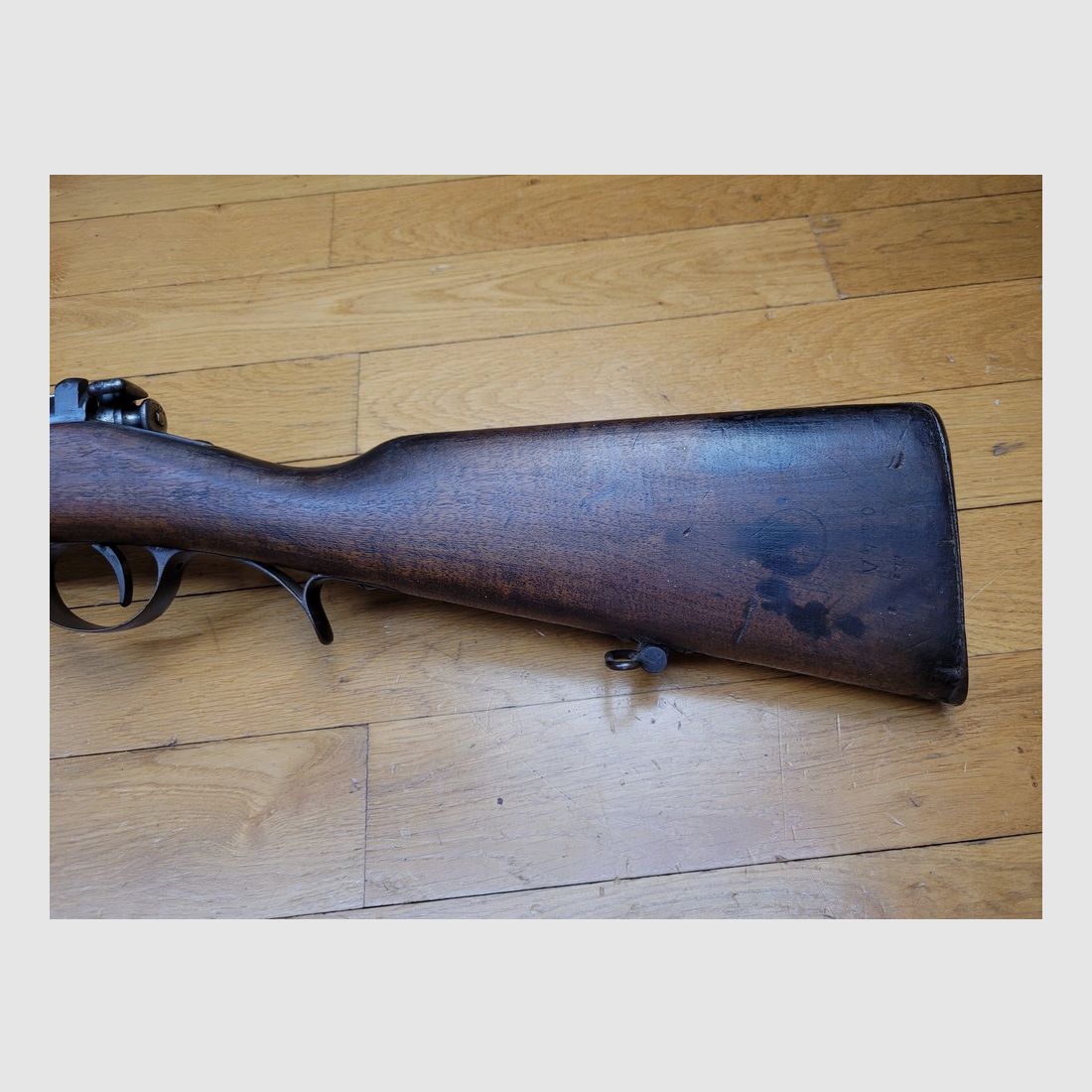
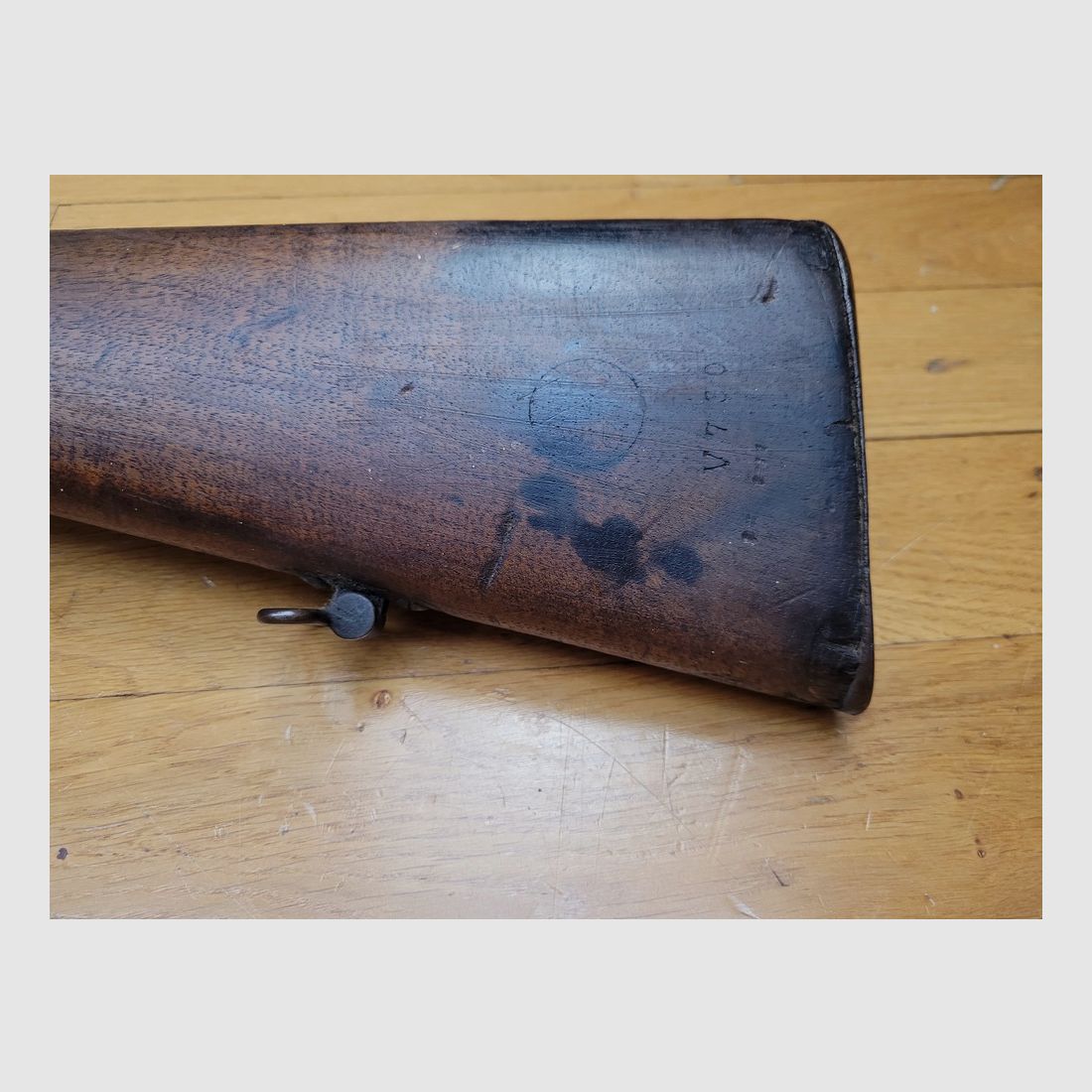


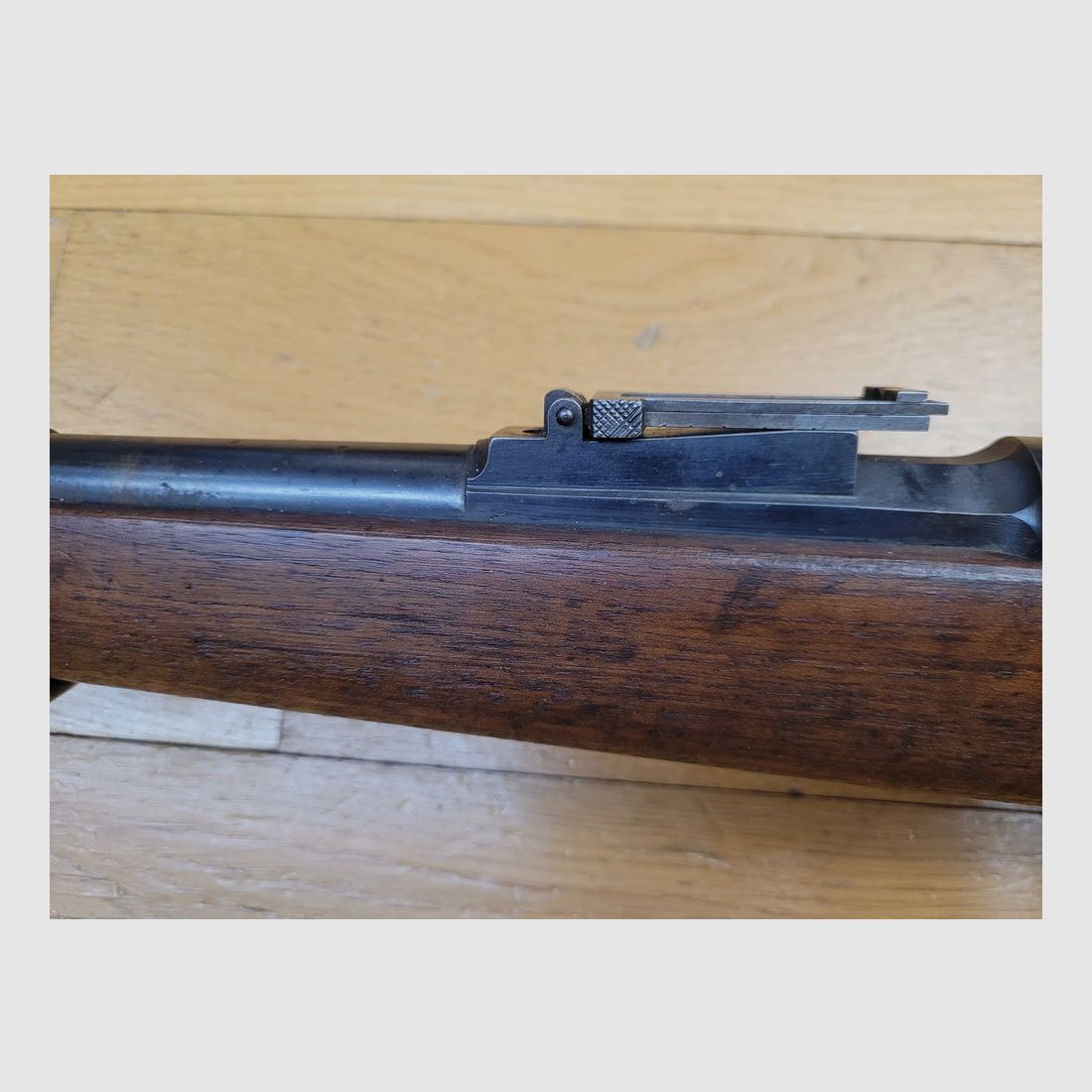
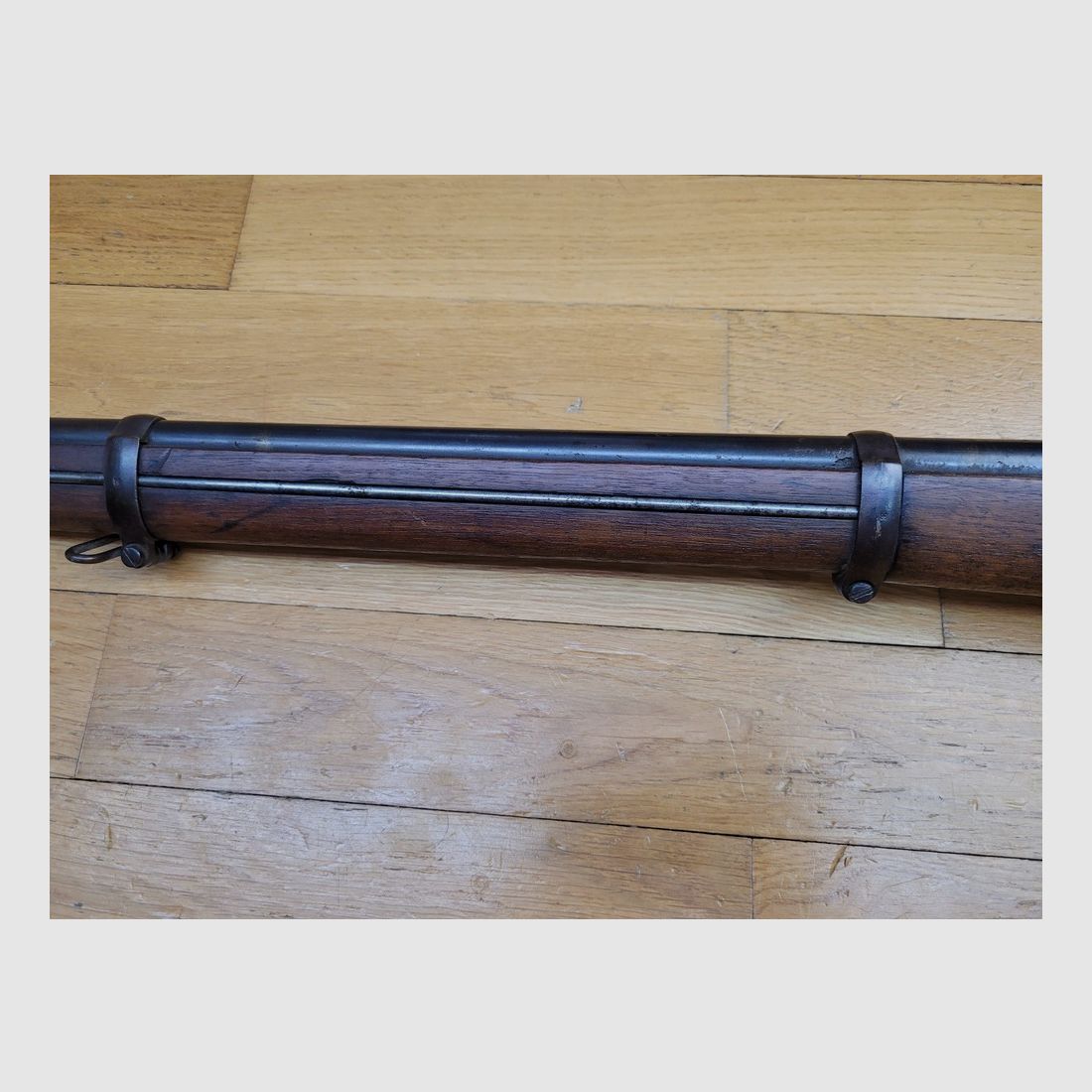

Very good rifle Kropatschek model 1886 – Manufactured by OEWG in Steyr in 1886 (also!) – Original black powder caliber 8×60 – 8×56 Portuguese – Beautiful wood – Good aesthetic and mechanical condition – Very good piece in BE+ / TBE!
Price on Request
Purchase permit required
75002 Paris, France
10
ID: 10338782
This item is currently unavailable.
Purchase from outside the EU: The firearm goes through an importer in your country, the dealer handles the export.
How buying from Europe works
Shop safely with Gunfinder
Our AI-powered seller identity verification makes Gunfinder the safest marketplace online.
Learn more
Details
- Original language
- French
- Category
- Purchase eligibility
- Required
- Caliber
- 8x60
- Condition
- New
- Location
- 🇫🇷 75002 Paris, France
- Availability
- Out of stock
Freshness
This listing is based on a mirrored offer, where the listing data was synced to us from a shop, dealer, or external marketplace. Please note that temporary price discrepancies may occur due to possible delays in data transmission.
- Source
- Flingus Maximus
- Last checked with the dealer
- 1 day ago
Description
Note:
The item is located abroad. Please note that delivery conditions, shipping times, and/or the purchase process may differ.
Almost every country tested them, and many adopted them in varying numbers, particularly for their colonial troops. France was among them, becoming the first “customer” in 1878, for its Marine Infantry.
Though it began as an obscure Austrian gendarmerie carbine (the Frürwirth carbine of 1869, then 1872), the Kropatschek system spread around the world, from the steep Atlantic coasts (Portugal, with its 1886 system rifles) to the Sea of Japan (the 1889 Meiji 22 Murata rifle). It also made its way to Germany (Mauser 71/84), the Ottoman Empire (1887 rifle), and Norway (Jarmann 1884 rifle).
The Kropatschek system (named after Von Kropatschek—Alfred, his first name—the eponymous Baron, General, inventor, and, incidentally, head of the Empire’s Artillery Cadet School and veteran of the 1859 Italian Campaign against the French; born in 1838 and died in 1911), with its tubular magazine and highly reliable cartridge lifter, conquered the world and firmly established the concept of repeating firearms for military service.
The Frürwirth carbine (named after its inventor) already had a tubular magazine beneath the barrel, allowing a single shooter to fire a series of shots. Repeating firearms were finally in the air for military weapons.
But the Frürwirth system was far from easy to use, and above all, far from reliable enough for a military firearm.
Every movement, whether opening or closing the bolt, had to be firm and even exaggerated, because the elevator refused to rise unless this very specific procedure was followed. It is a spring-loaded mechanism that pushes against the bolt once it reaches its stop (a kind of end-of-travel buffer for the bolt, whose sole purpose is to operate the elevator).
In short, the concept was promising, but far from perfect.
After many twists and turns, the inventor finally reached an agreement with the OEWG Arms Factory (the former name of Steyr) to transfer ownership of his invention to it. This allowed Kropatschek to work on the firearm and, in 1874, produce a first operational rifle that now bears his name.
The rifle unveiled was quite advanced. It corrected the Frürwirth’s flaws with a much better elevator and magazine-to-cartridge-lifter connection. As for the bolt, OEWG didn’t overcomplicate things and simply adopted the one from the Mauser Gewehr 71 rifle—which, as it happened, was also being produced at OEWG…
The rifle was immediately taken seriously by other parties, as Werndl and Mannlicher, among others, experimented with prototypes using Kropatschek’s tubular magazine. The Empire itself ordered more than 1,000 rifles for trials.
Yet the Austro-Hungarian Empire opted for… the Werndl-Holub 1873 rifle, which was far less modern than our Kropatschek.
The irony came in 1877, when the Austrian army chose to rechamber the Werndl-Holub 1873 for a more powerful cartridge rather than replace the firearm once and for all and finally adopt the excellent Kropatschek system, which had already been successfully tested…
This decision was probably also intended to “cover its tracks,” since choosing the Kropatschek, already available and tested in 1873, in 1877 would effectively have meant admitting that taxpayers’ money had been wasted on an archaic firearm barely three years earlier.
But the merits of the Kropatschek system and the results of the Austro-Hungarian Empire’s trials did not go unnoticed by other armies.
During the 1870–71 conflict with Prussia, France had been able to test manually operated repeating firearms such as the Winchester 1866 and the Spencer carbine, and the inherent advantages of repeating firearms with tubular magazines had certainly been noted.
In addition, a particular need arose in the immediate aftermath of the…
war of 1870.
The Navy, having cheerfully skipped the Gras 1874 stage, needed to replace its Chassepots and their paper cartridges, which were vulnerable to the damp conditions aboard ships and in the colonies, as quickly as possible, around 1875. Repeating fire was also fully justified for troops who might face an outnumbering enemy during landings.
Thus, the French Navy officially adopted the 1878 Kropatschek rifle, a manually operated repeating firearm with a high-capacity tubular magazine.
In an era of instinctive economic patriotism, the rifle must have had some real merits to warrant foreign manufacture. And indeed, the Kropatschek Mle 1878 Marine rifle is one of the finest bolt-action rifles our army has ever had (manufactured by Werndl in Steyr, Austria).
However, it opted for a brass magazine tube rather than one bored directly into the stock, to prevent swelling wood in tropical conditions from causing jams.
A foreign rifle, perhaps. But using the bolt of a German Mauser 71 was out of the question. Let’s not go too far! The rifle was in fact a Gras-Kropatschek, using a Gras rifle bolt with the Kropatschek magazine system.
France thus became the first major military power whose sailors were armed with a repeating rifle. Thanks to Kropatschek. The system, rightly considered very reliable, would also be used on our fine Lebel 1886.
But another country had a fine colonial empire to protect: Portugal.
In the final quarter of the century, Portugal moved further away each year from its golden age.
Its reputation on the diplomatic stage remained highly prestigious because its colonial empire had remained the largest in all of Africa until the 1860s. To defend its fine possessions against the ambitions of its new neighbors and ensure the superiority of its small but highly trained troops, it needed a new, modern firearm.
This was achieved with the adoption of the 1886 rifle with an improved Kropatschek magazine, chambered in 8x60R. It instantly made obsolete the very ingenious single-shot rifle with a lever under the stock, invented by Captain Luis Guedes Dias (1854-1926), which the Portuguese also had considerable difficulty producing.
Incidentally, this 8x60R would become the 8x56R when the switch to smokeless powder was made, by cleverly reducing the case neck by 4 mm, but it is the same cartridge.
For a very brief moment in history, Portugal, with its 1886 rifle, was equipped with the most advanced manually operated repeating rifle of its time, chambered for a fast, flat-shooting cartridge.
Kropatschek’s feeding system was now perfected and controlled from start to finish.
The cartridge lifter only lowers when the bolt is almost closed. This prevents, for example, a “classic” jam: the cartridge lifter lowers before the bolt is fully closed, then the shooter hesitates and cycles the action again before the extractor claw has caught the chambered cartridge, causing two cartridges to jam in front of the chamber.
This could even sometimes lead to a dangerous situation if the cartridge on the lifter struck the cartridge already in the chamber with its tip while the bolt was still unlocked. No more problems here.
Unlike the Mauser Gewehr 71/84, the magazine cutoff lever is now clearly visible to officers and can be operated at any time, raising the lifter permanently to its upper position until repeating fire is reactivated.
It should be noted that the bolt of the 1886 is entirely inspired by that of the Mauser, whether it be the
with the safety lever flag, the parts that strike the primer, or even the screw that keeps the bolt in the firearm. A safe bet.
The Portuguese 1886 rifle was manufactured in Austria by Steyr, with only 49,000 made. It is a kind of pinnacle of black powder firearms. It is renowned for its accuracy and quality of finish, and is one of the most enjoyable black powder firearms to shoot.
An excellent firearm that marks the technical peak of a system that made its mark on the history of military firearms.
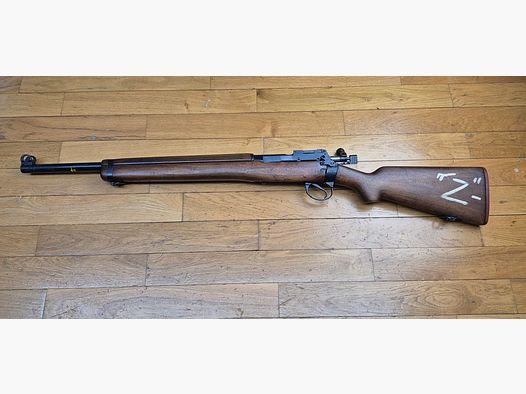
This is the Portuguese Model 1886 rifle that Maitre Flingus found for you today. It’s a very nice “classic” example, so it is not all matching. Otherwise, it’s a very fine firearm, with all parts conforming to the 1886 Portuguese contract.
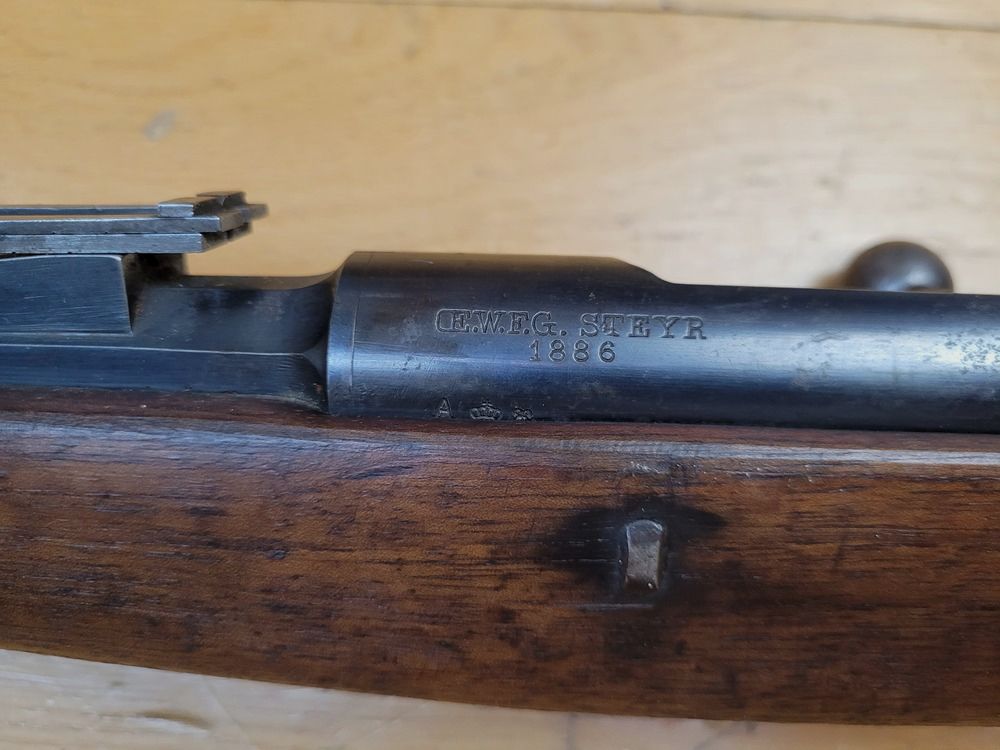
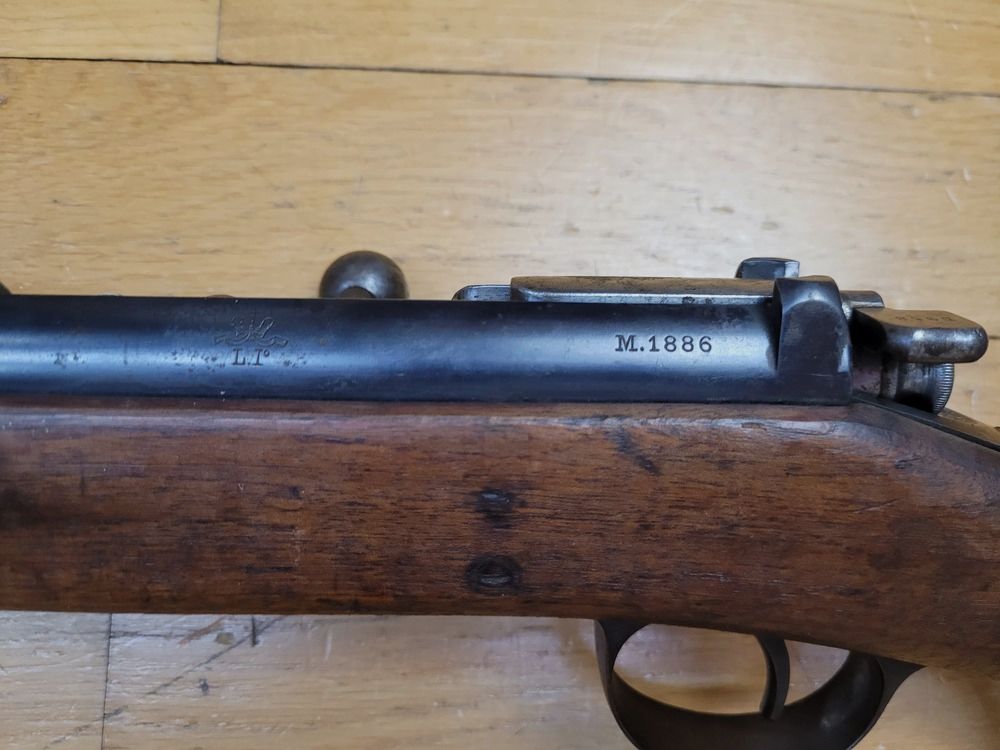
Austrian manufacture by “OEWG Steyr” (Österreichische Waffenfabriksgesellschaft), later known simply as “Steyr”, after its location, and marked as such on the chamber.
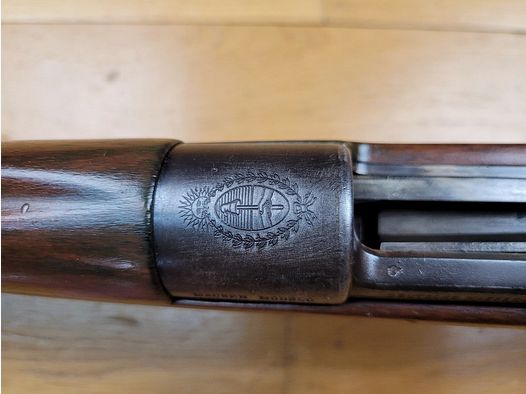
The chamber also bears the fine “M.1886” model marking, along with the beautiful crowned monogram of King Louis I (who, among other things, founded the first public aquarium in history and was passionate about oceanography!). All markings are crisp and legible, with no oxidation.
The firearm is dirty but in excellent overall condition, with a few scattered, limited traces of old oxidation and a tobacco stain (not pitting) on the bolt that can be largely cleaned off with WD-40 and 000 steel wool. A few tiny, very light marks in the bluing on top of the barrel—so light and small that I can’t explain what caused them, and they can’t be seen in the photos. But that’s everything. I’m only mentioning all this to be thorough, as around 95% or more of the original bluing is still there. Overall, the firearm is very attractive. It dates from 1886, the first year of production.
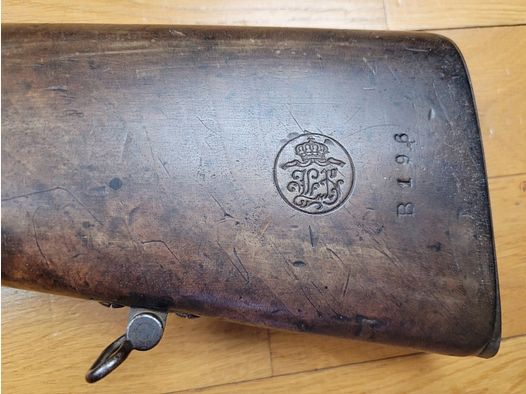
The wood is in good to very good condition, with relatively few handling marks for a military firearm. The cartouches are still visible, including the Steyr mark and the date 1886. The crown acceptance mark is still discernible, though not fully legible. The serial number is also still clearly legible, as are several marks on the wood. No missing pieces, significant dents, or repairs. In short, very good wood.
Mechanically, the firearm is impeccable—superb, even. The repeating mechanism works without issue (I replaced the feed spring, which was a little weak). The firing mechanism works as it did on day one. All springs are firm. The elevator works. No pitting inside. Excellent.
The barrel is beautiful, almost mirror-bright, with very crisp rifling. In short, top-notch!
The firearm is in its original 8×60 Portuguese caliber, also known as 8X56, which is the same cartridge with a reduced neck and the same cartridge length (but this 8×56 is not the Austrian 8x56R from the 1930s, which replaced the 8×50 1895 and appeared 40 years later…).
This service cartridge can easily be made from .348 Winch or 50-90 Sharps Starline cases, and dies are often available on the market. This 8×60 Portuguese cartridge, which came at the end of the black powder era, is undoubtedly one of the very best cartridges to shoot for this kind of shooting.
All in all, a fairly imposing military shoulder arm, like many firearms of its era, at the peak of black powder innovation and not often seen. One of the most accurate, and approved for TAR. Ideal for a collector who shoots European service firearms.
Category D firearm under the CSI: valid ID card or passport required
***********************************************************************************************************************
Let’s say it again! Flingus Maximus gun shop in Paris and throughout France is also here to help with your private firearm sale paperwork, buying firearm and militaria collections, firearm appraisals, and your firearm questions in the...
inheritance and succession. Contact your favorite gunsmith using our contact form or by emailing [email protected]
Flingus Maximus Gunsmith in Paris: All collectible, hunting, and shooting firearms are used and sold as is, without warranty.
All antique firearms sold as Category C or D, “Collection” or “Cowboy shooting” are collectible firearms that have not been proof-tested for shooting or tested at a range. They have been visually inspected for their general condition, but none have been used for shooting, so they are sold as untested. Anyone wishing to use a firearm for shooting must first contact the National Proof House in Saint-Étienne, the only body authorized to issue proof certificates before a firearm is used for shooting.
(Show description in original language)
La famille des fusils Kropatschek est l’une des plus prolifiques de la fin du XIXème siècle.
La quasi totalité des pays les ont testé et beaucoup l’ont adopté dans des quantités variables, en particulier pour leurs troupes coloniales. Y compris la France, son premier « client » dès 1878 pour son infanterie de Marine.
Pourtant parti d’une obscure carabine de gendarmerie autrichienne (carabine Frürwirth 1869 puis 1872), le système Kropatschek s’est imposée partout dans le monde, des côtes escarpées de l’atlantique (Portugal avec les armes du système 1886) jusqu’à la Mer du Japon (fusil 1889 Meiji 22 Murata). Il est aussi passé par l’Allemagne (Mauser 71/84), l’Empire ottoman (fusil 1887) ou la Norvège (fusil Jarmann 1884).
Le système Kropatschek (de Von Kropatschek, Alfred de son petit nom, Baron éponyme, Général, inventeur, accessoirement Patron de l’Ecole des Cadets d’Artillerie de l’Empire et ancien de la Campagne d’Italie contre les français en 1859, né en 1838 et mort en 1911)- avec son magasin-tube et son auget très fiable, a conquis le monde et a ancré pour toujours le concept de répétition dans les armes à feu réglementaires.
La carabine Frürwirth (du nom de son inventeur) possède déjà un magasin tubulaire situé sous le canon, permettant alors à un seul tireur de délivrer une série de tirs. La répétition était enfin dans l’air du temps pour les armes militaires.
Mais, le système Frürwirth est loin d’être simple à utiliser et surtout loin d’être assez fiable pour une arme militaire.
Chaque mouvement, que ce soit à l’ouverture ou à la fermeture de la culasse, se doit d’être ferme et même exagéré car la planchette élévatrice refuse de monter si on ne respecte pas ce procédé très directif. C’est un mécanisme monté sur ressort qui pousse contre la culasse une fois celle-ci arrivée en butée (une sorte d’amortisseur en fin de course de la culasse qui sert purement à faire fonctionner la planchette).
Bref, le concept est promoteur mais loin d’être parfait.
Après multes circonvolutions, l’inventeur finit par trouver un accord avec la Manufacture d’Armes d’OEWG (l’ancien nom de Steyr) pour lui céder la propriété de son invention ce qui va permettre à Kropatschek de travailler sur cette arme pour, en 1874, sortir un premier fusil opérationnel et qui porte aujourd’hui son nom.
L’arme dévoilée est assez aboutie. Elle corrige les défauts de la Frürwirth avec un bien meilleur système élévateur et de jonction magasin/auget. Pour la culasse, OEWG ne se casse pas la tête et adopte simplement celle du fusil Mauser Gewehr 71 qui, heureux hasard, était aussi en production à la OEWG…
L’arme est immédiatement prise au sérieux par des tiers puisque Werndl ou encore Mannlicher expérimentent des prototypes utilisant le magasin tubulaire de Kropatschek. L’Empire lui-même commande plus de 1.000 fusils pour des essais.
Pourtant, l’Empire Austro-Hongrois opte pour… le fusil Werndl-Holub 1873 bien moins moderne que notre Kropatschek.
Le comble se produit en 1877 quand l’armée autrichienne va préférer re chambrer le Werndl-Holub 1873 dans une munition plus pêchue plutôt que de changer d’arme une bonne fois pour toutes et se décider enfin à utiliser l’excellent système Kropatschek pourtant déjà testé avec succès…
Cette décision visait probablement aussi à se « couvrir » car, choisir en 1877 le Kropatschek déjà disponible et testé dès 1873, serait revenu concrètement à avouer avoir dépensé l’argent du contribuable à tord pour une arme archaïque à peine 3 ans avant.
Mais les qualités du système Kropatschek et les résultats des essais de l’Empire Austro-Hongrois ne passent pas inaperçus aux yeux d’autres armées
La France, pendant le conflit de 1870-71 avec la Prusse, avait pu tester des armes à répétition manuelle comme la Winchester 1866 ou encore la carabine Spencer et les qualités intrinsèques des armes à répétition à magasin tubulaire y avait bien été remarquées.
De plus, un besoin particulier se fit sentir dans l’immédiat après guerre de 1870.
La Marine, qui avait allégrement sauté l’étape Gras 1874, devait, vers 1875, remplacer au plus vite ses Chassepots et leurs munitions papier sensibles à l’humidité des bateaux et des colonies. De plus, la répétition se justifiait pleinement pour des troupes susceptibles de faire face à un ennemi en surnombre lors de débarquements.
C’est ainsi que la Marine française se dota réglementairement du fusil modèle 1878 Kropatschek, arme à répétition manuelle dotée d’un magasin tubulaire de grande capacité.
Il fallait bien que l’arme, en ces époques de patriotisme économique instinctif, eu des qualités pour recourir à une fabrication étrangère. Et il est vrai que le fusil Kropatschek Mle 1878 de Marine constitue l’un des plus beau fusil à verrou qu’ait jamais possédé notre armée (fabrication Werndl à Steyr – Autriche).
En revanche, elle opta pour un tube de magasin en laiton et non pas d’un tube directement percé dans le bois, afin d’éviter que des gonflements de bois en ambiance tropicale ne provoquent des enrayements.
Fusil étranger peut-être. Mais il était toutefois hors de question d’utiliser une culasse de Mauser 71 allemande. Faut pas pousser trop loin ! L’arme sera en fait un Gras-Kropatschek, utilisant une culasse de fusil Gras avec le système de magasin Kropatschek.
La France devenait ainsi la première grande puissance militaire dont les matelots étaient armés d’un fusil à répétition. Grâce à kropatschek. Le système, considéré à juste titre comme très fiable, sera encore utilisé sur notre beau Lebel 1886.
Mais un autre pays avait un bel Empire colonial à protéger: le Portugal.
Le Portugal, en ce dernier quart de siècle, s’éloignait chaque année un peu plus de son siècle d’or.
Sa réputation sur la scène diplomatique restait fort prestigieuse du fait son empire colonial resté, jusque dans les années 1860, le plus important de toute l’Afrique. Pour défendre ses belles possessions contre les appétits de ses nouveaux voisins et assurer la supériorité de ses troupes, réduites mais fort entraînées, il lui fallait une arme nouvelle et moderne.
Ce fut chose faite avec l’adoption du fusil modèle 1886 à magasin Kropatschek encore amélioré en 8x60R qui rendait instantanément obsolète le très ingénieux fusil mono-coup à levier de sous garde inventé par le Capitaine Luis Guedes Dias (1854-1926) et pour lequel les Portugais éprouvaient en plus un important problème de production.
Par parenthèse, ce 8x60R deviendra le 8x56R au moment du passage à la poudre sans fumée par habile réduction de 4mm du collet de l’étui mais c’est la même cartouche.
Ainsi, pendant un très bref moment dans l’histoire, le Portugal, avec son fusil modèle 1886, se retrouve équipé du fusil à répétition manuelle le plus avancé de son temps, chambré dans une munition véloce et de bonne trajectoire.
Le système d’alimentation de Kropatschek est désormais perfectionné et contrôlé du début à la fin.
La planchette d’auget ne s’abaisse que lorsque la culasse est quasiment fermée. Cela évite, par exemple, un cas d’enrayage « classique »: la planchette d’auget s’abaisse avant fermeture complète de la culasse, suivi d’une hésitation du tireur qui cycle à nouveau alors que la griffe de l’extracteur n’a pas encore attrapé la cartouche chambrée provoquant alors un embouteillage de deux cartouches présentées devant la chambre.
Cela pouvait même parfois mener à une situation dangereuse si la cartouche présente sur la planchette venait à percuter de sa pointe la munition déjà présente dans la chambre alors même que la culasse n’est pas obturée. Ici, plus de problème
Contrairement au Gewehr 71/84 de Mauser, le levier interrupteur du magasin est désormais bien visible par les officiers et peut être actionné à tout moment faisant alors monter la planchette en position haute de manière permanente jusqu’à ce que le mode tir à répétition soit réactivé.
Il faut souligner que la culasse du 1886 est totalement inspirée de celle de Mauser, que ce soit le drapeau du levier de sûreté mécanique, pièces réalisant la percussion ou encore avec la vis qui garde la culasse dans l’arme. Une valeur sûre.
Le fusil 1886 Portugais fut fabriqué en Autriche par Steyr à 49.000 exemplaires seulement. C’est une sorte de paroxysme de la poudre noire. Il est réputé pour sa précision et ses qualités de finitions et est une des armes à poudre noire les plus agréables à tirer.
Une excellente arme qui marque le sommet technique d’un système qui a marqué l’Histoire des armes militaires.
C’est bien ce fusil modèle 1886 Portugais que vous a trouvé Maitre Flingus ce jour. C’est un très bel exemplaire « classique » donc non – monomatricule. Pour le reste, c’est une très belle arme dont toutes les pièces sont bien conformes du contrat portugais de 1886.
Fabrication autrichienne de chez « OEWG Steyr »(Österreichische Waffenfabriksgesellschaft), qui deviendra plus tard juste « Steyr », emprunté à sa localisation, et bien marqué tel en chambre.
Belle mention de modèle « M.1886 » en chambre aussi avec le beau monogramme couronné du Roi Louis 1er (créateur, entre autres, du 1er aquarium public de l’Histoire, passionné d’Océanographie qu’il était!). Tous marquages bien nets et bien lisibles sans oxydation.
L’arme est sale mais dans un excellent état général avec de rares traces d’ancienne d’oxydation éparses et limitées et une tache tabac (pas une peau d’orange) en culasse largement nettoyable au WD40 plus paille 000. Quelques tout petits coups infimes en bronzage en dessus de canon, très légers et petits, tellement légers que je m’en explique pas la raison et qu’on ne peut pas les voir sur les photos. Mais tout est dit. Tout ça c’est vraiment pour être complet car le bronzage d’origine est quand même là à 95% ou plus. L’arme est donc globalement très belle. Elle est de 1886, la première année de production.
Les bois sont en bon à très bon état avec assez peu de traces de manipulations pour une arme militaire. Les macarons sont encore visibles avec celui de Steyr et la date 1886 et son macaron de réception à la couronne lui encore devinable à défaut d’être totalement lisible. Le numéro matricule est lui encore bien lisible aussi de même que plusieurs poinçons du bois. Aucun manque, coup important et aucune enture. Bref de très bons bois.
Mécaniquement, l’arme est impeccable, superbe même – Mécanisme à répétition sans problème (j’ai changé le ressort d’alimentation qui était un peu faiblard) – Percussion comme au 1er jour – Tous ressorts bien fermes – Auget fonctionnel – Aucune peu d’orange en interne – Très beau.
Le canon est très beau quasi miroir avec de très belles rayures bien nettes. Bref au top !
L’arme est en calibre d’origine 8×60 portugais ou 8X56 qui est le même avec un collet réduit pour une longueur de cartouche identique (mais ce ce 8×56 là n’est pas le 8x56R autrichien des années 30, remplaçant le 8×50 1895 et qui est apparu 40 ans plus tard…).
Cette munition règlementaire se fabrique sans problème à partir 348 Winch ou d’étuis 50-90 Sharps Starline et les outils sont fréquemment disponibles sur le marché. Ce 8×60 portugais, arrivé à la fin de l’histoire de l’évolution des poudre noire est sans doute une des toutes meilleures cartouches à tirer dans cet exercice.
In fine, une arme militaire d’épaule assez imposante comme beaucoup d’armes de son époque, au sommet de la courbe d’innovation des poudres noires et peu courante. Une des plus précise et admise au TAR. Idéal pour un collectionneur tireur d’armes réglementaires européennes.
Arme de catégorie D au CSI : pièce d’identité, CNI ou passeport, en cours de validité obligatoire
***********************************************************************************************************************
Répétons le ! L’armurerie Flingus Maximus à Paris et partout en France est là aussi pour vos formalités armes entre particuliers, le rachat de collections armes et militaria, vos estimations d’armes, vos questions armes dans les successions et héritage. Contactez votre armurier préféré via notre formulaire de contact ou à [email protected]
Flingus Maximus Armurier à Paris : Toutes les armes de collection, de chasse, et de tir sont d’occasion et sont vendues dans l’état, sans garantie.
Toutes les armes historiques de fabrication ancienne vendues en tant que C ou D, “Collection” ou “Cow-boy shooting” , sont des armes de collection non éprouvées pour le tir et non testées en stand. Elles ont été inspectées visuellement relativement à leur état général mais aucune n’a été utilisée au tir et elles sont donc vendues comme non testées. L’acquéreur désirant utiliser une arme pour le tir devra impérativement se rapprocher préalablement du banc National d’Épreuve de Saint Étienne, seule entité habilitée à délivrer des certifications d’épreuves préalable à un usage de tir.