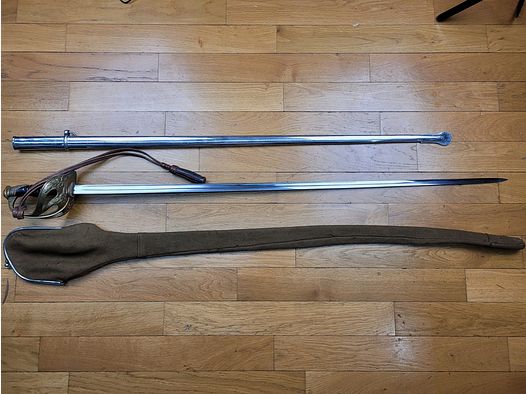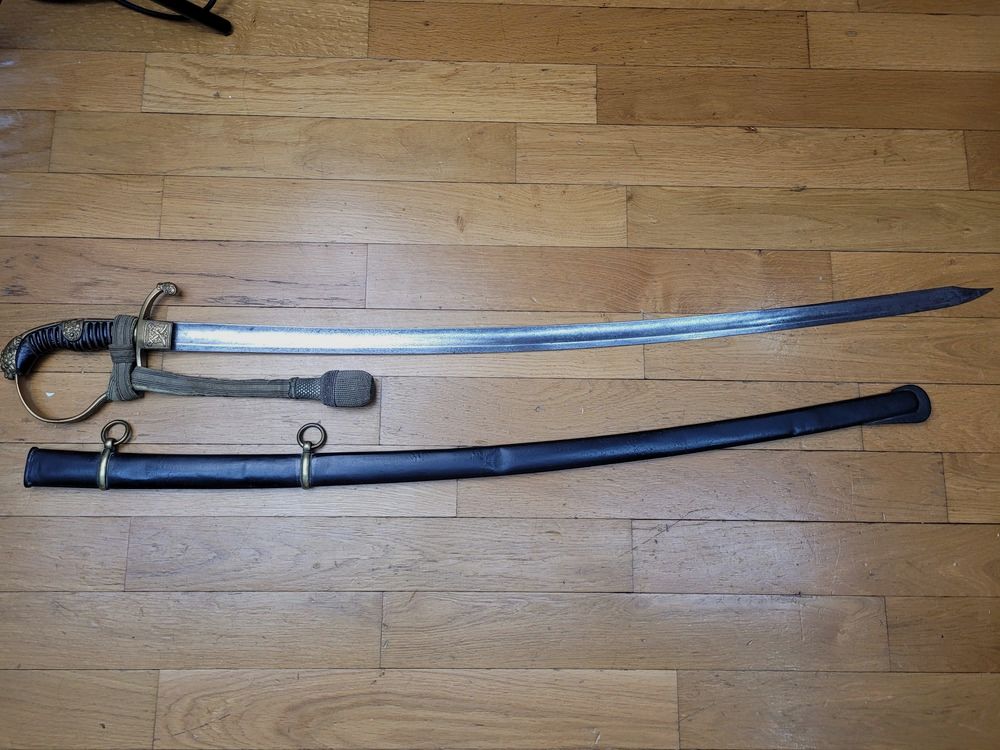
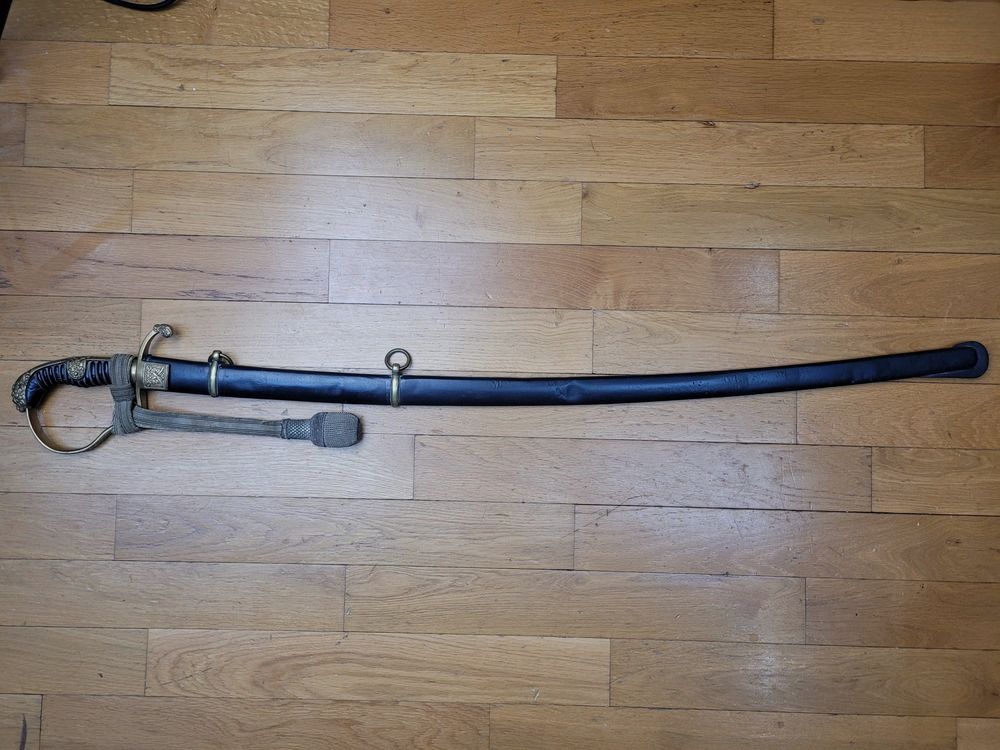




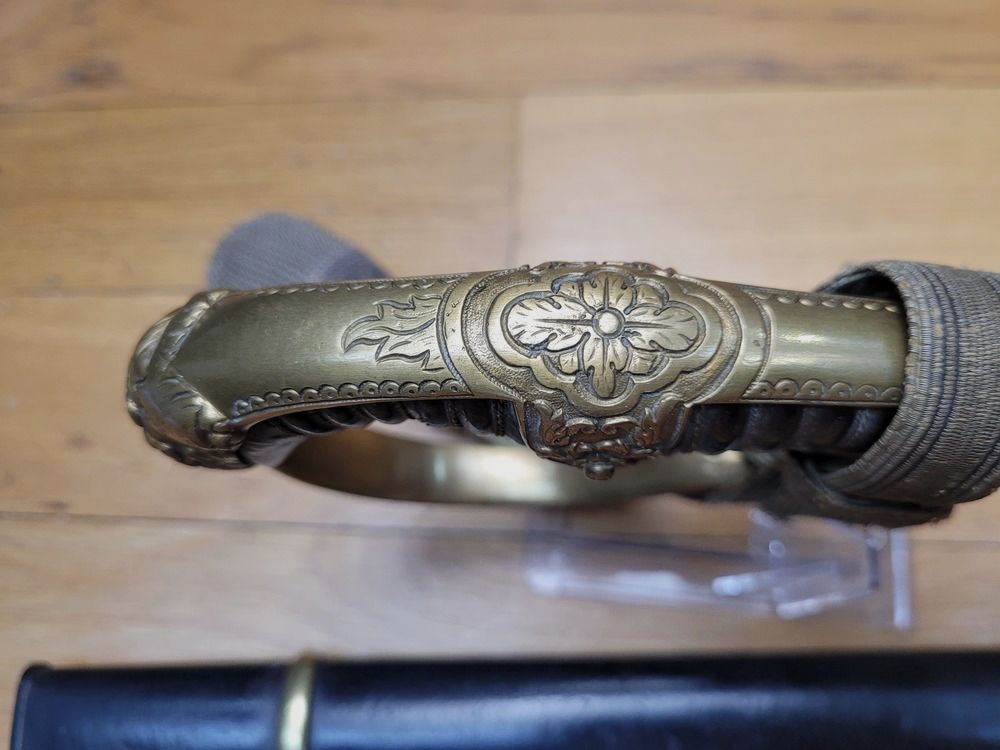
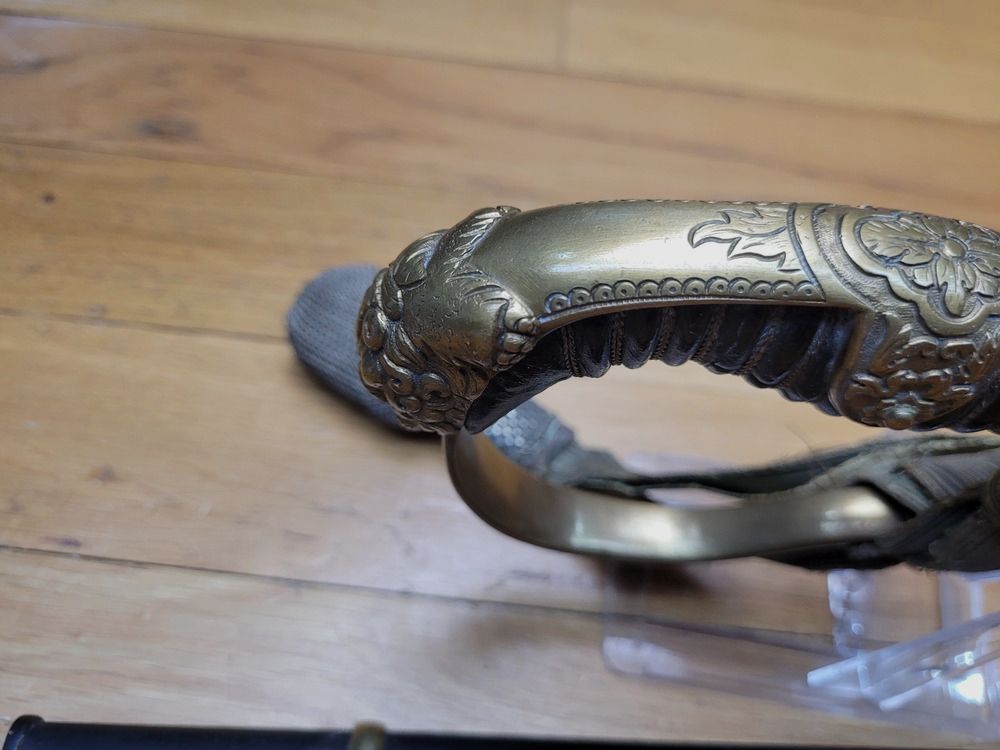
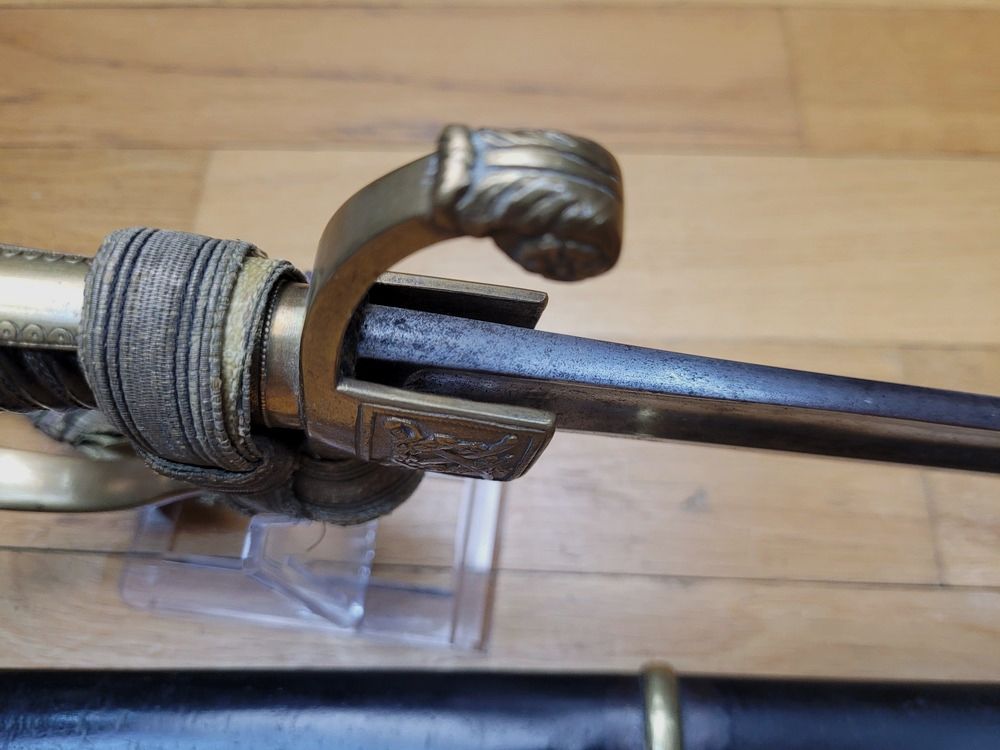
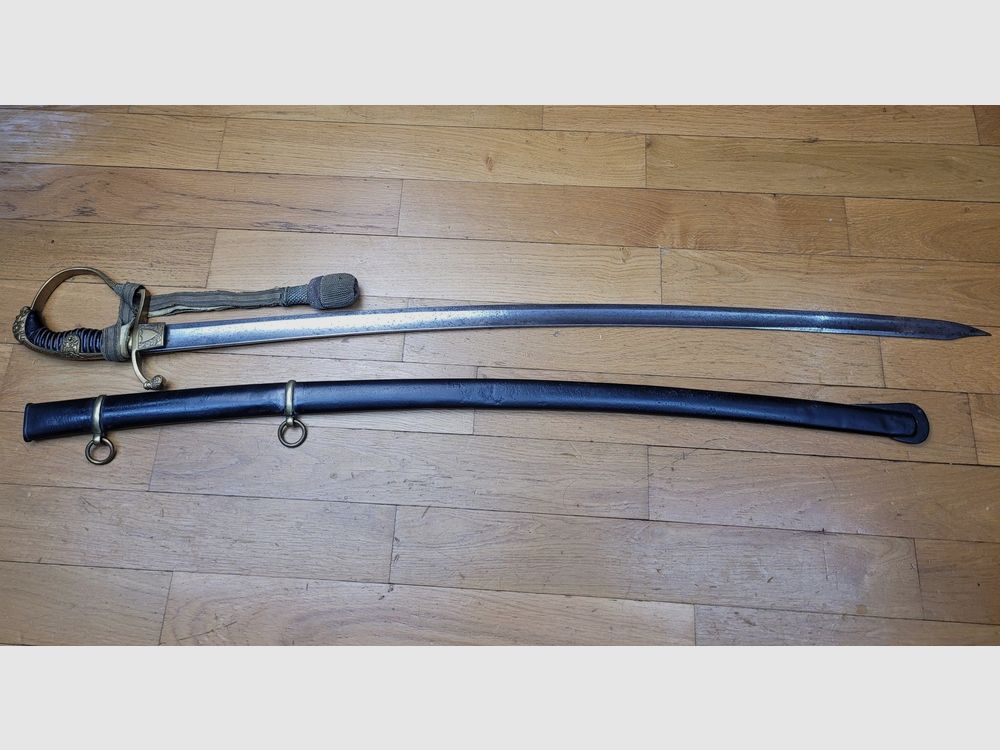
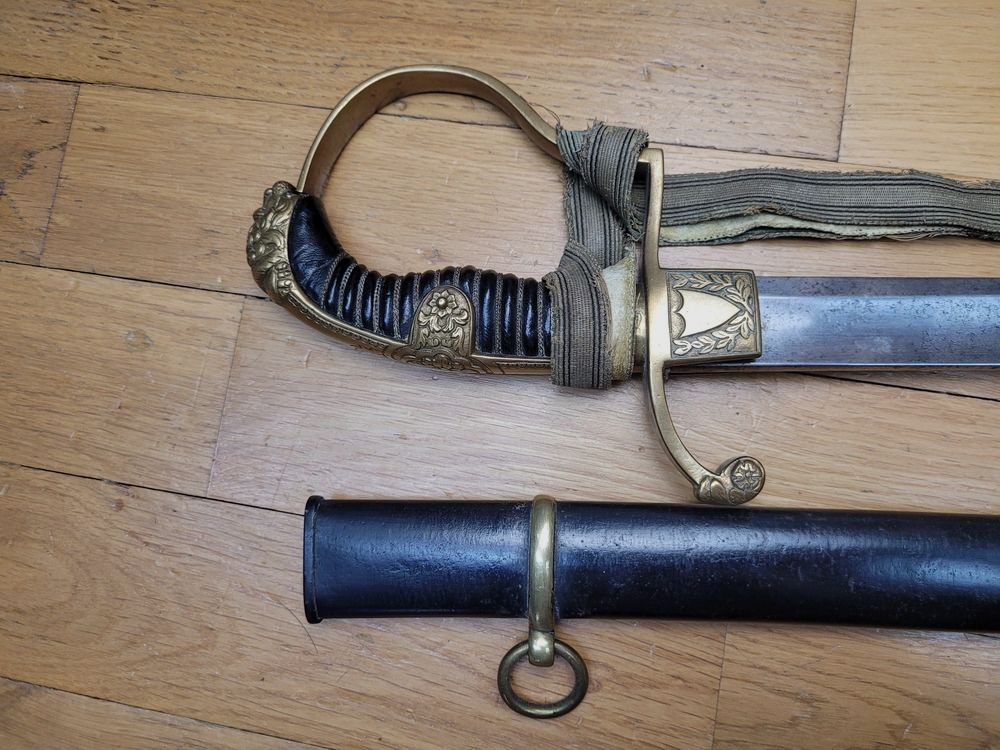












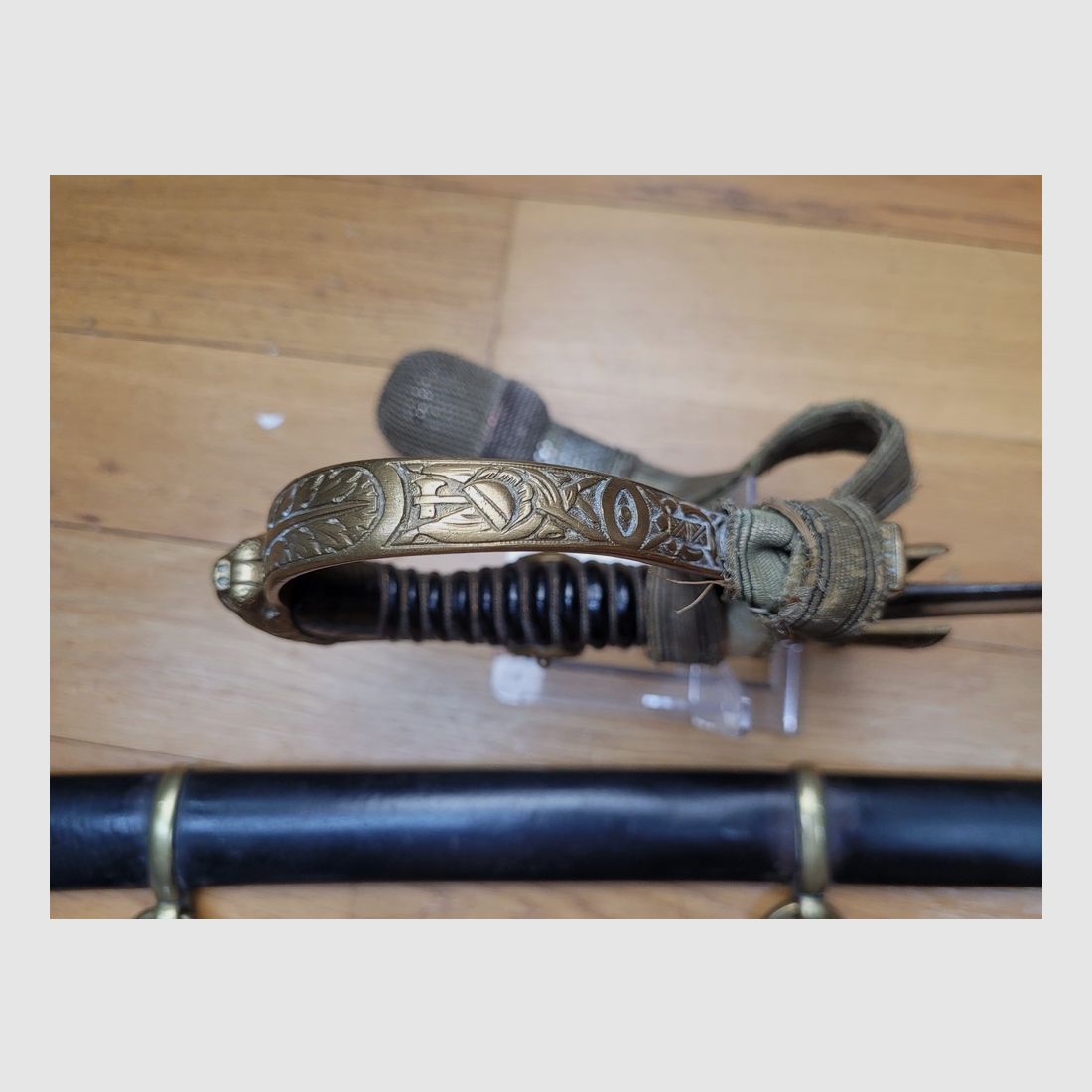

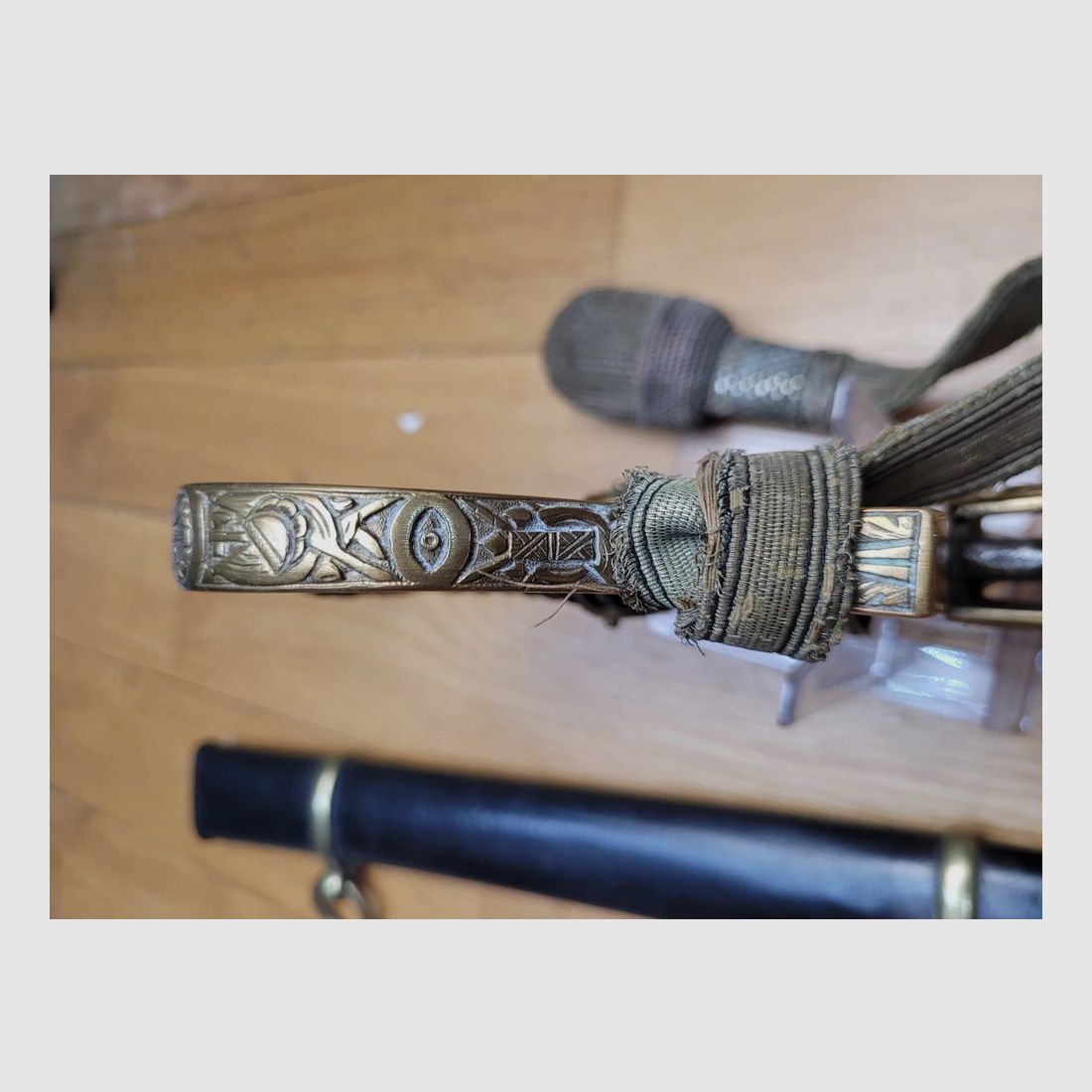
Beautiful German cavalry officer's saber – Very good curved blade with counter point – Dress wrist strap for Saxon officer – Overall TBE
≈ $659
Price at the dealer: 600 €. Converted at the ECB rate as of November 20, 2026.
No permit required (18+)
75002 Paris, France
9
ID: 10338776
Purchase from outside the EU: The firearm goes through an importer in your country, the dealer handles the export.
How buying from Europe works
Shop safely with Gunfinder
Our AI-powered seller identity verification makes Gunfinder the safest marketplace online.
Learn more
Details
- Original language
- French
- Category
- Condition
- New
- Location
- 🇫🇷 75002 Paris, France
- Availability
- In stock
Freshness
This listing is based on a mirrored offer, where the listing data was synced to us from a shop, dealer, or external marketplace. Please note that temporary price discrepancies may occur due to possible delays in data transmission.
- Source
- Flingus Maximus
- Last checked with the dealer
- 1 day ago
Description
Note:
The item is located abroad. Please note that delivery conditions, shipping times, and/or the purchase process may differ.
I see the models for cavalry officers like this one more rarely.
This is a model for private purchase officers (as German officers bought their weapons privately, like ours).
I don’t know the name of the maker. I can clearly see a mark under the guards but I don’t want to disassemble this sabre to find out more.
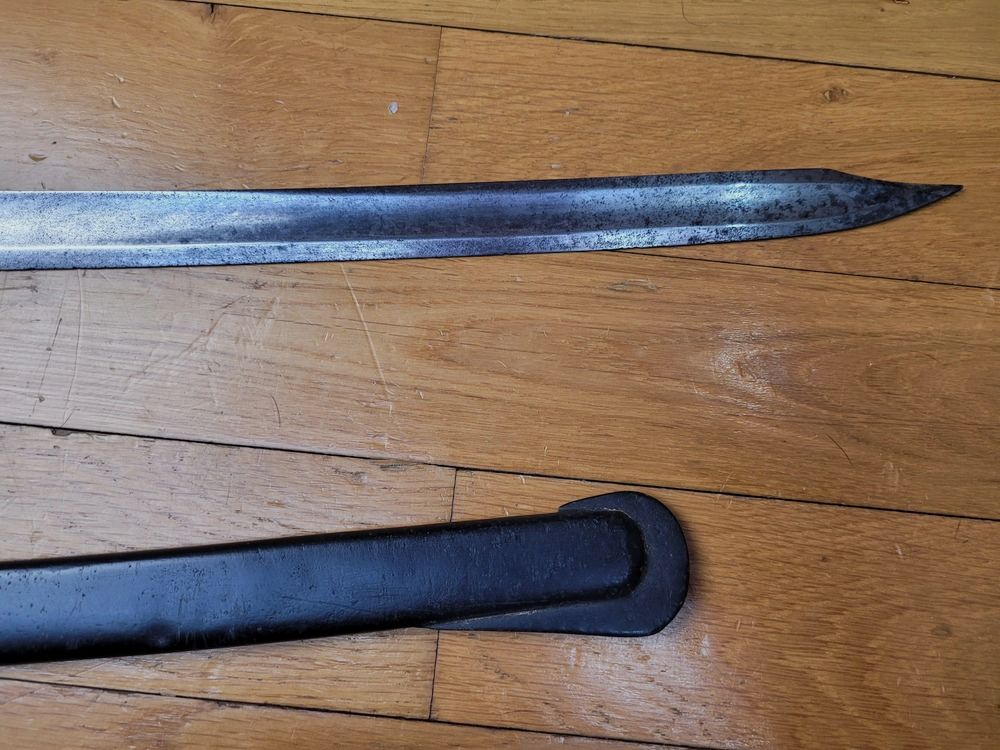
Robustly built, very finely finished, and equipped with a back edge, I date it around 1885/90.
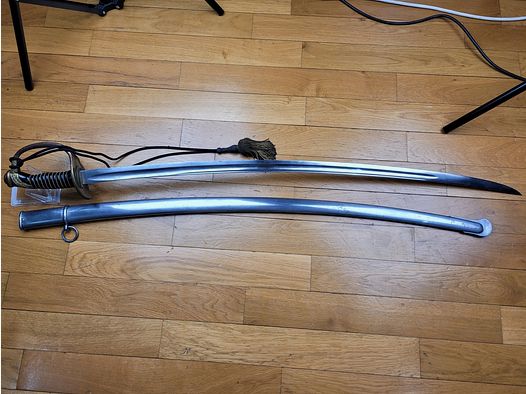
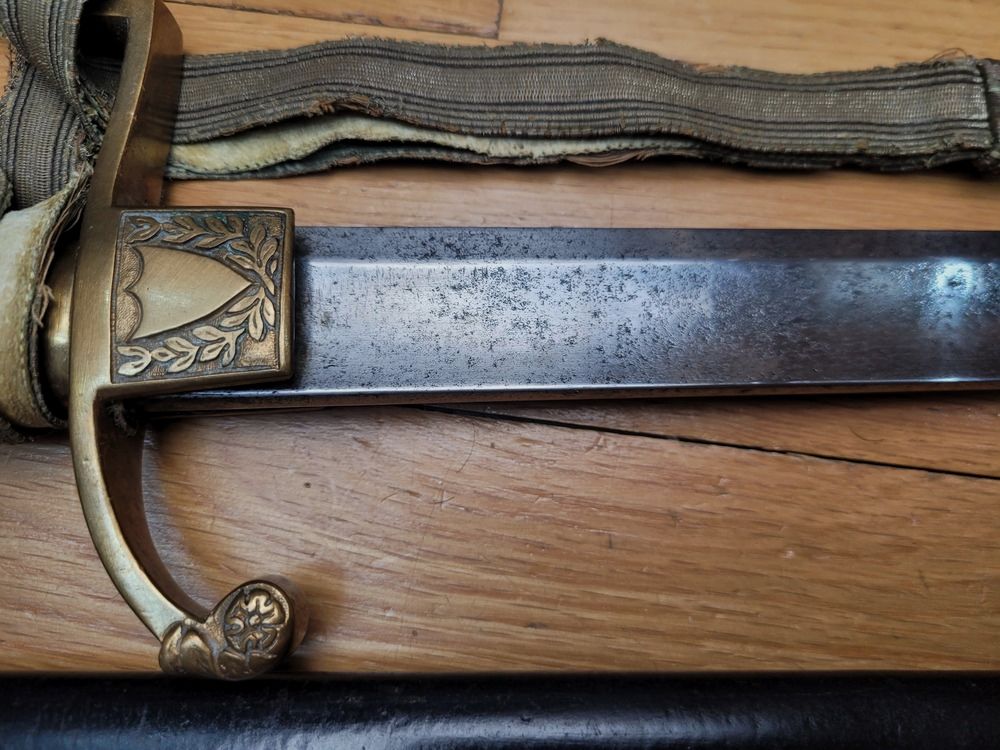
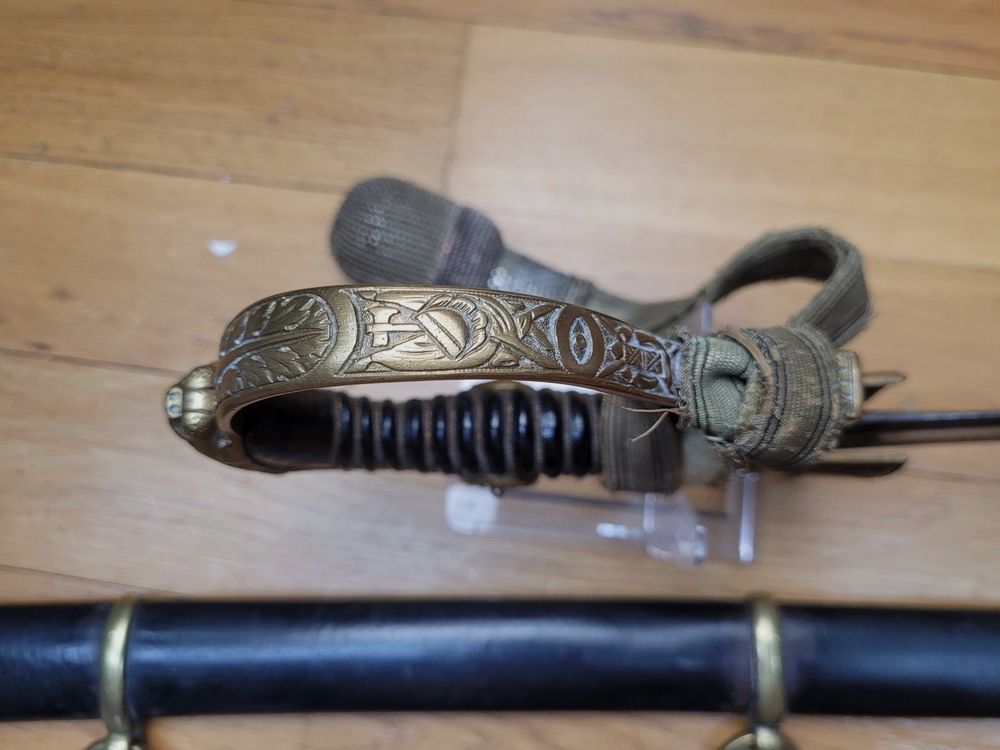
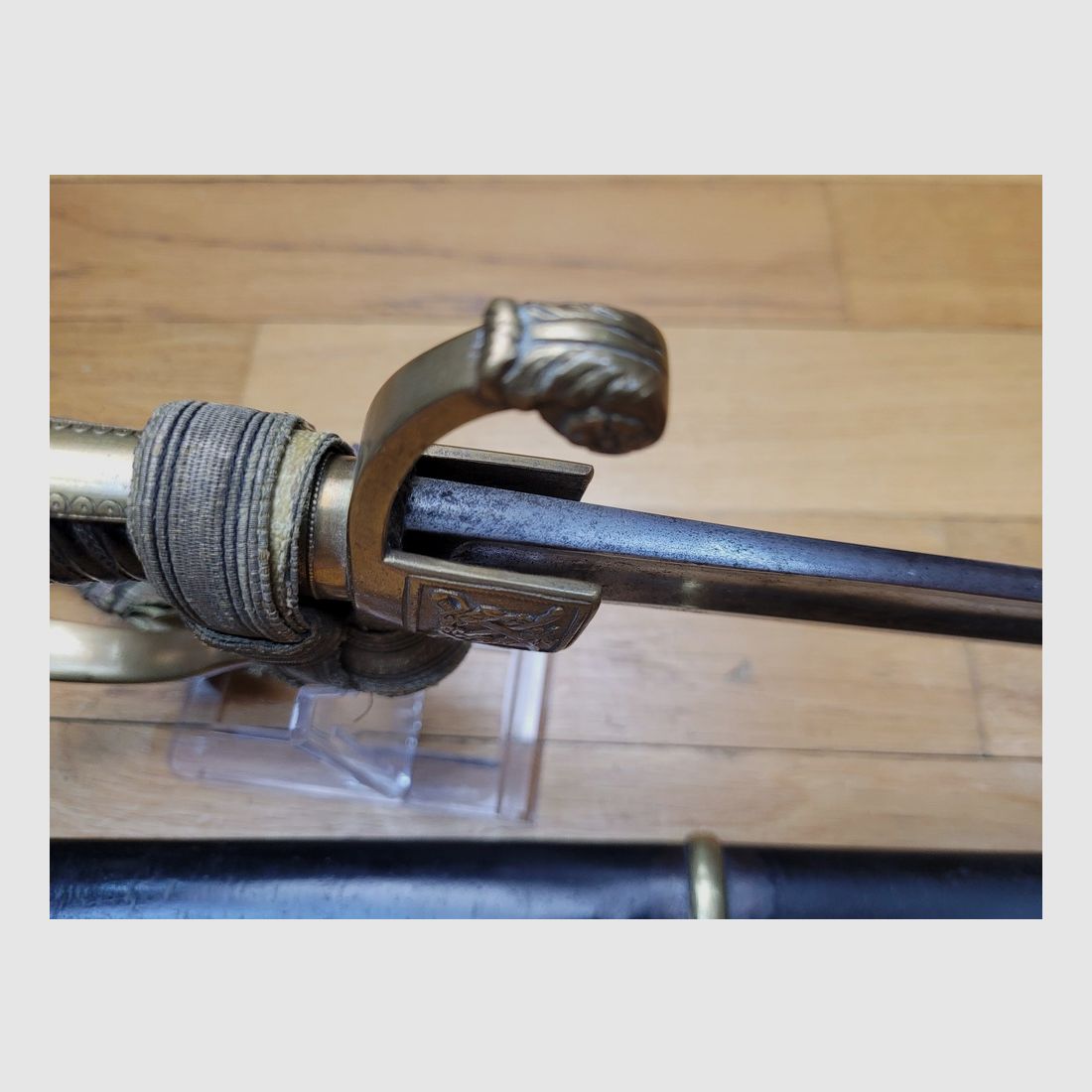
It is a model with a fairly curved blade typical of German light cavalry (often less curved for artillery). It bears two crossed sabres with curved blades on the guard.
I went back to Angolia and period catalogues. It is undoubtedly a cavalryman’s and not an artilleryman’s.
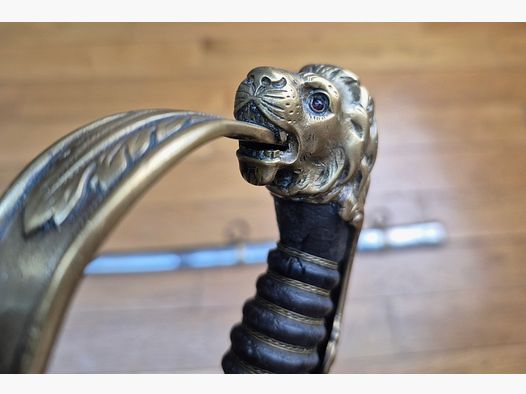
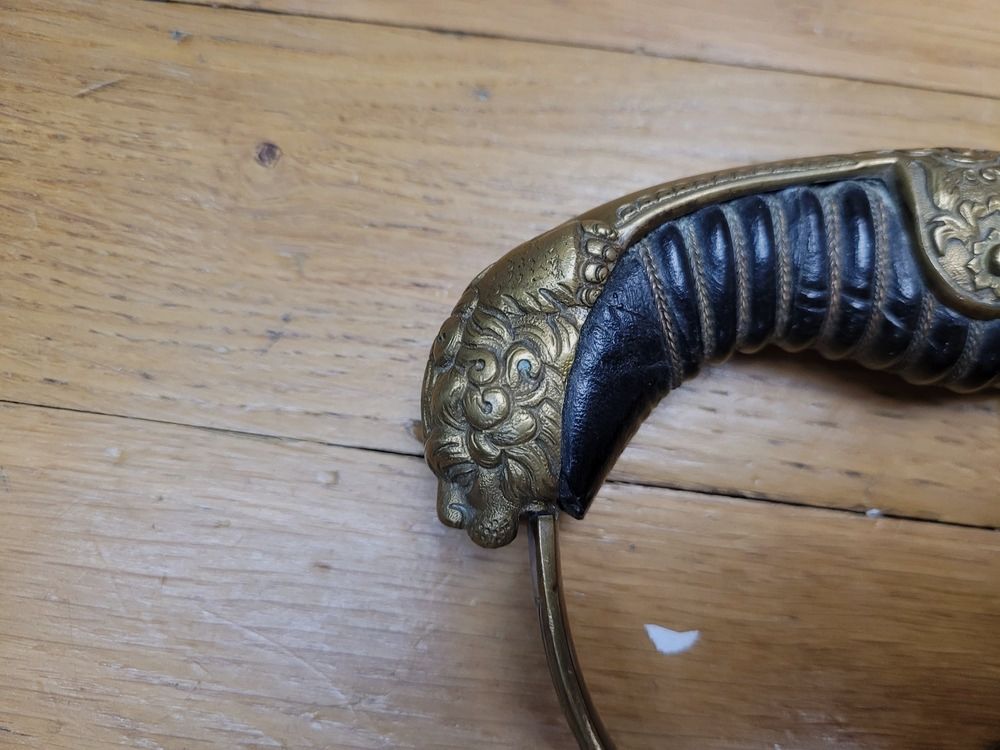
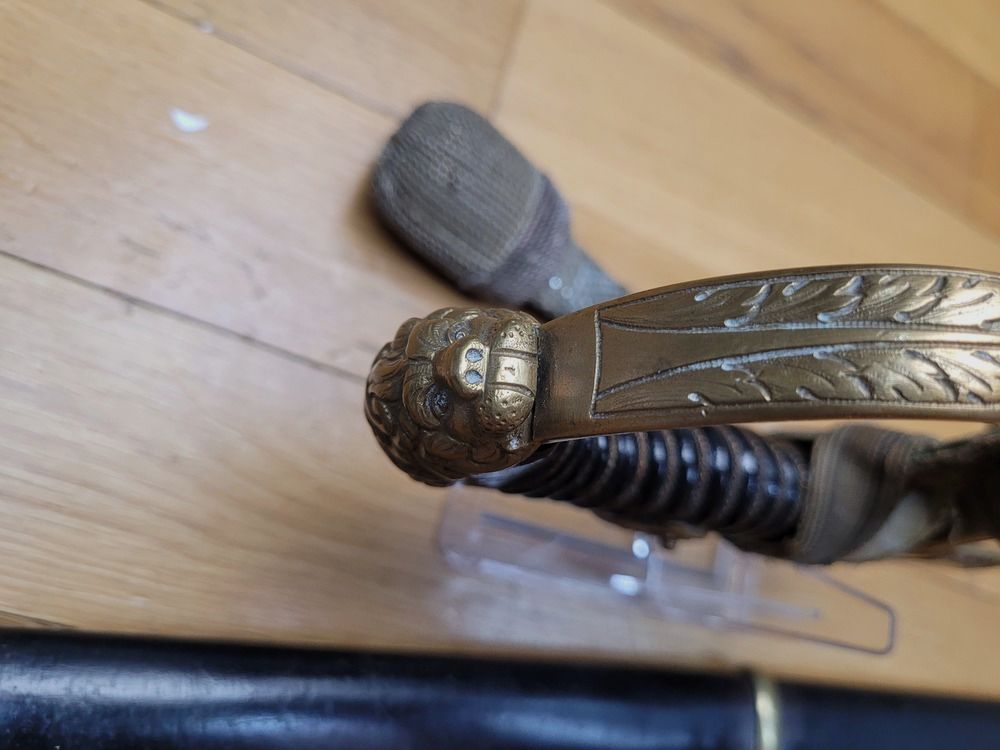
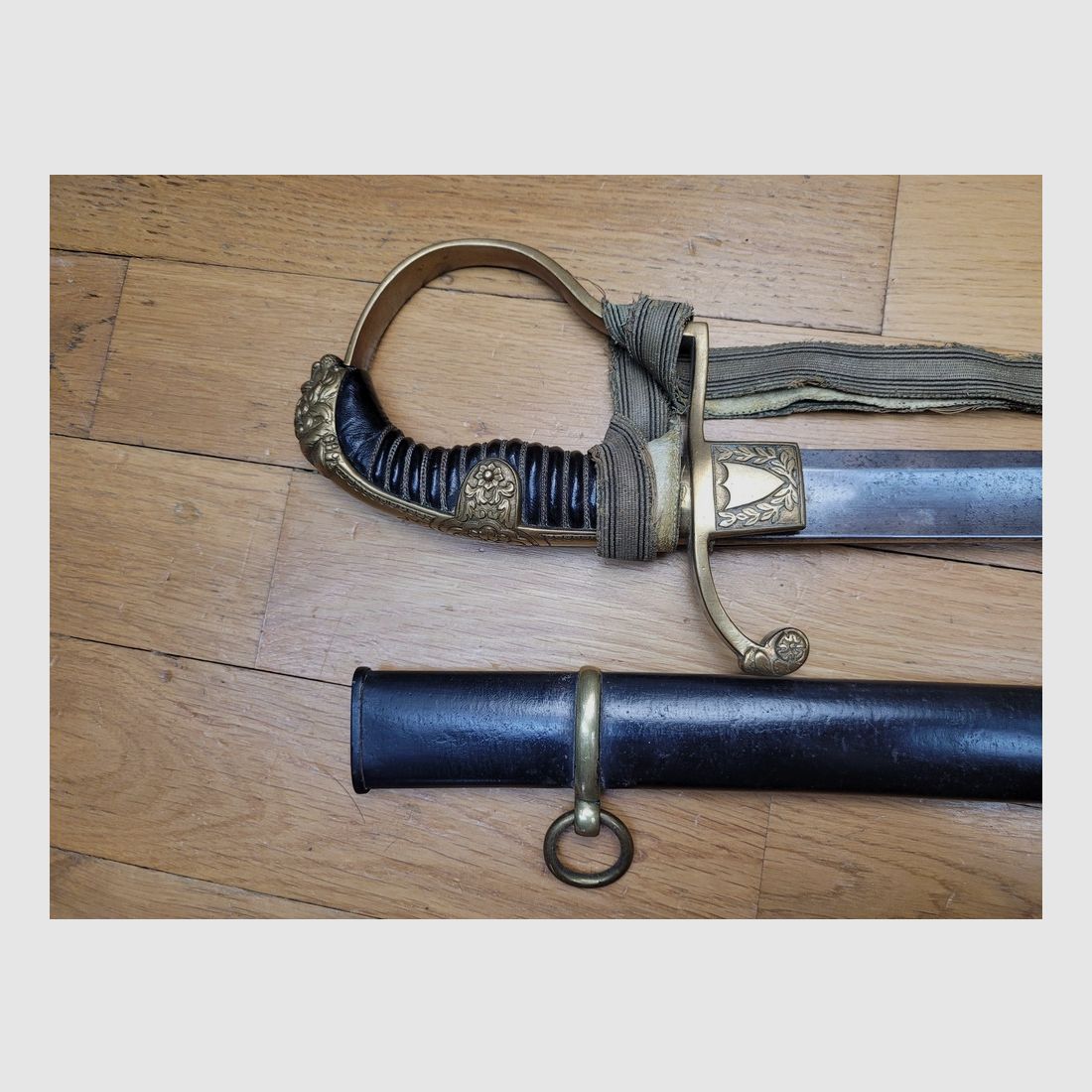
The guard is single-branch with a leopard’s head (not a lion) and therefore no ruby eyes. The bronze mount is finely worked – a bit more than WK&C type productions around 1900.
The back of the grip, the guards, the guard itself, everything is very well finished and has retained most of its gilding.
The grip is in very good condition and has kept its very beautiful original thick leather (the trend for galuchat and other fish skins came a bit later on these weapons).
It has also kept its original double twisted wire filigree.
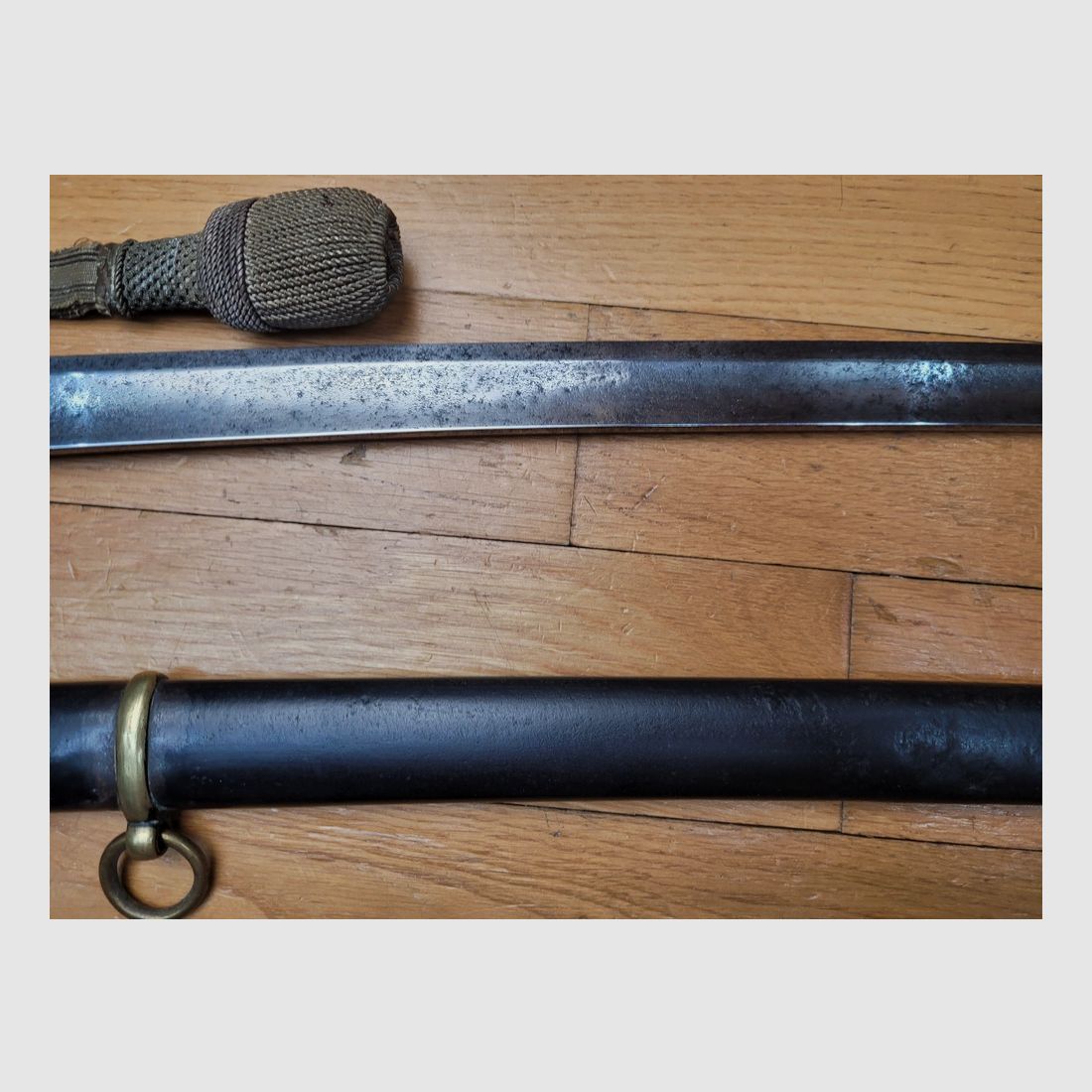
The lacquered scabbard with two brass bands has been repainted over slight oxidation but is sound, without fragility, with very few dents for a weapon that has seen service. It holds the weapon firmly in place.
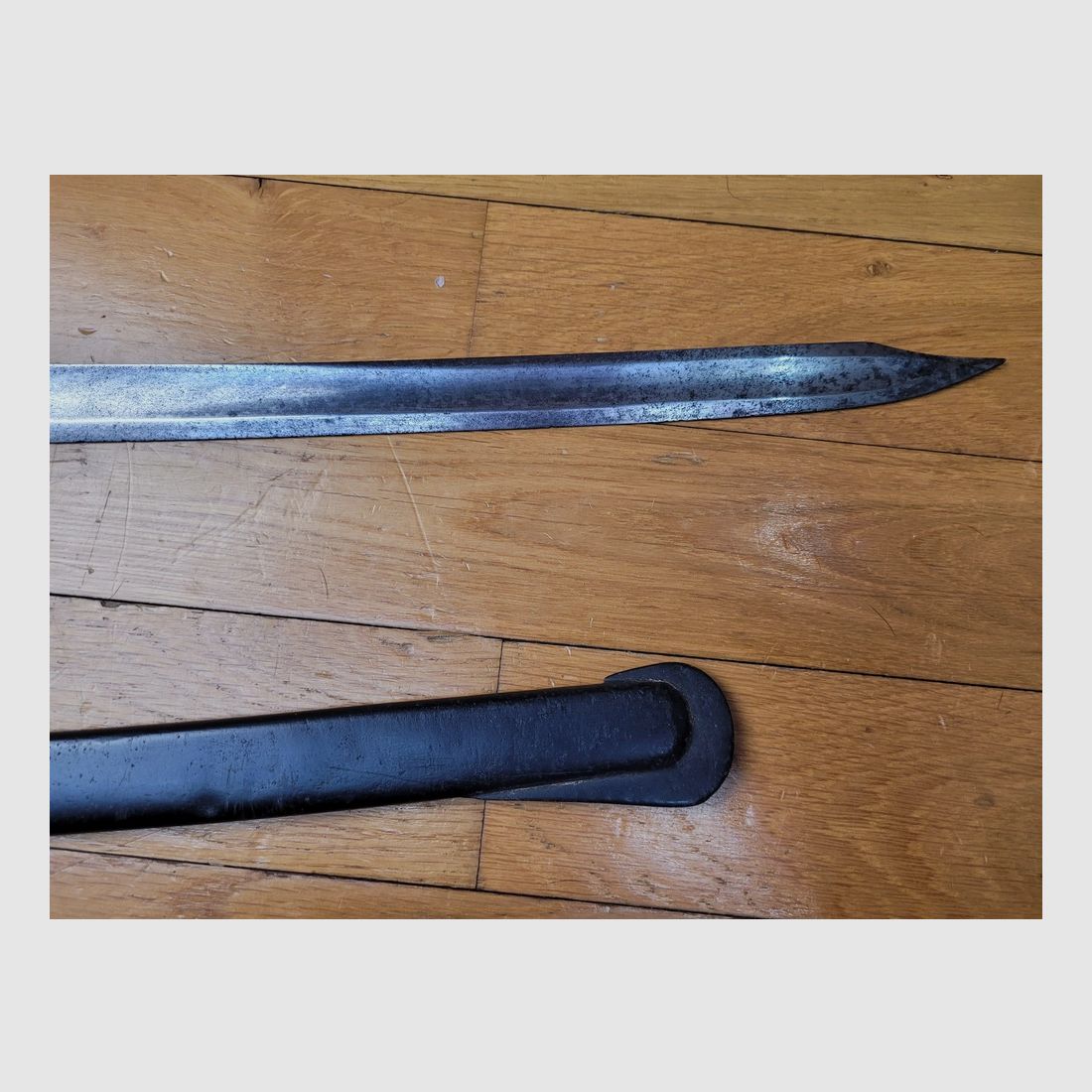
The blade is very beautiful with a tobacco-grey patina of age but without any deep pitting or edge loss. It can be perfectly cleaned with 0000 steel wool and WD40 to restore all its shine. It is just “out of the attic” and hasn’t been cleaned for decades. Overall very good condition.
It is thick and heavy compared to sabres from around 1900/1910 with a real back edge. This weapon is fit for combat. No play anywhere, neither in the guard nor in the grip.
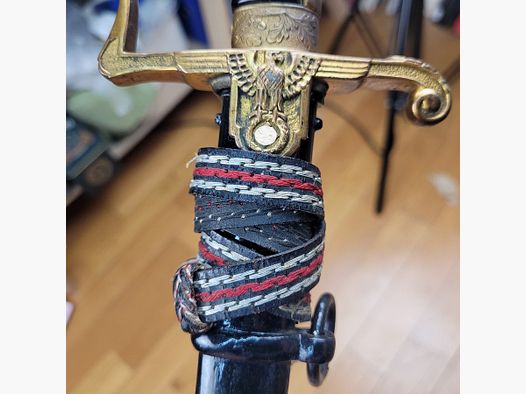
This sabre comes with its parade sword knot – The service sword knot is mounted on leather – It is in fairly good condition with wear marks on the edges as often, but has well preserved its colours which tell us the weapon belonged to a cavalry officer of the Kingdom of Saxony.
In short, a fine piece of Imperial Germany, rare under our climates as a cavalry officer’s sabre, especially Saxon, and in overall very good condition.
Ideal to complete a collection of European cavalry sabres or on the theme of Imperial Germany before its entry into the First World War.
Weapon not classified under CSI but sale forbidden to minors: ID required.
**********************************************************************************************
Let’s repeat it! The Flingus Maximus armoury in Paris and throughout France is also here for your private arms formalities, buying collections of weapons and militaria, your weapon appraisals, your weapon questions in successions and inheritance. Contact your favourite gunsmith via our contact form or at [email protected] (Show description in original language)
Pour l’Empire allemand dans sa phase wilhelmienne et terminale (1880 – 1918), je rencontre assez souvent les sabres d’officier d’infanterie type IOD 1889 à lame droite, les modèles strictement bavarois pour officiers et sous officiers ou les sabres de cavalerie de troupe 1889 ou 1857 pour l’artillerie.
Je vois plus rarement les modèles pour officiers de cavalerie comme celui-ci.
C’est un modèle pour officier d’achat privé (comme chez nous les officiers allemands achetaient leurs armes).
Je ne connais pas le nom du fourbisseur. J’aperçois bien une marque sous les oreillons mais je ne souhaite pas démonter ce sabre pour en savoir plus.
De construction robuste, de finition très soignée et doté d’une lame à contre-pointe, je le situe vers 1885/90.
Il s’agit d’un modèle à lame assez courbe typique de la cavalerie légère allemande (moins courbe souvent pour l’artillerie). Il porte en oreillon deux sabres à lames courbes croisés.
Je suis retourné au Angolia et aux catalogues d’époque. C’est indubitablement un cavalier et pas un artilleur.
La garde est à une branche avec la tête de léopard (et pas de lion) et donc pas d’yeux de rubis. Le bronze de la monture est finement ouvragé – un peu plus que dans les productions type WK&C vers 1900.
Le dos de poignée, les oreillons, la garde tout est très bien fini et a conservé l’essentiel de sa dorure.
La fusée est en très bon état et a conservé son très beau cuir d’origine bien épais (la mode des galuchats et autres peaux de poisson est venue un peu plus tard sur ces armes).
Elle a aussi conservée son filigranne d’origine à doubles fils torsadés.
Le fourreau laqué à deux bracelet de laiton a été repeint sur une légère oxydation mais il est bien sain, sans fragilité, avec très peu de bosse pour une arme qui a connu le service. Il maintient bien l’arme en place.
La lame est très belle avec une couleur grisée tabac d’ancienneté mais sans aucune piqure profonde ou manque en tranchant. Elle est parfaitement nettoyable à la paille 0000 et au WD40 pour lui rendre tout son brillant. Elle est juste « sortie de grenier » et non nettoyée depuis des décennies. TBE global.
Elle est épaisse et lourde comparée au sabre de la période vers 1900/1910 avec une vraie contre-pointe. Cette arme est apte au combat. Aucun jeu nulle part ni en garde ni en poignée.
Ce sabre nous vient avec sa dragonne de sortie – La dragonne de service est montée sur cuir – Elle est en assez bon état avec des traces d’usures en bordure comme souvent mais a bien conservé ses couleurs qui nous apprennent que l’arme a appartenu à un officier de cavalerie du Royaume de Saxe.
In fine, une belle pièce de l’Allemagne impériale, peu courante sous nos climats en officier de cavalerie surtout saxon et en TBE global.
Idéal pour compléter une collection de sabre de cavalerie européens ou sur le thème de l’Allemagne Impériale avant son entrée dans le premier conflit mondial.
Arme non classée au CSI mais interdite de vente aux mineurs : CNI obligatoire.
**********************************************************************************************
Répétons le ! L’armurerie Flingus Maximus à Paris et partout en France est là aussi pour vos formalités armes entre particuliers, le rachat de collections armes et militaria, vos estimations d’armes, vos questions armes dans les successions et héritage. Contactez votre armurier préféré via notre formulaire de contact ou à [email protected]