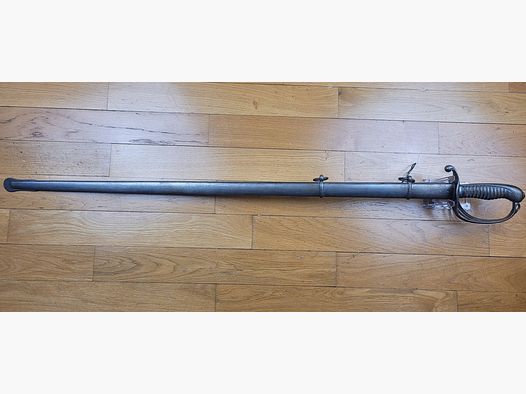
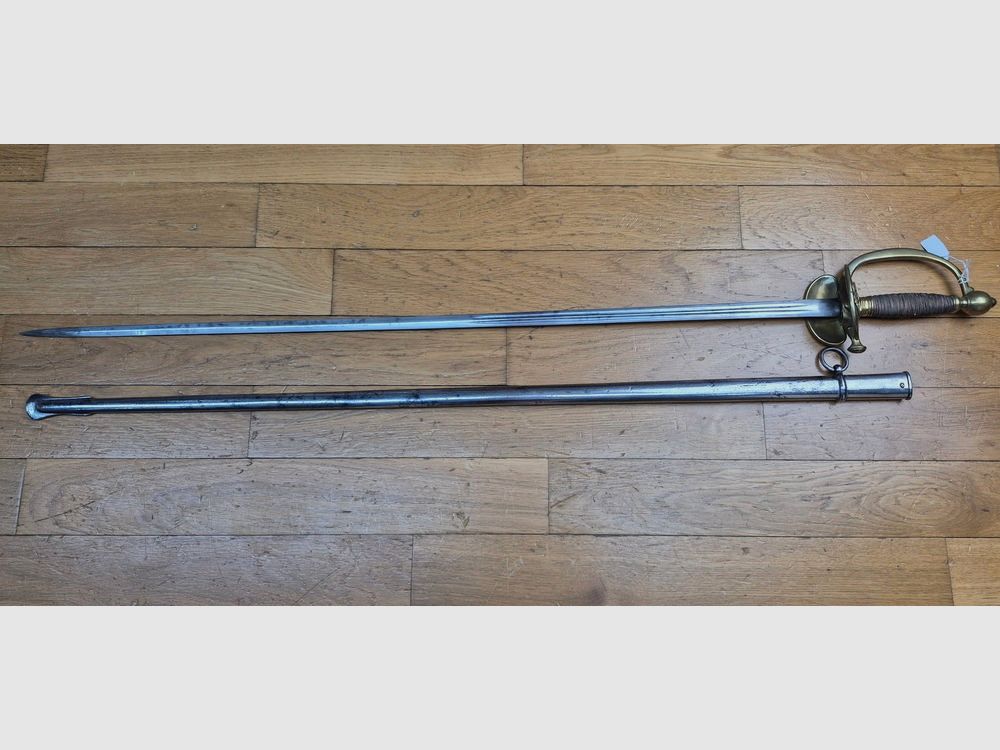
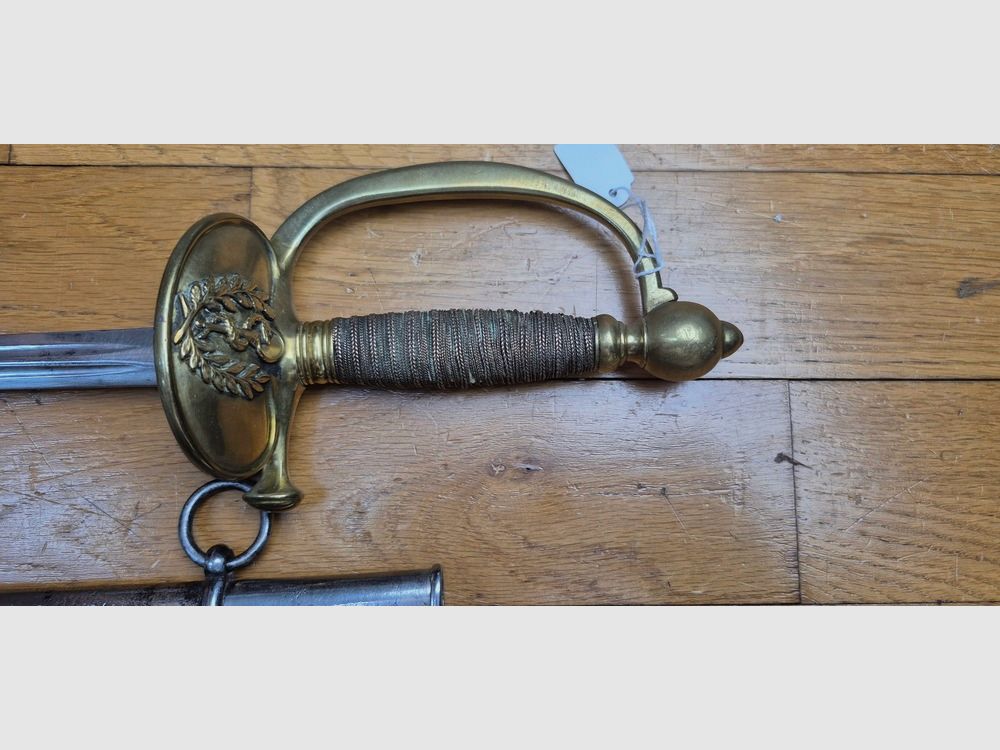
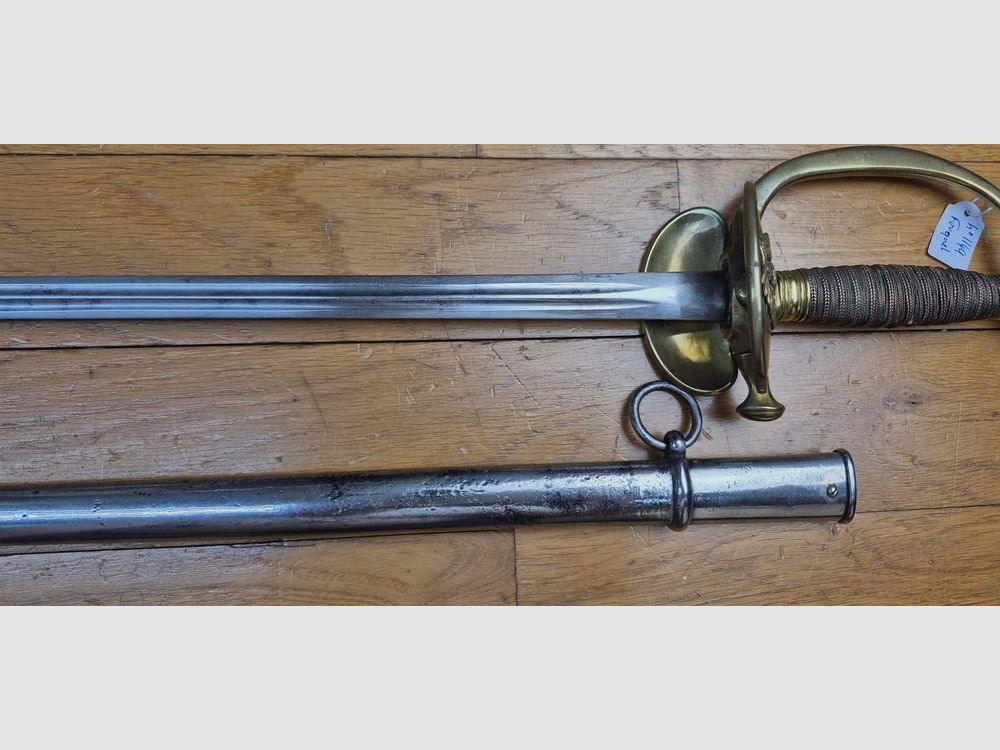
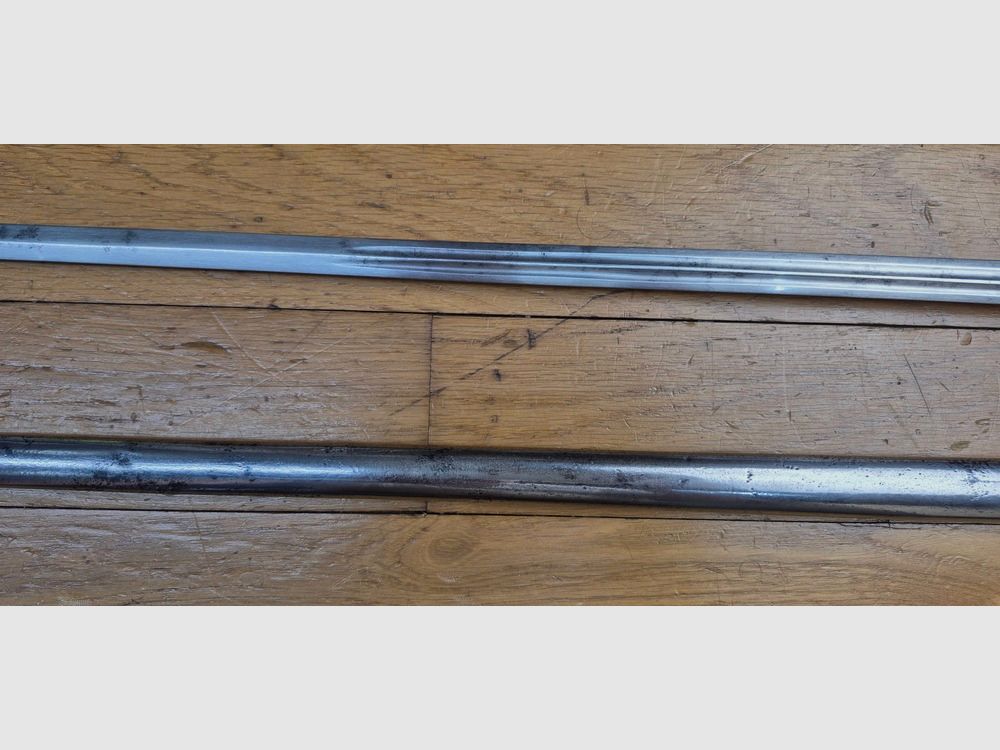
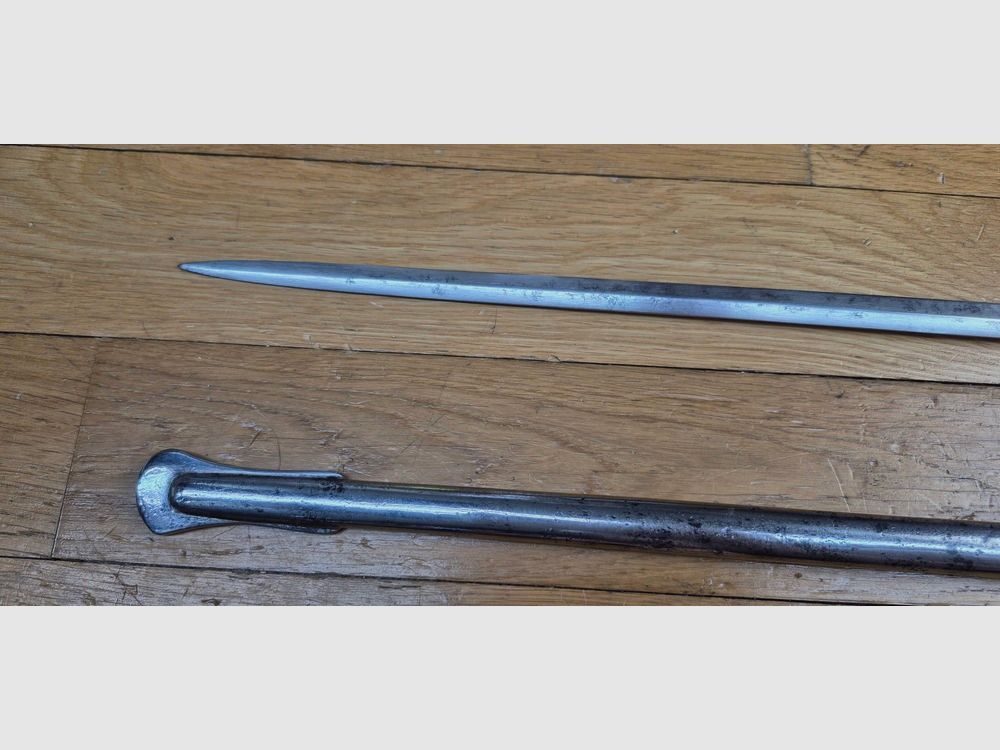

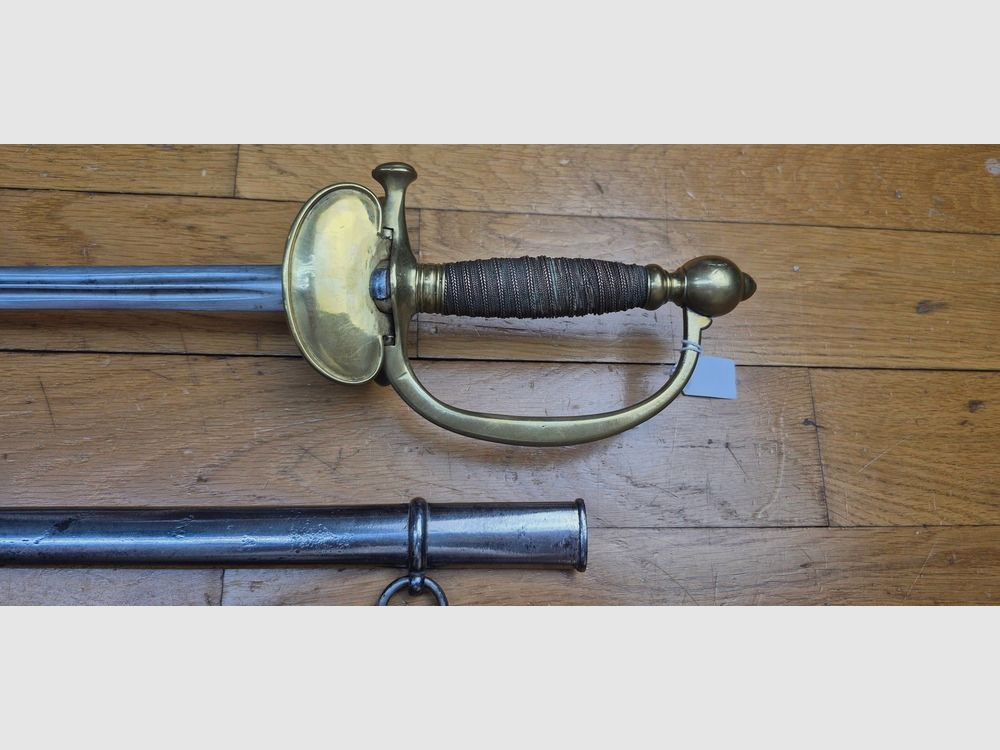
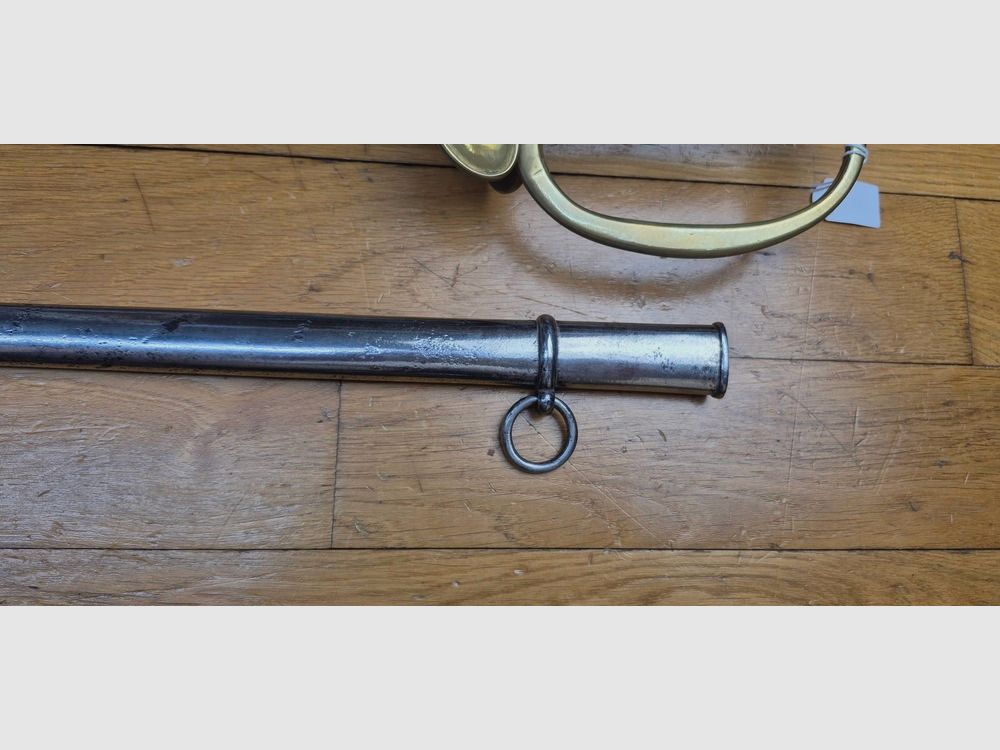

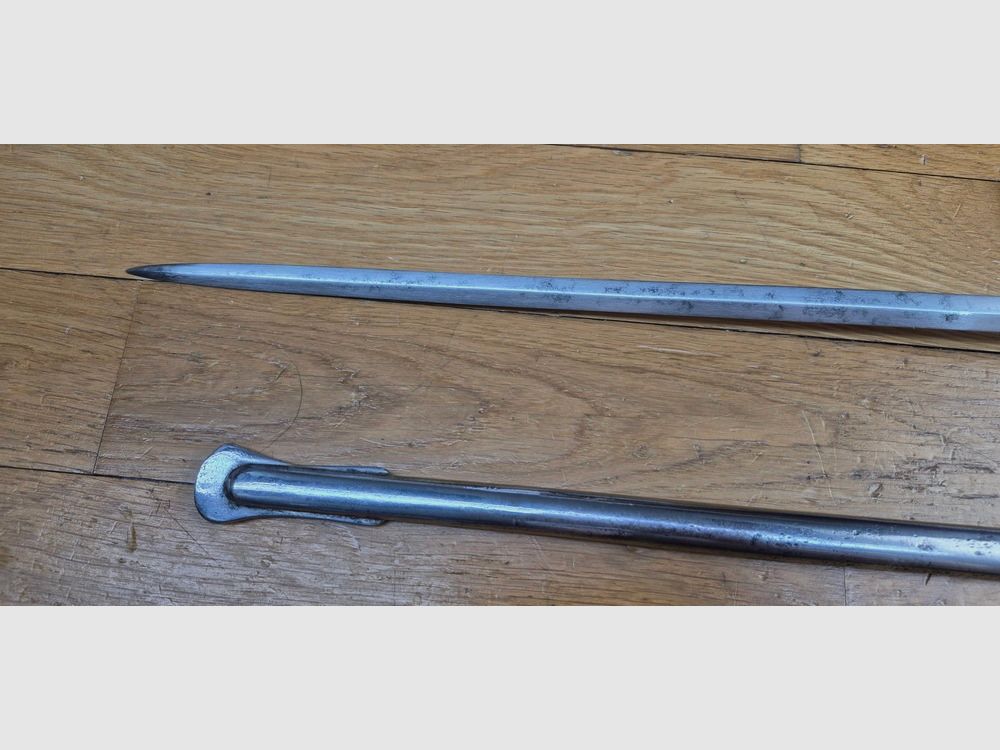






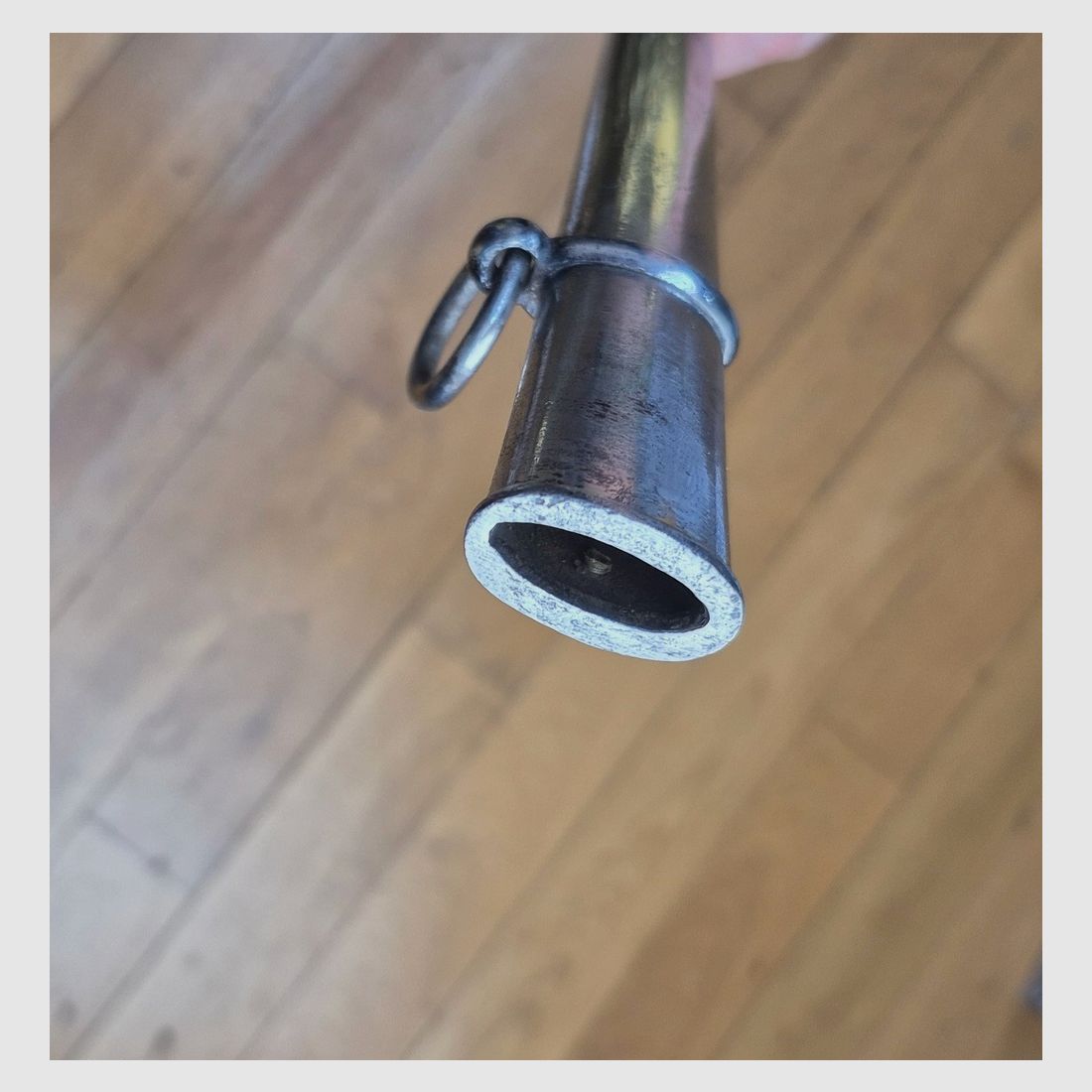

Officer's sword of the Army Health Service – Model 1872 – Double-grooved blade in accordance with regulations – Functional wedge – Compliant scabbard – Circa 1885-1910 – Very good condition
≈ $231
Price at the dealer: 210 €. Converted at the ECB rate as of November 20, 2026.
No permit required (18+)
75002 Paris, France
8
ID: 10338639
This item is currently unavailable.
Purchase from outside the EU: The firearm goes through an importer in your country, the dealer handles the export.
How buying from Europe works
Shop safely with Gunfinder
Our AI-powered seller identity verification makes Gunfinder the safest marketplace online.
Learn more
Details
- Original language
- French
- Category
- Condition
- New
- Location
- 🇫🇷 75002 Paris, France
- Availability
- Out of stock
Freshness
This listing is based on a mirrored offer, where the listing data was synced to us from a shop, dealer, or external marketplace. Please note that temporary price discrepancies may occur due to possible delays in data transmission.
- Source
- Flingus Maximus
- Last checked with the dealer
- 1 day ago
Description
Note:
The item is located abroad. Please note that delivery conditions, shipping times, and/or the purchase process may differ.
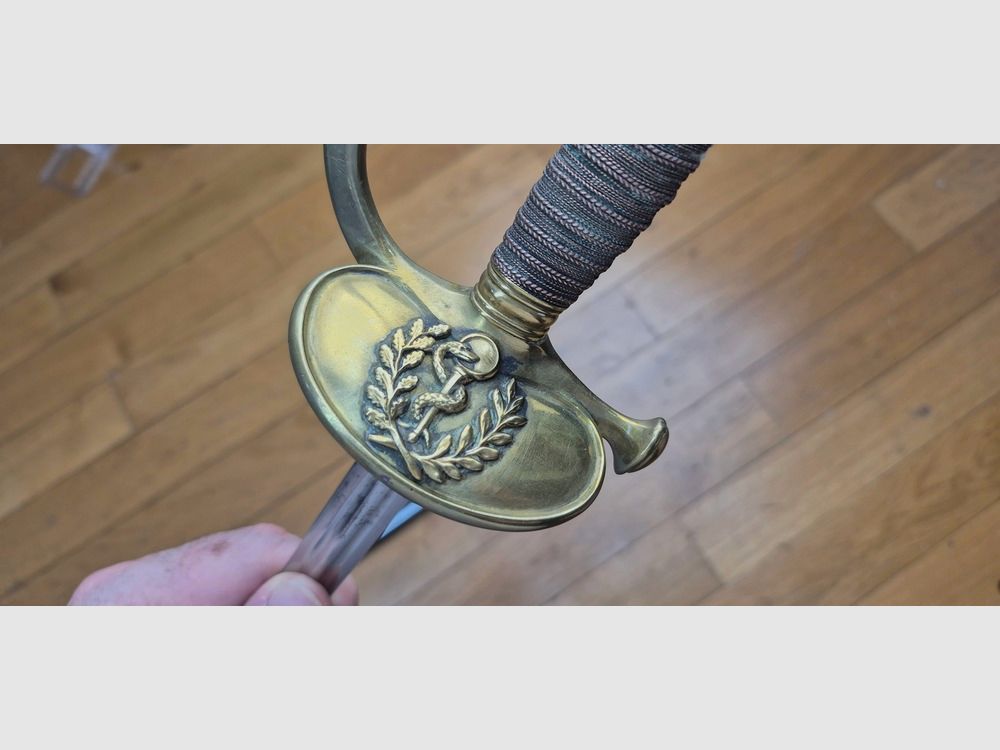
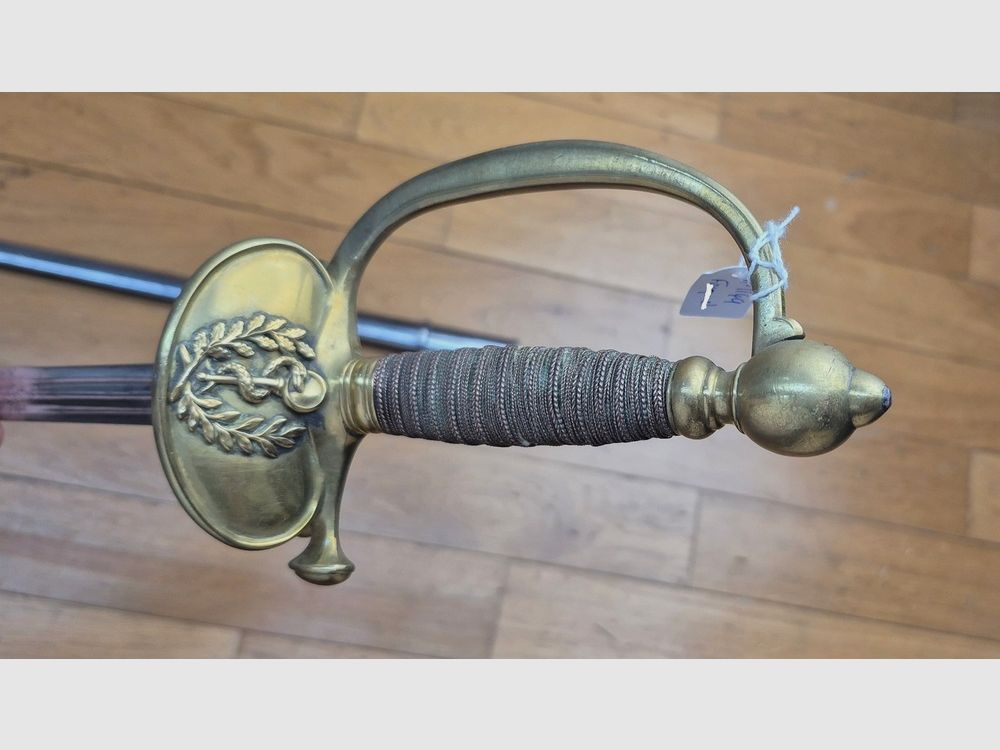
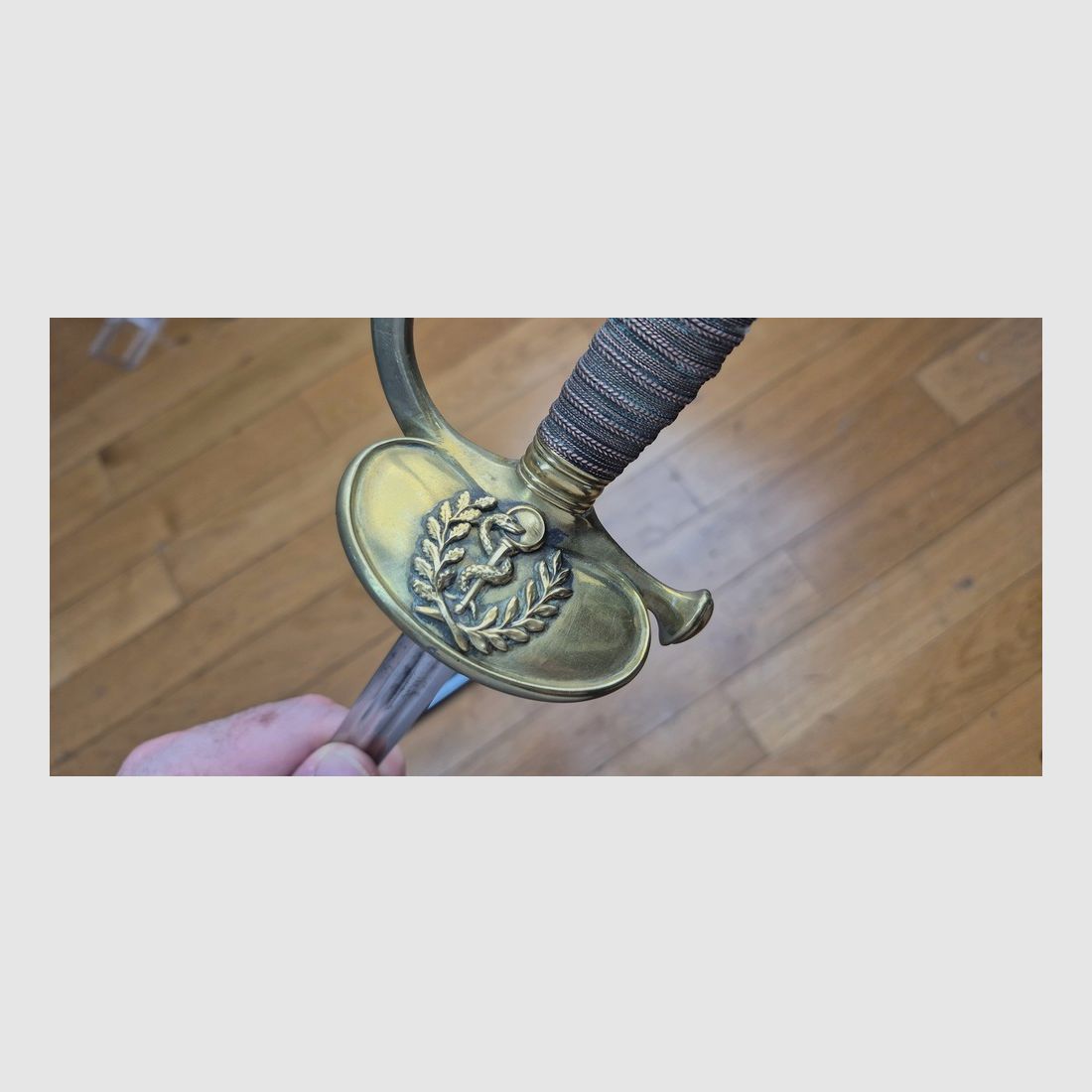
The symbol on the tang button is not the caduceus, as I still hear far too often, but the Rod of Asclepius. The caduceus is an attribute of Mercury (or Hermes, if you prefer and are more of a fashionista at heart than I am) and is the symbol of commerce, not medicine. The caduceus has wings and is entwined by two snakes.
The Rod of Asclepius, on the other hand, is indeed the symbol of medicine. It has no wings and features just one snake. It is a symbol of healing from poisoning. It is also, of course, topped with a mirror, the symbol of Prudence—a virtue befitting all good medical practice.
That’s how medicine was voted on back then…
The laurel (a symbol of glory) and the oak (a symbol of strength) recall the military role of the doctor who carried this sword.
That was your minute of symbolist culture with Maître Flingus.
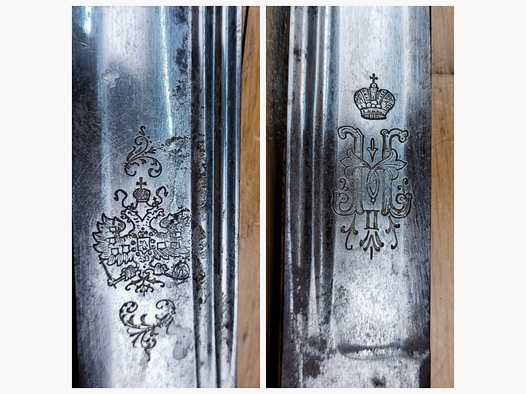
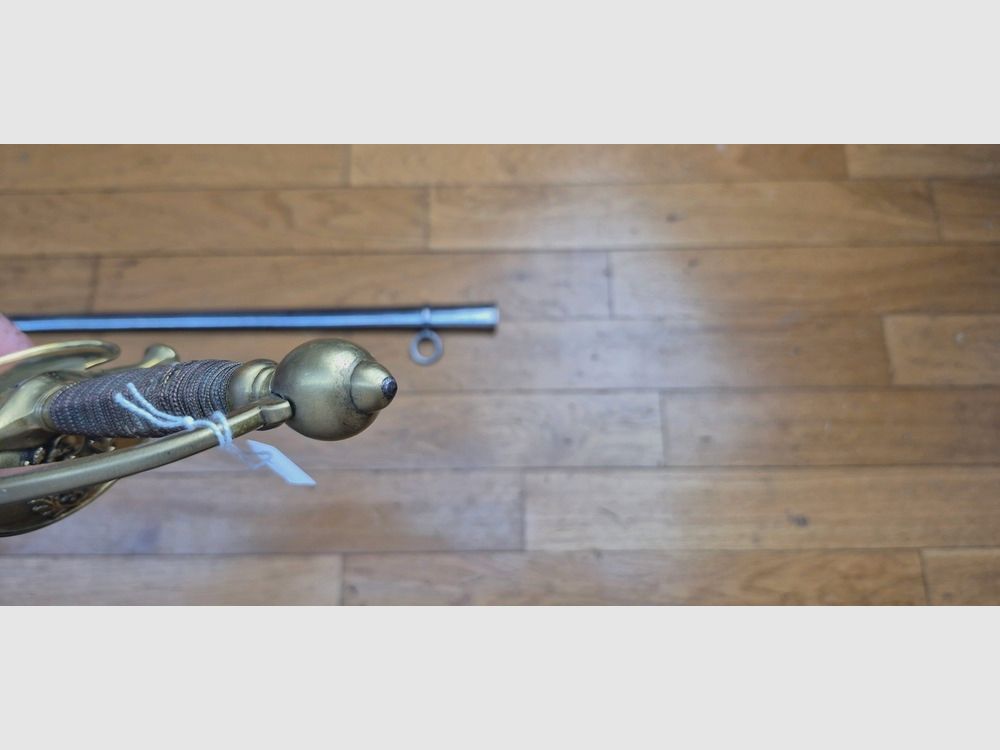
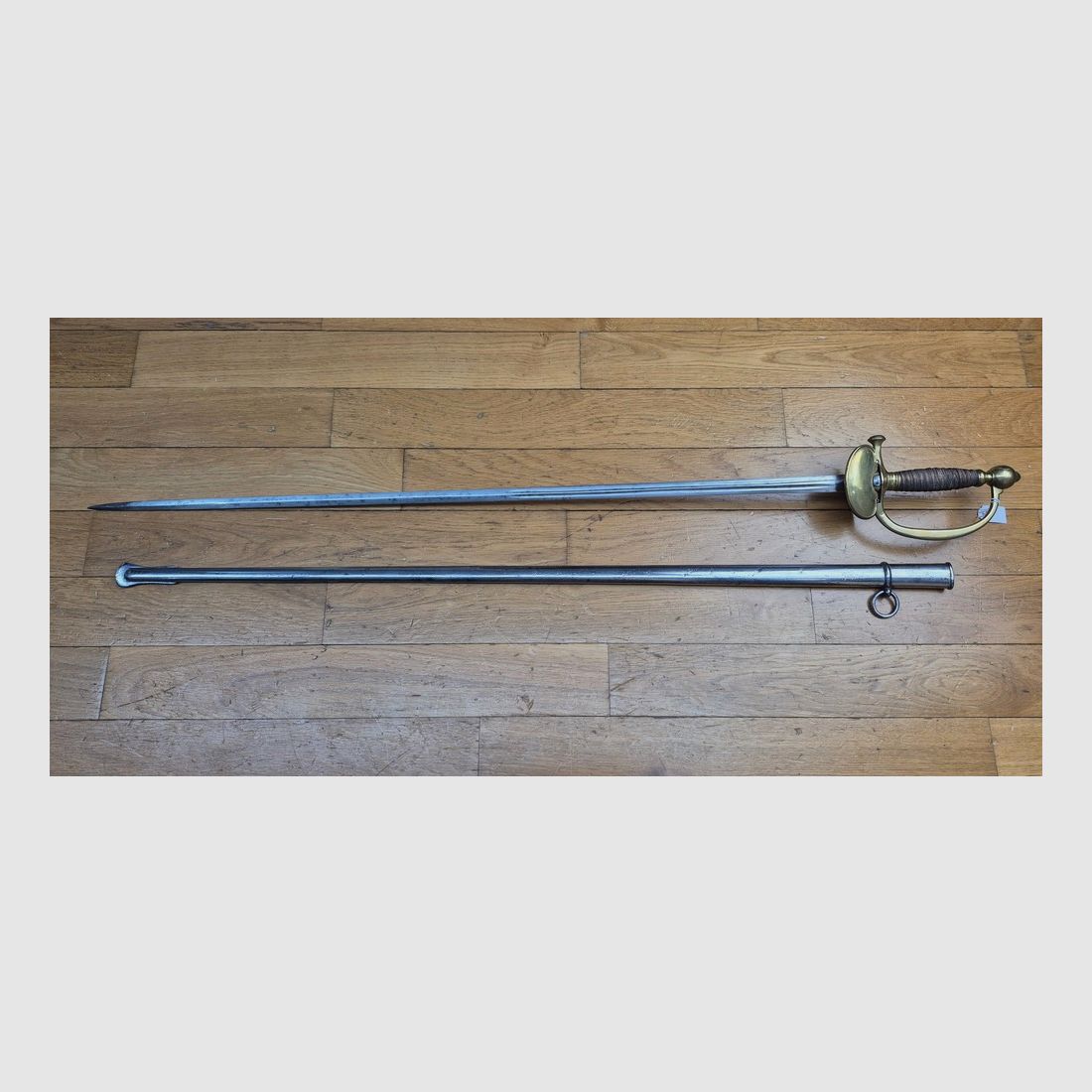
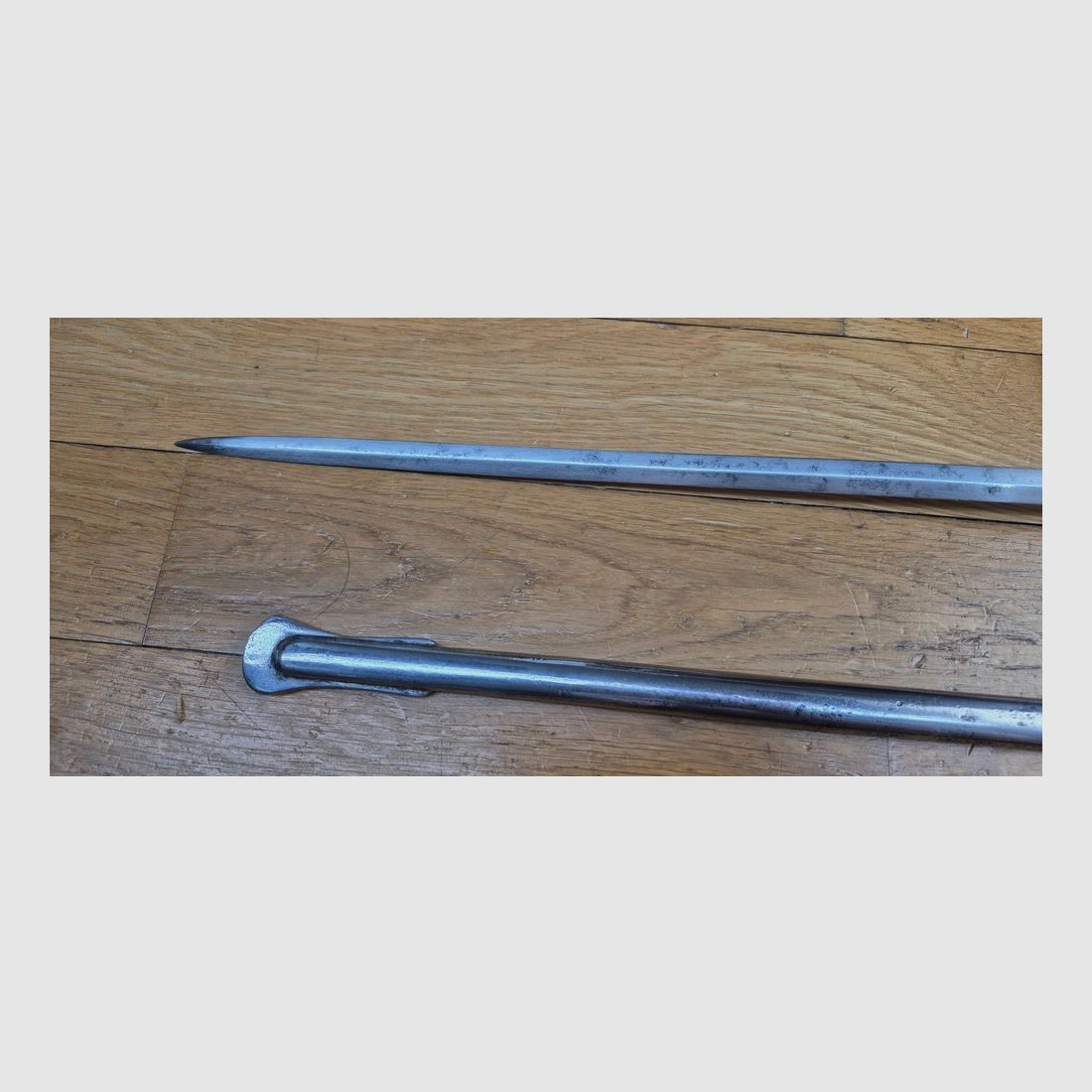
Here we have a fine 1872-pattern medical officer’s sword, with a double-fullered blade and a fully functional movable tang button (just press the white metal button). The blade is in very fine condition, with very few—and only light—signs of oxidation. No maker’s mark; this is a (beautiful) privately made piece. Some of these military doctors’ swords came from the Châtellerault arsenal, which also manufactured them.
Note that the tang is peened, as required by the regulations, whereas Châtellerault produced swords with a diabolo fitting (a screw instead of peening), which did not comply with the regulations. Go figure…
The wooden grip is in good condition, with its original double-wire wrap, slightly displaced but still present and looking good. The Rod of Asclepius and gilt brass hilt are very well preserved, which is uncommon. They are often stripped of their gilding and tarnished. Not this one.
The scabbard is nickel-plated steel with a single suspension ring, which replaced the more fragile leather scabbard under the 1884 regulations. Between 1882 and 1884, the regulations led to the removal of the second suspension ring from most French army edged weapons. These swords were only worn for ceremonies.
Our scabbard is in good condition, with old oxidation marks that look exaggerated in my close-ups, as usual, but it still retains 85%–90% of its nickel plating. A very fine piece.
A fine Third Republic piece that is quite hard to find in such good condition.
And a thought, too, for the enormous sacrifices made by French military doctors and the entire Army Medical Corps during the 1914–1918 conflict, and in caring for the people of the colonial territories, where many sacrificed their health and often their lives. In my case, a thought for Dr. Michel Raoux, who treated and vaccinated me when I was a child. His stories and humanity helped shape Maître Flingus’s interest in history and the wider world.
Weapon not classified under the CSI, but sale to minors is prohibited: ID required.
**********************************************************************************************
Let’s say it again! Flingus Maximus gun shop in Paris and throughout France is also here to buy your firearms and militaria collections, appraise your firearms, and answer your questions about legislation or firearms in estates and inheritances. Contact your favorite gun dealer using our contact form or at [email protected] (Show description in original language)
Belle épée d’officier du Services de Santé des Armées au règlement de 1872 modifié 1884 (pour le fourreau qui devient en acier età un seul anneau de bélière – il était en cuir auparavant).
Le symbole sur la clavette n’est pas le caducée comme je l’entends encore trop souvent mais le bâton d’Esculape. Le caducée est un attribut de Mercure (ou Hermès si vous voulez et êtes plus fashionista que moi dans l’âme) et il est le symbole du commerce (et pas de la médecine). Le bâton du caducée porte des ailes et il est entouré de deux serpents.
Le bâton d’Esculape lui est bien le symbole de la médecine. Il n’est pas ailé et ne figure qu’un seul serpent. C’est un symbole de guérison des empoisonnements. Il est aussi bien sûr surmonté d’un miroir qui est celui de la Prudence, vertu qui sied à toute bonne pratique médicale.
Enfin, c’est comme cela qu’on votait la médecine à l’époque…
Le laurier (symbole de gloire) et le chêne (symbole de force) rappellent la vocation également militaire du médecin porteur de la dite épée.
C’était la minute culture symboliste de Maître Flingus.
Ici une belle épée d’officier Médecin au règlement de 1872 avec sa lame à double gorge et sa clavette mobile bien fonctionnelle (suffit d’appuyer sur le bouton en métal blanc). La lame est en très bel état avec fort peut de marques (et légères en plus) d’oxydation. Pas de marque de fabricant et c’est une (belle) fabrication privée. Certaines de ces épéés de médecins militaire sortaient de l’arsenal de Châtellerault qui en a fabriqué aussi.
A noter ici que la soie est sertie ce qui est bien conforme au règlement alors que Châtellerault a sorti des épées à diabolo (vis au lieu de sertissage) non conformes au règlement. Va comprendre Charles…
Bonne poignée avec son filigrane à double fil d’origine un peu déplacé mais bien présent et encore beau sur une fusée en bois. Bâton d’Esculape et monture en laiton doré très bien conservée ce qui est peu courant. Elle est souvent dédorée et ternie. Pas ici.
Le fourreau est en acier nickelé à un seul bracelet de bélière qui a remplacé en règlement en 1884 le fourreau de cuir plus fragile. Entre 1882 et 1884, le règlement a conduit à la suppression du second anneau de bélière sur la plupart des armes blanches de l’armée française. Ces épées n’étaient portées qu’en cérémonie.
Notre fourreau est en bon état avec des traces d’oxydation anciennes exagérées par mes gros plan comme d’habitude mais avec encore 85%/90% de son nickelage. Très bonne pièce.
Une bonne pièce III° République qu’il est assez difficile de trouver en très bon état.
Et une pensée aussi pour les colossaux sacrifices consentis par les médecins militaires français et l’ensemble du Corps Médical des Armées, durant le conflit de 1914-1918 et dans les soins apportés aux populations des territoires coloniaux où nombre d’entre eux ont sacrifié leur santé et bien souvent leur vie (en ce qui me concerne une pensée pour le Docteur Michel Raoux qui me soignait et vaccinait quand j’étais enfant – Ses récits et son humanité ont contribué à forger l’intérêt de maître Flingus pour l’Histoire et le vaste monde.)
Arme non classée au CSI mais interdite de vente aux mineurs : CNI obligatoire.
**********************************************************************************************
Répétons le ! L’armurerie Flingus Maximus à Paris et partout en France, est là aussi pour pour vos rachats de collections armes et militaria, vos estimations d’armes, vos questions de législation ou sur les armes dans les successions et héritage. Contactez votre armurier préféré via notre formulaire de contact ou à [email protected]