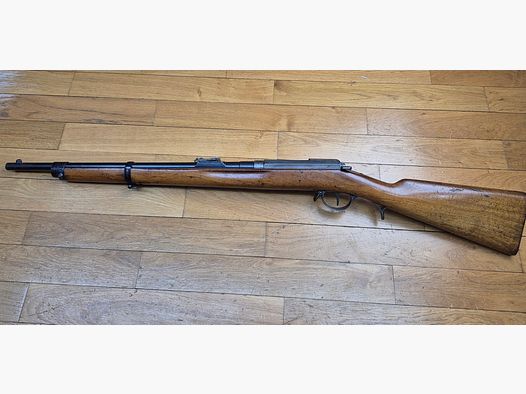
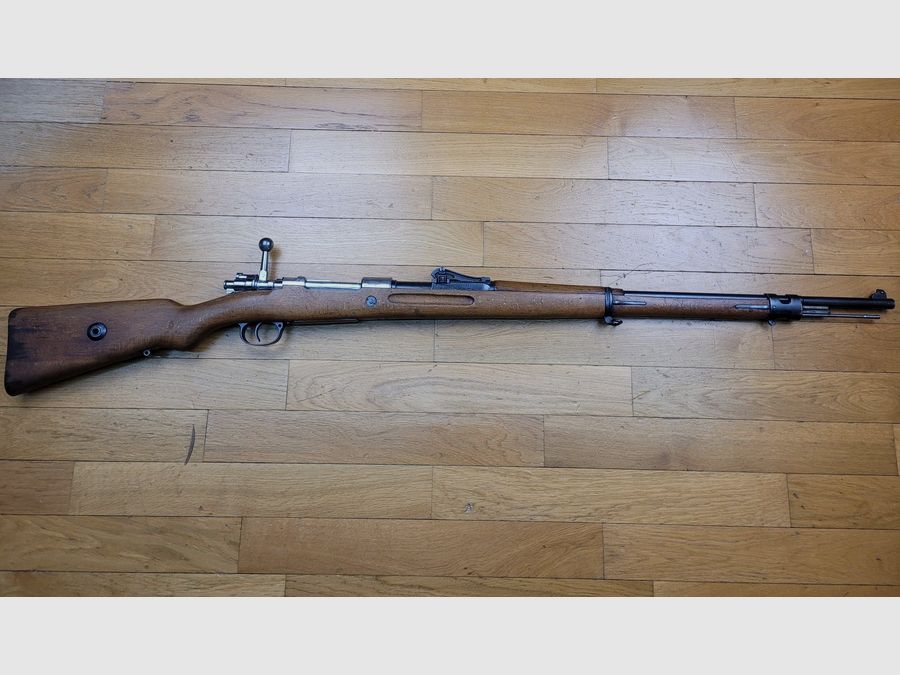


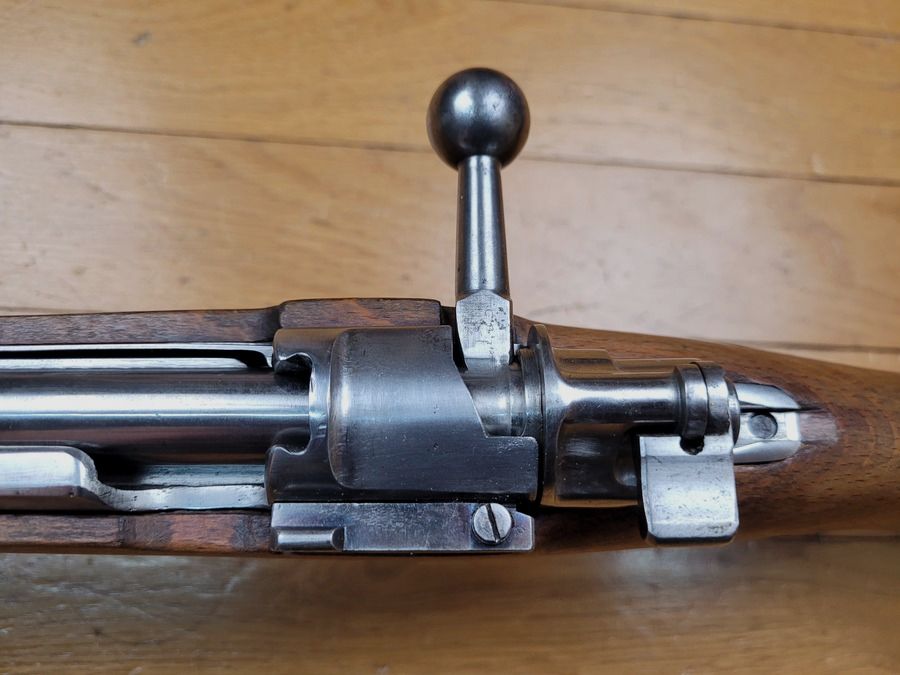

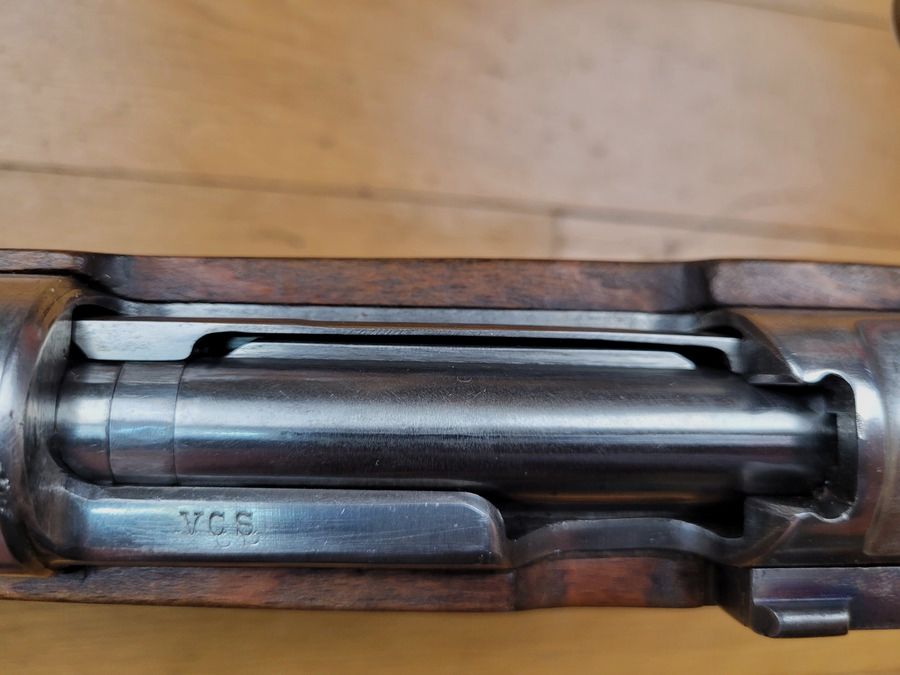
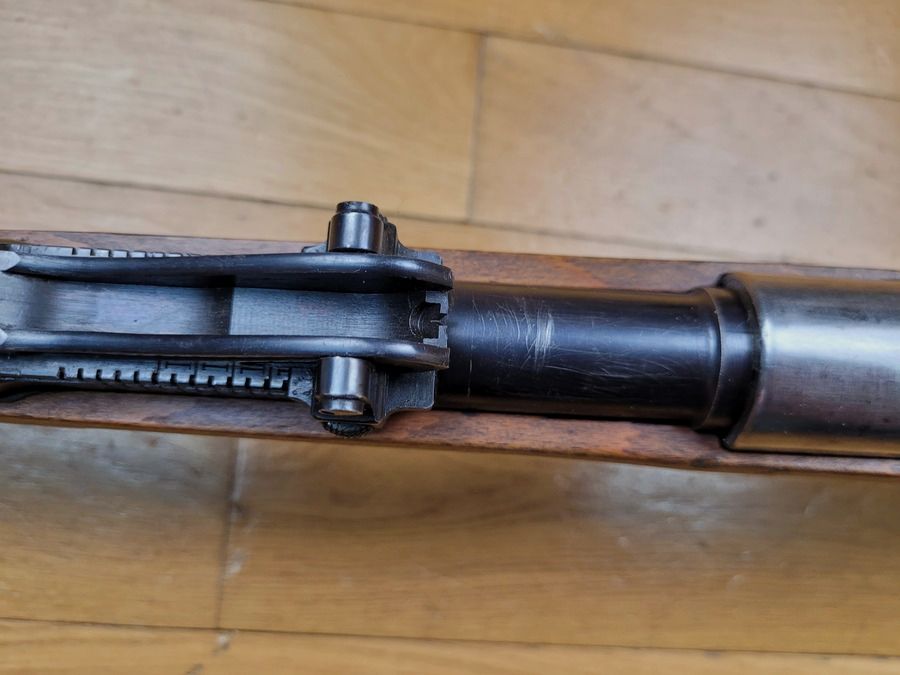

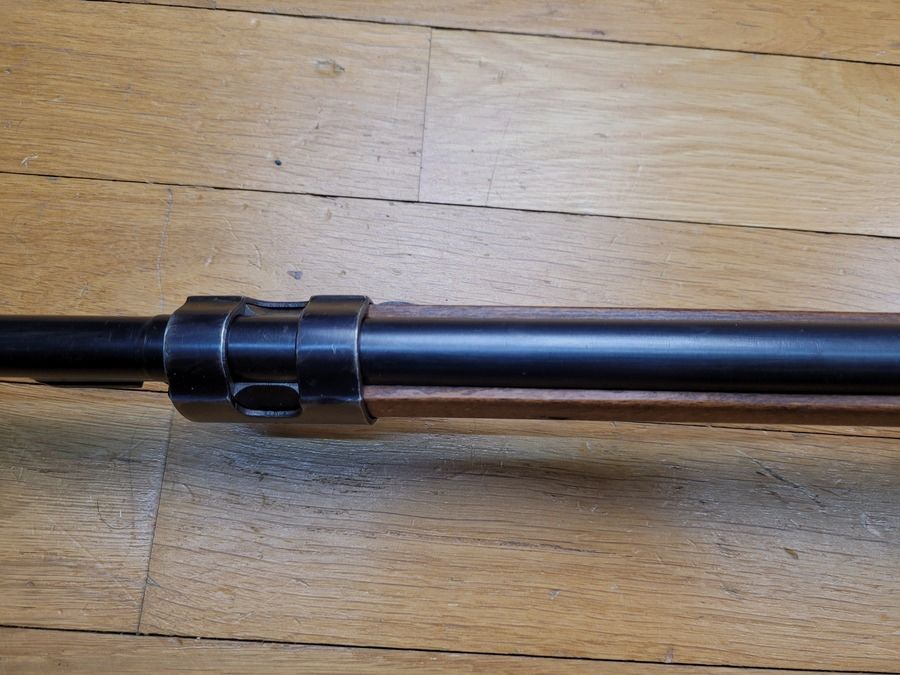
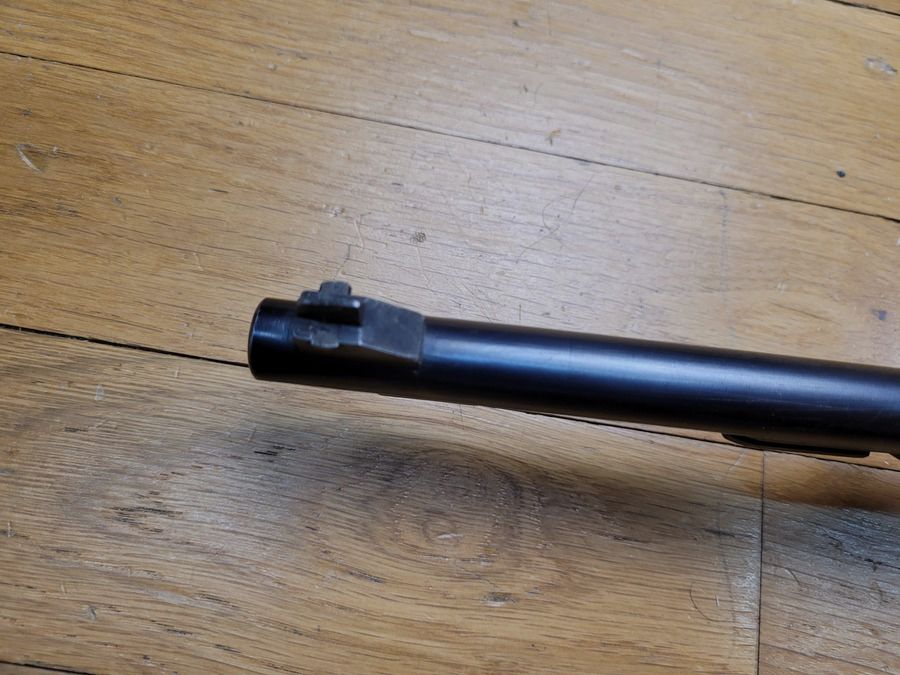
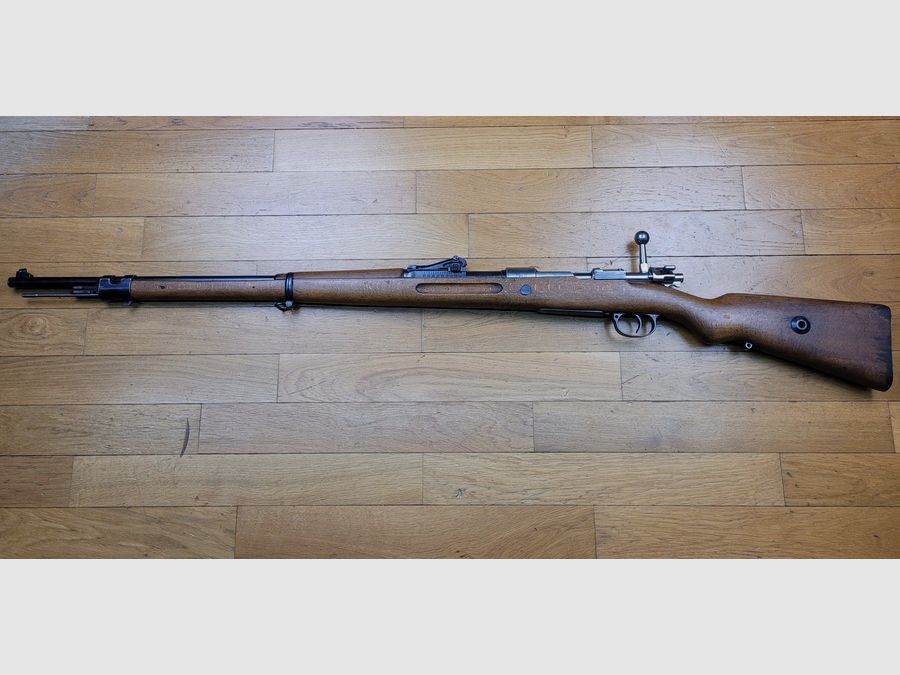
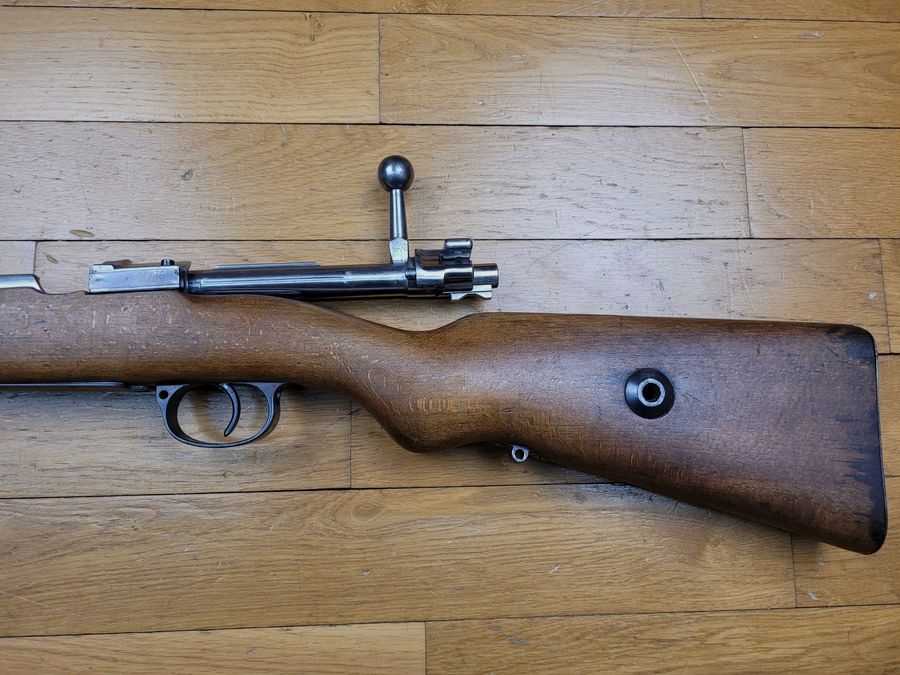

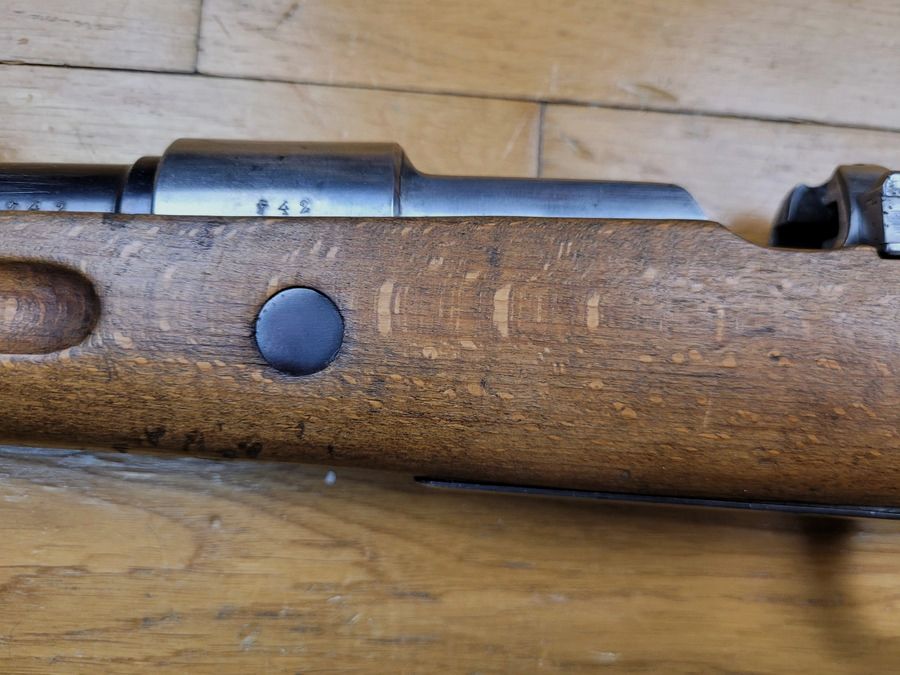

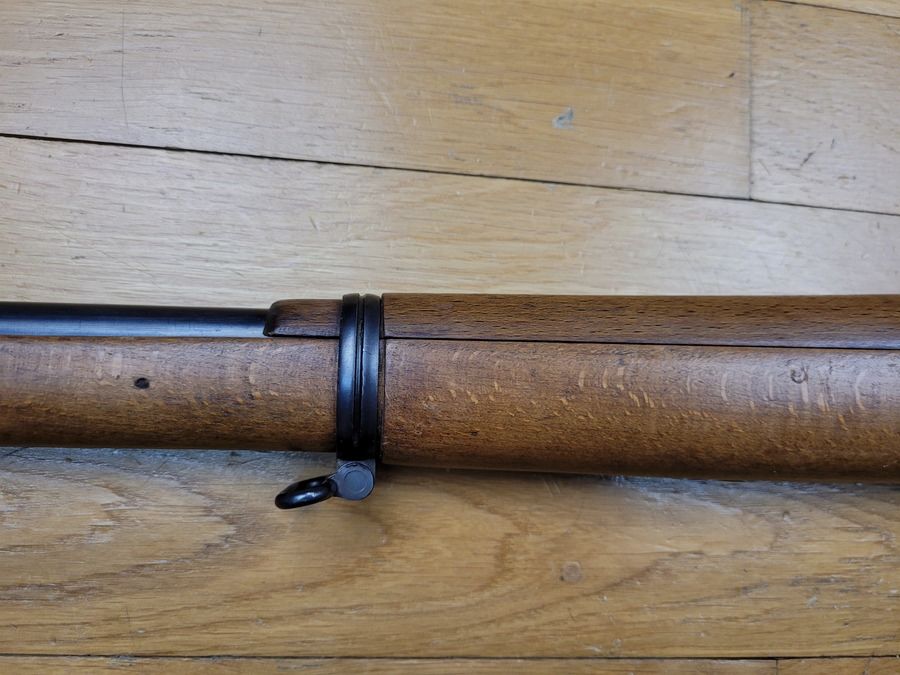
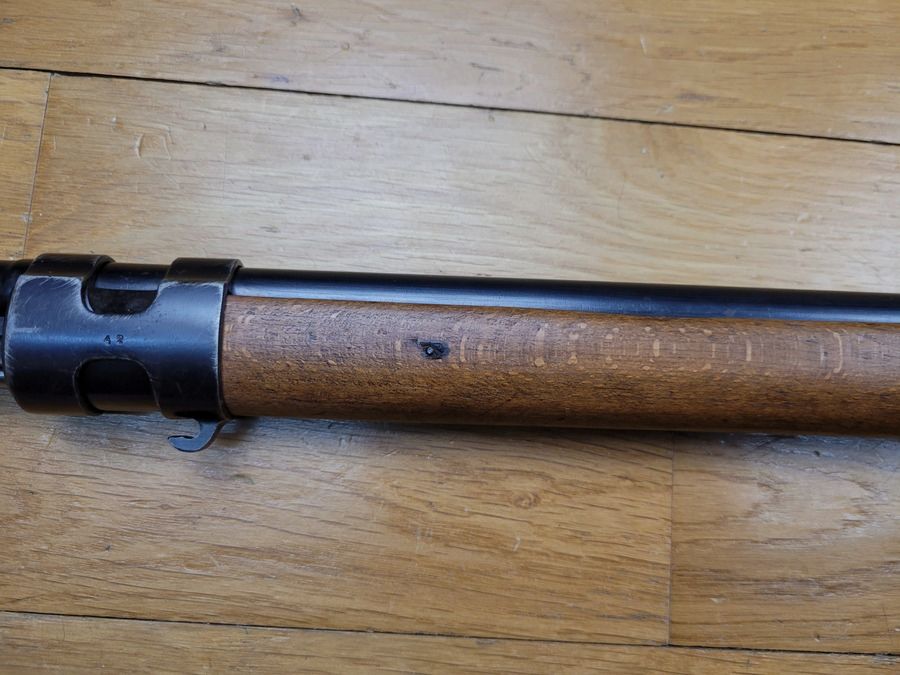
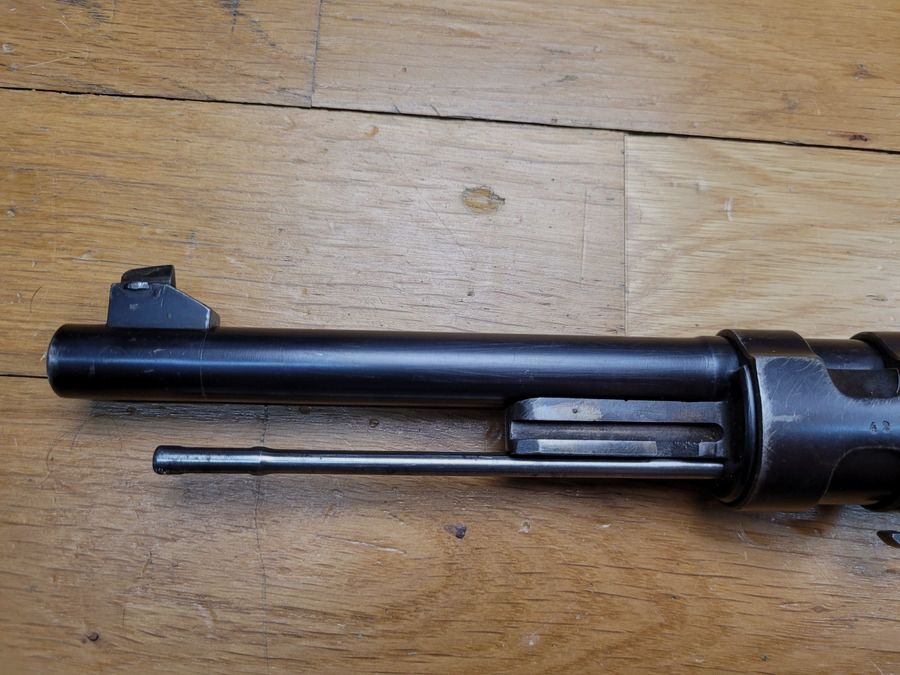
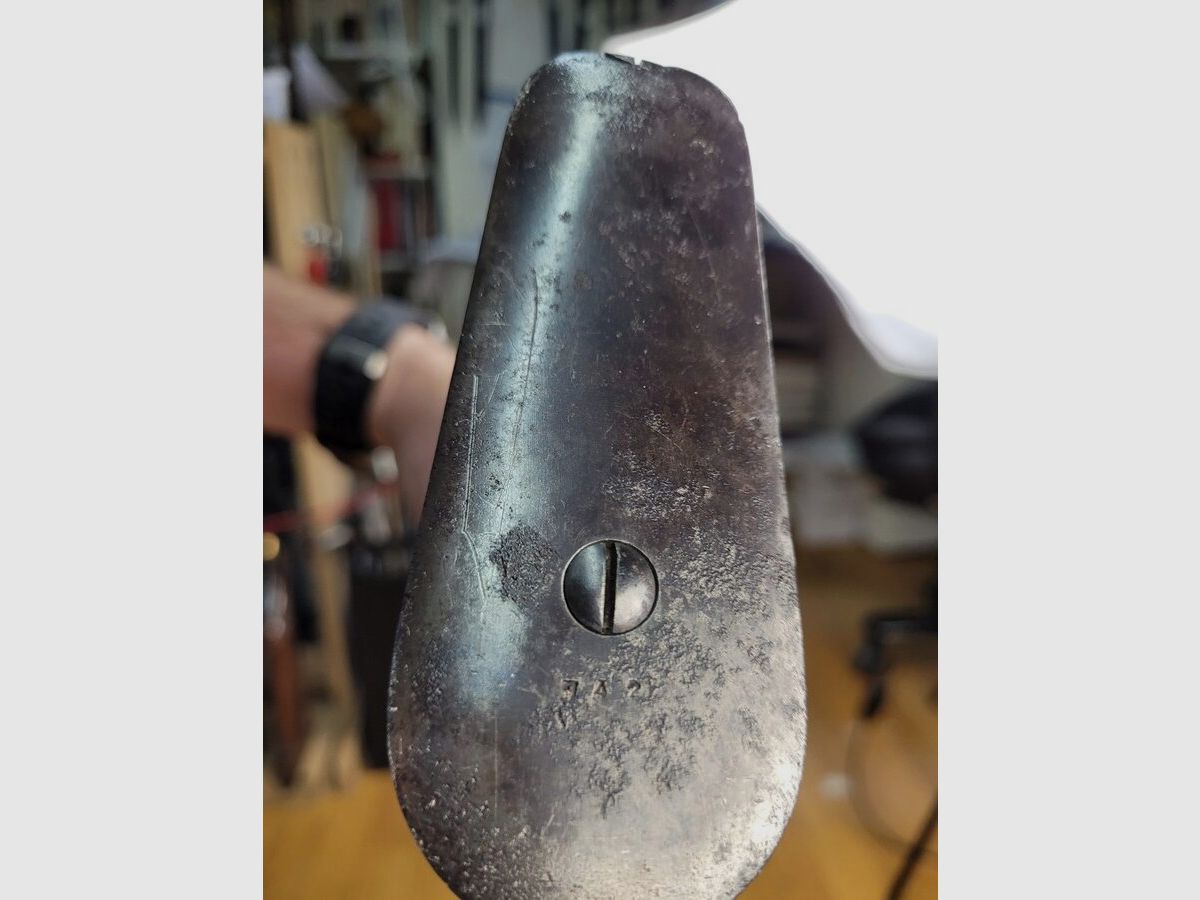


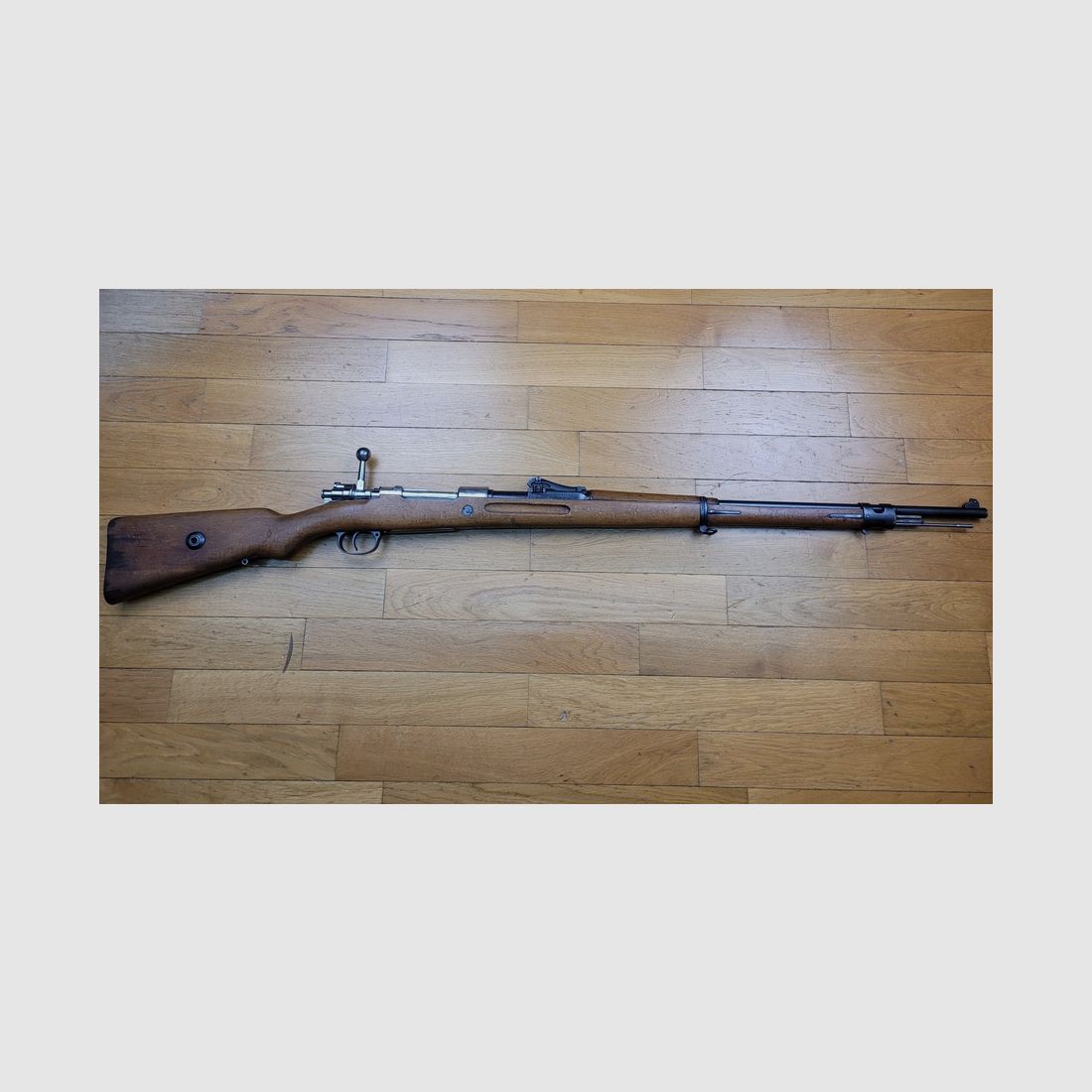




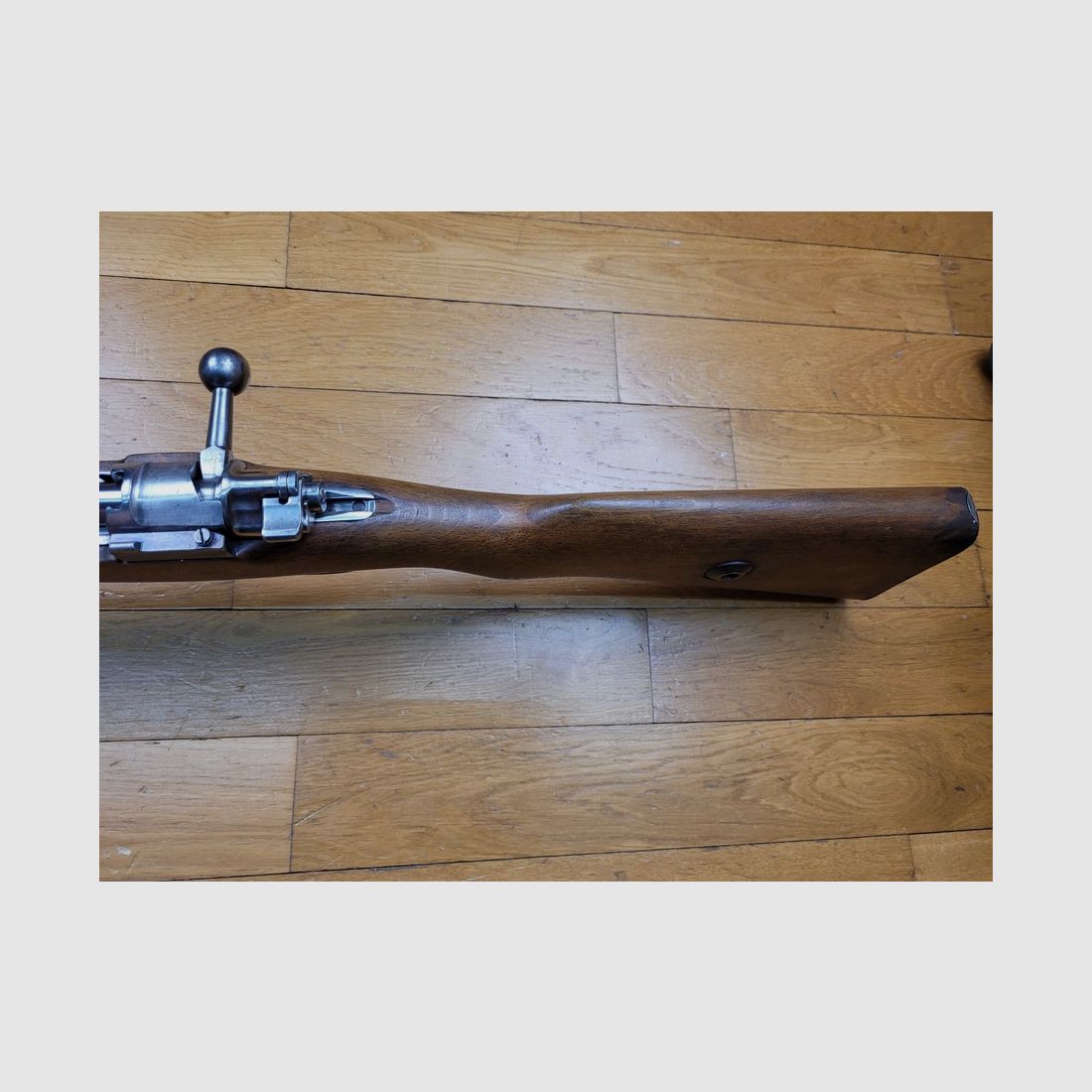
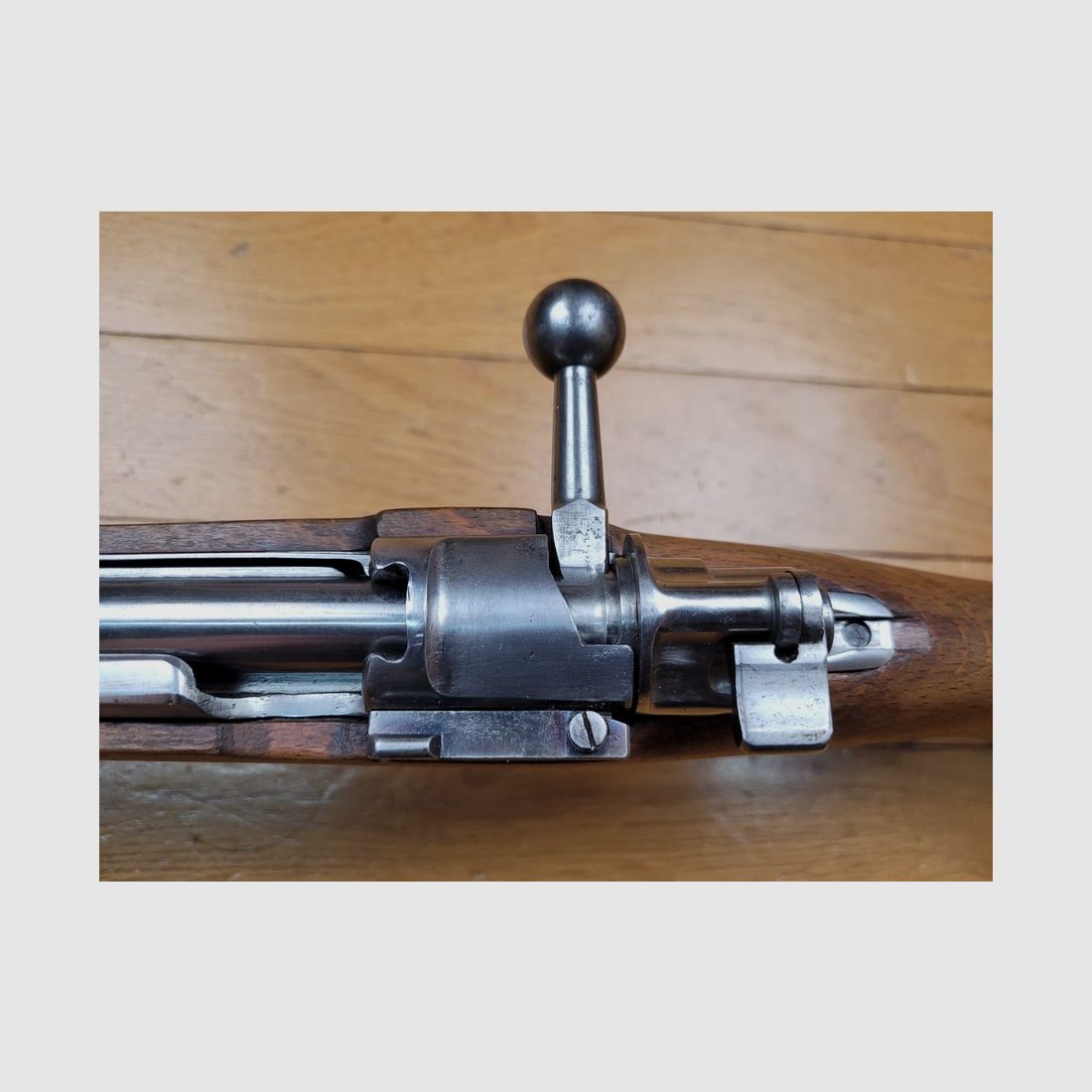



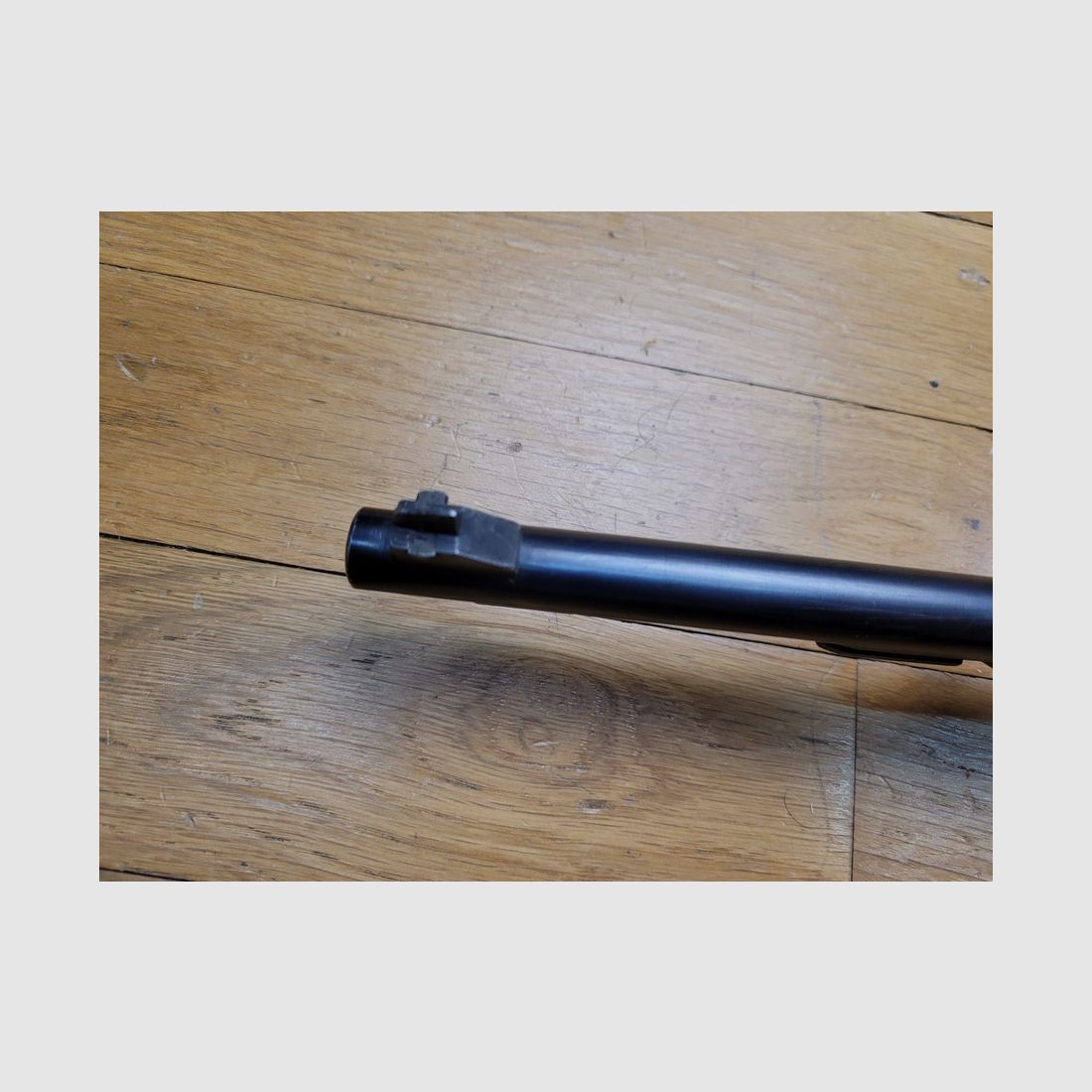
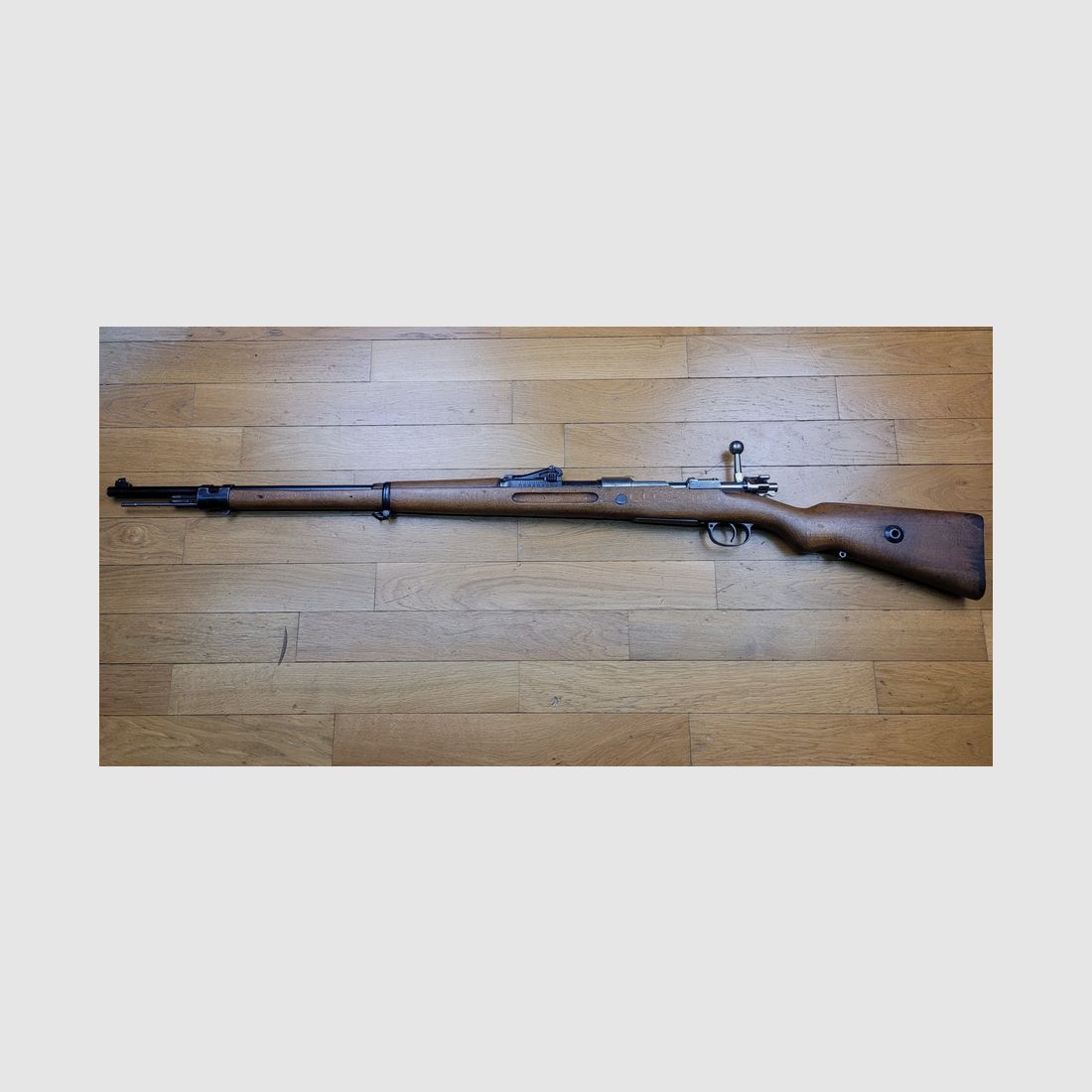







Very rare G98 Wehrmanns rifle – caliber 8.15x46R – rare civilian weapon of the 1898 system for Wehrmanns competitions – single shot – Weapon from September 1925 – TBE and very rare collectible item from the 1898 galaxy – TBE
≈ $879
Price at the dealer: 800 €. Converted at the ECB rate as of November 20, 2026.
Purchase permit required
75002 Paris, France
11
ID: 10338427
This item is currently unavailable.
Purchase from outside the EU: The firearm goes through an importer in your country, the dealer handles the export.
How buying from Europe works
Shop safely with Gunfinder
Our AI-powered seller identity verification makes Gunfinder the safest marketplace online.
Learn more
Details
- Original language
- French
- Category
- Purchase eligibility
- Required
- Caliber
- 8,15x46R
- Condition
- New
- Location
- 🇫🇷 75002 Paris, France
- Availability
- Out of stock
Freshness
This listing is based on a mirrored offer, where the listing data was synced to us from a shop, dealer, or external marketplace. Please note that temporary price discrepancies may occur due to possible delays in data transmission.
- Source
- Flingus Maximus
- Last checked with the dealer
- 1 day ago
Description
Note:
The item is located abroad. Please note that delivery conditions, shipping times, and/or the purchase process may differ.
The G98 Wehrmannsgewehr… What’s that?
Everyone knows the Mauser G98, or Gewehr 1898. An icon among 20th-century military rifles, it embodies the excellence of German engineering. Designed by Paul Mauser and officially adopted by the German army in 1898, this rifle became the standard weapon of the German armed forces during the First World War and, with barely any modifications, the Second.
Featuring an indestructible two-lug bolt action, a stripper-clip magazine and all the improvements patented by Paul Mauser since 1871, the G98 stood out from its competitors for its exceptional durability, firepower, impeccable manufacturing quality and accuracy. These qualities made it a weapon of choice on battlefields across every continent, from South Africa to China and Latin America.
Across the various national versions of the 98 produced around the world, perhaps more than 25 million firearms were made. A global success, Made in Germany.
But here we’re looking at one of the rarities of this system: a Wehrmannsgewehr 98.
Let’s go back to the distant past.
The French had a revolution. So they could have the right to hunt, too. French peasants had been hunting in large numbers since the 1820s, often using military or near-military calibers, at least at first. The French only took up shooting in large numbers under pressure, after the defeat of 1870, and most often with small-bore rifles—but starting at school.
The Germans had no revolution, and they weren’t allowed to hunt. Aristocratic landowners reserved that right for themselves. And it stayed that way long after 1918. So ordinary citizens took up target shooting, making them more like the Swiss and Austrians than the Gauls or Latin Ligurians.
Germanic tribes most often used beautiful, decorated and carved civilian Schützen rifles, first with rolling-block actions, then with bolt actions. Two centerfire cartridges eventually came to dominate competitions: the 9.5X47R and our 8.15 X46R of the day, which would go on to outshine the others in the German-speaking world.
An excellent target-shooting caliber, offering optimal accuracy for 300-meter open-sight shooting without any trouble. If your eyes are up to it. The cartridge is similar to, but not interchangeable with, the US 32-40. It can be made from 30-30 brass using a lead bullet. The dies are available from Hornady.
In 1897, a Dutchman introduced a new three-position competition: prone, kneeling and standing, offhand, at 300 meters, using the sporting 8×46 or 8.15×46 caliber with a 150 gr bullet. The Wehrmannsgewehr was born. That was originally the name of a civilian shooting competition with a distinctly military flavor. You might call it a kind of applied TAR.
It caught on, but remained a modest success in Germany, which carried on with its traditional civilian competitions, in the style of William Tell, using Schützen rifles.
Shortly after the Heer adopted the 98, Mauser added a rifle to its catalog for these events: a military rifle for civilians, which was simply a G98 barreled in 8.15, the leading caliber among Germanic sport shooters at the time. Mauser gave it the name Wehrmannsgewehr. From 1909 to 1913, Mauser produced around 1,800 of these civilianized military rifles for shooting clubs, in 8.15X46R. I want to stress that these 1898s were entirely civilian.
As surreal as it may seem, they continued to produce a few of these competition Wehrmannsgewehr rifles during the war, even as military orders were pouring in and the German war industry was already struggling to produce what the war demanded.
Probably to support military training at shooting ranges. How many were produced in 14-1
8? I don’t know. But 1,227 from 1916 to 1922, so perhaps around 2,000/3,000 or fewer between 1914 and 1922. Pure speculation, but it seems fairly realistic. In any case, you never see any of these.
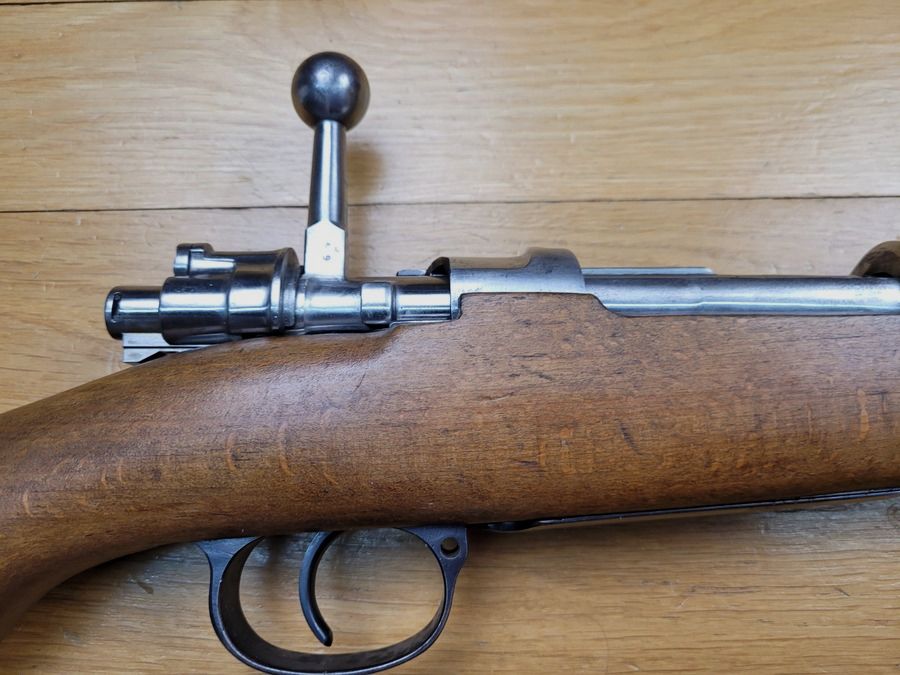
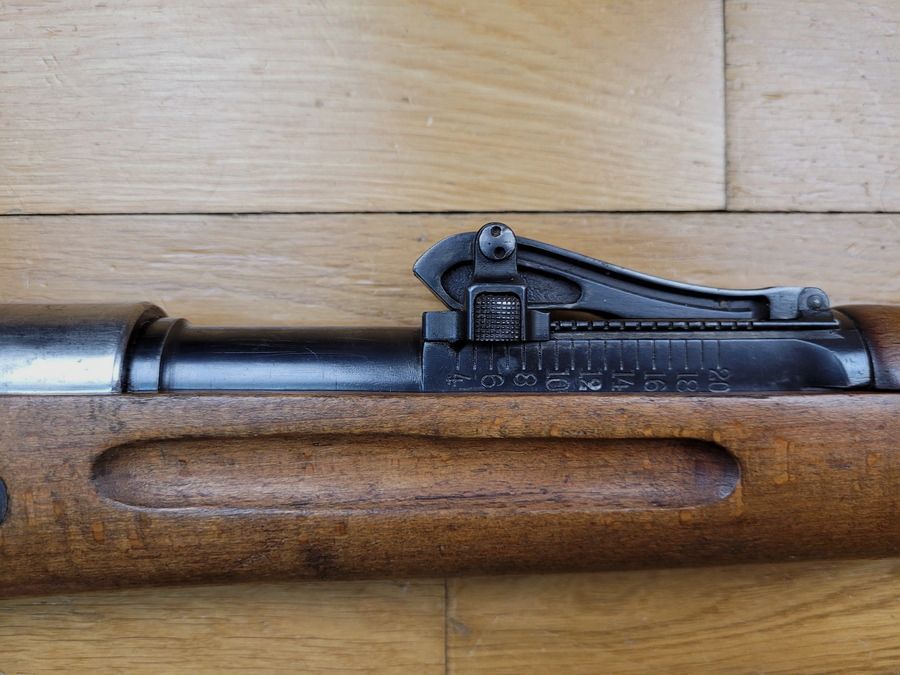
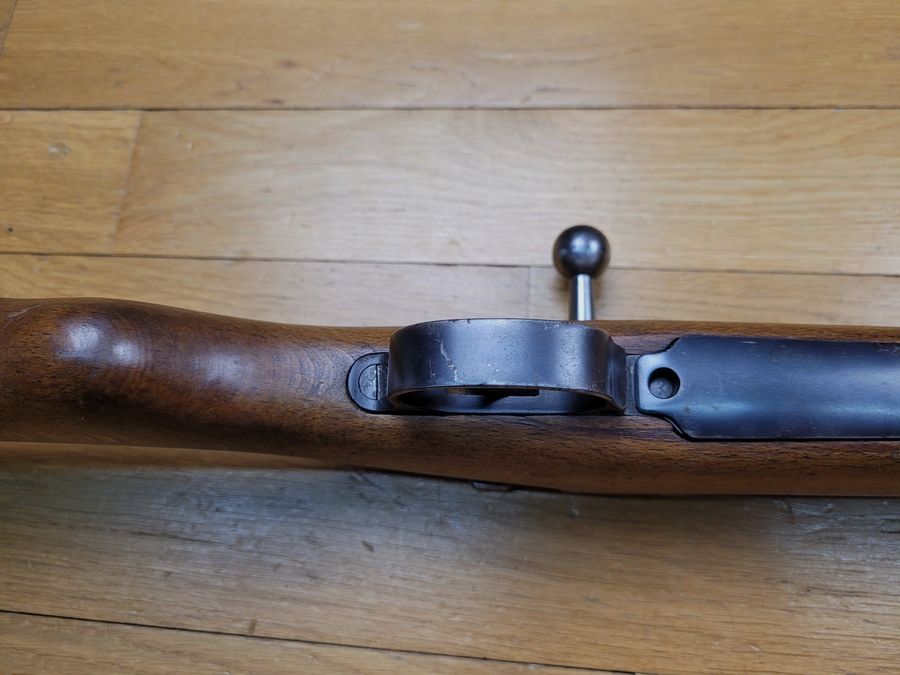
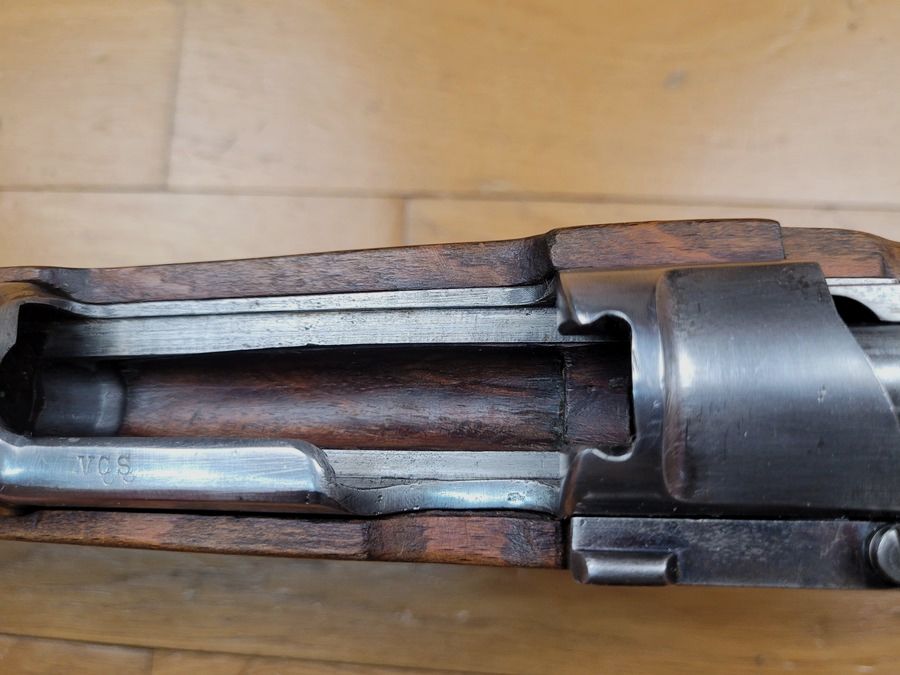
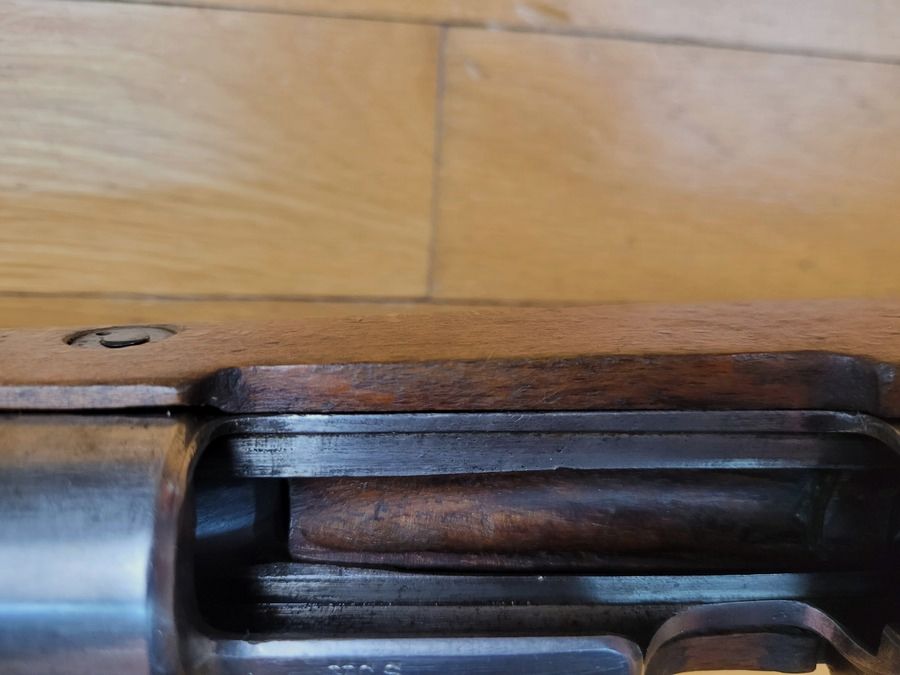
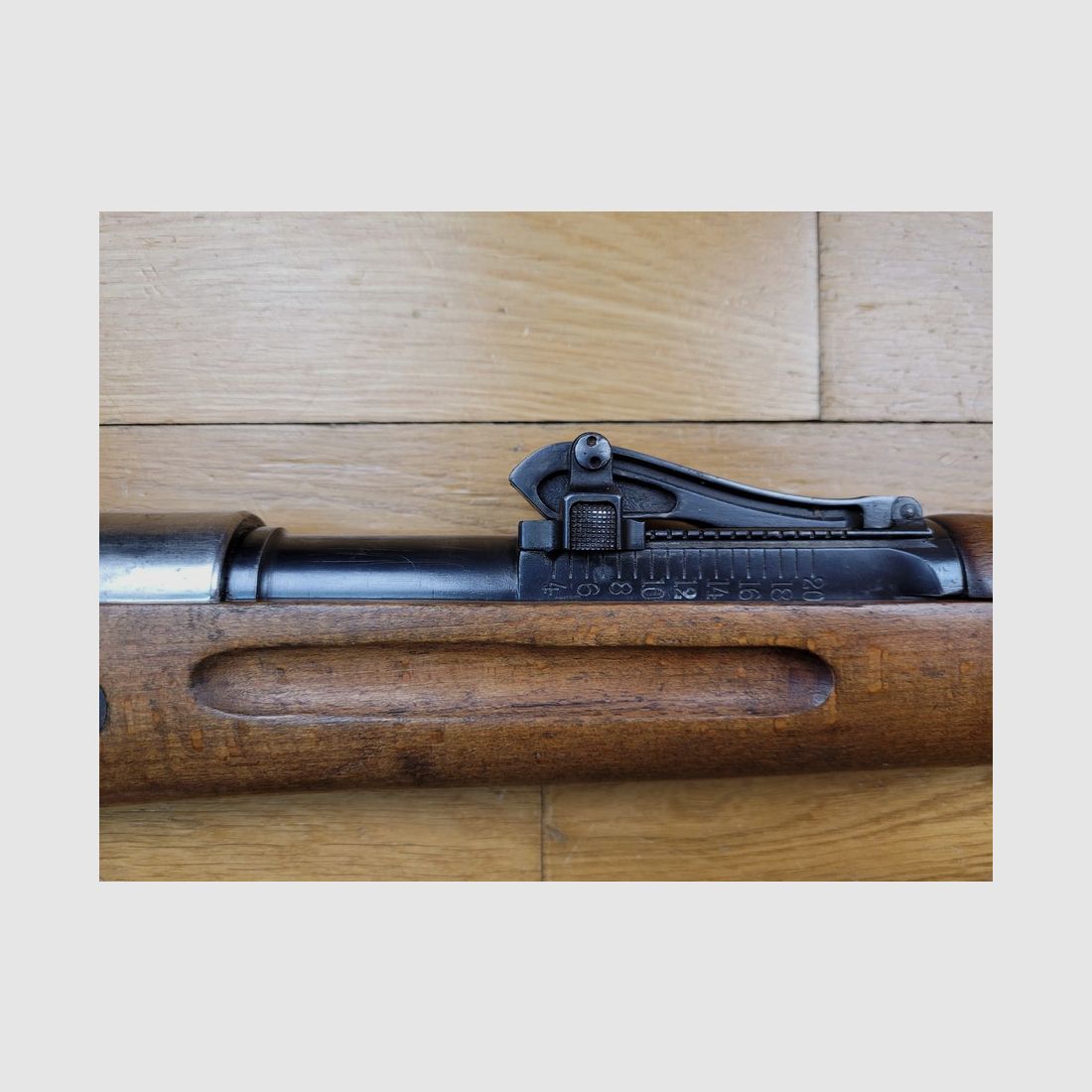
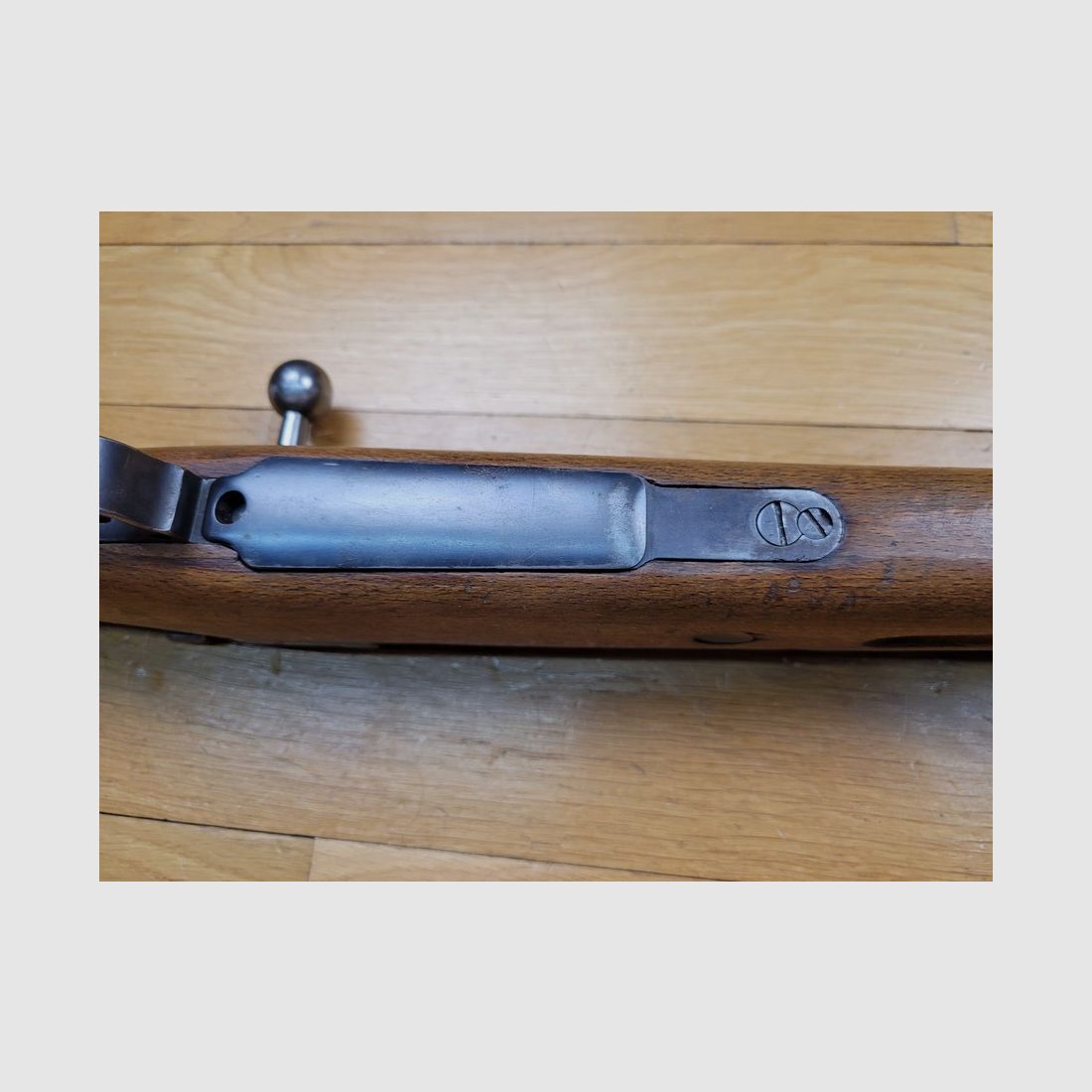
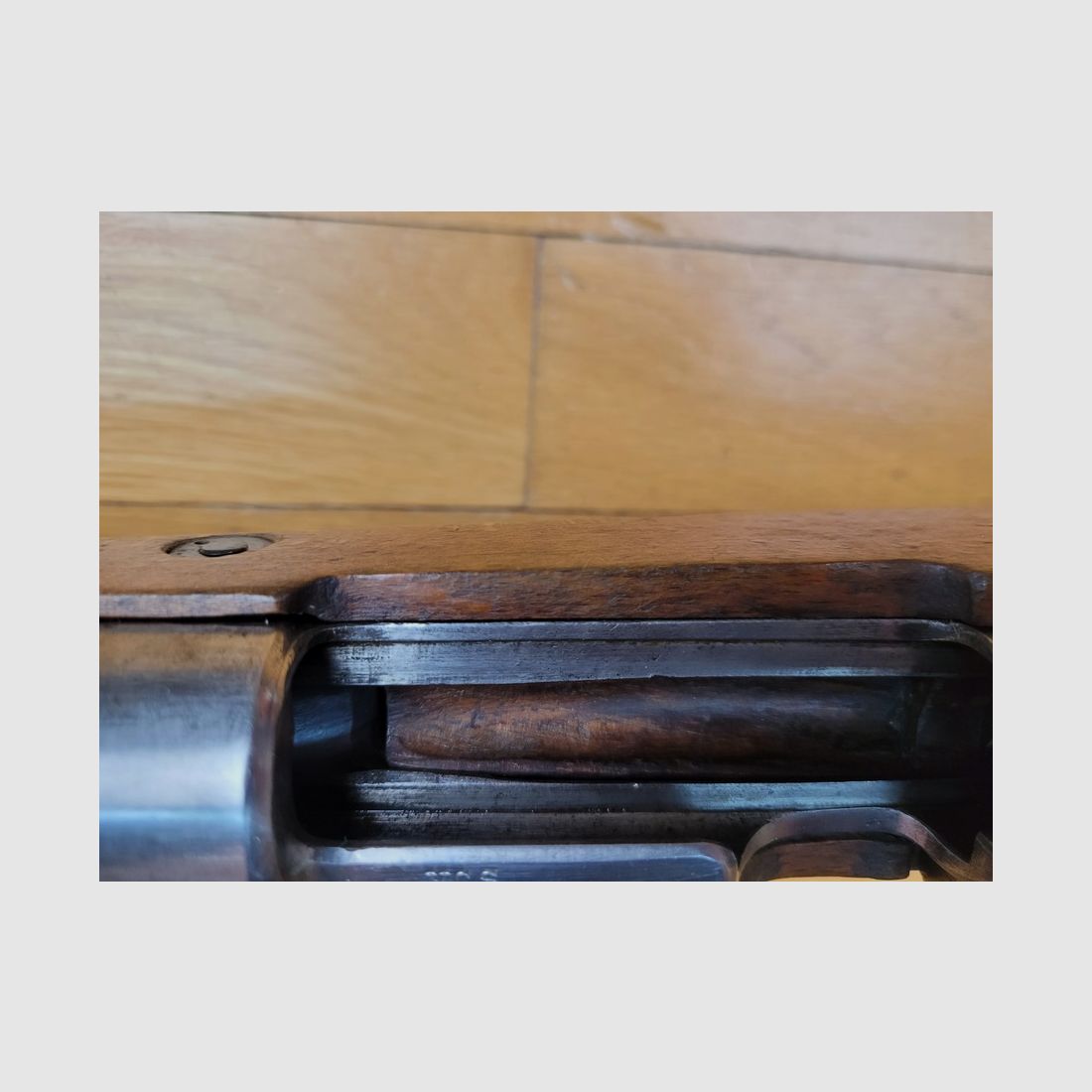
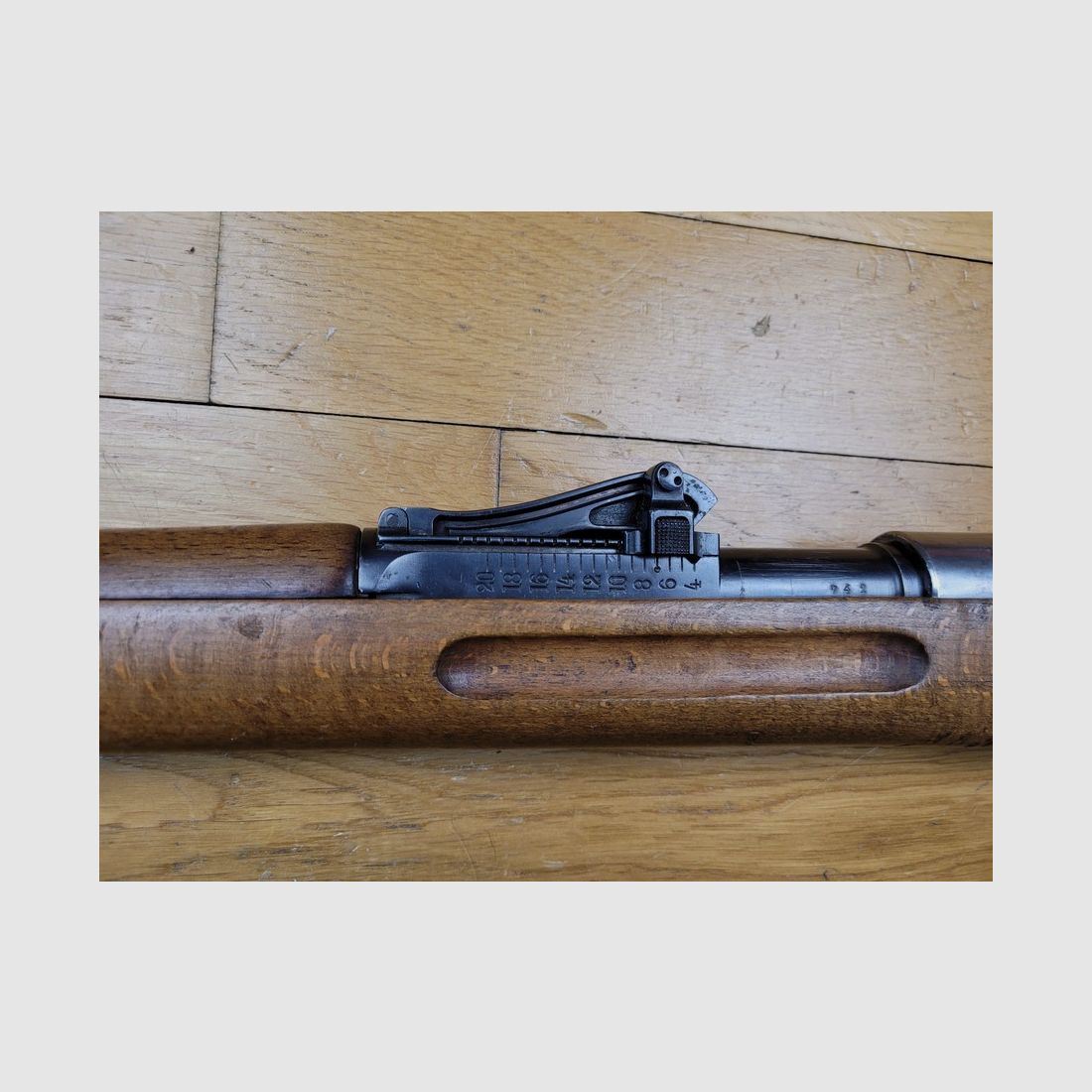
As far as I know, only “Momo” produced them at that time, up until after 1918. They’re all “classic” G98s, very close to the service rifle, with the roller-coaster rear sight and straight bolt handle, but chambered directly in 8,15 and converted to single-shot rifles by adding a wooden block in the magazine that presses against the follower.
But interest in this type of Wehrmanns competition and these rifles would grow again somewhat after the end of the First World War and with the restrictions imposed by the Treaty of Versailles.
To keep training in a world of restrictions, some people returned to Wehrmanns competitions and the good old pre-war 8,15×46, which wasn’t under close scrutiny and was therefore not almost banned like the standard 8×57 of the German army.
These civilian rifles thus returned to the market, especially in northern Germany (the south, culturally closer to Austria and the Swiss, was still very much Schützen Buschen).
In fact, during this period between the defeat of 1918 and 1933, not many people shot .22LR. This caliber would only become widely used for training from around 1927/30, and even more so after 1933, with the arrival in power of the agitated little man with the mustache, who would promote truly widespread training in this caliber, requiring many more, smaller ranges (50 meters instead of 300) and mass production of .22LR rifles, financially supported by the government.
The goal, type of competition, and scale were changing, so the caliber, rifles, ranges, and budget changed too. After all, .22LR is also significantly cheaper than 8,15, especially at these very high volumes.
But there you have it. You now know what a Wehrmanns Gewehr is and why you might sometimes come across a superb, new G98 that looks military, yet is 100% civilian and chambered in 8,15×46.
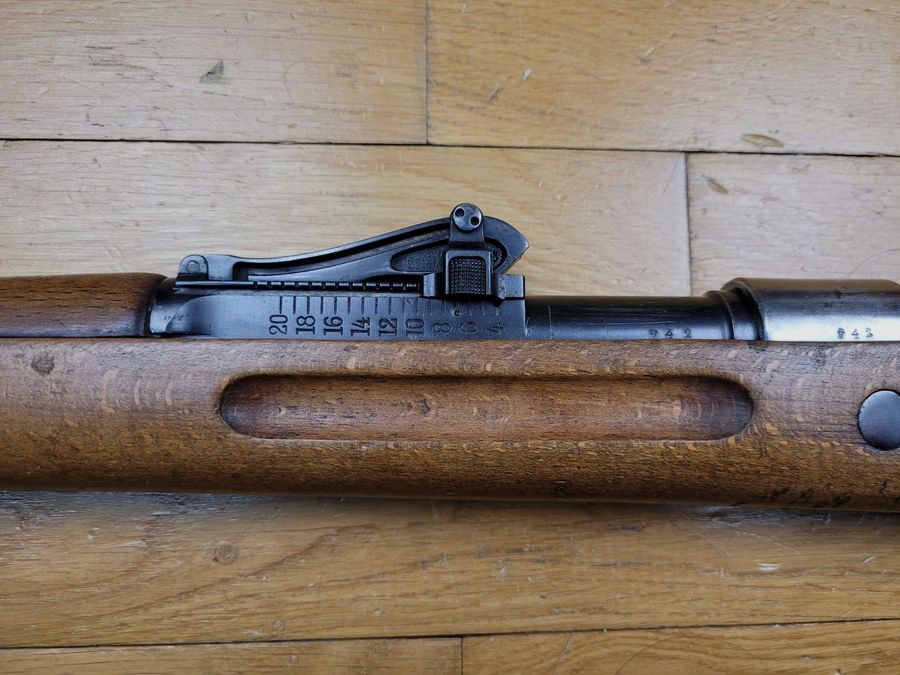
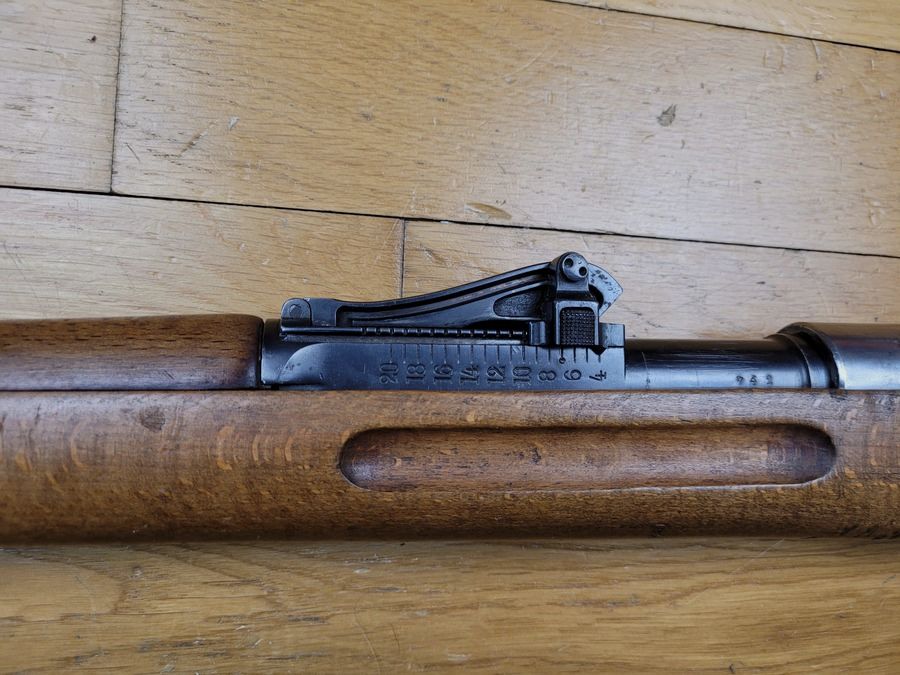
So, broadly speaking, we can distinguish three types of G98 specifically designed for these Wehrmanns Gewehr competitions: those produced by Momo before 1922, still with a snail rear sight, straight bolt handle, and Mauser Banner. Then there are rifles like ours, made from surplus G98s converted to single-shot rifles and rebarreled in 8,15 by three or four manufacturers between 1922 and 1930. Some have a flat rear sight, others a snail rear sight, with or without receiver markings from factories that operated during 1914–18, and were intended for those looking to get back into Wehrmanns competitions between roughly 1922 and 1930.
And finally, a few more produced by private industry under the emerging Third Reich, in addition to the regime’s many .22LR rifles, with different ejection ports, bent bolt handles, and flat rear sights this time. These were the last version before the Einheitgewehr (another topic Maître Flingus will cover another time).
So there are at least three main types to collect for a G98 enthusiast. Like me, for that matter. Much more than the K.
How many of these Wehrmanns Gewehr were made?
From the cross-checks I’ve done on US sites, very few.
I gave the figures for Momo’s 1914–1922 production. The Gewehr 98s converted to 8,15 in the 1922/30 period are also very rare. We know of some (still) from Mauser, Haenel, and VCS. Catalog prices were around 90/120 DM, probably because these robust rifles required all-steel parts, the necessary rebarreling, and their finish.
In any case, they were absolutely prohibitive for Germans impoverished at the time. Once again, these were civilian rifles bought privately for a particular type of competition, not things mass-produced to be distributed to populations eager for revenge…
Perhaps 5/6,000 in total for all the
models of Wehrmanns Gewehr combined. Probably a little less. And most are now in the USA, scooped up in the great bazaar of Germany’s defeat in 1945 and the looting of the country by all the Allies—which, as a fitting turnabout, followed the Germans’ gigantic plundering of everything in Europe between 1939 and 1944.
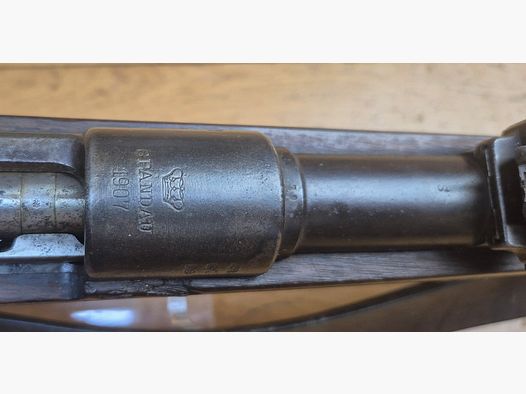
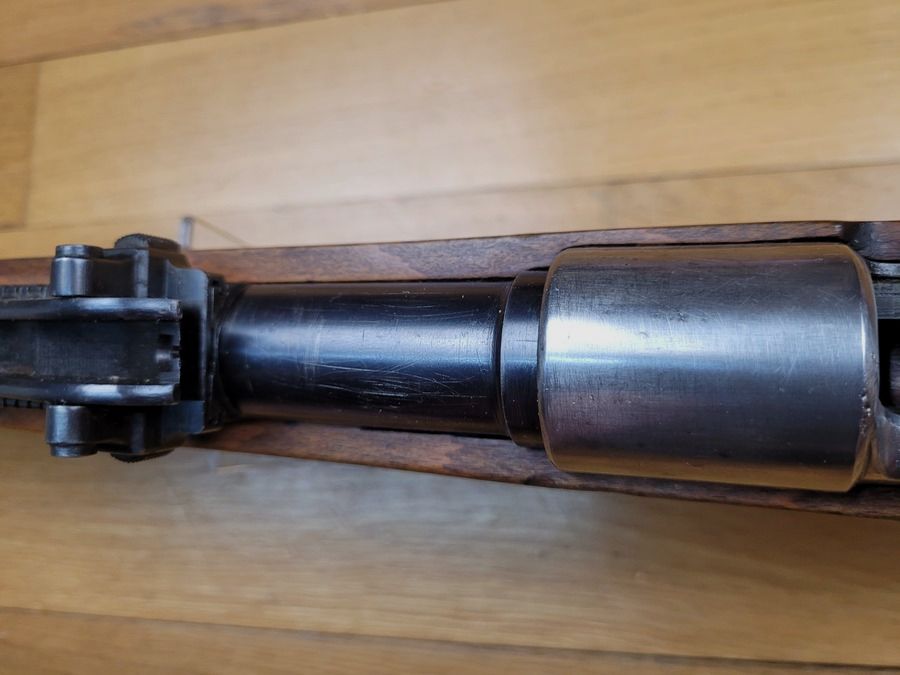
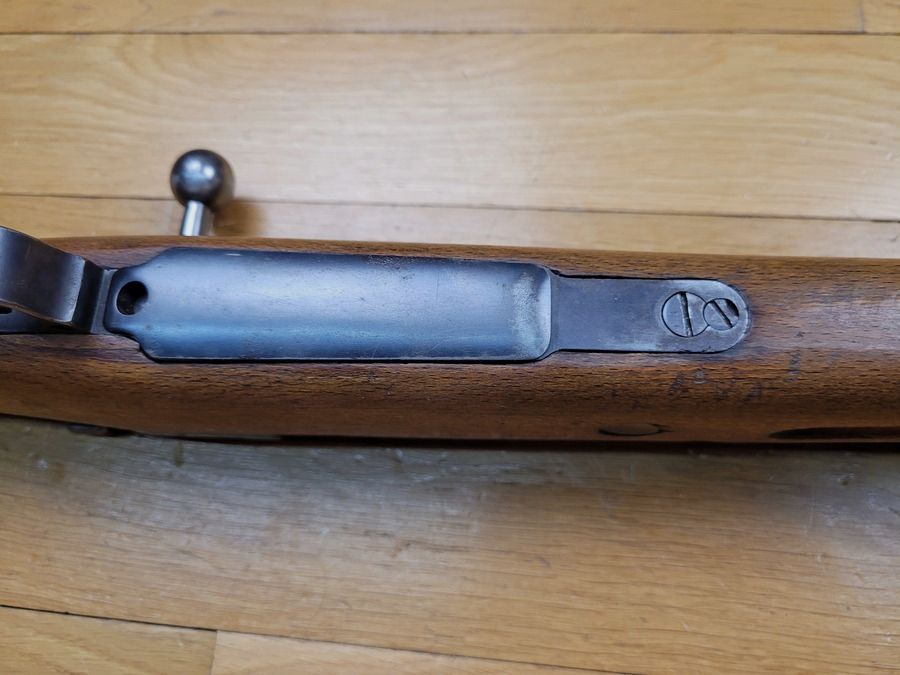
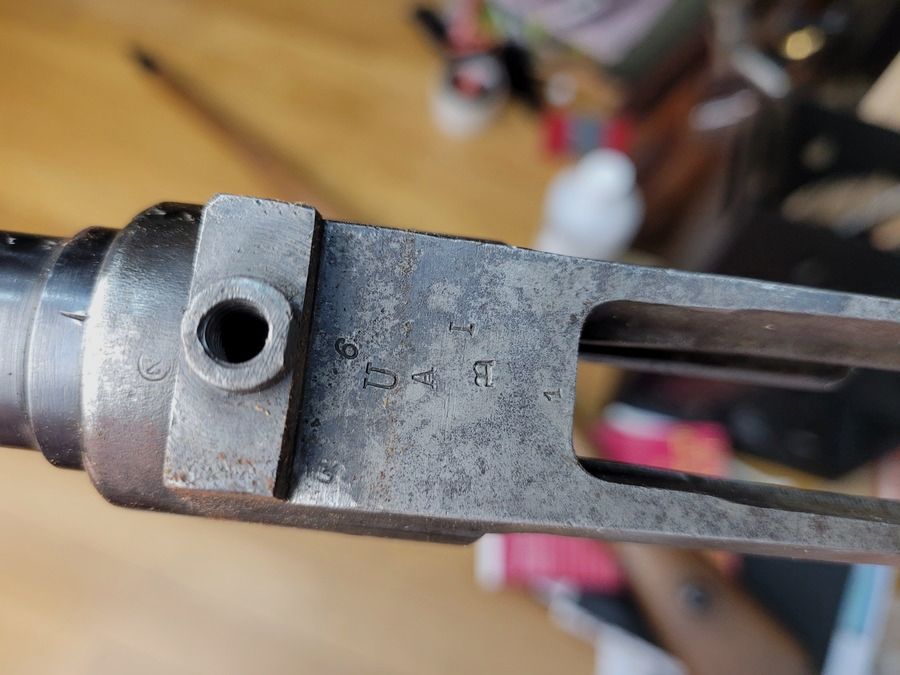
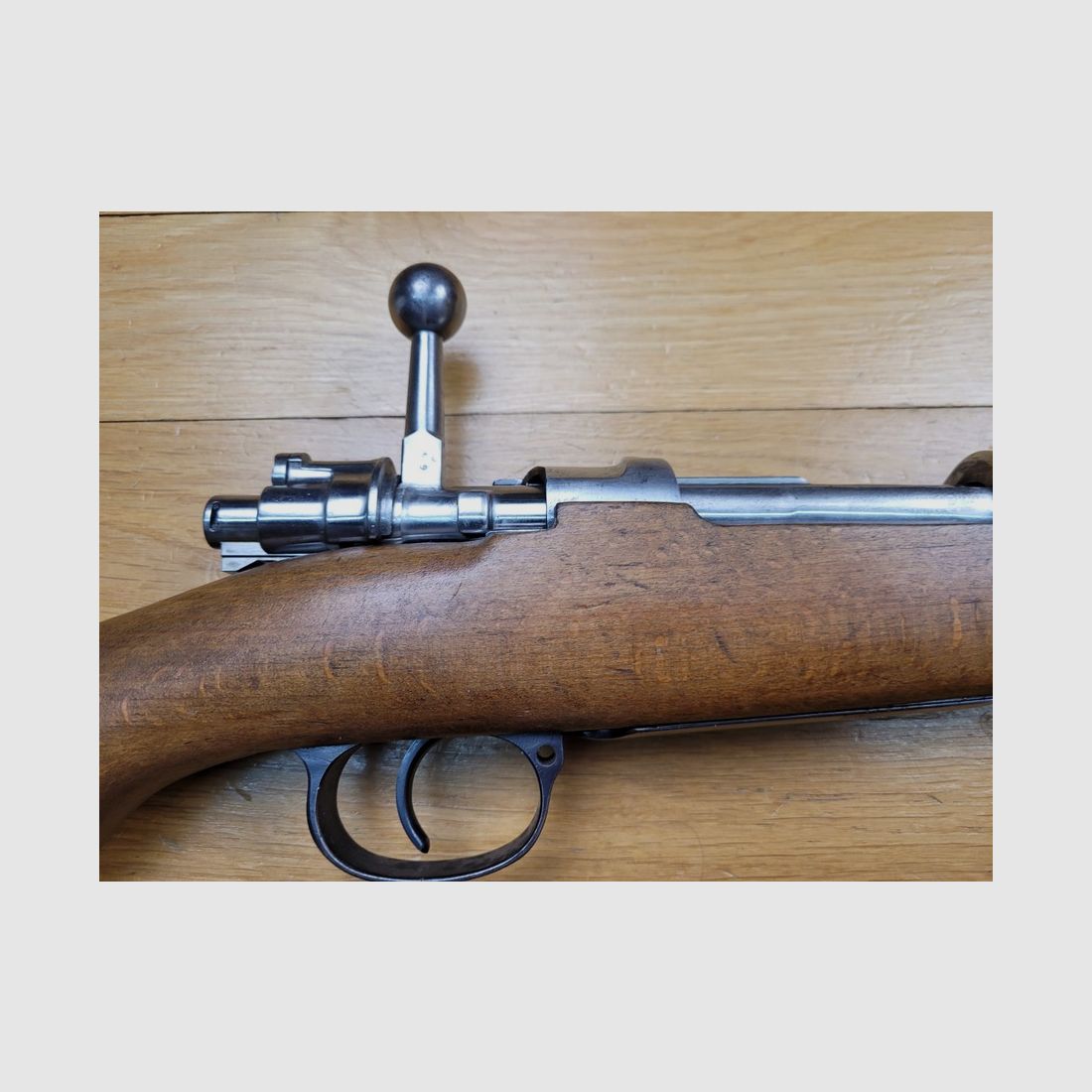
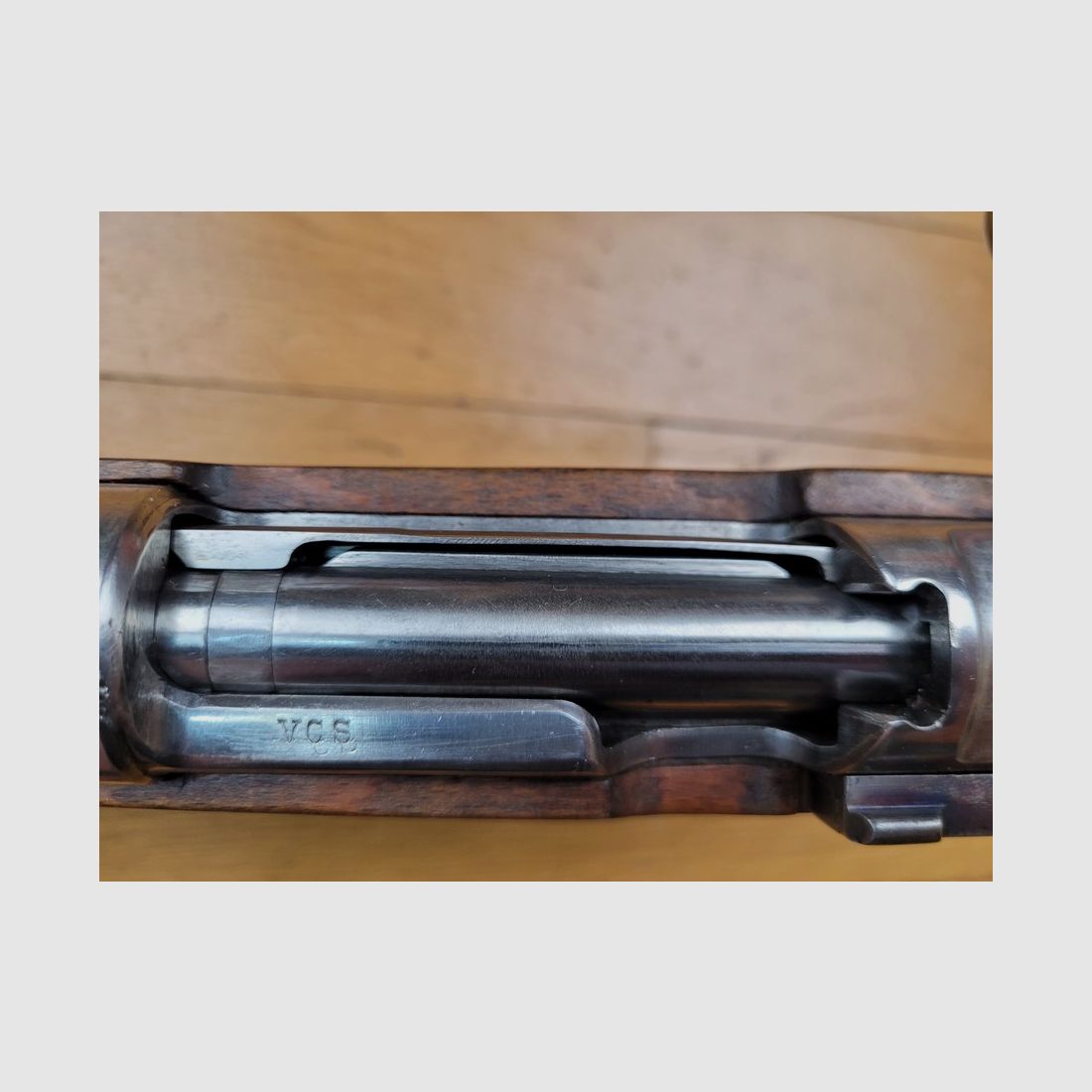
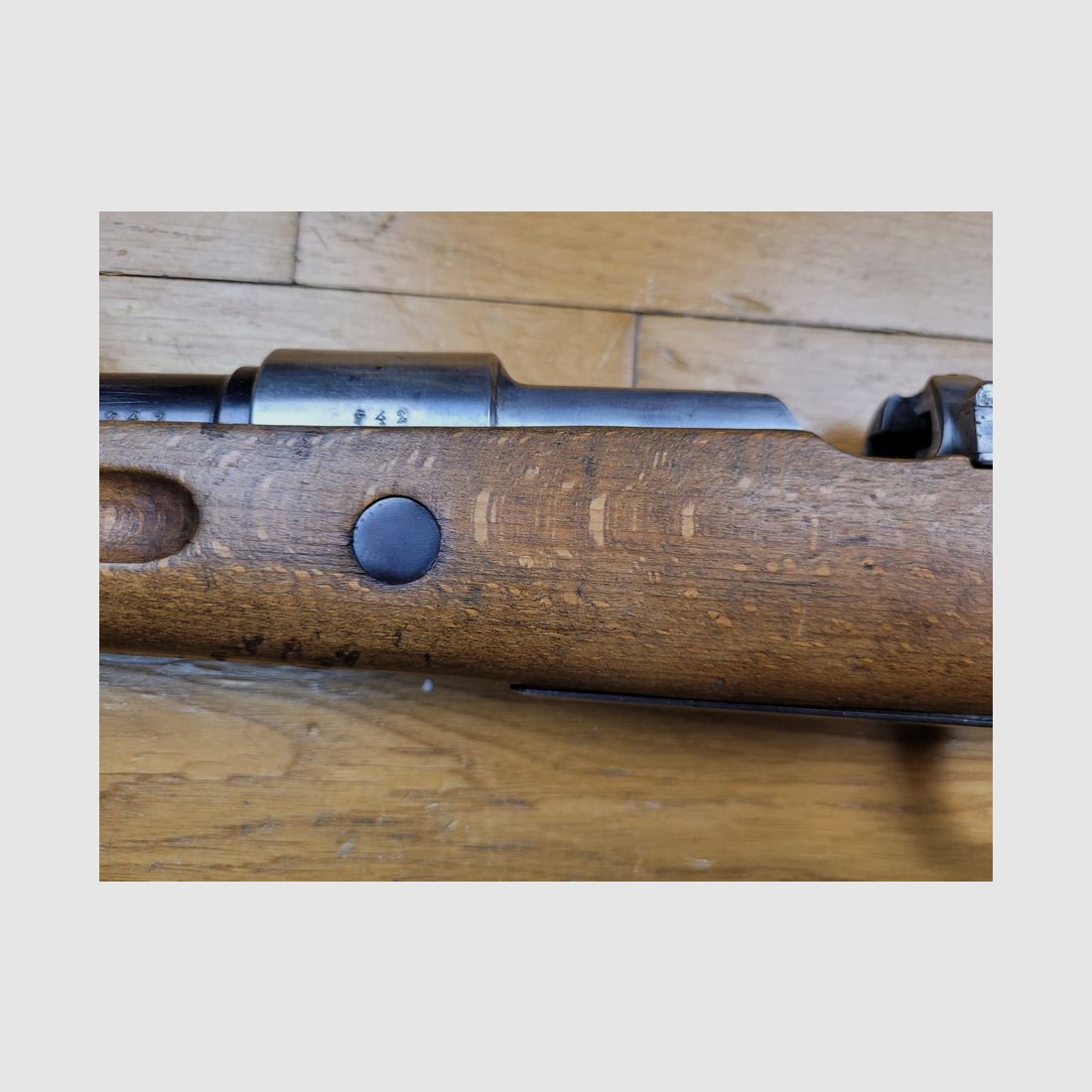
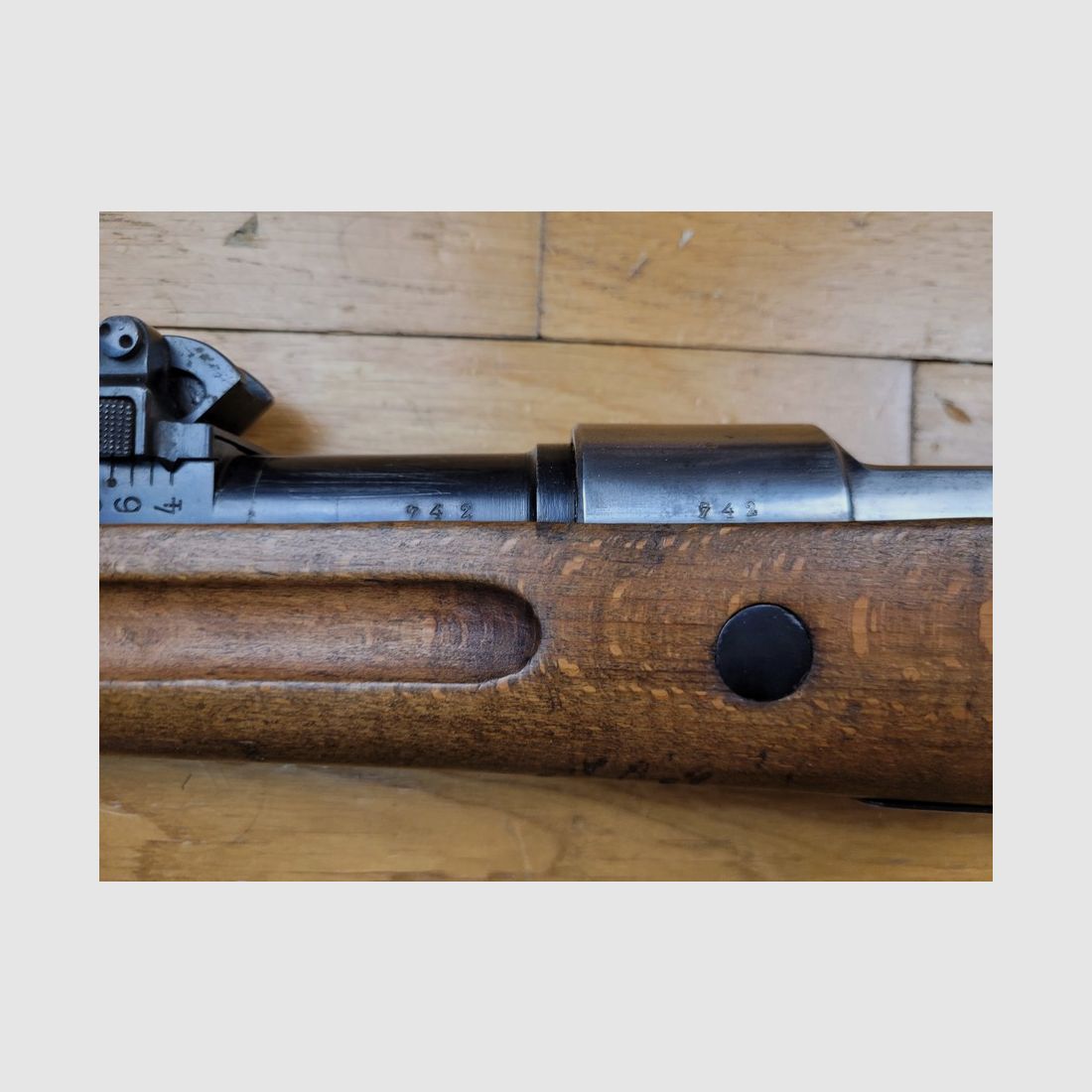
Our firearm today is typical of the few made for Wehrmanns competitors in the 1920s and 1930s. It is entirely civilian, built on a G98 action and receiver from VCS (Schilling in Sühl). This is the only surviving mark that might point to original military use, on the edge of the receiver. The traditional maker’s mark and production date usually found on top of the chamber have either been professionally removed or were never applied in the first place. No scratches or file marks—work made in Germany in those years.
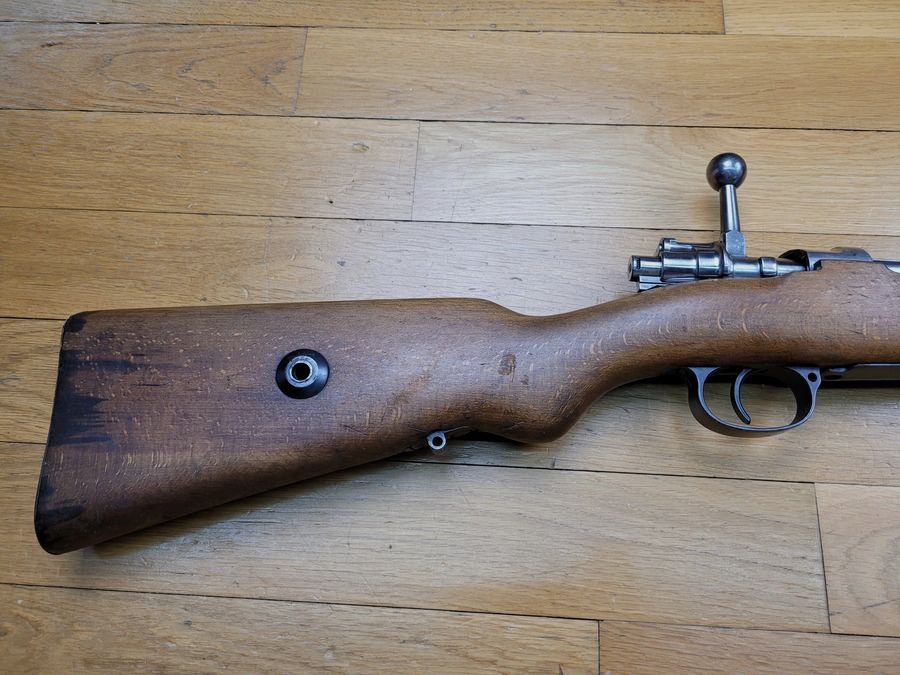
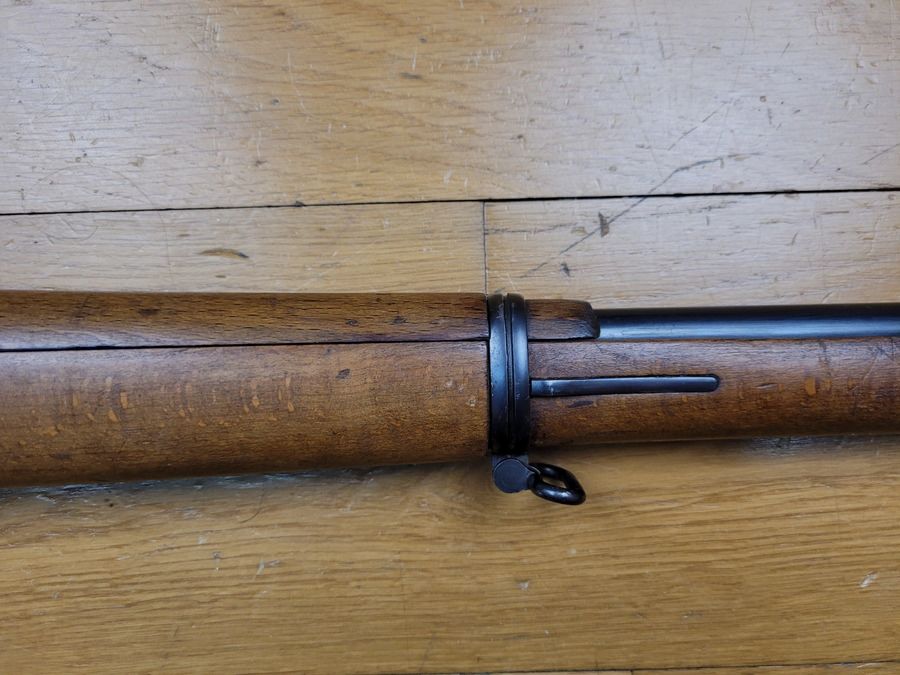
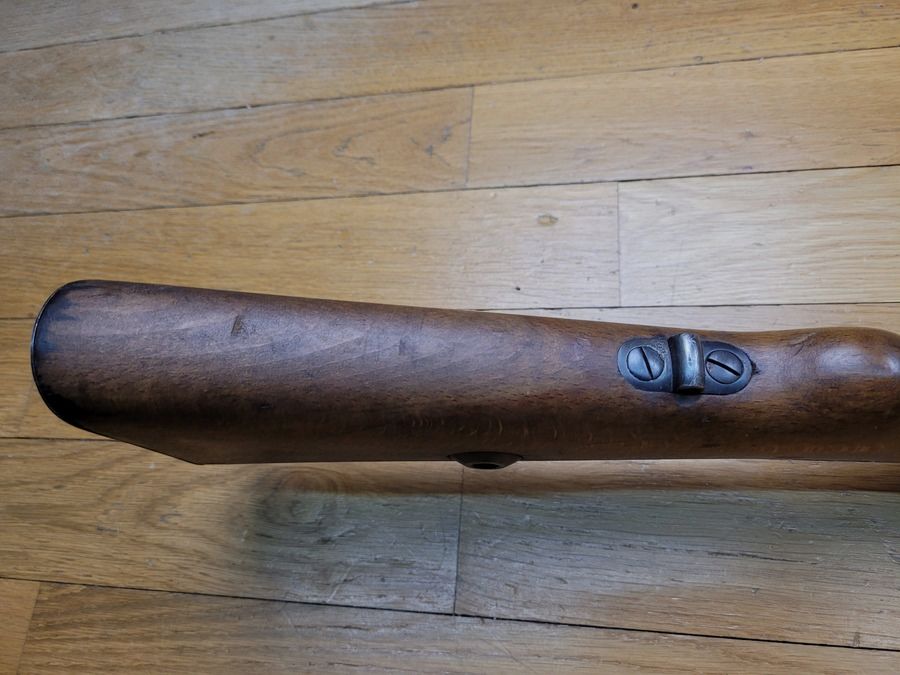
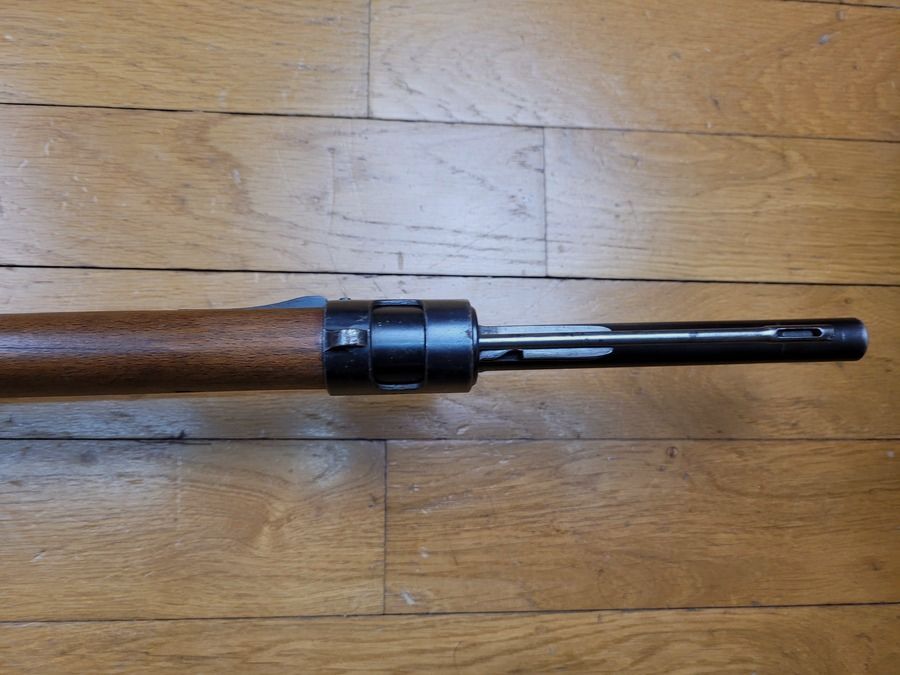
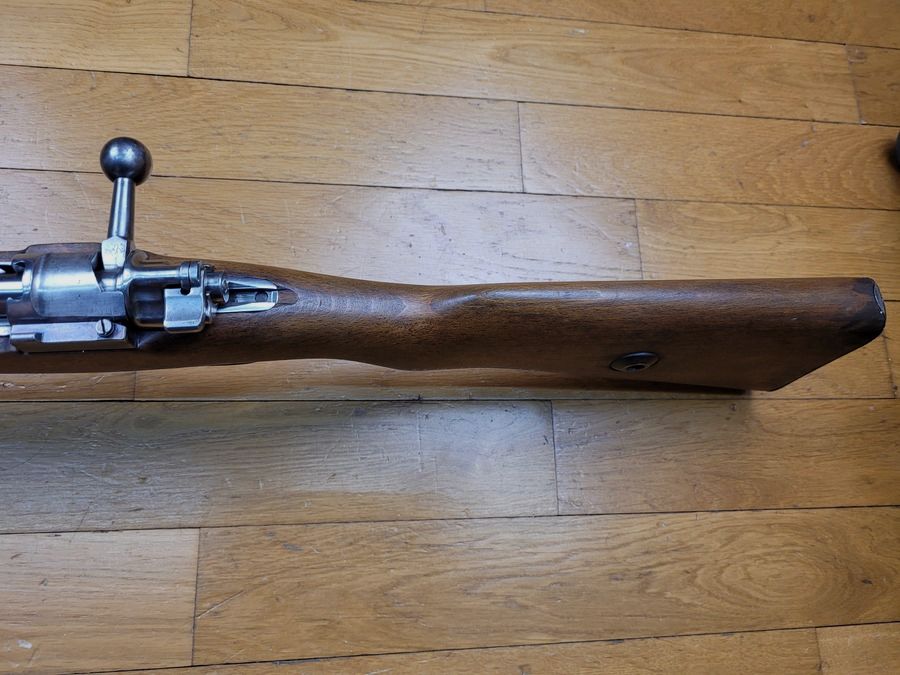
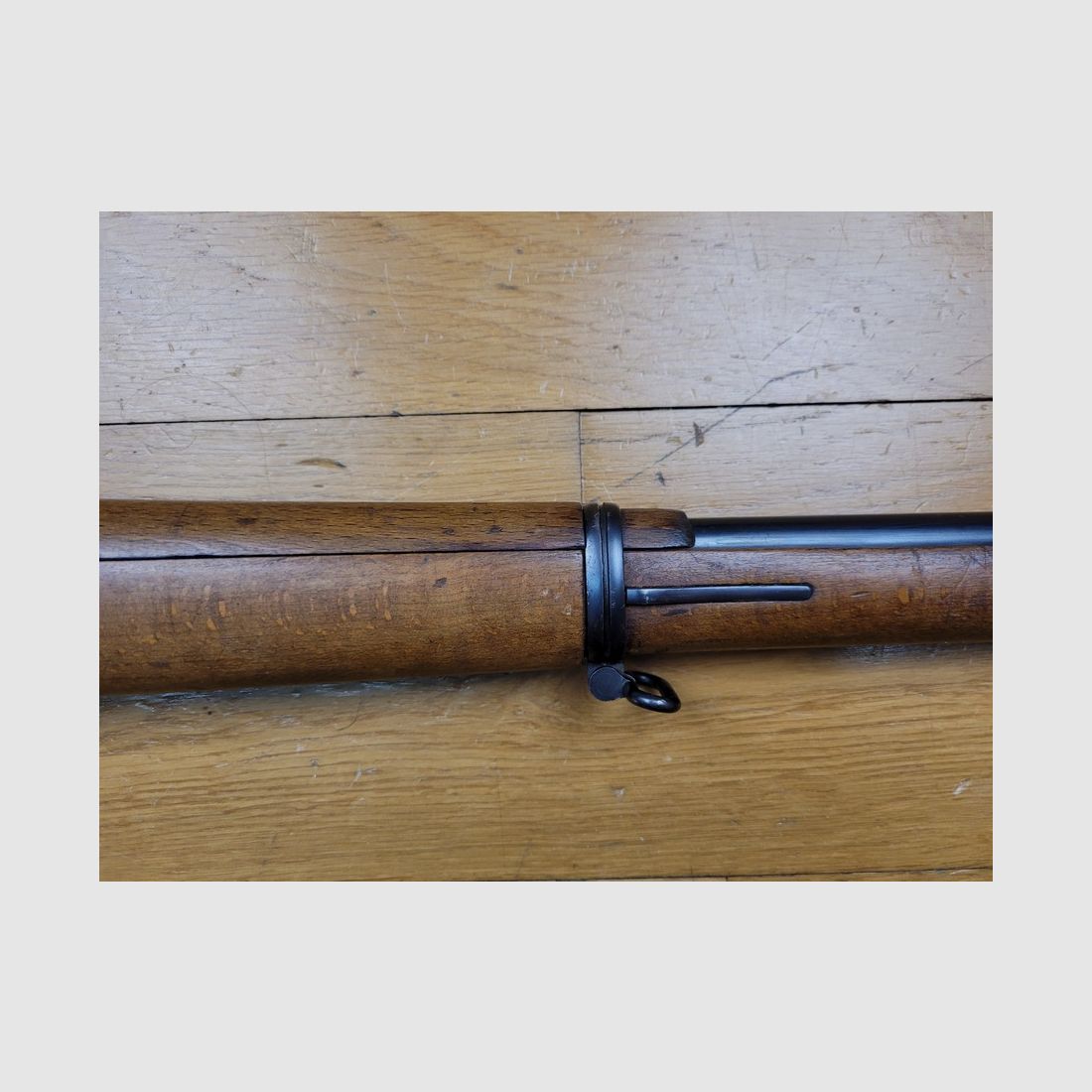
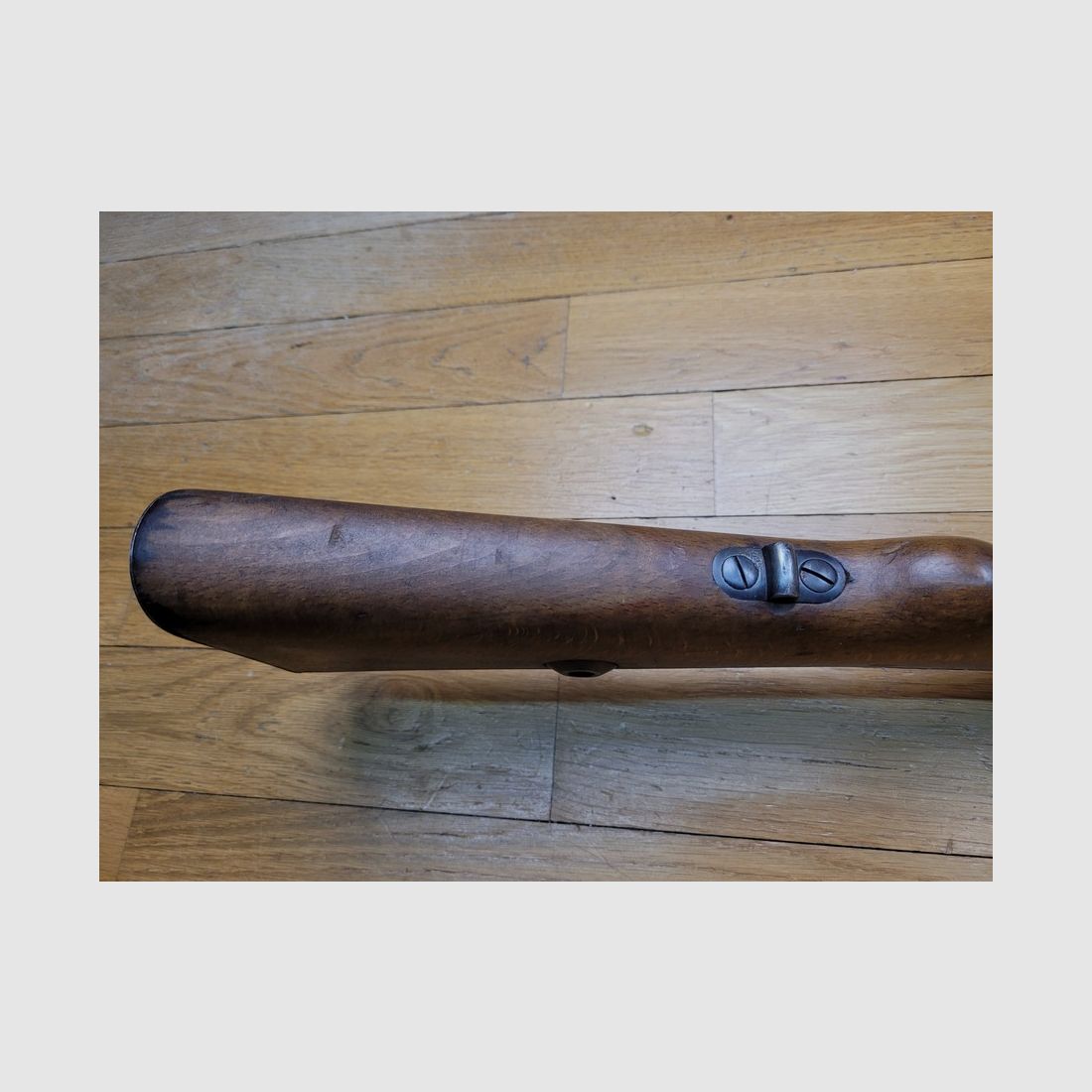
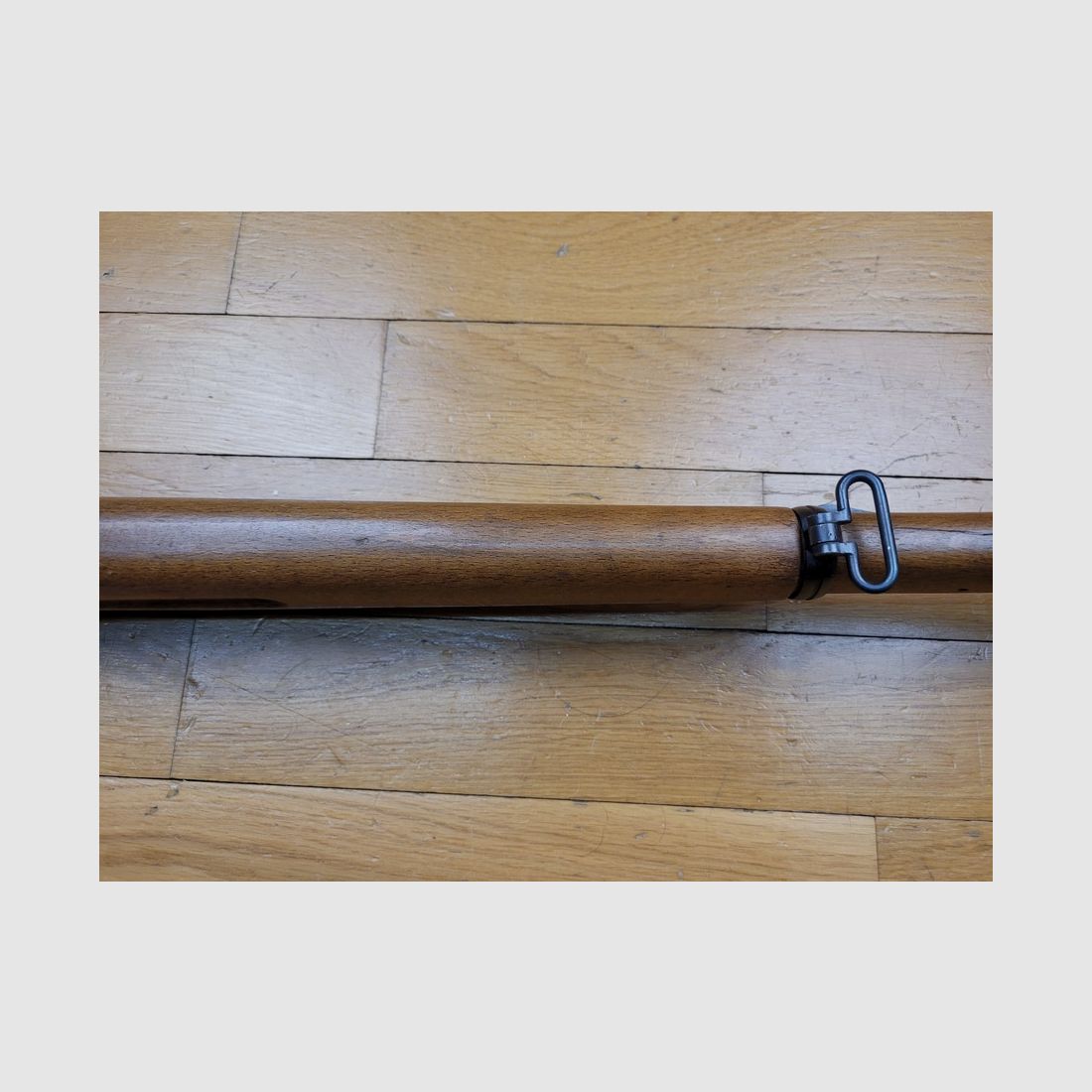
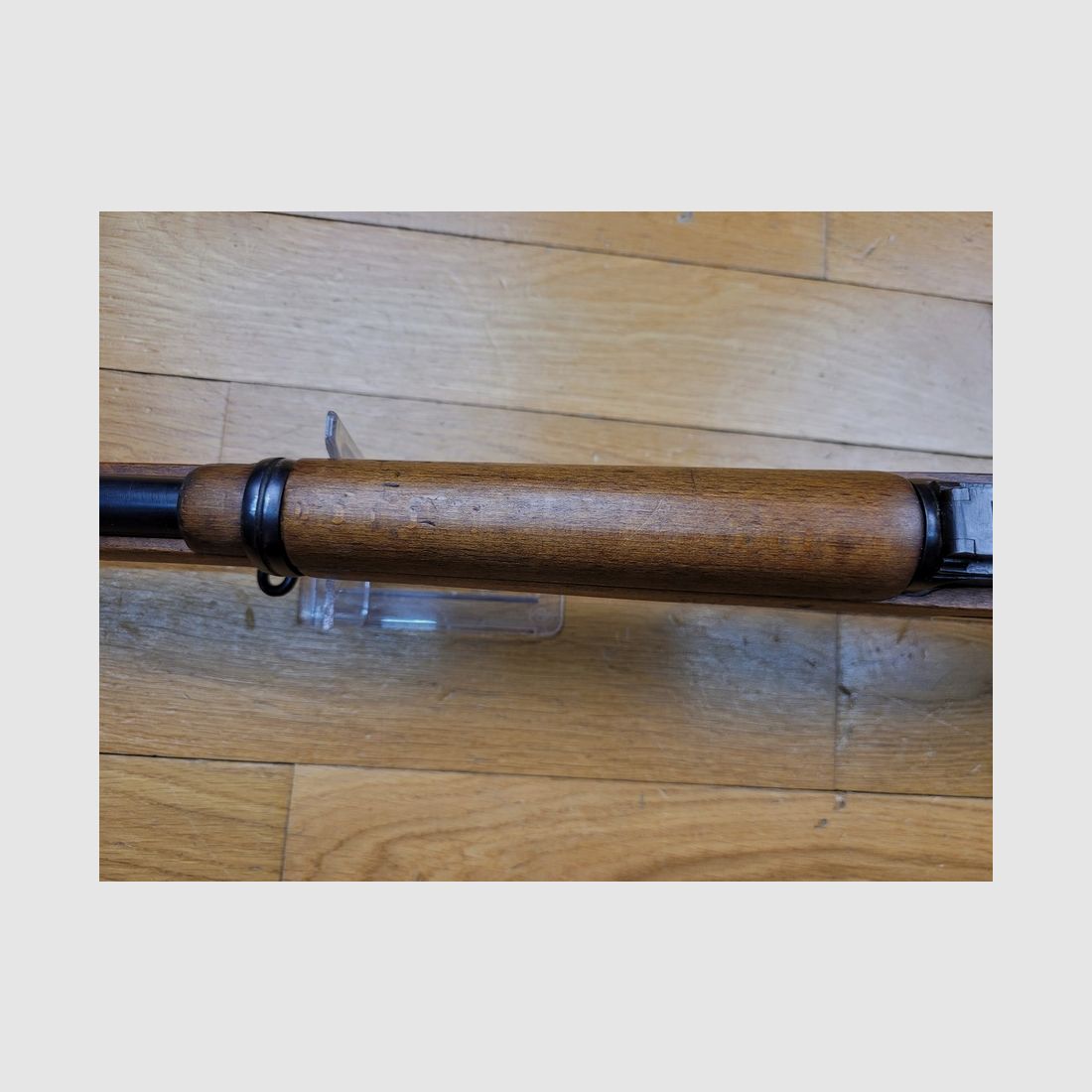
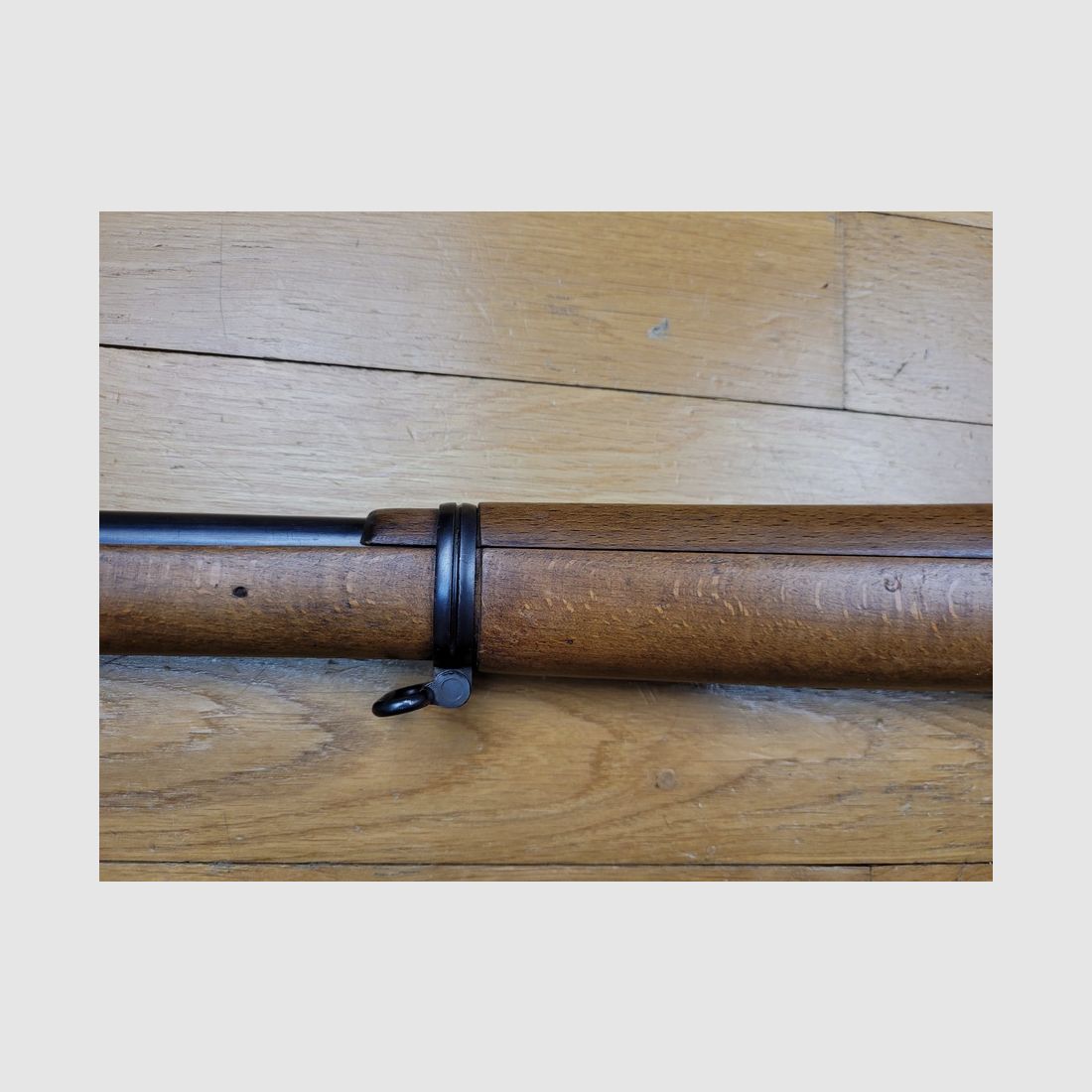
The stock is as sophisticated as they came at the time, with finger grooves in the fore-end (introduced on service rifles in late 1916) and a takedown disc in the buttstock, which only became widespread right at the end of the war. Note that on this civilian production, there is a takedown disc on both sides of the buttstock, and both are blued (unthinkable on a service rifle, which had only one disc, and even then fairly rarely—and obviously not blued).
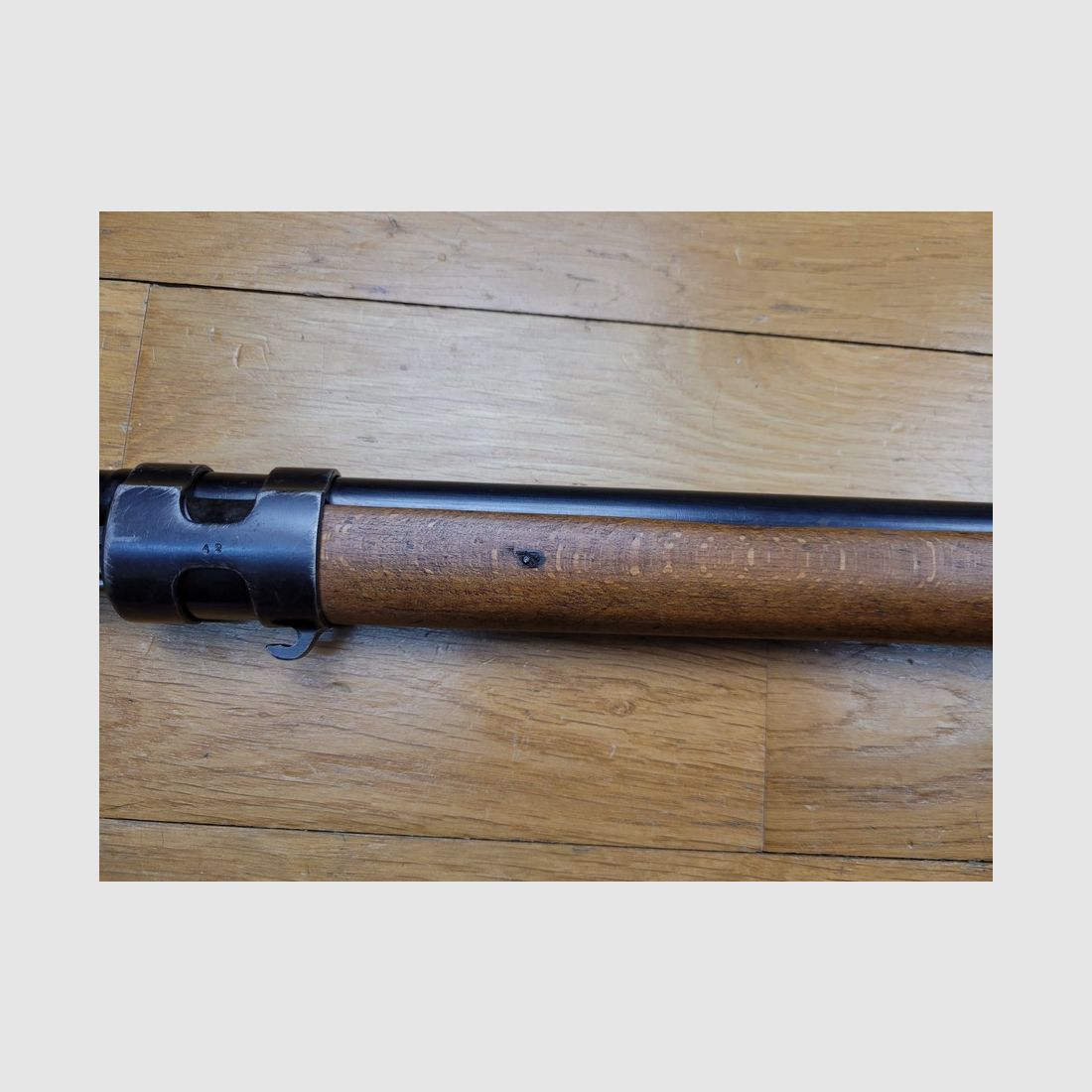
The wood is beautiful, high-quality beech, not walnut like 95% of military rifles. No military markings on the wood, of course. Between the two discs, the wood itself, and the lack of any trace of markings, it is not even certain that this stock ever saw military service. Having never been to war, it is in near-new condition, with very few handling marks. No major dents or repairs. It just needs a careful coat of oil to look superb.
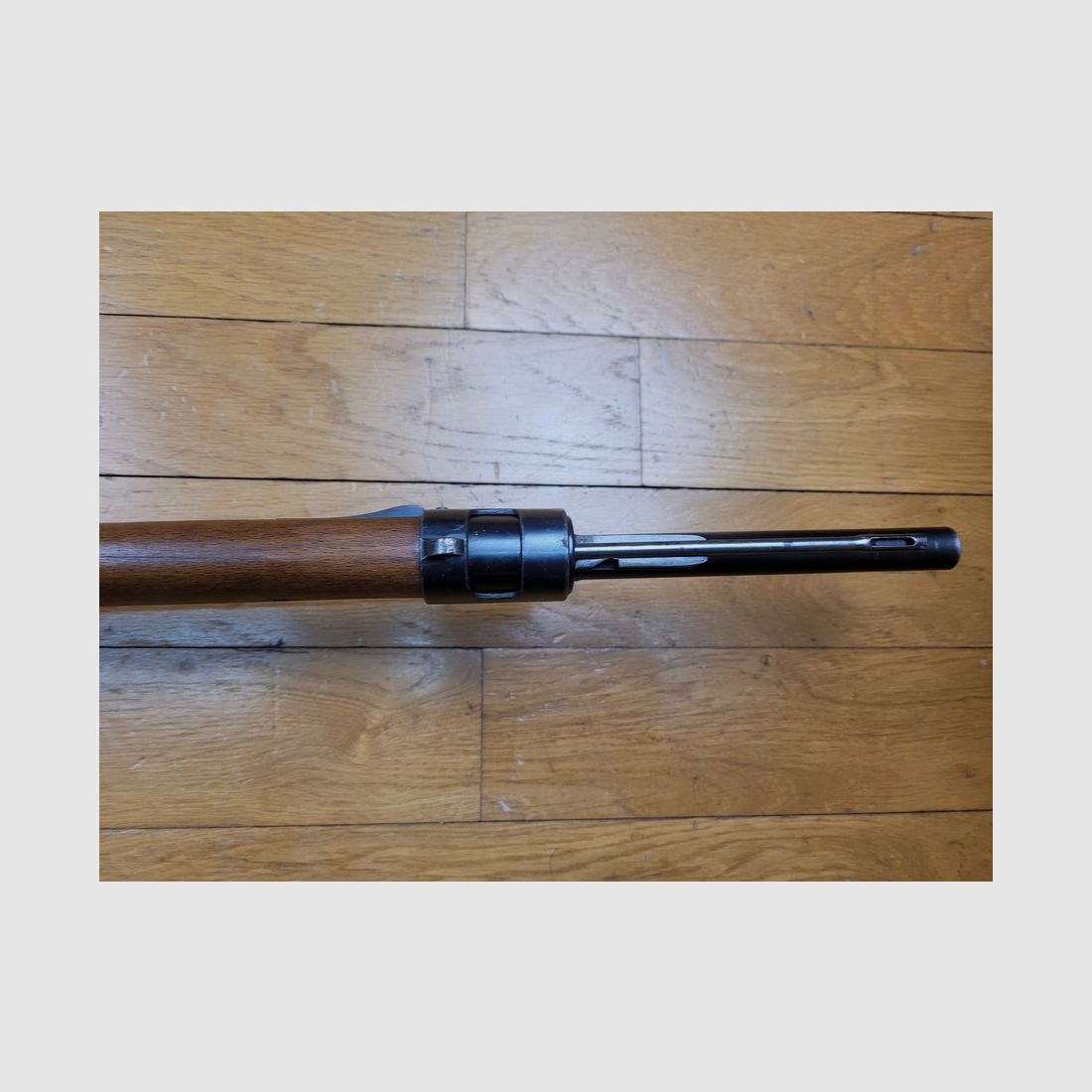
Mechanically, the firearm is perfect—its barrel is mirror-bright, with beautiful, crisp rifling. In fact, it is like new.
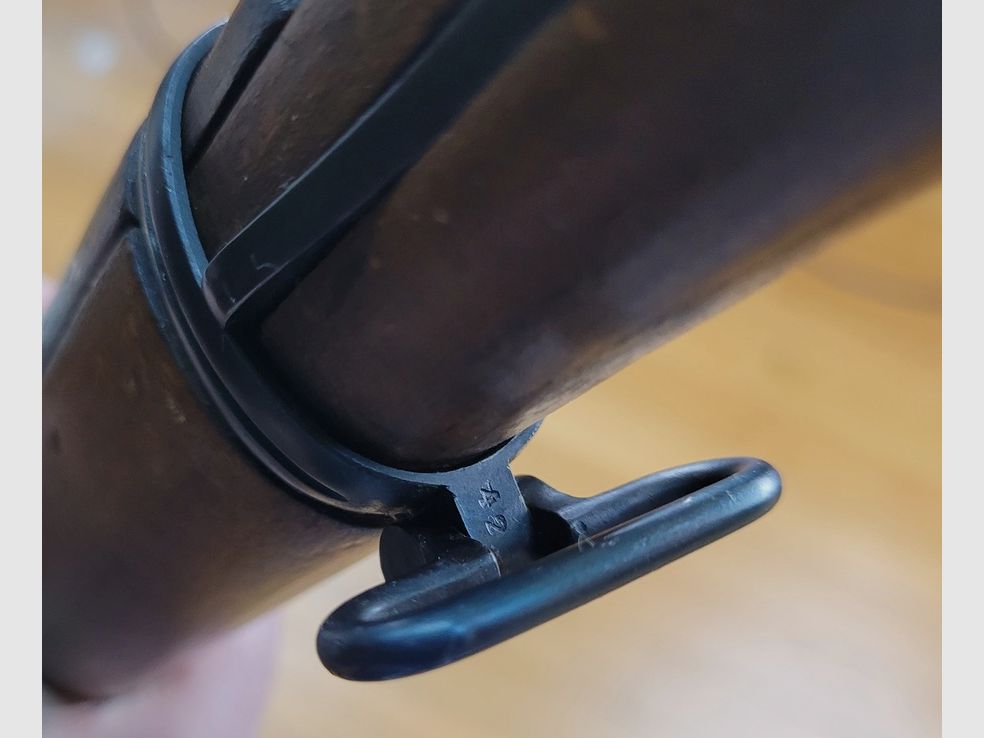
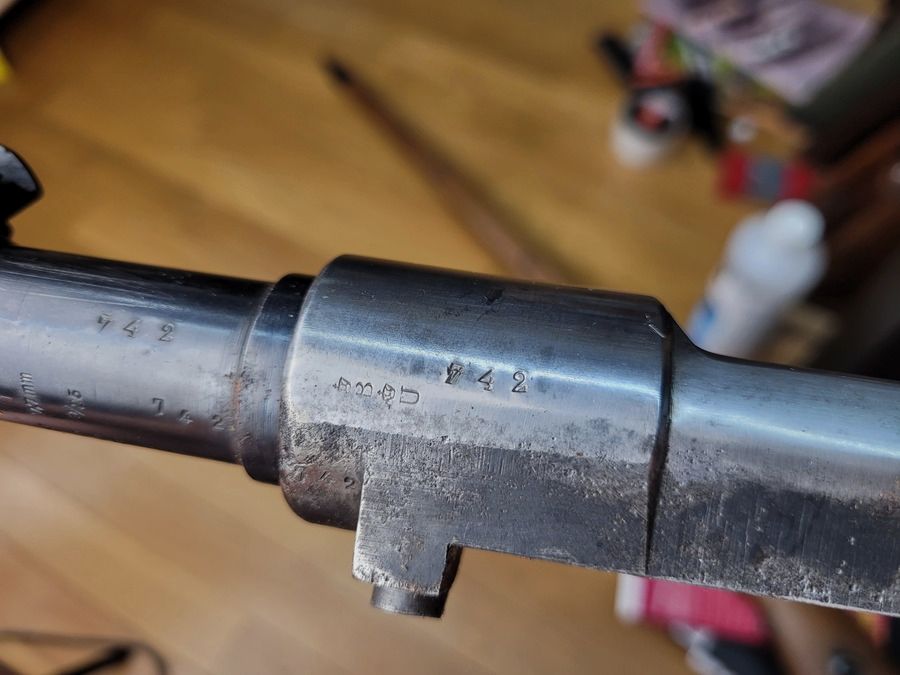
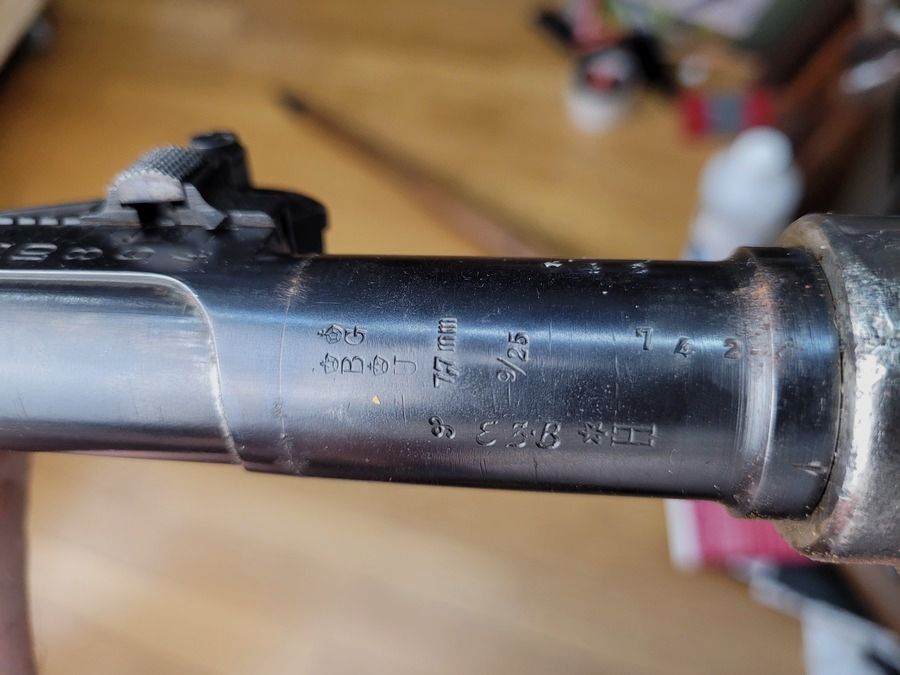
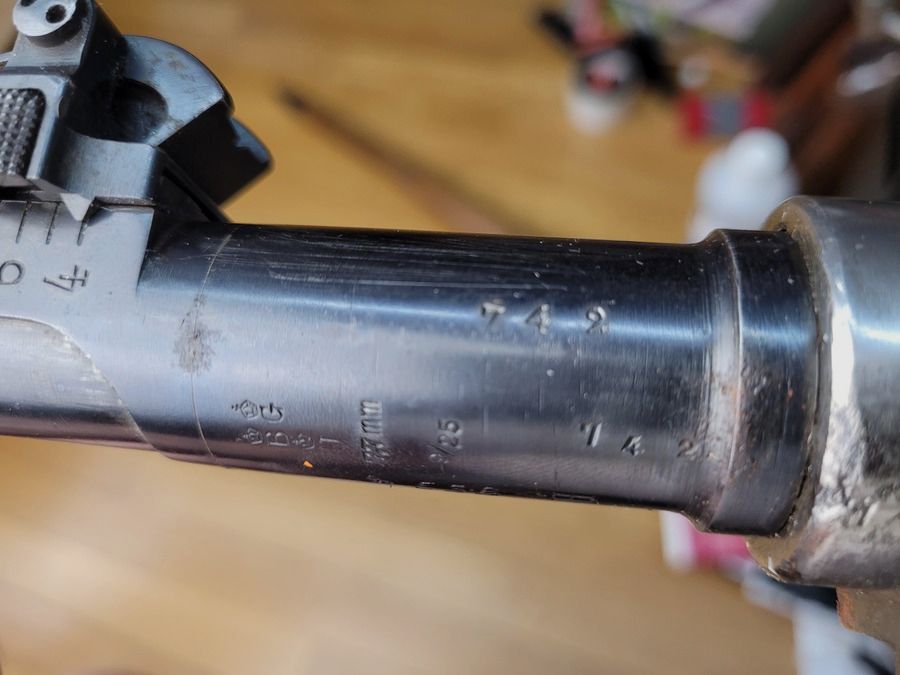
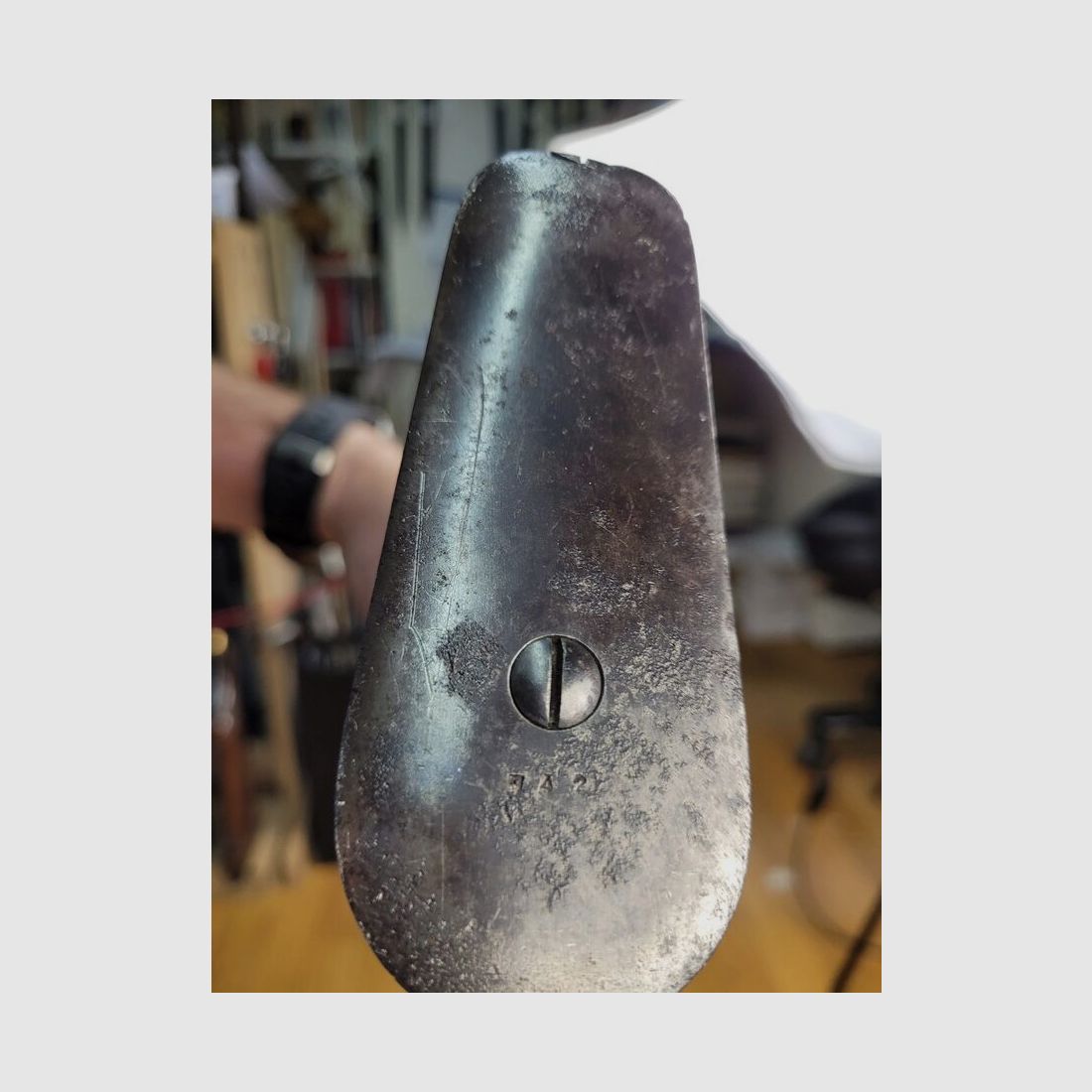
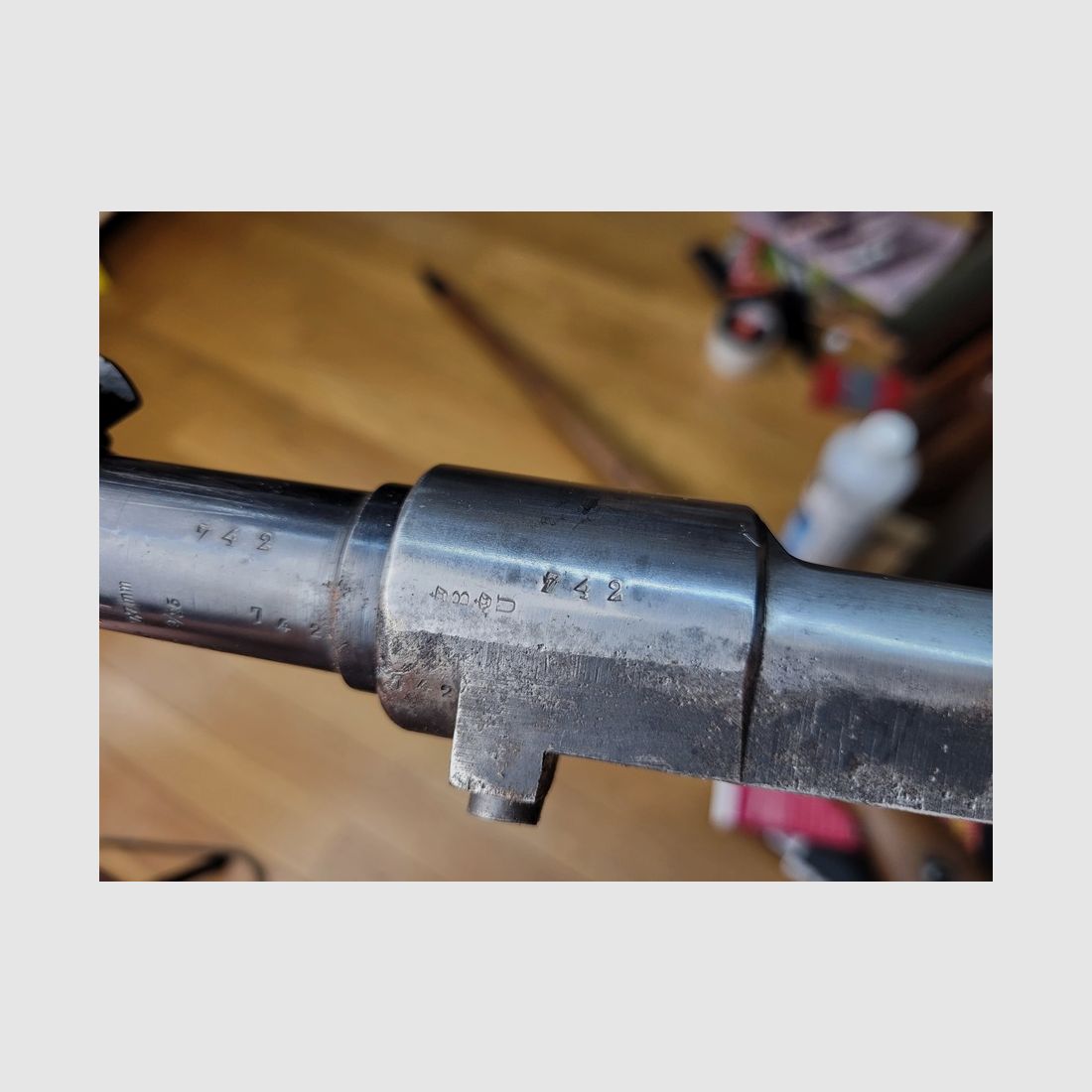
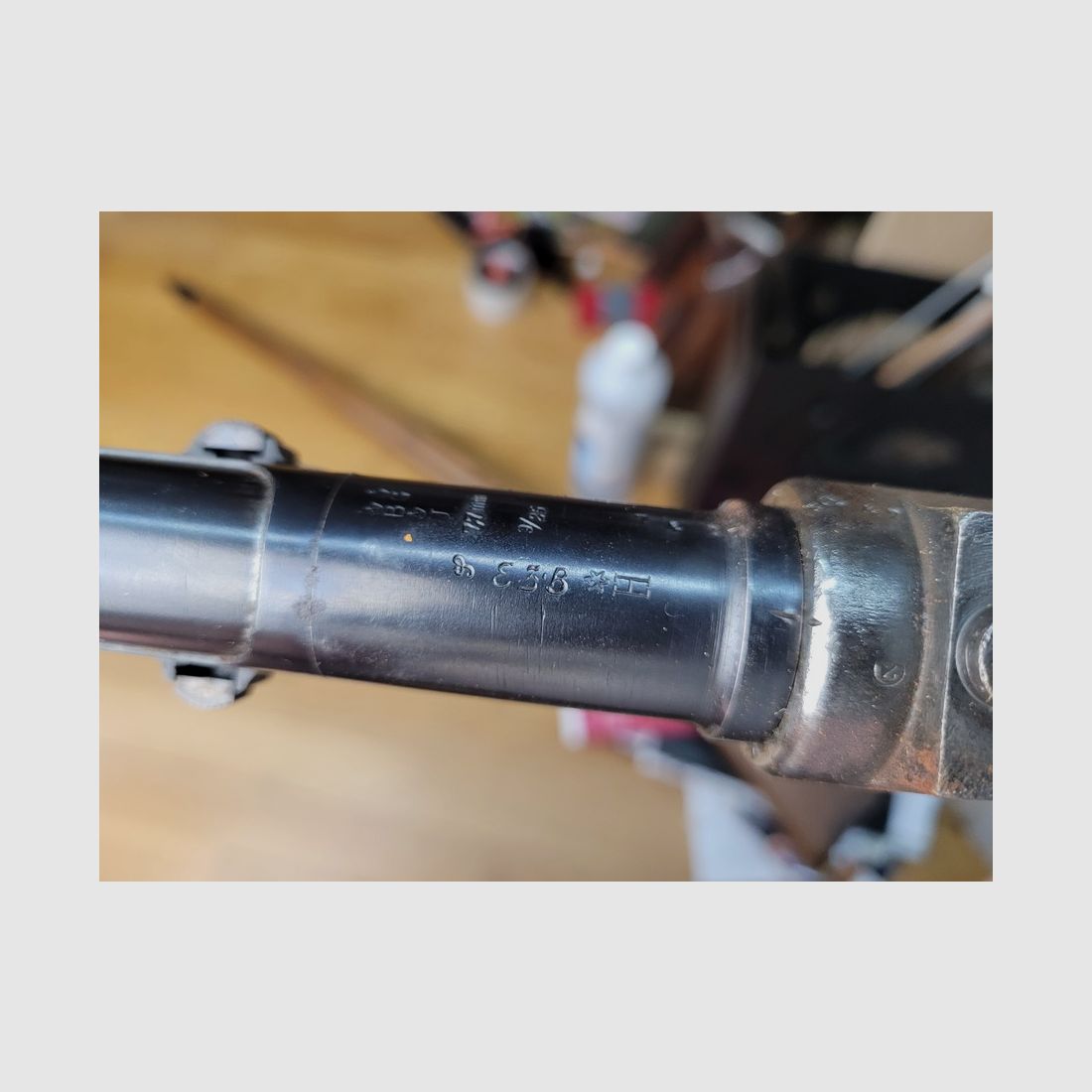
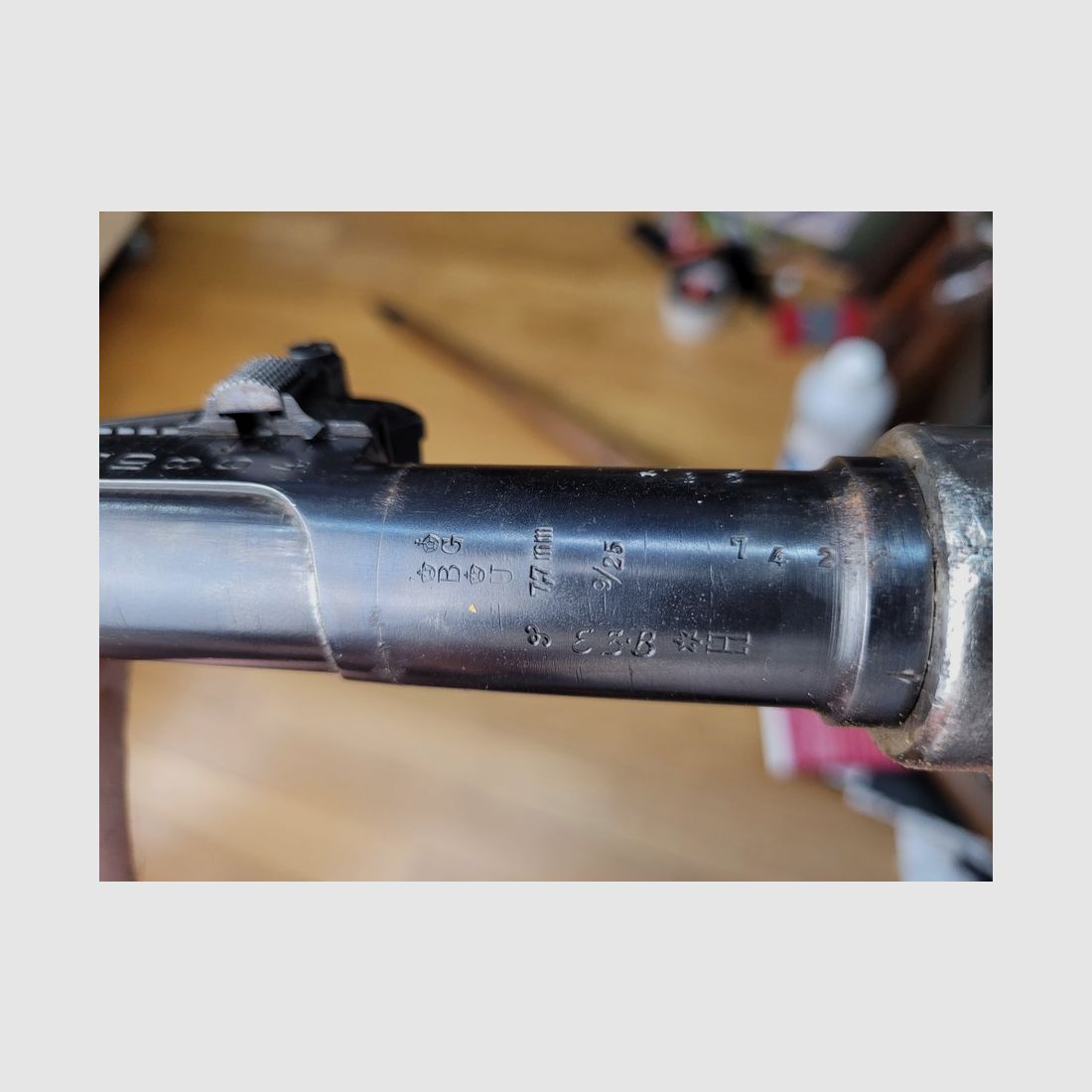
The firearm is numbered 742 throughout (fittings, buttplate, barrel, chamber, etc.), except for the bolt handle, which is civilian too. It bears the crowned “U” commercial proof mark, which identified civilian-made German firearms from the Empire through the Third Reich. The barrel also has the crowned “G” civilian proof mark for rifles. The screws are in very good condition, unnumbered, and blued like the firearm. A civilian finish.
To be sure, I completely disassembled the firearm and found beautiful crowned civilian G and U proof marks on the barrel. Civilian proof marks only. No crossed-out, erased, or overstruck military marks. It is indeed a 100% civilian barrel fitted to a former VCS receiver.
The crowned commercial U proof mark is also on the left side of the chamber, under the number 742, but it is not visible in the photos of the assembled firearm because it is hidden by the wood. But it is there. 100% guaranteed, and I have included a photo too. A 100% commercial firearm.
The firearm is chambered in 8,15x46R. The wooden block, also made of beech, is there in the magazine to limit the capacity for single-shot use. These blocks have a distinctive design, and this one is correct.
A barrel mark indicates that the firearm was made in September 1925. However, a starred H and an ESB mark remain a mystery to me (the barrel maker, perhaps?). The 7.7 mm marked on the barrel is the bore diameter measured across the grooves.
As with most Wehrmanns rifles I have seen on US sites, the receiver and bolt have been left in the white (which, incidentally, and contrary to a persistent myth, was also normal on all G98s during the war), while the rest of the firearm (barrel, rear sight, fittings, including the buttplate and even both takedown discs) is covered in a beautiful, deep-black civilian bluing that is in no way military.
This original bluing is 99% intact across the firearm, except on the buttplate, where it is only 60% intact and somewhat oxidized (m.
also numbered 742). All in all, a superb firearm.
Crisp percussion, all springs nice and firm, all screws in very good condition. Easy to disassemble, with no issues. Overall, in magnificent, near-new condition, with an exceptional finish.
In short, a very rare civilian competition variant of the G98—little known and very rare in our part of the world and elsewhere—in near-new condition. An exceptional addition for collectors of German firearms, Mauser-system firearms of all kinds, or rare civilian target-shooting firearms.
Category C firearm under the CSI: valid shooting licence with a doctor's stamp and signature on the back, or a hunting licence validated for the current or previous year, AND a valid national ID card or passport.
********************************************************************************************************************************************
Let’s say it again! Flingus Maximus gun shop in Paris and throughout France is also here to help with private firearm transfers, buying firearm and militaria collections, firearm valuations, and questions about firearms in estates and inheritances. Contact your favorite gunsmith using our contact form or at [email protected]
(Show description in original language)
Encore une arme venue de l’espace. Maître Flingus ne l’avait jamais eue entre les mains jusqu’à ce jour.
Le G98 Wehrmannsgewehr… Késako ?
Le Mauser G98 ou Gewehr 1898, tout le monde connait. Une icône parmi les fusils militaires du XXe siècle qui incarne l’excellence de l’ingénierie allemande. Conçu par Paul Mauser et introduit réglementairement dans l’armée allemande en 1898, ce fusil devint l’arme standard des forces armées allemandes pendant la Première Guerre Mondiale puis, à peine modifié, de la seconde.
Doté d’un mécanisme de verrouillage à deux tenons indestructible, d’un magasin à lames-chargeur et de toutes les améliorations brevetées par Paul Mauser depuis 1871, le G98 se distingue de sa concurrence par son exceptionnelle robustesse, sa puissance de feu, sa qualité de production irréprochable et sa précision qui en feront une arme de guerre de choix sur tous les continents, de l’Afrique du Sud à la Chine en passant par l’Amérique Latine.
Dans les divers systèmes nationaux de 98 existant au monde, peut-être plus de 25 millions d’armes produites. Un succès planétaire Made in Germany.
Mais ici nous sommes devant une des raretés de ce système. Un Wehrmannsgewehr 98.
Partons de l’histoire profonde.
Les français ont fait une Révolution. Pour avoir aussi le droit de chasser. Et le paysan français est massivement chasseur depuis les années 1820, et souvent, au moins au départ, avec des calibres militaires ou presque. Les français ne se mettront massivement au tir que sous contrainte qu’après la défaite de 1870 et le plus souvent à la bosquette mais dès l’école.
Les allemands n’ont pas fait de Révolution et ils n’ont pas le droit de chasser. De gros propriétaires terriens aristocrates se réservent ce droit. Et ce sera comme ça encore bien après 1918. Alors les simples citoyens font du tir, plus proches en cela des suisses et des autrichiens que des gaulois ou ligures latins.
Les tribus geraniques utilisent le plus souvent de superbes Schützen décorées et sculptées, civiles, à culasse basculante type rolling block puis à culasse mobile. Deux munitions à percussion centrale finissent par dominer les compétitions, le 9,5X47R et notre 8,15 X46R de ce jour qui va prendre le pas sur les autres dans le monde germanique.
Un excellent calibre de tir, permettant une précision optimale sans souci pour du tir à 300 mètres en visée ouverte. Si vous avez les yeux pour. La cartouche est proche mais pas interchangeable avec la 32-40 US. Elle se refait à partir du 30-30 sur base d’une balle plomb. Les outils sont chez Hornady.
En 1897, un hollandais introduit une nouvelle compétition à trois positions, allongé, à genou et debout bras franc à 300 mètres en calibre sportif 8×46 ou en 8,15×46 sur base d’une balle de 150 gr. Le Wehrmannsgewehr vient de naitre. Car c’est initialement le nom d’une compétition civile de tir à forte consonance militaire quand même. Une sorte de TAR appliqué dirait-on.
Ça prend mais le succès reste mitigé en Allemagne qui continue tranquillement ses compétitions civiles à l’ancienne façon Guillaume Tell avec ses schützen.
Peu après l’adoption du 98 par la Heer, Mauser met quand même à son catalogue de quoi pratiquer ces épreuves là avec un fusil militaire pour civils qui n’est autre qu’un G98 canonné en 8,15, calibre roi des tireurs sportifs germaniques de l’époque, et auquel Mauser donne bel et bien le nom de Wehrmannsgewehr. De 1909 à 1913, Mauser produira environ 1.800 de ces fusils militaires civilisés à destination des Sociétés de Tir et au calibre 8,15X46R. J’insiste sur le caractère totalement civil de ces 1898.
Aussi sur-réaliste que cela puisse paraître, ils en produiront encore quelques uns de ces Wehrmannsgewehr de concours pendant la guerre alors que les commandes militaires tournent à plein et que l’industrie de guerre allemande est déjà à la peine pour produire ce que la guerre demande.
Sans doute pour contribuer aux préparations militaires en stand de tir. Combien produits en 14-18 ? Sais pas. Mais 1.227 de 1916 à 1922 donc peut-être dans les 2.000/3.000 ou moins entre 1914 et 1922. Pure supposition mais qui semble assez réaliste. En tous cas on en voit jamais de ceux-là.
A ma connaissance, seul « Momo » en a produit à cette époque jusque l’après 1918. Ce sont tous des G98 « classiques », très proches de l’arme réglementaire avec la hausse toboggan et levier droit, mais canonnés directement en 8,15 et transformés en armes à un coup par l’adjonction d’un bloc en bois en magasin appuyant sur la planchette élévatrice.
Mais l’intérêt pour ce type de compétitions Wehrmanns et ces armes va croître un peu à nouveau avec la fin de la première guerre et avec les restrictions du Traité de Versailles.
Pour continuer à s’entrainer dans un monde de restrictions, certains reviennent aux compétitions Wehrmanns et au bon vieux 8,15×46 d’avant-guerre qui, lui, n’est pas sous haute surveillance et de fait n’est pas quasi interdit comme le 8×57 standard de l’armée teutonne.
Ces armes civiles reviennent donc sur le marché, surtout en Allemagne du Nord (le Sud, proche culturellement de l’Autriche et des Suisses est encore très Schützen Buschen).
En fait, en cette époque intermédiaire entre défaite de 1918 et 1933, on ne tire pas beaucoup de 22LR. Ce calibre n’apparaitra massivement pour l’entrainement qu’à partir des années 27/30 et encore plus après 1933, avec l’arrivée du moustachu agité au pouvoir qui promouvra un entrainement réellement massif dans ce calibre obligeant à des stands beaucoup plus nombreux, plus petits (des 50 mètres au lieu de 300) et à une production massive de carabines 22LR soutenues financièrement par le gouvernement.
On changeait de but, de type de compétitions, et d’échelle donc on changea de calibre, d’armes, de stands, et de budget. Car la 22LR est aussi nettement moins cher que la 8,15, surtout à ces très hautes doses.
Mais voilà. Vous savez désormais ce qu’est un Wehrmanns Gewehr et pourquoi on peut parfois trouver de superbe G98 neuf, d’aspect militaire, et pourtant 100% civils et chambrés en 8,15×46.
On peut donc distinguer, en gros, trois types de G98 spécifiquement conçus pour ces compétitions Wehrmanns Gewehr: ceux produits par Momo avant 1922 toujours à hausse escargot, levier droit et Mauser Banner. Des, comme le notre, issus de récupérations de G98 passé en coup par coup et canonnés en calibre 8,15 par trois ou quatre fabricants entre 1922 et 1930, certains à hausse plate et d’autres escargot, avec des marquages de boitiers d’usines 14-18 ou non et destinés à ceux souhaitant se remettre aux compétions Wehrmanns entre 1922 et 1930 en gros.
Et, enfin, quelques uns encore produits par l’industrie privée sous le Troisième Reich naissant, en sus des nombreuses 22LR du régime, avec des fenêtres d’éjection différentes, des leviers coudés et des hausses plates cette fois, et qui sont une dernière version avant le Einheitgewehr (autre sujet que Maître Flingus abordera une autre fois).
Donc au moins trois types principaux à récupérer en collection pour un passionné du G98. Comme je le suis moi-même d’ailleurs. Bien plus que du K.
Combien y en a t-il eu de ces Wehrmanns Gewehr?
Des recoupements que j’ai fais sur les site US, très peu.
J’ai donné les chiffres pour les productions Momo 1914-1922. Les Gewehr 98 transformés au 8,15 dans les années 22/30 sont également très rares. On en connait des (encore) de chez Mauser, des Haenel et des VCS. Les prix catalogue tournaient autour de 90/120 DM, sans doute du fait de la robustesse de ces armes obligeant à du travail plein acier sur toutes les pièces, du re-canonnage nécessaire, et de leur finition.
De toutes façons, c’était absolument prohibitifs pour les allemands ruinés de cette époque. Encore une fois ce sont des armes civiles d’achat personnel pour faire un type de compétition particulier et pas des trucs refaits massivement pour être distribués aux populations avides de revanche…
Peut-être 5/6.000 en tout pour tous les modèles confondus de Wehrmanns Gewehr. Sans doute un peu moins. Et le plupart sont désormais aux USA, barbotés dans le grand bazar de la défaite allemande de 1945 et du pillage du pays par tous les alliés qui faisaient d’ailleurs suite, juste retour des choses, à une razzia gigantesque de tout par les allemands en Europe entre 1939 et 1944.
Notre arme de ce jour est typique des quelques uns produits pour les compétiteurs Wehrmanns dans les années 20/30 – Elle est bien 100% civile sur base d’un G98 en culasse et boitier qui sort de chez VCS (Shilling à Sühl). Ce marquage est le seul subsistant d’une possible utilisation militaire originelle – en bord de boite de culasse. Le marquage traditionnel de fabricant et la date de production figurant usuellement sur le dessus de chambre ont été effacés très professionnellement ou bien rien n’a même jamais été apposé. Aucune rayure ou coup de limes – Du travail made in Germany de ces années-là.
Le bois est ce qui se faisait de plus perfectionné à l’époque avec rainures de préhension en fût (qui apparaissent fin 1916 sur les réglementaires) et œillet de démontage en crosse qui ne se sont généralisé qu’en extrême fin de guerre. A noter que dans cette production civile un l’œillet de démontage est présent des deux cotés de la crosse et bronzé (impensable sur un réglementaire qui ne comportait qu’un seul œillet et encore assez rarement et non bronzé évidemment).
Le bois, c’est du beau hêtre de qualité et pas du noyer comme 95% des militaires. Aucun marquage militaire en bois évidemment. Entre les deux œillets, le bois et l’absence de trace du moindre marquage, il n’est même pas sûr que ces bois aient connus l’armée un jour. N’ayant pas fait la guerre, leur état est proche du neuf avec très peu de marques de manipulations. Aucun coup important ou enture. Méritent juste un coup soigneux d’huile pour être superbes.
Mécaniquement l’arme est parfaite – son canon est miroir avec de belles rayures bien nettes. Neuf en fait.
L’arme est au numéro 742 partout (garnitures, plaque de couche, canon, chambre…) sauf le levier de culasse mais qui est bien civil aussi. En effet, il porte le poinçon commercial « U » couronné qui, de l’Empire au III° Reich inclus, identifie les armes allemandes de fabrications civiles. Poinçon « G » couronné d’épreuve civile pour les fusils aussi en canon. Les vis sont en TBE, non numérotées et bronzées comme l’arme. Une finition civile.
En effet, pour en avoir le cœur net, j’ai démonté intégralement l’arme et j’ai bien retrouvé de magnifiques poinçons civils G et U couronnés en canonnerie. Et seulement des poinçons civils. Pas de poinçons militaires rayés, effacés ou en sur impression.C’est bien un canon 100% civil fixé sur un ex boitier de VCS.
Le poinçon commercial U couronné est aussi en chambre coté gauche sous le n° 742 mais pas visible sur les photos de l’arme non démontée car masqué par le bois mais il est là. 100% garanti et j’ai mis la photo aussi. Arme 100% commerciale.
L’arme est en 8,15x46R – le bloc de bois, du hêtre aussi, est bien là aussi en magasin pour limiter la capacité en coup par coup. Ils sont d’un dessin particulier et celui-ci est bien conforme.
Un poinçon du canon indique que l’arme est de septembre 1925 – en revanche un H étoilé et un marquage ESB restent mystérieux pour moi (canonnier ayant fabriqué le canon?). Le 7,7 mm indiqué en canon, c’est la côte de forage du canon à flanc de rayures.
Comme sur la plupart des Wehrmanns que j’ai vu sur les sites US, le boitier et la culasse ont été laissés blanc (ce qui, par parenthèse, et contrairement à une légende tenace, était aussi normal sur tous les G98 de la période de guerre) alors que le reste de l’arme (canon, hausse, garnitures y compris plaque de couche et même les deux œillets de démontage) est recouvert d’un bronzage noir profond civil très beau et nullement militaire.
Ce bronzage d’origine est présent à 99% sur toute l’arme sauf la plaque de couche à 60%, elle, un peu oxydée (mais bien numérotée 742 aussi). Au final une arme superbe.
Percussion franche, tous ressorts biens fermes, toutes vis en TBE. Arme au démontage aisé et sans souci. État global magnifique proche du neuf dans une finition exceptionnelle.
In fine, une très rare variante de compétition civile du G98 – très peu connue et très rares sous nos climats et même ailleurs – dans un état proche du neuf – Un complément exceptionnel pour un collectionneurs d’armes allemandes, d’armes des systèmes Mauser de toutes natures ou bien d’armes de tir sportif civil rares.
Arme de catégorie C au CSI : Licence de tir en cours de validité avec cachet et signature d’un médecin au dos ou bien un permis de chasse avec sa validation pour l’année en cours ou l’année précédente ET CNI ou passeport en cours de validité.
********************************************************************************************************************************************
Répétons le ! L’armurerie Flingus Maximus à Paris et partout en France est là aussi pour vos formalités armes entre particuliers, le rachat de collections armes et militaria, vos estimations d’armes, vos questions armes dans les successions et héritage. Contactez votre armurier préféré via notre formulaire de contact ou à [email protected]