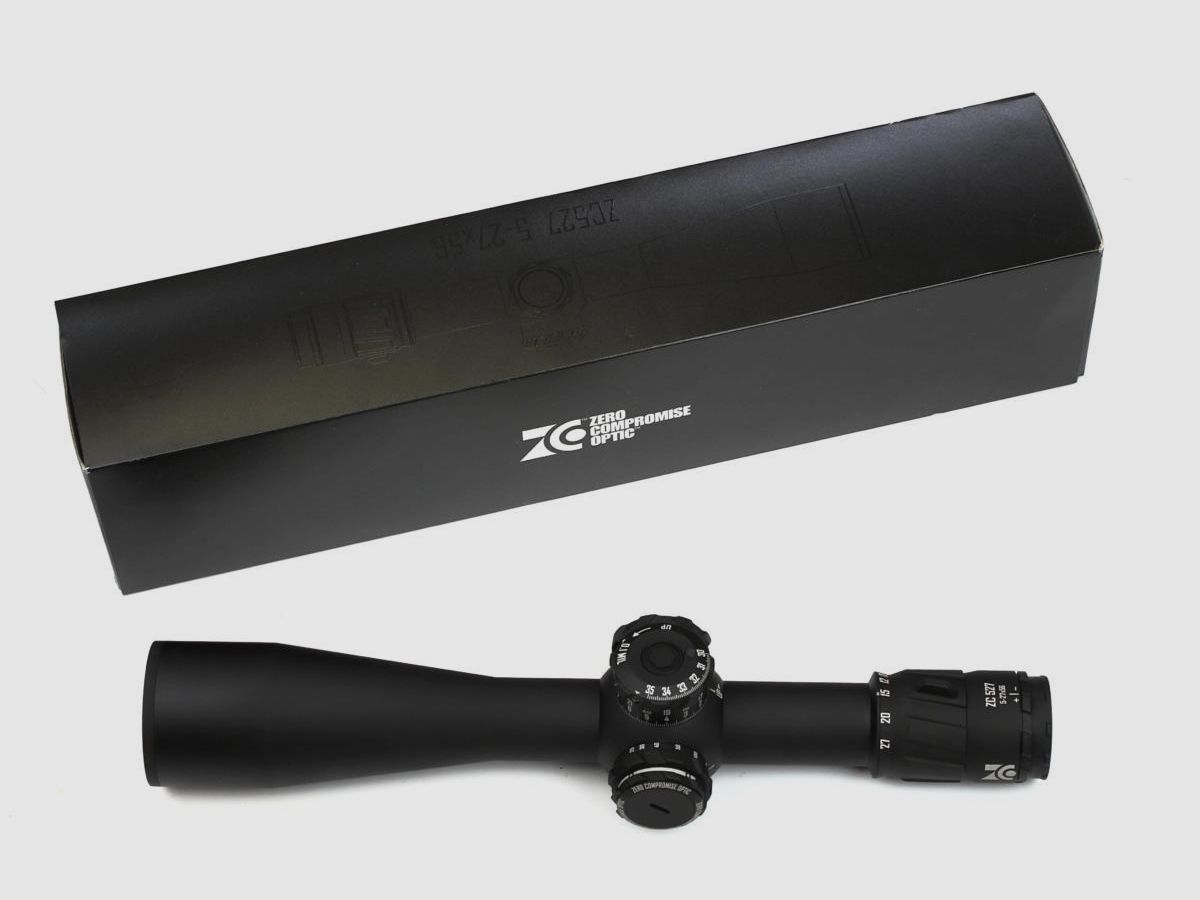



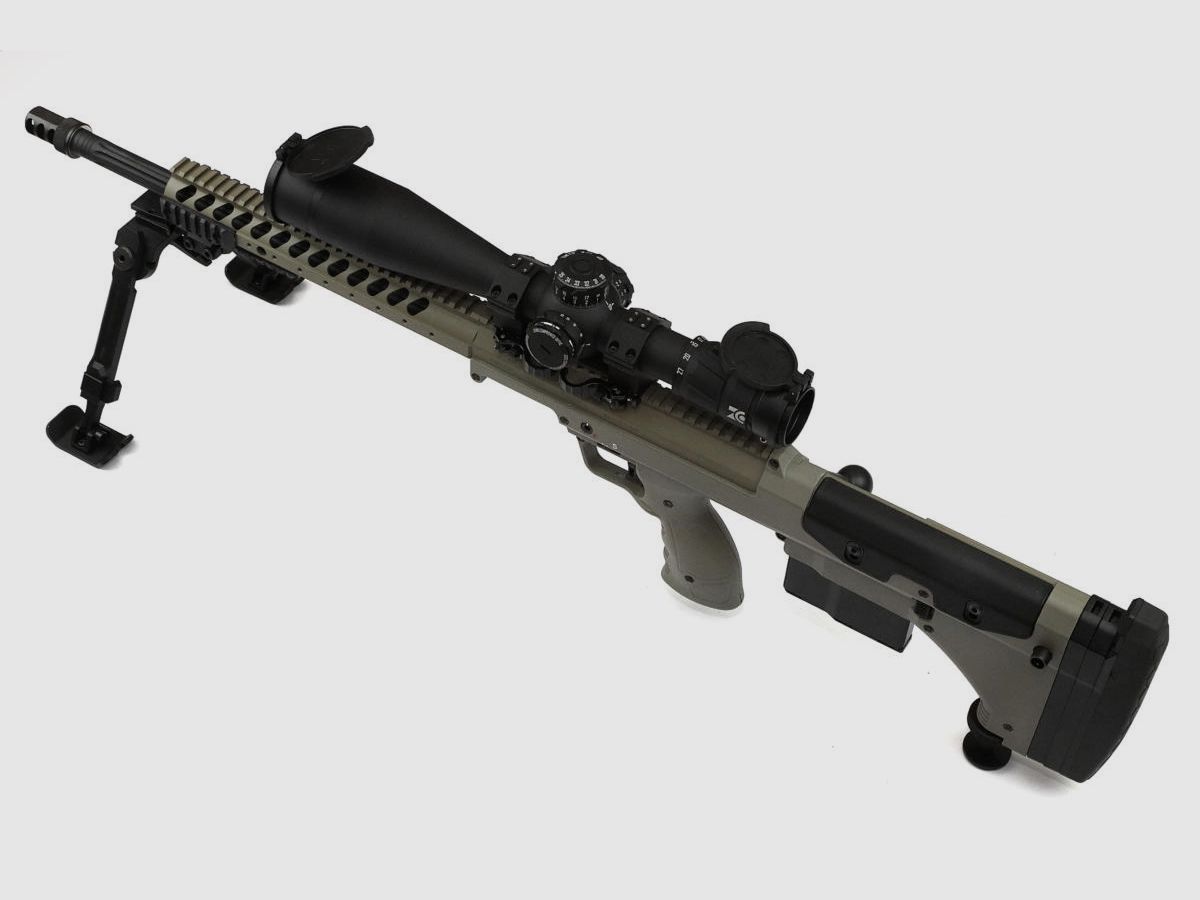


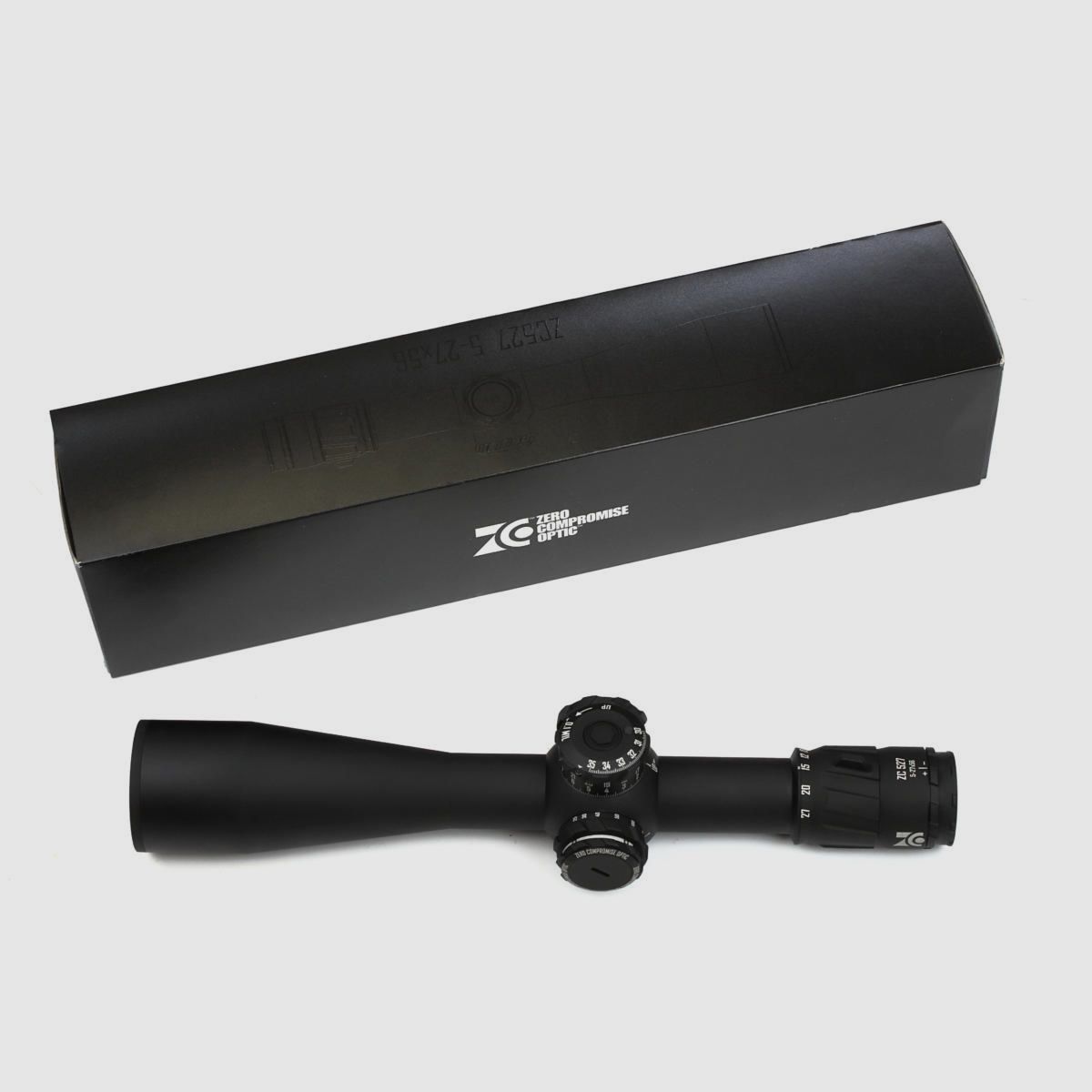


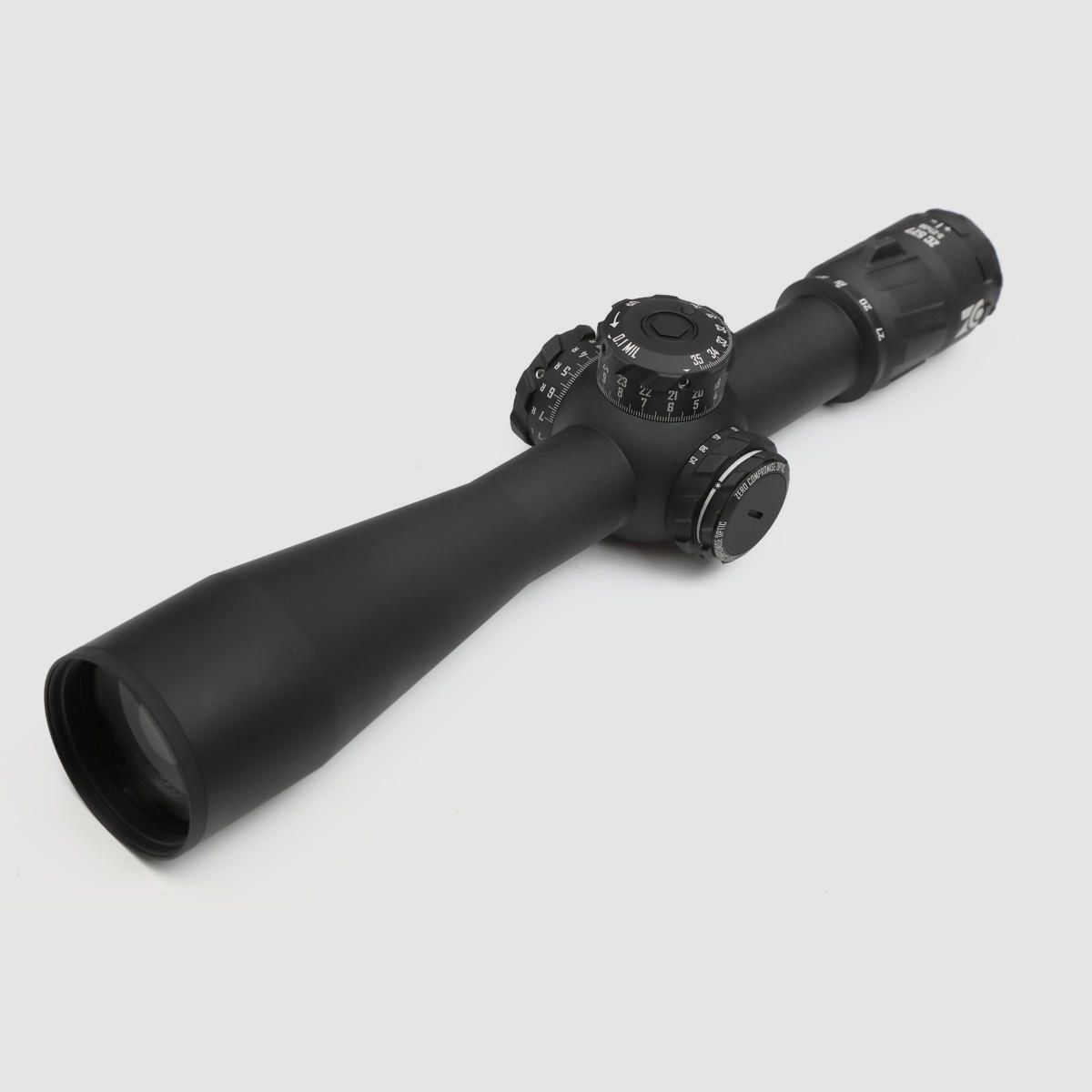

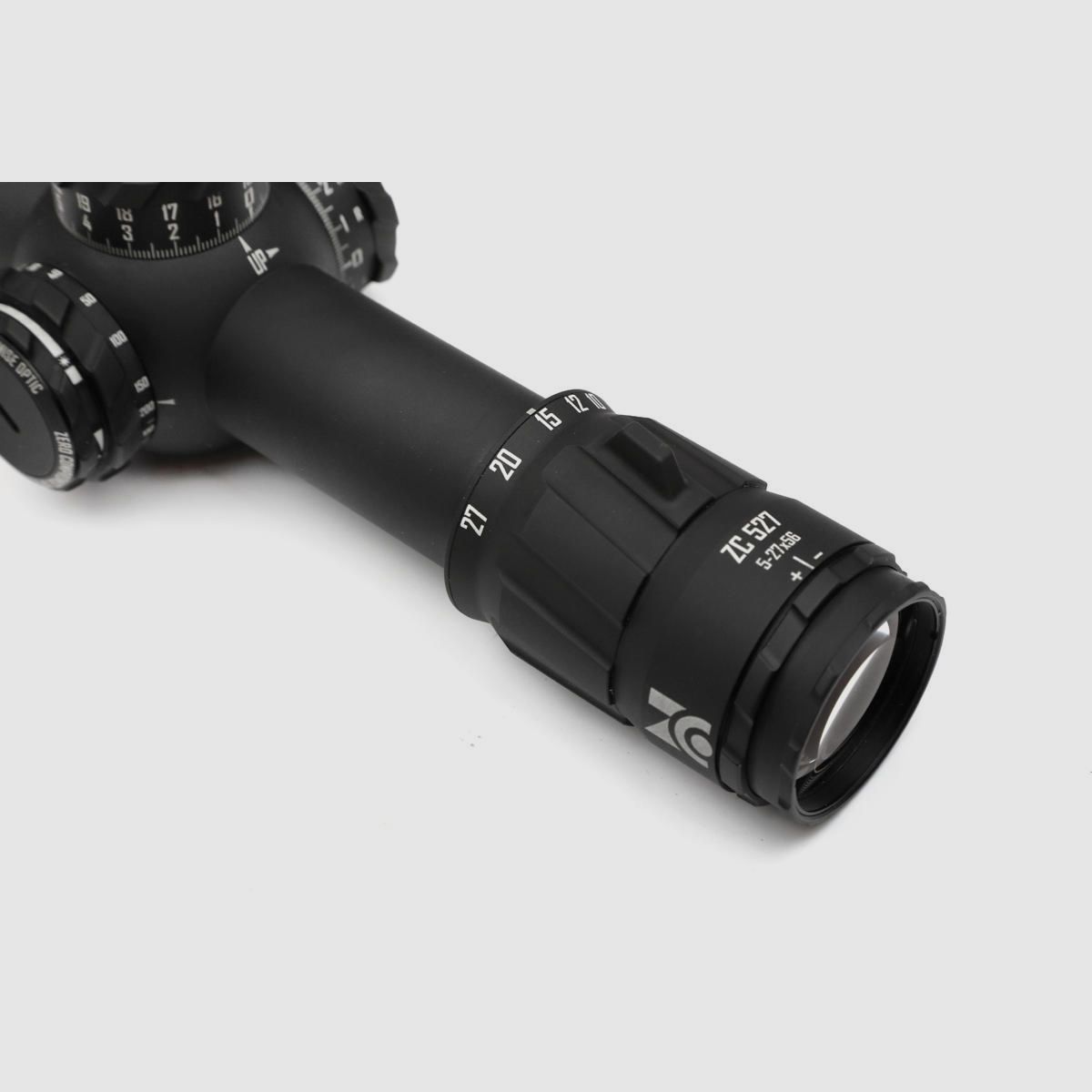
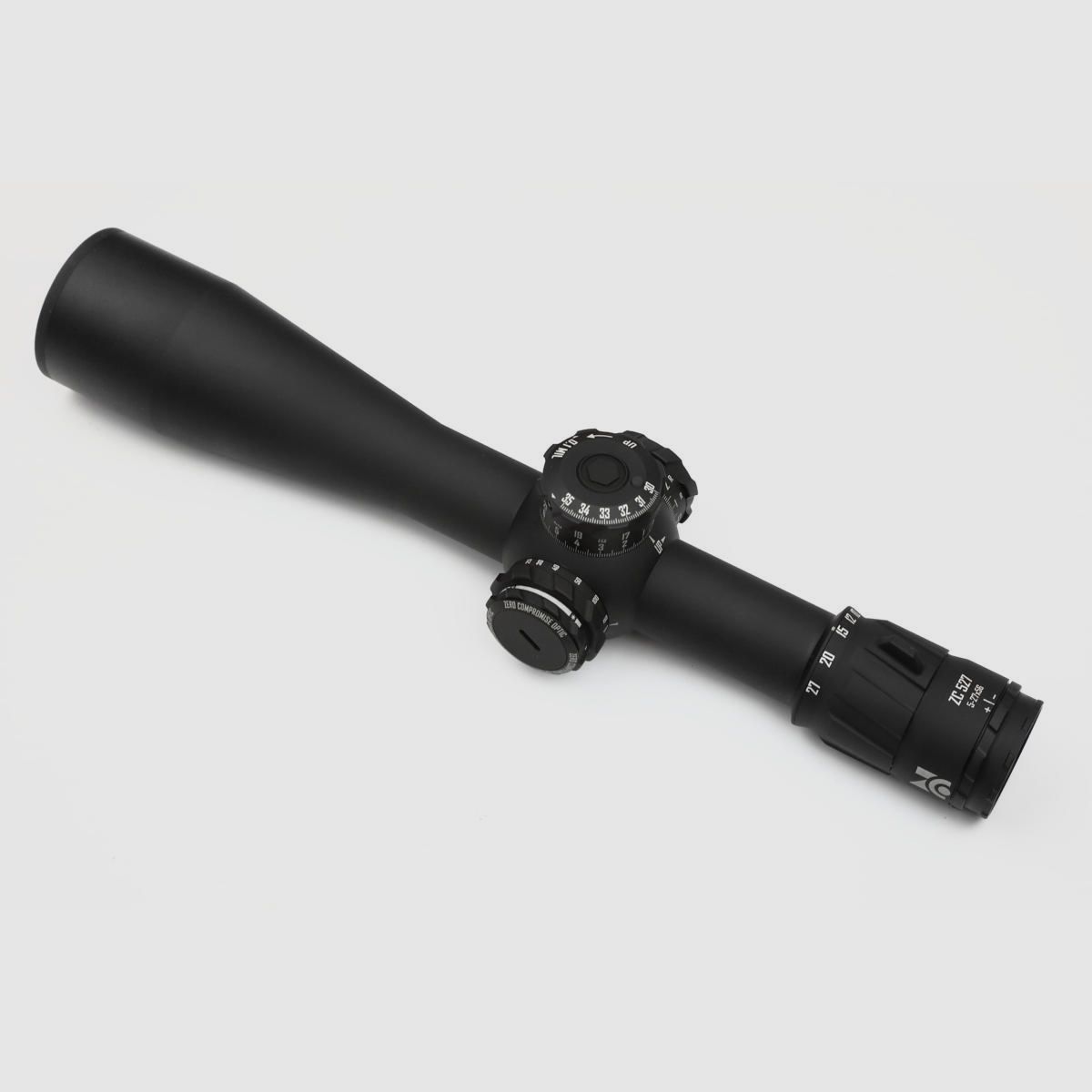

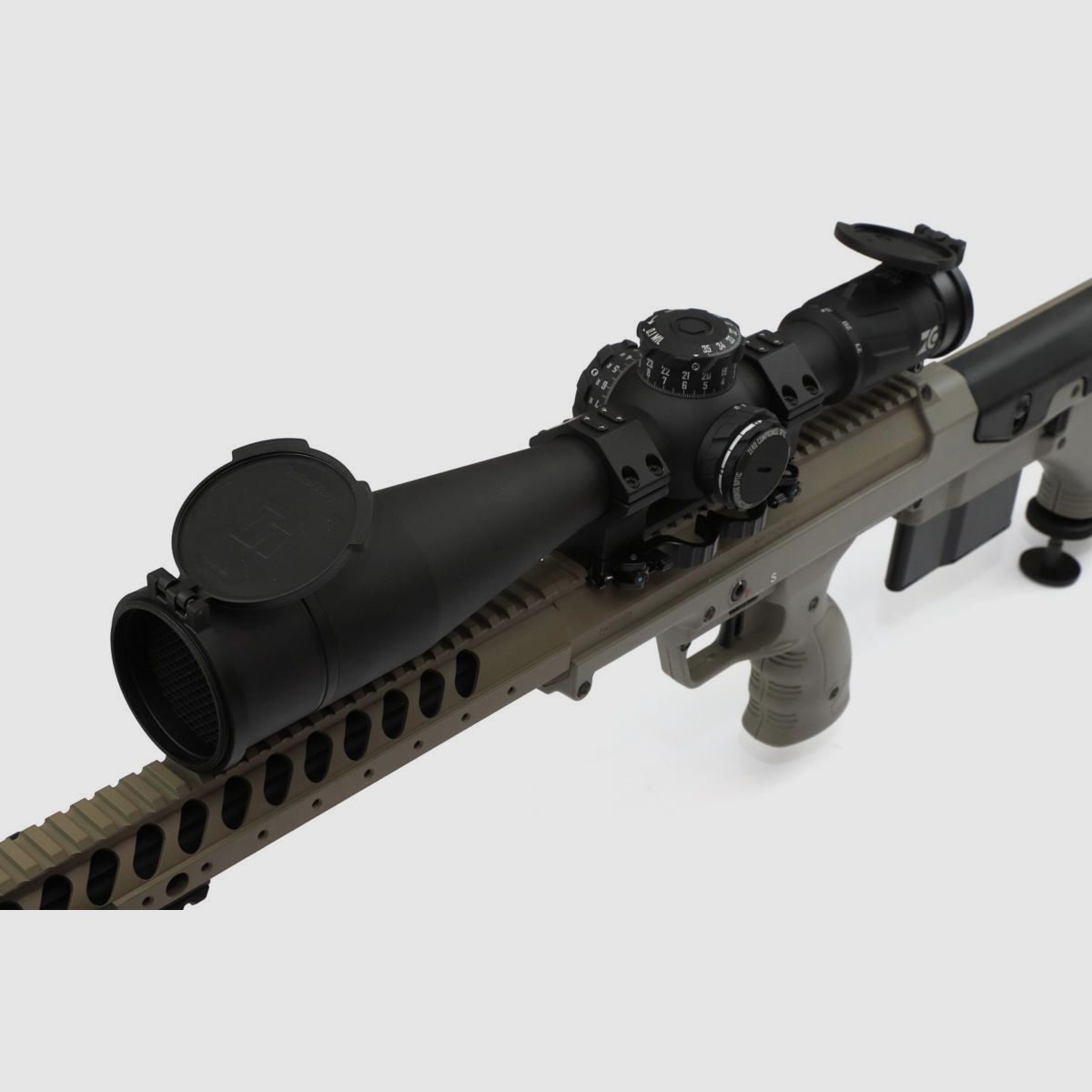


Zero Compromise Optic ZC527 5-27×56
Price on Request
No permit required (18+)
1000 Wien, Austria
5
ID: 10103757
Purchase from outside the EU: The firearm goes through an importer in your country, the dealer handles the export.
How buying from Europe works
Shop safely with Gunfinder
Our AI-powered seller identity verification makes Gunfinder the safest marketplace online.
Learn more
Details
- Original language
- German
- Category
- Condition
- New
- Location
- 🇦🇹 1000 Wien, Austria
- Availability
- In stock
Freshness
This listing is based on a mirrored offer, where the listing data was synced to us from a shop, dealer, or external marketplace. Please note that temporary price discrepancies may occur due to possible delays in data transmission.
- Source
- AWM
- Last checked with the dealer
- about 17 hours ago
Description
Note:
The item is located abroad. Please note that delivery conditions, shipping times, and/or the purchase process may differ.
http://www.zcompoptic.com/
Available Reticles
MPCT1
MPCT2
MPCT3
MPCT3X
Target 1
MOA
Tremor3
Tremor5
As a true specialist in rifle scopes, Zero Compromise Optic (ZCO) employs a team with many years of experience in the premium optical systems segment in Austria and the USA. With passion, dedication, and an absolute focus on its products, ZCO manufactures only the highest-quality rifle scopes. The use of the latest and most technically advanced optical and mechanical designs is essential.
There are no compromises when it comes to a passion for first-class design—ZCO is 100% committed to ultimate precision, maximum performance, and the highest reliability. All product components are designed, manufactured, and tested in-house at Zero Compromise Optic. All ZCO products are assembled by hand in Austria and the USA. Every single rifle scope is extensively tested under extreme real-world conditions (e.g. for impact and vibration) before leaving the production facility.
Satisfied customers are the foundation and motivation for future product development and further innovation at ZCO. That's why customer quality requirements always come first at ZCO!
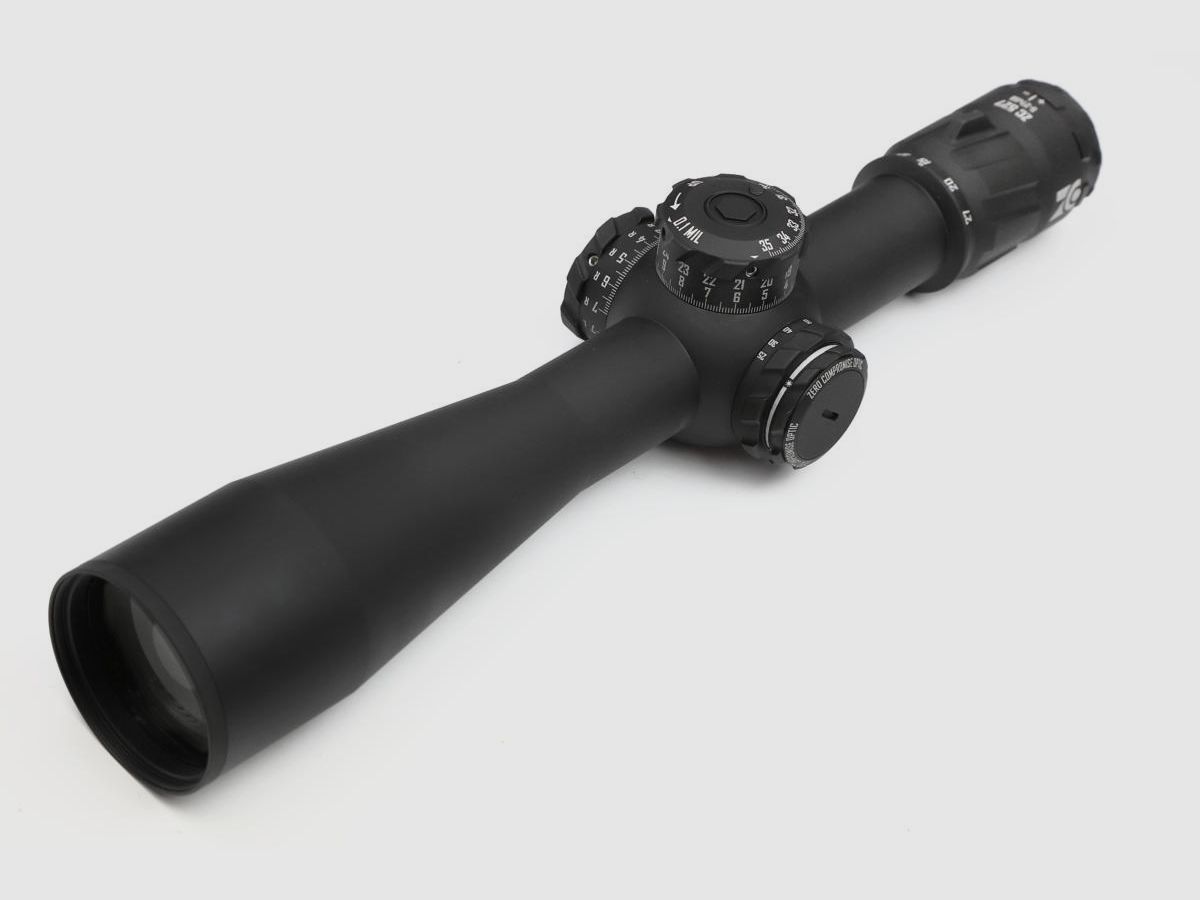
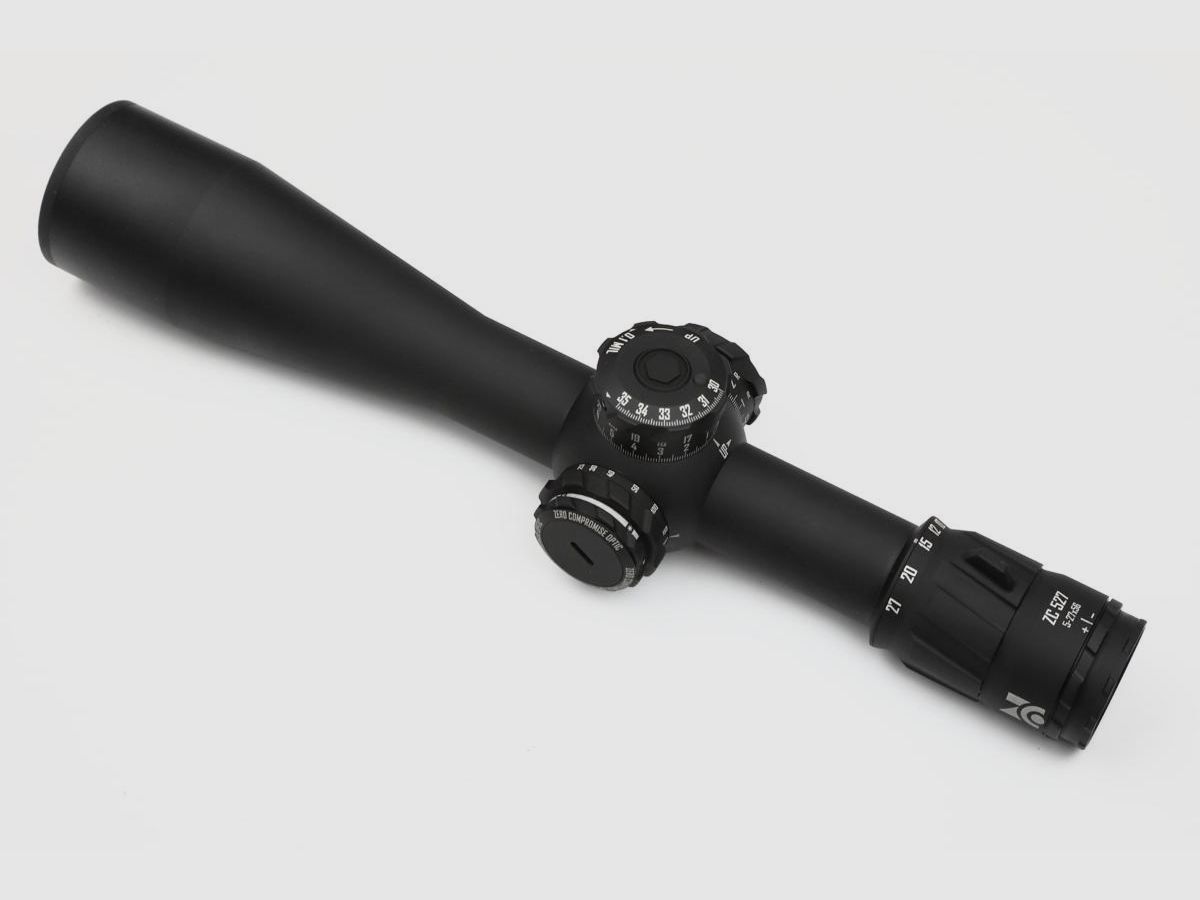
A high-performance rifle scope made in Austria, with a 36 mm main tube for the most demanding users.
25 years of experience in hunting, law enforcement, and sport optics.
56 mm objective lens with ED glass for outstanding target resolution, color correction, and contrast.
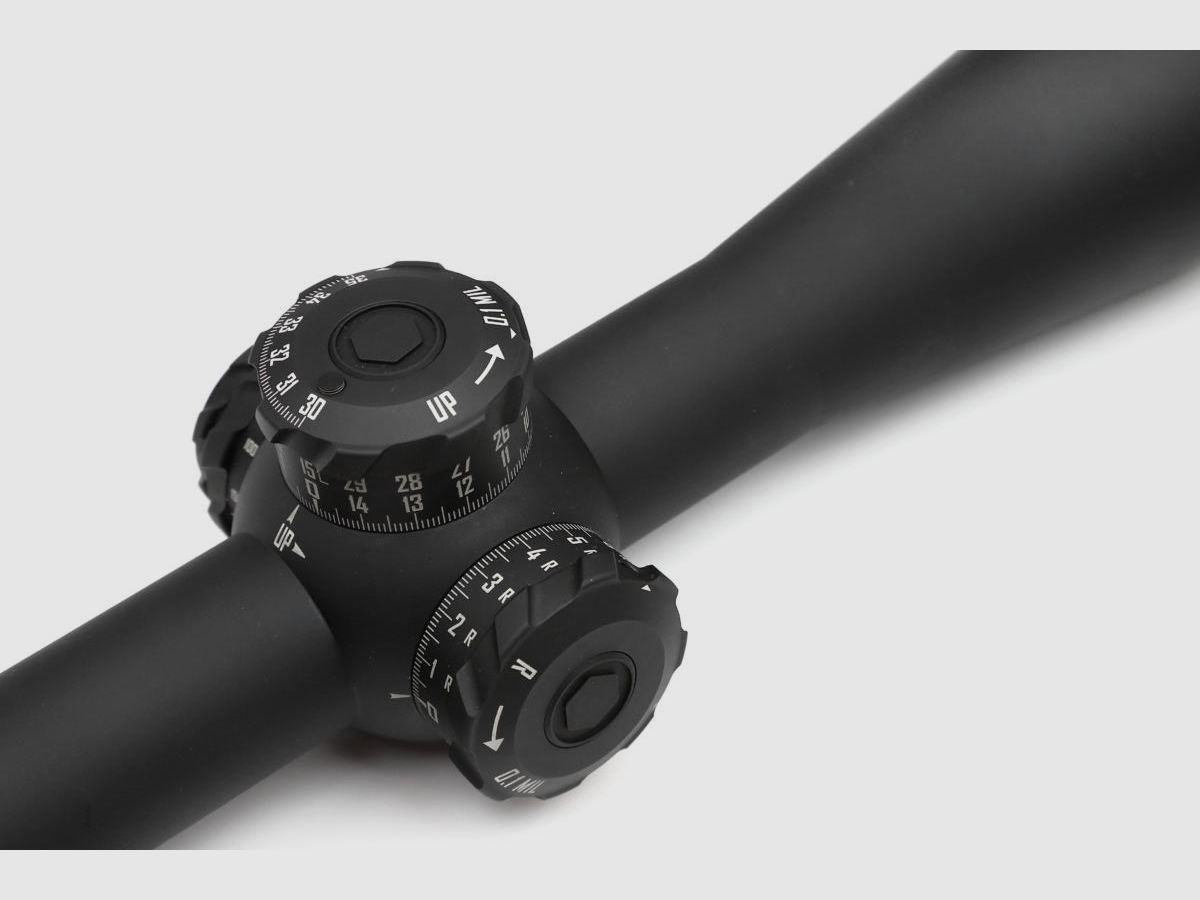
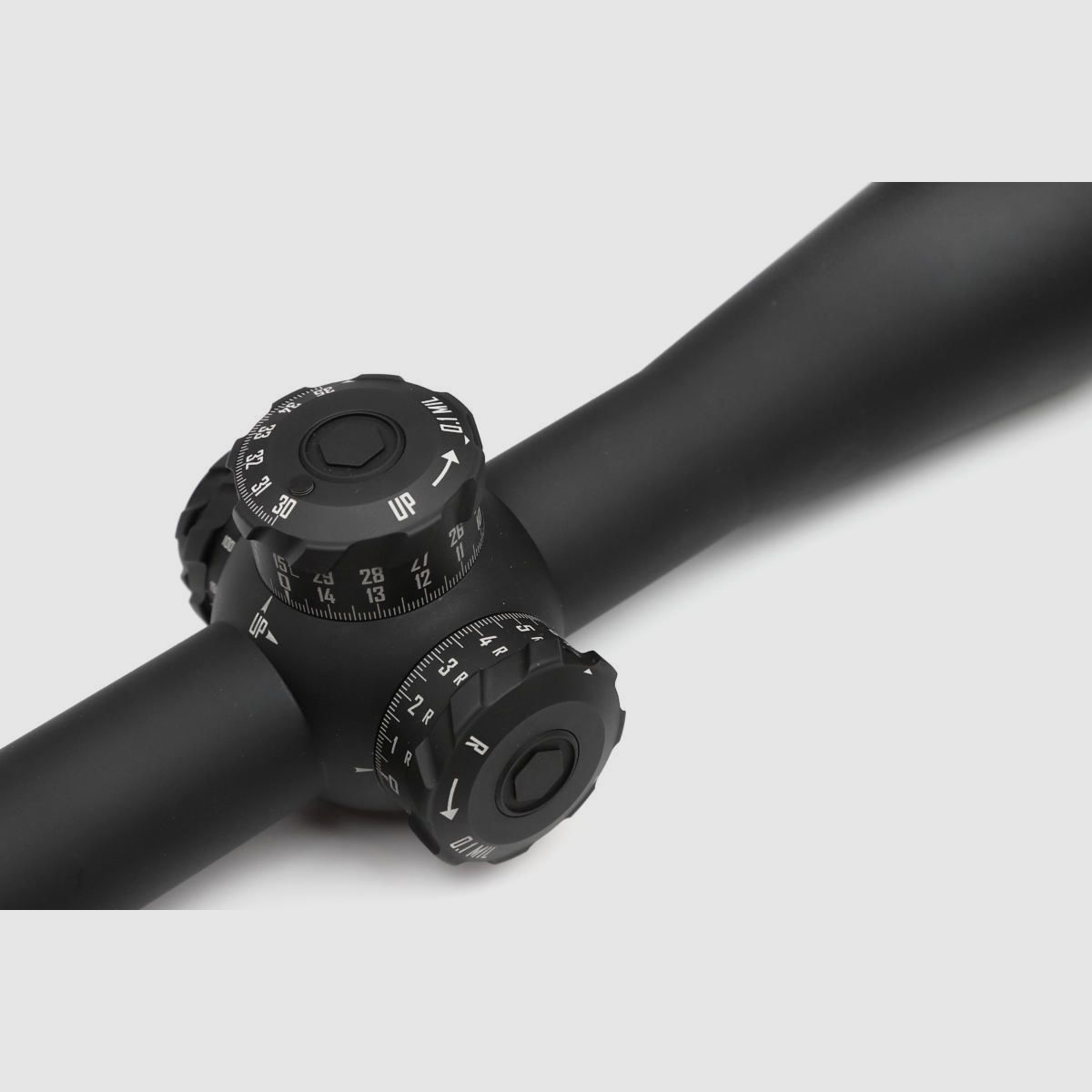
Intuitive push/pull locks on the elevation and windage turrets prevent accidental reticle adjustments.
AIM. Automatic Illumination Management improves sensor performance and significantly extends battery life. AIM turns off the illumination when the rifle scope's angle of inclination exceeds 75 degrees up or down, or 45 degrees to either side.
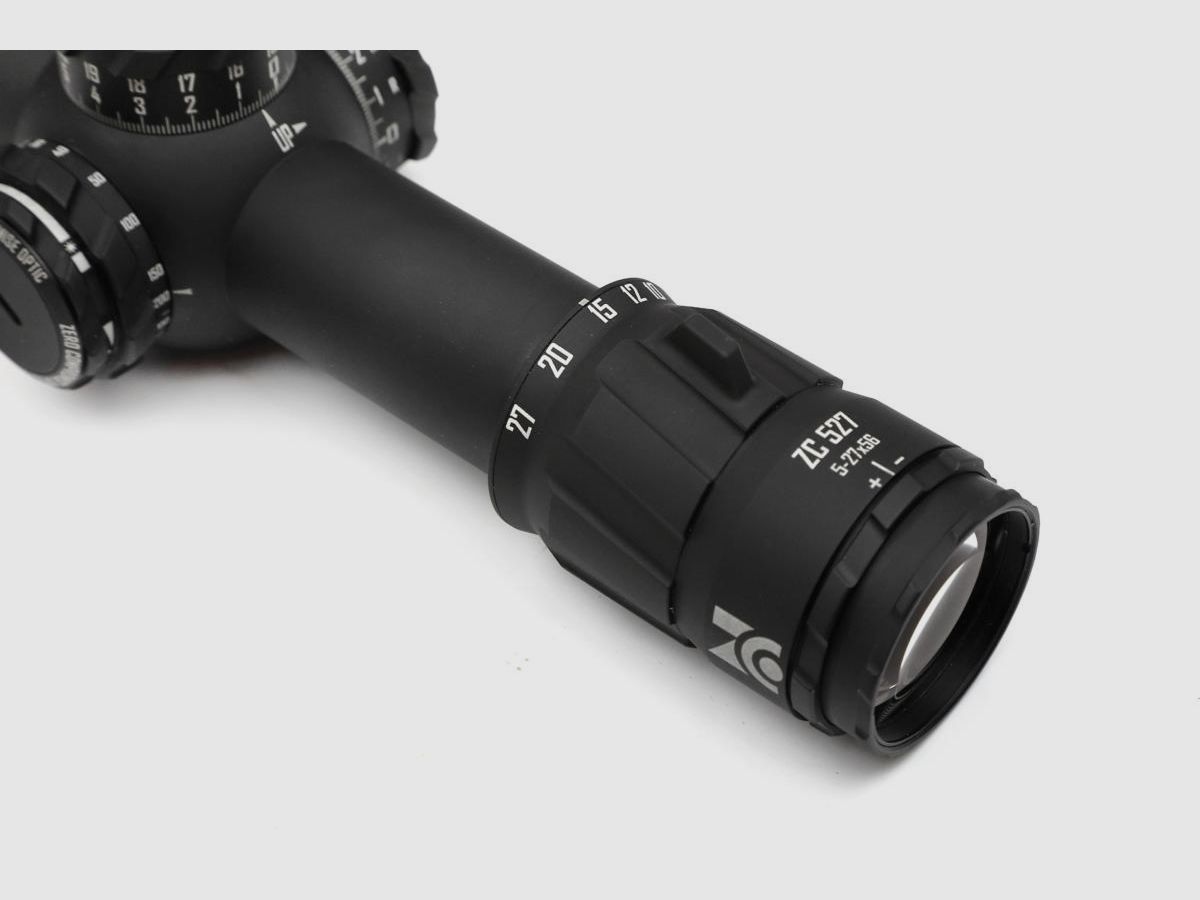
Magnification ring with an angled scale for easy reference from the shooting position.
Eyepiece with the latest optical designs for a maximized field of view, generous eye box, optimal eye relief, and a flat field of view.
Reticle MPCT2
The reticle for sport shooters. A minimalist mil-dot reticle in a holdover style, offering enough reference points to excel in almost any situation and acquire the target with crystal clarity.
This reticle features 0.2 mil dots throughout, while also offering a clear, well-organized design—so you can hit the mark faster and more effectively.
Reticle: MPCT2 in first focal plane
Field of view: 7.0–1.0 meters / 100 meters
Objective lens diameter: 56 mm
Main tube diameter: 36 mm
Click adjustment: 0.1 mil
Elevation adjustment with lock: 35 mil
Windage adjustment with lock: 20 mil
Eye relief: 90 mm
Length: 387 mm
This reticle user manual provides detailed information about the reticle on your product and how to get the most out of it.
Every ZCO product has its reticle in the first focal plane (FFP) of the optical system. This means the reticle always remains the same size relative to the target, regardless of the magnification setting. Whether you use a reticle with MRAD (MIL) or minute-of-angle (MOA) click adjustments, keep in mind that both are angular measurements. This angle remains the same regardless of the distance to the target; that is, 1 MIL or 1 MOA always equals 1 MIL or 1 MOA at both 100 meters and 500 meters.
This is important when adjusting the elevation and windage turrets based on a visible bullet impact at the range, regardless of distance, or when estimating the distance to the target using the reticle. Depending on the application, use...
Use one of the following formulas to determine your distance to the target.
MIL reticle
1. Target size in inches x 27.77 / target size in MIL = distance to target in yards
2. Target size in inches x 25.40 / target size in MIL = distance to target in meters
3. Target size in cm x 10.93 / target size in MIL = distance to target in yards
4. Target size in cm x 10 / target size in MIL = distance to target in meters
MOA reticle
1. Target size in inches x 95.5 / target size in MOA = distance to target in yards
2. Target size in inches x 87.3 / target size in MOA = distance to target in meters
3. Target size in cm x 37.60 / target size in MOA = distance to target in yards
4. Target size in cm x 34.38 / target size in MOA = distance to target in meters
Here’s an example:
You know that a steel plate at the shooting range measures 45 x 60 cm. On the MIL scale of your reticle, this corresponds to 1.00 MIL and 1.33 MIL, respectively. You want to calculate the distance in “meters.” In this example, we’ll assume the target is about 500 yards away. It takes practice to read the distance to the target accurately from the MIL scale in your scope. The more accurately you read it, the more accurately you can calculate the distance to the target.
Knowing that the reticle is in the first focal plane (FFP) and that both MIL and MOA represent angular measurements, we can quickly and accurately adjust the elevation or windage turrets on the scope if the point of impact at the shooting range differs from our intended point of aim. The reticle effectively becomes an enlarged ruler here, always measuring correctly regardless of distance. Position the crosshairs on the intended target, then check where the projectile actually hit. Now use the reticle to check whether the actual point of impact shows any vertical or horizontal deviation (depending on the reticle, in MIL or MOA). For example, if you want the shots to land a little higher and farther left on the target, adjust the elevation turret in the UP direction and the windage turret in the LEFT direction by the exact values you calculated using the reticle.
MPCT3 reticle
The new MPCT3 reticle from ZERO COMPROMISE OPTIC is a next-generation reticle for the modern rifle shooter. The MPCT3 builds on our highly regarded MPCT reticle line and features numerous improvements and some highly unique, advanced design elements. Precision rifle shooters will appreciate the uncluttered center area, which still allows for precise shot placement and a clear view of the target, while providing excellent reference points for quick follow-up shots when needed. A dot matrix design gives the shooter both elevation and windage correction points in 0.20-Mil increments, while still feeling “uncluttered” thanks to the minimal dot sizes. The open circles at the whole-MIL hold points make the reticle easier to see and distinguish, while keeping target observation exceptionally clear. Above the central aiming point are two Mil hold points, allowing you to select an intermediate target on the elevation turret, as well as engage close-range targets with the utmost precision. ZERO COMPROMISE OPTIC’s newly created “funnel” concept is positioned in the upper half of the field of view, where it stays out of the way but is still easy to use. This advanced feature is designed to offer much greater performance than any other reticle design on the market for quick range estimation. Four industry-leading target sizes can be used in the scale funnel to provide a direct range reading. The funnel is optimized for target widths of 6, 9, 12 and 18 inches and provides range readings in yards. Rapid target acquisition v
on target distances has never been faster or easier than with these very common target sizes, which include 100% IPSC, 66% IPSC, 50% IPSC, as well as any other square, rectangular, diamond-shaped or circular target with these widths. The user simply brackets a known target size either between the centerline and the corresponding edge of the funnel or within the entire funnel. Once the target is bracketed, simply read the yardage and interpolate it for that target size. Example: To determine the distance to a 100% IPSC target with a width of 18 inches, place the funnel over the target, with the centerline bisecting the target vertically. Look at the right side of the funnel and read the range where the funnel line crosses the right edge of the target. If the target edge falls between two given ranges, interpolate an approximate yardage based on the distance between the given yardages. Adjust your scope for this target distance or use the reticle for an appropriate hold. For targets measuring six or nine inches, use the middle dashed line of the funnel for one of the target edges, and read the distance from the corresponding side of the funnel. Standard mil-ranging functions are also available in the reticle for target sizes other than those used in the funnel.
All reticles available!
(Show description in original language)
Zero Compromise Optic ZC527 5-27×56
http://www.zcompoptic.com/
Verfügbare Absehen
MPCT1
MPCT2
MPCT3
MPCT3X
Target 1
MOA
Tremor3
Tremor5
Als echter Spezialist für Zielfernrohre beschäftigt Zero Compromise Optic (ZCO) ein Team mit langjähriger Erfahrung im Premiumsegment für optische Systeme in Österreich und den USA. Mit Leidenschaft, Hingabe und absolutem Fokus auf die Produkte fertigt ZCO ausschließlich Zielfernrohre höchster Qualität. Die Verwendung modernster und technisch fortschrittlichster optischer und mechanischer Designs ist dabei obligatorisch.
Die Leidenschaft für erstklassiges Design kennt keine Kompromisse – ZCO hat sich zu 100% ultimativer Präzision, maximaler Performance und höchster Zuverlässigkeit verschrieben. Alle Produktbestandteile werden bei Zero Compromise Optic selbst entworfen, produziert und geprüft. Sämtliche ZCO-Produkte werden von Hand in Österreich und den USA montiert. Jedes einzelne Zielfernrohr wird ausgiebig unter extremen Praxisbedingungen (z.B. auf Stöße und Vibrationen) getestet, bevor es die Produktionsstätte verlässt.
Überzeugte Kunden sind bei ZCO die Grundlage und Motivation für zukünftige Produktentwicklungen sowie weitere Innovationen. Die Qualitätsansprüche der Kunden stehen bei ZCO deshalb stets im Vordergrund!
Ein in Österreich hergestelltes Hochleistungszielfernrohr mit 36 mm Mittelrohr für höchste Ansprüche.
25 Jahren Erfahrung in der Jagd-, Behörden- und Sportoptik.
56 mm großes Objektiv mit ED-Linsen für überragende Zielauflösung, Farbkorrektur und Kontrast.
Intuitiv bedienbare Push-/Pull-Verschlüsse an den Höhen- und Seitentürmen, um eine versehentliche Absehen Verstellung zu vermeiden .
AIM. Durch das Automatic Illumination Management wurde die Sensorfähigkeitverbessert, und die Batterielaufzeit deutlich verlängert. Das AIM deaktiviert die Beleuchtung, wenn der Neigungswinkel des Zielfernrohrs nach oben oder unten 75 Grad bzw. zu den Seiten 45 Grad überschreitet .
Vergrößerungsring mit schräg angestellter Skala für ein einfaches Referenzieren aus der Schussposition heraus.
Okular nach modernsten optischen Designs für ein maximiertes Sehfeld, eine großzügige Eyebox, optimalen Augenabstand und Bildfeldebnung.
Absehen MPCT2
Das Absehen für Sportschützen. Ein minimalistisches mil-Dot-Absehen im Holdover-Style, das ausreichend Referenzpunkte bietet, um in nahezu jeder Situation zu glänzen und das Ziel gestochen scharf zu erfassen.
Dieses Absehen ist durchgängig mit 0.2-mil-Punkten versehen und zeichnet sich zugleich durch eine klar strukturierte, geordnete Optik aus – so treffen Sie noch schneller und effektiver ins Schwarze.
Absehen: MPCT2 in erster Bildebene
Sehfeld: 7,0 – 1,0 Meter / 100 Meter
Objektivdurchmesser: 56 mm
Mittelrohrdurchmesser: 36 mm
Klickverstellung: 0,1 mil
Höhenverstellung mit Fixierung: 35 mil
Seitenverstellung mit Fixierung: 20 mil
Augenabstand: 90 mm
Länge: 387 mm
In diesem Handbuch für die Benutzung des Absehens finden Sie ausführliche Informationen über das jeweilige Absehen Ihres Produkts sowie dessen bestmögliche Nutzung.
Bei jedem Produkt von ZCO befindet sich das Absehen in der Ersten Bildebene (FFP) des optischen Systems. Dies bedeutet, dass das Absehen unabhängig von der jeweiligen Vergrößerungseinstellung stets die gleiche Größe im Verhältnis zum Ziel behält. Unabhängig davon, ob Sie ein Absehen mit MRAD- (MIL) oder Minute-of-Angle-Klickverstellung (MOA) verwenden, sollten Sie sich stets vor Augen führen, dass es sich bei beiden Varianten um Winkelmaße handelt. Dieser Winkel bleibt unabhängig von der Entfernung zum Ziel stets gleich, d.h. 1 MIL bzw. 1 MOA entsprechen sowohl auf 100 Meter als auch auf 500 Meter Entfernung immer 1 MIL bzw. 1 MOA.
Dies ist wichtig, wenn Sie auf Grundlage eines sichtbaren Projektileinschlags am Schießstand die Ausrichtung der Höhen- und Seitentürme egal aus welcher Distanz anpassen oder die Entfernung zum Ziel mithilfe des Absehens einschätzen wollen.Nutzen Sie je nach Anwendungsfall eine der nachstehenden Formeln, um Ihre Entfernung zum Ziel zu bestimmen.
MIL-Absehen
1. Zielgröße in Zoll x 27,77 / Zielgröße in MIL = Entfernung zum Ziel in Yards
2. Zielgröße in Zoll x 25,40 / Zielgröße in MIL = Entfernung zum Ziel in Metern
3. Zielgröße in cm x 10,93 / Zielgröße in MIL = Entfernung zum Ziel in Yards
4. Zielgröße in cm x 10 / Zielgröße in MIL = Entfernung zum Ziel in Metern
MOA-Absehen
1. Zielgröße in Zoll x 95,5 / Zielgröße in MOA = Entfernung zum Ziel in Yards
2. Zielgröße in Zoll x 87,3 / Zielgröße in MOA = Entfernung zum Ziel in Metern
3. Zielgröße in cm x 37,60 / Zielgröße in MOA = Entfernung zum Ziel in Yards
4. Zielgröße in cm x 34,38 / Zielgröße in MOA = Entfernung zum Ziel in Metern
Hier ein Beispiel:
Ihnen ist die Größe einer Stahlscheibe am Schießstand mit 45 x 60 cm bekannt. Auf der MIL-Skala Ihres Absehens entspricht dies jeweils 1,00 MIL und 1,33 MIL. Die Entfernung wollen Sie in „Meter“ berechnen. In diesem Beispiel gehen wir von einer Entfernung von etwa 500 Yards zum Ziel aus. Es erfordert Übung, die Distanz zum Ziel akkurat von der MIL-Skala Ihres Zielfernrohrs abzulesen. Je genauer Sie ablesen, desto akkurater die berechnete Entfernung zum Ziel.
Mit dem Wissen, dass sich das Absehen in der ersten Bildebene (FFP) befindet und sowohl MIL als auch MOA Winkelmaße darstellen, können wir die Höhen- oder Seitentürme des Zielfernrohrs schnell und akkurat verstellen, wenn der Auftreff-punkt am Schießstand von unserem gewünschten Ziel abweicht. Das Absehen wird hier praktisch zu einem vergrößerten Lineal und misst unabhängig von der Entfernung stets korrekt.Positionieren Sie das Fadenkreuz auf dem gewünschten Ziel und prüfen Sie dann, wo das Projektil tatsächlich eingeschla-gen ist. Prüfen Sie nun mithilfe des Absehens, ob sich anhand des tatsächlichen Auftreffpunktes vertikale oder horizontale Abweichungen feststellen lassen (je nach Absehen in MIL oder MOA). Sollen die Einschussstellen zum Beispiel etwas höher und weiter links auf der Zielscheibe positioniert sein, verstellen Sie den Höhenturm in UP-Richtung sowie den Seitenturm in LEFT-Richtung um die exakten Werte, die Sie mithilfe des Absehens errechnet haben.
MPCT3-Absehen
Das neue MPCT3-Absehen von ZERO COMPROMISE OPTIC ist ein Absehen der nächsten Generation für den modernen Gewehrschützen.Das MPCT3 baut auf unserer begehrten MPCT-Absehens Linie auf und verfügt über zahlreiche Verbesserungen und einige äußerst einzigartige und fortschrittliche Designelemente. Präzisionsgewehrschützen werden den über-sichtlichen Mittelbereich zu schätzen wissen, der immer noch eine präzise Schussposition und eine klare Zielbeob-achtung ermöglicht und gleichzeitig hervorragende Referenzpunkte für schnelle Folgeschüsse bei Bedarf bietet.Ein Punktmatrixdesign bietet dem Schützen sowohl Höhen- als auch Seitenleitwerkskorrekturpunkte in 0,20-Mil-Schritten, während er sich aufgrund der minimalen Punktgrößen immer noch „übersichtlich“ fühlt. Die offenen Kreise der ganzen MIL Haltepunkte beschleunigen die Sichtbarkeit des Absehens und die Unterscheidung, während die Zielbeobachtung außergewöhnlich hoch bleibt.Oberhalb des zentralen Zielpunktes befinden sich zwei Mil Haltepunkte, die es ermöglichen, ein Zwischenziel auf dem Elevationsturm anzuwählen, aber auch Ziele im Nahbereich mit höchster Präzision zu erfassen. Das neu kreierte „Trichter“-Konzept von ZERO COMPROMISE OPTIC ist in der oberen Hälfte des Sichtfeldes positioniert, wo es nicht im Weg ist, aber dennoch leicht zu benutzen ist. Diese fortschrittliche Funktion ist so konzipiert, dass sie eine viel höhere Lei- stungsfähigkeit bietet als alle anderen auf dem Markt erhältlichen Designs zur schnellen Entfernungsmessung von Absehen. Vier branchenführende Zielgrößen können im Skalen-Trichter verwendet werden, um eine direkte Entfer-nungsanzeige auszugeben.Der Trichter ist für Zielbreiten von 6, 9, 12 und 18 Zoll optimiert und bietet Entfernungsangabe in Yards.Die schnelle Erfassung von Zielentfernungen war noch nie so schnell und einfach wie bei diesen sehr gebräuchli-chen Zielgrößen, die 100% IPSC umfassen, 66% IPSC, 50% IPSC, sowie jedes andere quadratische, rechteckige, rautenförmige oder kreisförmige Ziel mit diesen Breiten. Der Anwender klammert einfach eine bekannte Zielgröße entweder zwischen der Mittellinie und dem entsprechenden Trichterrand oder innerhalb des gesamten Trichters ein. Sobald er eine entsprechende Klammer gesetzt hat, liest er einfach die Yard Zahl ab und interpoliert sie auf diese Zielgröße.Beispiel: Um die Entfernung von einer 100 %igen IPSC-Zielscheibe mit einer Breite von 18 Zoll zu bestimmen, legen Sie den Trichter über die Zielscheibe, wobei die Mittellinie die Zielscheibe vertikal halbiert. Schauen Sie auf die rechte Seite des Trichters und lesen Sie den Bereich ab, in dem die Trichterlinie über den rechten Rand des Ziels verläuft. Wenn die Zielkante zwischen zwei gegebenen Bereichen liegt, interpolieren Sie eine ungefähre Yard-Angabe auf der Grundlage des Abstands zwischen den gegebenen Yard-Angaben. Stellen Sie Ihre Zielfernrohr-Verstellungen auf diese Zielentfernung ein oder verwenden Sie das Absehen für einen geeigneten Halt. Bei Zielen mit einer Größe von sechs oder neun Zoll wird die mittlere gestrichelte Linie des Trichters für eine der Zielkanten verwendet, und die Länge wird von der entsprechenden Seite des Trichters abgelesen.Für andere Zielgrößen als die im Trichter verwendet sind im Absehen noch Standard-Mil-Range-Funktionen vor- handen.
Alle Absehen erhältlich!