-6 %


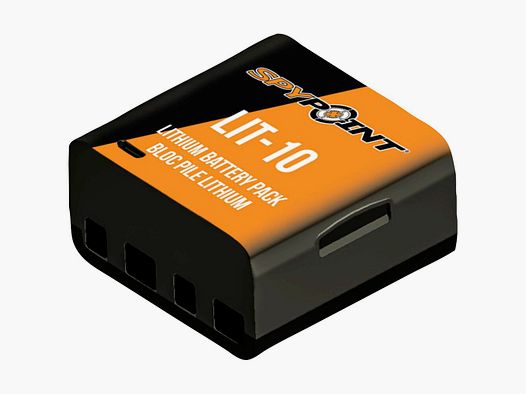
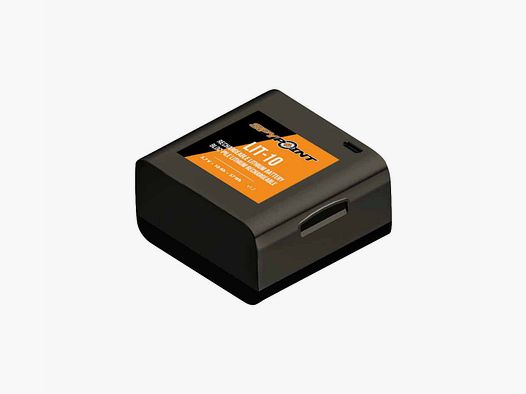
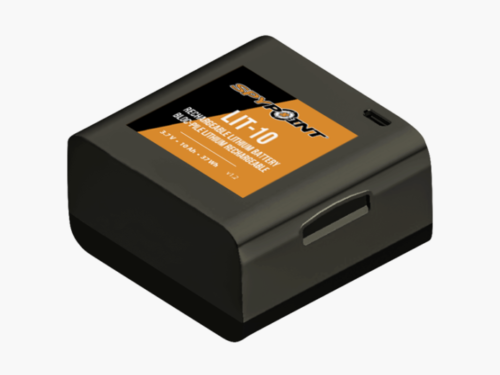
SPYPOINT LIT-10 Lithium Battery 3.7 V / 10,200 mAh
Price at the dealer: 74.90 €. Converted at the ECB rate as of November 20, 2026.
No permit required (18+)
72479 Straßberg, Germany
20
ID: 10064879
Purchase from outside the EU: The firearm goes through an importer in your country, the dealer handles the export.
How buying from Europe works
Shop safely with Gunfinder
Our AI-powered seller identity verification makes Gunfinder the safest marketplace online.
Learn more
Details
- Original language
- German
- Brand
- Spypoint
- Category
- Condition
- New
- Location
- 🇩🇪 72479 Straßberg, Germany
- Availability
- In stock
Freshness
This listing is based on a mirrored offer, where the listing data was synced to us from a shop, dealer, or external marketplace. Please note that temporary price discrepancies may occur due to possible delays in data transmission.
- Source
- Black Raptor
- Last checked with the dealer
- about 7 hours ago
Description
Note:
The item is located abroad. Please note that delivery conditions, shipping times, and/or the purchase process may differ.
SPYPOINT MICRO System · Rechargeable power The perfectly fitting replacement battery for LINK‑MICRO and CELL‑LINK The LIT‑10 replaces loose AA batteries in compatible SPYPOINT devices with a sealed, rechargeable battery pack. With 3.7 volts and 10,200 mAh, it’s designed for the MICRO family and CELL‑LINK.
Its strength lies in providing a predictable power reserve in the field: one pack runs in the camera while a second can stay charged and ready to go. How long a charge actually lasts depends on reception, transmission frequency, image volume, temperature, and the condition of the device.
Check before buying
Compatible devices: LINK‑MICRO, LINK‑MICRO‑LTE, LINK‑MICRO‑S‑LTE, and CELL‑LINK.
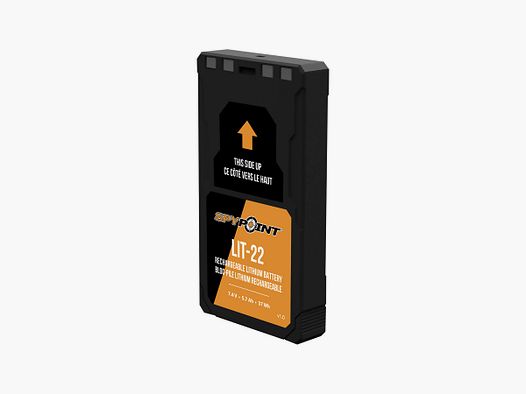
Not for FLEX: The SPYPOINT LIT‑22 is designed for compatible FLEX series cameras.
Charging: A Micro‑USB cable is included; according to the instructions, a 5‑V USB power adapter is also required.
New camera: If the device has never been activated, first activate and sync it according to the manufacturer’s instructions using the specified standard power supply before switching to the LIT‑10.
Our take
The LIT‑10 isn’t a universal trail camera battery, but a purpose-built component for a specific system. That’s exactly its advantage: its shape, contacts, and charge indicator are designed for the compatible SPYPOINT devices. If you check a LINK‑MICRO regularly, you can skip sorting individual batteries and keep your time at the site short by bringing a charged spare pack.
Any fixed range or runtime estimate would be misleading. Cellular transmission uses more power when reception is weak, frequent triggers increase consumption, and cold affects every battery chemistry. The battery makes power supply more predictable, but it doesn’t replace proper camera and transmission settings.
Buy it if: your device exactly matches the compatible models listed above
belongs to the MICRO family or is used with CELL‑LINK, and you’re looking for a rechargeable power source or a charged spare battery.
Don’t buy if: you use a FLEX, FORCE, or third-party camera, or assume mechanical compatibility based only on the same voltage.
Setup without troubleshooting in the field
Before first use, charge the LIT‑10 for approximately twelve hours using the included Micro‑USB cable and a suitable 5‑V‑USB power adapter. According to the instructions, the indicator changes from red to green when the battery is fully charged.
For a camera that’s already activated, select the LIT‑10 as the battery type in the SPYPOINT app before inserting it.
For setup, initially set the transmission frequency to transmit with every detection, as recommended by the manufacturer.
Insert the battery, turn on the device, and wait until all status lights have gone out. According to SPYPOINT, the low-battery light pattern that may appear on first startup is normal.
Trigger a test photo, check that it was transmitted successfully, and then restart the camera. The app should then show the LIT‑10 with its charge level as a percentage.
Practical tip: Don’t wait until you’re at the final location to make the initial changeover. Set up the camera, app, and battery completely at home, wait for a test transmission, and only then head out to the hunting area.
Battery swap routine: Label multiple packs with a number and the date they were last charged. This makes it easier to spot a battery that’s losing capacity unusually quickly and prevents a charged spare from accidentally ending up back in the charger.
After use in cold weather: Let the battery reach room temperature before charging it, and dry off any moisture completely. Keep the contacts clean and insert the pack without forcing it or tilting it.
Technical specifications
Model: SPYPOINT LIT‑10
Product type: Rechargeable lithium-ion battery pack
Nominal voltage: 3.7 V according to the current SPYPOINT product page and manufacturer instructions
Capacity: 10,200 mAh
Charging port: Micro‑USB
Charging time: Approximately 12 hours according to the manufacturer’s instructions
Charge status: Red while charging, green when fully charged
Compatibility: LINK‑MICRO, LINK‑MICRO‑LTE, LINK‑MICRO‑S‑LTE, CELL‑LINK
Manufacturer reference: 05558 / LIT‑10
LIT‑10 or LIT‑22?
LIT‑10: 3.7 V and 10,200 mAh for the LINK‑MICRO family and CELL‑LINK. LIT‑22: A different battery system for compatible FLEX series cameras. The model number matters more here than voltage or capacity: the two packs are not interchangeable.
Charge, transport, and dispose of it safely
Only charge a battery that’s undamaged on the outside, using a suitable cable and 5‑V‑USB power adapter. Don’t open, disassemble, crush, puncture, short-circuit, burn, or immerse the pack in water. Protect it from high temperatures, direct sunlight, and hot vehicles.
If the battery becomes deformed or discolored, gets unusually hot, smells, smokes, or leaks fluid, stop using and charging it immediately. Protect the contacts against short circuits during transport. Special rules apply to lithium batteries when flying, shipping, or returning them. Never dispose of used batteries with household waste; take them to an appropriate battery collection point.
What’s included
1 × SPYPOINT LIT‑10 lithium-ion battery pack
1 × Micro‑USB charging cable
Trail camera, CELL‑LINK, 5‑V‑USB power adapter, memory card, and other hunting-area accessories are not included.
A good fit for planning in the field
Find more systems and accessories under Trail Cameras for Hunting and the Field. Revier & Wildbergung brings together the right product categories for power and monitoring routines around your location. If you use a compatible FLEX camera, check out the SPYPOINT LIT‑22 battery.
Frequently asked questions
Does the SPYPOINT LIT‑10 fit FLEX cameras? No. SPYPOINT lists the LIT‑10 for LINK‑MICRO, LINK‑MICRO‑LTE, LINK‑MICRO‑S‑LTE, and CELL‑LINK. The LIT‑22 is intended for compatible FLEX models.
Is a power adapter included? No. The package includes a...
A Micro-USB charging cable is included. A suitable 5 V USB power adapter is also required for charging.
How long does a full charge take? The manufacturer’s instructions say approximately twelve hours. The power source, temperature, and battery condition can affect the actual charging time.
Why does the camera show a low-battery pattern when first installed? SPYPOINT describes this behavior as normal during initial setup. Set the battery type to LIT-10 in the app, wait for a successful transmission, then restart the device.
Do I need to change the battery type in the app? Yes, for a compatible camera that has already been activated. The LIT-10 setting ensures the device and app correctly account for the battery type being used.
How long does a trail camera run on one charge? There’s no reliable general answer. Signal strength, transmissions, triggers, temperature, settings, and battery condition all affect power consumption.
How do I dispose of a used LIT-10? Protect the contacts against short circuits and take the battery pack to an appropriate battery collection point. Lithium batteries must not be disposed of with household waste. (Show description in original language)
.br-v3-product{--br-green:#18392f;--br-gold:#e8d39a;--br-cream:#f7f4ec;--br-red:#8b2c2c;--br-text:#1b1f1d;color:var(--br-text);font-size:16px;line-height:1.62;max-width:100%;overflow-wrap:anywhere}.br-v3-product *{box-sizing:border-box}.br-v3-product a{color:#174d3d;text-decoration:underline;text-underline-offset:2px}.br-v3-product a:focus-visible,.br-v3-product summary:focus-visible{outline:3px solid #9f6c00;outline-offset:3px}.br-v3-product .br-hero,.br-v3-product .br-card,.br-v3-product .br-tip,.br-v3-product .br-compare,.br-v3-product .br-note,.br-v3-product .br-final{padding:22px;margin:20px 0;border-radius:8px}.br-v3-product .br-hero{background:var(--br-green);color:#fff}.br-v3-product .br-eyebrow{display:block;font-size:.82rem;font-weight:800;letter-spacing:.08em;text-transform:uppercase;color:var(--br-gold);margin:0 0 8px}.br-v3-product .br-title{display:block;font-size:1.55rem;line-height:1.2;font-weight:800;margin:0 0 10px}.br-v3-product .br-section-title{display:block;font-size:1.25rem;line-height:1.25;font-weight:800;margin:30px 0 12px;color:var(--br-green)}.br-v3-product .br-card{background:var(--br-cream);border-left:5px solid var(--br-gold)}.br-v3-product .br-tip{background:#edf4f0;border-left:5px solid var(--br-green)}.br-v3-product .br-compare{background:#f1f1f1;border-left:5px solid #555}.br-v3-product .br-note{background:#fff2f2;border-left:5px solid var(--br-red)}.br-v3-product .br-final{background:var(--br-green);color:#fff}.br-v3-product ul,.br-v3-product ol{padding-left:1.25rem}.br-v3-product li{margin:.42rem 0}.br-v3-product details{background:#f2f2f2;padding:12px 14px;margin:10px 0;border-radius:5px}.br-v3-product summary{cursor:pointer;font-weight:750;color:#153d32}.br-v3-product details p{margin:10px 0 2px}@media(max-width:720px){.br-v3-product{font-size:16px;line-height:1.55}.br-v3-product .br-hero,.br-v3-product .br-card,.br-v3-product .br-tip,.br-v3-product .br-compare,.br-v3-product .br-note,.br-v3-product .br-final{padding:17px;margin:16px 0}.br-v3-product .br-title{font-size:1.3rem}.br-v3-product .br-section-title{font-size:1.15rem}}
SPYPOINT MICRO-System · wiederaufladbare Energie Der passgenaue Wechselakku für LINK‑MICRO und CELL‑LINK Der LIT‑10 ersetzt bei kompatiblen SPYPOINT-Geräten lose AA-Zellen durch ein geschlossenes, wiederaufladbares Akkupack. Mit 3,7 Volt und 10.200 mAh ist er auf die MICRO-Familie und den CELL‑LINK abgestimmt.
Seine Stärke zeigt sich als planbare Energiereserve im Revier: Ein Pack arbeitet in der Kamera, ein zweites kann geladen und einsatzbereit bleiben. Wie lange eine Ladung tatsächlich hält, bestimmen Empfang, Übertragungsfrequenz, Bildaufkommen, Temperatur und Gerätezustand.
Vor dem Kauf prüfen
Freigegebene Geräte: LINK‑MICRO, LINK‑MICRO‑LTE, LINK‑MICRO‑S‑LTE und CELL‑LINK.
Nicht für FLEX: Für kompatible Kameras der FLEX-Serie ist der SPYPOINT LIT‑22 vorgesehen.
Laden: Ein Micro‑USB-Kabel gehört zum Lieferumfang; ein 5‑V‑USB-Netzadapter wird laut Anleitung zusätzlich benötigt.
Neue Kamera: Ein noch nie aktiviertes Gerät zunächst nach Herstelleranleitung mit der vorgesehenen Standardstromversorgung aktivieren und synchronisieren, bevor auf LIT‑10 umgestellt wird.
Unsere Einschätzung
Der LIT‑10 ist kein universeller Wildkamera-Akku, sondern ein bewusst eng gefasstes Systemteil. Genau das ist sein Vorteil: Bauform, Kontaktierung und Ladezustandsanzeige sind für die freigegebenen SPYPOINT-Geräte vorgesehen. Wer eine LINK‑MICRO regelmäßig kontrolliert, vermeidet das Sortieren einzelner Zellen und kann mit einem geladenen Tauschpack den Aufenthalt am Standort kurz halten.
Eine feste Reichweiten- oder Laufzeitangabe wäre unseriös. Mobilfunkübertragung kostet bei schwachem Empfang mehr Energie, häufige Auslösungen erhöhen den Verbrauch und Kälte beeinflusst jede Batteriechemie. Der Akku macht die Versorgung planbarer, ersetzt aber keine saubere Kamera- und Übertragungseinstellung.
Kaufen, wenn: dein Gerät exakt zur freigegebenen MICRO-Familie oder zum CELL‑LINK gehört und du eine wiederaufladbare Stromquelle beziehungsweise einen geladenen Tausch-Akku suchst.
Nicht kaufen, wenn: du eine FLEX-, FORCE- oder Fremdkamera betreibst oder allein wegen gleicher Spannung von mechanischer Kompatibilität ausgehst.
Einrichtung ohne Fehlersuche im Revier
LIT‑10 vor der ersten Nutzung mit dem mitgelieferten Micro‑USB-Kabel und einem geeigneten 5‑V‑USB-Netzadapter ungefähr zwölf Stunden laden. Die Anzeige wechselt laut Anleitung bei vollem Akku von Rot auf Grün.
Bei einer bereits aktivierten Kamera vor dem Einsetzen in der SPYPOINT-App den Batterietyp LIT‑10 wählen.
Für die Einrichtung die Übertragungsfrequenz nach Herstellerempfehlung zunächst auf Übertragung bei jeder Erkennung stellen.
Akku einsetzen, Gerät einschalten und warten, bis alle Statusleuchten erloschen sind. Das beim ersten Start mögliche Niedrigbatterie-Lichtmuster ist laut SPYPOINT normal.
Eine Testaufnahme auslösen, erfolgreiche Übertragung prüfen und die Kamera anschließend neu starten. Danach sollte die App den LIT‑10 mit prozentualem Ladezustand anzeigen.
Praxis-Tipp: Die Erstumstellung nicht erst am endgültigen Standort durchführen. Kamera, App und Akku zuhause vollständig einrichten, eine Testübertragung abwarten und erst dann ins Revier fahren.
Wechselroutine: Mehrere Packs mit Nummer und letztem Ladedatum kennzeichnen. So wird sichtbar, welcher Akku ungewöhnlich schnell Kapazität verliert, und der geladene Ersatz landet nicht versehentlich wieder im Ladefach.
Nach Kälteeinsatz: Den Akku vor dem Laden auf Raumtemperatur kommen lassen und Feuchtigkeit vollständig abtrocknen. Kontakte sauber halten und den Pack ohne Druck oder Verkanten einsetzen.
Technische Praxisdaten
Modell: SPYPOINT LIT‑10
Produkttyp: wiederaufladbares Lithium-Ionen-Akkupack
Nennspannung: 3,7 V laut aktueller SPYPOINT-Produktseite und Herstelleranleitung
Kapazität: 10.200 mAh
Ladeanschluss: Micro‑USB
Ladezeit: ungefähr 12 Stunden laut Herstelleranleitung
Ladestatus: Rot während des Ladens, Grün bei vollständiger Ladung
Kompatibilität: LINK‑MICRO, LINK‑MICRO‑LTE, LINK‑MICRO‑S‑LTE, CELL‑LINK
Herstellerreferenz: 05558 / LIT‑10
LIT‑10 oder LIT‑22?
LIT‑10: 3,7 V und 10.200 mAh für die LINK‑MICRO-Familie und CELL‑LINK. LIT‑22: anderes Akkusystem für kompatible Kameras der FLEX-Serie. Die Modellnummer ist hier wichtiger als Spannung oder Kapazität: Beide Packs sind nicht gegeneinander austauschbar.
Sicher laden, transportieren und entsorgen
Nur einen äußerlich unbeschädigten Akku mit geeignetem Kabel und 5‑V‑USB-Netzadapter laden. Pack nicht öffnen, zerlegen, quetschen, durchstechen, kurzschließen, ins Feuer legen oder in Wasser tauchen. Vor starker Hitze, direkter Sonne und aufgeheizten Fahrzeugen schützen.
Bei Verformung, Verfärbung, ungewöhnlicher Erwärmung, Geruch, Rauch oder austretender Flüssigkeit Nutzung und Ladevorgang sofort beenden. Kontakte beim Transport gegen Kurzschluss sichern. Für Flugreise, Versand und Rücksendung gelten besondere Regeln für Lithium-Akkus. Altakkus niemals über den Hausmüll entsorgen, sondern einer geeigneten Batterie-Rücknahmestelle zuführen.
Lieferumfang
1 × SPYPOINT LIT‑10 Lithium-Akkupack
1 × Micro‑USB-Ladekabel
Wildkamera, CELL‑LINK, 5‑V‑USB-Netzadapter, Speicherkarte und weiteres Revierzubehör sind nicht enthalten.
Passend in der Revierplanung
Weitere Systeme und Zubehör findest du unter Wildkameras für Jagd und Revier . Für Energie- und Kontrollroutinen rund um den Standort führt Revier & Wildbergung die passenden Produktgruppen zusammen. Nutzt du eine kompatible FLEX-Kamera, führt die Akkurichtung zum SPYPOINT LIT‑22 .
Häufige Fragen
Passt der SPYPOINT LIT‑10 in FLEX-Kameras? Nein. SPYPOINT nennt den LIT‑10 für LINK‑MICRO, LINK‑MICRO‑LTE, LINK‑MICRO‑S‑LTE und CELL‑LINK. Für kompatible FLEX-Modelle ist der LIT‑22 vorgesehen.
Ist ein Netzteil enthalten? Nein. Zum Lieferumfang gehört ein Micro‑USB-Ladekabel. Für das Laden wird zusätzlich ein geeigneter 5‑V‑USB-Netzadapter benötigt.
Wie lange dauert eine vollständige Ladung? Die Herstelleranleitung nennt ungefähr zwölf Stunden. Stromquelle, Temperatur und Akkuzustand können die tatsächliche Zeit beeinflussen.
Warum zeigt die Kamera beim ersten Einsetzen ein Niedrigbatterie-Muster? SPYPOINT beschreibt dieses Verhalten bei der ersten Einrichtung als normal. Batterietyp in der App auf LIT‑10 stellen, eine erfolgreiche Übertragung abwarten und das Gerät danach neu starten.
Muss der Batterietyp in der App geändert werden? Bei einer kompatiblen, bereits aktivierten Kamera ja. Die Einstellung LIT‑10 sorgt dafür, dass Gerät und App den verwendeten Akkutyp korrekt berücksichtigen.
Wie lange arbeitet eine Wildkamera mit einer Ladung? Das lässt sich nicht seriös pauschalisieren. Empfangsstärke, Übertragungen, Auslösungen, Temperatur, Einstellungen und Akkuzustand beeinflussen den Verbrauch.
Wie entsorge ich einen ausgedienten LIT‑10? Kontakte gegen Kurzschluss sichern und das Akkupack bei einer geeigneten Batterie-Rücknahmestelle abgeben. Lithium-Akkus gehören nicht in den Hausmüll.