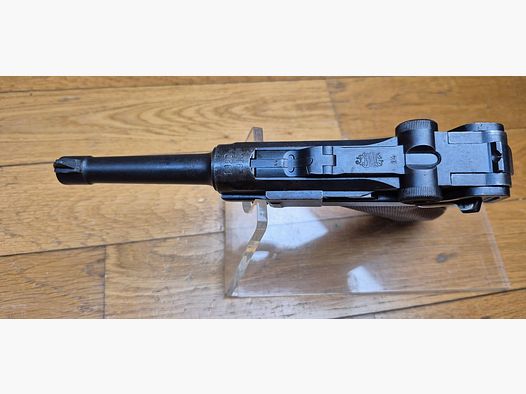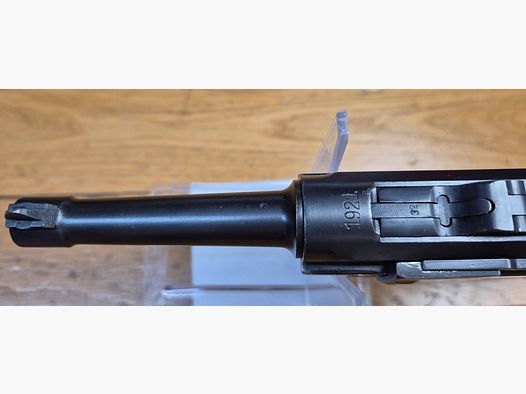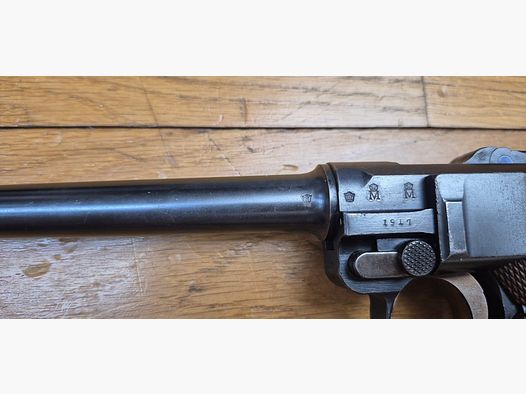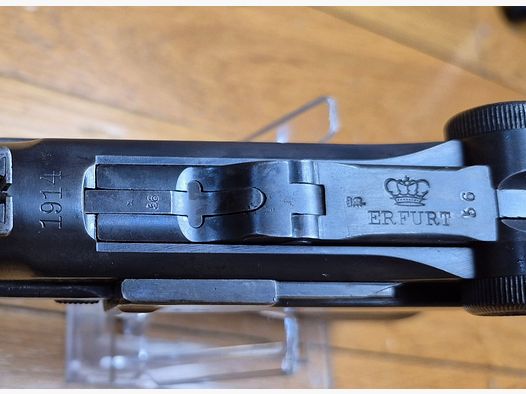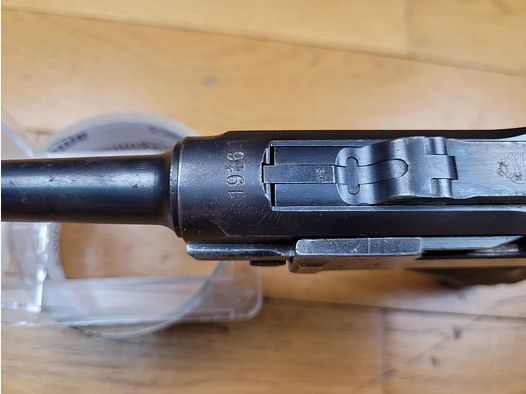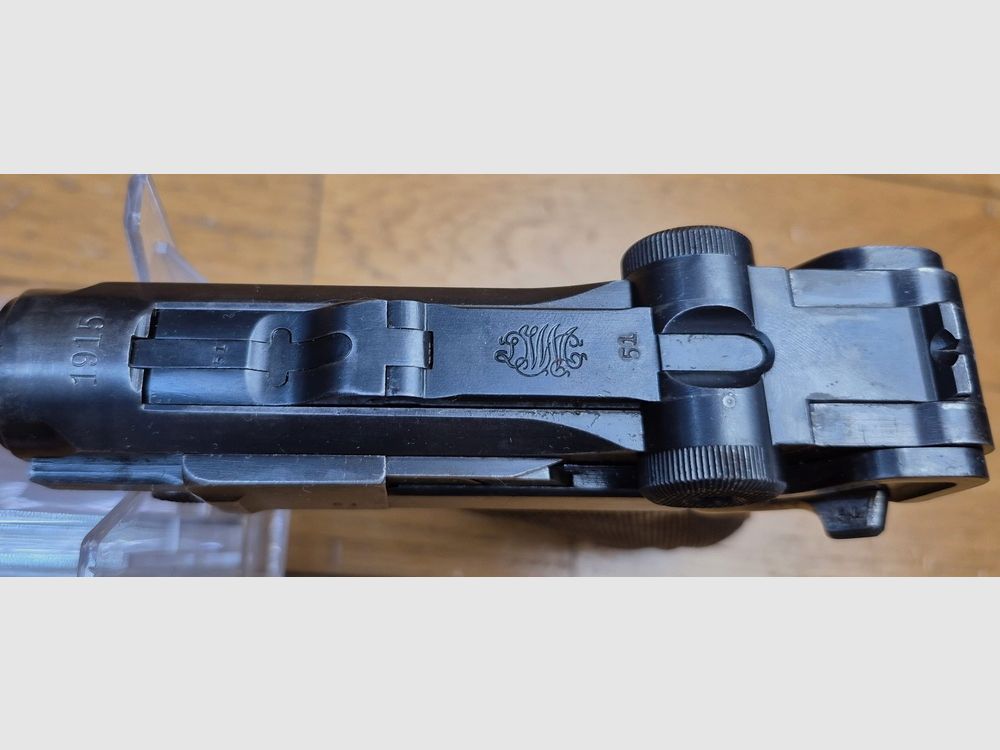
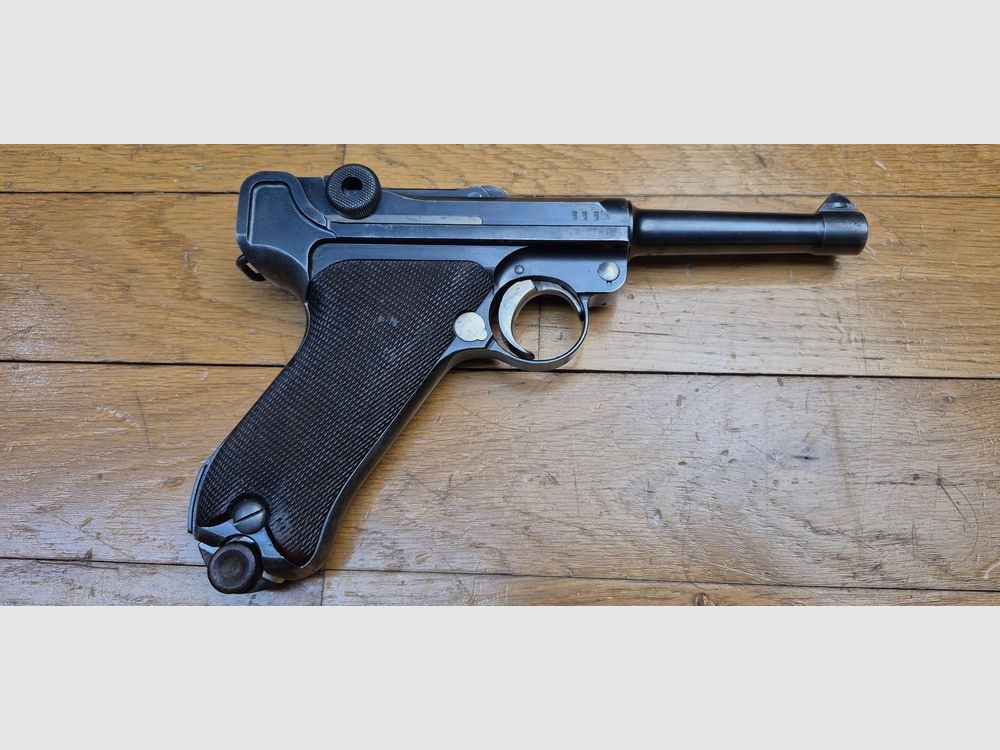


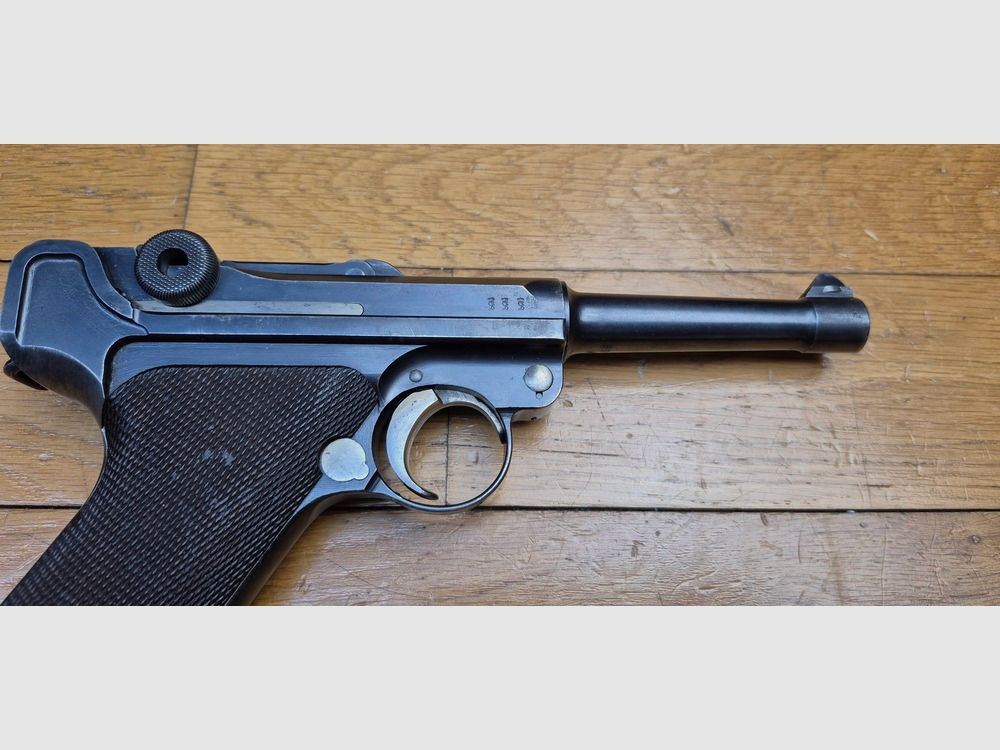
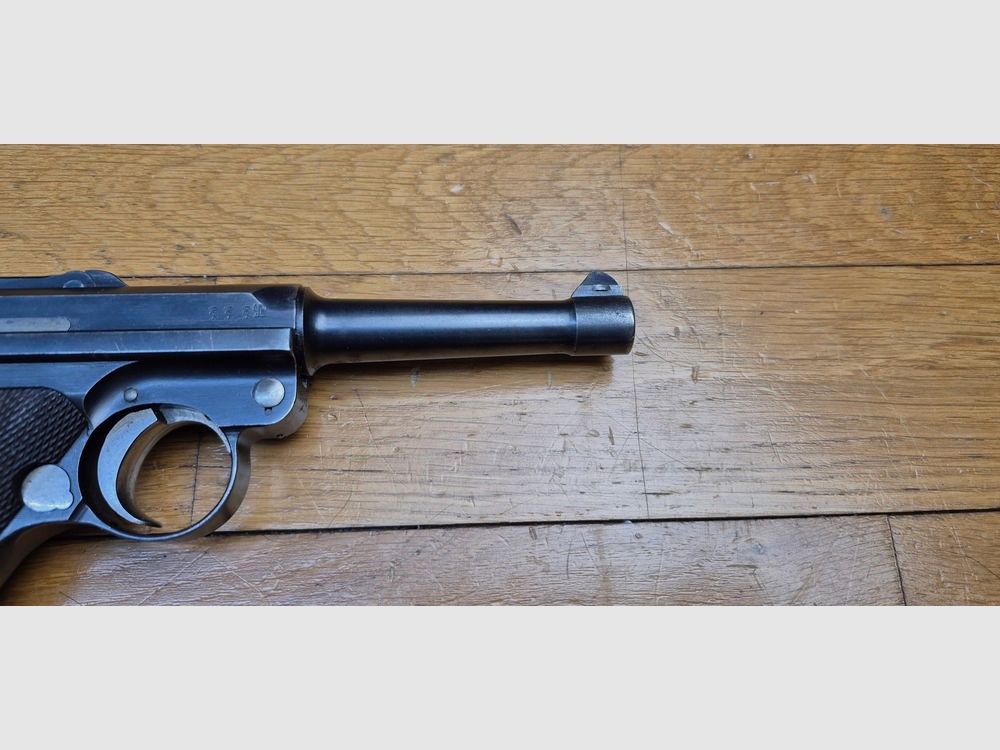
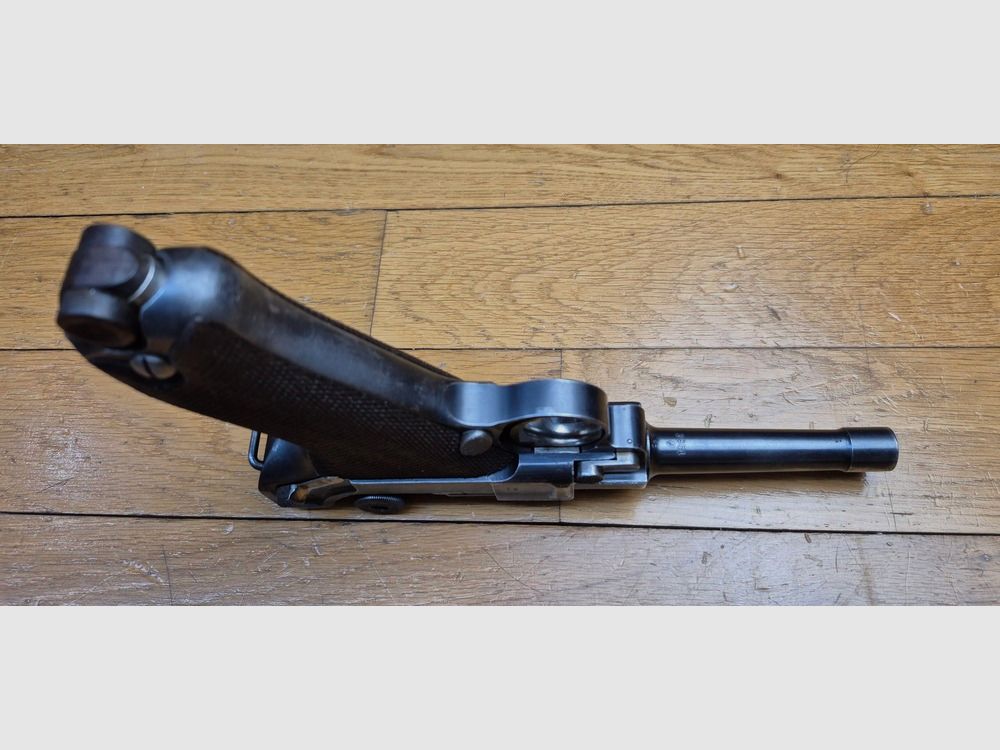


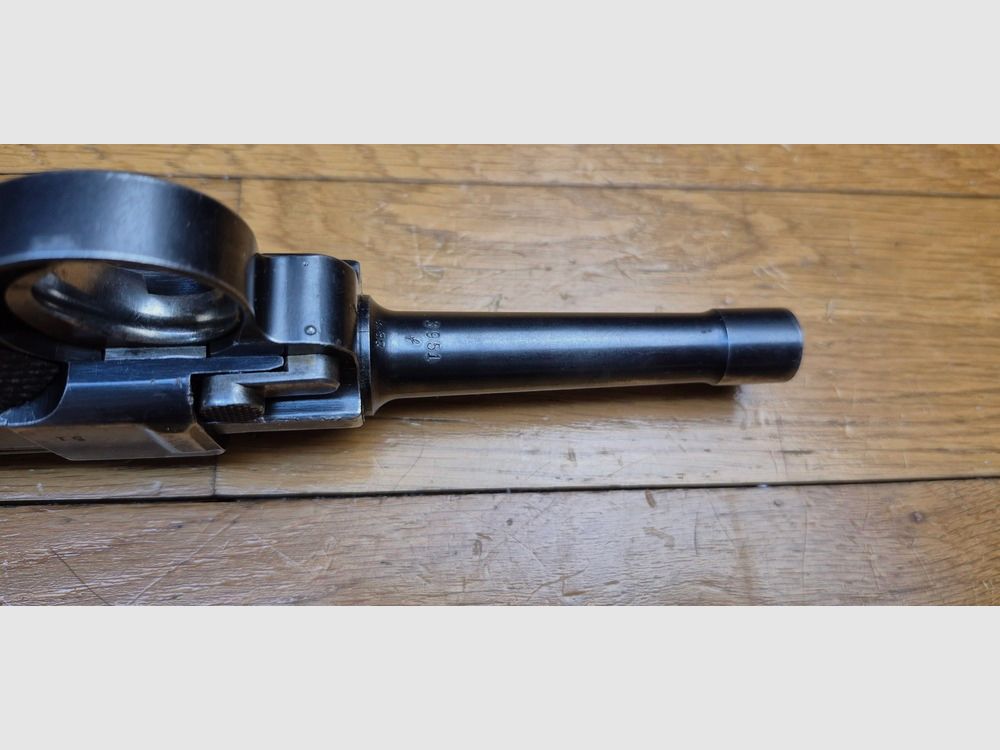
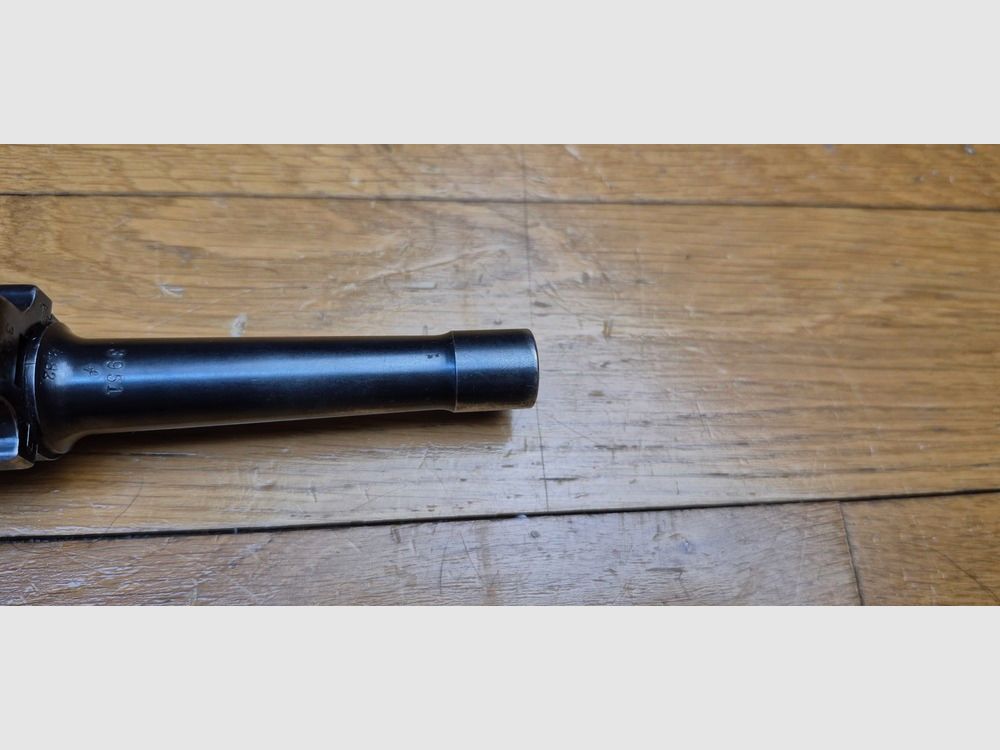


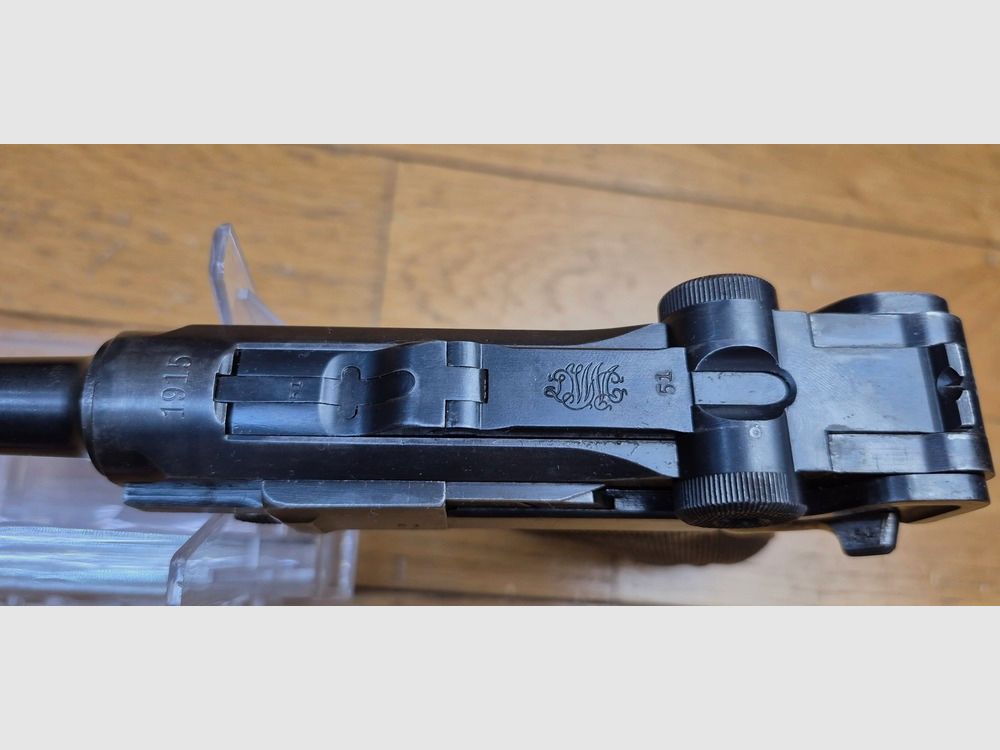
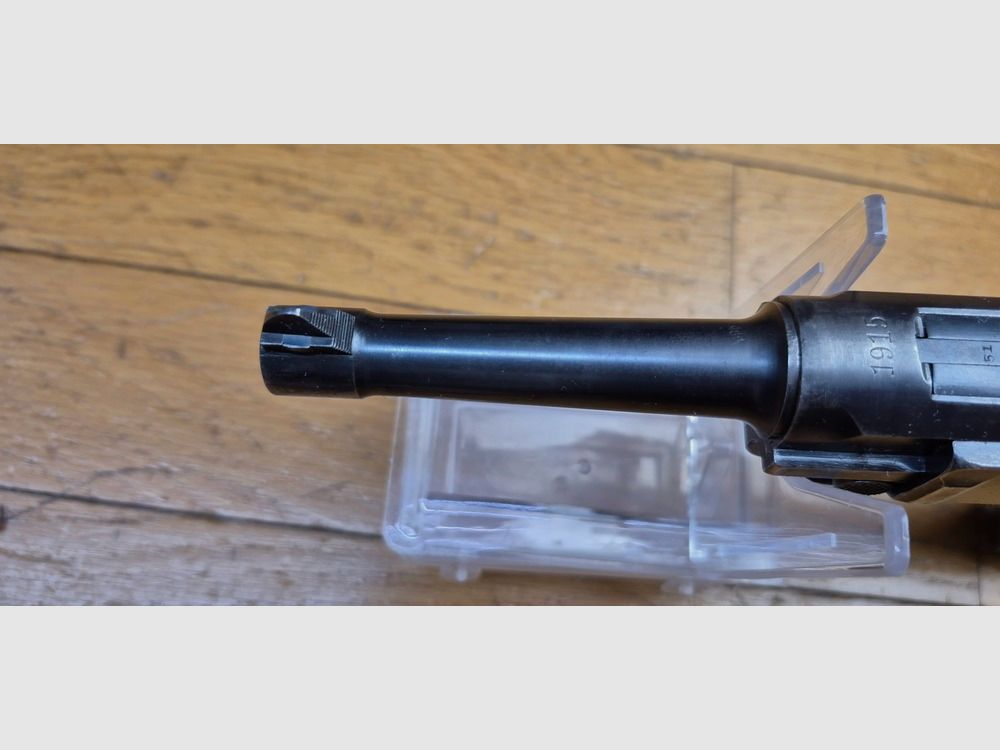

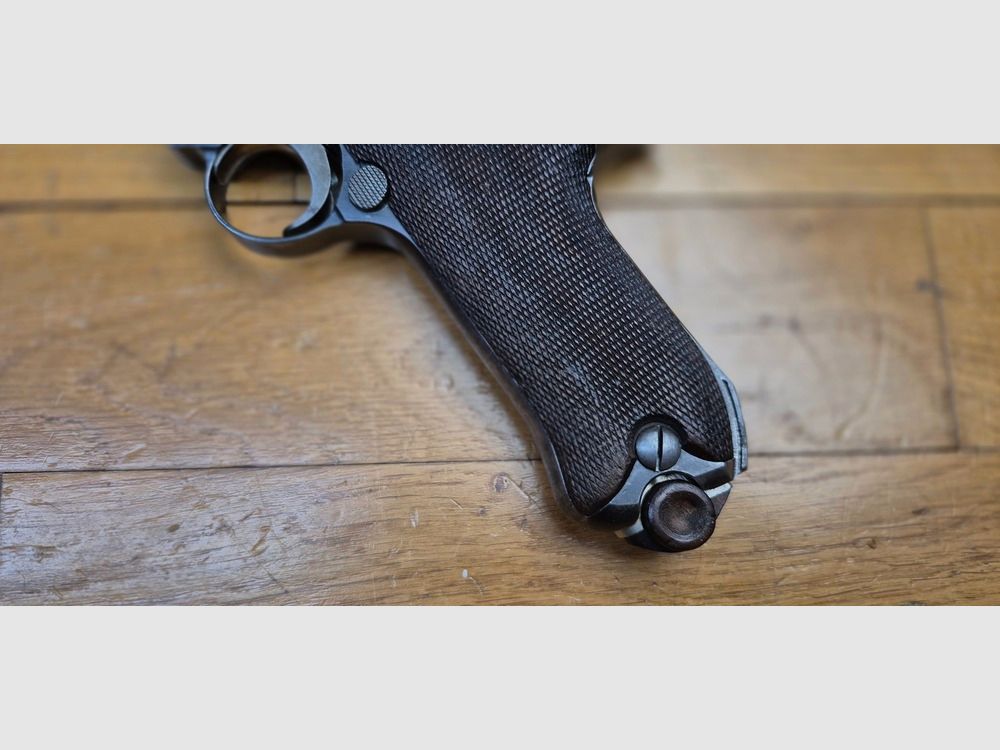

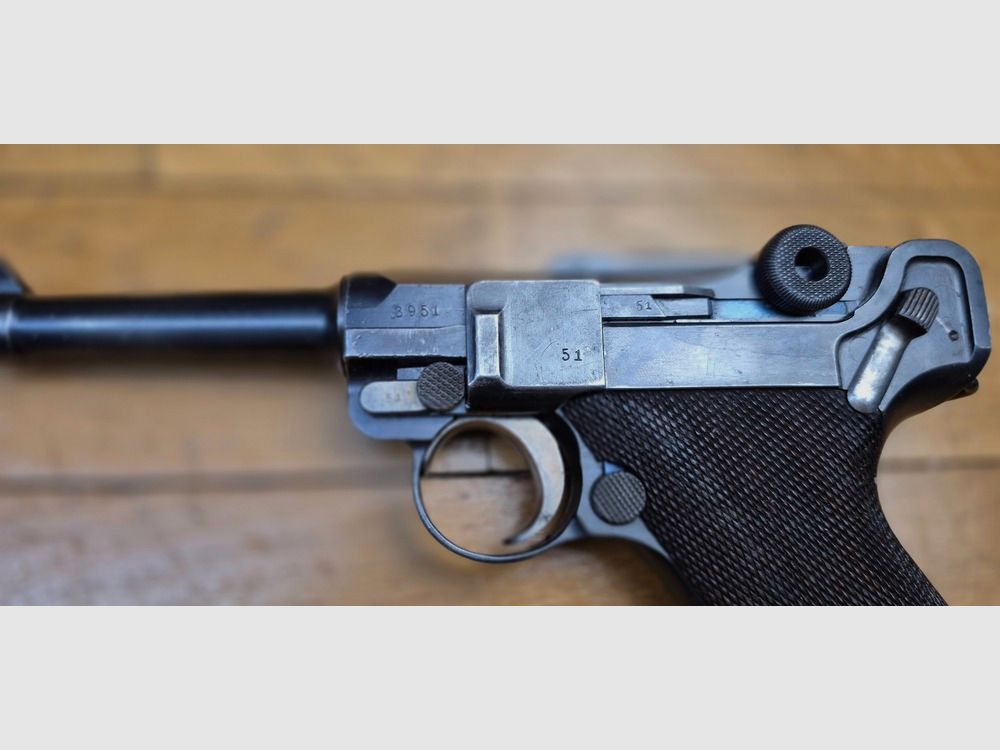

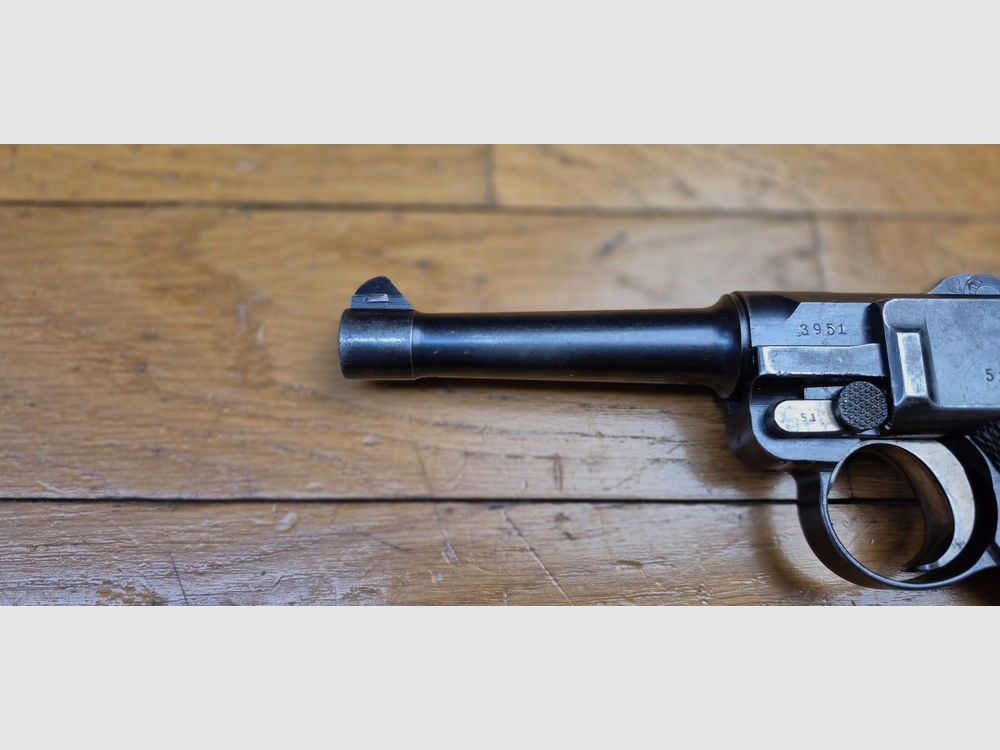
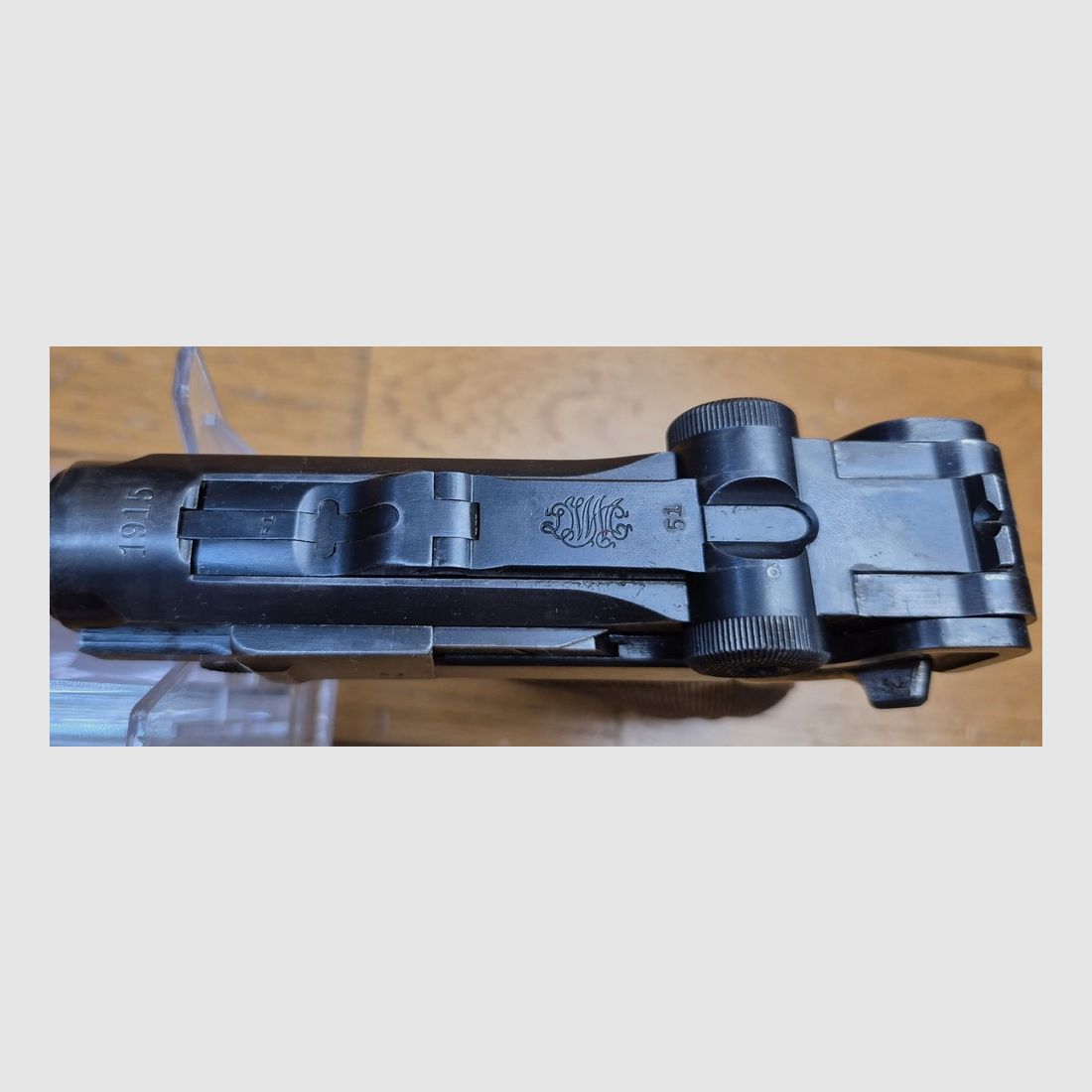

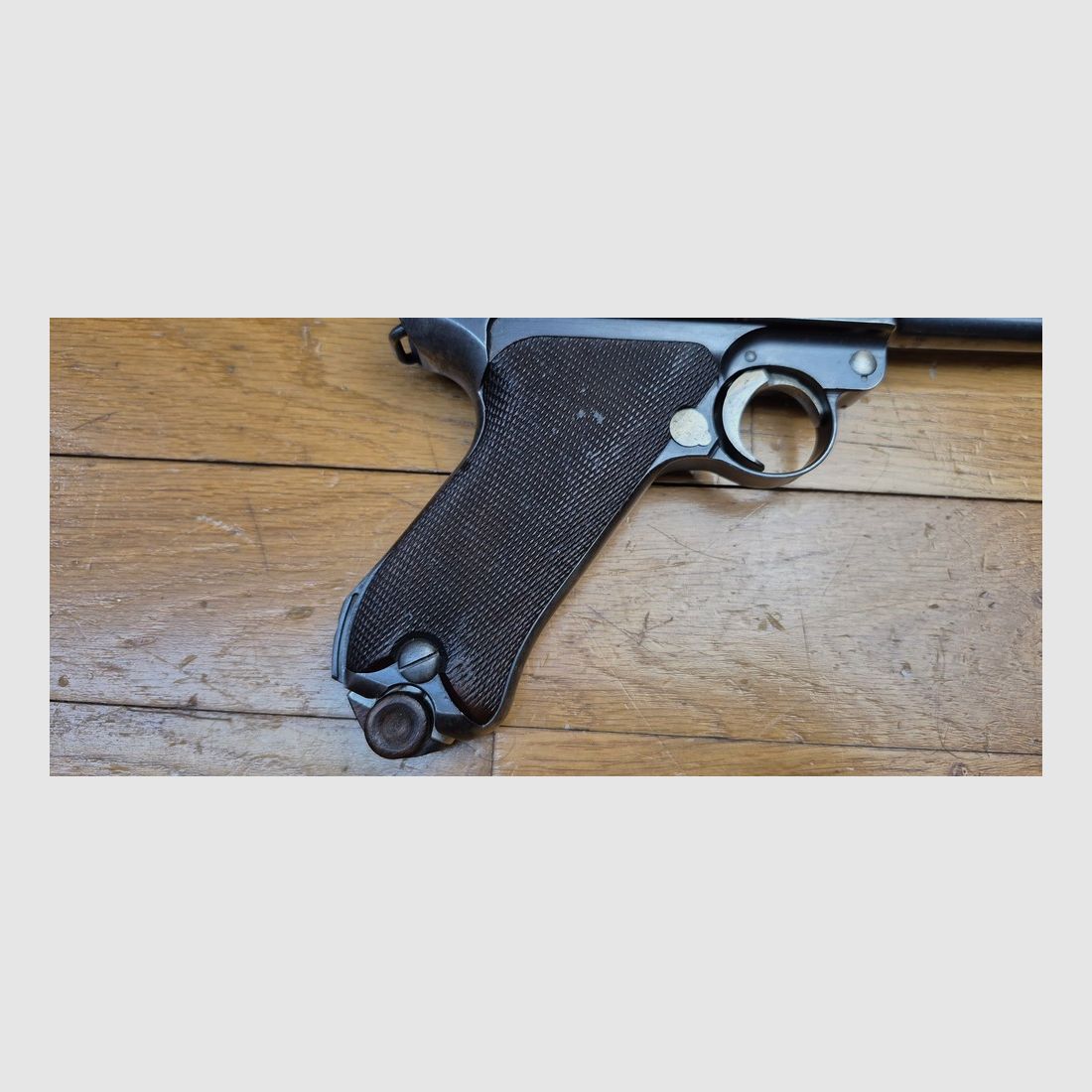
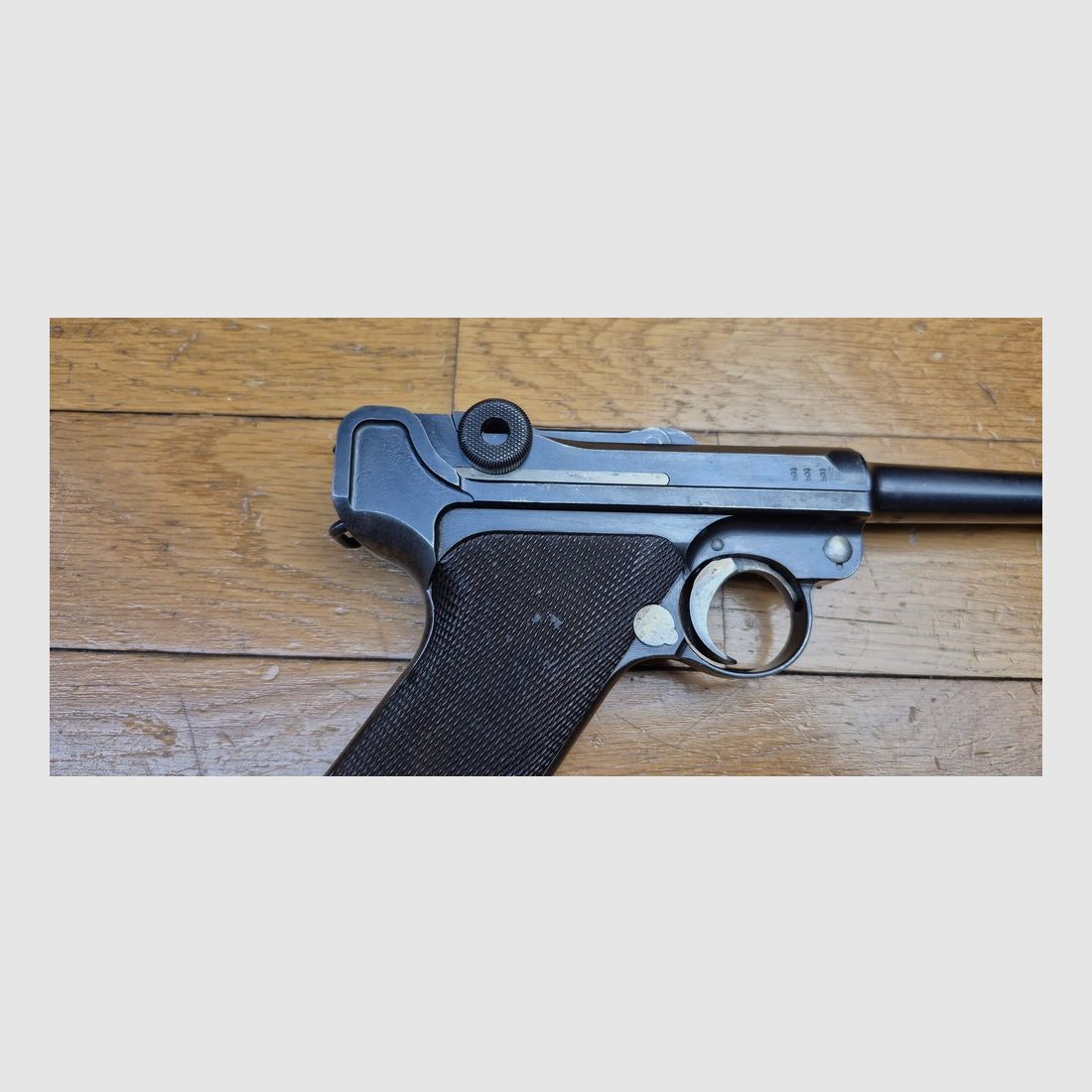
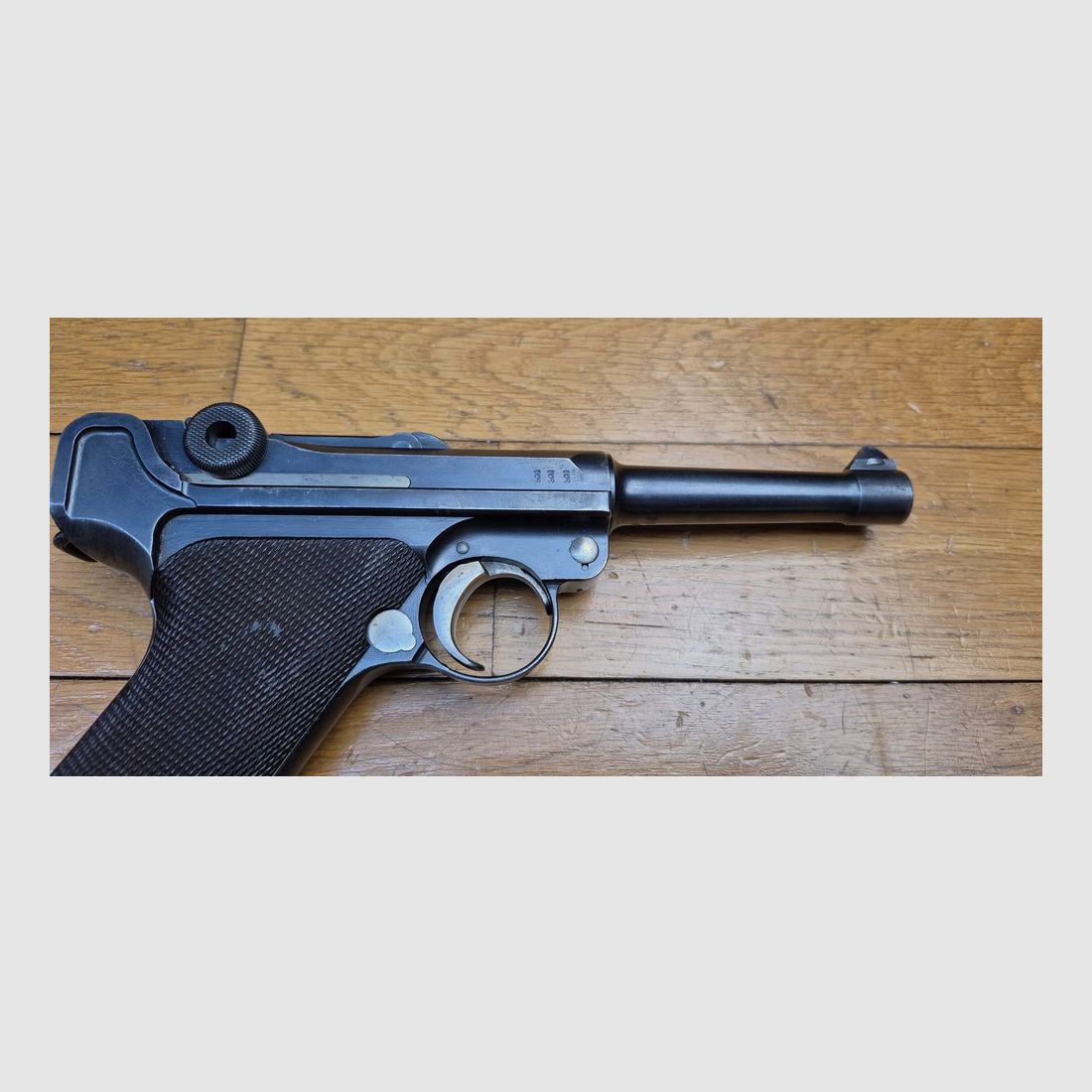

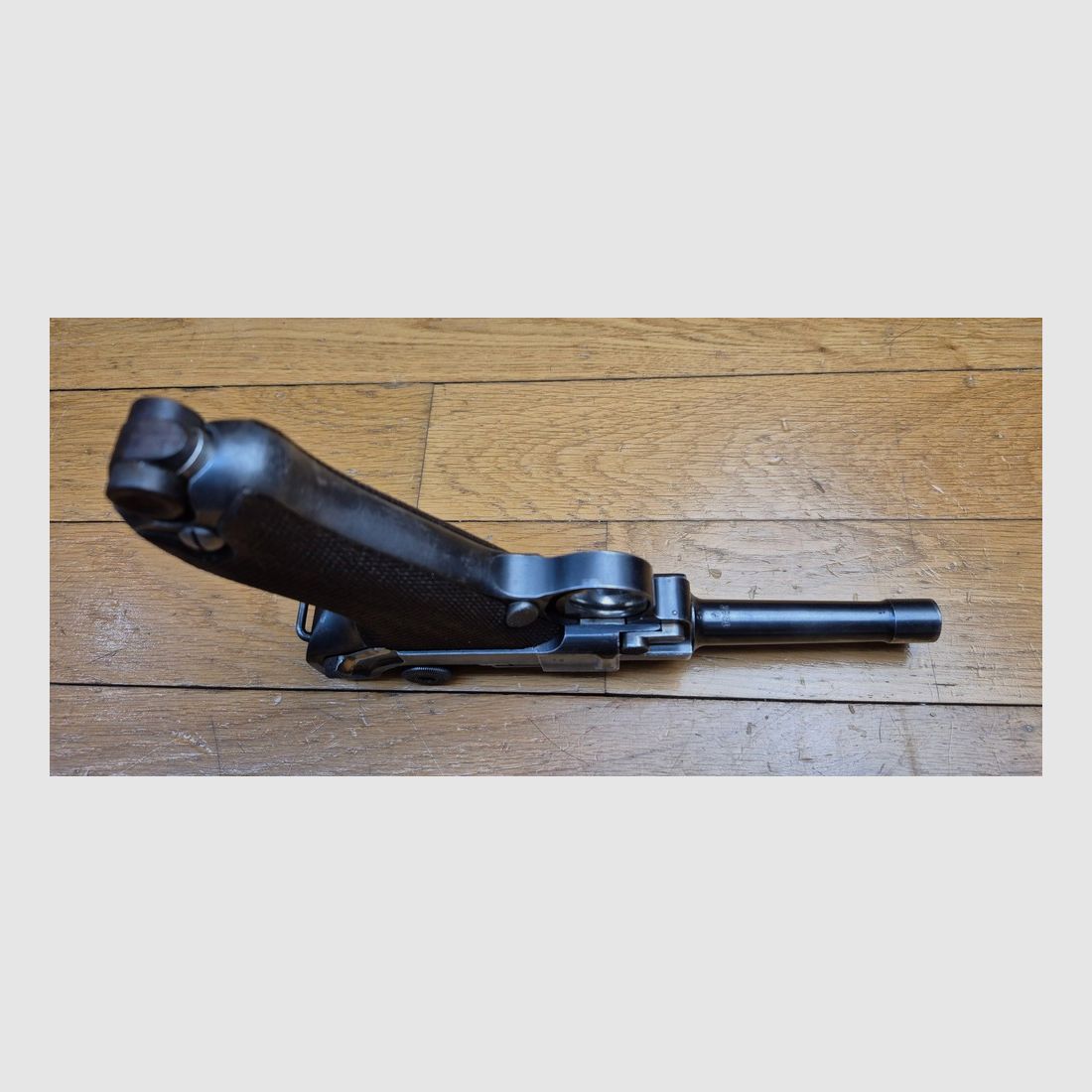
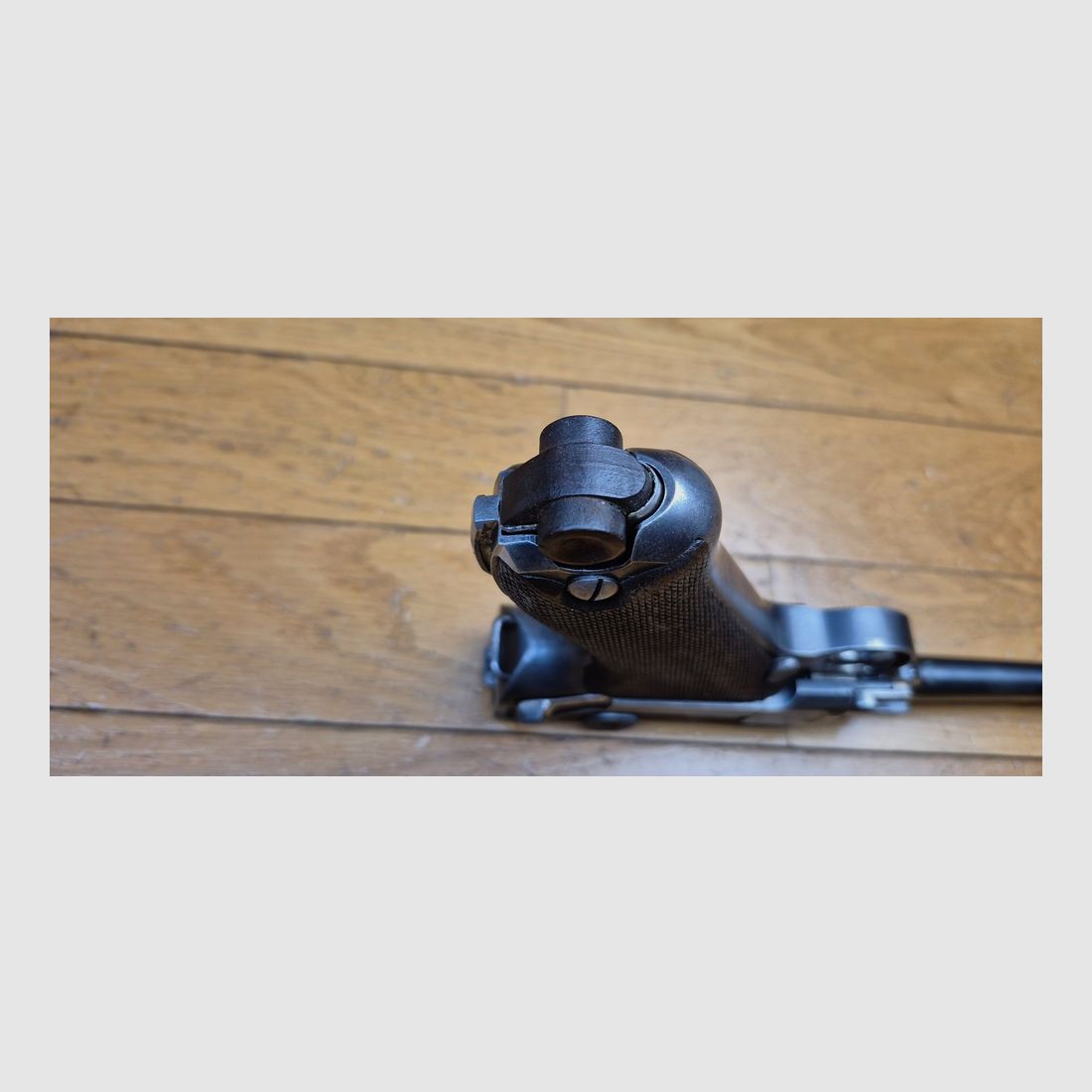


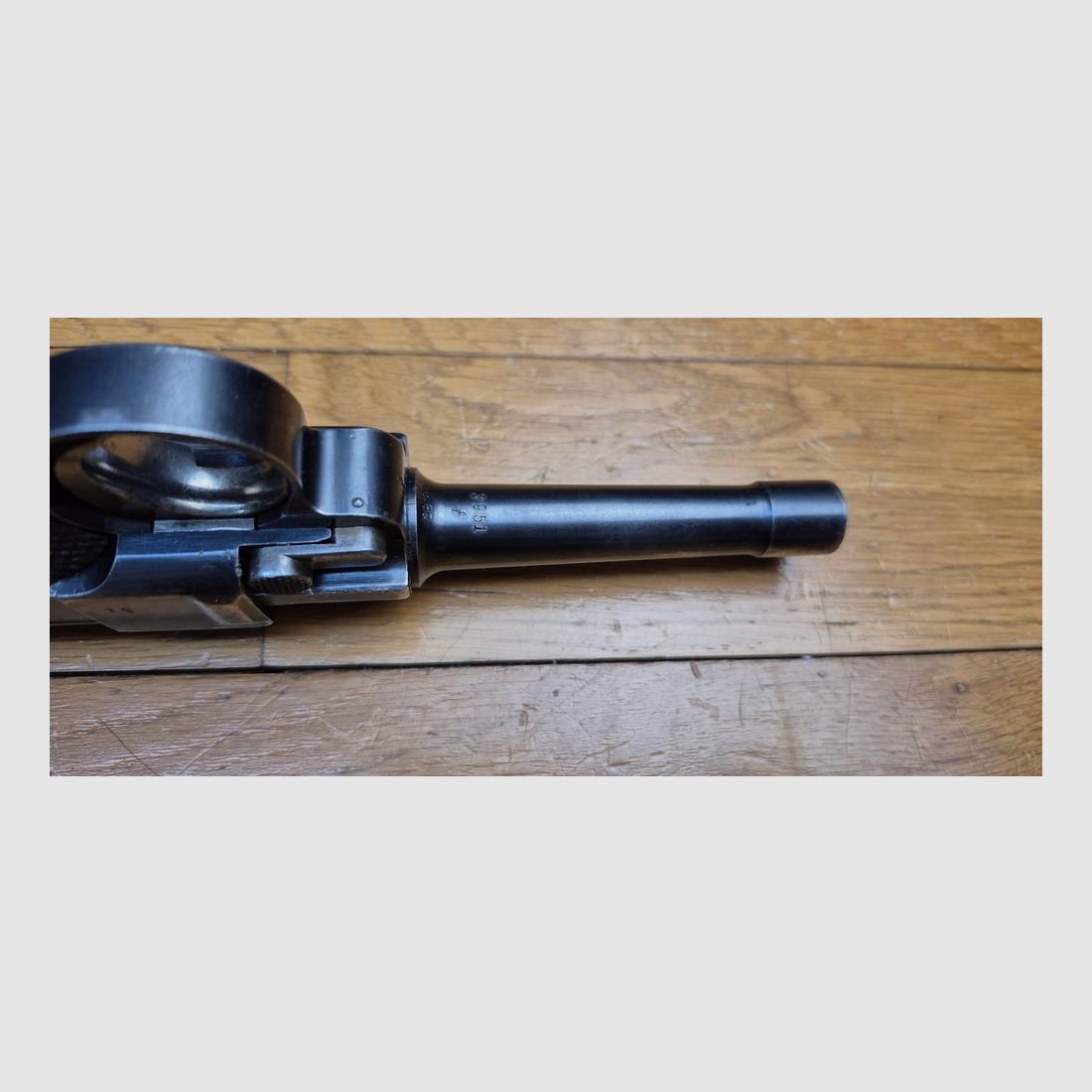


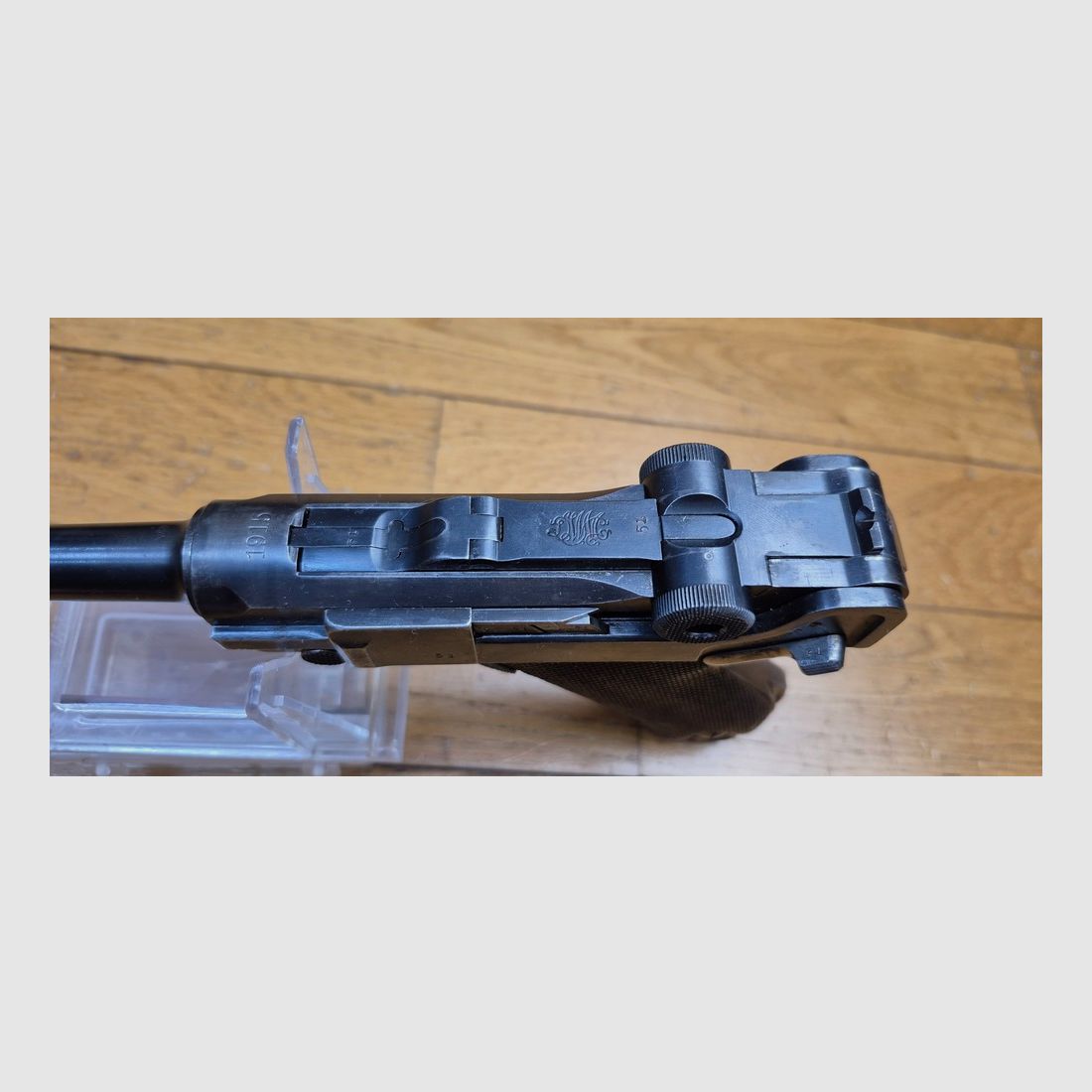


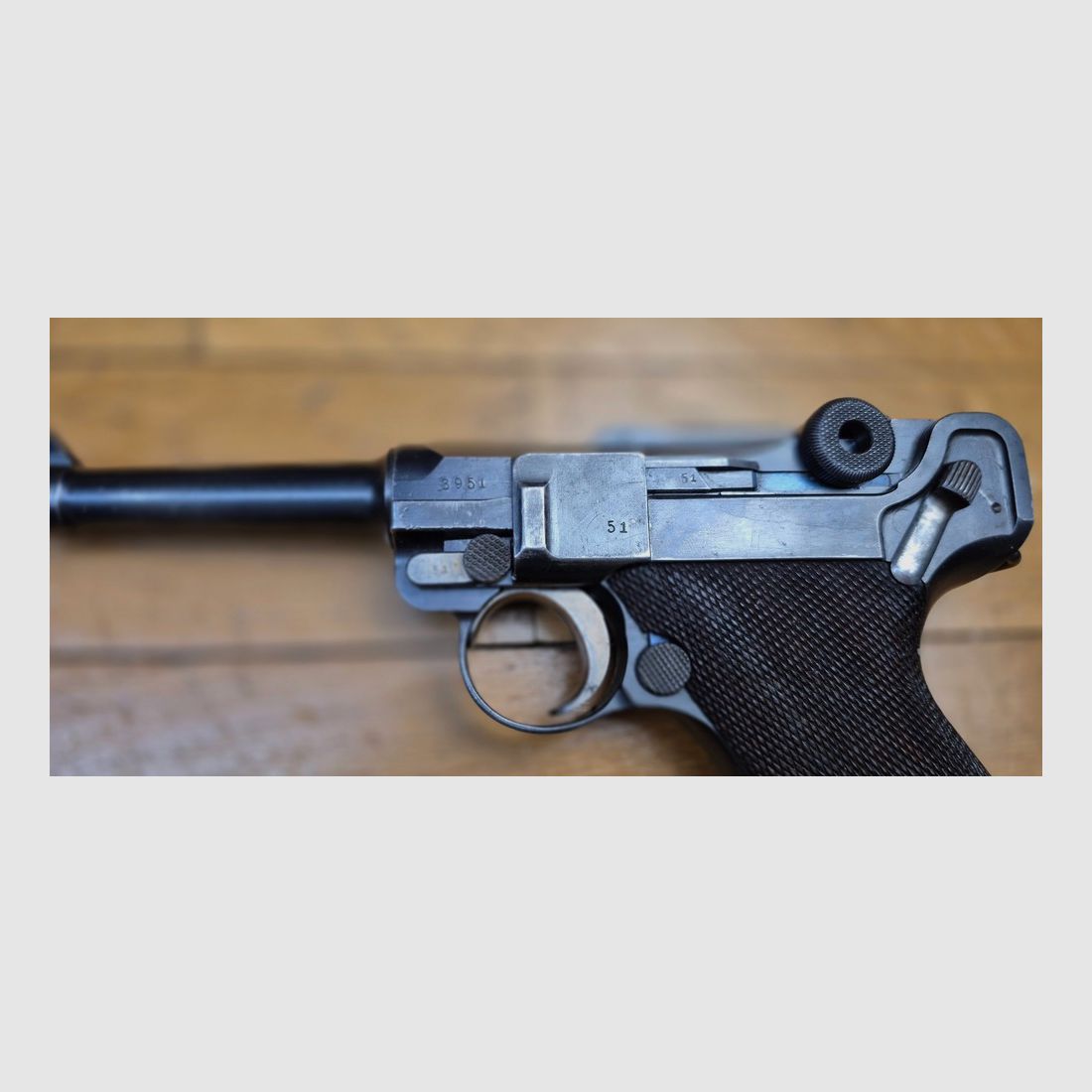
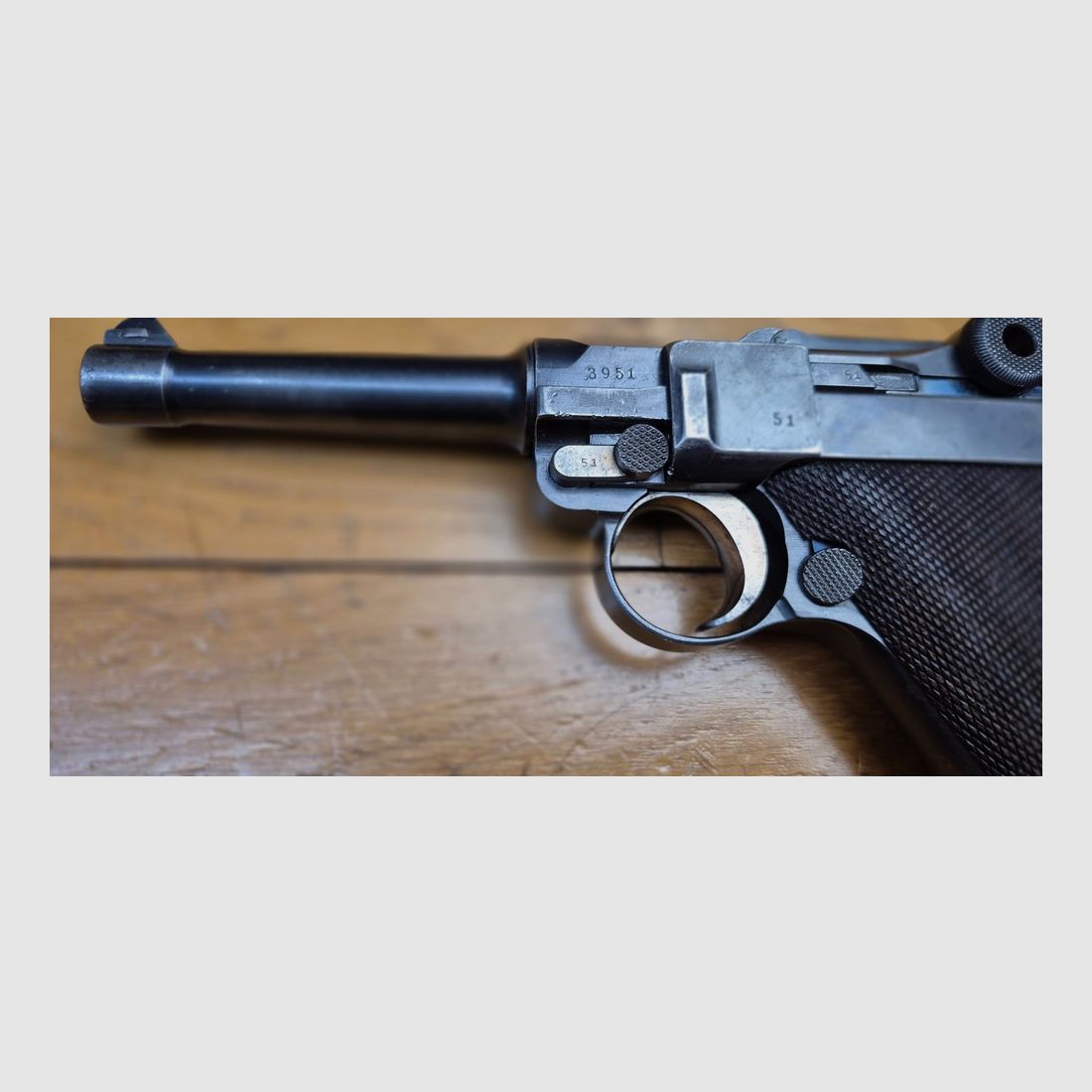
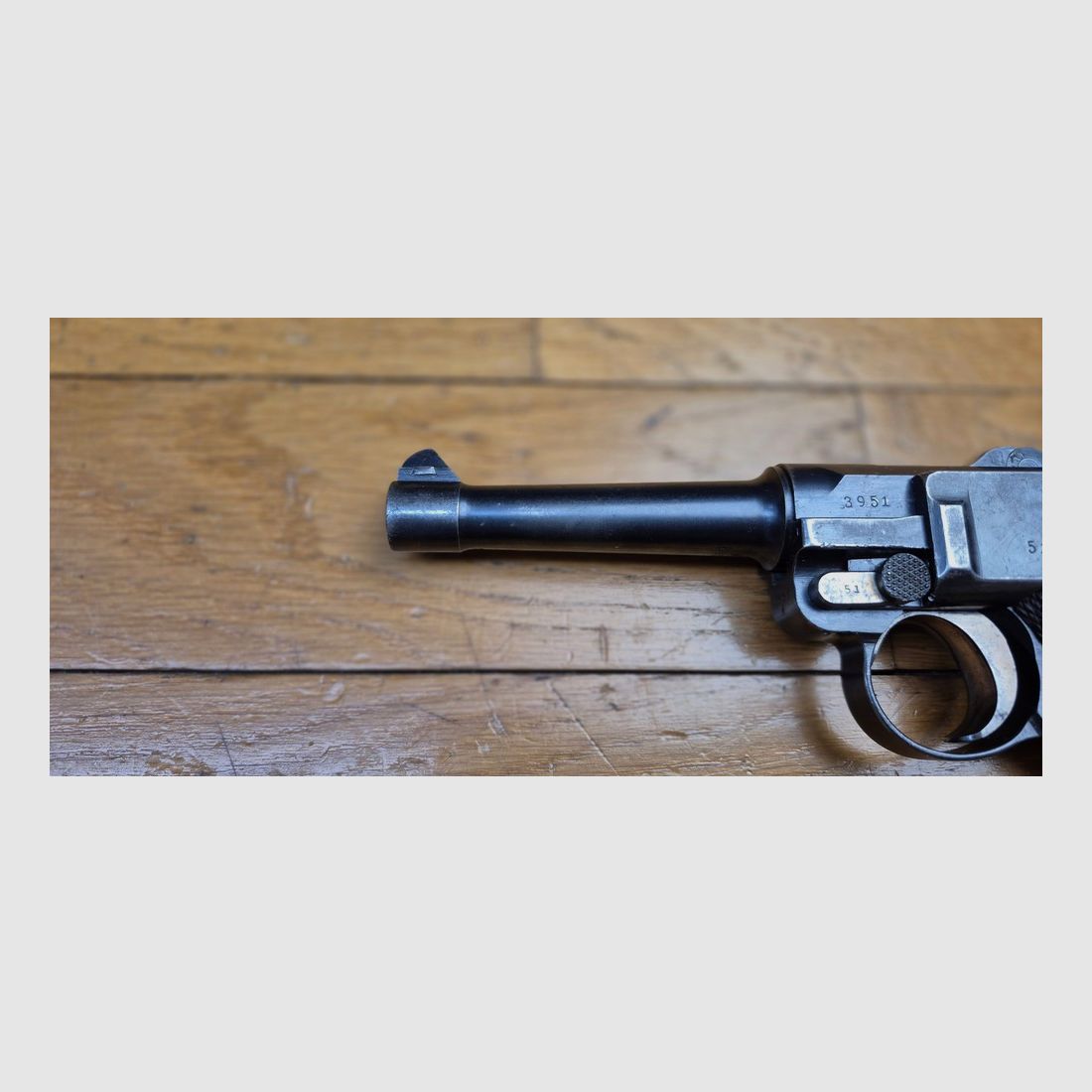
Very beautiful Luger P08 Pistol World War I – Manufactured by DMW in 1915 – Fully matching except magazine – Very nice mechanics – Superb barrel – Rare condition for its 111 years! – TBE+
≈ $1,753
Price at the dealer: 1,600 €. Converted at the ECB rate as of November 27, 2026.
Purchase permit required
75002 Paris, France
11
ID: 10338503
This item is currently unavailable.
Purchase from outside the EU: The firearm goes through an importer in your country, the dealer handles the export.
How buying from Europe works
Shop safely with Gunfinder
Our AI-powered seller identity verification makes Gunfinder the safest marketplace online.
Learn more
Details
- Original language
- French
- Category
- Purchase eligibility
- Required
- Condition
- New
- Location
- 🇫🇷 75002 Paris, France
- Availability
- Out of stock
Freshness
This listing is based on a mirrored offer, where the listing data was synced to us from a shop, dealer, or external marketplace. Please note that temporary price discrepancies may occur due to possible delays in data transmission.
- Source
- Flingus Maximus
- Last checked with the dealer
- about 12 hours ago
Description
Note:
The item is located abroad. Please note that delivery conditions, shipping times, and/or the purchase process may differ.
And yet there were plenty of them. Miles of them, even. We’ll come back to that.
A “good ’14,” as I call them to myself when I come across one. One of my favorites, too, for their finish, iconic looks, and above all their history: German infantry Luger P08s from 1914–1918.
A gentleman’s weapon, highly technical and complex, yet reliable and beautifully finished, it was nevertheless produced on a massive scale during the First World War to fuel the fury of men.
For four years. Four years. Right to the end. Without respite. Despite immense grief, countless maimed men, and widespread misery that grew worse as the conflict dragged on, ultimately ending in a cataclysmic step backward for every nation on the continent, to the benefit of a third power.
Some things are quite easy to set in motion with lofty speeches and bluster. And much harder to stop once they’ve become reality… Let that be a lesson to us.
If, around 1913, DWM (Deutsche Waffen und Munitionsfabriken) and the Erfurt Arsenal had been told they would produce 588,000 and 496,000 Luger P08 pistols respectively (!) in four years, they probably would never have believed it.
The great gunsmith before the Almighty, Gilles Sigros, had fun calculating that if you stand Luger P08s upright on their backs, magazines pointing up (they stand very steadily and proudly in this curious position), and line them up side by side, it takes 25 Luger P08s in a row, like soldiers on parade, to make one linear meter.
So perhaps it’s easier to picture the total production of infantry Luger P08s like ours (excluding the Navy P06s and artillery P14s) as a mere… 46 kilometers and 880 meters of Luger pistols lined up this way, on their sides and with their butts in the air!
That’s a lot of P08s at the edge of the trench. It also gives you an idea of the scale of the fury of men I mentioned above.
These hundreds of thousands disappeared in combat, crushed, lost, buried with their owners in the shattered dugouts and trenches of Champagne or along the Danube… Tens of thousands, no doubt, also ended up in the kit bags of French poilus or British Tommies who liked souvenirs, since the weapon was so beautiful and seemed incredibly modern at the time. And it was—beautiful and modern.
And yet, finding these “’14 Lulus” in very good condition today, 108 years after the end of the conflict, is no easy task. Difficult, even.
It also gives us an idea of the tons of weapons, despite their almost magical craftsmanship, that have been lost over the past century.
Abandoned in attics and cellars, hidden away and forgotten during occupations, rusted at the bottom of canals in northern France or the Seine because the notary said they had to be “gotten rid of” during the estate settlement, or crushed by the ton by governments with little regard for preserving firearms heritage. As early as 1919, they were literally being destroyed en masse.
A few “happy few” needed a lot of luck to make it down to us in good condition. Or even better than that. Here’s one.
Our example is really more than just very good. Almost untouched, I’d say.
First of all, it’s all matching except for the magazine. That was already quite uncommon by the Second World War.
They get damaged from shooting. They’re taken apart “just to see.” A part gets lost…
The thing is, with these beasts, almost all the parts are numbered… That’s the slightly crazy side of our German friends at the time. But it’s magnificent.
But in the First World War, finding one that’s completely matching is even rarer. And finding one with a matching-number magazine…
You should know that our Lugers were issued to their recipients in a holster with two magazines (one of them
the firearm and the other as a spare in the holster), both bearing the firearm’s serial number.
Our example is a beautiful 1915 “DWM”: the year of the March and September Champagne offensives (which my great-grandfather, like many of yours, did not come back from unscathed), the Dardanelles campaign in Turkey, and the Battle of Warsaw in the East. Or the Battle of Gibeon in Namibia.
We too often forget that this war really was global.
DWM produced “only” 100,000 Luger P08s in that difficult year of 1915 (180,000 in 1916), and ours is one of them. That still makes 4 km of Lugers laid end to end… Crazy!
And it’s in better shape at 111 than I am at 61!
Note that in 1915, only DWM produced these; the Erfurt arsenal made none, although it would produce them again in 1916, 1917, and 1918.
Our firearm is mechanically impeccable. It needs a thorough cleaning, but this old-timer is truly beautiful. The bolt stop and magazine safety work perfectly.
The springs are still very firm. Excellent trigger pull for a military trigger.
The firearm retains 85% of its original bluing. There are some areas of wear, especially on the left side from being carried in a holster. This is mainly visible on the barrel and side plate. The rest is in great shape.
As usual, my close-ups make every flaw look MUCH worse than it is, but this way you can see everything. The overall photos are representative of the firearm’s condition, which is very good, once again.
No pitting anywhere. That’s very rare on these firearms, given their age and the wear and tear they’ve endured over a century of storage, often under less than ideal conditions.
Just very slight surface oxidation, which will disappear with a little 000 steel wool, WD-40, and a couple of hours’ work.
The extractor, trigger, side plate lever, and magazine release on the right side still retain quite a bit of their original straw coloring, which was never meant to last. Once again, in very good condition.
The original blued parts (magazine release spring, extractor spring, and toggle joint pins) are still blued. A very fine example.
It just needs to be fully disassembled and thoroughly cleaned (with great care) before its first use. That’s all.
All markings and proof marks are sharp and clearly legible. The grips are in very good condition, and the correct period magazine with a wooden base is a fine match.
The barrel is still bright, with crisp, well-defined rifling, which is quite rare on these now more than century-old beauties. It has been gauged at 8.82 and still has plenty of life left.
It’s so beautiful that I recommend using it sparingly, as examples in this condition are becoming VERY hard to find.
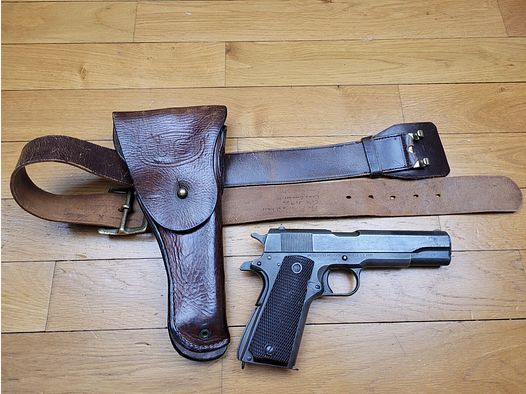
For enthusiasts, I have a very nice original 1916 holster in very good condition, with its original takedown tool. Contact me if interested.
Ahhh… How I love these Lulus, with their “complications” in the sense Swiss watchmakers give the word, their top-notch finish, and their James Bond or Star Wars looks, whichever you prefer. And their toggle action, like a heart beating to the rhythm of history’s cannon fire.
In short, a beautiful Great War piece in excellent condition—a choice addition for any collector of European military firearms, especially firearms from the First World War or German pieces.
FIREARM IN CATEGORY B UNDER THE CSI: SUBJECT TO AUTHORIZATION. A VALID ID AND LICENSE MUST BE PROVIDED. AN OPEN SIA ACCOUNT IS ALSO REQUIRED, OF COURSE. SHIPMENT WITH SIGNATURE REQUIRED IN TWO SEPARATE PARCELS AT LEAST 48 HOURS APART IS MANDATORY.
*********************************************************************************************************************
Let’s say it again! Flingus Maximus gun shop in Paris and throughout France is also here to buy firearm collections and other militaria, and to provide valuations…
questions about firearms, your questions about firearms regulations, inheritances and estates. Contact your favorite gun dealer using our contact form or at [email protected]
(Show description in original language)
En voilà un beau. Et pas si facile que ça à trouver dans son genre. Surtout dans cet état.
Et pourtant il y en a eu. Beaucoup. Des kilomètres même. On va y revenir.
Un « bon 14 » comme je me les décris pour moi-même quand je les découvre. Parmi mes préférés d’ailleurs pour leur finition, leur look iconique et surtout leur histoire: les Luger P08 d’infanterie allemande de 1914-1918.
Arme d’aristocrate, hautement technique, complexe mais fiable et très bien finie, elle fût néanmoins produite en grande masse durant la première guerre mondiale pour alimenter la fureur des hommes.
Pendant quatre ans. Quatre ans. Jusqu’au bout. Sans trêve. En dépit des deuils immenses, des estropiés sans nombre et d’une misère généralisée allant croissant avec la durée d’un conflit qui se termina in fine par un bon en arrière cataclysmique de toutes les nations du continent au profit d’une puissance tierce.
Certaines choses sont assez faciles à déclencher à coups de discours vertueux et de rodomontades. Et bien plus difficiles à arrêter quand on est passé en phase concrète… Que cela nous serve de leçon.
Si l’on avait dit, vers 1913, à la DWM (Deutsche Waffen und Munitionsfabriken) et à l’Arsenal d’Erfurt qu’ils produiraient respectivement 588.000 et 496.000 pistolets (!) Luger P08 en quatre ans, ils ne l’auraient sans doute jamais cru.
Le grand armurier devant l’Éternel qu’est Gilles Sigros, s’est ainsi amusé à calculer que si l’on pose des Luger P08 à la verticale sur le dos, chargeur en l’air, (ils tiennent très stablement et dignement dans cette curieuse position), et les uns à coté des autres, il faut 25 Luger P08 en rang comme à la parade pour faire un mètre linéaire.
On se représentera donc peut-être plus facilement ainsi que la production totale des Luger P08 d’infanterie comme le notre (sans les P06 de Marine et les P14 d’artillerie) représenterait la bagatelle de …. 46 kilomètres et 880 mètres de Luger alignés ainsi en tranche et les fesses en l’air !
Ça en fait du P08 au bord de la tranchée. Cela donne aussi une idée de l’ampleur de cette fureur des hommes dont je parlais au-dessus.
Ces centaines de milliers ont disparu au combat, broyés, perdus, enterrés avec leur porteur dans les creutes et les tranchées bouleversées de Champagne ou du Danube… Des dizaines de milliers aussi sans doute ont pourtant rejoint la musette d’un poilu français ou d’un Tommy britannique amateur de souvenir tant l’arme est belle et paraissait d’une modernité folle à l’époque. Et elle l’était, belle et moderne.
Et pourtant, trouver aujourd’hui ces « lulus de 14 » en TBE, 108 ans après la fin du conflit, n’est pas simple. Difficile même.
Cela nous donne aussi une idée des tonnes d’armes, d’une fabrication pourtant magique, qui ont été perdues durant ce siècle.
Abandonnées dans les greniers et les caves, planquées et oubliées durant les occupations, oxydées au fond des canaux du Nord ou de la Seine parce que le Notaire a dit qu’il fallait « s’en débarrasser » au moment de la succession ou broyées par tonnes par des États peu soucieux de préservation du patrimoine armurier. Dès 1919, ils sont littéralement détruits en masse.
Il leur en fallu de la chance à quelques « happy few » pour parvenir jusqu’à nous en bon état. Voire mieux que cela. En voici un.
Notre exemplaire est vraiment plus que très bien. Presque intouché dirais-je.
Il est d’abord mono-matricule sauf le chargeur. Déjà en seconde guerre mondiale ce n’est plus du tout courant.
On les abime au tir. On les démonte « pour voir ». On paume une pièce…
Le souci étant que sur ces bêtes-là, elle sont quasi toutes numérotés les dites pièces… C’est le coté un peu foldingue de nos amis allemands à cette époque. Mais c’est superbe.
Mais, en première guerre mondiale, c’est encore plus rare d’en trouver un mono-matricule intégralement. Quand à les trouver avec le chargeur au numéro…
Il faut savoir que nos Luger étaient attribués à leur récipiendaire en étui avec deux chargeurs (un dans l’arme et l’autre de rechange dans l’étui), et, tous deux au numéro de l’arme.
Notre exemplaire est un beau « DWM » de 1915: l’année des offensives de Champagne de mars et septembre (dont mon arrière-grand père, comme beaucoup des vôtres n’est pas revenu entier), des Dardanelles en Turquie et de la Bataille de Varsovie à l’Est. Ou de celle de Gibeon en Namibie.
On l’oublie trop souvent cette guerre était vraiment mondiale.
DWM a sorti « seulement » 100.000 Luger P08 en cette difficile année 1915 (180.000 en 1916) et le notre est l’un de ceux-là. Ça en fait quand même 4 km linéaire de Luger posé sur le dos… C’est fou!
Et il est plus vert pour ses 111ans que moi avec mes 61!
A noter que dans cette année là, 1915, il n’existe que des DMW, l’arsenal d’Erfurt n’en produisant aucun alors qu’il en re-fabriquera encore en 1916, 1917 et 1918.
Notre arme est mécaniquement impeccable. Elle est à nettoyer à 100% mais elle est vraiment très belle cette ancêtre. L’arrêtoir de culasse et sécurité de chargeur sont parfaitement fonctionnels.
Les ressorts restent très fermes. Excellente détente pour une détente militaire.
L’arme possède 85% de son bronzage d’origine. Des zones d’éclaircissements sont présentes surtout coté gauche du au port en étui. C’est essentiellement visible en canon et en portière. Le reste est top.
Tous les défauts sont, comme d’habitude avec moi, TRÈS exagérés par mes TROP gros plans mais comme ça vous voyez tout. Les photos d’ensemble sont représentatives de l’état de l’arme qui est très bon encore une fois.
Aucune peau d’orange nulle part. C’est très rare sur ces armes compte tenu de leur âge et des affres subis lors d’un siècle de stockage souvent plus ou moins heureux.
Juste très légères marques d’oxydation totalement de surface et qui disparaitront avec un peu de paille 000, de WD40 et deux heures de boulot.
Extracteur, détente, levier de portière, poussoir de chargeur coté droit possèdent encore pas mal du jaune paille d’origine qui n’était pourtant pas destiné à durer. Encore une fois TBE.
Les pièces bleutées d’origine (ressort de poussoir de chargeur, d’extracteur, ou axes de genouillère) le sont encore. Très bel exemplaire.
Il faut juste le démonter / nettoyer à fond (avec grand soin) avant sa première utilisation. C’est tout.
Tous les marquages et poinçons sont tous bien nets et bien lisibles – Les plaquettes sont en TBE et le bon chargeur d’époque à fond de bois leur rend un bien bel hommage.
Le canon est encore brillant avec de belles rayures bien nettes ce qui est assez rare sur ces bébés plus que centenaires désormais. Il a été jaugé à 8.82 et a encore tout son potentiel.
Il est si beau que j’en recommande une utilisation modérée car ils deviennent TRÈS difficiles à trouver dans un tel état.
Pour les amateurs, j’ai un très bel étui d’origine de 1916 en TBE avec sa clé de démontage d’origine. Me contacter si intéressés.
Aaaah… Que je les aime ces Lulu avec leur « complication » au sens que l’horlogerie suisse donne à ses montres, leur finition au top, leur look à la James Bond ou à la Guerre des Étoiles comme on voudra. Et leur mouvement d’étrier comme un cœur qui bat au rythme de la canonnade de l’Histoire.
Bref une très belle pièce de la Grande Guerre dans un état excellent – une addition de choix pour tout collectionneur d’armes réglementaires européennes et, au premier chef d’armes réglementaires du premier conflit mondial ou de pièces allemandes.
ARME DE CATÉGORIE B AU CSI : SOUMISE À AUTORISATION, PHOTOCOPIE DE LA PIÈCE D’IDENTITÉ EN COURS DE VALIDITÉ ET DE LA LICENCE OBLIGATOIRE – COMPTE SIA OUVERT BIEN ÉVIDEMENT – Expédition contre signature en deux colis séparés d’au moins 48 heures obligatoire.
*********************************************************************************************************************
Répétons le ! L’armurerie Flingus Maximus à Paris et partout en France est là aussi pour le rachat de collections d’armes et d’autre militaria, vos estimations d’armes, vos questions relatives à la règlementation des armes, les successions et héritage. Contactez votre armurier préféré via notre formulaire de contact ou à [email protected]