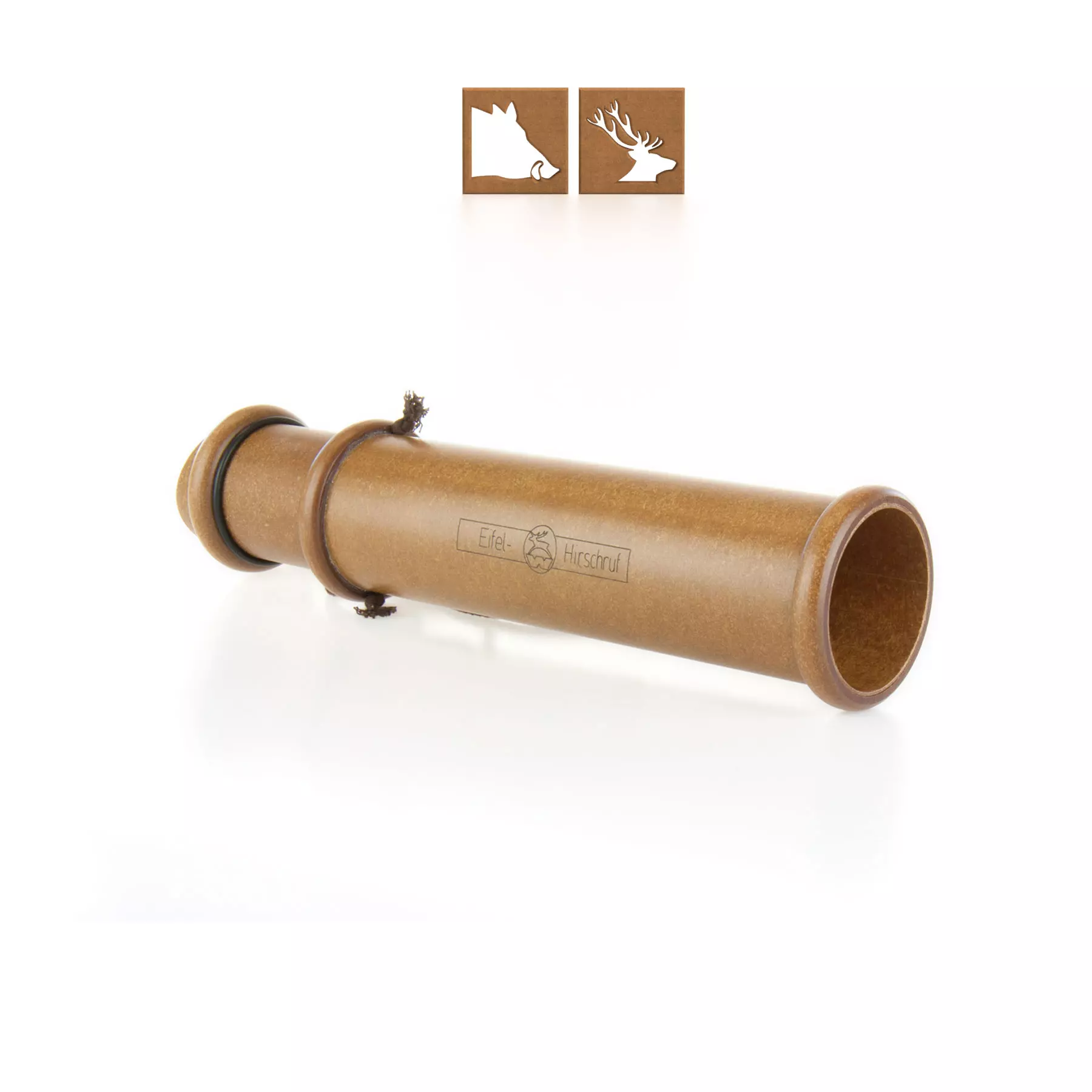
Weisskirchen Call for Deer Eifel
≈ $109
Price at the dealer: 99.90 €. Converted at the ECB rate as of November 23, 2026.
No permit required (18+)
28043 Bellinzago Novarese, Italy
3
ID: 10000292
Purchase from outside the EU: The firearm goes through an importer in your country, the dealer handles the export.
How buying from Europe works
Shop safely with Gunfinder
Our AI-powered seller identity verification makes Gunfinder the safest marketplace online.
Learn more
Details
- Original language
- Italian
- Category
- Condition
- New
- Location
- 🇮🇹 28043 Bellinzago Novarese, Italy
- Availability
- In stock
Freshness
This listing is based on a mirrored offer, where the listing data was synced to us from a shop, dealer, or external marketplace. Please note that temporary price discrepancies may occur due to possible delays in data transmission.
- Source
- Trophyhunt
- Last checked with the dealer
- 1 day ago
Description
Note:
The item is located abroad. Please note that delivery conditions, shipping times, and/or the purchase process may differ.
After extensive research, I have succeeded in uncovering the secrets of the material composition of this legendary “Eifel” call. The dimensions in question are not standardized and must be specially made for this type of call. The “Eifel” call is by far the best on the market and lets you imitate natural sounds realistically. Practice makes perfect. The “ox horn” stag call is the favorite of hunters in the east and is the instrument used by the “father of stags,” Count Georg zu Münster, as well as by Austrian stag-call experts. I deliberately did not drill this ox horn, since drilling the body would reduce the sound quality.
Use the “Eifel” call (ox horn) fully extended, with a voice produced from deep in your chest, to make the call [auuooooaa… uuuooooaa]. As you call, slowly shorten the call to produce a deeper sound. Extending it has the opposite effect. This lets you imitate the stag’s natural, fading and rising call from the chest, the so-called “announcement.” The tone of the fighting call does not drop, but is reproduced effectively and deeply [ouaaa… ouaaa]. With the ox horn, you need to produce these tones with your own voice. A hunter with a low voice can imitate a deep roar more easily, while a hunter with a high, tenor voice will not be able to produce very deep tones. It is increasingly said that the roar is no longer as “loud” and lively as it once was. Perhaps this is because so many people go mushroom picking and often venture into the areas where the mating ritual takes place (“Brunftplatz”). In these cases, simply imitating the “announcement” may help to encourage a “concert.”
It would not be appropriate for me to explain exactly how you should call stags. The enclosed CD (also available on MC upon request) contains a real roar that I recorded during a hunt, and from it you can hear how many countless, varied sounds the King of the Forest can make. Practicing at home is essential. Try to remember every detail of the roar recorded on the CD and imitate it at home. You will soon realize that the call can imitate any natural sound. Also try to remember every sound when you hear the roar, the fighting calls, the searching calls, the dispersal calls [eh..eh..eh..eh..eh], and the distress calls, so you can connect each sound you hear to a specific behavior shown by the stag. Only this way will you be able to “understand” the stag and succeed in calling it. Anyone experienced in calling stags can “converse” with them this way. They can tell right away whether the stag they hear is alone or in a group, searching, aggressive, standing or lying down. I recommend the book “Der Hirschruf” to every calling enthusiast (unfortunately, it is only available in German), written by Count Georg zu Münster (source: Jana-Jagd, Melsungen, toll-free number +49 0800-52625243). It contains many tricks and practical tips.
In the wild, you should always try to produce a sound with a certain volume, similar to that made by the stag in front of you. A strong stag will show no interest in hearing the call of a weak stag, and vice versa. Young male stags that are targets for culling are afraid of the call of a strong stag, and for this reason you need to (Show description in original language)
"Eifel" per cervo a due stadi
Dopo lunghe ricerche mi è riuscita lo scoperta dei segreti della composizione dei materiali di questo leggendario richiamo “Eifel”. Le misure in questione non sono standardizzate, ma devono essere appositamente prodotte per questo tipo di richiamo. Il richiamo “Eifel” è quello di gran lunga migliore a tutti gli altri in commercio e permette di imitare realmente i suoni naturali. L’esercizio contribuisce a formare un maestro. Il richiamo per cervo “corno di bue” è quello prelibato dai cacciatori dell’est ed è lo strumento del “padre dei cervi” Conte Georg zu Münster, nonché degli esperti di richiamo per cervo austriaci. Volutamente non ho trapanato questo strumento di corno di bue, in quanto una perforazione della carcassa comporta una diminuzione della qualità del suono.
Si bramisce con richiamo “Eifel” (corno di bue) aperto (allungato del tutto) con una voce prodotta all’interno del torace, ottenendo il suono [auuooooaa… uuuooooaa]. Mentre bramite, accorciate piano il richiamo ottenendo la fuoriuscita di un suono più profondo. Allungandolo otterrete l’opposto. In questo modo imitate il verso naturale, smorzante e crescente, proveniente dal torace del cervo, il cosiddetto “annuncio”. Il tono del verso da combattimento non diminuisce, ma viene riprodotto con efficacia e profondità [ouaaa… ouaaa]. Con il corno di bue, queste tonalità dovranno essere definite con il proprio tono di voce. Un cacciatore con una voce bassa riesce meglio nel imitare un bramito profondo, invece un cacciatore con voce alta, da tenore non riuscirà ad ottenere toni molto profondi. Si spande sempre di più la voce che il bramito non è più così “rumoroso” e vivace come una volta. Il motivo forse sono le tante persone che si dedicano alla raccolta dei funghi, che spesso si inoltrano nelle aree dove si svolge il rituale dell’accoppiamento (“Brunftplatz”). In questi casi, semplicemente imitando l’”annuncio”, si può tentare di stimolare un “concerto”.
Non è opportuno che io vi spieghi in modo esatto come dovrete richiamare il cervo. L’allegato CD (su richiesta anche MC), contiene un bramito reale da me registrato durante un'uscita, e da questo potete evincere, quanti innumerevoli suoni, diversi tra loro, il Rè dei boschi riesce ad emettere. L’esercizio a casa è indispensabile. Cercate di ricordare ogni singolo tratto del bramito inciso sul CD, e cercate, a casa, di imitarli. Giungerete presto alla conclusione, che il richiamo è in grado di imitare qualsiasi suono naturale. Cercate di ricordarvi anche ogni singolo suono quando sentirete il bramito, i versi da combattimento, di ricerca, di dispersione [eh..eh..eh..eh..eh], di lamento, in modo da poter collegare ogni singolo suono percepito a un preciso comportamento mantenuto dal cervo. Solo in questa maniera riuscirete a “capire” il cervo e quindi avere successo nel richiamarlo. Colui che è pratico nel richiamare i cervi, potrà in questo modo “conversare” con loro. Capisce subito se il cervo che sta ascoltando è solo, in gruppo, in cerca, aggressivo, in piedi o sdraiato. Ad ognun appassionato di richiamo consiglio il libro “Der Hirschruf” (purtroppo disponibile solo in lingua tedesca), scritto dal Conte Georg zu Münster (fonte: Jana-Jagd, Melsungen, nr. verde +49 0800-52625243), il quale contiene molti trucchi e consigli pratici.
Nella natura, dovrete cercare sempre di produrre un suono di un certo volume, simile a quello prodotto dal cervo che vi sta di fronte. Un cervo forte non mostra alcun interesse nell’udire la voce di un cervo debole, idem in caso contrario. Giovani cervi maschi da abbattimento, temono la voce di un forte cervo, e per questo motivo bisogna