Namibia: Hunting Permits and Firearms Documents at a Glance

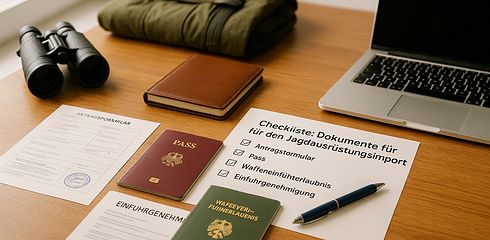
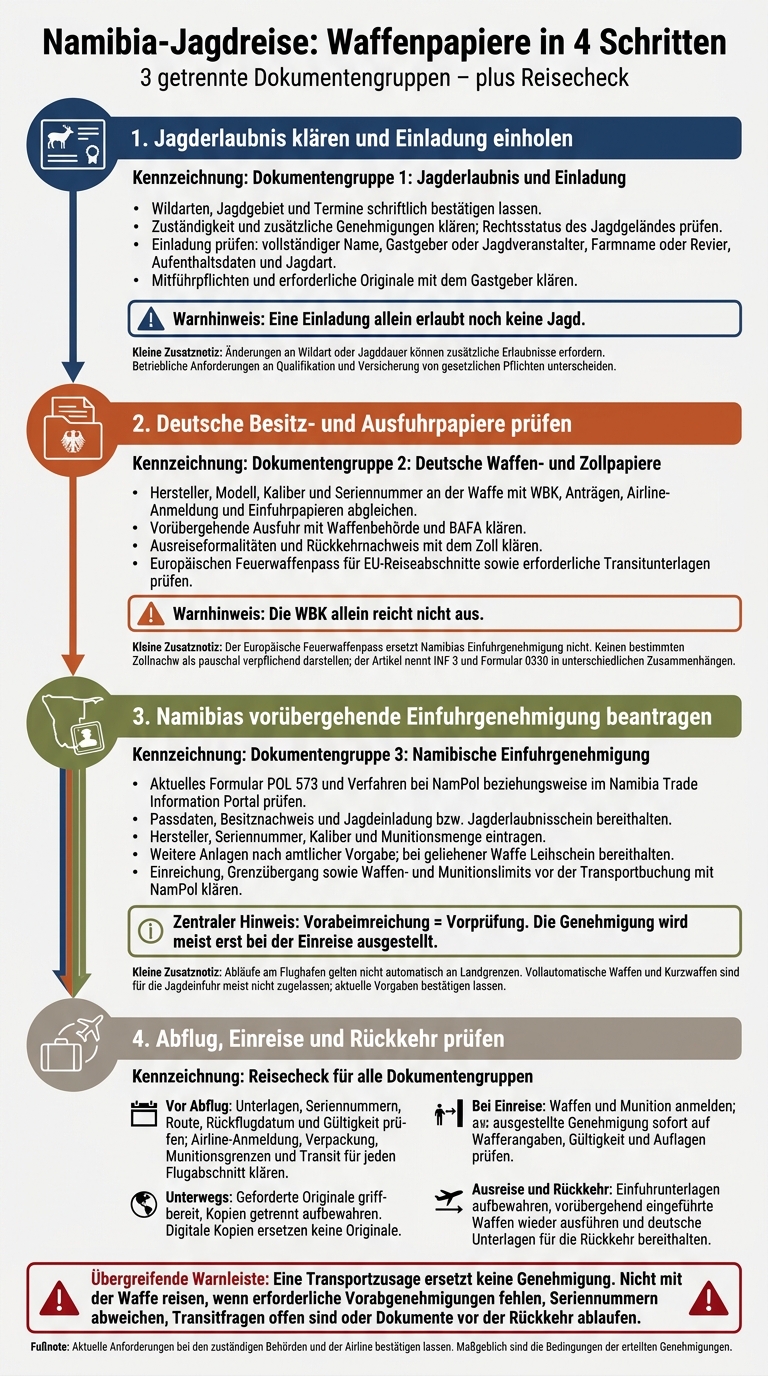
For your hunting trip to Namibia with your own firearm, you need 3 separate groups of documents. Before booking, check which permits you need for your hunt and travel route:
- Hunting permit and invitation: Get confirmation of the game species, hunting area, and dates. An invitation alone does not authorize you to hunt.
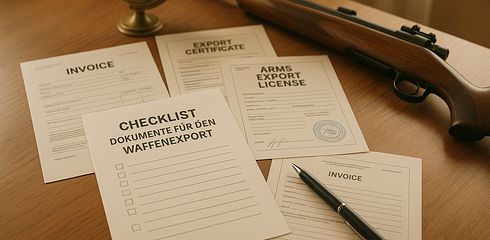
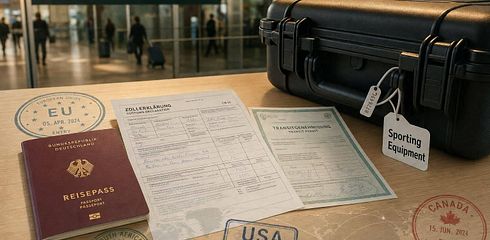
- German firearms and customs documents: Check your WBK, export requirements, and proof for your return. Make sure the firearm details match across all documents.
- Namibian import permit: Prepare form POL 573 and the required supporting documents. The permit is usually issued only upon entry.
Also coordinate firearm and ammunition limits, transport, and transit with the authorities and airline. Transport approval does not replace a permit. Bring the required originals and check that all permits remain valid until your planned departure.
Namibia hunting trip: Firearms documents in 4 steps
NAMIBIA - Bringing Your Own Hunting Rifle
sbb-itb-1cfd233
Step 1: Confirm Your Hunting Permit and Get an Invitation
Ask your host to confirm in writing which game species, hunting area, and dates your hunting permit covers. Find out who is responsible for the relevant permit and who obtains any additional permits. Also check the legal status of the hunting area: Different rules may apply on a private, fenced farm than in a concession or open areas.
Check the Invitation, Hunting Location, and Dates
Request a written invitation that confirms the details in your hunting permit. It should include your full name, the host or hunting outfitter, the farm name or hunting area, your stay dates, and the type of hunt. The hunting dates must fit your planned stay. Clarify any questions with your host and the relevant Namibian wildlife authority.
Also discuss in advance what you need to do if the game species changes or your stay is extended. A change to your booking does not automatically extend your permit. Before making any changes, check whether you need additional permits.
Gather Your Hunting Documents
Have your invitation, passport details, and your host's contact information ready. Ask specifically which documents you need to carry while hunting—and whether you need originals or copies are enough.
Also check whether your host requires proof of your hunting qualifications or hunting liability insurance. Ask which documents they accept and when they need them. Clearly distinguish between the outfitter's requirements and legal obligations.
Step 2: Check German possession and export documents
Once your hunting permit and invitation are sorted, the second set of documents comes next: the German possession and export documents. The WBK alone is not enough. [2]
Check firearm details against all documents
Compare the manufacturer, model, caliber, and serial number on the firearm with the details in your WBK, applications, airline registration, and import documents. Have any discrepancies corrected by the responsible authority before submitting your documents. Your firearms authority is responsible for errors in your WBK. [1][2]
The European Firearms Pass is useful for travel within the EU. However, it does not replace Namibia's import permit. Also check which transit documents you need for stopovers. [1]
Clarify export, return travel, and ammunition
Check with your firearms authority and the Federal Office for Economic Affairs and Export Control (BAFA) which permit or exemption applies to temporary export. Discuss departure formalities and proof of duty-free return, such as the INF 3 information sheet, with Customs. [2]
Check ammunition separately: What quantity is allowed, how must it be packed, and what are the airline's requirements? Register your firearm transport well in advance and get the conditions confirmed in writing. Transport approval does not replace legal permits. [1] Next comes the Namibian import permit.
Step 3: Apply for Namibia's temporary import permit
Once your German documents are complete and correct, take care of the Namibian import permit. You need form POL 573 for firearms and ammunition. Check the current version and procedure with NamPol and on the Namibia Trade Information Portal. Important: Documents submitted in advance are only pre-checked. You usually receive the permit only when you enter the country.
Complete POL 573 and gather supporting documents
Have your passport details, proof of lawful firearm ownership, and your hunting invitation or hunting permit ready. Enter the manufacturer, serial number, caliber, and amount of ammunition on the form. Check the official guidance to see whether you need any additional documents, such as a copy of your passport or proof of lawful export. If you’re borrowing a firearm, you’ll also need a loan certificate.[2]
Check submission, entry point, and firearm limits
Contact NamPol directly to find out how to submit your documents and what requirements apply at your border crossing. You can find the contact details on the official website. Procedures at airports don’t automatically apply at land borders.
Get confirmation of how many firearms and how much ammunition you can bring in before booking transport. Fully automatic firearms and handguns are generally not permitted for hunting imports.
Submit documents in advance and carry them with you
Get confirmation for your border crossing of which copies you need to submit in advance and which originals you must present on entry. Keep the documents you’ll need for the entry inspection separate and ready.
| Document | In advance, if required | Carry for inspection | Confirm requirements with |
|---|---|---|---|
| POL 573 | Completed copy or digital version | Signed original | NamPol |
| Passport | Copy | Original | Immigration authority |
| Proof of ownership, such as a WBK or European Firearms Pass | Copy | Original | NamPol |
| Hunting invitation or hunting permit | Copy | Original or certified copy, as required | NamPol |
| Travel itinerary with entry and exit dates | Copy | Copy | NamPol |
| Proof of lawful export, if required | Copy | Copy | Customs / Federal Police |
| Loan certificate, if you’re borrowing the firearm | – | Original | NamPol |
On entry, the police will inspect your firearms and their serial numbers. Check the permit as soon as it’s issued: are the validity dates and firearm details correct? What conditions do you need to follow? The permit conditions apply, not just your travel itinerary. You must take the temporarily imported firearms back out of the country when you leave.
Step 4: Check departure, entry, and return
Now check that all documents for departure, entry, and return are complete and ready in the right order.
Go through the checklist in travel order
- Before departure: Check your invitation, hunting permit, proof of ownership and export, and POL 573. Make sure the serial numbers, route, and return flight date match. Check with German Customs which proof you need for re-import, such as form 0330.[1]
- Coordinate transport: Notify the airline about the firearm transport. Check the packaging, ammunition limits, and transit rules for each flight segment. Also ask whether a shared gun case is allowed.[1]
- Bring your documents: Keep the originals handy and store copies separately. Digital copies do not replace originals. At the German departure airport, expect the Federal Police to check the serial numbers.[1]
- On arrival: Declare your firearms and ammunition.[1]
- For departure and return: Keep the import documents after arrival until you leave. Also have your German ownership and export documents ready for your return.[1]
Resolve permit issues before departure
Don't travel with your firearm if you are missing advance permits, serial numbers don't match, transit questions are unresolved, or documents expire before your return. Resolve any outstanding issues with NamPol, the wildlife authority, the firearms authority, BAFA, customs, transit authorities, and the airline.[1]
FAQs
How far in advance should I prepare my firearm documents for Namibia?
Contact the relevant authorities several weeks before your departure for Namibia. Allow two to three weeks for certified documents or translations to be processed.
Check the current requirements with the embassy and national firearms authorities in advance. This gives you enough time to prepare all the documents for entry and the safe transport of your equipment. It helps avoid delays or confiscations at the airport.
What should I keep in mind when transiting through South Africa?
Check South Africa's firearms regulations before your trip. They also apply if you're only passing through on your way to Namibia: transit counts as bringing firearms into the country under firearms law and requires the appropriate permit. So you'll need both the import documents for Namibia and the permit for South Africa.
Check the requirements with the relevant authorities well in advance to avoid problems at the airport or customs. On Gunfinder, you'll find helpful information and forms to prepare for your trip.
What should I do if my import permit expires while I'm there?
If your import permit for Namibia expires during your stay, contact the relevant local authorities as early as possible, such as the Designated Firearms Officer at your point of entry. Check the status of your documents with them. You must always carry the original permit.
Keep the contact details of the relevant authorities handy in your document folder. That way, you can respond quickly if any issues arise.