
.br-product-v3{--br-ink:#17201c;--br-muted:#54615b;--br-line:#d9e0dc;--br-soft:#f5f7f5;--br-deep:#10271d;--br-gold:#f2d58e;font-family:Arial,Helvetica,sans-serif;color:var(--br-ink);line-height:1.68;font-size:16px;max-width:100%;overflow:hidden}.br-product-v3 *{box-sizing:border-box;max-width:100%}.br-product-v3 .br-hero-v3,.br-product-v3 .br-final{background:var(--br-deep);color:#fff;border-radius:18px;padding:clamp(22px,5vw,40px);margin:0 0 24px}.br-product-v3 .br-eyebrow{color:var(--br-gold);font-size:.78rem;font-weight:800;letter-spacing:.12em;text-transform:uppercase;margin-bottom:8px}.br-product-v3 .br-hero-title{font-size:clamp(1.55rem,5vw,2.2rem);font-weight:850;line-height:1.14;margin-bottom:12px}.br-product-v3 .br-pill{display:inline-block;background:var(--br-gold);color:var(--br-deep);font-weight:800;border-radius:999px;padding:8px 13px;margin-top:14px}.br-product-v3 .br-section-title{color:var(--br-deep);font-size:clamp(1.18rem,3vw,1.46rem);font-weight:850;line-height:1.25;margin:30px 0 12px}.br-product-v3 p{margin:0 0 14px}.br-product-v3 .br-video-slot{min-height:1px;margin:0}.br-product-v3 .br-box{background:var(--br-soft);border:1px solid var(--br-line);border-left:5px solid var(--br-gold);border-radius:12px;padding:16px;margin:16px 0}.br-product-v3 .br-grid{display:grid;grid-template-columns:repeat(2,minmax(0,1fr));gap:14px;margin:16px 0}.br-product-v3 .br-card{background:#fff;border:1px solid var(--br-line);border-radius:14px;padding:16px;min-width:0}.br-product-v3 .br-card strong{display:block;color:var(--br-deep);margin-bottom:5px}.br-product-v3 .br-limit{background:#fff7e6;border:1px solid #ead8aa;border-left:5px solid #b78018;border-radius:12px;padding:16px;margin:18px 0}.br-product-v3 .br-tech{display:grid;grid-template-columns:minmax(130px,.7fr) minmax(0,1.3fr);border-bottom:1px solid var(--br-line);padding:10px 0;gap:14px}.br-product-v3 .br-delivery{background:var(--br-soft);border:1px dashed var(--br-muted);border-radius:12px;padding:16px}.br-product-v3 details{border:1px solid var(--br-line);border-radius:12px;padding:12px 14px;margin:10px 0;background:#fff}.br-product-v3 summary{font-weight:800;cursor:pointer;color:var(--br-deep)}.br-product-v3 details p{margin:10px 0 0;color:var(--br-muted)}.br-product-v3 .br-final{margin:30px 0 0}.br-product-v3 .br-final strong{color:var(--br-gold)}@media(max-width:680px){.br-product-v3 .br-grid{grid-template-columns:1fr}.br-product-v3 .br-tech{grid-template-columns:1fr;gap:3px}.br-product-v3 .br-hero-v3,.br-product-v3 .br-final{padding:20px 16px;border-radius:14px}.br-product-v3{overflow-wrap:anywhere}.br-product-v3 .br-card{width:100%}}
ACCU-SHOT · Buying Guide
Securely attach Atlas Bipod to 1913/Picatinny
The Accu-Shot adapter connects a compatible Atlas bipod to a matching 1913 Picatinny rail.
Check rail and Atlas interface
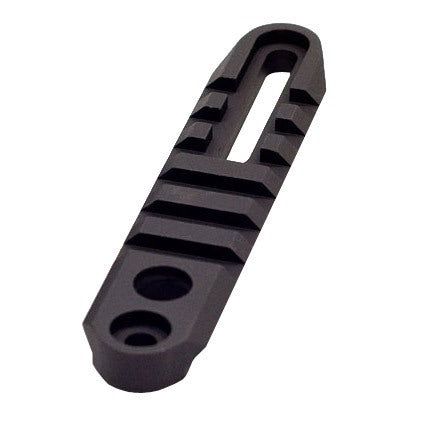
Accu-Shot 1913 Picatinny Rail Adapter - short Picatinny rail solution for Atlas and Accu-Shot support
Many support problems don’t start at the bipod but at the wrong or poorly placed interface on the fore-end. The Accu-Shot 1913 Picatinny Rail Adapter creates a defined Picatinny mount for accessories when a suitable mounting surface is provided on the stock or handguard.
Purchase check
Before buying, check rail standard, free slot length, and the exact Atlas interface. Picatinny-like profiles or other bipod interfaces are not automatically compatible.
Fits well For genuine 1913/Picatinny rails and confirmed Accu-Shot/Atlas configurations.
Fits less well For M-LOK, KeyMod, UIT/Anschütz, or proprietary rails without a matching counter-adapter.
Features and practical effect
1913 interface Enables defined clamping; slot and clamping surface must be clean and undamaged.
Two variants Select variant in the cart based on the bipod interface, not just by image.
Limits and avoiding bad purchases
Adapter play or f
Incorrect torque worsens the shot rest and can loosen components. Check clamping and bipod locking before each use.
Technical Classification
Picatinny / 1913 Only use on properly fitting profiles; Weaver is not always identical.
For adapters and rails, the interface is decisive. A technically good part is only good if it fits the platform without detours.
That’s why the most important check before purchase is always the same: Which platform is available, which movement should be controlled, and which variant prevents the next bad purchase?
Why exactly this product?
A short Picatinny rail is only good if it sits exactly where the support accessory works effectively. Too far back, too far forward, or on an unsuitable surface, it can hinder more than help.
The variants with 3.35 and 4.00 inch offer room for different rests and accessory positions. The longer variant provides more usable rail space, the shorter one stays more compact.
Practical Use
In practice, this rail is a clean base when a Picatinny-mounted Atlas bipod, an Accu-Shot monopod, or other suitable support accessory needs to be mounted precisely.
However, the rail does not fix a wrong base platform. Screw pattern, resting surface, stock material, and desired accessory position must match. If these points are unclear, a precise mounting check before purchase is more sensible than a quick click.
Key Features
1913 Picatinny: standardized rail logic for compatible accessories.
Two lengths: 3.35 inch and 4.00 inch variants for more compact or longer mounting surfaces.
Support interface: suitable for bipod and monopod mounts with Picatinny clamp.
Planned position: helps mount accessories at a defined spot instead of improvising.
Setup-dependent: only suitable if mounting surface and attachment fit the platform.
Our Assessment
For Black Raptor, a Picatinny rail is not an exciting product, but a purchase-deciding component. A clean rail makes a good bipod truly usable; an unfavorable position disrupts the entire support logic.
The short variant is interesting if only a compact interface is needed. The longer variant is worthwhile if more positioning space or accessory contact is required.
Black Raptor short summary:
Buy if: you need a Picatinny interface for support accessories; your platform offers a suitable mounting surface; you consciously choose between 3.35 and 4.00 inch for usable space.
Don’t buy if: your platform doesn’t allow proper attachment; you actually need a direct M-LOK solution; you haven’t checked the accessory position yet.
Useful for / less useful for
Useful for:
you need a Picatinny interface for support accessories
your platform offers a suitable mounting surface
you consciously choose between 3.35 and 4.00 inch for usable space
Less useful for:
your platform doesn’t allow proper attachment
you actually need a direct M-LOK solution
you haven’t checked the accessory position yet
Important classification before purchase
A Picatinny rail should not just fit somehow. Position, screw fit, resting surface, and later usability of the mounted accessory are decisive.
The decision should therefore not be based on name or appearance, but on interface, working area, and real workflow on the rifle. If these points fit, the component becomes unobtrusive: It creates stability, reproducible height, and clearer control of the sight picture. If one of these points doesn’t fit, another variant is more honest.
Setup check before mounting
First check the primary interface: M-LOK, Picatinny, 17S, Spigot, or another system mount are not interchangeable c
hbaren Begriffe. Der Adapter muss genau das verbinden, was wirklich vorhanden ist.
Danach kommt die Position. Ein Adapter oder Rail-Segment sollte nicht nur mechanisch passen, sondern das Zubehör dorthin bringen, wo es im Anschlag sinnvoll arbeitet. Balance, Handposition, Riemenführung und Beinwinkel gehören in diese Prüfung.
Zum Schluss wird entschieden, ob eine direkte Lösung oder eine universellere Schnittstelle besser ist. Direktadapter bauen oft sauberer und flacher, Picatinny bleibt flexibler. Beides kann richtig sein, aber nicht aus demselben Grund.
Varianten richtig wählen
Bei Rails und Adaptern ist die Variante immer eine Schnittstellenentscheidung. Eine kurze Picatinny-Schiene schafft Flexibilität, ein direkter Adapter reduziert Zwischenstufen. Die sauberere Lösung ist die, die mit weniger Umwegen zur vorhandenen Plattform passt.
Wenn zwei Teile ähnlich wirken, hilft die Funktionsfrage: Soll ein Picatinny-Zubehör an M-LOK, ein No-Clamp-Zweibein direkt an M-LOK oder eine Spigot-Plattform angebunden werden? Aus dieser Frage ergibt sich die Variante sehr viel zuverlässiger als aus dem Produktnamen allein.
Praxis-Tipp:
Lege vor der finalen Montage das Zubehör an die geplante Position und simuliere Anschlag, Magazinwechsel, Riemenführung und Transport. Viele Schienen sitzen mechanisch korrekt, aber praktisch an der falschen Stelle.
Weitere Praxis-Tipps
Schnittstelle benennen: Schreibe dir vor dem Kauf auf, was wirklich vorhanden ist: M-LOK, Picatinny, 17S, Spigot oder Stud.
Position simulieren: Halte Zubehör und Adapter vor der finalen Montage an die geplante Stelle und prüfe den Anschlag.
Bauhöhe bedenken: Jede zusätzliche Schnittstelle kann das Zubehör höher setzen. Direkt ist oft sauberer, universell ist oft flexibler.
Schraubenbild prüfen: Mechanische Passung ist wichtiger als ein ähnlich klingender Produktname.
Nachziehen kontrollieren: Nach den ersten Nutzungen sollte der Sitz geprüft werden, ohne die Verbindung unnötig zu überlasten.
Direkte Einordnung:
Gegenüber einem direkten M-LOK-Adapter ist eine Picatinny-Schiene universeller. Sie baut aber meist etwas höher und bringt eine zusätzliche Schnittstelle ins System. Direktadapter sind schlanker, Picatinny ist flexibler.
Anwendungsszenarien
Zweibeinmontage: wenn das Zweibein eine Picatinny-Klemme nutzt.
Monopod- oder Support-Zubehör: wenn eine kurze, definierte Schiene gebraucht wird.
Werkbankaufbau: wenn die Zubehörposition sauber geplant werden soll.
Kompakte Plattformen: wenn die kürzere Variante genug nutzbare Fläche bietet.
Merkmale & Konstruktion
Picatinny-Profil: für kompatible 1913-Klemmen.
Längenwahl: 3.35 inch für kompaktere Setups, 4.00 inch für mehr Schienenfläche.
Positionslogik: die Schiene sollte zur späteren Kraftrichtung des Zubehörs sitzen.
Adapterrolle: macht aus einer geeigneten Montagefläche eine Picatinny-Aufnahme.
Technische Daten
Schnittstelle: 1913 Picatinny.
Variante kurz: ca. 3.35 inch Gesamtlänge laut hinterlegter Variantenlogik.
Variante lang: ca. 4.00 inch Gesamtlänge laut hinterlegter Variantenlogik.
Einsatz: Schaffung einer Picatinny-Aufnahme für kompatibles Support-Zubehör.
Kompatibilitätsprüfung: Befestigungspunkte und Auflagefläche müssen zur Plattform passen.
Lieferumfang
1 Picatinny Rail Adapter in der gewählten Länge.
Nicht vergessen:
Eine Picatinny-Schiene sollte nicht nur irgendwie passen. Entscheidend sind Position, Schraubensitz, Auflagefläche und die spätere Bedienbarkeit des montierten Zubehörs. Prüfe zusätzlich immer die echte Schnittstelle am eigenen System, bevor du montierst oder Zubehör kombinierst.
Passende Produkte
Accu-Shot BT73 M-LOK Schiene für Handguards - kompakte M-LOK-zu-Picatinny-Schiene mit drei nutzbaren Slots.
Accu-Shot BT70 M-LOK Adapter für Atlas Bipods - direkter M-LOK-Adapter für passende No-Clamp-Atlas-Varianten.
Accu-Shot Atlas V8 Zweibein
- Atlas bipod with Picatinny mounting options.
Accu-Shot Atlas PSR bipod - reinforced Atlas bipod line.
Accu-Shot PRM rail monopod Quick Knob - Picatinny monopod as rear addition.
FAQ
Which length should I choose?
3.35 inch stays more compact, 4.00 inch offers more usable rail space. The deciding factor is the accessory to be mounted.
Is this an M-LOK rail?
No. It is a 1913 Picatinny interface. For M-LOK there are dedicated solutions like BT73 or direct adapters like BT70.
Does every bipod fit?
Only bipods with a matching Picatinny clamp. The rail does not replace an incorrect bipod mount.
What should I pay attention to regarding the position?
The accessory must be sensibly reachable in the shooting position and must not interfere with sling, magazine, hand position, or transport.
Is longer always better?
No. Longer offers more space but can take up unnecessary room. As short as possible, as long as necessary is usually cleaner.
Conclusion: Many support problems do not start at the bipod, but at the wrong or poorly placed interface on the fore-end. The Accu-Shot 1913 Picatinny Rail Adapter creates a defined Picatinny mount for accessories when a suitable mounting surface is provided on the stock or handguard. The decision should therefore not be based on name or appearance, but on interface, working area, and actual operation on the rifle. If these points fit, the component becomes unobtrusive: It creates stability, reproducible height, and clearer control of the sight picture. If one of these points does not fit, another option is more honest.
Black-Raptor classification A useful bridge adapter when both interfaces are fixed. For M-LOK, the direct BT70 is the cleaner choice.
| ID | 9896707 |
| URL | https://www.gunfinder.com/items/9896707 |
| Category | Accessories / Rails & handguards |
| Condition | Neu |
| Location | 72479 Straßberg, Germany |
| Availability | In stock |
| Shipping costs paid by | Buyer |