



.brp{font:16px/1.68 Arial,Helvetica,sans-serif;color:#17211c}.brp *{box-sizing:border-box}.brp h2{font-size:clamp(1.28rem,4.7vw,1.65rem);line-height:1.25;margin:1.8rem 0 .65rem;color:#17211c}.brp h3{font-size:1.04rem;margin:.1rem 0 .4rem;color:#17211c}.bh{background:#103727;color:#fff;border-radius:12px;padding:19px;margin-bottom:18px}.bh h2{font-size:clamp(1.45rem,6vw,2.15rem);line-height:1.15;margin:.25rem 0 .7rem;color:#fff;overflow-wrap:anywhere}.bh p,.bh li,.bh strong{color:#fff}.be{color:#f6d78b!important;font-size:.78rem;font-weight:800;letter-spacing:.08em;text-transform:uppercase}.bg{display:grid;grid-template-columns:repeat(2,minmax(0,1fr));gap:11px;margin:13px 0}.bc,.good,.bad,.tip,.note{border-radius:8px;padding:13px}.bc{background:#f7f8f5;border:1px solid #dce2dc;border-left:4px solid #d2a94e}.good{background:#edf8ef;border-left:5px solid #2f7f47}.bad{background:#fff1ef;border-left:5px solid #b44236}.tip{background:#eef5ff;border-left:5px solid #35679b;margin:15px 0}.note{background:#fff8e9;border-left:5px solid #b98522;margin:15px 0}.bt{width:100%;border-collapse:collapse;background:#fff}.bt td{border-bottom:1px solid #e0e5e0;padding:8px 9px;vertical-align:top}.bt td:first-child{width:42%;font-weight:700}.bl a{display:inline-block;background:#f4f1e8;border:1px solid #dfd2b7;border-radius:6px;padding:7px 9px;margin:3px;color:#21362d;text-decoration:none;font-weight:700}.brp details{background:#f5f7f5;border:1px solid #dde3dd;border-radius:7px;padding:10px 12px;margin:7px 0}.brp summary{font-weight:700;cursor:pointer}@media(max-width:600px){.bg{grid-template-columns:1fr}.bh{padding:14px}.bt,.bt tbody,.bt tr,.bt td{display:block;width:100%!important}.bt tr{border-bottom:1px solid #e0e5e0;padding:6px 0}.bt td{border:0;padding:3px 7px}.bl a{display:block;margin:6px 0}}
VORTEX VENOM 3–15×44 FFP · EBR-7C MRAD
3–15× is not a stripped-down 5–25× – it’s the more flexible magnification class.
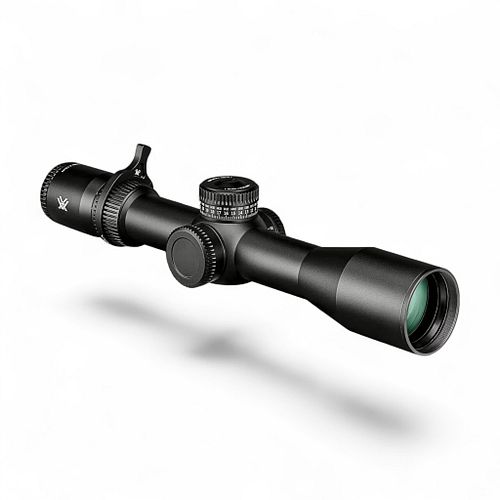
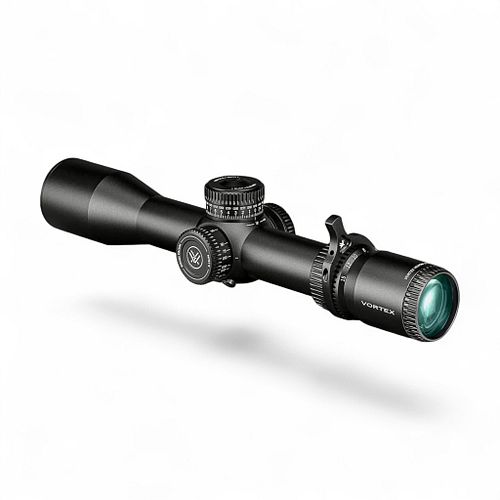
The Venom 3–15×44 combines FFP, 34mm tube, EBR-7C MRAD, and RevStop in a more compact optic for range, DMR-like setups, and more hunting-oriented mixed profiles.
With 42.4 ft field of view at 3×, 44mm objective, and about 28.8 oz, the scope remains more maneuverable than the large 5–25×56. If you don’t constantly need very high magnification, you gain overview at the low end and save weight.
3–15×44, FFP, EBR-7C MRAD
34mm tube and 0.1 MRAD system
approx. 3.7″ eye relief and 42.4–8.4 ft/100 yd field of view
RevStop Zero System; non-illuminated reticle
Product quick check
3× at the low end
More overview for position changes, medium distances, and faster target acquisition.
15× at the high end
Enough image size for many range and medium distance tasks without the size of a 56mm scope.
FFP
Correction marks remain valid across all magnifications.
44 mm
More compact than 56 mm; but less pure light gathering area at high magnification.
The real advantage lies in the usable zoom range
A 3–15×44 sits between a classic hunting scope and a heavy long-range scope. 3× provides significantly more overview than a 5× minimum magnification, while 15× already offers enough target image size for many distances. This makes the optic especially interesting if a system is not only used statically from the mat.
The EBR-7C MRAD is in the first focal plane. This means the hash marks are usable regardless of the chosen magnification. For precise work, the entire data and communication system should also be in MRAD.
RevStop provides a defined return to zero reference. The practical added value arises when a clear zero point is set before training and the turret logic is consciously practiced – not when the system is just a feature on the datasheet.
The 34mm tube must not be overlooked during mounting. Especially users coming from a 30mm hunting scope need suitable rings or a suitable block mount.
Key point: The 3–15×44 is the more rational choice if you want overview and ge
wicht stärker priorisierst als maximale Bildgröße. Entscheide MRAD vs. MOA nach Deinem bestehenden System, nicht nach vermeintlicher Präzision.
Technische Daten – und was sie praktisch bedeuten
Vergrößerung
3–15×
Objektiv
44 mm
Bildebene
FFP / erste Bildebene
Absehen
EBR-7C MRAD
Mittelrohr
34 mm
Klicksystem
0,1 MRAD
Augenabstand
ca. 3,7″ / 94 mm
Sehfeld
ca. 42,4–8,4 ft/100 yd
Länge
ca. 13,4″ / 34 cm
Gewicht
ca. 28,8 oz / 816 g
Beleuchtung
nein
Zero-System
RevStop
Kaufen, wenn …
Du ein FFP-Glas für gemischte mittlere und längere Distanzen suchst.
Du mehr Übersicht auf niedriger Vergrößerung willst als beim 5–25×56.
Du Range, DMR-nahe Nutzung oder jagdliche Distanzarbeit in einem System verbinden möchtest.
Dein Daten- und Korrektursystem bereits MRAD nutzt.
Nicht kaufen, wenn …
Du 20–25× regelmäßig für sehr kleine Ziele oder Spotting-Aufgaben benötigst.
Du ein besonders leichtes klassisches Jagdglas suchst.
Du zwingend ein beleuchtetes Absehen benötigst.
Dein gesamtes bestehendes System in MOA geführt wird.
3–15×44 oder 5–25×56?
Das 3–15×44 ist flexibler und rund 176 g leichter als die 5–25×56-Klasse. Es bietet auf 3× ungefähr doppelt so viel Sehfeld wie das 5–25× auf 5×. Das hilft bei Positionswechseln und mittleren Distanzen.
Das 5–25×56 liefert mehr Bildgröße und 56-mm-Objektivfläche für konsequente Long-Range-Arbeit. Wenn 20×+ selten genutzt wird, ist das 3–15× häufig das ausgewogenere Gesamtpaket.
Praxis-Tipp: Trainiere nicht nur auf 15×. Nutze 3–6× für Zielaufnahme und Position, erhöhe die Vergrößerung erst, wenn Zielgröße und Stabilität es erfordern. So bleibt der Zoombereich ein Werkzeug statt einer festen Gewohnheit.
Lieferumfang
Sonnenblende
Throw Lever
Objektiv-/Okularschutz
Linsenreinigungstuch
2-mm-Werkzeug
RevStop-Komponenten gemäß Hersteller-System
Passende Themenwelten bei Black Raptor
Vortex Optics Jagdoptik & Zielfernrohre Sportoptik & Zieloptiken Venom 3–15×44 MOA
FAQ
Ist das Venom 3–15×44 FFP? Ja. Das EBR-7C sitzt in der ersten Bildebene, sodass die Subtensionen über den Zoombereich proportional bleiben. Ist das Absehen beleuchtet? Nein. Diese Venom-Ausführung arbeitet mit einem unbeleuchteten EBR-7C. Welche Ringgröße brauche ich? 34 mm. Die verbreiteten 30-mm-Ringe sind nicht kompatibel. Ist 3–15× für Long Range geeignet? Für viele mittlere bis längere Distanzen ja. Wer sehr häufig maximale Bildgröße benötigt, ist mit 5–25×56 besser bedient. Soll ich MRAD oder MOA wählen? Wähle dieselbe Einheit wie bei Turmdaten, Ballistik-App, Spotter-Kommunikation und anderen Optiken. Einheitlichkeit reduziert Fehler. Hinweis: Technische Verstellung und Absehen helfen bei reproduzierbarer Arbeit, ersetzen aber keine sichere Handhabung, bestätigte Nullung, geeignete Schießumgebung und verantwortungsvolle Zielbeurteilung.
| ID | 9896064 |
| URL | https://www.gunfinder.com/items/9896064 |
| Category | Optics / Target scopes |
| Condition | Neu |
| Location | 72479 Straßberg, Germany |
| Availability | In stock |
| Shipping costs paid by | Buyer |