
.br-product{font-family:Arial,Helvetica,sans-serif;line-height:1.6;color:#222;}
.br-product h2{font-size:1.2rem;margin-top:28px;}
.br-product ul{padding-left:18px;}
.br-product .info-box{background:#ffdddd;border-left:6px solid #c40000;padding:12px;margin:20px 0;}
.br-product .tip-box{background:#eef6ff;border-left:6px solid #2a6fdb;padding:12px;margin:20px 0;}
.br-product .trust-box{background:#eaf7ea;border-left:6px solid #2f8f2f;padding:12px;margin:20px 0;}
.br-product .compare-box{background:#f5f5f5;border-left:6px solid #444;padding:12px;margin:20px 0;}
.br-product details{background:#f2f2f2;padding:10px;margin-bottom:8px;border-radius:4px;}
.br-product summary{font-weight:600;cursor:pointer;}
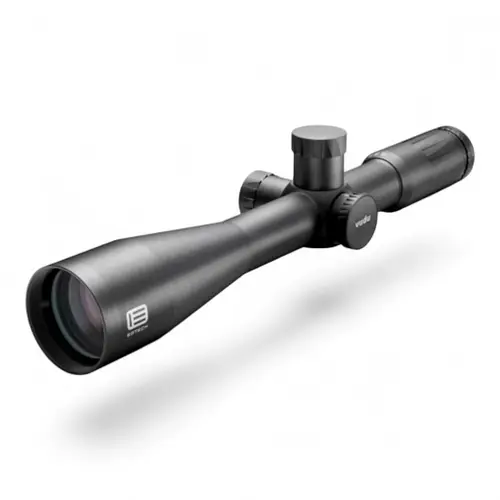
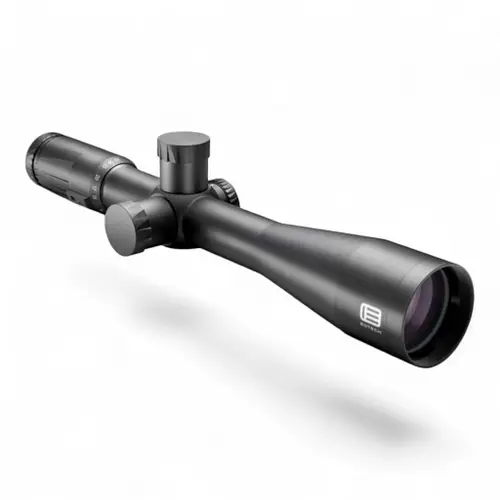
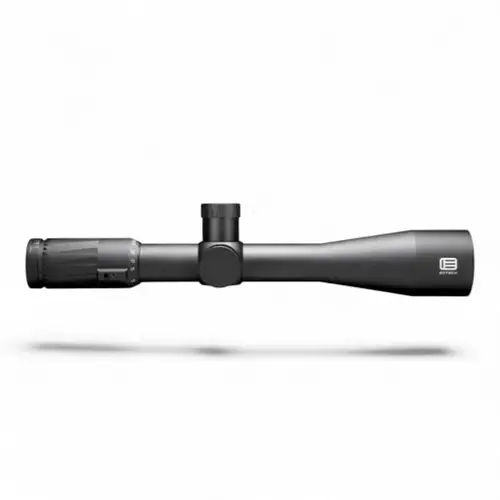
EOTECH Vudu 8-32x50 SFP HC2 – Precision scope for controlled distance work, target identification, and reproducible shooting positions.
When it comes to scopes, it’s not just the magnification range that matters, but whether reticle, focal plane, mounting, and intended use fit together.
The EOTECH Vudu 8-32x50 SFP HC2 is a high-magnification SFP scope for precision, target shooting, and near long-range applications. It’s designed for users who need more target information than a pure 1x sight offers but understand the limits of the respective optic class.
A scope with this magnification range is not a quick 1x optic. For dynamic close range, HWS, red dot, or LPVO clearly have the advantage. Before buying, you should clarify whether your application prioritizes fast target acquisition, target identification, holdover marks, turret adjustment, or low-light performance.
Important note for classification:
SFP means: The reticle stays optically the same size. This often feels steadier at low magnification, but holdover marks are only usable at a defined magnification.
Check before buying: tube diameter 34 mm, mounting height, eye relief, reticle variant, click system, zero-stop/turret logic, parallax, firearm type, engagement distance, and whether you really need 8-32x.
What makes this product technically special:
✔ 8-32x magnification: defines the real working range – close, mid-range, or precision distance depending on the model.
✔ SFP focal plane: determines how reticle and holdover marks can be used at changing magnifications.
✔ 34 mm tube/mounting logic: determines which mount fits and how much adjustment range/size the optic offers.
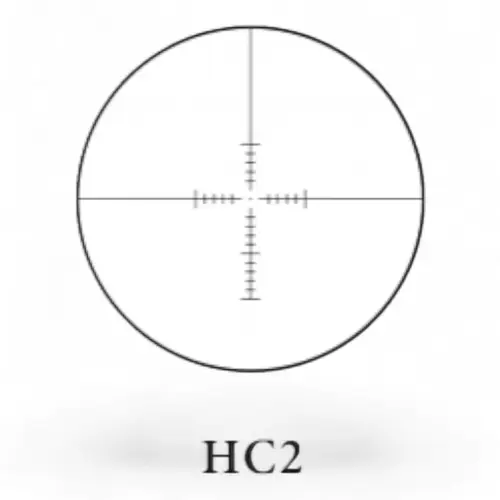
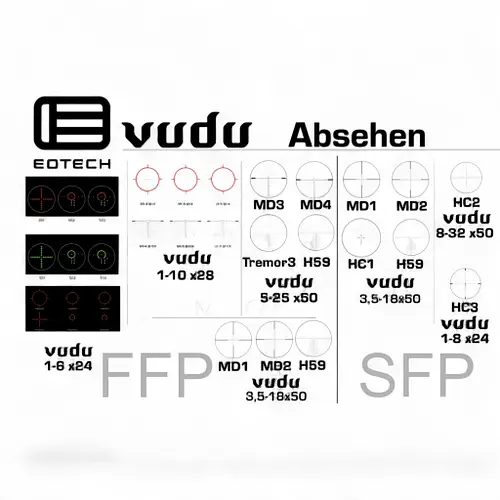
✔ HC2: reticle choice is a ballistics and usage question, not just a matter of taste.
✔ 50 mm objective: affects size, light gathering, mounting height, and balance.
Why this product?
The EOTECH Vudu 8-32x50 SFP HC2 makes sense if you don’t want to cover your distance range with a pure 1x sight. Compared to HWS/red dot, you get target information, reticle structure, and depending on the model, more precision reserve.
The limit is just as important: more magnification means a narrower field of view, more sensitive eye relief, and more weight. An 8-32x optic must fit the platform. On a light short firearm, it can become front-heavy; on a precision platform, it can be exactly the right choice.
Working range: 8-32x – don’t buy by max number, but by real distance.
Reticle: HC2 – MOA/MRAD/BDC only make sense if ammo and zero match.
Mounting: 34 mm – proper rings or mounts are mandatory, not a guessing game with accessories.
Platform logic: precision shooting, benchrest-like use, long range, and controlled distance work – that’s where the optic shows its strengths.
Trainer tip: Don’t treat LPVO and scope like a red dot
At low magnification, an LPVO feels fast, but eye box, mounting height, and cheek weld must be right. If you mount too far back, you force your head into an unnatural position and lose speed.
At higher magnification, a clean, relaxed cheek weld counts more than maximum zoom. If the image blacks out constantly at 10x, 25x, or 32x, it’s often n
icht das Glas das Problem, sondern Augenabstand und Körperposition.
Nullung immer mit der Munition durchführen, die du tatsächlich nutzt. BDC- und Haltemarken sind nur Annäherungen, bis du sie auf Distanz verifiziert hast.
Unsere Einschätzung
Das EOTECH Vudu 8-32x50 SFP HC2 ist stark, wenn du genau weißt, warum du 8-32x brauchst. Es ist weniger sinnvoll, wenn du nur die größte Zahl auf dem Vergrößerungsring kaufst. Gerade bei EOTECH Vudu und VuduX muss die Frage lauten: schnelle 1x-Nutzung, Allround-Jagd, DMR oder Präzisionsdistanz?
FFP-Gläser sind stärker, wenn Haltemarken auf jeder Vergrößerung genutzt werden sollen, wirken unten herum aber oft feiner. Deshalb entscheidet die Bildebene über deinen echten Nutzen. Für Training, Jagd und Range kann SFP sehr angenehm sein. Für Haltemarken über wechselnde Vergrößerung ist FFP oft die saubere Wahl.
Sinnvoll für:
Präzisionsstand, Benchrest-nahe Nutzung, Long Range und kontrollierte Distanzarbeit
Nutzer, die Montagehöhe, Augenabstand und Absehen bewusst einrichten
Schützen, die ihr Absehen mit echter Munition und Distanzdaten verifizieren
Setups, bei denen Zielinformation wichtiger ist als reines 1x-Tempo
Weniger sinnvoll für:
reine Nahdistanz-Setups, bei denen HWS oder Red Dot schneller sind
Jäger, die maximale Dämmerungsleistung eines großen Ansitzglases erwarten
Schützen, die Haltemarken nutzen wollen, ohne Ballistik und Zero zu prüfen
Plattformen, bei denen Gewicht, Länge oder Montagehöhe nicht passen
Direkte Einordnung:
✔ EOTECH Vudu 8-32x50 SFP HC2: sinnvoll, wenn hoch vergrößerndes SFP-Zielfernrohr für Präzision, Scheibe und Long-Range-nahe Anwendungen zu deinem Setup passt.
✔ HWS / Red Dot: schneller auf kurzer Distanz, aber ohne Zielansprache und Vergrößerung.
✔ größeres Präzisionsglas: stärker für reine Distanzarbeit, aber schwerer, langsamer und weniger führig.
Das EOTECH Vudu 8-32x50 SFP HC2 lohnt sich, wenn der Vergrößerungsbereich deine echte Anwendung trifft. Wenn du nur auf kurze Distanz arbeitest, ist ein HWS ehrlicher. Wenn du nur Long Range schießt, kann ein spezialisiertes Präzisionsglas sinnvoller sein.
Anwendungsszenarien
Range: Vergrößerung für Zielkontrolle, Gruppenbild und Trainingsdistanzen.
Jagd: je nach Modell sinnvoll für Pirsch, Feldkante, Drückjagd-nahe Situationen oder Ansitz mit begrenzter Dämmerungserwartung.
DMR / Carbine: mehr Zielinformation als HWS, ohne direkt ein großes Long-Range-Glas aufzubauen.
Präzision: Haltemarken, Türme und wiederholbare Positionen nur nutzen, wenn das Setup sauber eingeschossen ist.
Praxis-Tipp: Montagehöhe vor dem Kauf planen
Die beste Optik hilft wenig, wenn du sie auf einer unpassenden Montagehöhe fährst. Zu niedrig kann mit geradem Schaft, Schutzbrille oder Helm unnatürlich werden. Zu hoch vergrößert den mechanischen Offset und verändert den Anschlag.
Plane Glas, Montage, Schaft, Augenabstand und Bedienbarkeit als ein System. Besonders bei AR-Plattformen ist das wichtiger als viele Datenblattwerte.
Merkmale & Konstruktion
Vergrößerung: 8-32x – definiert, ob die Optik eher schnell, allround oder präzisionsorientiert ist.
Bildebene: SFP – bestimmt, wie Haltemarken bei wechselnder Vergrößerung arbeiten.
Objektiv: 50 mm – beeinflusst Lichtreserve, Baugröße und Montagehöhe.
Rohr / Montage: 34 mm – passende Ringe oder Cantilever-Montage vorher auswählen.
Absehen: HC2 – Auswahl nach Munition, Distanz und Halte-/Turmlogik treffen.
Variantenlogik: Varianten: keine Auswahlvariante – einfacher Produktaufbau.
Technische Daten
Modell: EOTECH Vudu 8-32x50 SFP HC2 – hoch vergrößerndes SFP-Zielfernrohr für Präzision, Scheibe und Long-Range-nahe Anwendungen.
Vergrößerung: 8-32x – realer Arbeitsbereich der Optik.
Objektivdurchmesser: 50 mm – beeinflusst Licht, Bauhöhe und Gewicht.
Bildebene: SFP – wichtig für Haltemarken und Zielbild bei wechselnder Vergrößerung.
Rohrdurchmesser: 34 mm – vor
Mandatory to check for scope mount purchase.
Length: 392 mm – relevant for mounting clearance, clip-on reserve, and balance.
Weight: 930 g – affects handling and center of gravity of the firearm.
Battery / Illumination: no illumination battery – only for reticle illumination, not for the basic function of the optic.
Reticle: HC2 – match reticle choice with ammunition and distance.
Click / Reticle logic: 0.125 MOA turret adjustment – don’t mix MOA and MRAD if you want to calculate precisely.
Origin: Japan / check manufacturer info – manufacturer/model info for product line.
Included in delivery
1x EOTECH Vudu 8-32x50 SFP HC2 scope
1x Throw Lever, if included with the specific variant
1x Operator Manual
1x Reticle Manual, if model-dependent included
1x Lens Cloth, if model-dependent included
1x CR2032 battery, if illuminated reticle present
Not included:
No rings, no cantilever mount, no bubble level, no ballistic calculator, no firearm, and no zeroing service. For variants with EFLX package, only include if this variant is explicitly selected.
FAQ
Is the EOTECH Vudu 8-32x50 SFP HC2 meant more for close or long range?
The 8-32x range determines the role. Low magnification helps with faster target acquisition, high magnification provides more target info but requires better cheek weld and closer eye relief.
What does SFP mean in practice?
SFP means: the reticle stays optically the same size. This often feels steadier at low magnification, but holdover marks are only accurate at one defined magnification.
What mount do I need?
You need a mount suitable for 34 mm. Additionally, height, cant, eye relief, and platform must fit together.
Do I have to verify BDC or holdover marks?
Yes. Every holdover mark is only as good as your ammo, barrel length, velocity, zero distance, and actual distance verification.
Who is this optic not suitable for?
It’s not suitable if you only want a quick close-range sight or want to use the optic without mounting planning, zeroing, and distance control.
Conclusion: The EOTECH Vudu 8-32x50 SFP HC2 is a strong optic if magnification range, focal plane, and reticle fit your real use. It doesn’t replace training or mounting planning but can carry a very clean range, hunting, or precision setup.
| ID | 9895093 |
| URL | https://www.gunfinder.com/items/9895093 |
| Category | Optics / Scopes |
| Condition | Neu |
| Location | 72479 Straßberg, Germany |
| Availability | In stock |
| Shipping costs paid by | Buyer |