




.br-product{
font-family: Arial, Helvetica, sans-serif;
line-height:1.6;
color:#222;
}
.br-product h1{
font-size:1.4rem;
margin-bottom:10px;
}
.br-product h2{
font-size:1.2rem;
margin-top:28px;
}
.br-product ul{
padding-left:18px;
}
.br-product .info-box{
background:#ffdddd;
border-left:6px solid #c40000;
padding:12px;
margin:20px 0;
}
.br-product .tip-box{
background:#eef6ff;
border-left:6px solid #2a6fdb;
padding:12px;
margin:20px 0;
}
.br-product .trust-box{
background:#eaf7ea;
border-left:6px solid #2f8f2f;
padding:12px;
margin:20px 0;
}
.br-product .compare-box{
background:#f5f5f5;
border-left:6px solid #444;
padding:12px;
margin:20px 0;
}
.br-product details{
background:#f2f2f2;
padding:10px;
margin-bottom:8px;
border-radius:4px;
}
.br-product summary{
font-weight:600;
cursor:pointer;
}
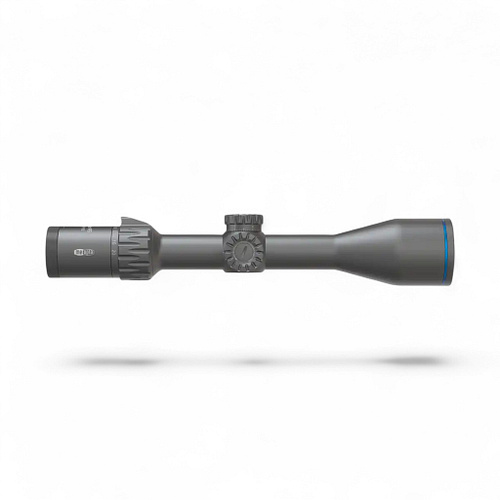
Meopta MeoHunter R5 4-20x50 SFP RD – hunting scope for longer stand distances and shot control
If you want to shoot cleanly, your scope has to fit the situation.
The Meopta MeoHunter R5 4-20x50 SFP RD is not just any scope, but a deliberately designed solution for field stand hunting, shooting range, and situations with a bit more distance. What matters is not just the magnification – but how image, reticle, parallax, and point of impact work together in real use.
With 4–20x, 50 mm objective, and 2nd focal plane (SFP), this scope is designed for more magnification reserve without a heavy long-range scope – with understandable mechanics, clear reticle logic, and precise point of impact control.
Why exactly this product?
✔ 4–20x magnification range – sensible for more magnification reserve without a heavy long-range scope
✔ 50 mm objective – good reserve in low light and high magnification
✔ 2nd focal plane (SFP) – SFP stays quick for hunting; BDC 3 should only be used if you know reference magnification and ballistics
✔ Click logic: one click equals 1 cm at 100 m, 2 cm at 200 m, and 3 cm at 300 m
✔ Meopta-typical robust, nitrogen-filled, and weatherproof construction
✔ 20x reserve for target and shot pattern control
✔ Compact design for attachment technology
Why MeoHunter R5 4-20x50 SFP RD?
This model makes sense if you don’t just want the biggest scope possible, but a scope that cleanly covers your real shooting range.
You get a clear classification of distances instead of pure datasheet values
You can consciously choose your reticle to fit the use
You immediately understand what a click practically does when zeroing in
You get optics that combine hunting practice and controlled training
You avoid bad purchases because magnification, objective size, and focal plane fit the use
The difference to a wrongly chosen scope:
❌ Too much magnification: narrow field of view, slow shooting position, unnecessary weight ❌ Too small objective: less reserve in low light and high magnification ✔ MeoHunter R5 4-20x50 SFP RD: more magnification reserve without a heavy long-range scope with suitable optical and mechanical reserve This exact difference doesn’t show in the store – but when zeroing, in low light, and under time pressure.
Practical tip: document zero, clicks, and point of impact cleanly
One click equals 1 cm at 100 m, 2 cm at 200 m, and 3 cm at 300 m. Always write down after zeroing: ammunition, zeroing distance, rough temperature, click position, and used magnification. This way you immediately recognize later if a deviation is due to ammunition, mounting, parallax, shooting position, or really the scope.
Most important features
Magnification range: 4–20x
Objective diameter: 50 mm
Main tube: 30 mm
Reticle: 4C or BDC 3 illuminated reticle
Reticle plane: 2nd focal plane (SFP)
Click adjustment: 1 cm / 100 m
Parallax: from approx. 15 m
Robust, weatherproof construction for hunting and training
Sensibly usable with clean mounting and controlled zeroing
20x reserve for target and shot
bild control
Compact design for attachment technology
Height adjustment range 233 cm / 100 m
Our assessment
The MeoHunter R5 4-20x50 SFP RD shows its strength where more magnification reserve is needed without heavy long-range glass. It’s not an all-purpose scope but must be consciously matched to the firearm, mount, ammunition, and hunting ground.
The combination of 4–20x and 50 mm is crucial in practice: low magnification is about overview and speed, high magnification about target assessment, control, and precise work.
SFP remains quick for hunting; BDC 3 should only be used if you know the reference magnification and ballistics. This reticle logic decides whether you just aim – or can really use hold points, corrections, and distances accurately.
Who is it for?
Hunters: if your hunting ground demands field stand, shooting range, and situations with some distance
Sport shooters: if you want to reproducibly use point of impact, clicks, and reticle
Stand / Field / Blind: if you need more control than with a pure all-round scope
Users with attachment or accessory planning: if mounting height, length, and parallax must be considered
Why exactly for you?
If you want to know why your shot hits or misses, you need a scope that works predictably. This model gives you exactly that technical basis – provided mounting, zero, and shooting technique are right.
Suitable optics, mounts, and accessories can also be found in our Outdoor & Crisis Preparedness category.
Important note:
Scopes improve target acquisition and precision but do not replace safe firearm handling, clean shooting technique, or legal review of the intended use. Always check mounting, point of impact, and used ammunition before hunting use.
Magnification & objective – what does it bring practically?
4–20x doesn’t automatically mean “better” but describes your usable working range. Low magnification determines field of view and speed, high magnification target control and precision.
The 50 mm objective is mainly relevant for light reserve and image stability. The higher you magnify, the smaller the exit pupil – so a suitable objective size is especially important at dusk and high magnification.
Low magnification: faster acquisition, keep more surroundings
High magnification: check shot group, assess target more precisely
50 mm: more reserve in low light and higher magnification
Always check at the range at which magnification you really shoot stable
Reticle & image plane – use correctly
This model works with 2nd image plane (SFP). SFP remains quick for hunting; BDC 3 should only be used if you know the reference magnification and ballistics
Important: A reticle is only an advantage if you know at which magnification or in which plane your hold marks are correct.
Choose 4C or BDC 3 illuminated reticle consciously by use
4C/Z-Plex: fast, clean, intuitively hunting
BDC/MRAD/MilDot: useful if you actively use distances, hold points, and ballistics
Don’t set illuminated reticle too bright – otherwise the hold point will overexpose at dusk
Clicks, zero & point of impact
One click equals 1 cm at 100 m, 2 cm at 200 m, and 3 cm at 300 m. This is extremely important when zeroing because you don’t have to guess but can calculate the correction precisely.
After every mount change, ring swap, or ammunition change, a control group belongs on the range. Especially with hunting optics, trust in the point of impact is more important than any advertising claim.
Zero cleanly at a defined distance
Document click position after zeroing
Shoot control group after mounting work
Adjust parallax consciously at high magnification
Never take just a single hit as reference
Features & construction
ion / Content
A scope of this class relies on clean mounting, correct torque, and stress-free ring position
Nitrogen filling and weatherproof construction support use in rain, cold, and temperature changes
Coated lenses reduce disturbing effects from water, dirt, and reflections
The technical performance only becomes visible when ammunition, mounting, and shooter work reproducibly
Technical Data
Magnification: 4–20x
Objective diameter: 50 mm
Tube diameter: 30 mm
Length: 340 mm
Weight: 620 g
Field of view at 100 m: 9.2 – 1.8 m
Adjustment increment: 1 cm / 100 m
Elevation adjustment range: 233 cm / 100 m
Eye relief: 96 – 94 mm
Reticle plane: 2nd focal plane
Objective thread: M52x0.75
Scope of Delivery
Meopta MeoHunter R5 4-20x50 SFP RD
Battery
Protective caps
User manual
FAQ
For which distance is this scope useful?
That depends on the hunting ground, firearm, and ammunition. The magnification range 4–20x makes it especially suitable for more magnification reserve without a heavy long-range scope; however, a clean zero and realistically trained distances remain decisive.
What does the click adjustment mean in practice?
One click corresponds to 1 cm at 100 m, 2 cm at 200 m, and 3 cm at 300 m. This allows you to correct point-of-impact deviations during zeroing precisely instead of turning by feel.
Is higher magnification always better?
No. High magnification shows more details but makes hold errors, mirage, and parallax errors more visible. In practice, the highest magnification is not automatically the best shooting magnification.
When do I need parallax adjustment?
As soon as you work with higher magnification or at varying distances. Incorrectly set parallax can cause point-of-impact errors even though the reticle and target appear properly aligned.
What should I check after mounting?
Ring mounting, eye relief, horizontal alignment, torque, parallax, zero, and a control group with the actually used ammunition.
Especially in the area of hunting scopes, hunting optics, and precise point-of-impact, it is not a single data value but the interplay of magnification, objective, reticle, zero, and reproducible mounting that decides.
| ID | 9894147 |
| URL | https://www.gunfinder.com/items/9894147 |
| Category | Optics / Scopes |
| Condition | Neu |
| Location | 72479 Straßberg, Germany |
| Availability | In stock |
| Shipping costs paid by | Buyer |