

.br-product{
font-family: Arial, Helvetica, sans-serif;
line-height:1.6;
color:#222;
}
.br-product h1{
font-size:1.4rem;
margin-bottom:10px;
}
.br-product h2{
font-size:1.2rem;
margin-top:28px;
}
.br-product ul{
padding-left:18px;
}
.br-product .info-box{
background:#ffdddd;
border-left:6px solid #c40000;
padding:12px;
margin:20px 0;
}
.br-product .tip-box{
background:#eef6ff;
border-left:6px solid #2a6fdb;
padding:12px;
margin:20px 0;
}
.br-product .trust-box{
background:#eaf7ea;
border-left:6px solid #2f8f2f;
padding:12px;
margin:20px 0;
}
.br-product .compare-box{
background:#f5f5f5;
border-left:6px solid #444;
padding:12px;
margin:20px 0;
}
.br-product details{
background:#f2f2f2;
padding:10px;
margin-bottom:8px;
border-radius:4px;
}
.br-product summary{
font-weight:600;
cursor:pointer;
}
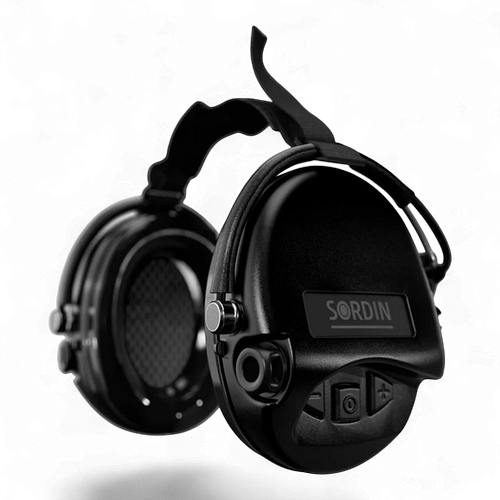
Sordin Supreme MIL AUX – active MIL hearing protection with AUX connection
If you want to integrate external audio sources but don’t need a Nexus-PTT setup, AUX is the simpler solution. The Sordin Supreme MIL AUX is the rugged MIL version with 3.5 mm AUX connection.
It’s designed for users who want to combine active situational awareness, robust electronics, and wired audio input – without necessarily using a boom microphone/Nexus system.
Why this exact model?
✔ MIL-AUX version with 3.5 mm connection
✔ Level-dependent ambient amplification
✔ RFI/MIL logic according to manufacturer/dealer info
✔ SNR approx. 24–26 dB depending on design/source
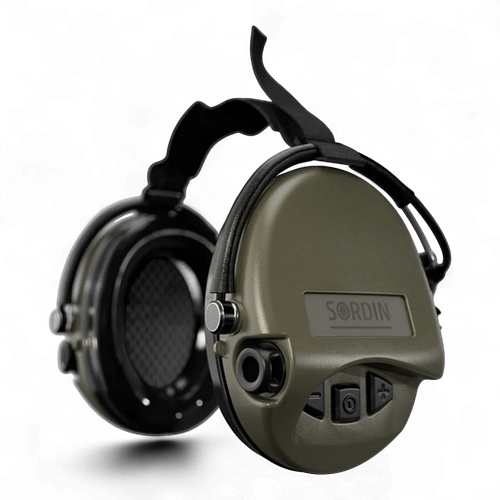
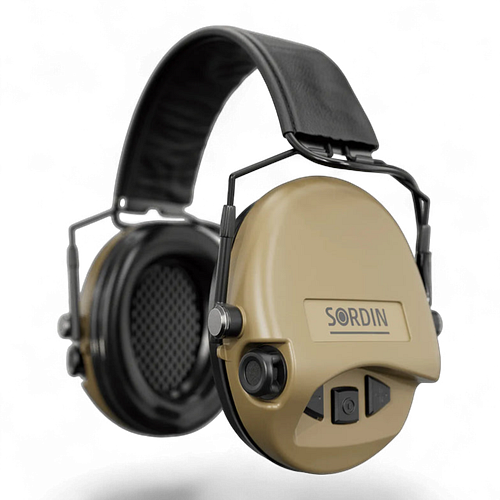
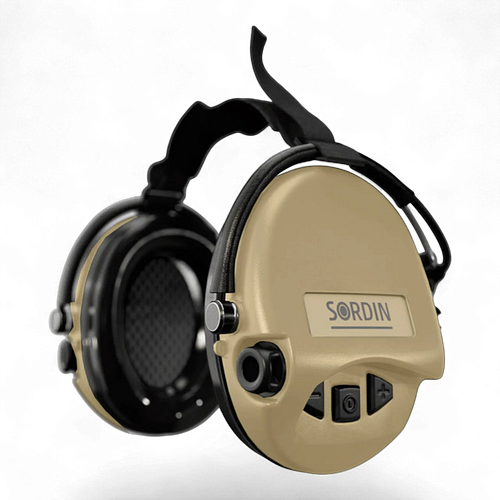
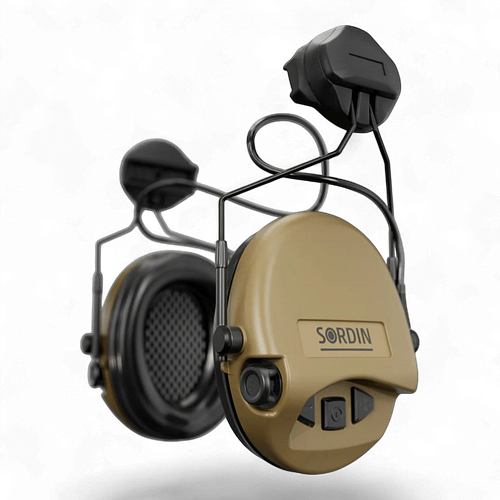
✔ Variants with headband, neckband/helmet version, and ARC rails
✔ Colors: black, green, beige/sand depending on choice
✔ Robust platform for professional audio/protection applications
Why this product?
The MIL AUX makes sense if you need external audio sources but not the full Nexus/boom mic logic of the CC version.
You get a rugged MIL platform with active protection
You can connect compatible audio sources via AUX
You choose headband, helmet version, or ARC depending on your setup
You avoid unnecessary CC complexity if no boom microphone is needed
You stay more flexible with communication/audio than with purely passive protection
MIL/Comms headset vs. regular active hearing protection
❌ Regular active hearing protection: hear surroundings and dampen gunshots ✔ MIL/Comms headset: also designed for radio/audio integration, RFI protection, and rugged operational logic This only pays off if communication, helmet, or professional use is really part of your setup.
Instructor tip: test radio dry first
Don’t test PTT, pin assignment, radio, and microphone position only at the range.
A communication hearing protector is only better if speech is reliably transmitted and the protector still seals properly.
Key features
Active hearing protection with AUX input
3.5 mm jack for compatible audio sources
Level-dependent ambient amplification
MIL/RFI logic according to manufacturer/dealer info
Headband, neckband/helmet, and ARC variants
Slim ear cups for long gun cheek weld
Colors and mounts depending on variant
Our assessment
The MIL AUX is the more rational choice if you want external audio input but don’t need a fixed boom microphone or Nexus/PTT radio solution.
It’s tougher and more mission-oriented than civilian standard models but also more specialized. For regular hunting or range use without audio input, the Pro-X/X2 is usually more sensible.
Choosing the variant is more important than the color here: headband for classic use, neckband/helmet version for headgear, ARC for direct helmet mounting.
Who it’s for
Professional users: if rugged audio connection is needed
Range/training teams: with compatible audio sources
Helmet users: depending on chosen mount
Shooters with special setups: if AUX instead of Nexus makes sense
Not suitable for:
Users who need a microphone/Nexus radio headset – choose MIL CC for that
Occasional shoote
tzen ohne Audio-/Comms-Bedarf
Budget buyers
Choose variants correctly
For this product, the mounting is crucial – not just the color.
Leather headband: classic, quick, and good for stand/training without helmet.
Helmet version/neckband: useful if no bracket should interfere on top of the head.
ARC Rails: for direct mounting on compatible helmet rails.
Color: Black/Green/Beige/Sand depending on the operational environment.
Important note
Radio/Nexus/AUX compatibility depends on PTT, plug wiring, radio, and system configuration. Always check technically before use.
Hearing protection effect also depends on fit. Helmet straps, glasses, cables, neckband, and padding must not lift the ear cup.
Gel pads, glasses, and sealing – why this is crucial
The best electronics are of little use if the hearing protection does not seal properly. Shooting glasses, safety glasses, or thin frames quickly create a small gap between the pad and the head.
Standard pads: work but press faster and react more sensitively to glasses frames.
Gel pads: adapt better to head shape and glasses frames.
Practical result: less sound leakage, fewer pressure points, longer wearing time.
Instructor note: after putting on, feel around the ear cup once – if a glasses frame visibly lifts the seal, you lose protection effect.
For glasses wearers and frequent shooters, gel pads are almost never just comfort. They are often the difference between "fits somehow" and truly effective sealing.
Features & operation
Active ambient amplification: important sounds remain audible while impulses are reduced.
Communication: depending on model via Nexus TP120, AUX, or Flex-Com solution.
Microphone position: position boom microphone close enough to the mouth but not directly in the airflow.
Directional hearing: ear cups must fit correctly – twisted or poorly fitting cups worsen perception.
Technical data – with practical classification
Type: active MIL hearing protection with AUX
Connection: 3.5 mm jack – check compatibility with source
SNR: model-specific, often approx. 24–26 dB in MIL-AUX data sources
Mounting: headband, helmet version, or ARC Rails depending on variant
Audio: ambient amplification plus external audio input
Practical: AUX is not a full replacement for Nexus/PTT radio with boom microphone
Scope of delivery
1x Sordin Supreme MIL AUX in chosen color/mounting
AUX connection depending on version
Batteries / documents depending on manufacturer scope
FAQ
What is the difference to MIL CC?
MIL CC uses Nexus TP120 and boom microphone for radio. MIL AUX uses 3.5 mm AUX for external audio sources.
Which mounting should I choose?
Headband for normal use, neckband/helmet version if top should remain free, ARC if hearing protection should be mounted directly on the helmet.
Can I use it for radio?
Only if your audio/radio solution fits the AUX connection. For professional PTT radio systems, MIL CC is usually the better choice.
Is AUX more robust than Bluetooth?
AUX is wired and independent of radio pairing. Whether it fits better depends on the system.
Do I need gel pads?
For glasses, long use, or helmet use, gel pads are very useful if compatible.
Especially with Sordin MIL hearing protection, communication hearing protection, and active hearing protection for operations and range, the right system choice determines protection, communication, and wearing comfort.
| ID | 9894114 |
| URL | https://www.gunfinder.com/items/9894114 |
| Category | Accessories / Hearing Protection |
| Condition | Neu |
| Location | 72479 Straßberg, Germany |
| Availability | In stock |
| Shipping costs paid by | Buyer |